30x30 Update & Sea Eagle Diets
The latest news on nature and conservation in Britain.
National news
30x30 | On Saturday, the ‘Nature Day’ at COP, the government published criteria and a map setting out what areas in England will count towards its commitment of protecting 30% of land for nature by 2030. Notably, the map – which delineates the areas currently counting toward 30x30, and those with potential – classifies National Landscapes (formerly AONBs) and National Parks as areas of unfulfilled potential. The decision has been welcomed by conservationists as recognition of the large gap remaining to fulfilling the government’s goal. However, Richard Benwell, CEO of Wildlife and Countryside Link, pointed out that Defra has already counted SSSIs within the 8.5% of England currently protected, regardless of their condition. ‘The target is only meaningful if it comes with a plan to restore the two-thirds of protected sites that are not in good condition,’ he wrote. ‘This will take a major increase in public funding and regulation.’ Others noted that privately owned rewilding sites have not been included, while many of the ‘potential’ areas are currently intensively farmed. ENDS covered the news. Other announcements on Nature Day included new legislation to ensure that supermarket products are not linked to illegal deforestation. The Telegraph and ENDS reported the news. The Wildlife Trusts also published their reaction to the overall outcomes of COP28.
Salmon | Atlantic salmon are now classified as endangered in the UK, after the IUCN released an update to its Red List at COP28. The assessment found that nearly a quarter of the world’s freshwater fish are at risk of extinction due to overfishing, pollution and climate change. Atlantic salmon – previously classed as a species of least concern – is now ‘near threatened’ with extinction after its global population fell by 23% between 2006 and 2020. Salmon have disappeared from rivers across the UK due to blockages, pollution, habitat degradation and overheating. Populations have also been weakened by breeding with farmed salmon, and invasive Pacific pink salmon pose a rising threat. Peter Powell, CEO of the Welsh Dee Trust, wrote a thorough Twitter thread on the extensive threats facing salmon: ‘It’s death by a thousand cuts rather than a single issue’. The Guardian and ENDS covered the news. Separately, the Environment Agency has published statistics on salmon and sea trout stocks in England and Wales, which the Wild Trout Trust said make for unhappy (but unsurprising) reading. Meanwhile, SEPA has announced a new regulatory framework to help protect salmon in Scotland, including wild salmon protection zones. STV News and ENDS reported the news.
Tracker | Four of the UK’s leading nature organisations have published a tracker report on Defra’s progress towards its commitments made last year at COP15. The report, co-written by Wildlife and Countryside Link, the RSPB, the Wildlife Trusts and the National Trust, finds that progress is stalling or even going backwards in areas including habitat restoration, sustainable agriculture, invasive species management and marine conservation. As part of the Global Biodiversity Framework agreed in Montreal, 23 targets were created with a deadline of 2030. The analysis shows that out of 18 targets assessed, none are on track, seven are ‘yellow’ – denoting some progress but action required – and 11 are ‘red’ or ‘dark red’ (stalled or regressing). Beccy Speight, chief executive of the RSPB, said the ‘dismal’ report should set alarm bells ringing for political leaders, and that the success of Montreal’s COP hinges on its commitments being ‘translated into action at home’. Edie and ENDS covered the news.
In other news:
- The Welsh government has announced changes to its farming funding plans, including increasing the time available to comply with tree planting requirements, reports the BBC.
- The Environment Agency has announced that financial penalties for environmental offences will now be unlimited, meaning ‘polluters always pay’. The Times covered the news.
- The government has published its response to a consultation on the principles of Marine Net Gain. Defra said it plans to make MNG mandatory for new development activities, but this will not include fisheries, reports ENDS.
- The Scottish government must take a more ambitious approach to reforming agriculture policy and funding if it is to meet its environmental targets, according to campaigners.
- Scottish Forestry has approved over 13,000 hectares of woodland creation schemes this year, making it the highest number recorded this century.
- An application to use a banned insecticide on sugar beet for the fourth year running has been submitted to the government, triggering concerns from regulators and wildlife organisations, reports ENDS.
- A deal agreed at COP28 calls on countries to ‘transition away’ from fossil fuels for the first time – although not to phase them out completely, reports the BBC.
- Defra has published five Fisheries Management Plans, setting out how the government will work with the fishing industry to support sustainable management of UK stocks including crab, lobster, king scallop and bass.
Across the country
Affric | The charity Trees for Life has protected a remnant of ancient woodland in Affric Highlands, the UK’s largest rewilding landscape. The area is home to what is thought to be Scotland’s oldest wild Scots pine: the tree was dated by the St Andrews Tree-Ring Laboratory, and is believed to be at least 565 years old. There are 57 ancient pines remaining at Glen Loyne – all several centuries old – but the woodland is under threat from overgrazing by deer. Now, working with the landowner, the charity has erected a deer-proof exclosure of fencing to protect the trees, and allow seedlings to grow. James Rainey, senior ecologist for the charity, said the pinewoods are ‘globally unique, and a special part of Scotland’s character and culture.’ He added that fencing is only a temporary fix, but for now will allow the pinewoods a ‘fighting chance’ of recovery until landscape-scale deer management is established. The BBC, the Times and the Scotsman covered the story.
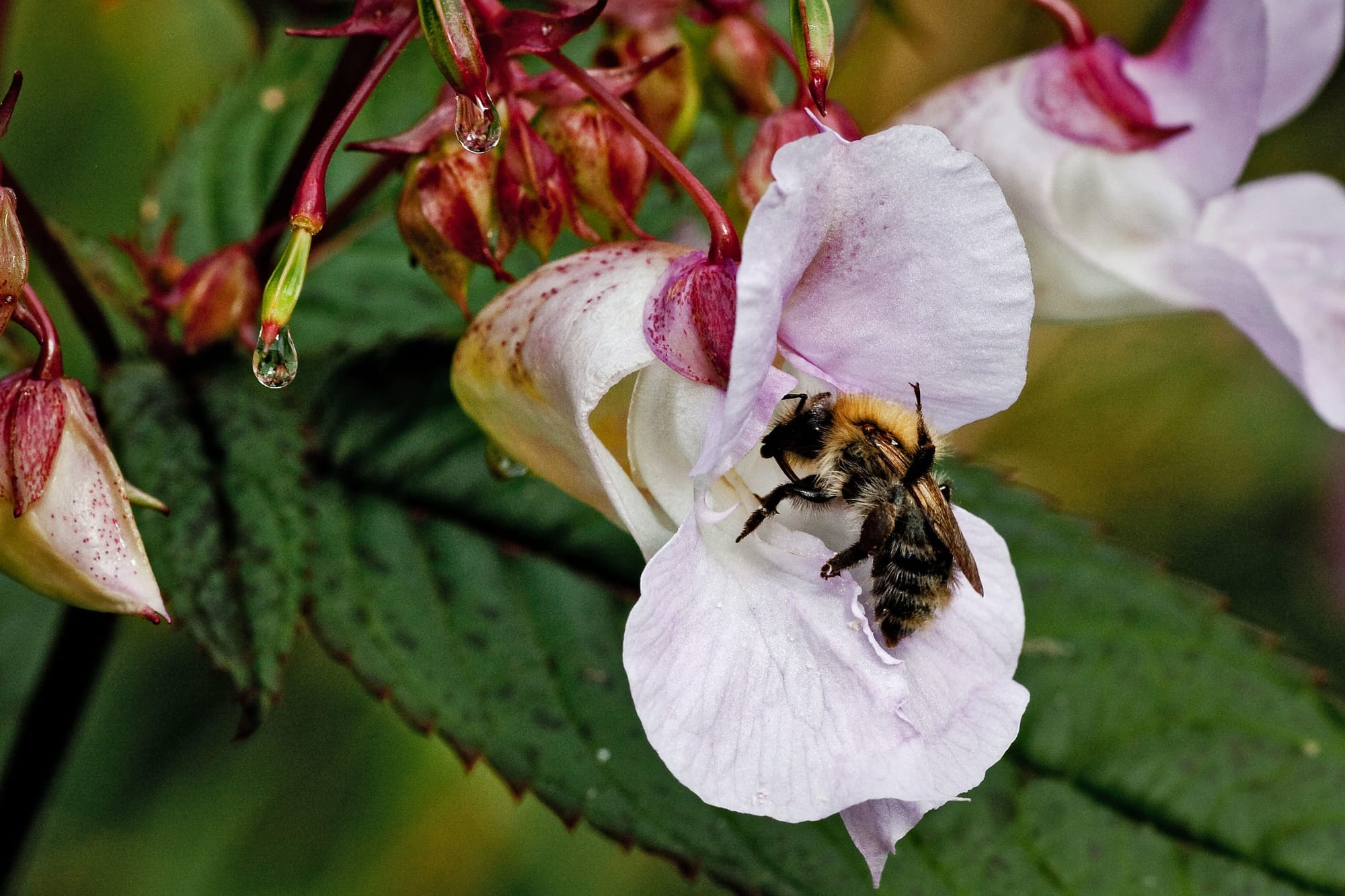
South Wales | A project led by Natural Resources Wales is testing innovative methods to tackle the spread of invasive species in four rivers in south Wales: the Teifi, Tywi, Cleddau and Usk. Specifically, the project is targeting Himalayan balsam, a species which colonises riverbanks and out-competes native plants for space, nutrients and pollinators. It also dies back during winter months, leaving riverbanks bare and prone to erosion. Now, the Centre for Agriculture and Bioscience International is trialling a biological control agent to suppress the balsam. It is testing the use of a rust fungus, which is native to the Himalayas and infects the stem and leaves of the balsam, but does not negatively affect any native species. The project will monitor the development of the fungus at a series of restricted trial sites over the course of five years to determine whether the method can be used more extensively along the rivers.
Lincolnshire | Plans to transform a former golf course into a nature reserve on the Lincolnshire coast have been approved. The National Trust purchased the 30-hectare area between Sutton on Sea and Chapel St Leonards for £800,000, and work is due to be completed in 2025. Notably, the coastal area lies under the path of the Atlantic Flyway, a globally significant migration route for birds. Work undertaken by the Trust will create a mosaic landscape of open water, islands, grassland and dunes, with reedbeds and ponds designed to encourage migratory birds to settle. A visitor centre is also planned for the northern tip of the reserve, and has been designed to run carbon-neutrally. The BBC reported the news.
Elsewhere:
- Natural England has launched a licensing scheme in Hertfordshire to conserve local populations of great crested newts. Meanwhile, plans have been submitted to create two ponds for newts in Nidderdale, reports the BBC.
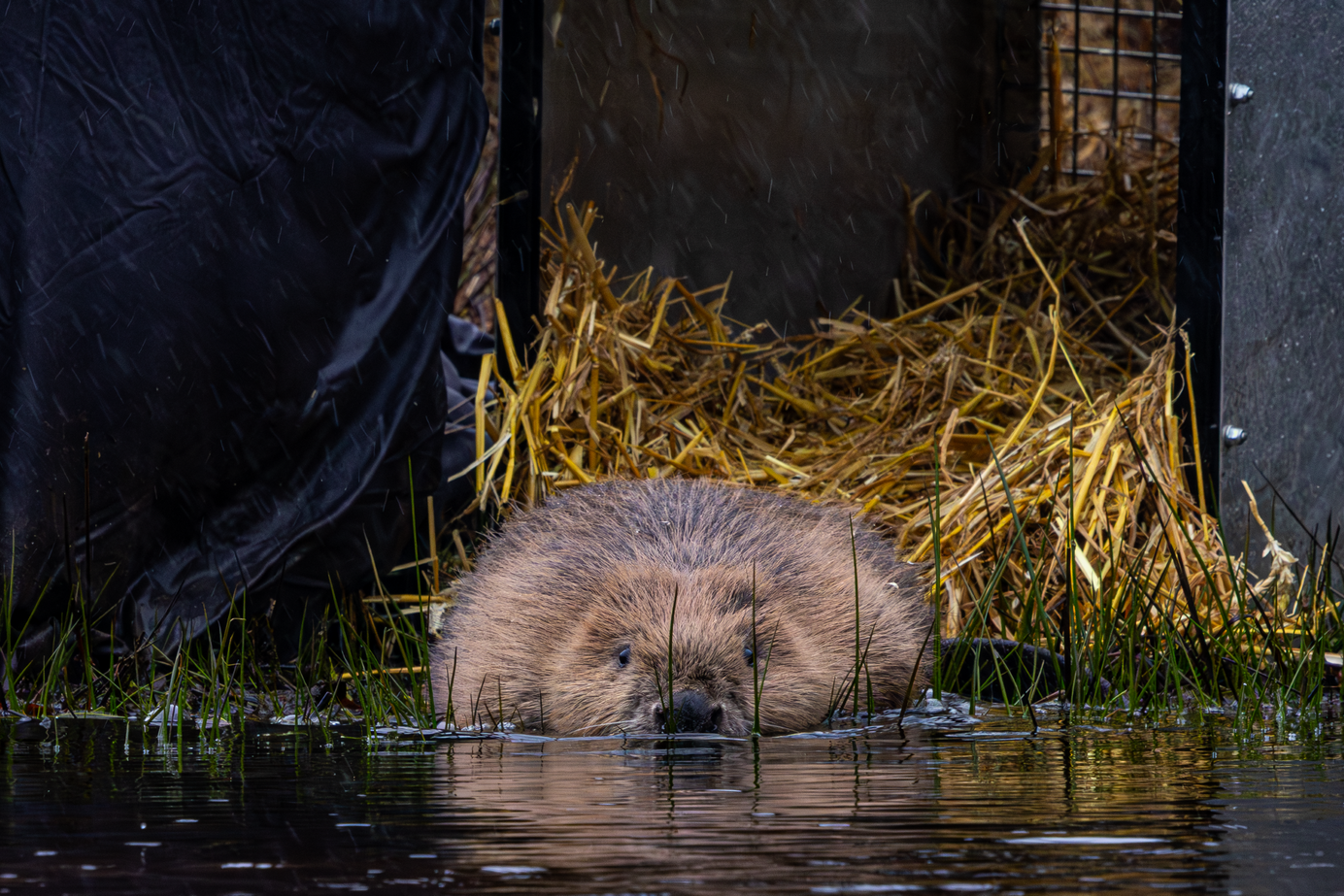
- Beavers have returned to Lincolnshire after being absent for four centuries, with two individuals released at a rewilding project, reports the BBC. Elsewhere, Forestry and Land Scotland have reinforced beaver populations in Knapdale and Tayside, and two orphaned beavers have been given a home in a rewilding enclosure in Devon.
- Natural Resources Wales is starting work to remove scrub from coastal sand dunes in Carmarthenshire to restore the specialist habitat for wildlife.
- The Eden River Trust has completed a river restoration project on a traditional farm in Cumbria, re-wiggling a straightened drain and reconnecting it with a floodplain.
- Campaigners are urging Amazon to save a 200-year-old oak tree as development work begins in East Yorkshire on a giant distribution centre, reports the Hull Daily Mail.
- The National Trust has removed a section of sea wall at Northey Island in Essex to allow more space for seawater to revive the saltmarsh, reports the Independent.
- The Scottish government is deciding whether to approve a wind farm power link which would require felling 50 hectares of trees in Dumfries and Galloway, reports the BBC.
- An independent report examining an investigation by the Environment Agency into the pollution of a Windermere tributary has found a series of errors, reports the Guardian.
- Residents of Torquay in Devon have branded the felling of 40 iconic palm trees as ‘pure vandalism’. The Guardian and the Telegraph reported the news.
Reports
Dartmoor | Defra has published its much-anticipated independent review of protected site management on Dartmoor. The review states that Dartmoor ‘cannot either stand still or retreat into its past’, and instead offers recommendations on how improved land management can balance environmental targets with food production, public access and heritage. The report acknowledges that Dartmoor is a complex landscape with deep-rooted issues – but recommends working with all stakeholders ‘as equals’ to deliver a ‘series of small changes’ with cumulative impact. Among these changes is the ‘absolutely top priority’ of improving hydrology and rewetting blanket bogs – a statement welcomed by conservationists. It also recommends tackling the spread of Molinia (purple moor grass) through increased cattle grazing, and investment in expanding wood pasture. Guy Shrubsole, who summarised his takeaways on Twitter, said the ‘less good bits’ included being ‘too polite’ about the impacts of overgrazing by sheep, and being too supportive of moorland burning. Natural England welcomed the review, saying it was clear the body must improve its communication with farmers.
Migration | Defra and the JNCC have published a major report examining the impact of climate change on migratory species and their ability to provide ecosystem services. Launched at COP28, the report finds that climate change is impacting both the habitats that migratory species rely on, and the phenomenon of migration itself. The authors stress that migratory species are essential to well-functioning ecosystems, and therefore their conservation is a vital part of solutions to both the biodiversity and climate crises. For example, the migration of bird, bat and insect species is key to pollination, seed dispersal, and pest control, while a wide variety of migrating species – including whales, elephants and bison – contribute toward carbon capture. The report includes a list of recommendations to policymakers, including establishing effective networks of protected areas, fostering international cooperation for cross-border species, and adopting integrated conservation approaches to make use of new technologies.
Land | Research commissioned by the Scottish government has found that the recent flood of green investment into Scottish land ownership could deepen existing divides between landowners and rural communities if policies fail to keep up. The report, written by the James Hutton Institute, investigated rural communities with major investment into green projects such as rewilding or tree planting. Overall, farmers and gamekeepers felt most impacted, through loss of employment – although the study also found benefits such as green jobs, training, and rural re-investment. Lead researcher, Dr Annie McKee, said that a standout feature of the research was the ‘significant economic power and investment potential held by new players’, and the potential for market forces to drive land use change faster than policies were able to achieve a ‘just transition’. The report stresses that green land investors and owners should include community voices, and ensure transparency in their management plans and objectives. The Herald and the Ferret covered the research.
Science
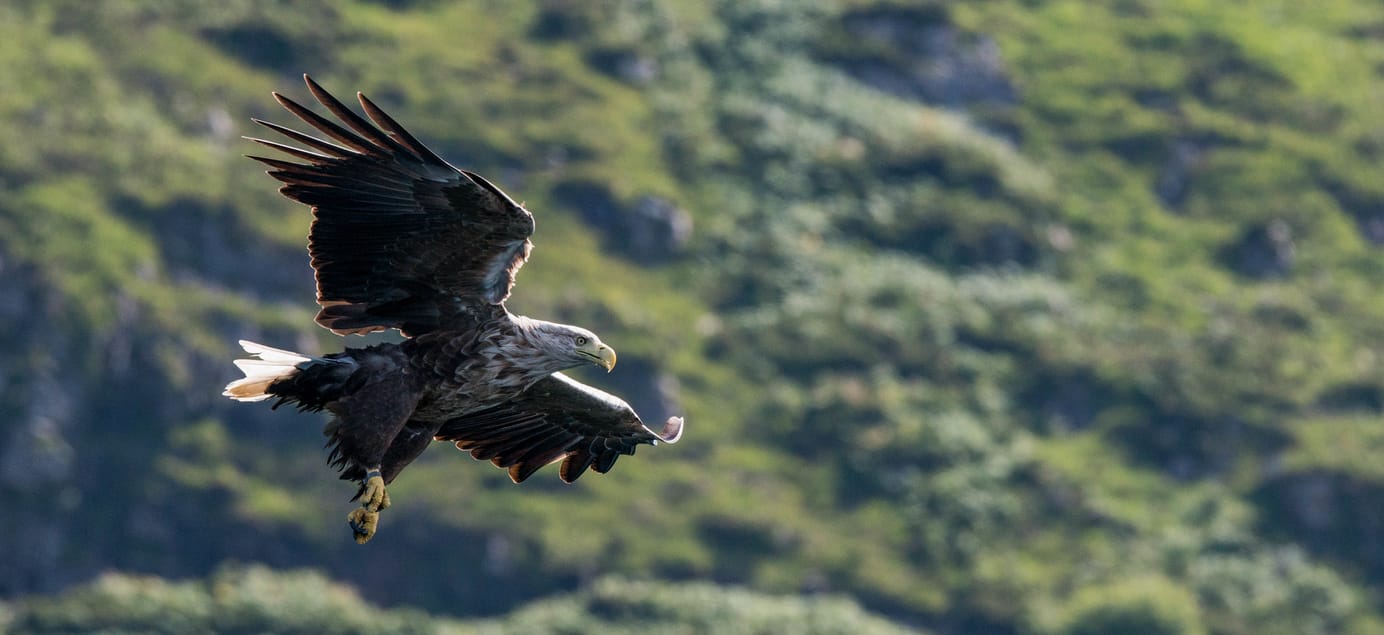
Sea Eagles | A twenty-year study has revealed that lamb is no longer a major food source for white-tailed eagles in Scotland. Researchers measured the eagles’ diets during breeding seasons, analysing over 11,000 food items from 92 different nest territories. They found that the food items consisted mostly of birds (67%), along with mammals (27%) and fish (6%). Notably, the diet composition changed over time: lambs were frequently preyed upon shortly after the reintroduction of sea eagles, but by 2017, lamb only made up a significant diet portion (30% or more) in five of the 58 territories sampled. It is thought that the new generations of eagles are breeding in areas where natural prey is more readily available. Duncan Orr-Ewing of the RSPB said the study would be ‘invaluable’ for informing the next management scheme, due next year, and he hoped that the results would provide reassurance to farmers and crofters. The Times and the Herald covered the research, and the RSPB summarised the findings on Twitter.
Bats | The historic decline of a rare British bat is linked to the felling of trees for colonial shipbuilding, according to a study in the Journal of Applied Ecology. Researchers from the University of Exeter and the Bat Conservation Trust found that Britain’s populations of Western barbastelle bat have dropped by 99%, starting around 500 years ago in the early colonial period. They analysed the DNA of modern-day bats to pinpoint a ‘signature’ of the species’ past, including periods of population decline marked by more inbreeding and less genetic diversity. Dr Orly Razgour, of the University of Exeter, said that the bats ‘usually roost in mature oak and beech trees’, so benefit from areas of substantial woodland cover. She added that the decline – triggered by the loss of woodland for timber – had continued since colonial times, and stressed the importance of protecting existing woodland. The Guardian covered the research.
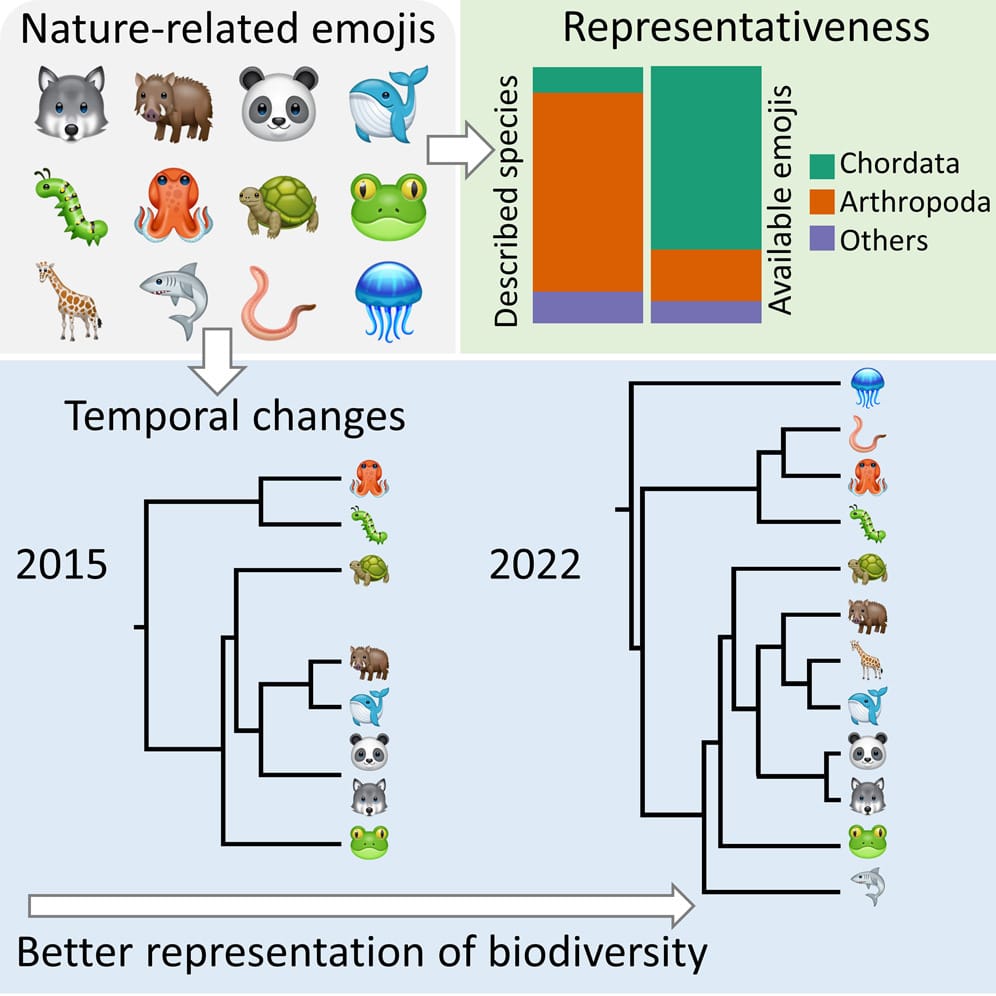
Emojis | A paper in iScience explores the extent – and limitations – of biodiversity communication through the digital ‘emoji tree of life’. Researchers quantified the taxonomic range of 112 available nature-related emojis: they found that current emojis encompass a broad range of animal species (92), but plants, fungi and microorganisms are underrepresented, with 18 emojis between them. Within animals, vertebrates are significantly overrepresented, while arthropods are overlooked. The taxa represented by emojis did double between 2015 and 2022, but the authors argue that further expansion would give the public a better idea of how broad biodiversity really is. ‘Adding 20 to 30 more emojis to represent missing but pivotal organisms will be nearly costless,’ said co-author Stefano Mammola. The Guardian covered the research.
Driftwood
Otter | For Emergence Magazine, author and professor Charles Foster writes a quirky, melancholy story charting the life of an otter in a West Country river. It describes the irreversible damage that humans have wreaked upon the otter’s home and its previous residents. ‘The farmers’ balance sheets had transformed the ecology and psychology of this otter family’, Foster writes – but one young otter survives in spite of the challenges. The story offers a sensory insight into the otter’s world, but always with one self-aware eye on the dangers of anthropomorphism: ‘He no longer wanted to be an otter at all. Or, rather, he did not want to be what otters had become. His decision to abandon modern otterdom was really an affirmation of his belief in true otterdom.’ The story is accompanied by Jackie Morris’ beautiful illustrations.
Energy | A feature in the Times spotlights Athelhampton Estate in Dorset: the UK’s first stately home to become net-zero. The house itself is one of England’s finest surviving examples of Tudor architecture, surrounded by registered park and woodlands. What appealed less to the owner, economist-turned-novelist Giles Keating, was the heating bill, which racked up a carbon footprint of around 100 tonnes a year. To decarbonise his mansion, Keating had to work with the surrounding estate. Now, 100 kilowatts of solar panels are positioned in a water meadow, designed so that sheep can still graze safely. Underneath are ground-source heat pumps, with water in the meadow helping to replenish the heat. For when the British sun disappears, Keating worked with Tesla to set up an installation of Powerwall batteries, strategically positioned behind an ancient yew tree. The renovations mean the grade I listed house is better preserved than ever before, and boasts an energy bill of £0.
Books | As the end of the year draws nearer, Rewilding Magazine has published a list of 23 books it recommended over the year, along with short reviews. The list includes new books as well as some ‘oldies-but-goodies’, plenty of which are UK-based. Among the well-known offerings are Ben Goldsmith’s God is an Octopus, Isabella Tree’s The Book of Wilding, Guy Shrubsole’s The Lost Rainforests of Britain and Mya-Rose Craig’s Birdgirl. It also includes others you might not have heard of: A Scurry of Squirrels by Highlands-based naturalist Polly Pullar, The Darkness Manifesto by Swedish bat scientist Johan Eklöf, and Butterfly Safari by UK-based photographer Andrew Fusek Peters. Look no further for wild-themed Christmas gift inspiration. And sign up to their excellent newsletter while you are at it.
Further reading:
- A BBC feature takes a look at the weird materials used to create sustainable furniture.
- A blog by the Natural History Museum delves into the possibilities of using big data to study nature at a microscopic level.
- Read about why Chris Packham is not ‘the next Attenborough’, but rather his own brand of ‘environmental institution’, in this Guardian feature.
- A feature in the Guardian explains the scientific process of altering DNA to attempt to save Scottish wildcats: like trying to ‘unscramble an egg’.
- The Woodland Trust has set out its priorities ahead of a woodland creation summit held by the Scottish government, stressing it is ‘not all about planting’.
- For the Guardian, biologist-turned-filmmaker Tom Mustill explores the potential reasons behind the recent spate of mass whale strandings.
- Also in the Guardian, reporter Helen Sullivan pens an ode to the robin, touching on its long-lasting inspiration for poets.
- A blog by NatureScot features a project by the Royal Botanic Garden Edinburgh to boost the numbers and distribution of ten threatened native plants.
- In the Ecologist, an article contemplates the power of song to celebrate and commemorate specific species, such as the disappearing ash tree.
- The ecologist who inspired the world to plant a trillion trees is now begging environmental ministers at COP28 to stop planting so many trees. Read about it in WIRED.
- A Senedd guest article by two researchers at Swansea University reviews why Welsh peatlands are so important, and what can be done to protect them.
- An article in iPaper spotlights CampWild, a ‘booking platform for wild spaces’ in the UK which was launched this year. However, some outdoor enthusiasts have criticised the platform on Twitter, arguing it is doing the exact opposite of opening access to nature.
Happy days
Moss | After a 13 year wait, scientists from NatureScot and the Royal Botanic Garden Edinburgh have rediscovered an extremely rare moss on the outskirts of the Scottish capital. Round-leaved bryum lives where other species cannot – in the mud by reservoirs and lochans when water levels are temporarily low – and it has only been confirmed living in one UK site since 1987, at Threipmuir reservoir in the Pentland Hills. Threipmuir was artificially stabilised in 2010, removing the plant’s preferred habitat conditions, and scientists feared the species had disappeared entirely. Since its rediscovery, bryologists have transferred specimens to the greenhouses at RBGE and plan to build up a population that can be translocated to new sites.
Subscribe to our newsletter
Members receive our premium weekly digest of nature news from across Britain.
Comments
Sign in or become a Inkcap Journal member to join the conversation.
Just enter your email below to get a log in link.