Allotment Controversy & Urban Flora
The latest news on nature and conservation in Britain.
National news
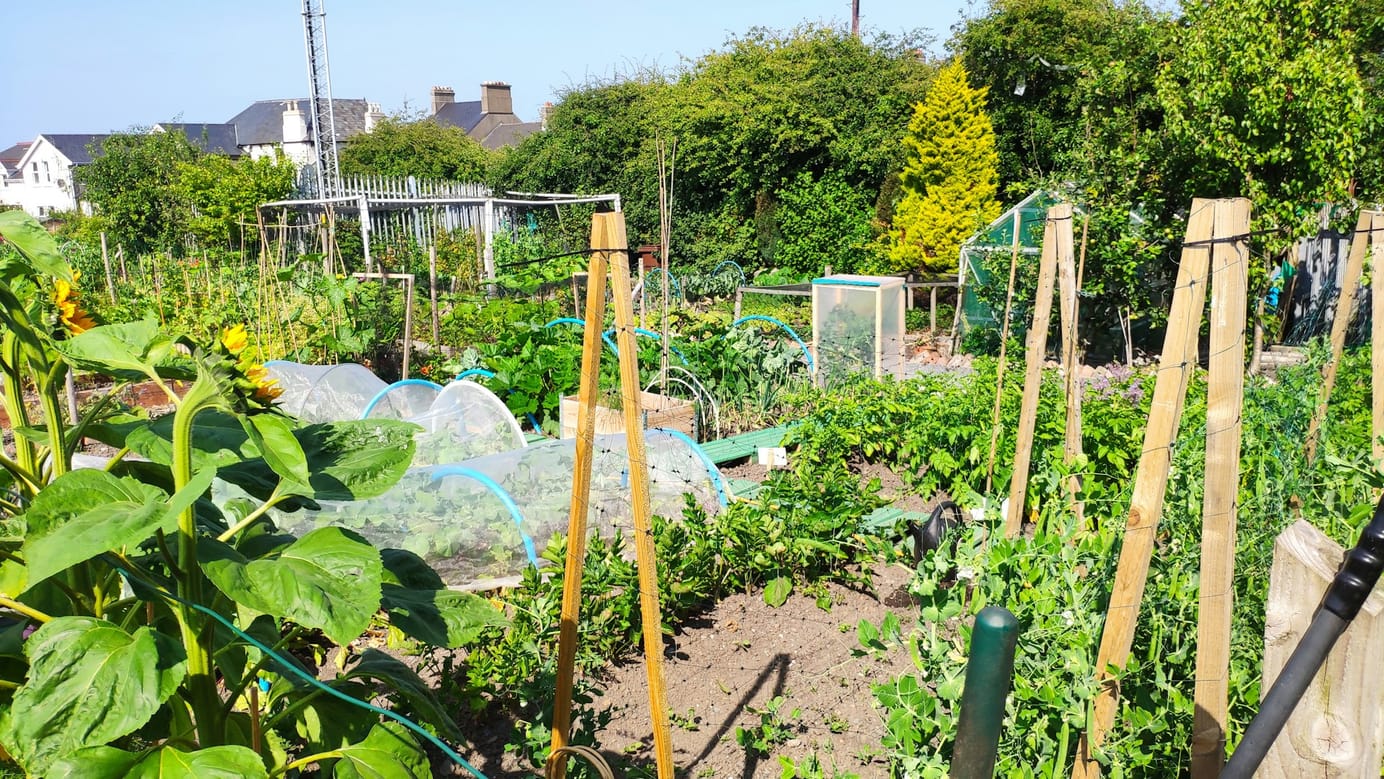
Allotments | Labour has come under fire this week, with Angela Rayner reported to have approved the sale of eight allotment sites across England. According to the Telegraph, the deputy prime minister gave councils ‘flexibility’ to sell these assets to fund day-to-day spending. Politicians and the public responded angrily to the news. Writing in the Telegraph, Jeremy Corbyn said that allotments have always been under threat from developers and now ‘that threat seems to have public backing’. The National Allotment Society, however, was less perturbed by the reports. A press release explained that there had been no change to legal protections, and that due process had been followed for each sale to date. Further reporting by the Derbyshire Times also painted a more nuanced picture of the sale of allotments in Bolsover, and an article in the Times quoted Labour sources seeking to quell the panic among allotment fans. The government eventually issued its own press release, clarifying the circumstances of the sales.
Lynx | The possibility of lynx reintroduction took a step forward this week, thanks to two new studies. One, a peer-reviewed paper in the Journal of Environmental Management, found that there was suitable habitat for the predator in Northumberland, Galloway and Aberdeenshire, even without environmental restoration. Up to 60 individuals could survive in Kielder Forest, and up to 240 in Aberdeenshire. The second study was a survey of people within the targeted area of Northumberland, run by the Missing Lynx Project. The results were overwhelmingly positive, with 72% in favour of reintroduction – including some sheep farmers. Discussions are now underway with those in the region to discuss how reintroduction could be managed if plans progress further. The news was covered by the Guardian, the BBC and the Northumberland Gazette.
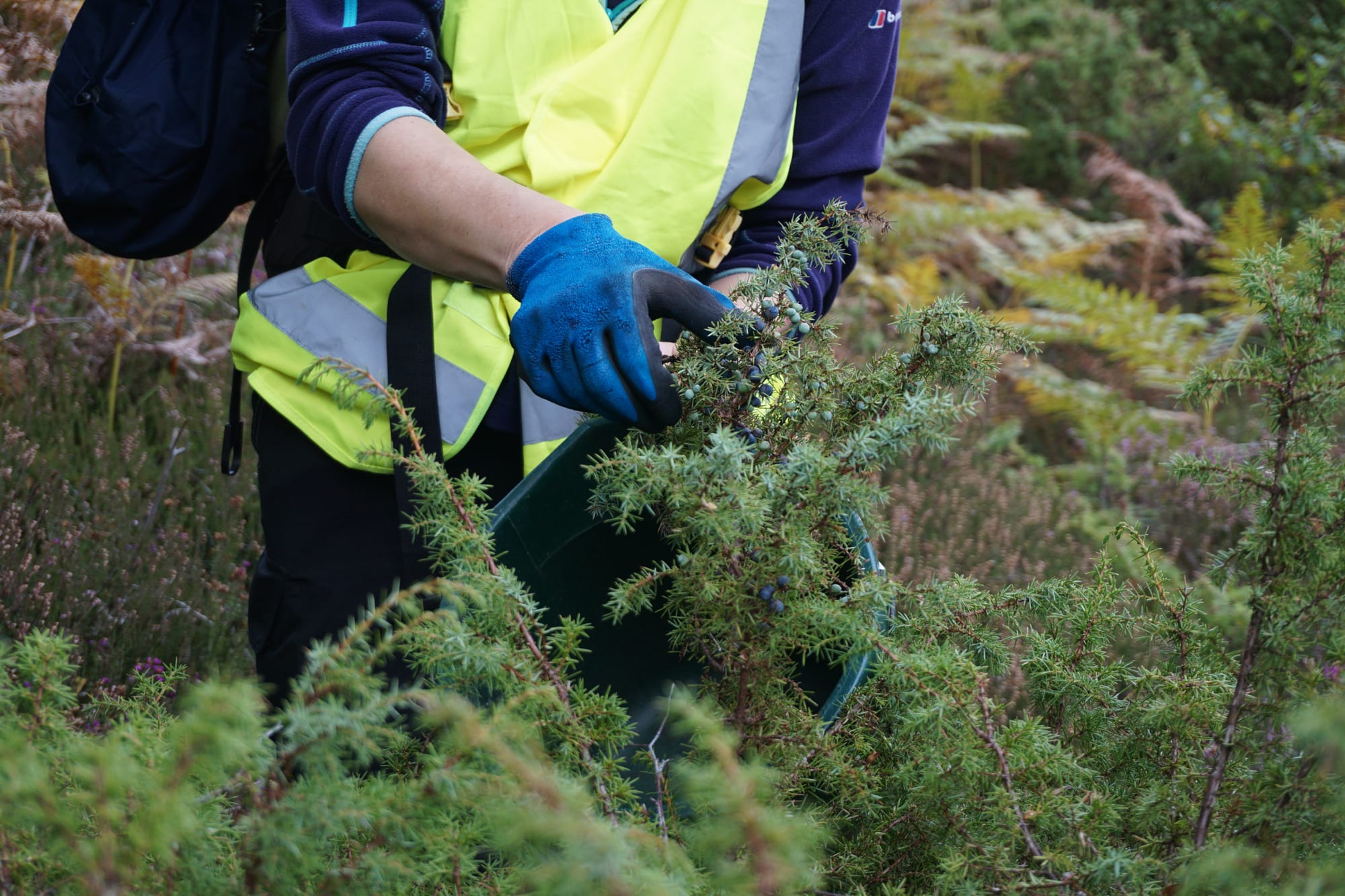
Genes | A juniper and silver birch forest in Scotland has been classified as a Gene Conservation Unit – a special European designation – recognising the unique circumstances in which the trees are growing. The woodlands are part of the 10,000-acre estate run by Trees for Life in Dundreggan, near Loch Ness. The designation aims to protect the genetic diversity of trees across the continent, and will create opportunities for further scientific studies. ‘The unusually wet location for juniper, and the extreme westerly location of silver birch, have contributed to making their populations at Dundreggan very special,’ said Gwen Raes, the estate manager. ‘Through this designation and further management, we aim to ensure these unique woodlands secure the extra care and attention they need, so they are protected and enhanced going forwards.’ The BBC covered the story.
In other news:
- Glasgow and Edinburgh may not reach net zero by 2030, reports the Herald.
- The government has allocated £150 million in farming grants, which will go towards sustainable food production and environmental improvements.
- Reform UK is calling on the Welsh government to end foreign aid spending, in response to a £4 million tree-planting project in Uganda, reports Wrexham.com.
Across the country
St Kilda | The first drone census of St Kilda has revealed that the remote archipelago now has the world’s largest population of gannets. This was a title it held through much of the twentieth century: however, a notable increase in the colony at Bass Rock knocked it from the top spot in 2014. Avian flu, however, led to a 25-30% decrease in the Bass Rock population, while the number of gannets on St Kilda remained relatively stable – something which ecologists attribute to the islands’ steep and rugged terrain. The previous census, carried out in 2013, was conducted using images taken from an aeroplane. The drones ensured ‘minimal disturbance’ and ‘high-quality images’, said Craig Nisbet, seabird and marine ranger at St Kilda. The Herald reported the news. Separately, a record-breaking number of Balearic Shearwaters have been recorded off the coast of South Devon this summer, reports BirdGuides.
London | Rewilding charity Citizen Zoo is investigating the potential for white storks to return to London. Since the birds were reintroduced to Sussex in 2016, sightings across the capital have rocketed. The charity is now mapping habitat and working with the University of Brighton to survey public attitudes across London, mimicking a national survey conducted as part of the Sussex project. The results are not foretold: while the national survey found support among the general public, a small number of conservationists and ecologists expressed concern about bringing back the birds. Elliot Newton, co-founder of Citizen Zoo, believes that storks belong in the city: ‘This is a bird that can actually thrive in urban landscapes, on chimneys, on pylons, and are associated with thriving in urban settings,’ he said. The BBC, the Guardian and the Telegraph covered the news.
 Sophie Yeo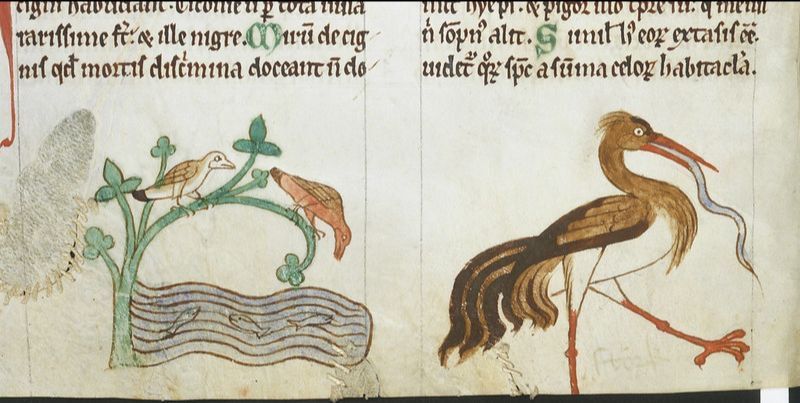
Isle of Wight | Plans to create an International School of Rewilding on the Isle of Wight have been backed by councillors, reports the BBC. The proposal comes from the Wildheart Trust, which already runs the Wildheart Animal Sanctuary on the island. The new site would include a 140-hectare rewilded area, including inland grazing marshes, with the possibility of introducing megaherbivores like elk or water buffalo. It would also develop a ‘year-round economy’, including investment partnerships with universities. It would mean ‘creating open areas of water, allowing migratory birds to come here, allowing overwintering birds and increasing the amount of wildlife we already have,’ said Lawrence Bates, who leads the Trust. A business case is now being put together for the School.
Elsewhere:
- Several rare species have returned to a nature reserve near Crewe, after Natural England leased the fields from the Church Commissioners in 2023, reports the BBC.
- Cornwall Council is considering selling off some of its farming estate to pay off debts, reports CornwallLive.
- Defra has awarded £750,000 to a nature recovery project near Hadrian’s Wall, reports the BBC.
- The Commoners who manage New Forest land have asked the government to declare them a ‘national minority’, reports the Times.
- A million seeds will be collected off the North Wales coast as part of a seagrass restoration project, reports Nation.Cymru.
- The Southern Small White butterfly has reached Britain for the first time, reports BirdGuides.
- North Northamptonshire Council has launched a public consultation on managing cemeteries in a more environmentally friendly way, reports the BBC.
- The Yorkshire Post looks at the efforts underway to return oysters to the Humber Estuary.
- The disappearance of two pine martens in Cumbria is being treated as suspicious, reports the BBC.
- Life has returned to Crowdy Marsh on Bodmin Moor, thanks to a peatland restoration project by South West Water, reports CornwallLive.
- At Invercauld Estate in the Cairngorms, more than 2,000 acres of native trees have naturally regenerated, reports the Scotsman.
- Around 100 water voles will be released at Wild Ennerdale in the Lake District this month, reports the BBC.
- Razorbills have been attempting to breed on Coquet Island since 2021; in July, two chicks fledged successfully for the first time. The BBC covered the news.
- Archaeologists have discovered the remains of an aurochs in a cave in the Yorkshire Dales, reports the BBC.
- A tourist has discovered a species of jellyfish, previously believed extinct, in the rockpools of South Uist. The news was revealed in British Wildlife and covered by the Guardian.
- AI bioacoustic monitoring of birdsong is being rolled out across Shropshire, reports the BBC.
- Southern Water has applied for permission to draw water from the Test, a rare chalk stream, reports the Guardian.
Reports
Coasts | The Conservative Environment Network has outlined a ‘patriotic and pragmatic mission’ to revive Britain’s coastal areas through nature restoration. Coastal towns are environmentally and economically vulnerable, according to the Making Waves report: nature-based solutions can help to address both challenges. The group calls for the strengthening of marine protections, and for government money to be redirected away from hard infrastructure like seawalls and towards natural defences like saltmarsh and kelp forests. It also calls for the publication of the long-awaited blue carbon codes, which will help unlock further private finance, and for more streamlined regulations for marine restoration businesses.
Hunting | In the UK, it is legal to hunt a number of waterbirds that are protected under the Agreement on the Conservation of African-Eurasian Migratory Waterbirds, including several species of goose, goldeneye, pochard, and tufted duck. This means that the UK must ensure that any use of these species is sustainable. However, there is limited data on the number of these birds killed – and the data that exists is likely biased, as it is submitted voluntarily by hunters. This makes sustainability difficult to assess. A report by the JNCC explores the data gaps, and makes recommendations on how to improve the sustainability of the harvest, including the development of a national reporting scheme, to be implemented voluntarily at first, and made mandatory if reporting does not increase within a few years.
BNG | In May, the government launched a consultation proposing reduced Biodiversity Net Gain (BNG) requirements for small- and medium-sized building developments in England (read more about it in the Inkcap Journal digest from that week). The suggestion was met with horror from conservationists at the time; now, new analysis from ecological consultants Arbtech suggests it could collapse the entire system through lack of demand, drying up the cash flow associated with smaller sites. ‘Biodiversity Net Gain has the potential to deliver something truly world-leading, protecting nearly 100,000 hectares of land within a single Parliament,’ said Robert Oates, CEO of Arbtech. ‘Scrapping it for small sites will unravel the entire policy.’ InsideEcology and Edie covered the story. Separately, the RSPB published a blog on what the government’s changes to the Planning Bill mean for nature.
Science
Flora | The flora in Scottish cities is surprisingly species-rich – richer, in fact, than the surrounding rural areas. Analysis of data collected by the Botanical Society of Britain and Ireland and the Botanical Society of Scotland reveals that there are at least 1,141 species of vascular plant in Glasgow and 1,226 in Edinburgh. However, more than 50% of these were alien species: these were particularly common on walls and around buildings, with the high pH of these environments possibly proving favourable to their growth. The diversity of habitats in the city contrasts with the relative paucity of the rural Scottish environment, which is often dominated by forestry plantations, or maintained as species-poor moorland for sheep or ‘sport’. The study was published in Plant Ecology & Diversity.
Games | It is not often that radioactive cats feature in academic studies. This, however, was one idea proposed during an outreach project for a tree planting-based videogame. The game is being designed as part of the Future of UK Treescapes project; the workshops took place with late primary and early secondary schoolchildren in the North of England. The sessions revealed the unique perspectives of children on the natural world, including a game narrative focused on non-human life revolting against humans, in contrast to government narratives that foreground human needs. The challenge now, the researchers write, is to design the game in a way that also encourages the children to stop playing and engage with real-world nature. The study was published in Global Studies of Childhood.
Processes | For more than half a century, scientists have been calling for a focus on ecological processes, rather than species preservation, when it comes to sustaining biodiversity. Yet those advocating for this approach face ‘blank stares’ from policymakers, even today. A perspective paper in PNAS renews the call for a process-focused approach, highlighting the importance of evolution, movement, interactions and genetics in maintaining resilient ecosystems. An appropriate analogy might be the financial market, write the authors: ‘Economists do not generally advocate saving a particular product, or brand, or company. They focus on managing and facilitating processes of supply, demand, productivity, and innovation, much like we are advocating.’
Driftwood
Farming | Andy Cato used to be one half of the 1990s dance duo Groove Armada. Now, he’s better known as the ‘nature bloke’ on Clarkson’s Farm. His short appearance in season three of the programme was an opportunity to summarise his 20-year passion for regenerative farming. Cato bought a farm in France in the late noughties, which ultimately led him to found Wildfarmed: a company that seeks to improve how cereal crops are grown. A short list of requirements includes keeping the soil covered with cover crops at all times and integrating animals wherever possible. Loaves of Wildfarmed bread are now available at Waitrose, Ocado, Tesco and even Greggs. Now Cato is aiming to revitalise the government’s approach to regenerative farming more broadly. Read more about his mission in Prospect.
Antarctic | In January, Dr Hugh Carter of the Natural History Museum undertook a six-week long trip through the Antarctic, visiting the same sites that explorers including Shackleton and Scott visited more than a century ago. As curator of marine invertebrates, Carter’s focus was on sea urchins, reports the Guardian. By collecting modern-day urchins, and comparing them to those collected by the explorers of old, he planned to study the impacts of ocean acidification. Unfortunately, preliminary findings suggest that acidification is already affecting marine life on the remote continent: the shells of the recent samples are thinner and more fragile than the historical samples, thanks to the calcium carbonate dissolving in the acidifying water. ‘There are confounding variables of course, but the fact the new ones are thinner is concerning,’ said Carter.
Books | The shortlists for the 2025 Wainwright Prizes have been announced. The nature writing award has expanded from three to six shortlists this year, with a greater emphasis on children’s literature and illustration. The lists feature bestsellers, including Robert Macfarlane’s Is A River Alive? and Chloe Dalton’s Raising Hare, alongside titles focusing on oceans, land ownership, evolution, hedges, elephants, gardens and climate change. The poet Benjamin Zephaniah, who died in 2023, has been posthumously nominated for his illustrated children’s book, Leave the Trees, Please. You can see the full lists here, and read more about the shortlists in the Bookseller.
Further reading:
- Wildlife needs darkness in cities just as much as green space, writes Nick Dunn, professor of urban design, in the Conversation.
- In Aeon, author Helen Jukes examines what ‘nest’ really means in a changing world.
- In light of continuing questions on the veracity of The Salt Path, an article in the Guardian asks what the scandal means for the nature memoir.
- The Cornish Seaweed Company is the subject of a profile in the Times.
- Following the allotments furore this week, an editorial in the Times champions the public’s right to grow.
- Did you know that northeast London has been dubbed the ‘Cucumber capital of Britain’? Find out more about London’s farming scene in this BBC article.
- Meanwhile, an article in the Times looks at the growing rewilding of London.
- A feature in Nature looks at the controversy over Colossal’s recent claim to have de-extincted the dire wolf.
- The BBC looks at efforts by farmers to diversify their incomes, including glamping and a pick-your-own flower business.
- Londoners love matcha – but what impact is the boom having on the artisanal Japanese farmers that produce it? Atmos explores the issue.
Happy days
Dancing | As scientific papers go, graphics don't get much better than this: an illustration of the ten most common dance moves performed by cockatoos.
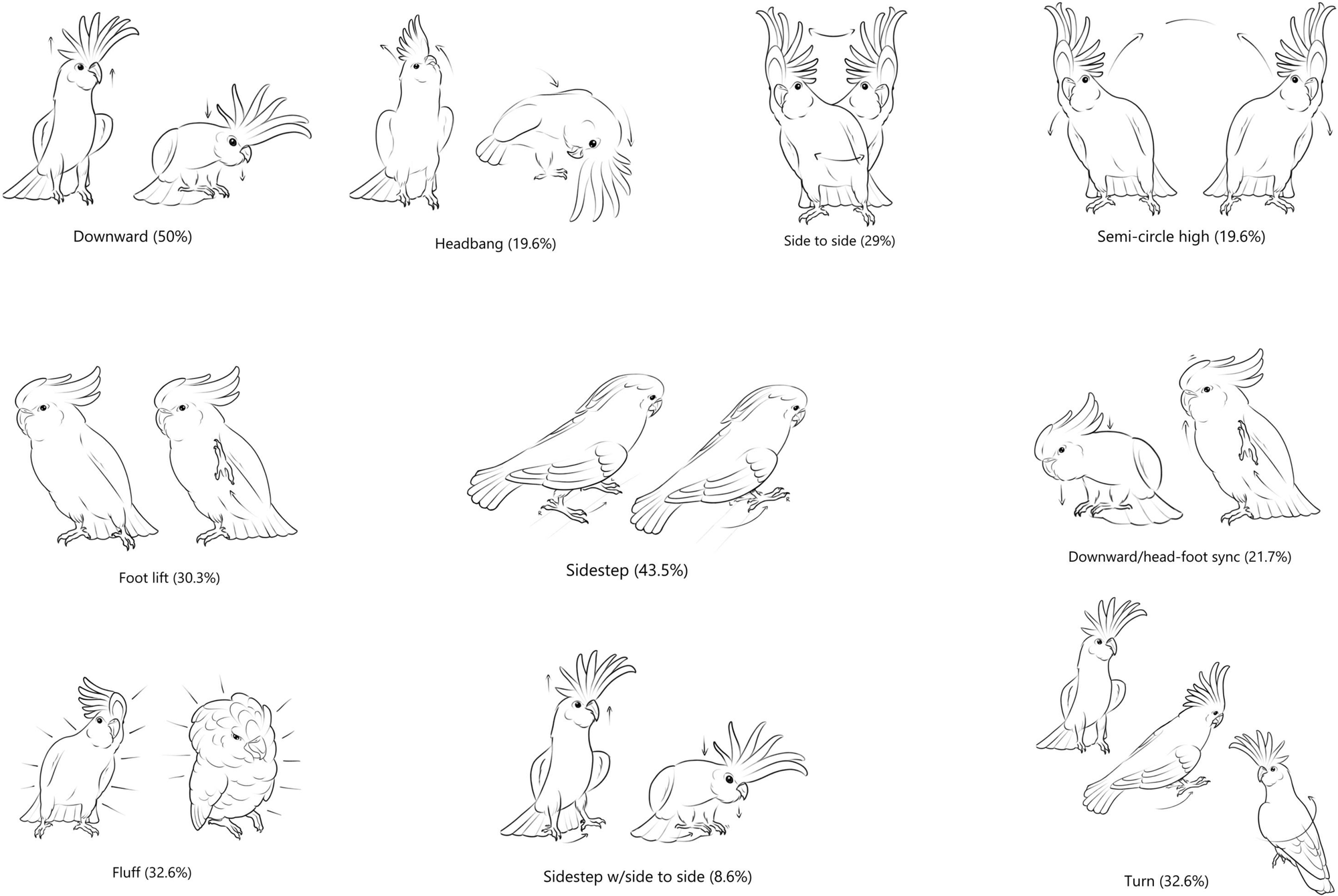
A study by Australian scientists suggests that the birds are enthusiastic dancers, with at least 30 different moves in their repertoire, including headbanging and body rolls. To date, only humans and parrots have shown evidence of being able to spontaneously dance to music. What motivates these birds is unclear, although it may be an extension of their natural courtship behaviour, extended towards their human keepers while in captivity. Read more about it in the Times.
Subscribe to our newsletter
Members receive our premium weekly digest of nature news from across Britain.
Comments
Sign in or become a Inkcap Journal member to join the conversation.
Just enter your email below to get a log in link.