Ancient Woodland & Hen Harriers
The latest news on nature and conservation in Britain.
National news
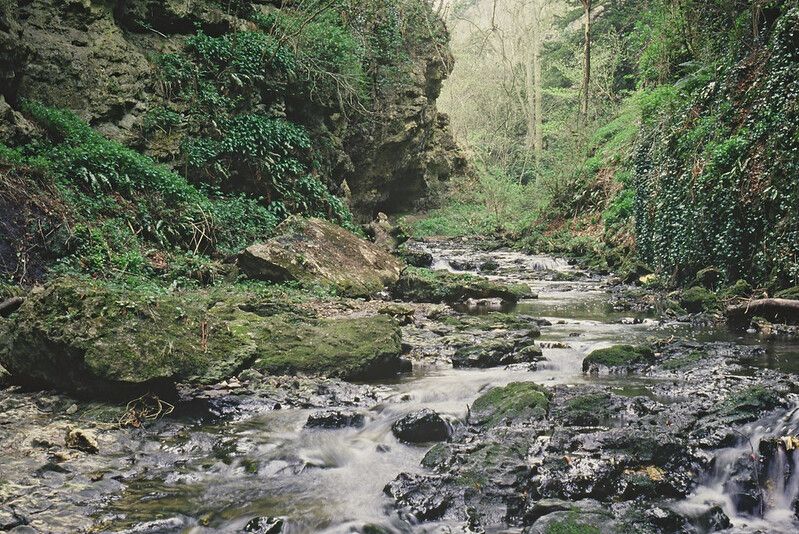
Woodland | The Scottish government has published a policy banning developments that would damage or destroy ancient woodland. The Woodland Trust celebrated a change of wording from previous drafts of the document, which recommended that woodland “should not” be lost to development. However, the policy – which was adopted on Monday – now states that such developments “will not” be supported, where they result in any loss of ancient woodlands, ancient and veteran trees, or have adverse impact on their condition. Policy advocate for the Trust, Suzie Saunders, said: “Precision of language means everything in policy like this.” She added that the switch from “should not” to “will not” could be the most important change in ancient woodland protection for years. In other news, the Welsh government has responded to its Roads Review by scrapping a large number of major road-building projects. The review recommended axing 42 out of 59 projects, including the controversial ‘Red Route’ in Flintshire, which would have cut through an ancient woodland. The Wildlife Trusts welcomed the news, saying the stringent new conditions will help protect vital habitats, as well as reducing carbon emissions. The BBC, the Guardian, Forbes and the Financial Times covered the news.
Water | The Times has launched ‘Clean It Up’, a campaign for cleaner waterways in Britain. On the back of a year awash with news of polluted rivers and beaches, the campaign will examine the causes behind the issue, look at what is being done to improve it, and demand faster action. Launched on Monday, an introductory article stated that: “Nothing is more basic to human flourishing than clean water [...] The welfare of future generations depends on action taken now.” Since Monday, the Times has published a slew of articles probing the problem. They examine the pollution of the River Wye by chicken farms; private lobbying to weaken the government’s sewage reduction plans; various methods to clean up the UK’s waterways; and lessons that Britain can learn from Europe’s clean water. Defra has responded to the campaign by welcoming “the awareness it will raise”, and highlighting the steps introduced in the Environmental Improvement Plan to improve the entire water system.
Carbon | Natural England has announced funding for six nature projects across England, to trial effective natural solutions for carbon capture and climate change mitigation. The six pioneering projects, stretching from Northumberland to Plymouth, will each operate at a landscape scale of more than 500 hectares and will share £4.3m in funding. They will assess how carbon is captured and stored across various restored habitats, including grassland, forest, wetland and heath. In Derbyshire, a project by the Wildlife Trust to restore Derwent Forest aims to connect the Northern and National Forests to allow species movement in response to climate change. The National Trust is creating a “wetter and wilder landscape” in Exmoor by restoring and protecting coastal woodland, heathland, species-rich grassland and wood pasture. Other projects are taking place on the River Wansbeck in Northumberland, a traditional estate in the Severn Vale, and the wetlands and floodplains of Oxfordshire. The BBC reported the news.
In other news:
- A rise in the number of turtles being stranded on British shores this winter could be a result of storms across the Atlantic, reports the Guardian.
- More than 200 community projects are benefitting from a share of £5m of funding through the Wildlife Trusts’ Nextdoor Nature project. Edie covered the news.
- A government department focusing solely on science, technology and innovation will be “transformative”, according to its new cabinet minister. The BBC reported the news.
- Shooting birds with lead shot will be banned in all EU wetlands, reports the Guardian. Meanwhile, the UK has postponed a decision on the matter until next year.
- Fewer than 1% of unauthorised tree fellings in Scotland result in prosecution, according to an investigation by the Ferret.
- Seals in Scotland have tested positive for avian flu, reports ENDS.
Across the country
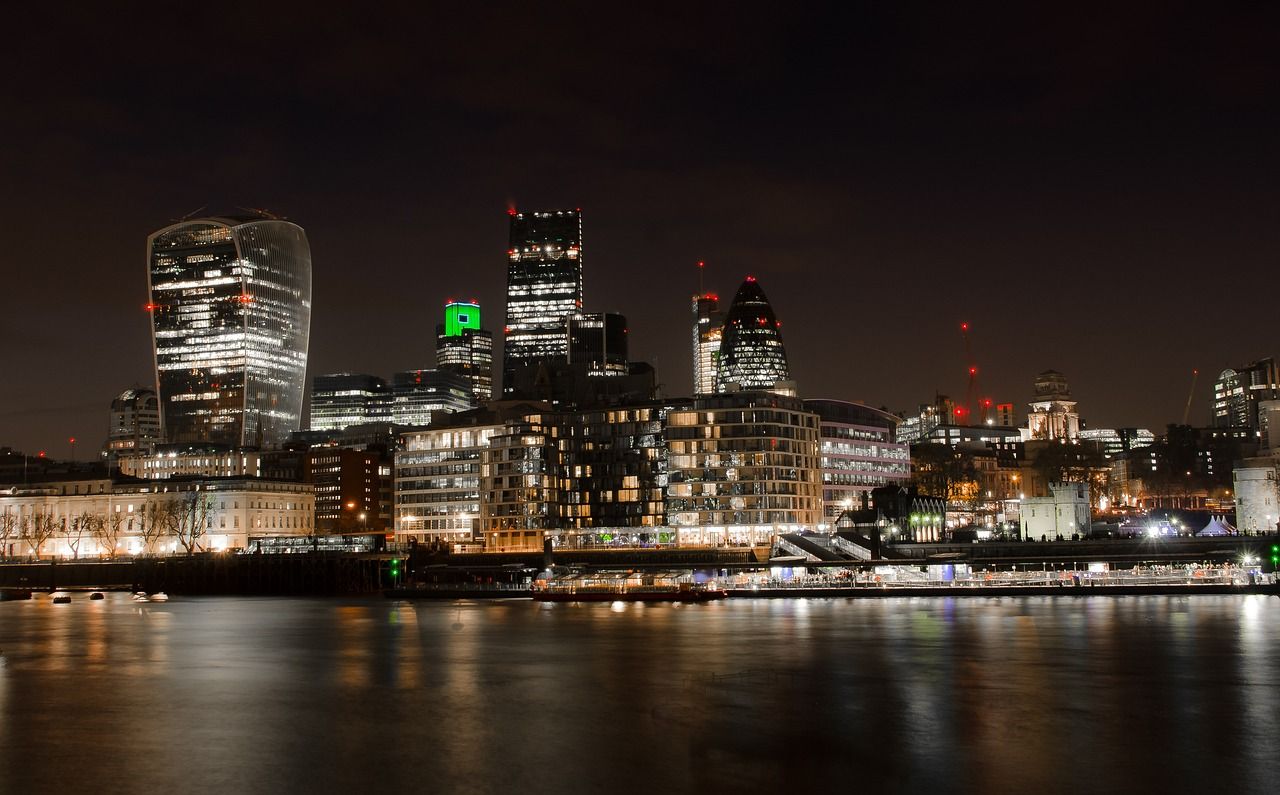
London | The governing body for the City of London has submitted plans that would require property owners to switch off their lights at night in an effort to cut light pollution and save energy. The planning document states that “obtrusive light is a growing problem in urban centres”, where it wastes energy, disturbs wildlife and poses a threat to human health. Under the plans, there would be three types of “brightness zones”, with varying “lighting curfews”: 10pm for residential and heritage districts, 11pm for cultural and tourist areas, and midnight for commercial and transport hubs. Developers would have to agree to the curfew during the planning process, while owners of existing buildings would be asked to follow the rules – although there would be no legal reinforcement. The BBC, the Times and the Guardian covered the news.
Devon | The National Trust has begun planting for its first major community woodland project, near Wembury in Devon. Over the next three years, the Trust – along with the Woodland Trust and Plymouth City Council – will expand the current wood at Wembury from 36 hectares to 120 hectares, comprising more than 90,000 new trees and 2.5 miles of hedgerows and banks. The aim of the project is to create a “lasting legacy”, with a mix of 25 native trees chosen for their hardiness and chance of surviving climate change and diseases. Alongside them, wood pasture, orchards and hedgerows will create homes and corridors for wildlife. The project will form one part of the Plymouth and South Devon Community Forest, which will eventually stretch from the city centre to the edge of Dartmoor, covering 1,900 hectares of forest and woodland habitats. The Guardian and the BBC reported the news.
Bristol | South Gloucestershire Council has introduced a herd of seven goats to the parkland around Bristol Parkway station as part of its conservation of the area. The grazing of the goats helps manage the grassland to encourage the presence of the rare small blue butterfly. The goats are expected to stay until March, when they will be removed as wildflowers begin to emerge. The herd is owned by StreetGoat, a community-led urban farming co-operative, which works closely with local authorities on land maintenance. The aim of the organisation is to connect communities to sustainable food production and regenerative land management. The Bristol Post covered the story.
Elsewhere:
- Conservation work on Chesil Beach in Dorset has resulted in a record number of endangered Little Tern chicks, reports the BBC.
- The Cairngorms Capercaillie Project has published guidance to boost protection for the birds in the upcoming breeding season, reports BirdGuides.
- A scientist has discovered what could be a new species of grass fly in South Bristol, reports the Bristol Post.
- A golden eagle, believed to be part of a project to boost the population in southern Scotland, has been found dead on an estate north of Dumfries, reports the BBC.
- Essex Wildlife Trust is opposing plans for a Lower Thames Crossing, on the grounds of its harmful implications for local wildlife and habitats.
- Thérèse Coffey has confirmed the government will not carry out any further investigation into the mass crustacean die-offs on the northeast coast, reports the BBC.
- After two years of campaigning by environmentalists, Shropshire Council has backed the Climate and Ecology Bill, reports the Shropshire Star.
- A badger sett is causing damage to cliff top roads in Leigh-on-Sea, Essex, but the animals cannot be moved during hibernation season, reports the BBC.
- Nottinghamshire Wildlife Trust has called on the police to help it deal with a wave of “serious and organised” crime at a reserve in Retford, reports the BBC.
- A post by the Environment Agency describes its work to keep rivers in Kent flowing during winter, to the benefit of eels and other aquatic species.
- Campaigners say that orange-coloured water in Whitehaven Harbour is the result of old coal mines, reports the BBC.
- The Freshwater Habitats Trust has added the “earliest ever” sighting of frogspawn in Scotland to its database, found near Wigtownshire in southwest Scotland.
- Environmental campaigners are calling for Prince William to rewild part of his estate, which covers a chunk of Dartmoor National Park, reports Euronews.
- Thousands of woodland flowers have been planted around the University of Worcester to boost biodiversity, reports the BBC.
Reports
Doom | A report by IPPR and Chatham House examines how the historical failure to tackle the climate and ecological crises can create consequences that challenge our ability to confront the root causes. This dynamic is termed a “doom loop”. The report uses the example of whether it is now inevitable that global heating will breach the internationally agreed goal of 1.5°C. The closer the earth gets to 1.5°C, the greater the risk to the climate and environment, and the more extreme transformational change would need to be to realise the Paris goal. Policies must shift beyond incremental change, the report concludes, and be replaced by those that realise system-wide transformation. The Guardian covered the research.
Economy | A discussion paper by the Centre for Thriving Places examines the “shared ingredients” for a wellbeing economy. It looks in detail at the Thriving Places Index; the SEED model (from Carnegie UK), and the Doughnut Economics Model (from Kate Raworth). The paper concludes that all three models hold “an overwhelming degree of agreement” on the ingredients for an equitable and sustainable economy, regardless of the model’s brand or image. All are defined by three main features: the delivery of conditions for people to prosper; fair and equitable delivery of wellbeing; and sustainable delivery, so the planet and future generations can also thrive. The authors conclude: “If we learn to collaborate, share knowledge and exchange skills we will surely move more quickly into cooking up a very different and brighter future for all.”
Wildfire | A report by the Forestry Commission compiles statistics of all wildfire incidents in England over the 12 year period from 2009 to 2021. In total, Fire and Rescue Services attended over 360,000 incidents, with the annual number of wildfires peaking at 47,000 in 2011-2012. However, the greatest area of land burned by wildfire – 26,000 hectares – occurred in 2018-19. Over half of all wildfires took place in built-up areas and gardens (54.4%), followed by improved grassland (14.4%) and woodland (14.2%). Of woodland wildfires, broadleaved woods made up the vast majority. Over 99% of all wildfires were classed as “small”, with only 45 classed as ‘large’, 67 ‘very large’ and 18 as ‘landscape scale’. While London saw the greatest number of wildfires, due to frequent small wildfires, the largest area of burned land occurred in the northwest of the country.
Science
Hen harriers | A study in People and Nature examines the long-running conflict surrounding hen harriers in Britain, and looks at the lessons it can offer wider conservation debates. Hen harriers’ prey includes birds shot for sport, such as grouse, which has led to conflict between shooting organisations and conservation groups. Researchers from the University of Exeter analysed 737 statements in 131 newspaper articles, published between 1993 and 2019, to examine the discourse surrounding the species. They found that polarisation peaked in the mid-2010s, after the launch of a government-backed species recovery programme. Conversely, the study found that the reintroduction of hen harriers to southern England, where numbers are comparably lower than northern England and Scotland, was less polarising. Filippo Marino, co-author of the study, said the debate has been “dominated by a few high-profile people and organisations”, likely perpetuating the conflict. He suggested that “allowing new voices to speak might change the dynamics and unlock this entrenched debate.”
Dormice | Hazel dormice should be classified as ‘endangered’ in the UK rather than ‘vulnerable’, according to research published in Ecological Solutions and Evidence. The paper, by scientists at the University of Exeter, highlights issues about how the conservation status of different species is classified. Although dormice numbers have declined by 78% in the last 28 years, the IUCN criteria for endangered species specifies a reduction of greater than 50% in the last ten years. The authors demonstrate that these strict categories are subject to “shifting baselines”, where the accepted norm at the start of a given period already represents a reduction from historic levels. Instead, they argue that species-specific conservation should focus on chronic declines, and that conservationists should act while there are still enough numbers to support a healthy recovery – rather than waiting until species are on the brink of extinction. The Times covered the research.
Television | Nature documentaries can promote plant awareness, according to a study in Annals of Botany. ‘Plant awareness disparity’, or plant blindness, is a well-known occurrence describing a tendency to ignore plant life over animals, and is thought to contribute toward bias against plant conservation programmes. Previous studies have shown that nature documentaries can boost audience awareness of animal species, so in this study, researchers investigated whether the BBC’s Green Planet had a similar effect for plants. They found that the programme not only helped viewers to gain a wider understanding of plants but also encouraged them to search for further information about plants which featured in the show.
Driftwood
Ownership | A blog by Who Owns England, run by activist Guy Shrubsole and programmer Anna Powell-Smith, reveals that only 0.37% of England is owned by Natural England (NE), the government’s official nature watchdog. With the government struggling to meet nature recovery targets, Shrubsole questions why it does not opt to give NE the resources to buy up more land. Early years of the Nature Conservancy – NE’s predecessor – saw it buy up land at a “rate of knots”, but during the last decade NE’s budget has fallen by almost two-thirds. This leaves the agency struggling to carry out basic functions, let alone buy new land. Shrubsole argues that, given the government has committed to protecting 30% of England by 2030, funding NE to protect areas through designations such as National Nature Reserves would be a good start. He writes: “The state still regularly makes use of compulsory purchase powers to acquire land for what it deems to be essential infrastructure – and in the 21st century, nature is essential infrastructure.”
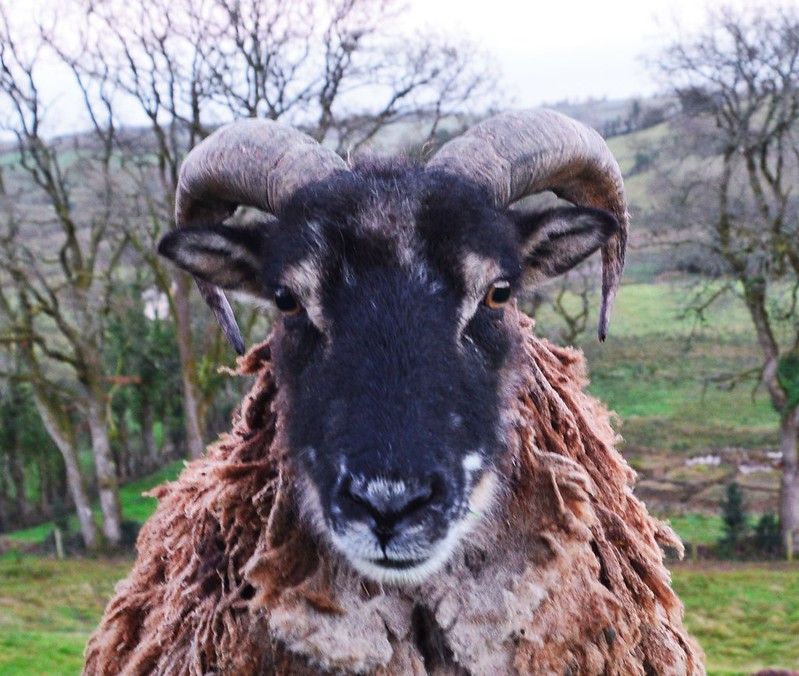
St Kilda | An article in the Herald explores the plight of a breed of sheep living in one of Britain's most remote places: St Kilda archipelago. The islands are home to Soay sheep, a primitive short-tailed breed that now live feral. These sheep are victims of “staggeringly high” mortality rates, according to two vets from the mainland, who estimate that, over the last 20 years, more than 12,000 adult sheep and 4,000 lambs have died. The population is unmanaged, meaning that it often follows a pattern of recovery and crash. Harsh winters, when there is not enough food to sustain the flock, can see up to 70% of the population die. The National Trust, which is responsible for the sheep, maintains a deliberate policy of non-management, so that researchers can study the effects of natural selection and population dynamics without human interference. But the vets argue that the starvation and suffering of the sheep “represent a failure by the establishment — those very institutions that should be leading the way in animal welfare.”
Access | An opinion piece for the Financial Times argues that a "right to roam" in England would be damaging for nature. Laura Battle writes that, although connection with nature is vital for people’s psychological and physical wellbeing, increased access for people would come at a cost: “wild animals, birds, insects and plants rarely want to connect with us,” she writes. While Scotland currently enjoys a right to roam, she points out that the ratio of people to woodland in Scotland is just 3:7 per hectare, compared to England’s 45:1. She concludes: “We must accept that the 'right to roam' is rooted in an earlier age, when the UK population was a fraction of what it is today, when people were more localised in their movements and wildlife was not so imperilled.”
Further reading:
- In the Conversation, University of Oxford researcher, Emma Garnett, writes about how livestock grazing is preventing the return of rainforests.
- An article in the Guardian investigates how London ship insurers could be enabling illegal fishing activity.
- Research by the Times shows that two in five British farmers do not understand Defra’s vision for the future of agriculture.
- A blog by the British Ecological Society looks into what exactly the new Environmental Land Management schemes will pay for.
- The Royal Horticultural Society is calling on people to report sightings of the giant willow aphid, which mysteriously disappears in spring. The Guardian covered the story.
- A blog by the Scottish Environment LINK looks at what gets spent on environmental protection and management in Scotland.
- The Forestry Commission is asking the public to send in photos of modern day “Lumberjills” for their exhibition celebrating women in forestry.
- In The Banker, an article explores whether biodiversity markets can deliver for both nature and investors.
- A feature in the Guardian describes how a "wilderness break" to Scotland can be the ideal low-carbon get-away.
Happy days
Murmuration | A video on the BBC captures the incredible moment photographer Peter Glaser was caught inside a starling murmuration on Bodmin Moor in Cornwall. Glaser described hearing a loud roar, before turning around and being engulfed by the swarming forms. He said the overwhelming experience was once-in-a-lifetime.
Subscribe to our newsletter
Members receive our premium weekly digest of nature news from across Britain.
Comments
Sign in or become a Inkcap Journal member to join the conversation.
Just enter your email below to get a log in link.