Autumn Budget & Peregrine Decline
The latest news on nature and conservation in Britain.
National news
Budget | On Thursday Chancellor Rachel Reeves announced Labour’s autumn budget. The budget did not contain – as many environmental organisations feared – further weakening of environmental protections in favour of growth. Instead, it included additional funding for Defra to boost skills in local planning departments, which was welcomed by the countryside charity CPRE. However, the budget also endorsed the recommendations of the recently published Nuclear Regulatory Taskforce report, including measures to allow nuclear projects to opt out of nature protections such as the Habitats Directive. In particular, the media has widely covered claims in the report that Hinkley Point C power station is spending more than £700m on protection measures which will save only around 500 fish each year. Joan Edwards of the Wildlife Trusts said this was ‘confected outrage’ designed to perpetuate the narrative that nature blocks development. ENDS and County Life have further coverage of the budget.
COP | COP30 has wrapped up in Belém, Brazil, but what was actually achieved at the summit billed as the ‘nature Cop’? There were some positive steps forward, according to the RSPB’s special report, but ultimately a small group of countries were ‘determined to keep nature out of the picture’ and held back any real progress. A notable win was the inclusion of full negotiation sessions on how to align climate and nature action: in previous years, this topic was squeezed into a short annual update. Countries also agreed on a set of indicators to track their efforts on climate adaptation, including within the food and agriculture sectors. Ultimately, however, nations failed to agree on a global roadmap to end deforestation or a plan to phase out fossil fuels, leading many to brand the conference a failure. Carbon Brief has a full run-down of the key outcomes for nature, land, forests and food here.
Legislation | Environmental organisations have accused the government of taking a ‘shameful step back’ on environmental protections after the controversial Planning and Infrastructure Bill was passed without amendments to safeguard nature. The Bill has finished its passage through Parliament and will now become law, despite desperate efforts by charities to remove its most destructive clauses at the final hour. The RSPB said that, in the closing phases of the Bill’s passage, the government offered ‘several assurances’ but chose not to include these in law. The Independent and Edie reported the news. Meanwhile, political figures including Michael Gove and Thérèse Coffey have strongly criticised proposals by ministers to weaken Biodiversity Net Gain rules by exempting small developments, reports the Times.
In other news:
- Farmers protested in central London on the day of the Budget announcement over plans for inheritance taxes, reports the BBC. Read more in Country Life.
- Analysis by the RSPB of Ordnance Survey data has revealed increases in the number of road names inspired by bird species which are declining in the wild.
- One in seven English bathing spots were rated as polluted in the latest testing – a slight decrease from last year, reports the BBC, Guardian and Times.
- Government figures have revealed that farmers in England are making more money from net zero subsidies than from growing barley and wheat, reports the Telegraph.
- To mark National Tree Week, the National Lottery Heritage Fund has awarded shares of £3.9m to 23 woodland restoration projects in Wales.
- The Salmon Scotland Wild Fisheries Fund is offering £230,000 for projects repairing river habitats and improving survival rates for salmon and sea trout, reports the Herald.
Across the country
London | Citizen scientists and conchologists are conducting a London-wide search for one of Britain’s most endangered molluscs, the German hairy snail. This fingernail-sized species survives only in fragmented patches of its historic tidal habitat along the Thames. It was first recorded in the UK in 1982, although fossilised remains suggest it may have been present since the last Ice Age, when the Thames was still connected to the Rhine. More than 100 volunteers, led by Citizen Zoo and Zoological Society of London, are surveying from Richmond to Newham to map its distribution and guide future conservation efforts, including habitat restoration, pollution management and potential translocation. The BBC and Guardian covered the story.
Essex | Wallasea Island in Essex is now home to a record number of migratory birds, thanks to a decade-long project to rewet the landscape. The RSPB bought the island in the mid-2000s, and used almost three million tons of soil – much of it excavated during the construction of the Elizabeth Line – to lift ground levels. In 2015, it removed sections of the sea wall to allow water to flow onto the island for the first time in 400 years. A bird count has revealed that 39,000 birds used the island last winter to rest, refuel, and nurse their chicks; the species included avocets, knot waders, grey plovers and bar-tailed godwits. The Guardian, Oceanographic and BBC covered the story.
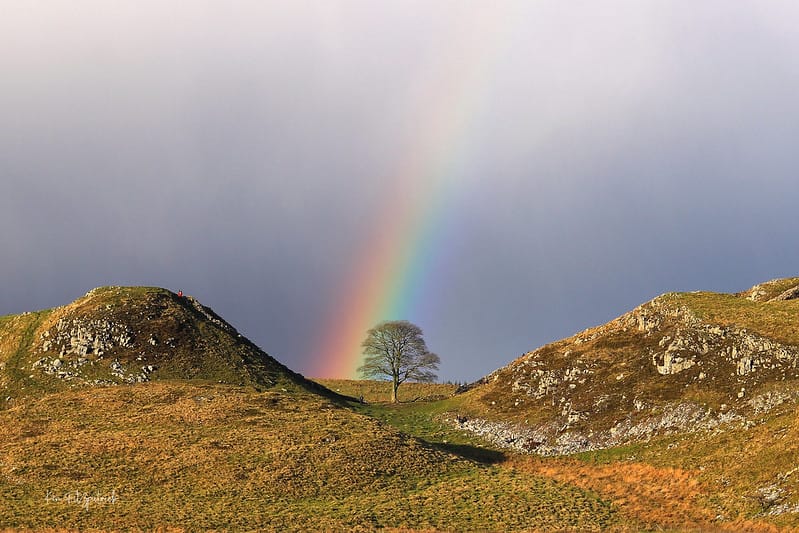
Northumberland | The National Trust has begun planting the 49 saplings grown from the illegally felled Sycamore Gap tree. The saplings, known as ‘trees of hope’, have been given to community projects across the UK, in the hopes that the iconic tree will live on and continue to inspire love for the natural world. The number of saplings represents each foot of the old tree’s height. The first planting locations include Greenham Common in Berkshire, which was the site of large-scale women’s peace camps in the 1980s; Hexham hospital in Northumberland; and Coton Orchard in Cambridgeshire, home to a grassroots project called Coton Loves Pollinators. The Northern Echo and Chronicle Live covered the story, as well as national media outlets.
Elsewhere:
- Northumbrian Water is employing Bracken, a four-year-old Labrador, to detect vulnerable species in areas where it plans to work, reports the BBC and Northern Echo.
- The National Trust’s annual bird count on the Farne Islands has revealed a drop in puffin numbers and an increase in Arctic terns, reports the BBC and Independent.
- The Thames Rivers Trust has received funding for its project to tackle barriers preventing endangered eel migration.
- Forestry England has announced it will create five new woodlands in Lincolnshire, which is one of the least wooded places in England, reports the Forestry Journal and BBC.
- A project gathering biodiversity data on rockpools held its first ‘rock pooling competition’ in Somerset on Saturday, reports the BBC.
- Martin Mere wetland reserve in West Lancashire is hosting a record number of cattle egrets, reports the BBC.
- Network Rail is using sheep to restore an area of damaged land near Banbury that is home to five rare species of butterfly, reports the BBC.
- Lincolnshire Wildlife Trust has launched a campaign to save 87 acres of rare grassland habitat from becoming farmland.
- The National Trust has started fitting Dartmoor ponies with GPS collars to track their grazing movements, reports the BBC.
- St Albans Council has announced plans to boost biodiversity in Verulamium Park – home to Roman city ruins – by planting 4,400 trees and creating wildflower meadows, reports the Herts Advertiser.
- A scheme to protect bats roosting at the site of the UK’s biggest self-build community in Bicester has been deemed a success, reports the BBC.
- Populations of finch species are declining in habitats across Surrey, according to a citizen science survey led by the Surrey Wildlife Trust.
Reports
Peregrines | The number of peregrine falcons in the Cairngorms National Park has declined by 56% since 2002, according to the national park authority, in its first park-wide survey of peregrine numbers in two decades. Last year, researchers checked historic breeding locations and found that, compared with a national survey from 2002, breeding pairs had fallen from 70 to 31. The park authority attributed the decline to reduced prey availability, wildlife crime, upland land management practices and, more recently, outbreaks of avian flu. It said it would explore a range of conservation options including nest cameras, DNA work and GPS tagging. The Herald covered the research.
Wales | A report by Natural Resources Wales has revealed that almost 3,000 species in Wales are confined to five locations or fewer, putting them at high risk of extinction. The Species In Peril report is the first in the UK to identify vulnerable species based on geographic rarity, helping conservationists target biodiversity hotspots. For example, Newborough Warren on Anglesey supports a remarkable 130 of these species, including the Mammoth Mushroom, Confounding Sunshiner Beetle and Sand Lizard. While the numbers paint a bleak picture, the report also highlights that low-cost measures can effectively safeguard many of these endangered populations, including adjusted grazing patterns or vegetation cutting. The Guardian and BBC covered the report.
Nurdles | Environmental charity Fidra has found plastic nurdle pollution at 84% of the UK’s Sites of Special Scientific Interest. Nurdles are tiny pellets used in almost all plastics manufacturing: they can be fatal to wildlife if ingested, and also degrade into microplastics. A report by the charity outlines findings from its annual ‘Nurdle Hunts’, which began in 2013 and have covered 25 countries. In the UK, Fidra found nurdles at 168 of 195 SSSIs, with the worst-affected areas including the River Itchen and the Firth of Forth. The charity is calling on governments to introduce stricter legislation to prevent spills, such as the North Sea shipping collision in March. The Guardian covered the report. Separately, research by the University of Exeter examines how plastic bio-beads are polluting the ocean. The Conversation covered the findings.
Science
Mercury | Mercury levels are rising in marine mammals, making them more vulnerable to disease, according to a study in Environmental Science & Technology. Scientists from the Zoological Society of London and other institutions analysed liver samples from 738 harbour porpoises that stranded along UK coastlines between 1990 and 2021. They found that mercury levels rose by around 1% each year, despite a global treaty in 2017 to curb mercury pollution. The study also revealed that animals with higher levels of mercury were more likely to die from infectious diseases. Co-author Rosie Williams said the results highlighted how long-lived porpoises are ‘quietly recording the story of our chemical footprint’. Read more in the Conversation.
Deer | There is widespread support for lethal control of deer among subscribers of nature organisations in England and Wales, according to a study in People and Nature. Growing deer populations threaten ecosystems, but culling is often met with mixed reactions. To investigate public perceptions, researchers from Bangor, Reading and Southampton universities distributed a questionnaire on deer management techniques among subscribers of five national nature organisations. Of the 3,936 people surveyed, 85% either ‘supported’ or ‘strongly supported’ lethal control. This approach was followed in popularity by tree guards (82%) and deer fencing (69%). The authors said that the findings could help nature organisations feel more confident about recommending lethal control. Farmers Weekly covered the research.
Rewilding | Some nature writing risks aligning rewilding with dangerous nationalistic narratives, according to a paper in Interdisciplinary Studies in Literature and Environment. Terms around ‘native’ and ‘invasive’ species are central to rewilding practices, but academic Kat Waters points out that this criteria for ‘belonging’ can tip beyond ecological arguments. She analyses two books on rewilding: Wilding by Isabella Tree, and Rebirding by Benedict Macdonald. Waters argues that rewilding is presented in both books as a way to ‘restore the nation to its origins and, in so doing, reanimate the national spirit’. For example, Tree proposes that restoring medieval forests on estates like Knepp might reawaken a lost British cultural identity. Waters warns that such an approach – while clearly intended to galvanise environmental support – makes rewilding susceptible to entanglement with nationalistic politics.
Driftwood
Forest City | An article in the Guardian explores how ambitions for a ‘forest city’ in England could become a reality. Author and investor Shiv Malik is behind proposals for the pioneering scheme, and is currently ‘in discussions’ with the housing department. The proposal envisions building a sustainable, affordable city for a million people east of Cambridge, largely on industrial farmland, with eco-friendly houses, walkable neighbourhoods, and 12,000 acres of native forest. Barrister and nature campaigner Paul Powlesland, on the project board, said ‘there is a capacity to do things differently’ by using technology, imagination and clever design to create a city where nature and humans co-exist. Conversely, a letter in the Guardian argues that the proposed development would see precious farmland destroyed.
Eels | Eels are fascinating and misunderstood creatures, according to countryside writer Laura Parker in this Country Life feature. The species has an ‘unfortunate image’, perhaps due to their slimy texture and propensity for dark river bottoms. But they have incredible capabilities – not least migrating 4,000 miles across oceans – and a rich history in Britain, where they were once so abundant that they were used as currency: the priests of Ely bartered them for stone to build their cathedral, while the Domesday Book of 1086 lists instances of ‘eel-rents’. This profusion is a ‘faded folk memory’ today, Parker writes, but she is hopeful that initiatives like the Somerset Eel Recovery Project can restore eel populations and our cultural connection to them.
Photography | In the BBC, read about a photography project aiming to make a difference. Wilder Britain has brought together 60 of the UK’s top wildlife photographers to showcase British species and the habitats they need to thrive: lead photographer Irene Amiet describes it as a ‘manifesto to what is at stake’. All the images were donated, and the profits raised through the resulting book sales will go towards carefully selected rewilding projects. See a selection of the shots – including boxing brown hare, capercaillie in snow, and Black Darter dragonflies – here. Also on camera, the BSBI has announced the winning images of its annual plant photography competition, including grass-of-parnassus in Morayshire and great reedmace in Cambridgeshire.
Further reading:
- A feature in the Guardian profiles how the Youngwilders group is accelerating nature recovery at a farm in Surrey.
- An article in WIRED explores the climate impact – and ensuing moral conundrum – of owning a dog.
- The Bristol Post has an article about a Bristolian who climbed a tree every day for a year – and recently published the Art of Climbing Trees, for ‘aspiring eutopians’.
- An article in the Financial Times asks whether wildcats are ‘too wild’ for the English countryside.
- A feature in Noema asks whether social animals create cultures with ethics, while an essay in Aeon turns to Greek philosophers to answer whether non-human species belong in moral communities.
- Why are more doctors not prescribing time spent in nature? A feature in Atmos looks at the practice of ‘green prescribing’.
- A recent rise in ‘waste crime’ is causing environmental disaster across the UK, according to this Guardian feature.
Happy days
Rewilding | Last year, we published an essay on the rewilding of Wild Finca – an ex-dairy farm in Spain – by Katie Stacey. It proved hugely popular with Inkcap readers, who wrote in saying how inspired they were by the project, and by the devotion that Katie and her family had shown towards the land. This week, Katie has published a book, No Paradise With Wolves, describing their journey in more detail. It has already been chosen as one of BBC Wildlife’s best books of 2025. ‘It’s a book about rewilding in every sense – land, family, rhythm, self,’ writes Katie. Find out more on the Wild Finca website.
 Katie Stacey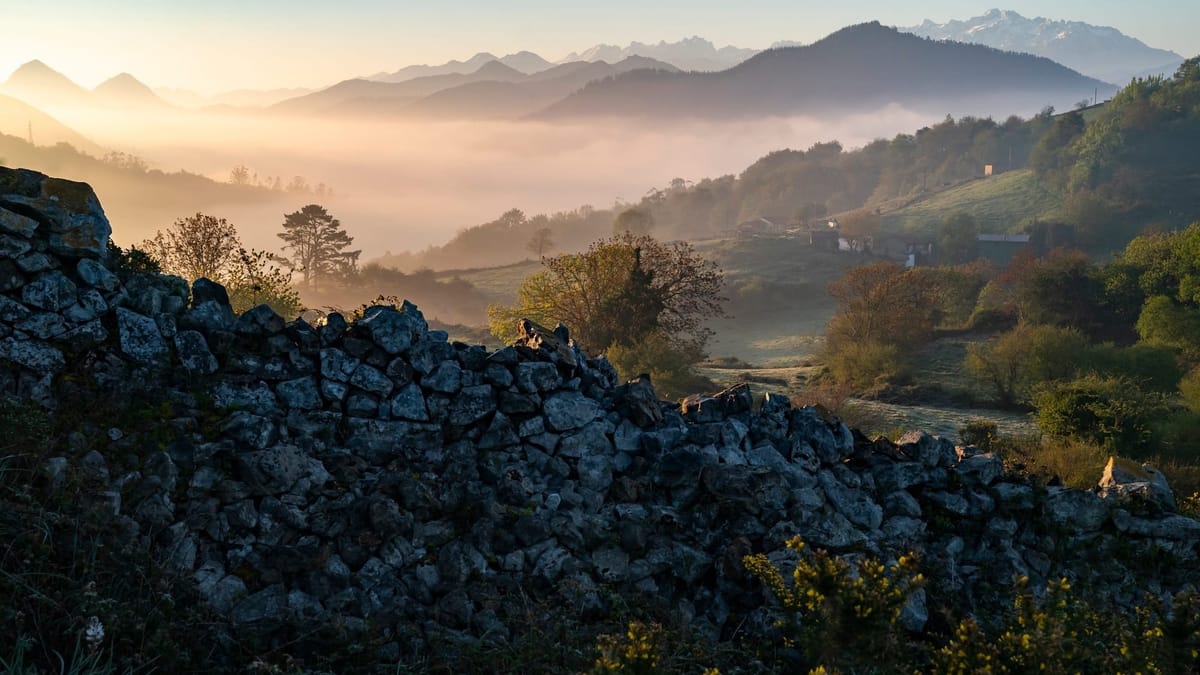
Subscribe to our newsletter
Members receive our premium weekly digest of nature news from across Britain.
Comments
Sign in or become a Inkcap Journal member to join the conversation.
Just enter your email below to get a log in link.