Baby Bison & Another New Prime Minister
The latest news on nature and conservation in Britain.
National news
Government | Former chancellor Rishi Sunak has replaced Liz Truss as the UK’s prime minister – and environmental groups are hoping that he might reverse the “attack on nature” launched by his predecessor. In his first speech as PM, Sunak pledged to “protect the environment” and has already restored the ban on fracking – a decision welcomed by locals in Blackpool, close to the UK’s only shale gas wells. Green Tories are positive about Sunak’s leadership on environmental matters; Philip Dunne, chair of the Environmental Audit Committee, believes that Sunak “is part of the broad consensus in the Conservative party that we need to leave the environment in a better state than we left it.” However, the Guardian notes that, as chancellor, Sunak tended to focus on the “costs rather than the benefits” of environmental action, and Downing Street has confirmed that he will not attend the upcoming UN climate summit. ENDS also reported on the new PM’s green credentials. Sunak has appointed Thérèse Coffey, former health secretary, as the new environment secretary. Unlike her predecessor, Ranil Jayawardena, Coffey does have experience in Defra through a previous junior ministerial role. Despite the fact she has shown little recent interest in the environment, some may take hope from her support for the Dasgupta review and Defra’s nature strategy in 2020. Environmental campaigner Mark Avery was less optimistic, writing that Coffey was “no eco-zealot during her previous stay at Defra”, and candidates such as George Eustice or Michael Gove would have been better candidates. ENDS provided an analysis of “how green” Sunak’s new cabinet really is.
Law | Environmental organisations have written to the new prime minister, urging him to “make the right choice” by ditching the Retained EU Law bill, and instead honouring the 2019 Conservative pledge for environmental protection. The proposed bill would scrap over 570 pieces of EU environmental law, which currently protect swathes of British nature (you can find further analysis in the Driftwood section). Wildlife & Countryside Link and Green Alliance, sent a joint letter to prime ministerial candidates on Sunday, beseeching them to “set aside misguided plans for deregulation”, while in the Guardian executive director of Green Alliance Shaun Spiers wrote: “There is no support for a bonfire of EU-derived laws, either from business or the electorate.” Hours after quitting the government on Tuesday, former business secretary and proposer of the bill, Jacob Rees-Mogg, returned to the backbenches to criticise opponents of the legislation, saying they were “fighting a Brexit battle” all over again. SNP spokesperson Brendan O’Hara described the bill as an “unwanted puppy”, while former environment minister Rebecca Pow criticised the short timescale for reviewing over 570 laws and advised the government to extend the deadline until 2026. The bill has started its progress through the Houses of Parliament. The Guardian and ENDS covered the news.
Grouse | The Scottish government has launched a consultation for a new Wildlife Management (Grouse Moor) Bill, which aims to tighten laws around grouse management. The proposals are based upon the recommendations in the independent Werritty Report, which sought to address the issues of raptor persecution and unsustainable land use. The consultation is seeking views on, among other things, the introduction of a licensing scheme for grouse shooting, increased regulations of muirburn (burning of moorland heather), a ban on glue traps, and more regulation for other wildlife traps. REVIVE, the coalition for grouse moor reform, however, was disappointed that the scope of the review wasn’t wider, while gamekeepers, estates, and shooting associations warned it could “hamper what is a world-class rural business sector”. The Scotsman and the Herald reported the story.
In other news:
- Tens of thousands of new homes face being delayed or scrapped because of new phosphate river pollution targets, the BBC reports.
- Farmers are urging the Scottish government to control “sheep-killing feral pigs” (also known as wild boar), the Times reports.
- Forestry England has urged the public not to dump their old Halloween pumpkins in forests and woodlands. The Shropshire Star reported the appeal.
Across the country
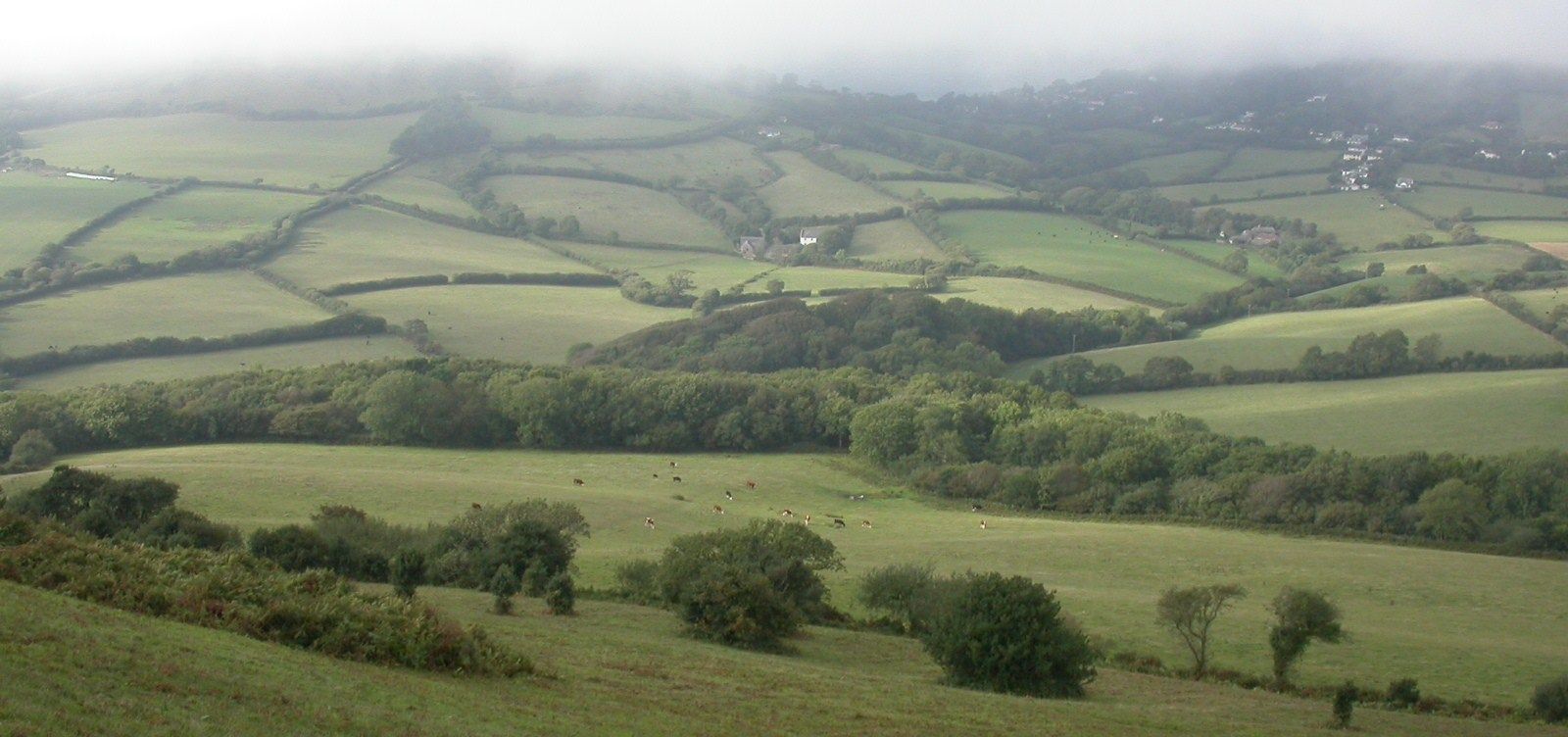
Dorset | A group of environmentalists wants to plant or revitalise about 100 miles of hedgerows in Dorset. The Great Big Dorset Hedge project, driven by the Dorset Climate Action Network, will run from the border with Somerset in the west to the edge of Hampshire in the east, creating a wildlife corridor across the county. The hedgerow will include ten different species, including honeysuckle, elm, hawthorn, dogwood, and blackthorn. If successful, the final product will be longer than Hadrian’s Wall. The Telegraph and the Times reported the story.
Teesside | A parliamentary enquiry this week has hinted at further investigations into a mass crustacean dieoff along the northeast coast. Since October last year, thousands of crabs have washed up on beaches between Seaham and Robin Hood's Bay, and fishers in the region have seen their catches plummet. Defra maintains that the dieoff is due to toxic algal blooms, ruling out industrial pollutants linked to nearby dredging. However, a study commissioned by the North East Fishing Collective and conducted by Newcastle, Durham, York and Hull universities found pyridine, an anti-corrosion treatment in marine infrastructure and highly toxic to crabs, in sediments. During the hearing, scientists said that dredging in the River Tees could have unearthed the chemical. However, Mark Rice, deputy director for water and land quality at the Environment Agency, said water was tested for possible pollutants but no pyridine was found, with none detected for several years. Academics have called for a halt to dredging until the cause of the dieoff is found, but Teesside freeport work has continued, the BBC reports. The Northern Echo live-blogged the proceedings.
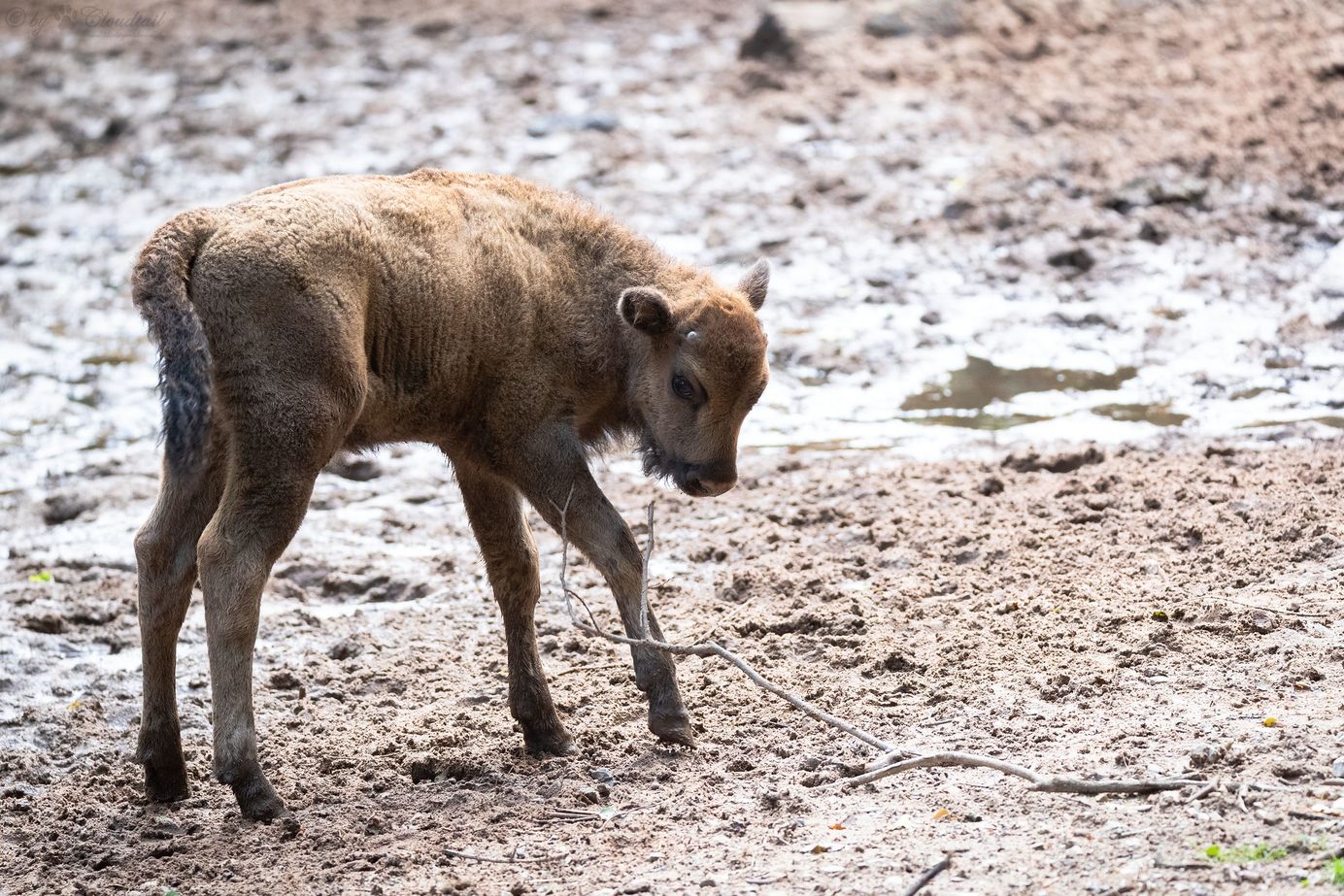
Kent | The UK has welcomed the first wild baby bison born in millennia. In July, the Kent Wildlife Trust and Wildwood Trust introduced three bison – considered the ultimate ecosystem engineers – to Kent as part of a rewilding project. The goal to have a herd of bison roaming the county’s woodlands turned out to be closer than initially thought: one of the bison was secretly pregnant. “It is difficult to detect pregnancy in bison as they naturally conceal being in calf to avoid being hunted by predators,” said Tom Gibbs, a bison ranger. The baby was born on 9 September, but the announcement was delayed because of the Queen’s death the previous day, the Kent Wildlife Trust said. The BBC and the Guardian both reported the news, replete with cute baby bison images and videos.
Elsewhere:
- A charity in Bury St Edmunds is salvaging leftover apples from fields for food-insecure people, the BBC reports.
- Plans to restore the River Hun chalk stream have received the green light, the Eastern Daily Press reports.
- Two-thirds of cattle farms in north Devon cause river pollution, the Guardian reports.
- The Scottish Environment Protection Agency has removed two full weirs to help wild fish return to rivers, the Scotsman reports.
- Worcester City Council is set to almost double its gull control budget to £70,800, the BBC reports.
- Oswestry Town Council is calling for volunteers to help plant 2,000 trees, the Shropshire Star reports.
- Plans to build a hydropower scheme on the Tyne in Hexham have been paused following concerns about salmon, the Chronicle reports.
- The Cumbria Wildlife Trust will soon have its very first seed bank, linked to Kew’s national Millennium Seed Bank.
- Planning officers have recommended the construction of a giant solar farm near Richmond and the Yorkshire Dales, the Yorkshire Post reports.
- The City of London Corporation has accused mushroom pickers of damaging Epping Forest’s ecology, the Epping Forest Guardian reports.
- Hundreds of endangered crayfish have been released at a secret site in the River Itchen, the Hampshire Chronicle reports.
- Sunderland City Council has approved plans to create new wildlife habitats in the River Wear, the Sunderland Echo reports.
- Fifty trees damaged during Storm Arwen have been put to use in a restoration project in a tributary of the River Dee, the BBC reports.
- Cardiff Council plans to plant more than 20,000 trees across the city, Wales Online reports.
- A special council group is being set up to manage Llandudno’s feral Kashmiri goats, North Wales Pioneer reports.
Reports
Woodland | UK forestry bodies – including Forestry Commission, Natural Resources Wales, Scottish Forestry and Northern Ireland Forest Service – have published new guidelines outlining how woodlands can contribute to natural flood management, providing practical advice on design and management to landowners, managers and planners. Suggestions include how to identify whether downstream communities are vulnerable to flooding and, if so, how to modify the woodland accordingly. Scotland’s environment minister Mairi McAllan urged landowners to take the recommendations onboard. “This new guidance describes how forestry can provide a natural defence to flooding and highlights the importance of complying with best practice,” she said.
Nature | An RSPB report calls for a “decade of action” to reverse environmental losses and fight climate change. It lays out how each of the UK’s nations can be “nature positive” by 2030. The charity has identified six focus areas for governments: species recovery, protected areas, food and farming, fisheries, climate change, and finance. In each case, the report breaks down the current state of play, explaining the successes and challenges in England, Scotland, Wales and Northern Ireland, as well as UK seas and overseas territories. “Governments repeatedly sign up to targets, make promises, and then fall short on action,” the report says. “We must not let this happen again.” In response, RSPB Scotland has called on its government to deliver on its nature ambitions.
Emissions | Agricultural greenhouse gas emissions in the UK decreased by around 16% between 1990 and 2020, according to the latest government agri-climate report. The reduction mostly happened during the 2000s due to a fall in animal numbers and a decrease in the use of synthetic fertiliser. Agriculture is a major source of nitrous oxide, methane and carbon dioxide, all of which contribute to global warming. These are mainly due to livestock, agricultural soils, and machinery. In 2020, the sector was responsible for more than two-thirds of nitrous oxide emissions (69%), and just under half of all methane emissions (48%); meanwhile it only accounted for 1.7% of carbon dioxide emissions. According to the 2022 Farm Practices Survey, which is included in the report, just under two thirds of farmers (64%) thought it was important to consider greenhouse gases when making farm business decisions, compared to 29% who thought they were not relevant. The survey found that 58% of farmers were taking action to reduce emissions.
Science
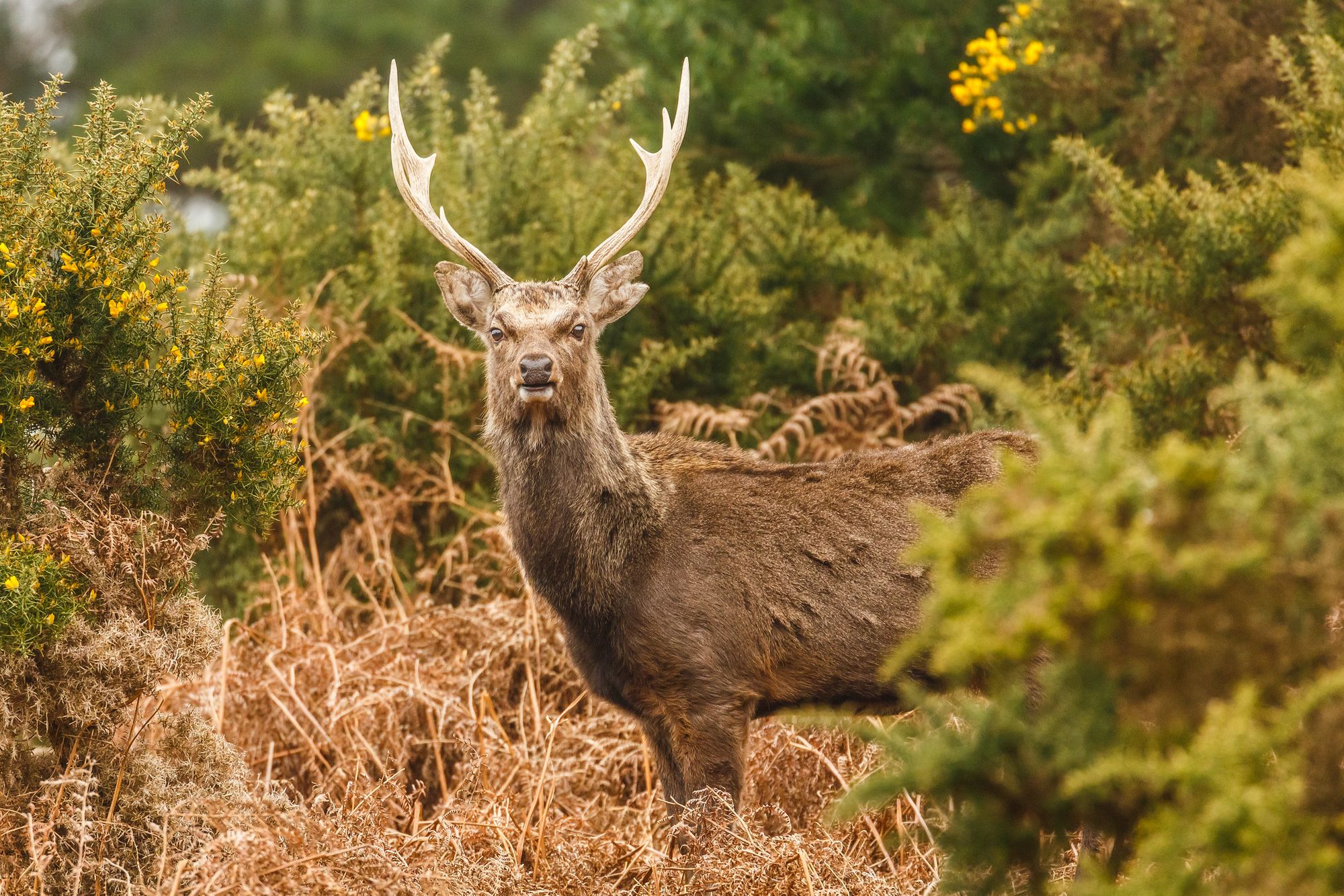
Deer | In a recent paper in Mammal Communications, scientists detail Ireland’s first systematic camera trap survey for large mammals. Taken over a two-month period last year in central Wicklow, a known deer “hotspot”, the cameras captured eight wild mammal species from 19 forest sites. The overwhelming majority (92%) of sightings were of sika or sika-red deer hybrids. “It's quite odd in Europe to have a non-native as the most common wild mammal!” lead author Adam Smith said in a Twitter thread about the research. Originally from Japan and introduced to Ireland in 1860 and Northern Ireland in 1870, the tens of thousands of sika in Ireland are descended one stag and three hinds. The latest study shows that systematic camera traps can reveal wildlife dynamics and generate data for science-informed management and conservation, say its authors.
Mussels | Within five years of its construction, there were signs of seabed recovery under the large-scale long-line mussel farm built in Lyme Bay, according to a study published in Aquaculture, Fish and Fisheries. In long-line farming, mussels are grown on ropes that descend from headlines closer to the surface. The authors hypothesised that the exclusion of destructive fishing practices would give the ecosystem time to recover – and they were proved correct. “This is the first experimental, long-term ecological evidence that offshore mussel farming can deliver positive, restorative effects on degraded seabed habitats,” the authors write. Although the farm developer Offshore Shellfish Ltd. funded the study, the paper notes that independent researchers from the University of Plymouth undertook the research. The Fish Site reported the story.
Mental health | Seeing or hearing birds is good for people’s mental health, according to a new study published in Scientific Reports. It is difficult to judge the mental health benefits of everyday encounters with birdlife, and past studies have relied on retrospective questionnaires or contrived set-ups. However, in the latest paper, scientists used a smartphone app, Urban Mind, to let people self-report their mental wellbeing in everyday situations. Almost 1,300 participants logged more than 26,500 in-the-moment ecological assessments between April 2018 and October 2021. The scientists found that everyday encounters with birdlife were linked to improvements in mental wellbeing, which lingered even after the person had moved on with their day. “These improvements were evident not only in healthy people but also in those with a diagnosis of depression,” the authors write.
Driftwood
Rewilding | In this profile in the Times, the owners of Mapperton Estate in Dorset discuss how and why they are rewilding their land. The Mapperton Wildlands project is handing 450 acres of land back to nature. The owner Luke Montagu, Viscount Hinchingbrooke, highlights the environmental imperative, but also the financial one: the estate is targeting government subsidies, but also fuel for their online channel, Mapperton Live. The channel offers a “backstage” look at life (and rewilding) at the estate, and “superfans” can pay for exclusive content. The BBC also wrote about their rewilding project. Separately, gardening guru and broadcaster Alan Titchmarsh warned that rewilding isn’t the only way to increase biodiversity in your garden, and that there remains room for traditional gardening. “There is nothing more useful to life than a well-grown garden,” says Titchmarsh in an interview with the Independent.
Legislation | In a series of posts, officials at The Wildlife Trust explain how the proposed Retained EU Law Bill threatens the British environment and nature. Following Brexit, the UK kept more than 2,000 EU laws on its statute books to ensure continuity. If the proposed bill is passed, however, these laws and their regulations will be automatically deleted at the end of next year, unless ministers decide there should be exemptions, the Guardian reports. Defra has at least 570 pieces of legislation threatened by the bill, more than any other UK government department, writes Dr Joe Llanos, policy and information officer at The Wildlife Trusts. The laws regulate areas such as pesticides, water quality, conservation areas, and species protection, each of which is analysed in detail with the blog series. A Wildlife Trusts media briefing sets out further details on what is at stake if these laws are scrapped.
Rainforests | In a profile in the Guardian, author and environmental activist Guy Shrubsole talks about his new book, The Lost Rainforests of Britain. “I wanted to re-enchant more people with the magic of the rainforest we have left in this country,” Shrubsole says. But the reality is that the UK’s rainforests are fighting for their survival. Today, Britain’s temperate rainforests cover just 1% of the land, when they could cover up to a fifth of the island, according to maps released by Shrubsole’s campaign to protect this fragile ecosystem. Meanwhile, in Ireland, Eoghan Daltun has invigorated an Atlantic rainforest on an abandoned farm in the Beara Peninsula; his story is profiled in Independent.ie. And in Scottish rainforest-related news, campaigners say that the money committed by the government to protect these ecosystems is a fraction of what is needed.
Further reading:
- The Times offers a look at the bird flu pandemic and some of the species that now face extinction.
- A couple has told the Times how climate change and warmer temperatures drove them to relocate from Surrey to Scotland.
- The rise of community orchards is helping to revive neglected heritage apple varieties, the BBC reports. The Guardian also has a feature on community orchards.
- Environmental DNA tests could help save newts – and other protected species – from developers, according to an article in the Times.
- An article in New Scientist argues that the industrial revolution in Britain could have been driven by drought, and not enough water to drive water wheels.
- Snow hunter Iain Cameron searches the Scottish Highlands for snow that has survived over the summer and early autumn, and this piece in the Times laments the lack of snow.
Happy days
Halloween | After the trick-or-treating is over, the folks at Countryfile have just the thing to shake you out of your sugar stupor: a selection of horror movies to get your adrenaline pumping. They pulled together a list of the best British horror films set in the countryside, ranging from The Wicker Man, a classic of the rural horror genre, to various more obscure titles. Whether it’s zombies, ghosts or demonic possession, these flicks have something to scare everyone – if you’re into that sort of thing.
Subscribe to our newsletter
Members receive our premium weekly digest of nature news from across Britain.
Comments
Sign in or become a Inkcap Journal member to join the conversation.
Just enter your email below to get a log in link.