Bats and Newts & Dartmoor Camping
The latest news on nature and conservation in Britain.
National news
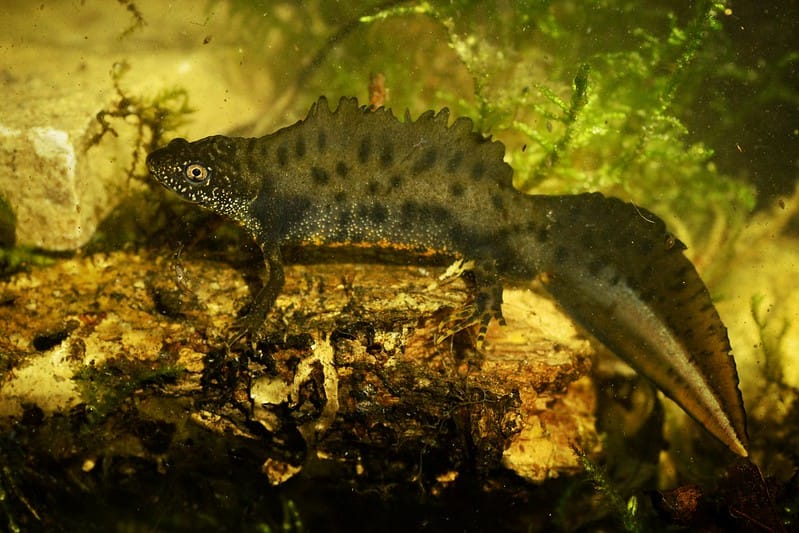
Growth | The Wildlife Trusts and RSPB have published a report showing that bats and great crested newts were relevant to just 3% of planning appeal decisions in 2024. The research was commissioned in light of claims by Keir Starmer and Rachel Reeves that protected species such as bats and newts are to blame for delays to much-needed development. The organisations say the findings demonstrate that nature does not, in fact, block growth, and it adds to the growing body of evidence which proves otherwise. They are calling on the government to remove the controversial Part 3 of the Planning & Infrastructure Bill. Chief executive of the Trusts, Craig Bennett, said: ‘The so-called Nature Recovery part of the Bill is a Trojan horse – it’s a misnomer because, in reality, it is a licence to destroy.’ Meanwhile, a poll commissioned by the Trusts revealed that less than a third of adults feel the Labour government has kept its promise to protect British landscapes and wildlife. Separately, 28 environmental charities served a spoof planning notice to MPs, warning them that the Bill is an application to demolish wildlife. ENDS covered the news.
Birds | Two reports published this week examine how birds are faring in the UK. The RSPB has issued its annual Wildlife on Reserves report, giving an overview of its 220-plus nature reserves and their 18,500 inhabiting species. It found that 2024 was a ‘mixed year’ for wildlife, with avian flu continuing to impact seabirds, and extended periods of flooding resulting in lower breeding numbers for certain wetland species. However, conservation efforts also paid off: for example, restoring heathland at the Minsmere and Arne reserves helped boost nightjar numbers, while the UK’s only roseate tern colony broke its breeding record in part thanks to new nest boxes and ‘tern terraces’. Meanwhile, the British Trust for Ornithology published the latest Wetland Bird Survey, which reveals the impact of avian influenza on mute swan populations and highlights the importance of maintaining protected areas for wintering and migratory birds.
Rivers | Citizen testing of rivers in England and Wales has revealed that more than a third of freshwater sites breach phosphate levels for good ecological status. Volunteers from angling groups collected more than 4,000 samples on 76 catchments between July 2023 and 2024, measuring nitrate, phosphate, ammonia and temperature, among other readings. They found that 34% of samples breached the upper limit for phosphate levels, while 45% returned levels of nitrate above an independent guideline. The pollution was particularly concentrated in southeast England. Alex Farquhar of the Angling Trust said the report demonstrates ‘the systemic failure to make the rapid shifts in governance needed to bring [rivers] back to life.’ The Guardian reported the news. Meanwhile, campaigners are calling on the government to resurrect an abandoned plan to save England’s rare chalk streams, reports the Times.
In other news:
- Thousands of people took part in ‘Paddle Out Protests’ on Saturday to campaign against water pollution. ITV News, the BBC and Independent reported the news.
- British fishers say the new UK deal with the EU, which grants EU trawlers 12 years’ access to UK waters, is a ‘disaster’ for the fishing industry. The BBC, Guardian, Times and Conversation covered the news.
- Labour MP Chris Hinchliff has warned his colleagues that the planning bill risks pushing the public towards Reform, reports the Guardian.
- The upcoming British strawberry harvest could be particularly sweet due to the warm days and cooler nights, reports the BBC.
- National Highways is preparing to double the number of wildlife-friendly green bridges in the UK within the next two years.
- The Environment, Food and Rural Affairs Committee has recommended that farm inheritance tax changes should be delayed by a year, reports the BBC.
- West Nile virus has been detected in mosquitoes in Britain for the first time, likely due to climate change spreading the disease, reports the Guardian and Times.
- Scientists from the Environment Agency are exploring new ways to measure coastal water quality to protect declining mussel populations.
- The Climate Change Committee has proposed a new set of targets for Scotland after the previous targets were abandoned last year, reports the BBC.
- The government has launched a record 81 criminal investigations into water companies since the election, reports the Times.
- Sea temperatures in the UK are soaring after the exceptionally warm spring, with concerning implications for marine life, reports the BBC.
Across the country
Dartmoor | The Supreme Court has ruled that wild camping on Dartmoor is legal, much to the relief of campaigners and outdoor enthusiasts. The case has been ongoing since 2023, when wealthy landowner Alexander Darwall won the right to exclude campers from his land in high court, before the decision was overturned by the appeal court. The case has hinged on the definition of ‘open-air recreation’, allowed under the Dartmoor Commons Act 1985, which Darwall’s lawyers claimed only applied to walking and horse-back riding. Now, the Supreme Court has ruled that camping is a form of open-air recreation, along with activities such as picnicking, rock climbing and bird watching. Following the verdict, campaigners are urging the Labour government to revive plans to legalise the right to roam across England, which was promised in opposition but dropped in its manifesto. The Guardian and BBC covered the news.
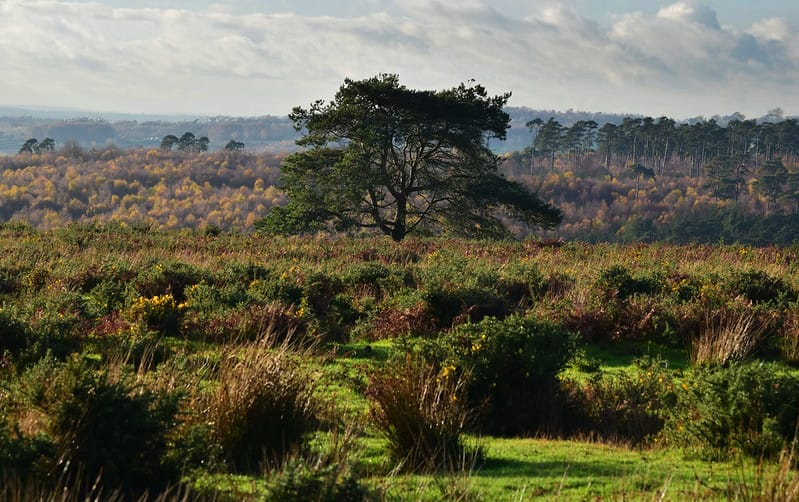
Sussex | A trial deer cull in Ashdown Forest – the ancient landscape made famous by A A Milne’s Winnie the Pooh – has proven a success with stalkers, environmentalists and food banks alike. The trial, run by the Country Food Trust, asked rangers to shoot four times the usual number of deer last season. The Trust guaranteed stalkers a set payment per kilogram of meat, and also organised the processing of meat by local game dealers and its delivery to food banks and charity kitchens. The cull resulted in 884 deer shot – reducing grazing pressures on the woodland habitat – and provided venison for more than 170,000 donated meals at a cost of less than 60p per meal. Chief executive of the Trust, SJ Hunt, said it had been such a success they were now in talks with multiple areas across England and Scotland to replicate the scheme. The Times covered the story.
Loch Lomond | The Scottish government is set to grant permission for a controversial holiday park development on the banks of Loch Lomond, overturning the decision of the national park authority. Developer Flamingo Lands wants to build a £40m resort featuring a waterpark, monorail, hotel and restaurants. The proposal initially received 155,000 objections, and was rejected last September by the Loch Lomond National Park authority, which said it did not comply with environmental policies. Now, to the widespread dismay of locals and environmentalists, a Scottish government planning reporter has said they intend to grant permission anyway. A spokesperson for the Balloch and Haldane community council said the decision was a ‘fundamental failure of democracy’ which ‘rides roughshod’ over the principles of community empowerment and environmental protection. The Scottish Greens are asking members of the public to write to the Planning Minister here to object. The BBC, Herald and STV covered the news.
Elsewhere:
- A farmer in Cornwall is nurturing a brood of eight white stork chicks as part of plans to reintroduce them to the county, reports the BBC.
- Basingstoke & Deane Borough Council has granted legal ‘personhood’ rights to local chalk streams, reports the Basingstoke Gazette. The Hampshire Wildlife Trust celebrated the news.
- The chief executive of the Northumberland National Park Authority has said the park is ‘close to a cliff edge’ after a reduction in its government funding, reports the BBC.
- A businessman who bought the tiny island of Càrn Deas in the Summer Isles has applied for permission to build a bird observatory, reports the Scotsman.
- Two new festivals have been launched: a nature festival in Exmoor National Park, and the Dartmoor Tors Festival, celebrating the history and culture of the landscape.
- The RSPB has expressed concern after the disappearance of two male hen harriers within days of each other from Geltsdale reserve in Cumbria, reports the BBC.
- Marine Scotland is investigating reports of a pollution incident at Loch Hourn in the Highlands, reports the BBC and Ferret.
- The lottery has awarded Devon-based charity Shallowford Farm Trust £227,000 to protect and restore an area of rare marshy grassland on Dartmoor, reports the BBC.
- Sheffield & Rotherham Wildlife Trust has said their nature-friendly and climate-resilient farming techniques at Ughill Farm are showing tangible results during the dry spring.
- Tests on a pair of peregrine falcons nesting at Christchurch Priory which died within days of each other have confirmed the presence of bird flu, reports the BBC.
- Volunteers for the Ribble Rivers Trust have planted 60,000 native trees across Lancashire, reports the BBC. Elsewhere, 20,000 trees and shrubs have been planted to improve woodland in the north Pennines.
Reports
Trawling | The UK’s offshore marine protected areas (MPAs) suffered more than 20,000 hours of suspected bottom-trawl fishing last year, according to a report by Oceana. The organisation used satellite tracking data to analyse fishing activity taking place in the UK’s 377 MPAs, only 38 of which are fully protected from bottom trawling by law. The activity involves dragging heavy metal gear along the seabed, bulldozing marine habitats and resulting in large quantities of bycatch. The three most exploited MPAs were off the coast of Cornwall and west Scotland. Oceana said the results were an ‘underestimation’ of the total damage since the analysis did not include inshore MPAs. They concluded that the MPA network is ‘little more than a sham’, and argued that a ban on bottom trawling would be a win-win-win for nature, small-scale fishers and the taxpayer. Oceanographic and ENDS covered the research.
Habitat | Habitat creation in the UK is behind schedule but making ‘significant progress’, according to the first progress report toward the government’s Environment Act target, which aims to restore or create at least 500,000 hectares of wildlife-rich habitats by the end of 2042. Natural England found that, since January 2023, 38,877 hectares have been created. The agency admits that, if delivery was linear, the government should have delivered 56,000 hectares already to meet the target. However, it argues that much action already underway is not captured by the first report, largely because multi-year schemes will have delayed results. The report also shows that agri-environment schemes have delivered most of this target so far. Habitat specialist Ruth Hall summarised the findings in this blog post, saying that it ‘shows the journey towards nature recovery is underway’ and that ‘we have hit the ground running’.
Bees | A report from Bee:wild, a global campaign for pollinators, has warned that bees and other pollinators are facing new threats over the next decade. It is well known that habitat loss, pesticides, climate change and invasive species are causing the decline of pollinator species, but a wave of emerging threats is adding greater pressure, according to the report. These include microplastic particles contaminating beehives, artificial light at night reducing nocturnal flower visits, antibiotics used in agriculture, and air pollution. Conflicts such as the war in Ukraine are also forcing countries to grow fewer crop types and leaving pollinators without diverse food supplies. The report, led by researchers from the University of Reading, outlines 12 recommended steps to combat these threats, including transitioning to electric vehicles, breeding crops with enhanced pollen and nectar, and creating flower-rich habitats within solar parks. The Guardian covered the research.
Science
Estuaries | Estuary ecosystems in the UK are at risk of being ‘squeezed’ into nonexistence, according to a study by scientists from Nottingham Trent University. Researchers used 76,000 salinity measurements to map tidal freshwater and low salinity zones at the top of all 85 estuaries across mainland England and Wales. These transitional waters are considered among the most productive ecosystems on earth. However, the study revealed that nearly 70% of these estuaries are blocked by man-made barriers, such as weirs or sluices, at their tidal limits. Combined with rising sea levels, this restriction is ‘squeezing’ intertidal zones, making them increasingly salty. The team identified 19 estuaries at high risk of this phenomenon, with those in southern England such as the Medway, Exe and Ouse most at risk. The authors suggest that recreating historic marshes would help combat estuarine squeeze whilst also restoring key wildlife habitats. Phys.org summarised the findings.
Microplastics | Microplastics eaten by invertebrates are contaminating UK food chains, according to a study in Environmental Toxicology and Chemistry. The study, conducted by the universities of Sussex and Exeter, tested 581 samples of invertebrates from 51 sites across Sussex. The team found that microplastics were present in nearly 12% of samples, including in all taxonomic groups, with the highest levels recorded in earthworms (30%) and slugs and snails (24%). Lead author Emily Thrift said the study is the first to find plastics 'consistently turning up across an entire community of land invertebrates’. The authors conclude that plastic pollution is not just a marine issue, and that while attention is currently focused on litter, the samples demonstrate that plastic is coming from multiple sources ranging from clothing to paint, requiring better understanding of how different plastics are harming terrestrial ecosystems. Phys.org covered the research.
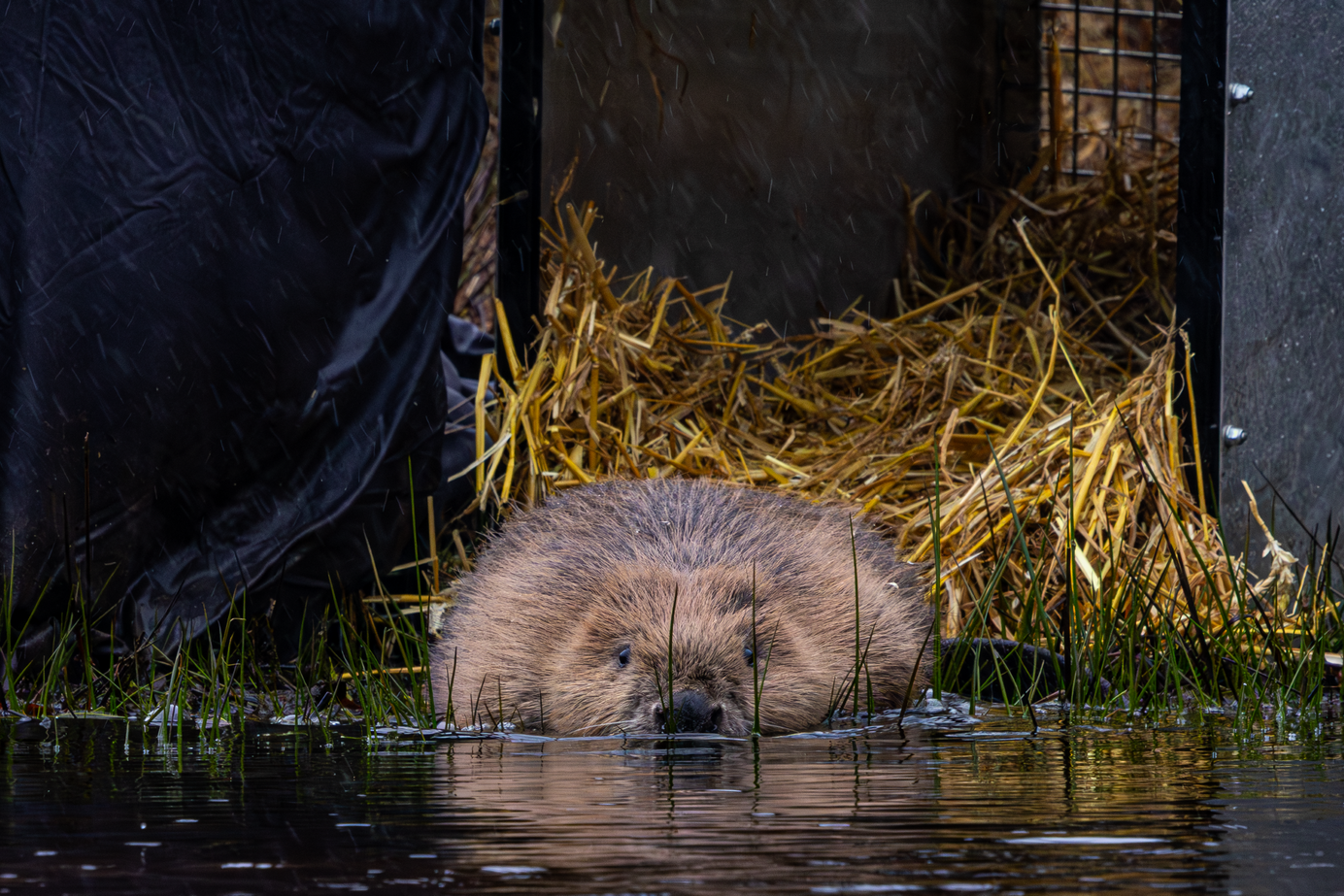
Beaver | The spread of beavers following reintroduction has had no negative effects on fish migration. This is the main finding of a preprint study by researchers from NatureScot, two Scottish universities, the Atlantic Salmon Trust and the Wild Trout Trust. The team analysed environmental DNA (eDNA) collected from 142 sites across the UK’s oldest and largest established beaver population in Tayside, east Scotland. The results were used to model the impact of increased beaver presence on the distribution of three migratory fish species. They found that, at catchment scale, beaver presence had no effect on the distribution of Atlantic salmon, brown trout or lamprey – and it had a positive correlation with European eel. The authors said this was likely due to the increased habitat complexity provided by beaver activity. Overall, they concluded that, from a policy standpoint, the results support continued beaver translocations to appropriate sites.
Driftwood
Webcams | In the Guardian, biodiversity reporter Phoebe Weston writes about the value of wildlife webcams. These nature-focused livestreams, usually free to watch on the internet, have proliferated in recent years thanks to cheap cameras and remote internet connection. ‘The drama of nature – or sometimes the lack of it – is what draws people in,’ Weston writes. ‘Slow TV’ is proving particularly popular, including the Great Moose Migration in Sweden, and salmon swimming upstream in Norway. Researchers have found that, while technology can draw us away from the natural world, it can also connect us in unique ways, especially for people who cannot leave their homes, or live further from natural environments. Here in the UK, the Wildlife Trusts have 25 webcams, while other popular sites include peregrine falcon nests, a puffin cam at Skomer Island, and baby storks at Knepp Estate.
Gardens | The Chelsea Flower Show is up and running again in west London, and this year it spotlights rare British habitats as well as gardens of the future. The Wildlife Trusts won a silver medal for their British rainforest garden, which they describe as a ‘lush, mossy tribute to one of the UK’s most mysterious and forgotten habitats’. Meanwhile, seagrass made its debut at the Chelsea Flower Show as an ‘unsung hero’ of the plant world. The specimens, displayed in a saltwater pool, will be replanted on the ocean floor as part of restoration efforts. Elsewhere, a feature in the Times looks at designs showcasing drought resistant plants, while another investigates the ‘Avande Intelligent Garden’, which uses artificial intelligence to allow visitors to ‘converse’ with twelve trees. Other highlights include the Dog Garden, created with canine comfort in mind, and an interactive exhibit on bees.
Glitter | Conservationists in Wales are hoping to help save endangered water voles using an unusual conservation tool: glitter. In an environmental context, glitter is usually considered a potential pollutant, but in this case the Initiative for Nature Conservation Cymru is planning to use an edible, biodegradable version – the same that goes on fancy cakes – as a tracking device. The plan, which is currently being tested on captive-bred water voles, is to feed the small mammals food covered in glitter so that the team can track the populations by finding their sparkly excrement. This will allow them to make adjustments to the environment, such as removing invasive conifers or fencing off riverbanks, helping the species disperse through the landscape. Read more in the BBC and Discover Magazine.
Further reading:
- A feature in the Times takes a look at Britain’s biggest building site, Hinkley Point C, and its accompanying ‘fish disco’.
- Author Jim Dixon writes a column in the Times about volunteering to help protect the migration of vulnerable toads.
- In the Critic Magazine, author Patrick Galbraith argues that the ‘rich and vivid’ culture of rural life is being destroyed by a government that does not understand it.
- A feature in Noema Magazine explores the neglected abundance of ‘backyard biology’.
- The Conversation is running a series of articles alongside BBC radio programmes exploring how UK marine scientists are developing climate solutions.
- Positive News also has a mini-series, this one on nature rights. The first article is about UK-based artist Cosmo Sheldrake, who makes music with the more-than-human world.
- Emergence Magazine has a feature on nature rights, too: this one is an interview with Robert Macfarlane about rivers.
- In the Conversation, researcher Nicholas Carter writes about how lichens are ‘bringing stone to life’ and challenging western labels for nature.
- The Financial Times has a ‘memorial to Sycamore Gap’, and other ‘hopelessly lost’ trees.
- A blog by the Moorland Association summarises recent research into the ‘complex, vital and demanding’ role of grouse moor gamekeepers in England today.
- An article in the Times explores Jeremy Clarkson’s second-place ranking in a poll for who is best to represent the British countryside – after David Attenborough.
Happy days
Trees | A project by Google Arts & Culture invites you to step inside the ‘weird and wonderful’ world of trees. The new ‘World Wide Wood’ is the largest online database of tree stories, featuring more than 400 exhibits from more than 100 global partners across 36 countries, including the UK’s Tree Council, Kew Gardens and Cambridge University. The site uses photography, storytelling, audio, video, 3D models and educational materials to bring to life the world’s oldest, largest and tallest organisms. Digital guides dive into subjects including the history of how trees have shaped art and culture, an introduction to plant taxonomy, and stories of activism. Read more about the project here, or start by exploring British heritage trees here.
Subscribe to our newsletter
Members receive our premium weekly digest of nature news from across Britain.
Comments
Sign in or become a Inkcap Journal member to join the conversation.
Just enter your email below to get a log in link.