Beaver Strategy & Rewilding in Wales
The latest news on nature and conservation in Britain.
National news
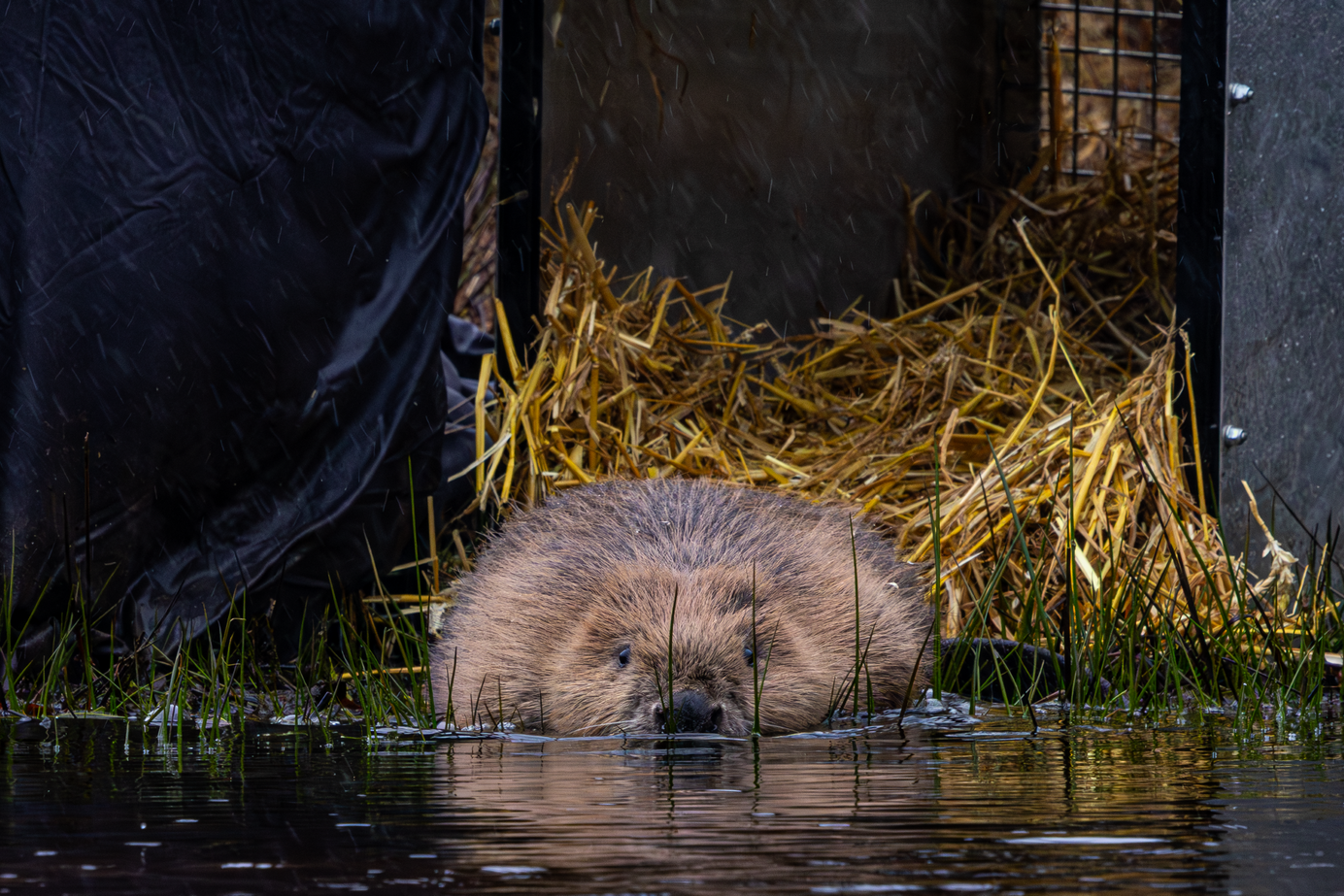
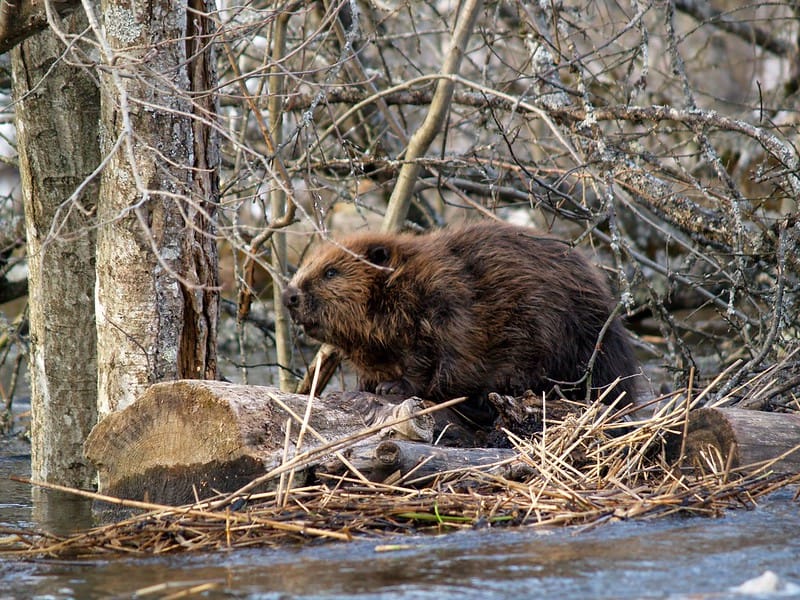
Beavers | A group of 49 organisations have written an open letter to the Labour government urging Defra to publish a long overdue licensing framework and national strategy for wild beaver releases in England. The letter, which was signed by groups including the Beaver Trust, Rewilding Britain and Anglian Water, argues that the lack of formal policy is preventing ‘much needed progress’ in restoring the native species. It also points to ‘growing public and scientific support’ for their reintroduction, including Defra’s public consultation in 2021, in which 69% of respondents agreed with the proposed approach. Meanwhile, the Guardian has reported that senior Downing Street officials have blocked the beaver reintroduction plans of Natural England because they are seen as a ‘Tory legacy’ – although a government spokesperson said the story was ‘categorically untrue’. The Spectator also reported the story.
Pine marten | A decade-long conservation project has hit a major milestone after successfully translocating 100 pine martens, thereby re-establishing populations in Wales and southwest England. The Vincent Wildlife Trust collaborated with Forestry and Land Scotland (FLS) to move pine martens from forests across Scotland to parts of Gloucestershire, Devon and Wales, where the species was on the brink of extinction due to habitat loss and historical persecution. These populations have now successfully bred and spread beyond their initial release sites, resulting in a resilient western metapopulation, according to the Trust. The BBC and the County Times reported the news.
Rewilding | The charity Rewilding Britain has announced £150,000 of funding for eleven projects across the UK which are ‘pushing the boundaries on rewilding’. Five of the projects are aimed at young people. The Scout Association, for example, is going to introduce rewilding strategies at four of its Adventure Centres, including the Lake District and Ashdown Forest, while the Essex-based charity Wilderness Foundation is creating an outdoor classroom in an ancient woodland. Other funded projects focus on species reintroductions, including restoring storks to London, bringing back elk to the Norfolk fens, and returning Britain’s largest ever bird – the Dalmatian pelican – to Norfolk. The Guardian covered the news, and you can read more about the projects here.
In other news:
- The UK is gearing up for the RSPB’s Big Garden Birdwatch – the world’s largest garden wildlife survey – which is taking place next weekend, reports BirdGuides.
- Britain is facing a shortage of broccoli, cauliflowers and other brassicas this spring as the mild autumn and winter caused the crops to come up early, reports the Guardian.
Across the country
Wales | The Welsh rewilding charity Tir Natur has successfully raised over £90,000 following a community appeal to establish Wales’ largest ecosystem restoration project. The funds will pay for the deposit and associated costs of more than 1,000 acres of marginal upland farm, the location of which will be revealed in spring. The charity says that the site will showcase large-scale rewilding and the importance of large grazing animals in restoring depleted ecosystems. It also plans to demonstrate the natural overlaps between rewilding and more traditional farm systems, with ‘wild range’ meat contributing to the local economy. Stephen Jenkins, co-CEO of Tir Natur, said that the success of the fundraising appeal ‘reflects the strength of public backing for this work’. The Nation Cymru covered the story.
Borders | A botanist has reported that an assemblage of rare plants is threatened by a controversial forestry plantation in the Scottish Borders. Land on Warb Law, overlooking the town of Langholm, was sold to forestry firms for the planting of fast-growing Sitka spruce. However, bryologist Dr Elizabeth Kungu from the Royal Botanic Garden in Edinburgh has recorded more than 70 species of moss and 26 species of liverwort on a nearby site, some of which have never been found elsewhere in the county. Kungu’s report claimed that the habitat would be ‘in serious danger of disappearing’ as a result of tree planting. A spokesperson for Scottish Woodlands said that the planting proposal had been specifically designed with open areas to avoid areas of ecological interest. The Times covered the story.
Aberdeen | The National Trust for Scotland has completed restoration work at Castle Fraser in Aberdeenshire. The Inverurie castle is one of the few sites in northern Scotland that supports the rare northern damselfly and azure damselfly, the former being one of the 26 priority species identified by the Trust in their recent Plan for Nature. The work included repairing a sinkhole and leaks in the castle’s popular Flight Pond, home to a variety of dragonfly and damselfly species. The Trust also carried out surveys of the fish stock in the pond, and discovered a critically endangered European eel estimated to be anywhere between 30 to 60 years old. Ranger Vivian Bisset said it was ‘very exciting’ to think that the eel had ‘found its way from the Sargasso Sea to Castle Fraser as part of its epic migration journey’. The Herald reported the story.
Elsewhere:
- The Wildfowl and Wetlands Trust is spending £21m to transform low-lying farmland on the Awre peninsula in Gloucestershire into a saltmarsh nature reserve, reports the Times.
- Beavers have been spotted for the first time in Somerset’s Avalon Marshes, reports the BBC.
- The reintroduction of the chequered skipper butterfly to a forest in Northamptonshire has been declared a success, 50 years after it went extinct in England, reports BirdGuides.
- An Oxfordshire wildlife group has started a campaign calling for people to stop feeding red kites due to a ‘change in behaviour’ from the birds, reports the BBC.
- A three-year project funded by National Highways has allowed the Wildlife Trust in Bedfordshire to protect rare chalk grassland species.
- The National Lottery Heritage Fund has awarded more than £216,000 to a group tackling invasive plant species in the River Tees, reports the Northern Echo.
- Scientists have confirmed that Italian ryegrass – a weed resistant to a key herbicide – has been found in the UK for the first time, in fields in Kent, reports the BBC.
- The RSPB is increasing its Wallasea Island reserve in Essex by 100 hectares, providing vital habitat creation for threatened birds including corn buntings and lapwings.
- The Isle of Wight Wildlife Trust has restored 90 hectares of floodplain habitat in the Lower Test Valley, providing habitat niches for waders, wildfowl, damselflies and fish.
- Derbyshire Wildlife Trust is using an £80,000 grant to explore opportunities for peatland restoration alongside sustainable food production.
- Members of the Women’s Institute are testing the water in Northumberland’s River Coquet as part of a long-term project to improve its biodiversity, reports the BBC.
- The first sighting of frogspawn in the Freshwater Habitat Trusts’ national survey was recorded in the Isles of Scilly, reports the BBC.
- Environment minister Steve Reed is appealing against a High court decision which ruled that the government had not met its legal duty to clean up a river in Yorkshire, reports the Guardian.
- The National Lottery Heritage Fund has awarded £3m to the Dartmoor Dynamic Landscapes programme to restore nature and protect heritage on Dartmoor, reports the BBC.
Reports
Heritage | The National Trust has published an ambitious ten-year strategy to mark its 130th birthday. Foremost among its goals is to restore nature, both on Trust land and elsewhere. By 2035, it is aiming to create 250,000 hectares of thriving, nature-rich land in collaboration with other landowners and local communities. Its plans also include an apprenticeships scheme for 130 young people in areas including countryside management and gardening; supporting 100 towns and cities to transform and grow green space; and boosting peatland restoration. Meanwhile, it will also tackle unequal access to nature and heritage, including through a new partnership with the mental health charity Mind. The news was covered by the Guardian, Countryfile and Museums Association, while the Telegraph reported that some farmers feel threatened by the restoration drive.
Targets | The window to stop the decline of England’s nature is closing fast, according to the Office for Environmental Protection in its latest annual progress report. Overall, the government is largely on track to achieve just nine of its environmental targets, partially on track to achieve 12, and largely off track to achieve 20. Areas of particular concern include the marine environment, achieving ‘thriving plants and wildlife’, and general biodiversity trends. The report stressed the importance of properly funding and monitoring England’s protected areas for nature – including SSSIs, national landscapes and MPAs – as well as investing in nature-friendly farming schemes. The OEP did praise some of Labour’s actions, including setting up a water commission and writing a new environmental improvement plan, but said the government must act ‘urgently and decisively’ to catch up on its legal obligations. The Guardian covered the news.
Wales | Natural Resources Wales has published an interim State of Natural Resources Report (SoNaRR), assessing the pressures on Welsh ecosystems, their quality and their contributions to societal wellbeing. Ahead of the full SoNaRR report – which will be published at the end of the year, as required by the Environment Act – the interim report warns that urgent and collectivei action is needed now if Wales is to redress the balance between degradation and protection of natural resources. It highlights the key challenges, which are cited as the accelerating loss of nature and the intensifying effects of climate change and pollution. It also spotlights areas of progress since the last report in 2020, including the national commitment to support nature’s recovery via the Leaders’ Pledge for Nature (2020) and the government’s Biodiversity Deep Dive (2022).
Science
Raptors | Reintroduced white-tailed eagles in Scotland may have different diets to their pre-reintroduction relatives, according to a study in Plos One. Focusing on red kites and white-tailed eagles – both generalist raptors reintroduced to Scotland – researchers measured ratios of carbon and nitrogen in feather keratin and bone collagen of museum specimens collected between the 1800s and 2010s. By comparing the pre- and post-reintroduction periods, they found that red kites showed very similar isotope values, suggesting their prey base was unlikely to have altered substantially. In contrast, several pre-reintroduction eagles were isotopically distinct from the post-reintroduction population. It is unclear whether this apparent change reflects a shift in distribution of the species, or potentially a change in prey availability, such as reduced access to marine species. As the first study of its kind, the authors conclude that it demonstrates the utility of natural history collections for investigating environmental changes for reintroduced species.
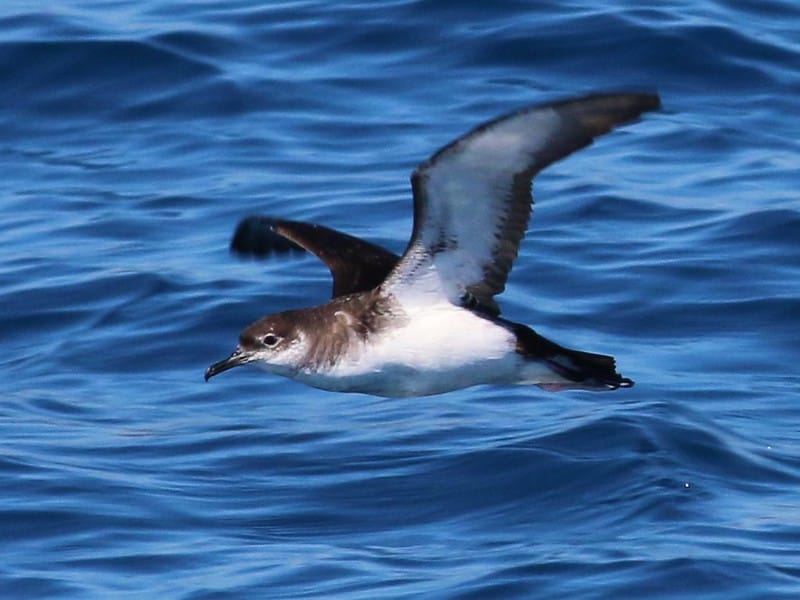
Shearwater | Travelling seabirds such as Manx shearwaters make trade-off decisions between wind efficiency and favoured fishing areas when deciding where to forage, according to a study in Current Biology. To investigate foraging behavior, researchers from the University of Bangor used GPS accelerometers to track 218 shearwaters, mapping over 600 foraging trips from two island-based observatories in north Wales and Northern Ireland. The research showed that, on windy days, the birds looked for food in places that it was easier to fly to, conserving their energy. In contrast, on calmer days, they favoured known targets – memorised foraging areas – over energy-efficient journeys. Senior author Dr. Line Cordes said that, with climate projections forecasting a reduction of summer winds in the UK, understanding the role of winds in how seabirds forage will be crucial to understanding future climate impacts on the species. Phys.org covered the research.
Squirrels | Feeding red squirrels with supplementary peanuts can cause them to develop weaker jaws, according to a study in Royal Society Open Science. A team of researchers compared the shape of skulls and lower jaws in red squirrels from four isolated UK populations: north Scotland, the Borders, the Formby reserve in Merseyside, and Jersey. They found that the Formby population, which was provided with supplementary peanuts throughout the 1990s and 2000s, had less robust lower jaws, and skulls with flatter braincases and longer faces – implying a less forceful bite. Peanuts are much easier to open than other food sources such as hazelnuts and pine cones, suggesting that these changes were a result of the diet change. The authors conclude that conservationists should match any supplementary foods to what species are most likely to find in the wild. Co-author Philip Cox explained the findings in the Conversation.
Driftwood
Rewilding | The mysterious release of four lynx into the Cairngorms has reignited a debate on the ethics of guerrilla or ‘rogue rewilding’. This is the practice of illegally releasing species into the wild, usually citing the slow pace of official reintroduction schemes. Indeed, the return of wild beavers to UK rivers was largely due to unofficial ‘beaver bombing’. However, conservationists – including Derek Gow, one of Britain’s foremost defenders of guerilla rewilding – have pointed out that ‘a lynx is not a beaver’, and that the seeming effort to re-establish the predator was irresponsible. Indeed, one of the cats died after being captured. An opinion piece in the Telegraph argues that the ‘idiotic’ release has damaged rewilders’ bid for reintroduction. Meanwhile, environmentalist Ben Goldsmith wrote on his Substack that the backlash was the result of a ‘small, organised rural cabal that is opposed to any kind of wildlife recovery’. Read more on the debate in the Guardian, Conversation, Times, BBC, Herald and on X.
Eating | The magazine Wicked Leeks has two features this week on the ethics of eating. In the first, researcher David Burrows writes about how restaurants, cafes and canteens are increasingly providing customers with more environmental information about the food they serve. He explores whether the concept of carbon labels on menus could help diners make more sustainable choices – or simply make them feel guilty for eating steak. More important, he argues, are the choices about what goes on the menu in the first place. In the second article, retired clinical dietitian Dr Ann Ashworth examines the history and science behind plant-based eating, from vegan to flexitarian diets. In particular, Ashworth looks at the intersection of health research – what is good for our bodies – and climate research: what can help save the planet. Hint: more fruit, veg, beans and pulses, and less red and processed meat, in both cases.
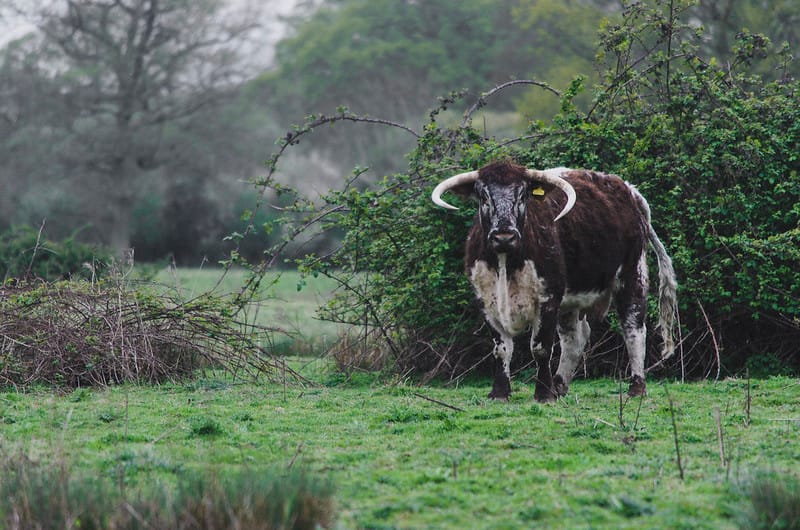
Wild | A long read in Noema picks at the threads between rewilding and agriculture. These concepts are often held up as opposites, mapped onto ‘nature’ and ‘culture’, but they are becoming increasingly entangled, according to the feature. When writer Tristan Søbye Rapp visited the Knepp Estate – the touchstone of British rewilding – he was struck by the visual similarities between the former English farmland and classical European vistas: wood-pastures of Romania or cork dehesas of Spain. He writes: ‘If Knepp’s supposedly rewilded vistas challenge our deep-rooted preconceptions of wilderness and the wild, then it is perhaps our preconceptions, and not Knepp or its cattle, that demand revision.’ He further explores why the prospect of ‘agricultural rewilding’, while not an ecological silver bullet, is increasingly gaining traction among both researchers and practitioners.
Further reading:
- In the Times, environment editor Adam Vaughan writes about why wine drinkers may have to swap an English chardonnay for a solaris as temperatures rise.
- Researchers have found that climate change scepticism has almost entirely disappeared from the opinion pages of British national newspapers. Read more in the Press Gazette.
- A feature in the Guardian by C Marina Marchese describes how she discovered the world of local honey, and her journey to becoming a honey sommelier.
- Did you know that fatbergs – those disgusting masses blocking sewage pipes – are being turned into an ingredient used in perfume? Find out how in this BBC InDepth article.
- In the Guardian, Sam Pyrah describes how volunteering in her local park helped turn environmental despair into mood-boosting altruism.
- An article in Nation Cymru describes the ‘delightfully weird’ tradition of wassailing in Gower, Wales.
Happy days
Tradition | In the southeast corner of England, ancient rural traditions are being revived to brighten the start of the year. In some towns in Cambridgeshire, the first Monday after Twelfth Night – known as Plough Monday – is marked by Molly dancers. These were traditionally groups of workers, usually farm labourers, who would disguise themselves in costumes and dance and sing to raise money while the fields were frozen. The custom was revived in the village of Mepal, near Ely, in 1977, and the Mepal Molly dancers now tour schools to spread the spectacle. Also in Cambridgeshire, the Whittlesey Straw Bear Festival dates back to the mid-1800s, and is said to originate from plough boys who would dress in straw to prank anyone who did not show them charity. You can read about both of these quirky festivals on the BBC.
Subscribe to our newsletter
Members receive our premium weekly digest of nature news from across Britain.
Comments
Sign in or become a Inkcap Journal member to join the conversation.
Just enter your email below to get a log in link.