Biodiversity Strategy & Christmas Trees
The latest news on nature and conservation in Britain.
We are signing off for Christmas now, so there will be no newsletter for the next two weeks.
Thanks to all our wonderful subscribers who have continued to support our environmental journalism over the course of this year – particularly as I have attempted to balance this newsletter with new motherhood over the past few months. I really appreciate everyone who has stuck with us during the disruption wrought by childbirth! I am exhausted and looking forward to introducing my tiny daughter to the joys of the festive season (and to her extended family!).
My particular thanks to Inkcap Journal's wonderful newsletter editor, Coreen Grant, who has kept everything running so smoothly this year. A reminder that you can follow her on Twitter, if you don't already!
We will both be back with more energy and ideas in January. My maternity leave ends in March, when regular features will return to your inbox once more, hopefully bigger and better than ever. If there's anything you think we should cover, or topics that you find particularly interesting, or a style of feature you find especially valuable (more interviews? more explainers? more science?) let me know!
Love,
Sophie - editor
National news
Biodiversity | The Scottish government has published a draft Biodiversity Strategy, laying out proposals for how it plans to become “nature positive” by 2030, and restore biodiversity across Scotland by 2045. NatureScot outlined 26 priority actions, including expanding and improving protected areas; supporting nature-friendly farming, fishing and forestry; recovering vulnerable species; and tackling the nature and climate emergencies together. A delivery plan for the strategy is expected in spring 2023. Also this week, NatureScot launched a consultation on plans to designate at least 10% of its seas as Highly Protected Marine Areas (HMPAs). HMPAs provide marine environments with the highest protection from activities such as fishing and aquaculture, as well as developments including new ports and offshore wind. If the plans go ahead, Scotland will become the first country in the world to afford its oceans this level of protection. The Herald, the Scotsman and ENDS reported the story.
Land | A report from the House of Lords Land Use Committee calls for the creation of a land use framework, guiding decisions around which areas are best suited to different uses. The report, called ‘Making the most out of England’s land’, highlights competing pressures – including food production, nature and biodiversity restoration, carbon sequestration, housing, infrastructure, and access and wellbeing – and the current uncertainty landowners are facing from the Environmental Land Management scheme. It recommends the creation of a Land Use Commission, as well as a more multifunctional approach to the land, and more effective use of the Green Belt for biodiversity. The Guardian and ENDS covered the news.
Indicators | Defra has published its latest update of the UK Biodiversity Indicators for 2022. A reduced set of only six (from 24) indicators have been published this year due to the government’s ongoing review of environmental targets. One further indicator – status of priority species – is expected in spring 2023, with the next full update after the review is completed. Of the six updates, only air pollution and the extent of marine protected areas are improving. Meanwhile, the status of butterflies and protected areas on land have seen little or no change. The distribution of pollinating insects and the condition of protected sites are both deteriorating, with expenditure on UK and international biodiversity also in decline. With the majority of indicators excluded from the update, environmental charities are urging the government not to “waste years of its time” rewriting environmental laws, reports ENDS. Environmental journalist Rachel Salvidge summarised the updates on Twitter.
It's biodiversity indicator day today! DEFRA has decided not to report on most this year, because they're busy setting those important nature/water/waste targets (which have not yet been set despite the deadline being 31 Oct)👀 1/6https://t.co/F5VPw0j1rz#COP15 #COP15montreal
— Rachel Salvidge (@RachSalv) December 14, 2022
In other news:
- COP15 continues apace, with a particular focus on whether the ‘30 by 30’ target is achievable. Campaigners have warned that “wordsmithing” is holding back progress, while tensions are high over finances. The Guardian provides daily updates.
- In Scotland, 300,000 chickens are dead after an outbreak of bird flu, reports the BBC.
- Environmental organisations have penned an open letter to the government, urging them to leave behind the practice of burning trees for electricity.
- British farmers are ripping up their orchards because they cannot afford to keep them, according to the NFU president. The Guardian reported the news.
- The Scottish government has announced £7.6m for large-scale restoration projects, including restoring rivers in the Cairngorms and protecting the rainforest in Argyll.
- Conservation groups have warned that eel populations are facing collapse, after EU negotiations set quotas above those recommended by scientists. The Guardian reported the news.
- Destructive bottom-trawling fishing is still taking place in more than 90% of the UK’s marine protected areas, reports the Times.
- Labour has formally launched the Labour Climate and Environment Forum, reports BusinessGreen.
Across the country
Solent | Ten organisations have joined together to launch the £5m Solent Seascape Project, which will restore threatened marine habitats along the Solent over the next five years. The Project covers around 522 sq km of the major shipping lane and will focus on four types of habitats: seagrass meadows, oyster reefs, saltmarsh and seabird nesting sites. The Solent is an internationally important site for wintering and breeding seabirds, but its habitats are increasingly impacted by pollution and coastal development. Dr Joanne Preston, from the University of Portsmouth, said: “Embarking upon a marine habitat restoration project at this scale is truly groundbreaking from a scientific perspective.” The BBC, the Times and the Guardian reported the news.
Dartmoor | On Monday, over 100 ramblers held a protest outside the Royal Courts of Justice, ahead of a ruling on the right to wild camp on Dartmoor. Hedge fund manager and landowner, Alexander Darwall, has brought a legal challenge to court against the right to wild camp on sections of the National Park: something which has been enshrined since 1985 by the Dartmoor Commons Act. The moor is the only place in England and Wales where it is legal to wild camp without the landowner’s permission, but Darwall says that camping is creating “problems and risks” which are “getting worse”. Outside the courts, locals and protestors held signs and shouted: “Dartmoor is for everyone”. The Guardian, the Times and the Telegraph reported the news.
Whitstable | The Bumblebee Conservation Trust has announced Victory Wood, a Woodland Trust site in the Wilder Blean landscape in southeast England, as a “Champion Site” for its conservation of a rare bee species. The Woodland Trust purchased Victory Wood – previously an arable farm – in 2004, but it wasn’t until 2018 that they discovered a population of shrill carder bees, one of the UK’s rarest bumblebees. Since then, the two Trusts have worked on a conservation programme to provide foraging and nesting sites. Surveys indicate the population has risen significantly, with 121 individuals recorded in one day. Dr Hazel Jackson of the Woodland Trust called it “a real conservation success story and a great example of nature recovery.”
Elsewhere:
- Lancashire Wildlife Trust has been awarded £30,000 to bring back lost plant species to Winmarleigh Moss SSSI, a rare lowland raised peat bog.
- The sighting of a walrus – named “Thor” – on Calshot beach in Hampshire is extremely rare, according to experts. The BBC and the Times reported the news.
- One of Britain’s largest and rarest spiders, the fen raft spider, is making a comeback in Norfolk, according to the RSPB.
- A recycling firm in Redcar has offered a remediated industrial site as a home for bees which have been removed by pest control, reports the Northern Echo.
- Northumberland Wildlife Trust has announced that this year saw 26 young hen harriers fledge from seven nests on Forestry England land and two private estates in Northumberland.
- Delays to the restoration of Beddington Farmlands in south London are “depriving” locals of access to green space, reports BirdGuides.
- A peregrine falcon found in Lowestoft, having been illegally removed from a nest, has been released into the wild, reports the BBC.
- Danes Moss North in Macclesfield has been recognised as a Local Wildlife Site, despite being at risk of development, according to Cheshire Wildlife Trust.
- MPs have criticised the government’s investigation into crustacean deaths off the northeast and Yorkshire coast for lacking transparency, reports the BBC.
- Natural Resources Wales is set to begin work removing New Zealand pygmy weed, an invasive plant, from sites in Flintshire to help great crested newts.
- Stepping Stones, a National Trust project in Shropshire, is asking for volunteers to help plant trees over winter to create passageways for animals, reports the BBC.
- Police are investigating the deaths of four hen harrier chicks in the Yorkshire Dales, reports the Northern Echo.
- Warwickshire Wildlife Trust has launched a project to restore 140 hectares of habitat along the River Blythe.
- Professional stalkers have culled 1,700 “super-sized” red deer who were living on the Flanders Moss National Nature Reserve in Stirling, reports the Times.
- Derbyshire Wildlife Trust has been awarded £100,000 by Natural England to protect and restore the county’s peatlands.
- Manchester City Council has declared Kenworthy Woods, a former tip, as a local nature reserve, reports the BBC.
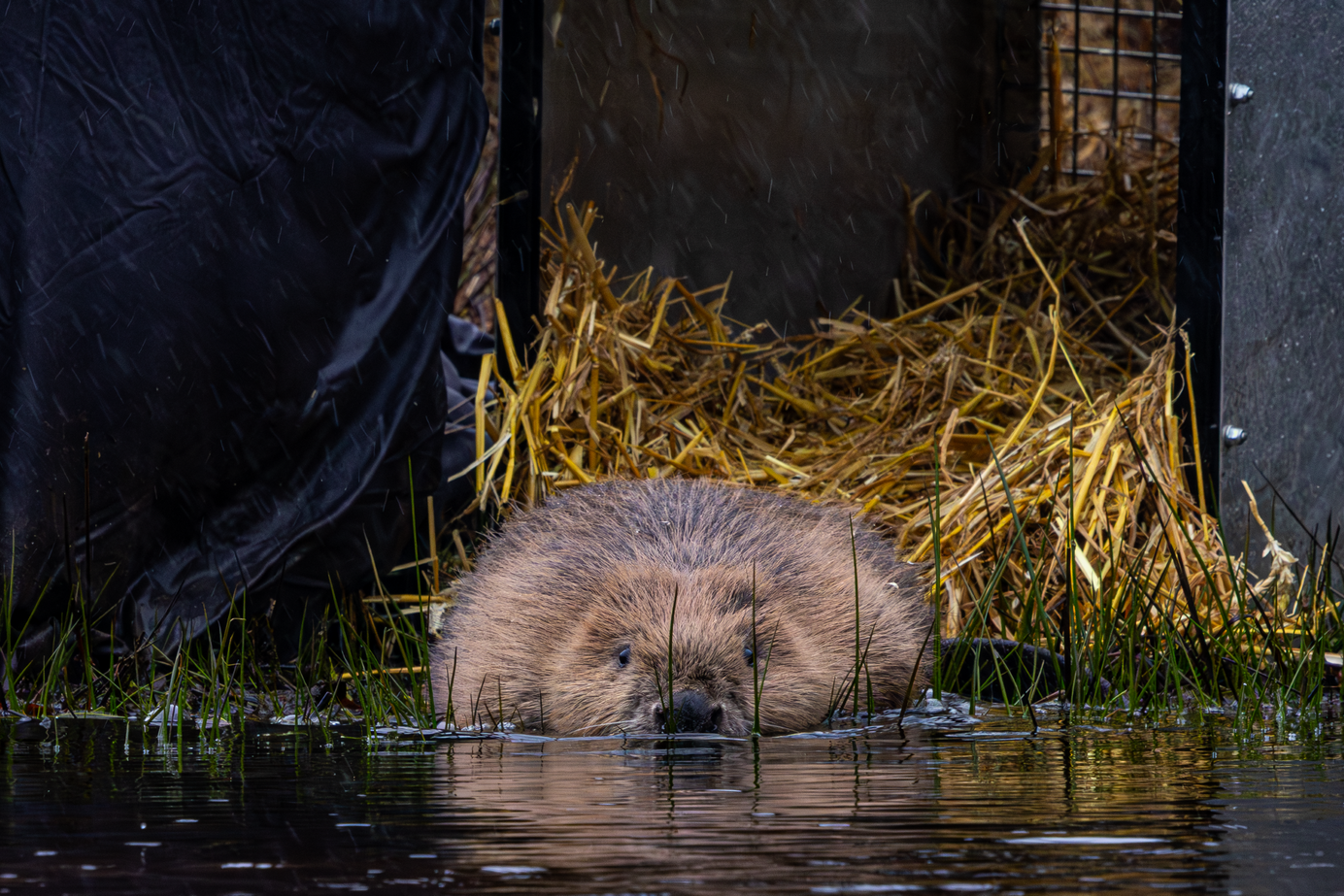
- NatureScot has approved an application from RSPB Scotland to release a family of beavers at Aber Burn in Loch Lomond, reports the Herald.
Reports
Children | A report by Natural England explores children’s perspectives on what “quality” means for their local nature spaces. The authors of the report worked collaboratively with 93 young people aged between eight and 15. The findings revealed five overarching factors: the variety of animals and plants in the environment; space to play and be active; man-made aspects that enhance the natural setting; feelings such as safety, belonging and excitement; and accessibility of the space. Children from diverse backgrounds all identified similar features as being important to them. The authors of the report conclude that involving young people in the design and maintenance of natural spaces will ensure their preferences are reflected, and will also position children as valued users and keepers of natural environments.
Race | Only 7% of people working in the environmental sector identify as people of colour, according to the inaugural RACE Report. The Racial Action for the Climate Emergency report, which will be published annually, aims to work with environmental organisations to increase transparency around diversity and inclusion in the sector. This year’s report includes data from 91 organisations on the race and ethnicity of its staff members. It shows some signs of improvement, with 11% of trustee and governance board members identifying as people of colour – higher than the average 8% across the wider charity sector. However, only 5% of people managers identified as people of colour, and only 9% of staff who received a promotion in 2021. The report concludes that while the data shows some good practices are becoming commonplace, “it is clear that more substantial and widespread action is needed to ensure organisations’ diversity is reflective of the broader picture across the UK's population.”
🚨🚨 New data alert. The Race Report has just released new data showing that representation of people who identify as people of colour and racially or ethnically marginalised groups, reaches 7% but remains below national average.
— RSPB (@Natures_Voice) December 14, 2022
A thread 🧵1/6 pic.twitter.com/Hj5vgTso6D
Insects | Flying insect numbers splatted on number plates have declined by 64% since 2004, according to the annual Bugs Matter survey. The citizen science survey, which is conducted by the Kent Wildlife Trust and Buglife, asks volunteers to record the number of insects squashed on their vehicle registration plates following a journey – a proxy for the number of insects flying about in the wild. The 2022 report found a 5% greater decline than observed between 2004 and 2021, with record summer temperatures perhaps playing a part. Nearly 7,000 volunteers participated in this year’s survey, with 4,140 journeys analysed; the scientists behind the survey are urging more people to sign up next year, to help understand whether the data is showing long-term trends or the impact of extreme weather. The Guardian and the Times covered the research.
Science
Puffins | Puffins are vulnerable to winter storms for up to two months of every year, according to a paper in Ecology and Evolution. Researchers used tiny loggers attached to the legs of four puffins to track their movements and water immersion over the winter months, when puffins moult their flying feathers and spend weeks out at sea. They found that puffins spend far longer water-borne than expected: up to eight weeks, which is twice as long as previously thought. Lead author, Jamie Darby, said the findings are significant because puffins are in decline, and winter cyclones in the North Atlantic are likely to become more frequent and severe with climate change, putting these charismatic birds at greater risk.
Birds | How does the density and stability of bird populations in an English oak woodland compare to Białowieża National Park (BNP) in Poland, one of the best preserved examples of natural European woodland? This was the question posed by a paper in Acta Ornithologica. Somewhat counterintuitively, low densities of birds and high community stability may be features of near-natural forest conditions. The study used a long-term census of breeding birds in 50 hectares of oak woodland in central England, which contains both managed and undisturbed areas. “Although caution is needed in drawing conclusions from a single site, with the exception of a small number of species, in recent decades there is unlikely to have been a general pattern of higher densities of birds in English woodland than in BNP,” the authors concluded.
Shelter | The strategic placement of trees and hedgerows on farmland can improve both the welfare and productivity of livestock, according to a paper in Forests. Researchers tracked 15 ewes in a wider flock using GPS, and analysed their movements compared to the microclimate. They found that the sheep exhibited a preference for shelter almost four times greater than the exposed open areas of the trial site. They also noted that sheep tended to cluster around sheltered areas during cold periods and high winds. The ewes demonstrated equal preference for artificial shelters and natural ones, but the authors point out that agroforestry practices – integrating trees and hedgerows into farming systems – provide additional environmental benefits such as climate change mitigation and biodiversity gains.
Driftwood
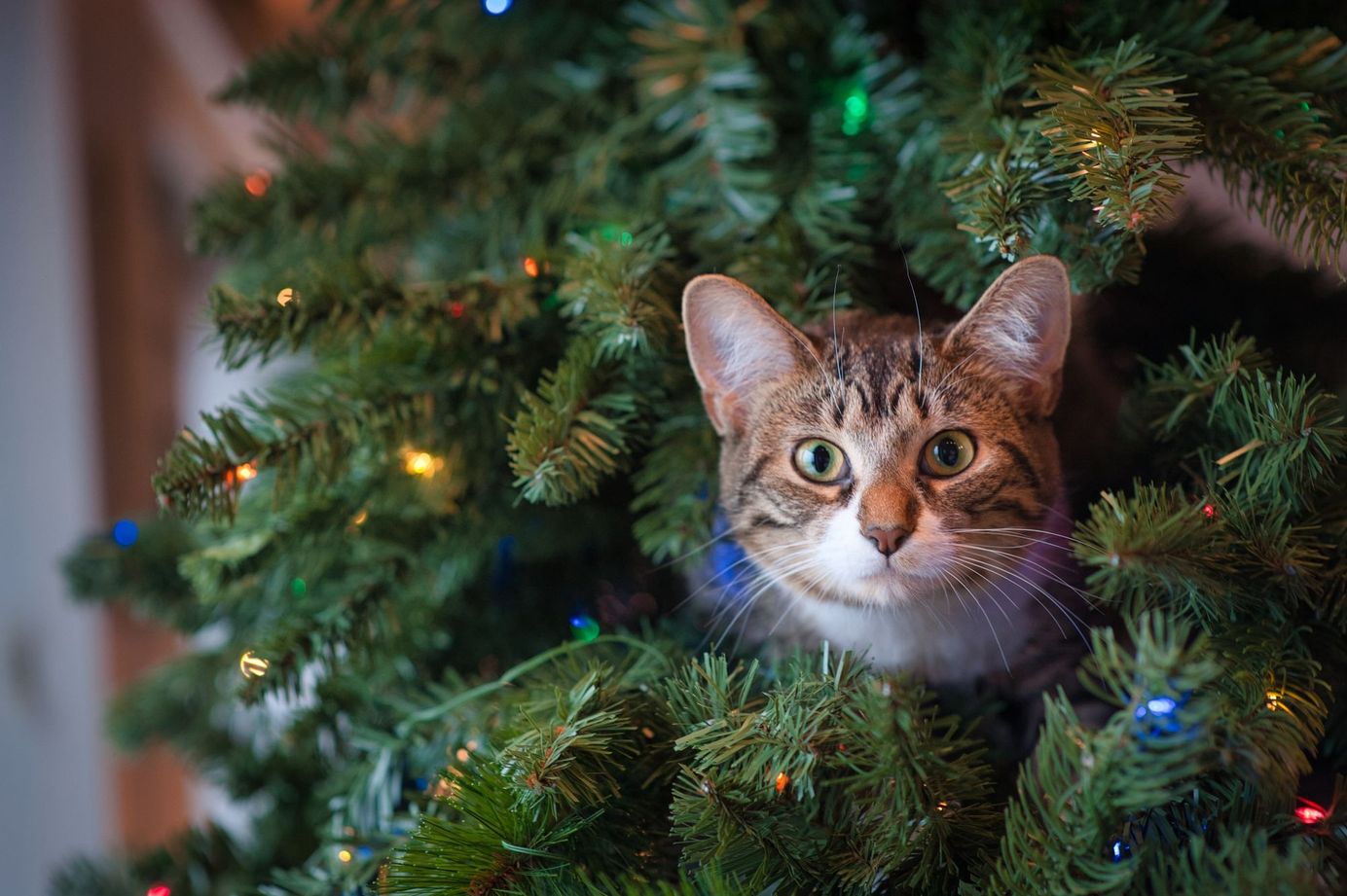
Christmas | Which is better for the environment: a real Christmas tree or a fake one? Chopping down millions of young trees every year – estimated to be more than eight million in the UK alone – to bring inside and wrap in tinsel might not seem like the greenest of actions, but this article in BBC Future explains that there are overlooked environmental benefits to choosing a real tree over a plastic one. Christmas tree plantations can provide a boost for biodiversity, especially in areas dominated by heavy agriculture. They also provide jobs in rural economies, absorb carbon, and provide a connection to nature in homes where there may be few other opportunities. Increasingly, there are options to recycle or replant your Christmas tree, or even rent one instead of buying it outright – so there’s still plenty going for the tradition of real pine needles.
Rainforest | In The Fence magazine, writer Harriet Rix critiques The Lost Rainforests of Britain by Guy Shrubsole. Safe to say, she is not a fan of the book. Rix takes issue with Shrubsole’s writing and “privileged” position as an activist, but more fundamentally finds fault with his ideology. Rix argues that Shrubsole’s idea of protecting the “lost rainforests” of Britain from overgrazing is not a dream but a colonial fairytale, which will damage the flora that depends on grazing. Rix points to Inkcap Journal’s interview with legendary botanist Margaret Bradshaw, who linked the declining flora of Teesdale to changing grazing pressures. The article has split opinion on Twitter, with some hailing it a “brilliant piece of criticism”, and others an “incoherent and unfair attack”.
Extinction | In the Times, former leader of the Conservative Party, William Hague, ponders how our descendants will look back on society a thousand years from now. He believes that the outcome of COP15, currently taking place in Montreal, could shape the very way our society is remembered: “Busy as we are this week with our strikes, our weather and our Christmas parties, we should be focusing on what is agreed there by the world’s governments,” he writes. Otherwise, he fears, the history books will recount that, despite their enormous wealth, people "could not work out a way to quantify and save their most precious asset of all.”. The answer, according to Hague? Valuing nature in a way that reflects its vital importance to society, for a start.
Further reading:
- A report from Share Action finds that Europe’s largest banks are not doing enough to address the biodiversity crisis. Edie covered the news.
- In the Guardian’s coverage of COP15, articles address the questions of what “nature positive” really means, and whether the summit can protect ocean biodiversity from the growing “blue economy”.
- Following the publication of the draft Biodiversity Strategy, a blog by the Scottish Environment LINK looks at the importance of freshwater ecosystems.
- This article in Countryfile exhibits a selection of images from their Landscape Photographer of the Year competition.
- A blog by Natural England explains how the Paludiculture Exploration Fund will help farmers to explore wet farming on peat soils.
Happy days
Winter | With much of the UK receiving a wintry dusting of snow this week, an article by the RSPB takes a look at the animals in Britain that are specially adapted for a white Christmas. The ability to turn white is a nifty evolutionary trick which allows mountain hares, grouse and stoats to survive in remote, high-elevation areas. Meanwhile, the Wildlife Trusts has given a classic carol an informative makeover: check out their version of the Twelve Birds of Christmas.
Subscribe to our newsletter
Members receive our premium weekly digest of nature news from across Britain.
Comments
Sign in or become a Inkcap Journal member to join the conversation.
Just enter your email below to get a log in link.