Biodiversity Strategy & Turtle Dove Decline
The latest news on nature and conservation in Britain.
National News
Biodiversity | The Scottish government has proposed a strategy to halt biodiversity loss by 2030 and reverse it by 2045. The new strategy is in response to mounting evidence of dramatic declines in Scottish biodiversity, and would represent a “fundamental overhaul” of Scotland’s existing Biodiversity Strategy, which was published in 2004. The government has opened a three-month consultation for stakeholders and the public to contribute their opinions of the strategy’s long-term aims. Francesca Osowska, chief executive of NatureScot said: “We have reached a critical point where we must take ambitious action for nature now, and Scotland’s new biodiversity strategy gives us the best opportunity to do this.” The Herald and the National reported the announcement. In other news, statistics published by NatureScot show that more than three-quarters of Scotland’s natural features – habitats, species and geology – on protected sites are either in or recovering towards a favourable condition. However, there has been a slow decline in the number of features in favourable condition over recent years, which is mainly attributed to overgrazing and invasive non-native species. Biodiversity minister Lorna Slater said that “we know we can and must do more.”
Rainforest | Nearly three-quarters of England’s remaining temperate rainforests do not have any official protection, according to analysis by the campaign Lost Rainforests of Britain. Led by environmental author and campaigner Guy Shrubsole, the campaign urges the public to help identify and protect what little rainforest remains. Only 18,870 hectares of rainforest exist in England from a habitat that once stretched from Cornwall to Scotland, and, of these remaining fragments, only 5,000 hectares are under formal protection as SSSIs. Environment minister Rebecca Pow responded that many rainforests are protected by existing policy, and added that SSSI guidelines focus on securing “a representative series rather than protecting every example”. The Guardian reported the story.
REVEALED: Almost three-quarters of England's temperate rainforests are not protected, the @LostRainforests campaign can disclose - despite Ministers' claims to be protecting them.
— Guy Shrubsole (@guyshrubsole) June 23, 2022
Time for the Govt to designate all our remaining rainforests as SSSIs:https://t.co/mlQShXO80z pic.twitter.com/xPLF277j3Q
Oceans | Five highly protected marine areas (HPMAs) could be created by the government to help protect and restore marine life, according to the Guardian. HPMAs are governed by tougher restrictions than other marine protected areas, and effectively constitute “no take” zones for fishing. This makes them controversial among fishers, but conservationists argue they are necessary, given regular MPAs have very few restrictions on damaging activities such as bottom trawling and offshore cabling. The five proposed sites for HPMAs include the coast of Lindisfarne in Northumberland and at Allonby Bay, Cumbria, as well as two offshore sites in the North Sea and one at Dolphin Head in the Channel. The five sites included in the pilot project are expected to pave the way for full HPMA status for some or all of England’s protected sites in 2023, following a consultation. Joan Edwards, director of policy at the Wildlife Trusts welcomed the announcement, but said it was “just the start. We want to see an entire network of highly protected marine areas to help our ocean habitats recover.”
In other news:
- The Guardian and the Telegraph both reported that Defra had updated farming guidance to remove a loophole allowing farmers to spread manure and slurry in a way which could risk water pollution. However, the Defra press office has called the articles “inaccurate and misleading”, claiming the guidance was merely clarified and no such loophole existed.
- Campaigners have accused Boris Johnson of failing to keep his policy pledges after eight wildlife bills promised by the Prime Minister have so far failed to materialise. The Guardian reported the story.
- The president of the NFU has told celebrities who plant trees out of guilt that they are contributing to the loss of Britain’s grazing grasslands, reports the Telegraph. Meanwhile in the Guardian, singer-songwriter Ellie Goulding talks about her love of nature and celebrity platform for ecological activism.
Across the country
Inverness | NatureScot has restricted the use of general licences on Moy Estate near Inverness, after Police Scotland provided evidence of wildlife crime against birds. The evidence included a poisoned red kite found in 2020, as well as incidents relating to trapping offences. General licences allow land managers to carry out control of common species of wild birds, such as magpie and crow, to protect crops or livestock; the use of general licences on Moy Estate will be suspended until June 2025. The BBC reported the news.
Norfolk | The arrival of bee-eaters in Norfolk is an “unmissable sign” of climate change, according to the RSPB. The rare rainbow-coloured birds are usually found in southern Europe and northern Africa, but seven have been spotted making nest burrows in a small quarry at Trimingham. This is now the species’ sixth nesting attempt in Britain this century. Mark Thomas of the RSPB said: “While an incredible sight, we mustn’t forget that the arrival of these birds to our shores is due to changes to our climate and subsequent pressures on wildlife.” The BBC covered the news, while the Guardian also reported the fledging of three black-winged stilts at Potteric Carr nature reserve in Doncaster, believed to be the most northerly nest in Britain for a wading species.
Leicester | A walker’s delight over Leicester City Council’s apparent decision to rewild a disused golf course has been dashed after the council informed him that their mower had merely broken. Steve Walters, who has walked the course for the last 26 years, had emailed the council to congratulate them on rewilding the course. The grass had not been cut since early spring, and Walters said it had attracted butterflies, badgers and birds to the area. The council’s reply said they were “sorry to disappoint”, but their mowing policy was unchanged and their mower was simply out of action. The council said it had a duty to maintain the site, was not aware of any new emerging species, and has now cut the grass. The BBC and the Leicester Mercury reported the news.
Elsewhere:
- Britain’s largest butterfly, the swallowtail, is at risk after fungal pathogens have caused a drastic die back of its major food source on the Norfolk Broads, reports the Guardian.
- A citizen science survey led by Kent Wildlife Trust and Buglife has found a 70% decrease in flying insects in Essex in the last 17 years. Essex Wildlife Trust announced the findings.
- Norfolk Wildlife Trust has raised a “record” £600,000 to create a city nature reserve at Sweet Briar Marshes in Norwich, reports the BBC.
- Conservationists have warned that avian flu deaths among the great skua population on St Kilda are pushing the species toward the brink of extinction, reports the BBC.
- Extinction Rebellion campaigners held a silent protest against the proposed Western Link road near Norwich, staged on the summer solstice, reports the Eastern Daily Press.
- Grouse shooting is set to be banned on the Thornton moorlands in Yorkshire, which inspired the Brontë sisters, reports the Telegraph.
- Locals are once again fighting to protect the flora and fauna of Loughborough Cemetery from “overzealous and unauthorised tidying”, according to the Leicester Mercury.
- Residents have complained to the police after bulldozers began uprooting a local woodland without planning permission, according to the Birmingham Mail.
- The UK and Scottish governments have recommended Britain’s largest rewilding initiative, Affric Highlands, for UN World Restoration Flagship status, announced the charity Trees for Life.
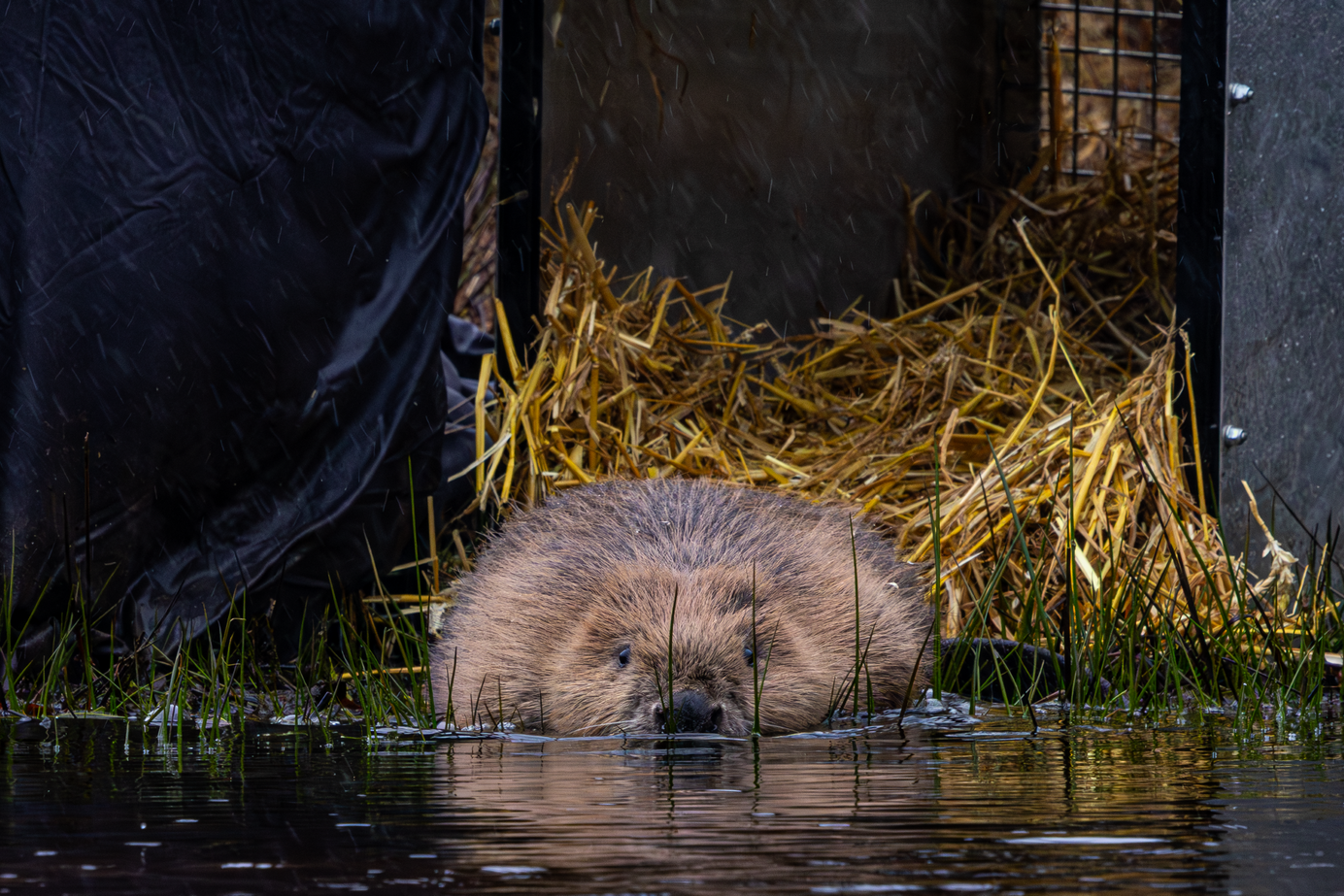
- On its five year anniversary, the Cornwall Beaver Project is celebrating significant biodiversity and flooding benefits brought by its beaver releases. Cornwall Wildlife Trust shared the results.
- A 600-year-old oak in Bretton is due to be felled next week to save taxpayer money, reports Peterborough Today.
- A conservationist has warned that Lake Windermere faces “catastrophe” unless its blue-green algae blooms are urgently tackled, reports the BBC.
Reports
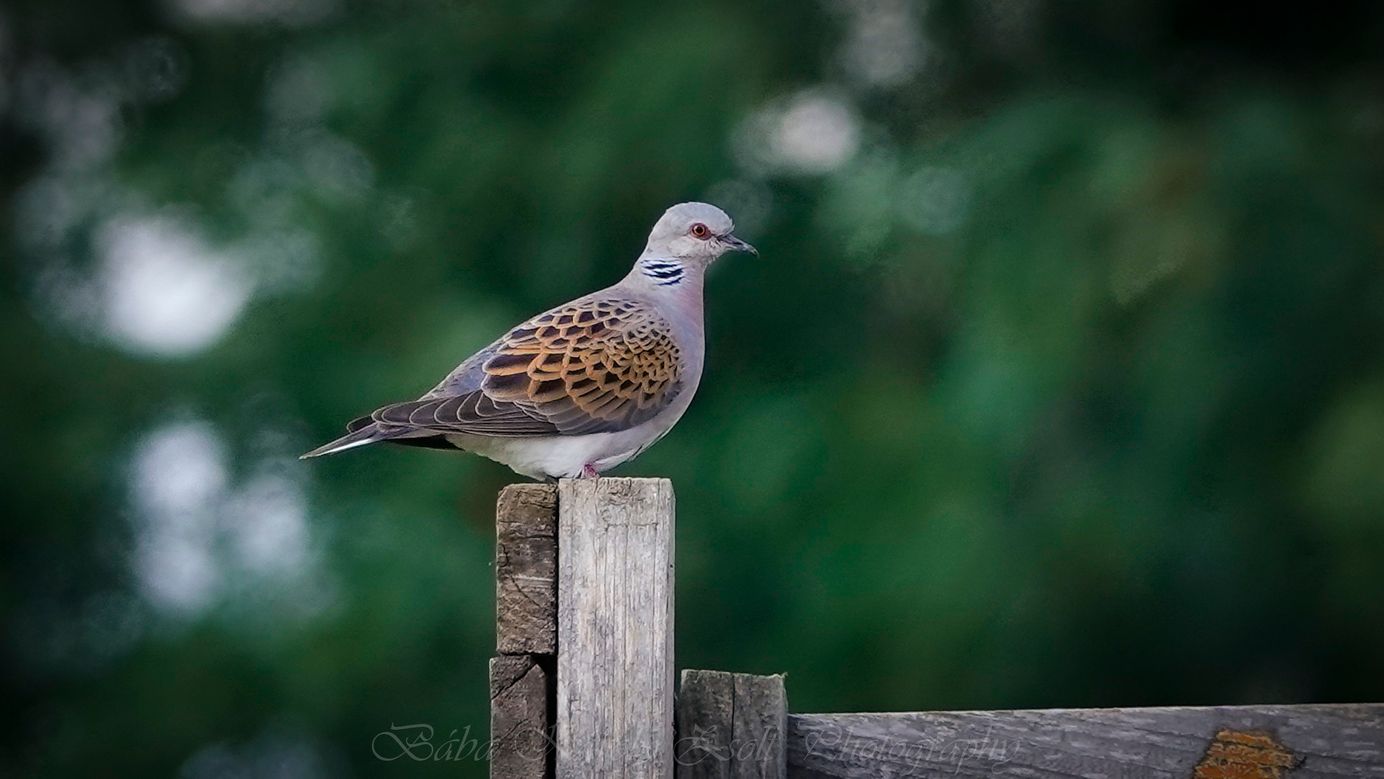
Doves | The first ever national turtle dove survey has estimated that only 2,100 breeding pairs remain in the UK, down 98% from the 1970s. The results make turtle doves the fastest declining bird species in Britain. The national survey was conducted in summer 2021 after population numbers dropped so low that the Bird Breeding Survey was no longer able to produce robust population trends for the species. Turtle doves are unique as the only long-distance migratory dove species in Europe, and research shows that their decline is being driven by the loss of suitable habitat and unsustainable levels of hunting during migration. However, the RSPB says hope is on the horizon, with conservation partnerships driving forward the restoration of breeding habitat and successfully campaigning for hunting bans in France, Spain and Portugal. BirdGuides, the Evening Standard and the National covered the report.
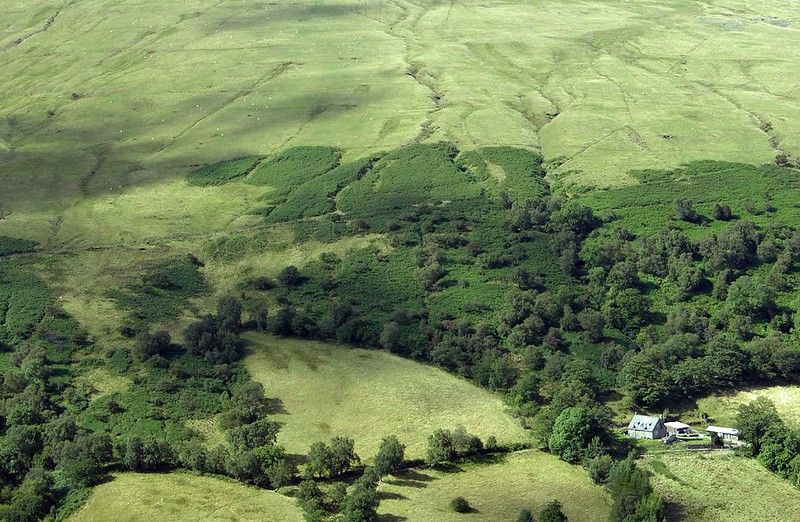
Fire | A report by the Joint Nature Conservation Committee explores whether land management measures, such as grazing and prescribed burning, could reduce wildfire risk. The study focussed on Mynydd Du, a large area of common land managed by local graziers in the Brecon Beacons National Park, where a reduction in grazing had led to concerns of elevated fire outbreaks. In response, the authors developed an analysis model, which integrates local expertise and Earth observation data to create a map showing areas of fire risk, from very low to very high, based on factors including habitat type, climatic and topographic factors, and accessibility of the area. The application is available in both English and Welsh, allowing users to run scenarios of land-use change to explore the impacts on burn risk. The authors suggest that the method could be further developed to analyse more options, such as water quality or biodiversity.
Birds | The Joint Nature Conservation Committee has published the 2021 Breeding Bird Survey, tracking population trends for 118 breeding bird species in the UK. The report outlines that, overall, 43 species are showing long-term declines, including a number of wader species. The worst hit include redshank (down by 49%), and curlew and lapwing (both down by 48%). Common sandpiper and oystercatcher are also struggling. On the flip-side, 39 species showed long-term population increases. The little egret, a recent colonist from Europe, topped the list with an increase of 2,380%, and red kites are also doing well, up by 1,935% after being reintroduced to England and Scotland in the 1990s. Paul Woodcock of the JNCC, said that the survey “really demonstrates the value of the large-scale long-term datasets which are created through these schemes to nature conservation efforts”, and thanked the 2,685 volunteers who took part in the survey.
Science
Predators | A study published in Global Change Biology outlines how the return of pine martens as a native predator in Ireland has caused the rapid decline of grey squirrels (an invasive species) over an entire landscape. Researchers used distribution surveys of Ireland from 2007 to 2019 to examine recovering populations of pine martens, compared to the range of grey and red squirrels. They found that the pine marten range increased by 205% over the 12 years, alongside an increase of 52% for the native red squirrel; in contrast, the invasive grey squirrel range reduced by 41%. The authors argue these figures demonstrate the strength of the interaction between a recovering native predator and what they call an “evolutionary naive” invasive species. They conclude that their research provides ecological justification for restoring larger native predators globally, including the lynx, Florida panther and wolf as nature-based solutions to damaging invasive species. The Conversation featured the research, and lead author Josh Twining provided a helpful summary thread on Twitter.
Freshwater | A study in Water Research trials a new method of species distribution modelling to predict the presence of focal species in English freshwater catchments. Traditional biomonitoring schemes are extremely costly and time consuming, and tend to overlook taxa groups such as invasive species, which are viewed as undesirable in a biodiversity context. This can be particularly misleading in urban ecosystems, which are heavily modified and often contain large populations of non-native (often invasive) species. The authors argue that including data on missing taxa such as invasive or rare species could be an accurate indicator of water quality. To test this, researchers used national land use and water quality indicator datasets to predict the presence or absence of 48 focal threatened or invasive species across 5,638 catchments in England. The authors suggest that this method of modelling could help catchment managers to directly link the water quality they aim to control with the biodiversity they are trying to protect.
Dieback | A study in Landscape Ecology analyses the effects of forest dieback in the French highlands on local beetle diversity. Researchers sampled saproxylic beetles in commercial fir forests and compared the results with dieback levels, which they calculated from the percentage of dead tree crowns via aerial mapping. They found that the taxonomic, functional and phylogenetic diversity among the beetle populations all benefited from forest dieback at both local and landscape scale. The authors conclude that tree mortality provides conservation benefits by diversifying the forest landscape and enhancing deadwood habitats, and that conventionally managed forests could take advantage of unharvested trees to promote species richness and diversity. Inkcap Journal explored the benefits of more deadwood in our feature on ash dieback.
Driftwood
Rewilding | The Guardian’s flavour of the week is ‘rewilding’, which they are exploring through their Wild World series. In “Welcome to wild Britain”, Patrick Barkham examines how rewilding has gained momentum over the past five years. Phoebe Weston delves further back in time in a feature on Devon neighbours who have united to “rewind” the landscape. Barkham also writes about how wetter farming could be beneficial to both nature recovery and food production, while another feature explores the urban “parklet” movement, which involves transforming unused car parking spaces into tiny parks. The series kicked off on Monday morning with our own collaboration with the Guardian on council rewilding: the Inkcap Journal feature extends our previous investigation to include Scottish and Welsh councils, while the Guardian article highlights the most exciting examples we unearthed during our research.
Insects | Literary campaign group Writers Rebel have released a short film for Insect Week named ‘Almost Invisible Angels’. Penned by environmental writer Jay Griffiths, voiced by actor Sir Mark Rylance and accompanied by a score from folk-singer Sam Lee, the short two-minute film reimagines insects as silent angels at work in society, describing the services they quietly perform to keep ecosystems connected and mourning their decline. Filmed in the ruins of Tintern Abbey, the film is both visually arresting and poignant in tone.
Farming | A few farming-themed features have cropped up in the papers this week. The Telegraph recommends which books to read in order to fix Britain’s farming crisis, while the Times reviews Jake Fiennes’ new book, Land Healer, on how farming can save Britain’s countryside. In the Guardian, George Monbiot questions why farmers – who represent a small minority of the rural population – hold disproportionate sway over government decisions. “As far as government policy is concerned, farming and the countryside are synonymous. If you’re not a farmer, your interests are overlooked, your voice unheard. You’re a second-class rural citizen,” he writes.
Further reading:
- Countryfile presenter Ellie Harrison argues that soothing ASMR and “clever technology” can never compete with the raw sounds of the natural world.
- A feature in the Herald asks whether Brewdog’s approach to eco-friendly business represents a “punk way” to save the world, or whether they belong to the recent wave of green lairds building empires of trees.
- Residents of Llandudno in Conwy are arguing over whether their famous herd of Kashmiri wild goats are a positive or a plague, reports the BBC.
- A feature in the Guardian spotlights the “queen of the corvids”, Professor Nicola Clayton, who founded the pioneering laboratory in Cambridge studying the intelligence of corvids.
- Also in the Guardian, an interview with birdwatcher and activist Mya-Rose Craig discusses the lack of diversity in the nature sector.
Happy days
Photography | If you fancy a close-up view of insects in all their intricate glory, the British Ecological Society is hosting a digital exhibition of high magnification photography of various species to celebrate Insect Week. Ed Hall, photographer and curator behind the exhibition, said that he finds insects fascinating: “They inhabit an alien world that we get the chance to explore. Every time I do I find out something new.” You can check out some of the other digital events taking place during the festival on the Royal Entomological Society’s Insect Week website.
Subscribe to our newsletter
Members receive our premium weekly digest of nature news from across Britain.
Comments
Sign in or become a Inkcap Journal member to join the conversation.
Just enter your email below to get a log in link.