Biodiversity Summit & Pleistocene Rewilding
The latest news on nature and conservation in Britain.
National news
COP | On Monday, the 16th UN Biodiversity Conference began in Cali, Colombia. The summit is expected to include 196 countries and more than 15,000 people, with the goal of preserving the world’s flora and fauna. So far, governments have yet to meet any of their collectively agreed targets on nature loss, and ecologists warn that time is running out before the earth’s natural tipping points are breached. Key issues set to be discussed include domestic strategies to halt biodiversity loss and the target for wealthy countries to contribute a minimum of $20bn annually. In a blog post for the Wildlife Trusts, Dr Rob Stoneman argued that the summit is ‘a chance for the UK to show true leadership and signal they will take the action required’. The news has been widely covered, including an explainer of the big issues by the Guardian. Elsewhere, Carbon Brief has summarised who wants what, and is tracking each country’s pledges and financial contributions. In other news, analysis by the Natural History Museum has revealed that biodiversity is declining faster in protected areas than outside them, putting the ‘30 by 30’ target into doubt. The Guardian covered the story.
Envoy | The government has appointed a special envoy for nature in a ‘landmark first’. Ruth Davis is now in Colombia for the start of COP16, where she will begin her role of forging international agreements to halt the desperate decline of species. Davis, who was formerly an environmental campaigner, has more than 25 years of experience working on environmental policy, and previously held senior roles at Greenpeace, the RSPB and Plantlife. She reportedly beat a fierce field of competitors to secure the role, and the appointment has been met with wide praise from the sector. Oscar Soria, director of the environmental think tank Common Initiative, said: ‘Ruth’s name means: a compassionate friend. The UK is now appointing a big heart and a clear mind, and that’s good news for the world.’ The Guardian reported the news.
Review | The Labour government has launched the largest review of the water sector since it was privatised 35 years ago. Defra said the independent commission would provide recommendations on how to tackle the systemic issues in the sector in order to restore Britain’s rivers, lakes and seas to good health, and meet future challenges. This includes reviewing whether regulators such as Ofwat should be reformed or even abolished. The review will be chaired by Sir Jon Cunliffe, the former deputy governor of the Bank of England, and is due to deliver its recommendations before June. Environmental groups have largely welcomed the news, saying it comes ‘not a moment too soon’, although Tim Farron of the Liberal Democrats said the review should not be used ‘as a tool to kick the can down the road on immediate reforms’. The news was widely covered.
In other news:
- NFU Cymru has warned that scrapping inheritance tax relief for Welsh farmers could lead to the ‘break-up’ of family farms, reports the BBC.
- More than 50 scientists have written to UK ministers urging them to be more ambitious in their regulation of PFAS ‘forever chemicals’, reports the Independent.
Across the country
Severn | A tonne of critically endangered eels has been exported from the Severn estuary to Russia this year, with the quota expected to increase next year. The European eel is a protected red-list species, and in 2010 the EU banned its trade outside its natural range in Europe. However, a legal loophole allows for the exporting of elvers – young eels – to non-EU destinations in their natural range if they are used for conservation purposes. Now, millions are flown to Kaliningrad each year, where they are purportedly destined for a Russian ministry of agriculture-led ‘restocking’ project. Andrew Kerr of the Sustainable Eel Group described the trade agreement as ‘bonkers’, saying the eels could be smuggled toward Asia, where there is huge demand for young eels to stock fish farms. The Guardian covered the story.
Cumbria | Owners of garden ponds in Ulverston are facing an unusual problem: their fish are being raided by otters. After a number of midnight attacks, residents have begun searching for humane ways to protect their pet fish from the hungry mammals, from motion-sensor lighting to CCTV and electric fencing. One man has even trained his chihuahua to bark on sight of an otter. South Cumbria Rivers Trust said that a combination of pollution and loss of habitat in the surrounding catchment has driven declines of native fish, likely forcing the otters to predate on captive populations. It added that it was working with partners and landowners to improve the water quality, and introduce practical interventions like eel passes on weirs, in the hopes that the otters will stop venturing into urban areas for food. The BBC covered the story.
Essex | Conservationists have written to the UK’s secretary of defence, John Healey, asking him to reverse a decision to sell a 76-hectare area of acid grassland for housing. Middlewick Ranges on the edge of Colchester is the country’s second-best place for nightingales, and home to rare barbastelle bats and nearly 1,500 invertebrate species, including a quarter of Britain’s spider species. Now, it is being slated as a site for 1,000 houses after the MoD’s property arm said that acid grassland can be replaced by adding sulphur to mitigation land to create ‘new’ habitat. ‘This idea that every habitat is replaceable is a misuse of biodiversity net gain,’ according to Martin Pugh, an ecological consultant and member of Friends of Middlewick. ‘We need to draw a red line and say this is irreplaceable habitat.’ The Guardian reported the story.
Elsewhere:
- Work by the RSPB to create ‘leaky dams’ will re-wet an area of peatland near Wareham, Dorset, reports BirdGuides.
- Green ring-necked parakeets have made a home in Cambridgeshire for what is believed to be the first time, in an orchard in Coton, reports the BBC.
- A project to restore a network of wetlands in West Sussex as part of the Downs to the Sea initiative has been awarded £1.7m, reports BirdGuides.
- Herefordshire Wildlife Trust has opened a new wetland reserve which it hopes will act as a stepping stone between other reserves, reports BirdGuides.
- An area turned into a wildflower meadow by residents of St Eval in North Cornwall has been saved from developers, reports Cornwall Live.
- Campaigners and conservationists on the Isle of Man have created a new lobby group for a ‘stronger voice for Manx nature’, reports the BBC. Meanwhile, a species of ant has been discovered on the island for the first time at a disused quarry site.
- A decision by the Pembrokeshire Coast National Park to approve a planning proposal for a coasteering centre is ‘flawed’ due to its proximity to wildlife, according to Wild Justice.
- A government agency is investigating after more than 40 dead birds were found on a stretch of the Grand Union Canal in West London, reports the BBC.
- Campaigners have called on Scottish ministers to take action after discovering raw sewage is being discharged into the Water of Leith in Edinburgh, reports the Times.
- Natural Resources Wales is taking part in a collaborative initiative to boost the number of both red squirrels and pine martens in North Wales.
- Residents in Gateshead are being asked their opinion on three potential projects to restore the salt marshes and mudflats that once ran along the River Tyne, reports the BBC.
- A golf course in County Durham has received planning permission to build ponds to protect the local great crested newt population, reports the Northern Echo.
- A charity has warned that increasing traffic on Anglesey is a major threat to the island’s restored otter population, reports the BBC.
- Natural Resources Wales is celebrating the discovery of a population of the rare Lobaria pulmonaria lichen in Carmarthenshire, indicating the area’s environmental recovery.
Reports
Raptors | The illegal killing of birds of prey is a ‘national disgrace’ according to the RSPB, following their Birdcrime 2023 report. The report, which summarises 15 years’ worth of data, reveals that 1,344 birds of prey were killed between 2009 and 2023. The majority of these incidents were associated with land managed for gamebird shooting, and 75% of all individuals convicted of persecution-related offences were connected to the industry. Of 62 prosecutions, only one person was jailed. The known number of killed birds is just the tip of the iceberg, according to the charity, since most instances take place in remote areas and often go unreported or undiscovered. In light of the findings, the RSPB is calling on the rest of the UK to follow Scotland’s lead in introducing licences for shooting estates. The BBC and BirdGuides covered the news, with the Times and Wales Online focusing on Scotland and Wales respectively.
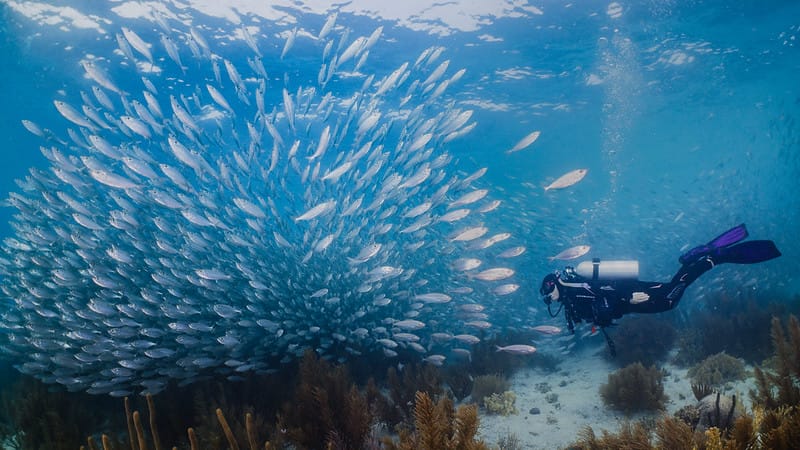
Marine | At the current rate of protection, the goal of protecting 30% of the ocean will not be achieved until 2107, according to a report by Greenpeace. The target of conserving 30% of coastal and marine areas by 2030 was a key part of the Global Biodiversity Framework agreed at COP15 in 2022. However, the majority of the global ocean (64%) falls outside national jurisdictional boundaries, making it more difficult to legally protect; currently, less than 1% is fully or highly protected. The Global Ocean Treaty would provide a legislative pathway for protecting these areas – but only 13 of the required 60 countries have ratified it to date. The report highlights that governments must accelerate the pace of ratification to keep the 30x30 target within reach, and also begin to identify the most ecologically valuable high seas sites for immediate protection. ENDS covered the research.
Water | Rivers in the east of England and London have the worst water quality in the country, according to a mass citizen science monitoring programme. The Great UK WaterBlitz takes place twice a year, with the latest campaign involving more than 4,500 participants from 20-23rd of September. The results revealed that 61% of data points from freshwater sources showed poor water quality, with the Anglian and Thames river basin districts returning the worst results. Over 80% of surveys in this area contained ‘unacceptable nutrient concentrations’, including nicotine, caffeine and antidepressants. Conversely, Northumberland had the best water quality in England, along with West Glamorgan in Wales and Kirkcudbrightshire in Scotland. The BBC covered the report.
Science
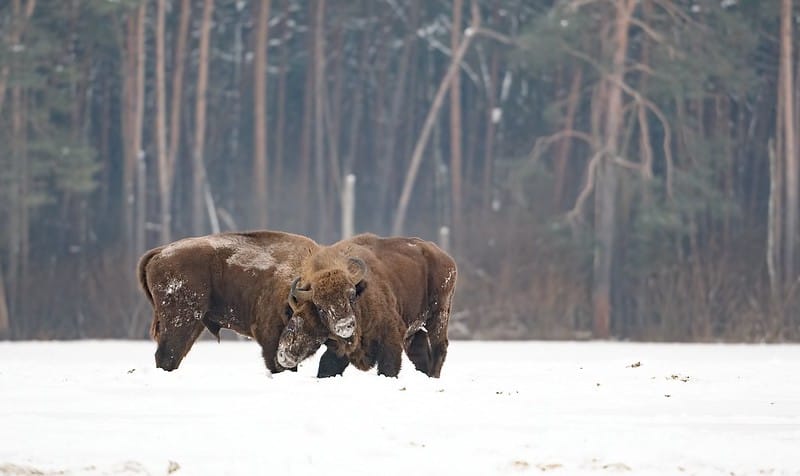
Megafauna | A review paper in Wildlife Biology examines the feasibility of ‘Pleistocene rewilding’ in light of the recent influx of megafauna to the north of Eurasia. Pleistocene rewilding refers to the controversial concept of restoring ecosystems to their state during the Pleistocene epoch, by reintroducing species or their close relatives. Around 100 years ago, the native boreal fauna of Eurasia comprised five species of large land mammals, but since then, these have been augmented by the introduction of species such as bison and feral horses, as well as the northward expansion of wild boar and non-native deer. This ‘ongoing enrichment’ might resemble Pleistocene rewilding, according to author Igor Popov, but so far the presence of these species remains low, both in population size and available habitat. In comparison, large-scale megafauna rewilding projects are labour-intensive, expensive, and not popular enough to receive sufficient support, and therefore remain largely unfeasible.
Frogs | Frogs and toads will face increasing threats to their survival over the next 60-80 years as water sources dry up due to global warming, according to a study in Nature Climate Change. The research team used various tools to map areas of the globe where anurans – frogs and toads – are predicted to face increasing water limitations. They found that between 7-30% of current anuran habitat will become arid between 2080 to 2100, with the variation depending on an intermediate or high warming scenario (+2 to +4°C). Meanwhile, 15-36% of anuran regions will experience worsening droughts in the same timeframe. These growing threats come on top of the current risks of habitat loss from development and deforestation, pollution of water sources and fungal outbreaks. Phys.org covered the research.
Fritillaries | The marsh fritillary butterfly has been declining across Europe since the 1980s, but a study in Ecology and Evolution has revealed a surprising stronghold: a former military training area in Germany, abandoned three decades ago after the Cold War. Researchers used a capture-release-recapture approach to assess the population size and movement patterns of fritillaries on three former training areas. Their models revealed around 19,000 individuals on the largest study site: likely one of the biggest populations found in dry grassland habitat in central Europe. According to the authors, the findings suggest a ‘remarkable persistence’ of the species in an area without regular management, contrary to the belief that the butterfly relies on ecological disturbance to thrive. However, they also stressed that observed flight distances of the butterflies were not sufficient to reach other isolated patches of habitat, and therefore active – but careful – management and habitat restoration should be considered.
Driftwood
Wetlands | This week, articles in both Positive News and the New York Times feature innovative projects to restore wetlands in Somerset. The former looks at a three-year project on the National Trust’s Holnicote estate to ‘reset’ the river Aller by reconnecting its water to the surrounding floodplain. A year on from completion, the article reflects on its successes, including mitigating the effects of England’s wettest 18-month period on record. Meanwhile, further along the coast at the Steart Marshes, the New York Times profiles a decade-long project to deliberately flood the Steart Peninsula using tidal waters to recreate salt marsh, accompanied by beautiful photographs of the ecosystem. Both projects provide blueprints for how parts of the British landscape could adapt to the impacts of extreme weather, while also storing carbon and providing habitat for wildlife.
Ireland | The New York Times has an interview with Eoghan Daltun, a sculptor who has restored an area of native rainforest on the Beara Peninsula on Ireland’s southwestern coast. Daltun discusses why much of the Emerald Isle is in fact a ‘biological desert’: Ireland may be covered in green fields, but the grass monocultures of modern agriculture leave little room for biodiversity, and native trees cover just 1% of the land. However, Daltun believes this can change, if some of the interventions he applied to his own land were to be adopted nationally. These include reducing overgrazing by fencing out deer and feral goats, removing non-native plants, and offering farmers payments for rewilding their land.
The magic of an Irish rainforest.
— Eoghan Daltun 🌍 (@IrishRainforest) October 17, 2024
🌏 pic.twitter.com/DIV3IFJAMf
Micro | The Nikon Small World competition is celebrating turning 50 this year with a stunning array of microscopic photographs. The competition first began in 1975 as a means to recognise the skill of those photographing through a light microscope, as well as displaying the beauty hidden from the naked eye. Today, it is a showcase for photomicrographers from a wide array of scientific disciplines, and celebrates the key role photomicrography plays in furthering research into nature and health. The Guardian and Colossal have selections of the winning images, which include the cells of a mouse brain tumour, a cluster of octopus eggs, slime mould, butterfly wing scales, and pollen in the web of a garden spider.
Further reading:
- With COP16 underway, an opinion piece in the Guardian argues that the onus is on the global north to use advances in science to fight species extinctions. Elsewhere, the New Scientist investigates how a 1% levy on global retail sales could plug the funding gap for biodiversity loss.
- A piece by Inside Climate News explains how climate change could be altering the colours of nature, including autumn leaves and the ocean.
- Guardian reporter Karen McVeigh visits Rathlin Island to find out whether culling ferrets and rats can save one of the UK’s largest seabird colonies. Elsewhere, the Press and Journal profiles the team tackling Orkney’s invasive stoat problem.
- The Times laments the latest news of illegal discharges into Windermere.
- An article in the BBC explores why the Humber Estuary acts like a ‘motorway service station’ for birds, while a Guardian piece considers divided opinions on starlings.
- A comment piece on Climate Home argues that it is time to end the UN’s artificial divide between biodiversity and climate.
- A new book showcases four decades of wildlife photographed on North Sea oil rigs. See a selection in the Herald.
- The Royal Horticultural Society has suggested that houses should be sold with ‘garden performance certificates’ to support wellbeing and nature, according to the Independent.
- For the Rewilding Magazine, Ian Parsons previews the collaborative book he has edited on rewilding, and why the topic should be broadened beyond niche discussions.
- A feature in the Financial Times examines how the new corporate fashion of being ‘nature positive’ runs the risk of greenwashing.
Happy days
Leeches | At London Zoo conservationists are celebrating after successfully establishing a breeding population of the medicinal leech. The number of medicinal leeches – which is the UK’s largest native leech – has declined steeply, and there are now only four main populations left, in Kent, Dorset, Cumbria and Wales. As the name suggests, the species is entangled in medical history: during medieval times they were used frequently as a widespread cure, and they are still used today to increase blood circulation. The project, which is led by the Freshwater Habitats Trust, has now bred over 40 young medicinal leeches. As well as preventing the extinction of the species, the project is hoping to change the image of this much misunderstood creature.
Subscribe to our newsletter
Members receive our premium weekly digest of nature news from across Britain.
Comments
Sign in or become a Inkcap Journal member to join the conversation.
Just enter your email below to get a log in link.