Biosecurity & Orchids in Cemeteries
The latest news on nature and conservation in Britain.
National news
Biosecurity | Less than 1% of the government’s biosecurity budget goes toward tackling invasive species, according to figures obtained by the Wildlife and Countryside Link via Freedom of Information requests. The data shows that just £2.47m of the £250m budget is used to prevent invasive plants and animals from entering the UK, despite being a top driver of native nature loss, including ‘cherished’ species from water voles to ladybirds. The figures also revealed that only £250,000 is being channeled to local groups tackling non-native species such as rhododendrons and giant blackberries. Meanwhile, one species – the Asian hornet – bucks the trend of low funding, with more than £2.2m spent solely on fighting its presence in the UK. In light of the findings, WCL is calling for more resources for border checks to stop invasive species arriving, and further funding for local groups working on the ground. The Guardian and Independent reported the news.
Drought | The UK has experienced the driest start to spring in 69 years, bringing warnings of potential drought if the weather continues. In particular, many of the UK’s rivers have hit exceptionally low levels that could worsen in the next three months, according to an update from the Centre for Ecology & Hydrology. If the dry spell holds, the low flow could result in large-scale fish deaths and increased pollution, particularly if water companies continue to discharge sewage. The National Drought Group met last week to urge water companies to do more to safeguard water supplies. Meanwhile, campaigner James Wallace of River Action said the current crisis was ‘avoidable’, and that reservoirs were running dry and rivers being polluted due to ‘corporate greed and regulatory complacency’. The Guardian and BBC covered the news. The weather is also leaving farmers’ crops in ‘survival mode’, reports the BBC, Times and Wales Online.
Trade | Labour has promised to uphold Britain’s high agricultural standards amid speculation around the US-UK trade deal, which has reduced tariffs on agricultural products such as beef and ethanol. The result was hailed by Downing Street as a ‘win for both nations’. Welfare campaigners and farmers had previously expressed concerns that a trade deal would allow products such as chlorine-washed chicken and hormone-fed beef into the UK, which are both illegal under UK law. However, environment secretary Steve Reed wrote on X that ‘any agricultural imports coming into the UK will have to meet our high food (SPS) standards.’ Meanwhile, ministers insisted that border checks would prevent such products entering surreptitiously. The National Farming Union responded to the news cautiously, saying that it was ‘not something anybody wanted’ but praising the government’s work to maintain high standards and secure access to beef markets. The Times, Guardian and New Food Magazine reported the news.
In other news:
- The government has relaunched the Sustainable Farming Incentive scheme for around 3,000 applicants after an uproar over its sudden closure. Edie and ENDS reported the news.
- An RSPB petition calling on the government to protect and grow the nature-friendly farming budget has reached over 100,000 signatures.
- Legal campaign group Wild Justice is planning a judicial review against the government’s new planning bill, reports the Guardian.
- Coinciding with Invasive Non-Native Species week, research by WCL has mapped the SSSIs in England and Wales that are struggling with the most invasive species.
- Butterflies usually associated with midsummer have emerged early, with scientists concerned that some may fall out of sync with food availability, reports the Guardian.
- The British Trust for Ornithology has published the latest Breeding Bird Survey, showing positive news for a range of birds and worrying declines for some familiar species.
- A mosquito-borne disease freshly arrived in Britain is threatening blackbirds, reports the BBC.
- NatureScot has announced £1.6m in funding under a new Seabird Resilience Fund to help safeguard Scotland’s vulnerable seabirds.
Across the country
Yorkshire | Natural England has announced that the next national nature reserve – the 7th in the Kings Series – will be in Brontë Country, in west Yorkshire. The huge Bradford Pennine Gateway reserve will span 1,274 hectares, linking together eight nature sites on the doorstep of Bradford. The area includes the sweeping hills and moors of the Pennines that inspired the Brontë sisters to write novels such as Wuthering Heights. Natural England said that approximately 90% of the area comprises priority habitats, including peat bogs, heathlands and wetlands, while endangered wildlife such as adders, curlew, short-eared owls and golden plover will benefit from the designation. The agency also said that the reserve would help break down barriers for young people to access the countryside in what is one of England’s most nature-deprived areas. The Guardian, Times and BBC covered the news.
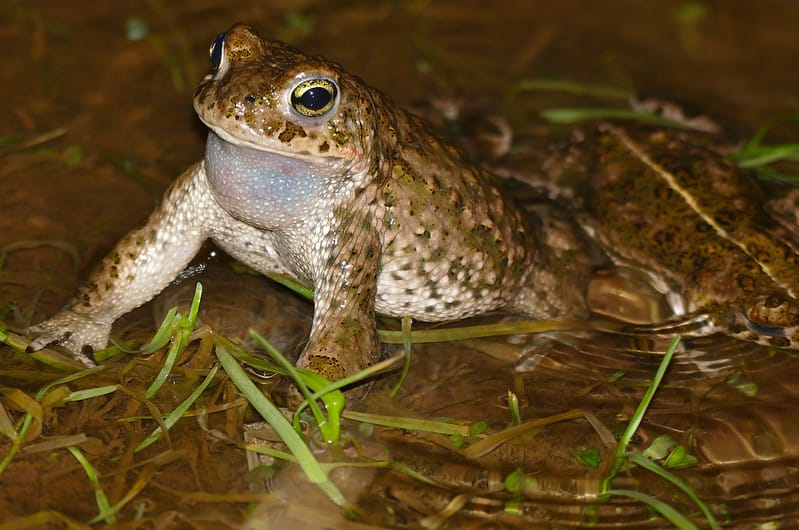
Hampshire | The UK’s loudest amphibian, the natterjack toad, has made a ‘remarkable comeback’ in the South Downs National Park following a conservation project. A total of 28 toadlets were recently counted at Blackmoor, marking the first time that natterjacks have been recorded breeding at the site in 50 years. The project, which started in 2021, involved creating new territory for the toads by digging shallow ponds and restoring heathlands for the reintroduction of cattle grazing. Olivia French, a team leader at the National Park, said: ‘This area is the last heathland bastion for this iconic species and extending their habitat range is a big step forward in stopping the species becoming locally extinct.’ Elsewhere, the toads are almost exclusively confined to coastal sand dunes and marshes in northwest England and the Solway Firth in Scotland. The Times and BBC reported the story.
Perth | Forestry and Land Scotland has announced that it will establish an ‘Ash Archive’ in Perth and Kinross as part of efforts to save the species from ash dieback disease. The 1.5 acre archive will be the second in the UK after the first was set up in Hampshire in 2019: their purpose is to grow disease-resistant trees in a bid to conserve and eventually restore ash trees across Britain. The new archive will use grafts of the strongest trees at Hampshire alongside more recent selections to create a geographically distinct facility that will disperse the risk of archive trees being lost. Announcing the project, rural affairs secretary Mairi Gougeon said the disease had destroyed thousands of trees, and also ‘had a devastating impact on the interconnected network of almost 1000 other species’ that are dependent on the tree – making the work of vital importance. The Herald reported the news.
Elsewhere:
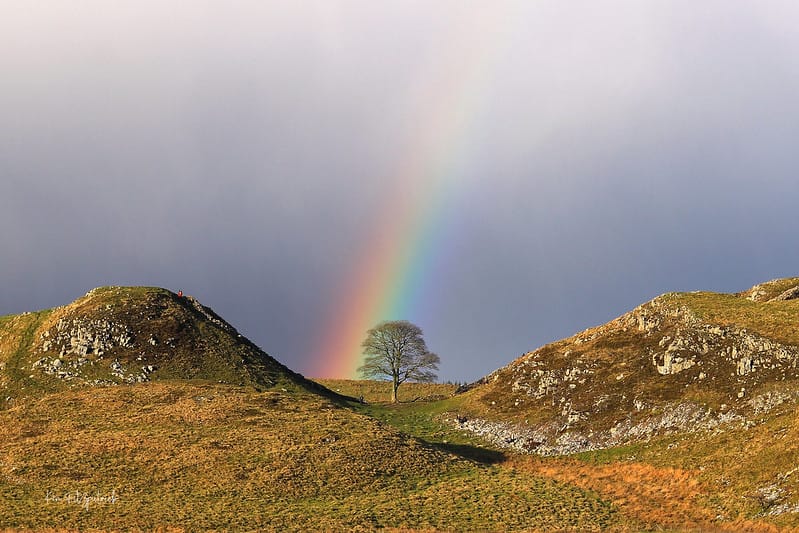
- Two men have been convicted of felling the famous Sycamore Gap tree after the court heard overwhelming evidence of their guilt. The BBC, Guardian, New York Times and Northern Echo reported the news, with more reaction in the Driftwood section.
- ‘Irreplaceable’ 4,000-year-old maerl beds off the Cornish coast could be killed after conservationists found they had been smothered in algae caused by pollution, reports the Times.
- Work has begun to restore 100 miles of coastline after the Sussex Bay project received £1m of funding, reports the BBC.
- The Great Bustard Group is using drones to help them to find great bustard nests on Salisbury Plain, reports BirdGuides.
- Mayor of London Sadiq Khan has announced that he will explore options to open up London’s green belt to development to fix the housing crisis, reports ENDS.
- A woman living on the Solway Firth is trying to save a rare breed of Scottish sheep by creating bespoke scarves from its fleece, reports the BBC.
- A community river clean-up in Bridgend – thought to be the largest in Wales – has pulled 6,000 tyres from the River Ogmore, reports the BBC.
- A four-year project led by Butterfly Conservation has used robot mowers, goats and planted trees to create more than 60 hectares of butterfly habitat across the midlands.
- Manx Wildlife Trust has announced a project to restore a rainforest at Glen Auldyn, which will be the largest under the Wildlife Trusts’ rainforest recovery programme so far.
- The annual count of puffins on the Farne Islands has begun, including weighing them by popping them head-first into a jug, reports the Times and Chronicle Live.
- Norfolk Wildlife Trust is expanding Foxley Wood, home to Norfolk’s largest ancient woodland, by 100 acres, creating habitat for rare species.
- A three-year study by researchers at the University of Exeter is examining women’s mental health in farming communities, reports the BBC.
Reports
Peat | New mapping of England’s peatland has revealed that 80% of the habitat is in dry and degraded conditions. Defra combined satellite imagery, AI and in-depth data analysis to create the Peat Map, which it says is the most complete map of peatland to date. The map reveals that peaty soil covers roughly 8.5% of England’s surface, with the most extensive areas in the Pennines, North York Moors, parts of the Lake District and uplands of southwest England. It also shows that three-quarters of the peatlands are covered by plants and land-use types associated with dryer conditions – such as heather – but only 1% are covered by peat-forming plants such as sphagnum moss. Dr Sallie Bailey, Natural England’s chief scientist, said the ‘extraordinary’ map was ‘something of a global first’. Ministers hope that it will help land managers to restore and re-wet peatland, and support decisions on how to balance biodiversity and carbon storage with food security. The BBC and Guardian covered the research.
Soil | Around 40% of British soils are degraded due to intensive agriculture, with that number rising to more than 60% in the EU, according to a report by the Save Soil initiative. This degradation of soil is changing the land’s water cycle and exacerbating the impacts of climate change, the authors argue: impoverished soils lacking their natural structure lose their capacity to regulate water, including absorption during floods or storage during drought. Healthy, living soils also store significant amounts of carbon, enhance biodiversity and improve agricultural productivity, making soil restoration ‘one of the most practical and effective solutions available’. Save Soil – which advocates for regenerative farming practices such as reduced tilling and agroforestry – is calling for soil restoration to be made a key priority of climate mitigation measures, and for changes in agricultural policies and subsidies to reward it. The Guardian covered the research.
Invasion | Experts led by the UK Centre for Ecology & Hydrology have published the latest version of the watchlist of invasive non-native species that could threaten Britain’s environment in the next ten years. The list – which is called a ‘horizon scanning exercise’ – identified 145 non-native animals and plants that have the potential to become invasive in the near future, impacting biodiversity and ecosystems and, in some cases, human health or the economy. The top 20 species include pink salmon, which is already recorded in some northern rivers and outcompetes native salmon; pine wood nematode, a threadworm that causes pine wilt disease; and spaghetti bryozoan, a colonial invertebrate that disrupts food chains by consuming large quantities of phytoplankton. Lead author Helen Roy said that horizon-scanning exercises are crucial to identify top threats since prevention is much easier than eradicating species once they have become established. Phys.org covered the research.
Science
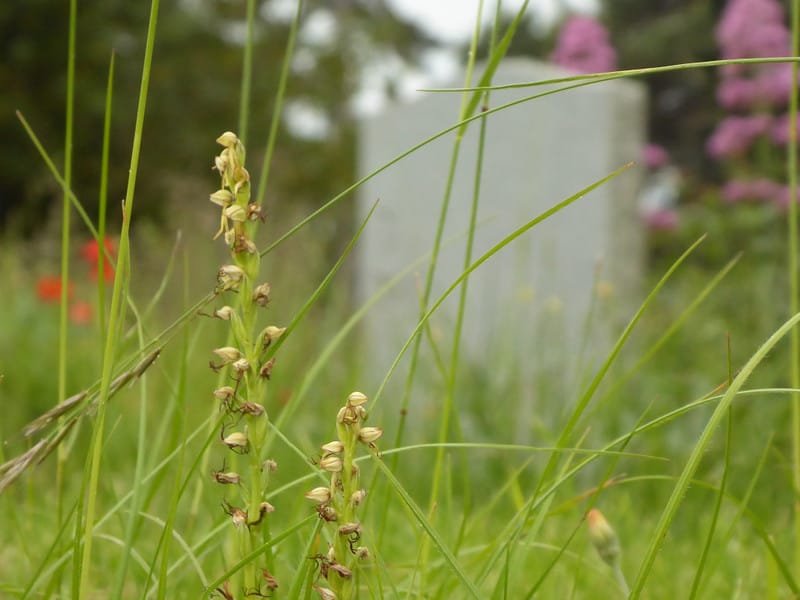
Orchids | Scientists have discovered that European cemeteries are acting as refuges for a diverse range of orchids. To investigate the ecosystem health of human burial sites, researchers from the University of Debrecen in Hungary conducted comprehensive field surveys of orchid flora in cemeteries across 13 European countries. They found orchids growing in every country visited, including the UK, with more than 65 varieties represented. The authors conclude that burial grounds are of ‘major importance’ for conserving orchids, and further research is urgently needed to identify the anthropogenic factors which are affecting cemetery biodiversity. In particular, they stress the need to eliminate damaging management practices such as mechanical mowing and pesticide applications. They also advocate for the use of native plant species for decoration, and the safeguarding of traditional burials compared to modern methods such as cremation. The findings were published in Global Ecology and Conservation.
Menus | British chefs want to design menus which are environmentally sustainable – but first and foremost they must protect the bottom line, according to a study in the Journal of Cleaner Production. Researchers from the University of Leeds interviewed 15 head chefs from small-to-medium sized restaurants in northern England to better understand the influence of environmental sustainability in menu design. Among the findings, the interviews revealed that chefs prioritised seasonal produce, cooking from scratch, and buying local food to support local economies. They also preferred designing small and agile menus which could be tweaked in response to ingredient availability or customer demand, and recognised the importance of minimising food waste. However, the study also emphasised that decisions around menu content were restricted by produce cost, operating costs and business resources, and therefore any changes to improve environmental credentials must also be financially sustainable.
Policy | Environmental policy recommendations should be short, direct and clear to make them more likely to be accepted, according to a study in Climate Policy. For the first time, researchers from the University of East Anglia have examined how advice from independent climate advisory bodies actually influences government decisions. The authors analysed UK government responses to recommendations by the Climate Change Committee from 2009 to 2020, and found that 23% of the recommendations were at least partially accepted, and only 2% in full. Shared characteristics of accepted measures included a cross-sectorial focus, repetition, and overall being short, clear, and including a specific addressee and action point. The authors say that the findings offer a roadmap for making advisory input more actionable, although further research is needed to assess how far accepted recommendations are implemented. The Tyndall Centre summarised the research.
Driftwood
Sycamore | In the wake of the Sycamore Gap verdict, people have written about the symbolism of the crime, and why it was widely considered as ‘more than just a tree’. In the Guardian, north of England correspondent Mark Brown argues that the tree was also a ‘life-enhancing’ place for countless photographs, declarations of love and ash scatterings, and that ‘many considered it part of the DNA of north-east England’. For Channel 4, head of tree collections at Kew Gardens Kevin Martin speaks about the emotional reaction to the felling, while in the Times, journalist Matthew Syed suggests that the ‘moronic crime’ was linked to a ‘deep pathology in our culture’ characterised by technology addiction and short attention spans. Meanwhile, a series of letters in the Guardian argue that, while idiotic, the crime and its culprits do not deserve jail time, and rather a ‘creative and constructive’ sentence – such as planting trees – would be much more beneficial.
Wellbeing | The Princess of Wales has released the first in a series of seasonal videos called Mother Nature, in which she will encourage viewers to connect to the outside world. The first video, which is almost three minutes long, is a compilation of soothing shots of spring across Britain, from the Scottish Highlands to blossom in London trees. In the voiceover, Kate – who is in remission from cancer – says that ‘over the past year, nature has been my sanctuary’. She talks about the capacity of the natural world to inspire, nurture and heal, and spring being the season of rebirth, hope and new beginnings. ‘Just as nature revives and renews, so too can we,’ she says. You can watch the video in the Times. Meanwhile, the Royal Horticultural Society has named a striking coral rose after the Princess to raise awareness of the healing power of nature, reports the BBC and Country Living.
Food | What could dinner look like in 25 years time? Think kelp noodles, soybean spaghetti and dandelion salad, according to a project by food delivery company HelloFresh, in collaboration with food futurologist Morgaine Gaye and Oxford researcher Joseph Poore. The research draws on multiple fields including agritech, consumer behaviour, and food system innovation to forecast what society might be growing, cooking and eating by 2050. Suggested innovations range from 3D food printing, allowing people to transform leftover ingredients into nutritional meals, through to ‘edible couture’, in which clothing garments contain pockets designed to grow microgreens and herbs. The wide-ranging project also examines the potential role of AI, ancient grains, city farming, and food literacy around ‘climate cuisine’: read more in Edible Plant Ventures, the Daily Mail, and Vegconomist.
Further reading:
- A survey by Country Living has found that 77% of Brits think that spending time in nature should be prescribed for mental health.
- In a column for the Times, author John Lewis-Stempel writes that the countryside has become too tidy for turtle doves.
- In a Guardian interview, poet laureate Simon Armitage speaks about his new book Dwell, which is inspired by Cornish wildlife, and makes a plea for humans to slow down.
- An article in the BBC makes the case for the positive impact of growing native plants at new-build developments to support both nature recovery and residents.
- In the Guardian, campaigner Jennifer Hobson explains how she became obsessed with protecting seals, and what people can do to help the species.
- A group of 30 artists are visiting a heathland rewilding site in Norfolk to capture its changing flora, fauna and landscape: find out more in the BBC.
- A feature in the Conversation charts the evolution of David Attenborough’s documentaries, from Zoo Quest to Ocean.
- An article in BBC Future delves into research showing how gardening can boost and preserve cognitive function, with benefits for some dementia patients.
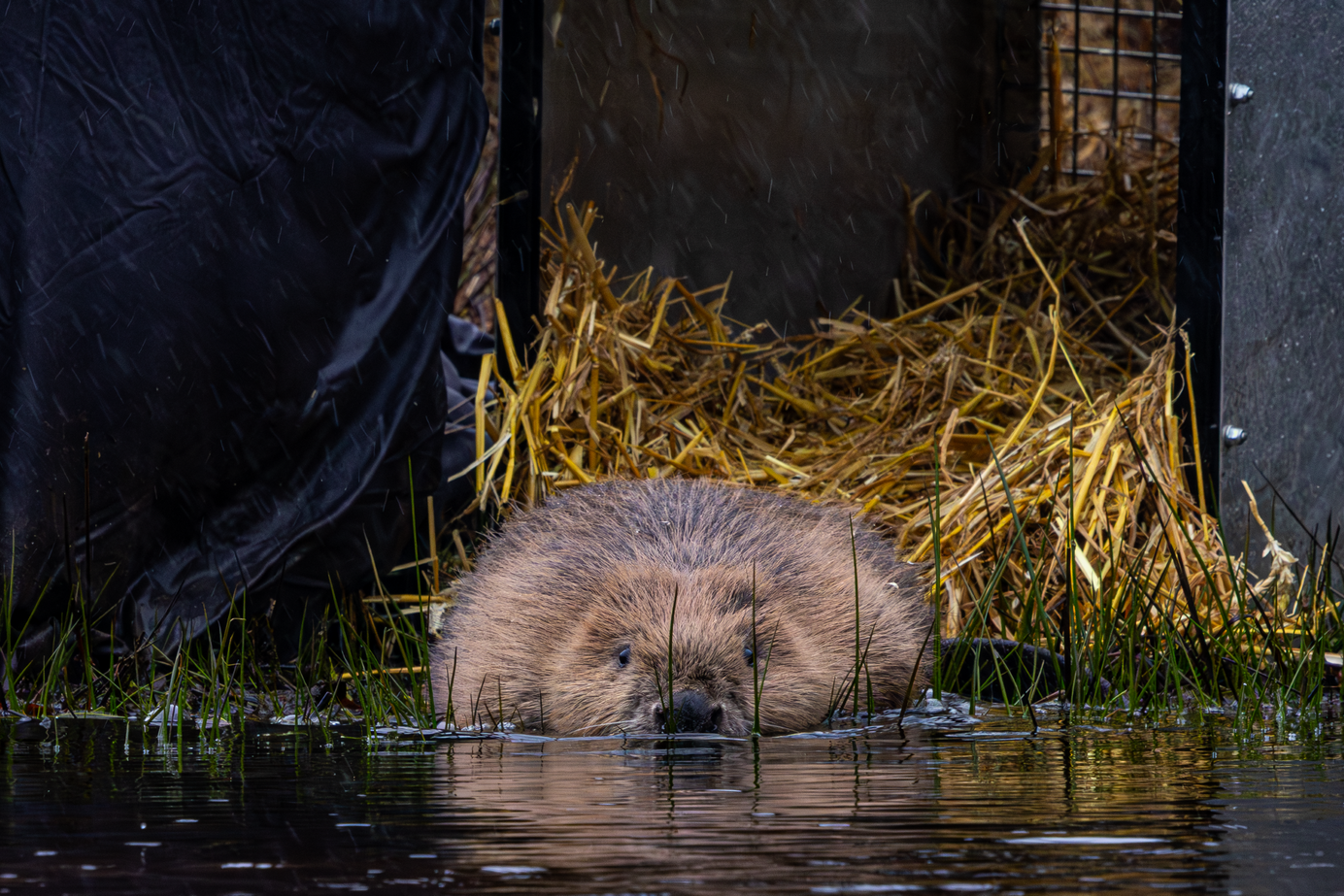
- In the Times, read about how the introduction of beavers to the West Glen River in Lincolnshire can help with flooding.
- A feature in the Guardian looks at why 2024 was a record year for the removal of river barriers in Europe.
Happy days
Games | A London Zoo employee has spent three years painstakingly building a digital recreation of the popular attraction as it was 120 years ago. The recreation was made for Planet Zoo, a simulation game where players can digitally construct and manage their own zoos and wildlife parks. The reconstruction will allow virtual visitors to tour the animal enclosures and buildings as they were in 1904, with ‘extraordinary’ attention to detail, from the building materials to animal information signs. Designer and engagement officer Ralph Stickley said he had long been fascinated by the evolving landscape of the site at Regent’s Park, and was inspired to create the world after reading the book London Zoo from Old Photographs. Get a glimpse of the game in this BBC article and Blooloop piece.
Subscribe to our newsletter
Members receive our premium weekly digest of nature news from across Britain.
Comments
Sign in or become a Inkcap Journal member to join the conversation.
Just enter your email below to get a log in link.