Chalk Streams & Wolf Reintroduction
The latest news on nature and conservation in Britain.
National news
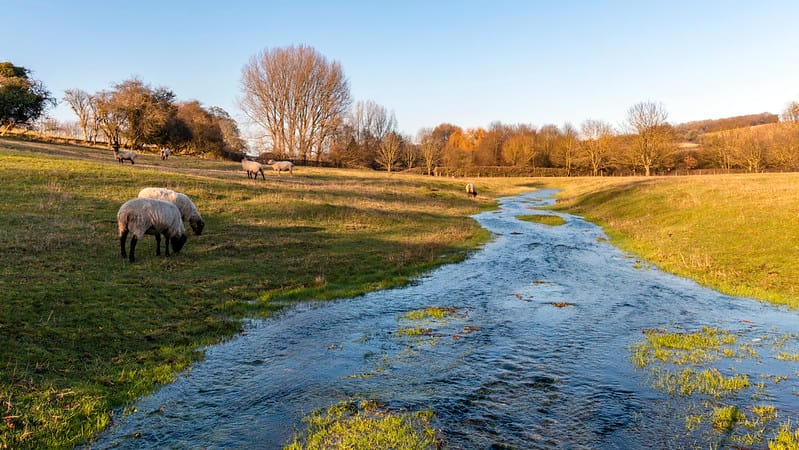
Chalk | More than 200 councillors have sent an open letter to Deputy Prime Minister Angela Rayner, protesting against the government’s reported abandonment of a plan to restore chalk streams. The previous Conservative government announced plans for a Chalk Stream Recovery Pack in June 2023, but it never appeared. Hampshire & Isle of Wight Wildlife Trust, which organised the letter, said there was ‘widespread concern’ that the pack had been shelved entirely. The letter highlights the value of rare chalk stream habitat, which it says forms ‘a quintessential part of our natural environment and national heritage’. It also outlines the worsening water quality and subsequent impacts on biodiversity, including genetically distinct salmon. In a statement, Defra did not comment on the recovery pack, but instead said that the government is ‘committed to restoring chalk streams and is investing in 55 river catchment projects’. The BBC, ENDS and Daily Echo reported the news.
Lynx | Conservation organisations are calling on Scotland’s First Minister to reconsider his stance on lynx reintroduction after a poll revealed increased public support. Earlier in February, John Swinney ruled out the possibility of reintroducing the predator to Scotland, referencing the illegal release of four lynx in the Cairngorms. He stated that his government ‘will not be reintroducing lynx, or indeed any other large carnivorous species’. Now, the Lynx to Scotland Partnership has published an opinion poll conducted by Survation in January, which shows that 61% of more than 2,000 respondents support the return of lynx to Scotland, up by nine percentage points since the last survey in 2020. Just 13% of respondents were opposed: a drop of six points. The poll coincides with an open letter sent to Swinney signed by 20 organisations, questioning his dismissal of the topic and highlighting the environmental, climate and economic benefits of reintroduced species. Read more on Scotland: The Big Picture website. The Independent and STV reported the news.
Habitat | One year on from the introduction of Biodiversity Net Gain, the scheme has made some progress – but environmental groups say it is still ‘full of holes’. BNG came into force on 12 February last year, and requires developers to create or enhance habitat to compensate for any harm to nature from new developments. Demand for habitat bank sites has recently boomed, according to Environment Bank, a company responsible for 18 sites. Meanwhile, the Wildlife Trusts says it is set to be one of the largest providers of BNG, proving that ‘restoring nature alongside development is entirely possible’. However, research by the WCL coalition found that, over the past year, the BNG scheme had delivered just 50% of the minimum amount of habitat expected, and 13% of the amount deemed ‘likely’. Chief executive Richard Benwell said that the first year contained ‘some great projects, but in other areas low ambition, loopholes and weak enforcement have meant missed opportunities.’ The coalition is calling on the government to take steps in its planning reforms to ensure the system works effectively. The Guardian reported the news.
In other news:
- The Scottish government has published its Natural Environment Bill. ScotLink celebrated the news, highlighting the Bill’s legally binding nature recovery targets.
- Campaigners say that Natural England is failing to protect crucial natural sites, with only two new SSSIs designated in the last three years, reports the Guardian.
- The number of foreign workers seeking help over claims of exploitation on UK farms increased significantly last year, reports the BBC.
Across the country
South Wales | A project led by the Initiative for Nature Conservation Cymru has discovered new colonies of water voles in the uplands of South Wales. Water voles are the UK’s fastest declining mammal species, and while they usually favour riverbank habitats, the INCC have so far found 20 colonies in the upland landscapes of the Rhondda and Afan valleys. The project surveyed numerous ditches, marshes and peat bog habitats to track down the unknown populations. Chief executive Robert Parry described the discovery as ‘huge’, adding: ‘We didn’t know they were up there, they’re on the verge of extinction, we’ve been looking for them for decades.’ Importantly, invasive American mink, which can devastate entire colonies within days, tend to steer clear of upland areas, giving hope that the species will be safe from local extinction. The BBC covered the news.
Cairngorms | Butterfly Conservation is calling for volunteers in Scotland to help search for any unknown colonies of the tiny Highland Nymph moth, which is facing extinction in the UK. Nicknamed the ‘Alpine Coffee moth’ for its cappuccino colouring and mountain lifestyle, the moth had not been seen in Scotland for 20 years until a single colony was discovered in Corrie Fee reserve in 2024. The species is mostly found in the Alps and Scandinavia, but had previously been recorded at 10 locations in Scotland, all within three glens in the Cairngorms. Experts say that the decline is due to loss of its primary habitat – montane willows – as a result of high numbers of sheep, red deer and mountain hares. The organisation is working on a range of initiatives to save the moth, and is planning a massive search across mountainous areas of Scotland to find evidence of any other colonies.
Plymouth | Thousands of trees are being planted at Plymouth’s Defence Munitions site as part of a collaboration between the Ministry of Defence and Ministry of Justice. Some 30,000 saplings have been grown by prisoners at four prisons in the area as part of a rehabilitation scheme, in what is the largest initiative of its kind so far. The saplings are a mix of native broadleaves, alongside conifers, western red cedar and coastal redwood, and were regularly watered, weeded, fed and nurtured by the prisoners. MoJ manager Mel Downer said that the programme was helping prisoners to develop skills for employment opportunities on release, adding that growing and caring for seeds and saplings also ‘supported their mental health through spending time outside, learning about and investing in nature, which is hugely beneficial.’ The Plymouth Herald covered the story.
Elsewhere:
- The Yorkshire Dales Millennium Trust charity has been awarded £250,000 towards its work to conserve dwindling populations of house birds, reports the Northern Echo.
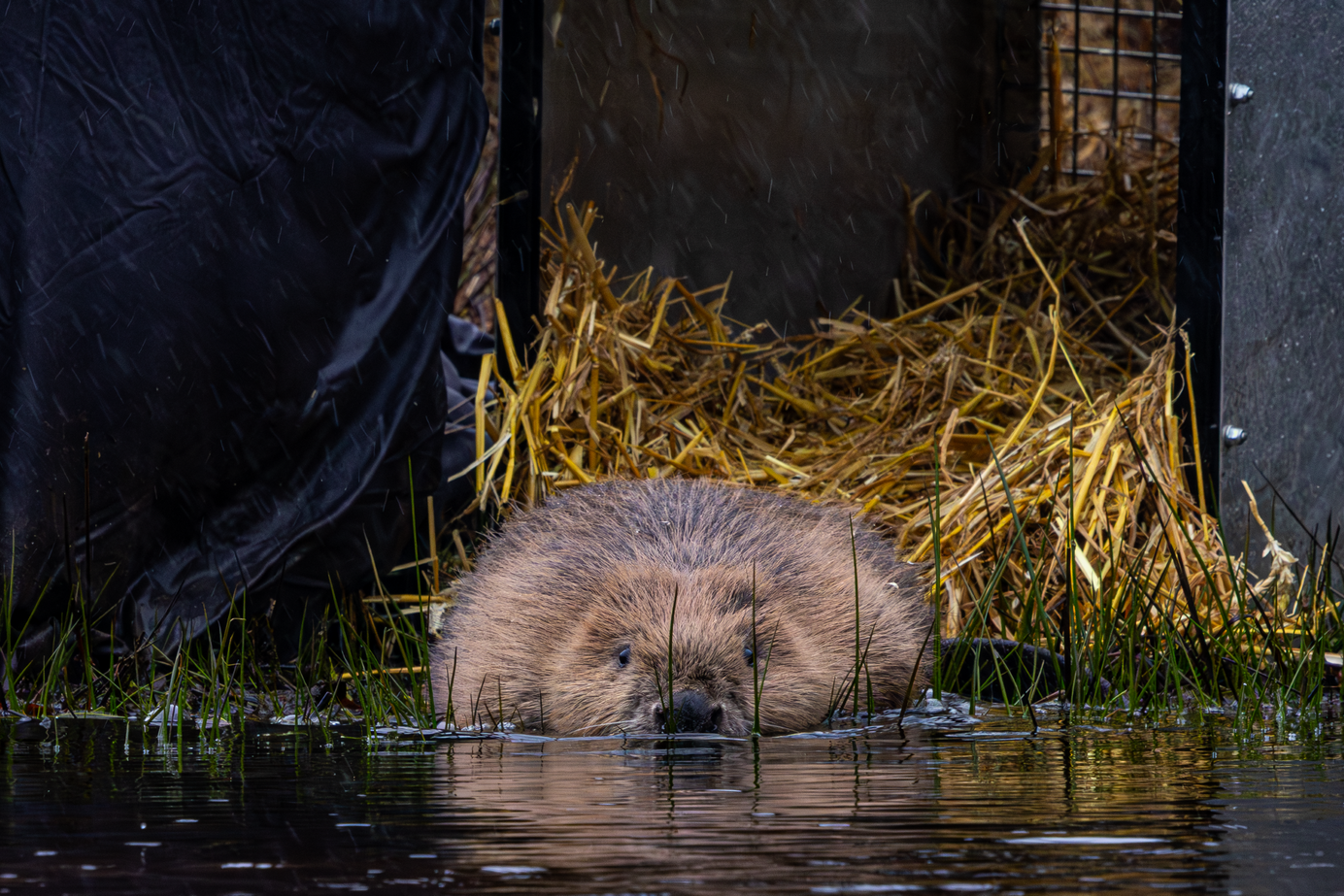
- Beavers are being reintroduced to Northamptonshire for the first time in 400 years, into a fenced enclosure at Rushden Lakes, reports the BBC.
- The fish farm company Mowi has purchased the uninhabited Scottish island of Sanda, and plans to revive the island’s past as a tourist destination – as well as build a large salmon farm, reports the Scotsman.
- The National Trust has released five Exmoor ponies into popular areas of the Surrey countryside to help with conservation efforts, reports the BBC.
- Four seals have died in England’s largest colony at Blakeney Point after contracting bird flu, reports the Guardian.
- The Environment Agency has restocked the River Tame in Greater Manchester with 4,000 fish to boost its ecosystem, reports the Manchester Evening News.
- The charity Beach Buddies is asking the Manx public to take part in organised beach cleans ahead of nesting season to protect chicks from plastic, reports the BBC.
- Wildlife experts have discovered that a large number of sick hedgehogs in Alderney were caused by parasites rather than a ‘mystery illness’, reports the BBC.
- Authorities have captured and ‘humanely culled’ a group of feral pigs, believed to have been illegally released in the Cairngorms. The Guardian, the Times and the Herald reported the news.
- Volunteers in Suffolk have started planting 2,500 trees and shrubs into a beetle-shaped woodland to highlight the importance of stag beetles, reports the BBC.
- London’s new £5bn super sewer is fully connected and is already stopping half a million tonnes of sewage from entering the Thames, reports the BBC.
- The Environment Agency is working to limit the impact of a 4,000-litre oil spill which has affected the River Wandle, a rare chalk stream in London, reports ITV.
- The government of Jersey has published a Ramsar framework aimed at reversing the loss of wetlands, reports the BBC.
- A hen harrier has disappeared under suspicious circumstances in the North Pennines, reports the Chronicle Live and Scotsman.
- The National Trust is working with the Dorset Bat Group to protect five species of rare bats roosting in wartime bunkers at Fort Henry, reports the BBC.
Reports
Beavers | A report by NatureScot and the Beaver Trust examines how to best create woodlands that will thrive alongside beavers. With ambitious woodland targets and a growing beaver population in Scotland, conservationists expect the overlap between woodland creation schemes and beaver territories to become increasingly common. Drawing on international evidence and Scottish case studies, recommendations include encouraging fast-growing species including willow, aspen, hazel, birch and rowan within 20 metres of the riverbanks or loch shores, either through planting or natural regeneration. These native species are preferred by beavers and will resprout after browsing, and are also well-adapted to survive occasional flooding. Similar strategies have been shown to be effective in the Czech Republic, Danube River Basin and North America. The report also highlights that effective deer management will be key to establishing woodland where beavers are present due to browsing pressures.
Flooding | Updated research from the Environment Agency has highlighted the role of nature in improving the UK’s resilience to flooding and coastal erosion. The EA’s Natural Flood Management evidence directory was first published in 2017, and its recent update has added three new measures: beavers, oyster reefs, and aquatic vegetation such as kelp and seagrass habitat. Informed by more than 700 scientific papers, the report details benefits such as the ability of beavers to reduce peak water flows, increase groundwater storage, connect floodplains, trap sediment and store carbon – as well as supporting other biodiversity. It also includes emerging evidence on the potential of both oyster reefs and submerged vegetation to function as natural breakwaters by reducing wave energy. Other findings include the power of catchment woodlands to not only reduce flood risk but also improve soil health, biodiversity and water quality. Oceanographic covered the research.
Wetlands | A report by the Global Rewilding Alliance examines the critical role of wild animals in shaping and sustaining wetland ecosystems, drawing upon both case studies and an extensive global literature review. The case studies include several examples from the UK: in one, the reintroduction of otters to the upper Thames catchment triggered a rapid reduction in the densities of invasive American mink. Another demonstrates how the presence of beavers in Scotland has reshaped former straightened farm ditches, and increased the wetland area, landscape complexity and overall biodiversity. Other important species mentioned range from freshwater pearl mussels to herbivorous geese. The authors highlight the drastic decline of wild animal populations globally, and stress the urgent need to integrate wildlife conservation into wetland management to restore ecological balance and resilience.
Science
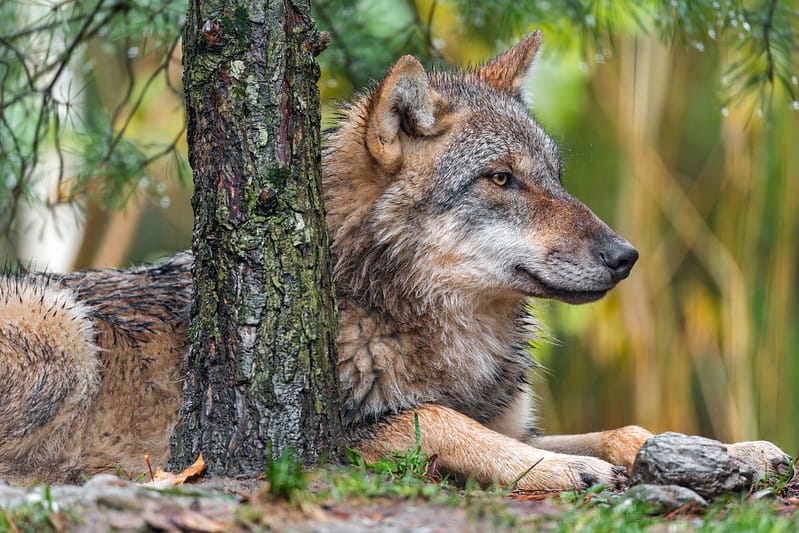
Wolves | Reintroducing wolves to the Scottish Highlands could expand native woodlands and sequester one million tonnes of CO2 annually, according to a study published in Ecological Solutions and Evidence. Researchers at the University of Leeds used a predator-prey model to estimate the carrying capacity of four areas of the Highlands to collectively support a wolf population. They found this to be roughly 167 wolves: enough to reduce red deer numbers to a level that would allow trees to regenerate naturally. The research found that this alone could contribute around 5% of the carbon removal target for UK woodlands. The study’s lead author, Dominick Spracklen, said there was ‘increasing acknowledgment’ that ‘we need to look at the potential role of natural processes’ to recover degraded ecosystems. However, the authors recognised that the research may be met with mixed reactions, and said that substantial public engagement would be essential before any reintroductions could be considered. The research was widely covered by national outlets.
Solar | Solar farms which are managed for nature can boost bird biodiversity amid agricultural landscapes, according to a paper in Bird Study. Scientists from the RSPB and the University of Cambridge analysed bird populations on six solar farms in the East Anglian Fens to better understand their impact on biodiversity. They compared two management styles of solar farms: simple habitat, which was intensively managed, and mixed habitat, which had hedgerows, and no sheep grazing or grass cutting. They found that, overall, both types contained more birds than arable farmland, but the mixed habitat contained the greatest number of species, and nearly three times as many birds as the farmland. Lead author Joshua Copping said the results show that well-managed solar farms could help provide relief from the effects of agricultural intensification for threatened species such as corn bunting, linnet and yellowhammer, as well as other wildlife. The BBC covered the research.
Adaptation | A study conducted by Queen’s University Belfast has found that species living in urban areas are more resilient to stressful environmental conditions than their wilder counterparts. Researchers conducted a series of stress experiments with three marine taxa – one blue mussel and two amphipods – by mirroring current and predicted environmental conditions. They tested the adaptability of individuals found on shorelines in urban environments – which are exposed to high ship traffic, higher temperatures and more pollutants – and compared these with individuals from a remote protected shore. Urban populations demonstrated significantly higher resilience to stressful conditions, with important conservation implications. For example, urban populations could function as potential ‘rescue populations’ for endangered species. Conversely, the authors also warned that the adaptations could increase the threat of biological invasions, and highlighted the need for further research.
Driftwood
Ghosts | Off the coast of Brighton, a team of four technical divers descend 26 metres into murky water, down to the shipwreck of a steam drifter boat that sank in 1917. Their mission: to remove several chunks of trawler nets that have become entangled with the wreck. These are volunteers for Ghost Fishing UK, an organisation that was established in 2015 to tackle the issue of ‘ghost’ fishing gear in British waters. This includes abandoned, lost or discarded nets, lines and pots, and threatens a range of marine life since species from crabs to larger mammals can get trapped in the gear and perish. For a feature in Positive News, writer Sam Haddad joins the trip from Brighton to learn more about their mission. The organisation has an existing roster of 70 volunteers, but Haddad writes that the wait list to join is around 300 strong, such is the desire of recreational divers to help tackle the issue and ‘give back’ to the marine environment.
Golf | From California and Canada to Australia and Ayrshire, golf courses are being rewilded in what journalist Jocelyn Timperley calls a ‘small but significant global trend’. Writing for BBC Future, Timperley visits one such site on the west coast of Scotland. The Plock of Kyle – a golf course turned community-owned parkland – boasts a mosaic of habitats within its 60-hectare plot. A wildflower meadow, ponds, scrub, coastline and even peat bog here are home to roe deer, lizards, eels, otters and a wide array of insects and birds. It also hosts guided walks, a mental health support group, scything classes, and groups of school children: rewilded courses benefit local people as well as wildlife. Timperley writes that closure is not the only way to bring nature back into golf courses, with a rising number of functioning courses choosing to renaturalise areas too.
School | In an increasingly digital world, it's easy to see why a ‘pedagogical phenomenon’ like the Forest School has grown in popularity, writes Megan Kenyon in the New Statesman. What might be surprising is the scale of its growth. The Scandinavian method of outdoor learning first arrived in the UK in 1993, but it has mushroomed in the five years since the first Covid lockdown, and there are now more than 200 Forest Schools registered in the UK. The benefits of its philosophy include a focus on ‘play for play’s sake’, on controlled risk-taking, and the provision of a safe green space when access to nature in the UK is far from a given. The biggest hurdle for delivery seems to be the mindset of the results-driven British education system, writes Kenyon, but at the current rate of expansion, perhaps the ‘dawn of the outdoor revolution’ is not so far off.
Further reading:
- In the Guardian, campaigner Melanie Watts writes about why fish that clean other fish need to be legally protected for the health of Scottish reefs.
- A blog by the Wildlife Trusts highlights the work of award-winning biro artist Cy Baker, who has drawn more than 50 nature reserves.
- A feature in the Times looks at the team of volunteers in Bath ‘going the extra mile’ to help more than 3,000 toads safely cross roads to their breeding grounds.
- An explainer in the Guardian examines how to treat pets for fleas without harming nature.
- In the New Yorker, a long read delves into the process behind teaching an endangered ibis species to migrate via flying microlight.
- A paper in Science argues that efforts to rewild productive land in industrialised nations may be damaging for global biodiversity due to the displacement of production to more biodiverse regions: an impact called ‘biodiversity leak’. Read more in the Times.
- A feature in Knowable Magazine investigates how rotting logs support mini ecosystems of forest biodiversity.
- In an interview with the Times, the chair of Natural England Tony Juniper explains how he thinks development and nature can co-exist. Meanwhile, this article argues that favouring infrastructure over nature will have consequences for trade with the EU.
- Dazed has a feature on photographer Camille Lemoine’s series Down Tower Road, which explores the relationship between body and landscape in a Scottish context.
- Read about the work of the Sussex Dolphin Project to conserve cetacean populations in Oceanographic. Meanwhile, an article in the Cool Down looks at the increase in marine wildlife sightings off the English coast.
- For Wicked Leeks, Joel Hart visits two sustainability-focused vineyards to investigate the rise of UK organic and biodynamic winemaking.
- There is hope for Britain’s ‘loneliest mammal’: conservationists have discovered the first female greater mouse-eared bat in Britain since the 1980s. Read more about the species in the Guardian, BirdGuides and Countryfile.
- A BBC article looks at the experts who are trying to track down rare British daffodil varieties.
Happy days
Music | The former Police drummer and Grammy-winning composer Stewart Copeland has teamed up with British naturalist Martyn Stewart to create an album fusing sounds from nature with traditional instruments. Wild Concerto is inspired by the mighty migration of the Arctic tern from pole to pole, and it includes the sounds of creatures possibly encountered on the way. These species – including red deer, wolves, guillemots and black-footed albatross – are backed up by 30 musicians of the Kingdom Orchestra. Stewart, who has captured an archive of almost 100,000 natural recordings over six decades, said the album would immortalise the voices of endangered species. You can listen to a track here, and read more about the project in the Guardian.
Subscribe to our newsletter
Members receive our premium weekly digest of nature news from across Britain.
Comments
Sign in or become a Inkcap Journal member to join the conversation.
Just enter your email below to get a log in link.