COP15 & Rare Beetles
The latest news on nature and conservation in Britain.
National news
COP15 | The UK’s four national nature agencies have made a rare joint statement, calling for action on nature recovery ahead of COP15. Natural England, Natural Resources Wales, NatureScot and the Northern Ireland Environment Agency set out the need for urgent action “for our survival, prosperity and wellbeing”. The bodies were brought together by the Joint Nature Conservation Committee. The UN Biodiversity Summit, due to take place in Montreal in two weeks’ time, will be the biggest conference on biodiversity in a decade, with governments convening from around the world to debate a new set of goals for protecting and restoring nature. The British agencies have pledged to support global governments and businesses in committing to binding and ambitious targets. The head of Natural England, Tony Juniper, said the summit is the “best and last chance” to halt and reverse the decline of nature. The BBC and ENDS covered the news. Meanwhile, the Environmental Audit Committee (EAC) has written to environment secretary Thérèse Coffey, urging Defra to publish the delayed environmental targets ahead of COP15. The chair of the EAC, Conservative MP Philip Dunne, raised concerns about a “culture of delay” at Defra, which is holding up a range of promised environmental policies. Edie and Business Green reported the news.
Access | Large swathes of national parks in England and Wales are off limits to the public, according to analysis by the group Campaign for National Parks (CNP). Research by the group revealed that only 10% of the Pembrokeshire coast is open to walkers, while 64% of the Peak District – the nation’s first designated national park – is inaccessible. Half of the Lake District, the New Forest and Dartmoor is also closed off, while the Yorkshire Dales are slightly more accessible, with only 40% out of reach. The majority of the land is privately owned and operated, but unlike in Scotland there is no “right to roam”. CNP is calling for increased access in the parks, while Green MP Caroline Lucas has tabled a right to roam bill in Parliament, which will be debated in the new year. The Guardian reported the news.
Bill | The Climate and Ecology Bill privately proposed by Liberal Democrat Lord Redesdale has passed through the committee stage of the House of Lords, after dropping the “climate” aspect. Redesdale said he is making the change to ensure the Bill has “laser-like focus on reversing the decline of nature” ahead of COP15. The proposed Bill would require “a new, strong, science-led nature target for the UK”, which ensures that Britain reverses its overall contribution to nature loss and degradation by 2030. Redesdale sets out how this “procedural” issue could be achieved in an article for PoliticsHome. The news was covered by ENDS.
The #CEBill is making its way through the Lords. Alongside this, we're still seeking the support of all MPs and parties in the Commons. Help us keep up the pressure—keep writing, emailing and calling Parliamentarians. Our collective future, security and prosperity is at stake. https://t.co/B9isRL5UPe
— Zero Hour 🌍 (@cebill_now) November 22, 2022
In other news:
- Birdlife, the Wildlife Trusts and the Scottish Environment LINK have written separately about the “mixed” results for both climate and nature at COP27, and why there is still much to be done to strengthen nature-climate linkages.
- Welsh rivers have risen in temperature by one degree over the last 40 years, according to a long-running study in the Carmarthenshire area. The BBC reported the news.
- Defra has pledged £4m in support of the International Consortium on Combatting Wildlife Crime, pushing for further protection for global endangered species.
- The Welsh government has resumed its initiative offering a free tree to every Welsh household, reports the BBC.
- The Wildlife Trusts says the absence of nature from the Chancellor’s Autumn Statement puts the country’s future prosperity at risk.
- School children in England are set to learn about biodiversity and nature thanks to a partnership between the Royal Horticultural Society and the Natural History Museum, reports the Guardian.
- Defra has announced that farmers will be given financial support to tackle water and air pollution from slurry.
- Surfers Against Sewage have published a report revealing that water companies are illegally dumping sewage even during dry weather. The Guardian covered the news.
Across the country
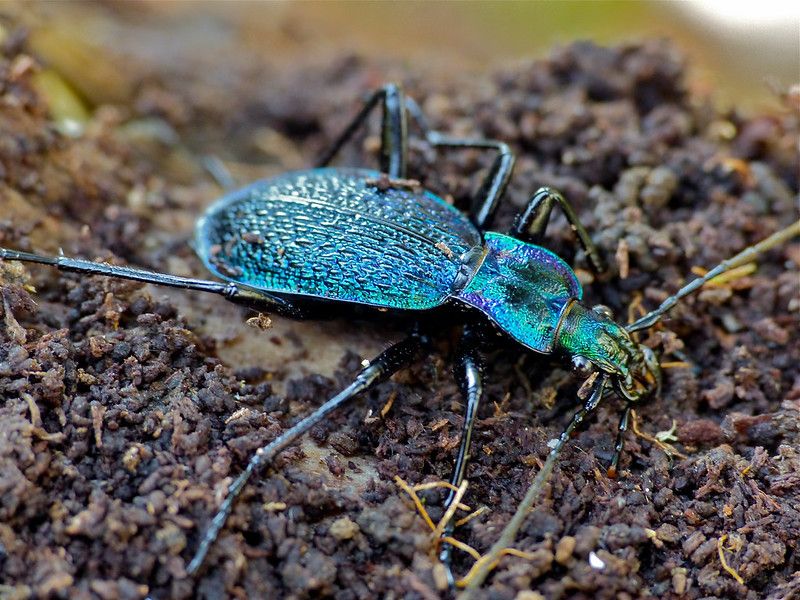
Dartmoor | New populations of Britain’s rarest beetle, the Blue Ground Beetle, have been discovered at two sites in Dartmoor. The populations were found by Buglife staff and volunteers, who spent “many damp torchlit nights” searching for the nocturnal bug across Dartmoor woods. It had previously been seen in only 13 sites across Devon, Cornwall and South Wales, and the charity described the discoveries as “very significant” for the rare species. It is the largest ground beetle in Britain, measuring up to 38mm, and makes its home in damp, deciduous and often ancient woodlands of oak and beech. Richard Knott, an ecologist for the Dartmoor National Park Authority, said the area is of “national importance” for the species.
Aberdeenshire | The Dee District Salmon Fishery Board is trialling a new and unconventional method to protect salmon numbers in the River Dee. The idea: jet skis, equipped with “acoustic startling devices” to deter seals. Although seals usually live along the coast, a number have become accustomed to travelling up the Dee, as far as Banchory, some 20 miles inland, leading to concerns about impacts on salmon populations, which are already struggling. Lorraine Hawkins, river director with the board, explains: “The jet ski is a way of getting the acoustic deterrent a bit closer to the seal, and shepherd it downstream, towards the coast.” So far, it has yielded positive results. The Press and Journal reported the news.
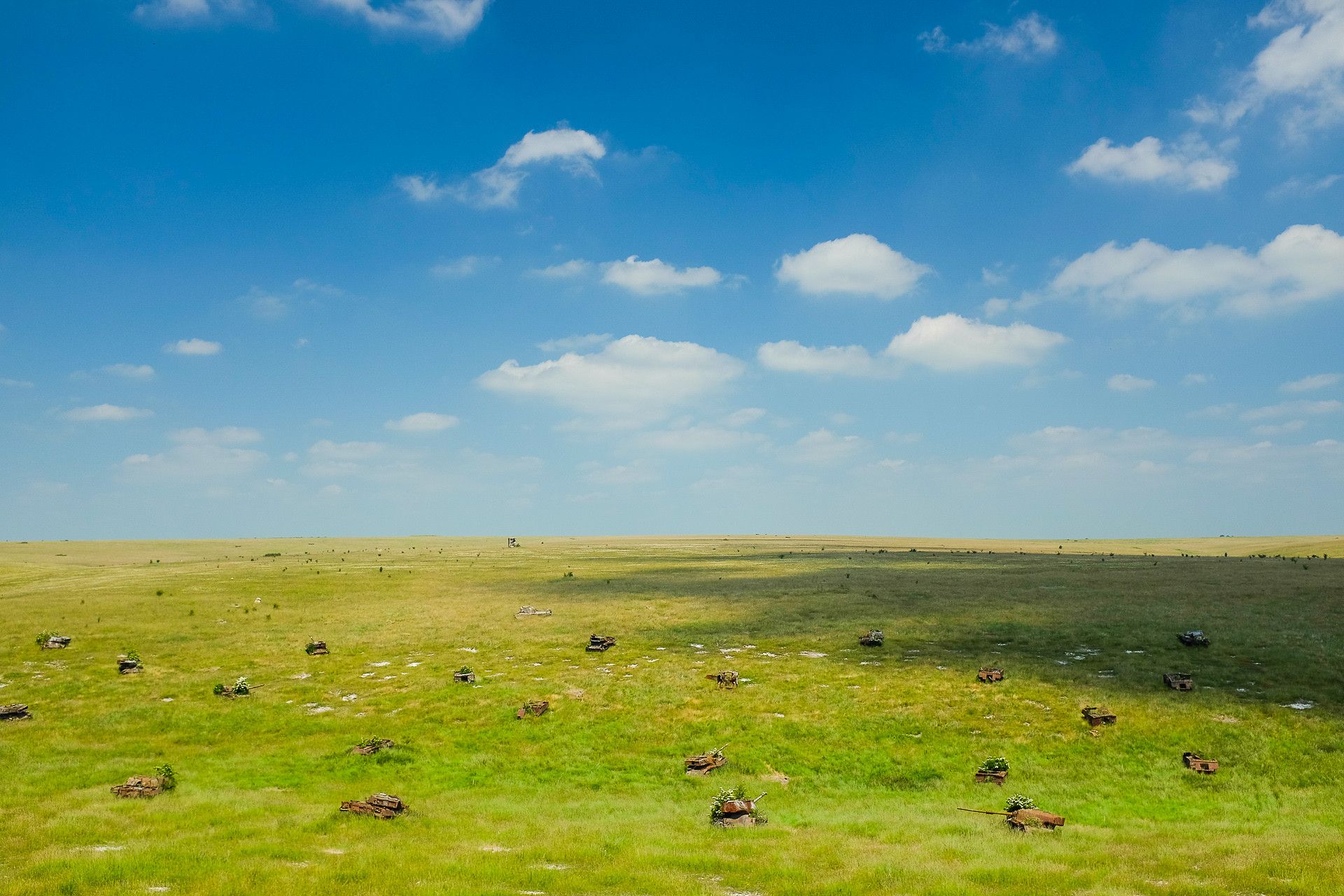
Wiltshire | Hen harriers will be reintroduced to southern England under a conservation breeding programme run by Natural England and the International Centre for Birds of Prey. Twelve young adults have recently been brought to England from France and Spain to establish breeding pairs; the birds will be reared in captivity before being released on Salisbury Plains. The birds’ only breeding grounds in England are currently on northern moorlands, where they are heavily persecuted, but scientists believe they could thrive on southern farmland if reintroduced. Although much of Salisbury Plain is owned by the Ministry of Defence, where the birds should be free from persecution, Natural England spent four years talking to local farmers and game shoots to ensure support for the project. The agency is aiming to release at least 100 birds over the next five or more years. BirdGuides and the Guardian reported the news, while the British Association for Shooting and Conservation commended Natural England for their attention to detail.
Elsewhere:
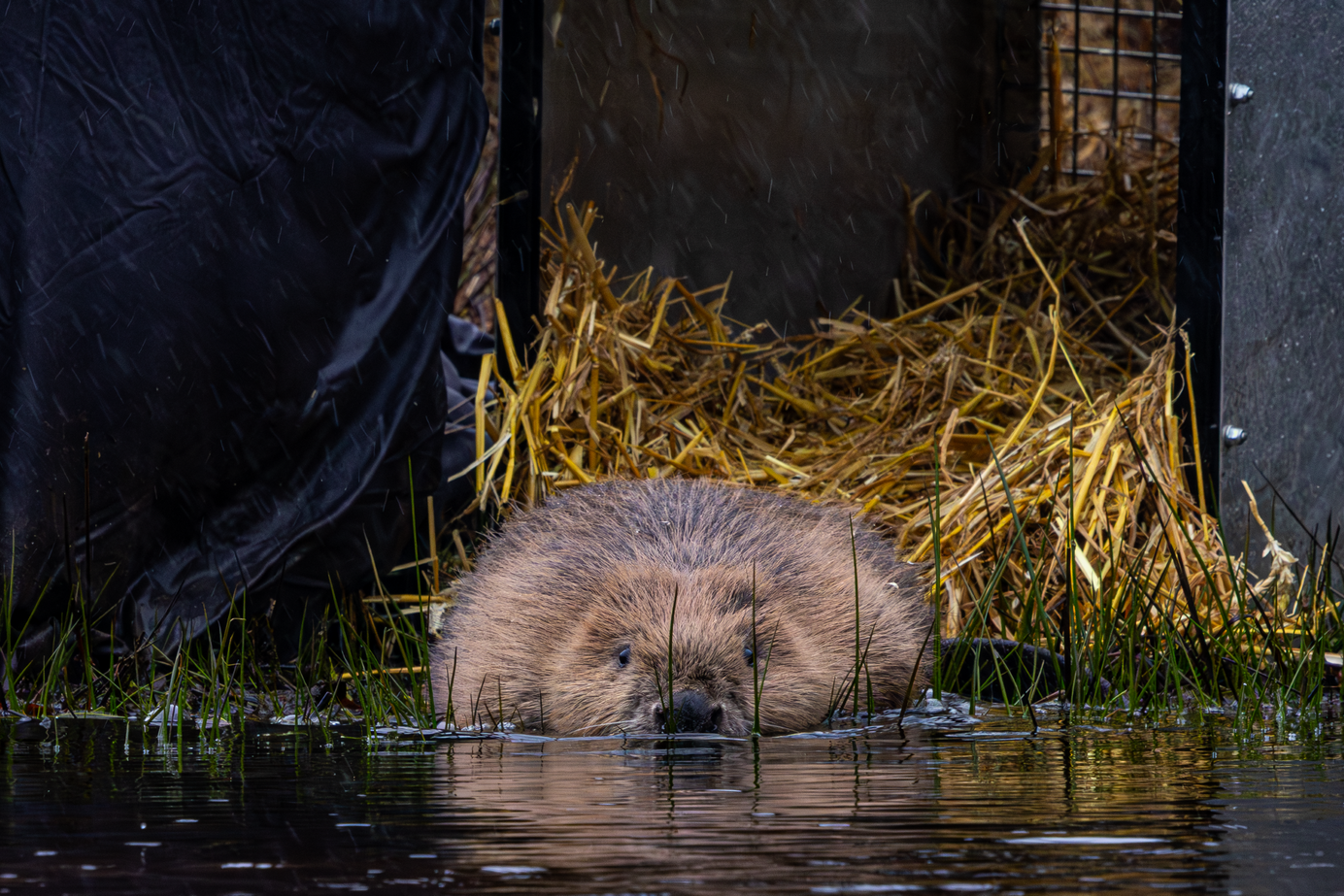
- Two more beaver enclosures are to be built in the area of Essex where the animals were first released in 2019, reports BirdGuides.
- Snowdon will now be known primarily by its Welsh name, Yr Wyddfa, and the Snowdonia region as Eryri, the National Park Authority has decided. The Shropshire Star reported the news.
- A dolphin calf found dead on St Agnes beach in Cornwall was caught in fishing gear, according to experts. The BBC and Cornwall Live reported the news.
- Plymouth City Council has ‘paused’ the controversial felling of city-centre trees following protests, reports the Plymouth Herald.
- NatureScot is trialling the use of new green technology – satellite imagery combined with AI software – to track deer numbers in Scotland.
- Campaigners are calling for a stop to dredging in the River Tees while investigations into shellfish deaths continue, reports the BBC.
- Southern Water has announced plans for a £13m project to stop sewage outflows into the River Itchen in Hampshire, reports the Daily Echo.
- Dorset Council has approved plans for a 200-hectare farm of solar panels, despite criticism that it could harm the Dorset AONB, reports the BBC.
- Berkshire Wildlife Trust is asking the public not to pick mushrooms from its nature reserves after reports of commercial scale foraging.
- The summer heatwave may have killed an entire generation of endangered baby bats in Jersey, reports the BBC.
- Hounslow Council is creating more than 500 allotments, orchards and community gardens to help feed kids at school, reports MyLondon.
- The roots of a 100-year-old oak tree in Bristol have been diverted from nearby housing using underground resin, reports the BBC.
- Farmers say that Natural England’s plan to turn an area of West Cornwall into an SSSI will cost them tens of thousands of pounds, reports ITV News.
- Chatsworth Estate in Bakewell is planting around 25,000 trees to create a more diverse woodland, reports the BBC.
- Countryside charity CPRE is celebrating the removal of a final pylon from an area of the Peak District National Park as a result of campaigning.
Reports
Ocean | Eighty percent of the British public think it is crucial to protect Britain’s marine environments, according to results from an online survey conducted by Defra, Marine Scotland and Natural Resources Wales, in collaboration with the Ocean Conservation Trust. Around 12,000 people responded to the survey, with 84% of respondents supporting the creation of Marine Protected Areas. Some 78% also reported mental health benefits and 72% felt physical benefits from visiting the ocean. Marine litter and plastic pollution were thought to be the greatest threats to the ocean, followed by chemical pollution and overfishing. Nicola Bridge, from the Trust, said it was “uplifting to see more and more people taking action” to protect the ocean, and the results would be an “important tool” to shape public engagement and education programmes.
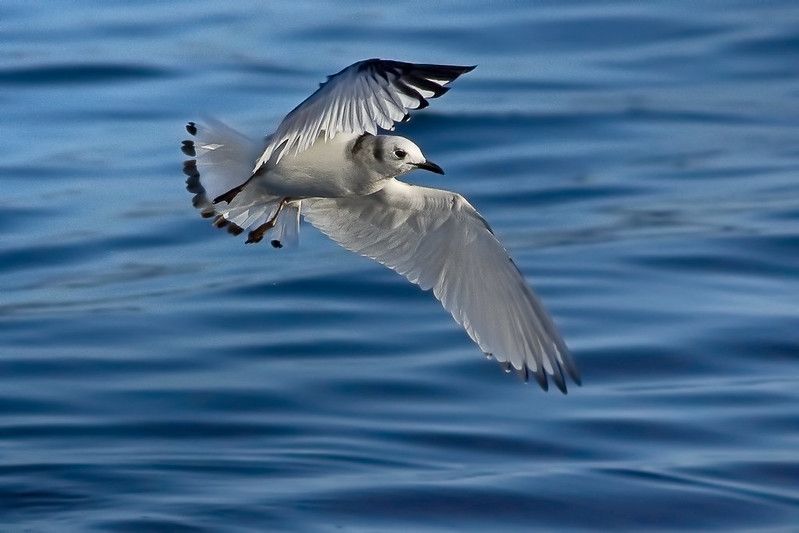
Disturbance | Natural England has published a report investigating the sensitivity of seabirds and waterfowl to human disturbances. Researchers assessed 36 species against 42 human-induced pressures, ranging from habitat reduction to litter to the introduction of invasive species. It found that sensitivity to disturbance was highest during the birds’ breeding season, with particular impact at the colony site. It also found that, with the exception of kittiwakes, seabirds were able to withstand more artificial pressures than waterfowl, with skuas and gulls particularly impervious. Although waterfowl were more easily impacted, their populations recovered quickly due to high breeding rates and shorter lifespans. The results of these vulnerability assessments will be used to inform an English Seabird Conservation and Recovery Plan.
Law | The short timescale proposed for reviewing the EU laws retained after Brexit could put environmental protections at risk, according to a report by the Office for Environmental Protection (OEP). The Retained EU Law (REUL) Bill is a piece of legislation introduced by Jacob Rees-Mogg, under which thousands of EU laws will be deleted by the end of next year – a deadline known as a ‘sunset’ date. The OEP’s report advises the Bill Committee that the sunset date should be reviewed and extended, because it does not give enough time to properly review all the laws that will be lost. While a full review of EU laws is an opportunity to improve the UK’s environmental protections, according to the watchdog, the change needs to be carefully managed. The Guardian covered the news.
Science
Coastlines | Britain’s rocky coastlines could retreat rapidly in the coming century due to rising sea levels, according to a study published in Nature Communications. Researchers modelled the rate of cliff retreat over the last 8,000 years and used the data to forecast future coastal erosion. They found that even previously stable coastlines, like those of Yorkshire and Devon, are highly sensitive to sea-level rise, and could retreat inland by as much as 22 metres in the next 80 years. Dr. Jennifer Shadrick, lead author of the study, said: “The findings are a stark warning that we must better adapt to coastal retreat or face the loss of the people, homes, and infrastructure that call coastal areas home.” The Times covered the research.
Cities | A study in Plos One has ranked Britain’s greenest city centres. After analysing 68 urban centres in England, Scotland and Wales for tree cover, vegetation and parks, researchers found that all five greenest centres are in the south of England: Exeter, Islington, Bristol, Bournemouth and Cambridge topped the table. The study is the first to focus specifically on the heart of cities – typically the most heavily urbanised areas – rather than cities as a whole. Glasgow was ranked as the least green centre, with Middlesbrough, Sheffield, Liverpool and Leeds in the bottom five. Dr Paul Brindley, senior author of the study, said that the stark north-south divide highlights the need for local authorities to close the gap. The BBC and the Daily Mail covered the research.
Birds | The planet’s most unique species of birds are at the highest risk of extinction, according to a study published in Functional Ecology. Researchers from Imperial College London analysed the physical attributes of 99% of all living bird species, along with their extinction risk, making it the most comprehensive study of its kind. They found that birds with uncommon traits, or combinations of traits – from beak size and shape to wing, tail and leg length – are also the most threatened. One possible reason for this is that highly specialised organisms could be less able to adapt to changing environments. Jarome Ali, lead author of the study, said that urgent action was needed to protect such species, and their unique ecological roles, to prevent the severe disruption of ecosystems.
Driftwood
Regeneration | With fertiliser prices soaring, TV personality and Cotswold farmer Jeremy Clarkson is exploring the possibilities of regenerative farming, which he sees as a sensible alternative to rewilding. Despite asserting that “on paper it makes no sense at all”, Clarkson writes in the Sunday Times that he was persuaded to give regenerative farming a go after a local farmer demonstrated that the soil on his farm was “pretty feeble”. He hasn’t committed fully, but instead is trialling the method in one field, where he has planted both beans and wheat. “It’s not organic farming,” he reassures readers: “It’s a sort of halfway house that recognises we need to eat and we need to look after the mud.” Despite his scepticism, Clarkson is pleased to note that his crops are already growing.
Diversity | The environmental sector is one of the least racially diverse industries in the UK, coming second behind farming. However, a group of young campaigners are working to change that, reports the BBC. Dominique Palmer, a 23-year-old climate activist, is one such person. Growing up in London, she didn’t feel connected to the environmental movement at all: "I just didn't understand that some of the issues, for example asthma and air pollution that I was facing growing up, were actually also connected to environmental issues,” she says. Palmer now makes content for social media and speaks about the environment in public. The latest If You Don’t Know podcast, entitled Black environmentalists… where you at?, explores why there are so few people from ethnic minorities working in the sector.
Trees | Scotland’s ancient and veteran trees are being catalogued properly for the first time, reports the Herald. The effort by amateur “tree hunters” to document these old trees comes after details emerged of a proposed policy barring any developments that could damage ancient woodlands or individual veteran trees. “Precision of language means everything in policy like this,” says Woodland Trust Scotland policy advocate Suzie Saunders. “The switch from ‘should not’ to ‘will not’ could be the most important change in ancient woodland protection for years.” People have been recording Scotland’s old trees in a piecemeal fashion since 2006, when the Woodland Trust launched its Ancient Tree Inventory, but the appearance of the draft policy has spurred a new determination to find as many specimens as possible.
Further reading:
- A blog by the Scottish Wildlife Trust looks into what is stopping the widespread use of nature-based solutions in towns and cities.
- In the Guardian, a feature examines how nature has inspired human inventions and design, from velcro to dynamic shipping lanes and the shape of bullet trains.
- Countryfile has published three ‘highly commended’ entries for New Nature Writer of the Year.
- Author Sophie Pavelle writes in the Guardian about Britain’s changing seasons, and the anxiety she feels from a warm November.
- In the New Statesman, Conservative MP Peter Aldous argues that the British government must work to attract green investment to balance the nation’s books.
- The Financial Times has a list of their favourite environmental books of 2022.
- A feature in the Guardian delves into the history of conservation and resistance at Gallows Down, the Berkshire hill that is the focal point for Nicola Chester’s memoir On Gallows Down: Place, Protest and Belonging.
- An opinion piece in Nation Cymru looks at the environmental costs of industrial agricultural operations: specifically, chickens.
Happy days
Inventions | Did you know that velcro was inspired by burdock burrs stuck to the fur of a Swiss engineer’s dog? Or that the fronts of bullet trains are designed to mimic a kingfisher’s streamlined beak? A feature in the Guardian examines how nature has frequently inspired human inventions and design. The article examines five examples where nature is being used to inspire technology for the future, from non-toxic waterproof glue to artificial colour-changing “smart skins”.
Subscribe to our newsletter
Members receive our premium weekly digest of nature news from across Britain.
Comments
Sign in or become a Inkcap Journal member to join the conversation.
Just enter your email below to get a log in link.