Debate Disappointment & Funding Rewilding
The latest news on nature and conservation in Britain.
National news
Debate | Environmental campaigners were disappointed by the content of the ITV debate between Rishi Sunak and Keir Starmer. Friends of the Earth stated that the quality of discussion on the environment was ‘astoundingly poor’, with no accountability for recent backtracking by either party. The Labour leader did speak about the opportunities to transition to a green economy, but there was a ‘glaring gap’ where both parties’ plans to restore nature ‘ought to have been’, according to the organisation. This was in spite of green groups writing to TV networks to urge them to prioritise the climate crisis in forthcoming debates. But perhaps it should not come as a surprise; a poll by the Wildlife Trusts found that the majority of the public think the main political parties are doing poorly on both nature (71%) and climate (69%). ENDS and Business Green reported the news. Meanwhile, a coalition of nature groups has organised the ‘Big Nature and Climate Debate’ to fill the gap. Due to take place on the 17th of June at Chester Zoo, the event will put the five major political parties ‘in the hot seat’ on their environmental policies – although they have not yet announced which politicians will participate.
Hornets | Asian hornets have overwintered in the UK for the first time, suggesting the invasive species is here to stay. The number of the hornets spotted in the UK has skyrocketed in recent years, with 57 sightings in 2023 – double the previous seven years combined. One hornet can hunt down and eat 30 to 50 honeybees in a day, and the species is estimated to have wiped out as many as one in three honeybee colonies in France, leading to concerns over the UK’s native pollinators. Testing from the government-backed National Bee Unit has shown that three queen hornets caught in East Sussex last month are the offspring of a nest destroyed in Rye in November 2023. Defra said that, while it is the first evidence of overwintering, there must be evidence of ‘a significant number of generations’ reproducing in the wild to consider the species established. The news was widely covered by national outlets.
Peatland | More than 10,000 hectares of peatland were restored in Scotland last year, setting an annual record, according to the Scottish government. The restoration took place across more than 100 different projects, and means that the average rate of restoration has more than doubled within two years. Almost three-quarters of Scotland’s two million hectares of peatland are degraded, but the Scottish government has pledged £250m to restore the habitat. Agriculture minister Jim Fairlie celebrated the milestone ahead of World Peatlands Day on 2nd June, and added that increasing private investment and maximising the community benefits of peatland restoration would be crucial going forward. The Independent and Edie reported the news. Elsewhere, Natural Resources Wales has launched a data layer on the Welsh Peatland Data Map to allow the public to search for where peatland is being restored in the country.
In other news:
- The Liberal Democrats have pledged to expand Marine Protected Areas to cover at least 50% of UK territorial waters by 2030 if elected, reports ENDS.
- The UK has experienced its warmest May and spring on record, despite the damp weather, reports the Times and Sky News.
- The charity Open Seas has asked the UK competition authority to investigate the sustainability of scampi, which is sourced through damaging trawling practices. The BBC reported the news.
- Laws to provide better protection for wild and domestic animals on Guernsey have been put forward by the office for Environment & Infrastructure, reports the BBC.
- The Wildlife and Countryside Link has challenged all political parties to set out how they intend to halt wildlife decline by 2030. Meanwhile, the Woodland Trust is calling on parties to commit to getting tree-planting back on track. The Evening Standard covered the news.
- The market for carbon offsets has shrunk by 61%, according to research by Ecosystem Marketplace. The Guardian covered the report.
- Future energy demand does not need any new fossil fuel projects in order to be met, according to a study by researchers from University College London. The Financial Times covered the research.
Across the country
Northumberland | The Farne Islands are clear of bird flu, according to National Trust rangers, as they begin the first full puffin count since 2019. However, there has been a ‘catastrophic decline’ in the number of seabirds nesting there, partly due to the impact of the disease and partly due to heavy autumn storms. Tom Hendy from the Trust said they expect numbers of puffins to drop by around 10% compared to 2019, while guillemots appear to be down by 46%, and shags by as much as 85%. Puffins nest in underground burrows, and counting them requires close monitoring. This year, endoscopic cameras will be used for the first time to check whether burrows are occupied to minimise intrusion. The BBC and Chronicle Live reported the news.
Carmarthenshire | The UK’s first large-scale seagrass nursery is now actively restoring and establishing meadows. The nursery, which is located near Carmarthen Bay in southwest Wales, is a joint venture by the charity Project Seagrass and the wetplant specialist Salix. Over the last two years, it has processed 1.5m seeds collected from sites around Wales and England, and grown tens of thousands of plants belonging to the UK’s two species of seagrass: eelgrass and dwarf eelgrass. Last month, for the first time, the project sent 3,000 plants to projects in north Wales and the Solent. Nursery lead, Emily Yates, said the main challenge has been the lack of guidance on how to grow seagrass. ‘For most plants, there’s at least a dusty Victorian notebook you can find,’ she explained. ‘Not for this.’ The project is experimenting with growing in both polytunnels and outdoor pools: the Guardian was given an exclusive first tour.
Yorkshire | Around 3,000 species of plants and animals are at risk in Yorkshire, according to the first State of Yorkshire’s Nature report. Nearly 2,000 species have already been lost from the county in the last 200 years, according to the Yorkshire Wildlife Trust, who produced the report. Others – including iconic species such as curlews and puffins – are being pushed to the ‘brink of collapse’. The report provides crucial evidence on species which are struggling, such as the dark bordered beauty moth and lady’s slipper orchids, and found that conservation efforts could have the greatest benefits for biodiversity on limestone, wetland and marine habitats. CEO of the Trust, Rachael Bice, said: ‘We are losing what makes Yorkshire so special, and sleepwalking towards homogenised landscapes where only the most common and adaptable species can survive’. The Trust has published a page of actions to inspire people locally. The BBC reported the news.
Elsewhere:
- A pair of Roseate Terns is nesting in Hampshire: a rare case of the species attempting to breed on the south coast, reports BirdGuides.
- In Llyn Brenig, an osprey chick was nearly knocked from its nest by a drone, while in Cromer, a laser shone at a peregrine nest caused the mother to temporarily abandon her chick. Elsewhere, the Barn Owl Trust in Devon has asked the public to leave young tawny owls in the wild after a number were brought to the sanctuary, reports the BBC.
- Scottish rock singer Fish has begun a new ‘unplugged’ life in the Outer Hebrides as a crofter, reports the Scotsman.
- Kent Wildlife Trust is planning to transform a 26-hectare former farm in Sevenoaks into a biodiverse chalk downland after a fundraiser, reports the BBC.
- Cornwall Council has ordered that more street lights be switched off or dimmed to help nocturnal wildlife and protect Dark Skies areas.
- Bird enthusiasts in Bampton, Devon, have created a series of swift boxes for the town’s church in an effort to boost their population, reports the BBC.
- A farmer near Cambridgeshire fears he may have to sell his cattle herd due to the impacts of the wet winter, even though the local ecosystem relies on their grazing, reports the BBC.
- A 32-hectare floodplain in Oxfordshire has been added to the official site register for biodiversity net gain, bringing the total number of sites to five, reports ENDS.
- Conservationists are alarmed by the appearance of a grey squirrel on the Isle of Seil, one of Argyll’s Slate Islands, about 160km from the nearest other known greys, reports the BBC.
- Henley Town Council has unanimously voted ‘no confidence’ in Thames Water due to the state of the Thames, reports the BBC.
- In honour of World Environment Day, more than 70 businesses in Bristol have signed a letter urging MPs to back the Climate and Nature Bill, reports the BBC.
- The Wildlife Trusts in Greater Manchester have hatched a plan to reverse the decline of endangered willow tits by creating an area of bespoke habitat, reports the BBC.
Reports
Rewilding | A ‘radical shift’ in funding and investment is needed to ensure large-scale nature restoration progresses in Britain, according to a report by Rewilding Britain. Reviewing the current state of funding, the report found that major rewilding projects are struggling to navigate a confusing financial landscape, while government schemes are under-delivering. To address this, the report outlines five recommendations to build a stronger nature recovery investment system. These include building the capacity of locally and community-led partnerships to co-design initiatives, standardising definitions and frameworks to facilitate connections between initiatives and investors, and developing long-term public incentives. The report also includes a set of principles for financing rewilding projects to help ensure their environmental, economic and social benefits. The key points are summarised by this thread on X.
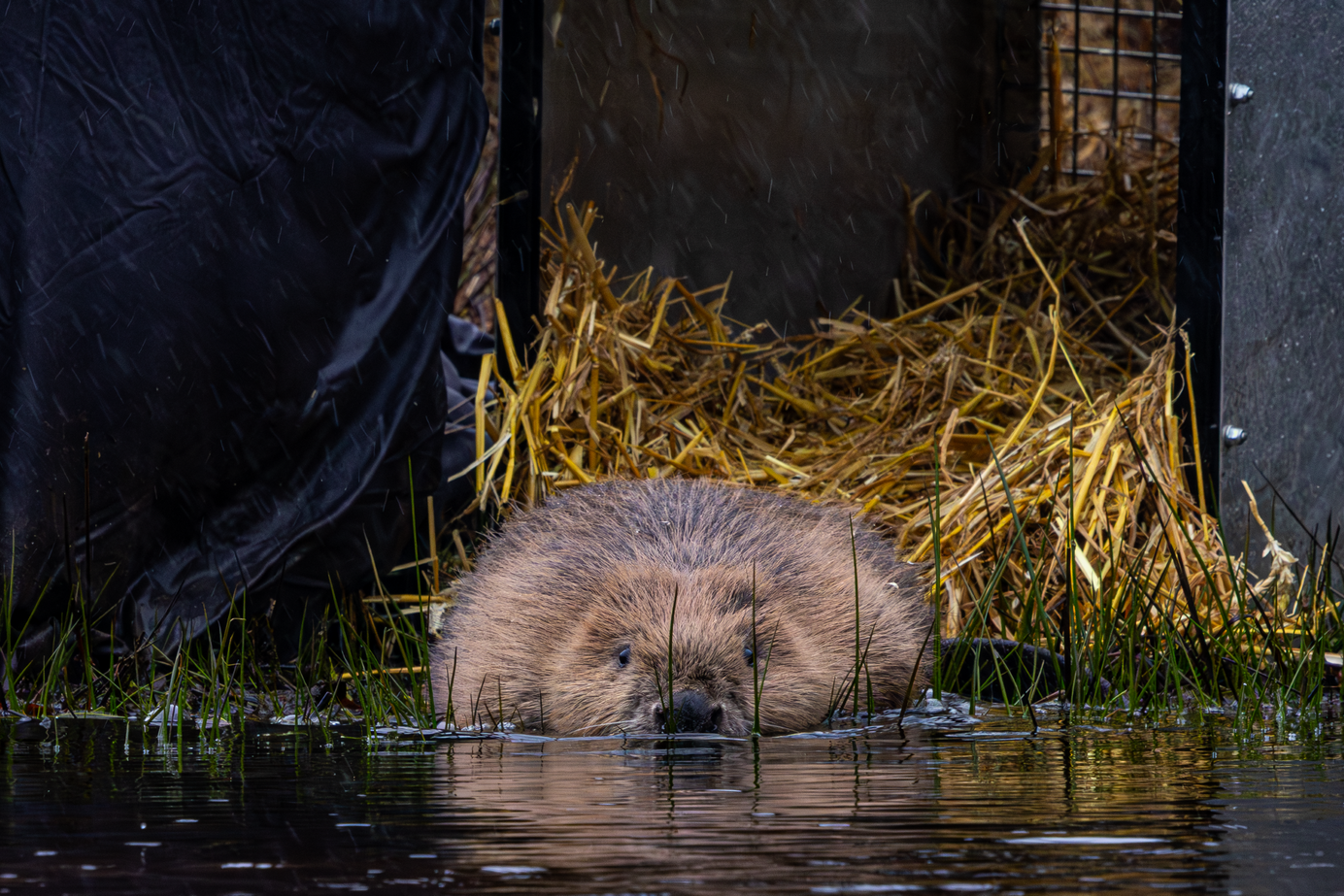
Beavers | Research commissioned by the Scottish Rewilding Alliance has shown that the majority of Scots want public bodies to step up action on beaver reintroductions – but government agencies are not delivering. Polling found that 73% of respondents believed that Scotland’s public bodies should identify more sites on their land where beavers could live. In 2022 the Scottish government called on public bodies to scale up action for returning beavers to public land, but since then, only five beaver families have been relocated, all within the Cairngorms National Park. Kevin Cumming, deputy convenor of the Alliance, said the Cairngorms authority is ‘showing what can be done’, but other public agencies – such as Forestry and Land Scotland, the country’s biggest manager of public land – need to ‘play catch-up’. The Scottish Farmer and the Herald covered the research.
Manifesto | On Wednesday, World Environment Day, the Conservative Environment Network published a report setting out its recommendations for the party’s green agenda. Announcing the plan, director of the group Sam Hall urged the party not to cede environmental leadership to the left, and said parties should be ‘competing over how to improve the environment, rather than whether climate change or nature loss are problems’. The proposals in the plan include creating local nature recovery zones around towns and cities, maintaining the nature-friendly farming budget in real terms for the next parliament, and stopping large fishing vessels from damaging the marine environment. Other recommendations address boosting solar panels and overhauling the water sector. The policies are summarised on a thread on X, and the Independent and Express reported the news. Meanwhile, the Environmental Investigation Agency also published its 17-point manifesto on key green policies for the next government.
Science
Extinction | The extinction of the woolly rhinoceros at the onset of the Holocene has long puzzled scientists, with conflicting evidence around its cause. Now, an international research team has used computer modelling alongside the fossil record and ancient DNA to uncover the species’ metapopulation dynamics across 52,000 years. They found that the path to extinction began long before the Holocene, when a combination of cooling temperatures and low but sustained hunting by humans drove the rhinoceros into suboptimal habitats in the south of their natural range. This ecological trap intensified after the last Ice Age, weakening metapopulation processes and triggering their extinction. The authors conclude that the findings should act as a warning for today’s remaining large-bodied grazers restricted to fragments of poor quality habitat due to anthropogenic change. The findings were published in PNAS.
Climate | A study published in Nature Ecology & Evolution has found that some species may tolerate climate change better than expected. Researchers used a new model to reassess the proportion of 25,000 terrestrial and marine species threatened with extinction by climate change. They found that 49% of these species currently live in climate niches that are contiguous – ‘stuck’ – to the limits of current climate conditions. However, using niche expansion scenarios, they found that 86% of those species could potentially tolerate a wider range of conditions as temperatures rise, with this figure rising to 92% for marine species. The authors say this would result in lower – although still alarming – rates of predicted biodiversity loss, particularly in the tropics. EurekAlert summarised the findings. The journal also published a comment piece by David Nogués Bravo, who celebrated the findings while also pointing out some reasons for caution.
Green | Increased residential greenspace is associated with lower antidepressant use, according to a study published in Landscape and Urban Planning. Researchers used a nationwide sample of adults residing in Sweden during 2013-16, alongside GIS analysis of residential greenspace land cover and data on antidepressant redemptions via the Swedish National Prescribed Drug Register. They found that higher greenspace within 500 metres of residential buffer zones was associated with lower levels of antidepressants, with the correlation particularly strong for greenspace within 50 metres. The authors say the findings underscore the importance of green infrastructure for mental health, as well as the need to integrate health and environmental policies and urban planning.
Driftwood
Mushrooms | Garden experts have warned that the boom in mushroom home-growing in the UK could have dire consequences for biodiversity. Scientists at Kew Gardens have received increased inquiries about growing fungi after installing mushroom beds in the Kew kitchen garden, while the sales of fungi kits are on the rise. Growing native fungi in gardens can benefit the soil and help break down organic materials, but experts warn that non-native species could prove difficult to remove, and potentially prove just as disastrous for biodiversity as formerly popular garden plants such as Japanese knotweed, rhododendron and bamboo. Sheila Das, a garden manager at RHS Wisley, said buyers should look for kits containing UK-collected spawn, since ‘alien fungi could potentially be even harder to control than alien plant species as their manner of growth is so complex’. Read more in the Guardian.
Restoration | In the Conversation, two biodiversity researchers outline the holes in the UK’s plans for nature restoration – and how to fill them. The article comes on the back of an open letter signed by more than 180 UK scientists, calling on all UK political parties to make nature loss a priority in the upcoming election, as well as the years after. One of the major issues, according to the article, is that the target to reverse the loss of biodiversity by 2030 is not enshrined in law: current legally binding targets focus just on species (rather than ecosystems), and only require the decline to be halted, as opposed to reversed. Another gap is the UK’s approach to its biodiversity footprint abroad, with overseas impacts not systematically tracked or considered in environmental legislation. ‘Nature underpins our health, our economy, our wellbeing and is key to getting out of the climate emergency we find ourselves in,’ they write. ‘The UK’s next government needs to recognise this and act upon it.’
Noise | Hakai Magazine features an excerpt from science writer Amorina Kingdon’s new book, Sing Like Fish: How Sound Rules Life Under Water. In it, Kingdon unpicks how the global soundscape of the ocean has changed in recent decades, and the resulting impact on marine species. Globally, shipping noise has doubled every decade from 1960 to 2010. At one end of the spectrum, noise can cause acute injury and even death in marine mammals, but it also impacts communication, mating, fighting, migrating, and bonding in subtle and myriad ways. ‘Underwater, acoustic space is valuable, and noise is trespass,’ Kingdon writes. As understanding of the impacts grows, so too does the number of possible solutions, ranging from slowdowns and lane shifts to retrofits and species research. Nevertheless, ‘shutting up’ the shipping industry will not be easy, Kingdon finds.
Further reading:
- For the Times, journalist Damian Whitworth tracks the source of the River Avon and walks along it to ask candidates and voters what they think of the state of Britain’s rivers.
- A feature in Atmos explores the rising trend of a ‘No Buy Year’ as people become increasingly conscious of the environmental impacts of consumerism.
- In a couple of weeks, UNESCO will announce its decision on an application for the Flow Country in the north of Scotland to become a world heritage site. Read more about the process in the Guardian.
- British rock band Coldplay say they have beaten their ‘eco-touring’ targets, according to the BBC.
- The world record for the most DNA found within a living thing has been broken by a tiny fern. A BBC feature explains the discovery.
- In the Guardian, biodiversity reporter Patrick Greenfield digs into how the bark beetle is wreaking havoc on the great northern forests. Separately, the Forestry Commission is extending measures to tackle spruce bark beetle across East Anglia, reports the BBC.
- Also in the Guardian, read about five ways to rewild and conserve the ocean, as featured in a new book by marine biologist Helen Scales.
Happy days
D-Day | A pillbox used for Army training in the run-up to D-Day has become a home for protected species of bats. The area around Dunwich Heath and Beach on the Suffolk coast was the base for Exercise Kruschen in 1943, one of the first large-scale military exercises designed to help with the planning of D-Day. Now, one of those pillboxes has been repurposed as a hibernaculum by the National Trust, and has both brown long-eared and Natterer’s bats roosting there. Richard Gilbert from the Trust said converting the pillbox was a ‘fantastic way to honour Dunwich’s lasting heritage’ while also supporting the wider biodiversity of the heath. The BBC covered the story.
Subscribe to our newsletter
Members receive our premium weekly digest of nature news from across Britain.
Comments
Sign in or become a Inkcap Journal member to join the conversation.
Just enter your email below to get a log in link.