Deep Peat & Wistman's Wood
The latest news on nature and conservation in Britain.
National news
Peat | The government has proposed a ban on burning deep peat in the English uplands to protect the environment. The ban would tighten the previous government’s legislation on peat burning by revising the definition of ‘deep peat’ to count anything over 30cm rather than 40cm, and also extending the protections beyond SSSIs. It would also require any prescribed burning to be carried out under strict licence. If implemented, the changes would increase the area currently protected from 222,000 to more than 368,000 hectares. Nature minister Mary Creagh said the rare habitat is a ‘precious part of our national heritage’, and that the changes would also benefit communities by improving air and water quality, storing carbon and reducing flood risk. The Wildlife Trusts welcomed the move, but said that all 677,000 hectares of peatland in England should be protected. The Guardian and Standard reported the news.
Regulations | An independent review of the government’s environmental regulations has found that the current system is outdated, inconsistent and complex – delivering for neither nature nor growth. The review, commissioned by environment secretary Steve Reed and led by economist Dan Corry, concludes that a ‘bonfire’ of regulations is not the solution, and instead makes 29 recommendations to streamline and modernise regulations. Defra said it would adopt nine of the recommendations immediately, and actively consider the others. Those adopted include a single ‘lead regulator’ for major projects to ensure environmental decisions happen at speed, as well as streamlining permits and guidance. Environmental groups have reacted with alarm, expressing concern that the aim of boosting economic growth will overshadow nature recovery. The Guardian and ENDS reported the news.
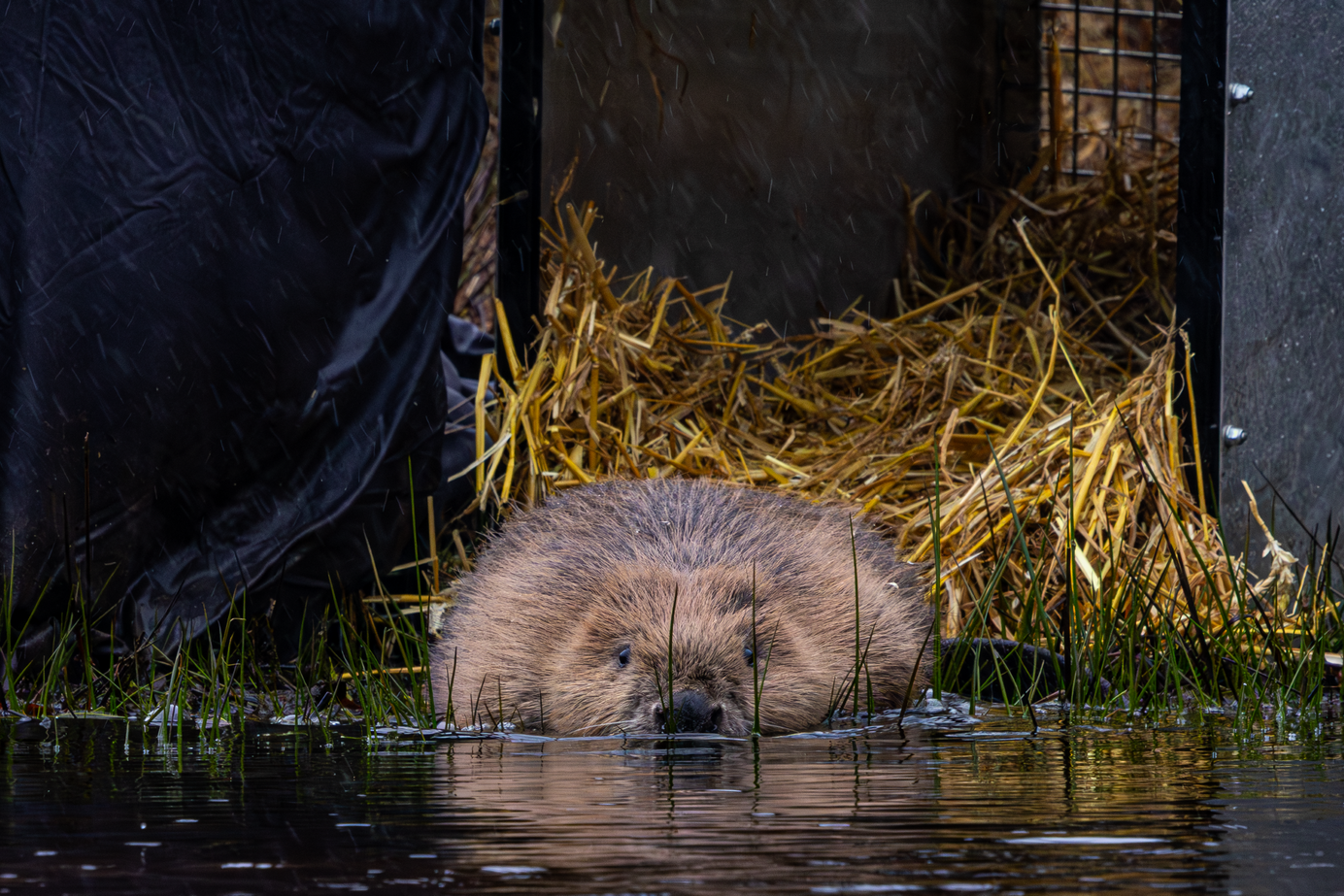
Rewilding | It could take up to seven decades for major nature restoration to be underway across 30% of Scotland at the current rate of change, according to data compiled by the Scottish Rewilding Alliance. The coalition calculated that rewilding is underway across 2.5% of the country’s land, with more than 195,000 hectares currently being rewilded. This is an increase of almost 33,000 hectares since the Alliance’s last assessment one year ago. However, the Scottish government has committed to protect at least 30% of its land and sea for nature by 2030, and at its current rate, this will take 65 years. The Alliance is calling for a ‘significant increase’ in political support to reach the target. Meanwhile, rewilding charity Trees for Life says it is ‘mystified’ after its plan to release beavers into Glen Affric in the Highlands has been delayed due to ‘considerable concern’ in the local community. The BBC and Herald reported the news.
In other news:
- Natural Resources Wales has announced £10m of funding, split across 13 nature recovery projects in Wales, from protecting curlew to restoring woodland habitats.
- National park leaders are expecting their biggest ever cut in government funding this year, reports the Times.
- Craig Bennett, chief executive of the Wildlife Trusts, has said that developers are failing not because of environmental restrictions but because they are ‘very bad’ at building houses, reports the Guardian.
- Last Friday the RSPB reported that turtle dove numbers are rapidly rising in Europe thanks to a shooting ban, but on Wednesday the Guardian reported that the EU has lifted the ban.
- The National Trust has been awarded £5m to boost wildlife and tackle climate impacts on its land, across four areas of England. The BBC and ITV reported the news.
Across the country
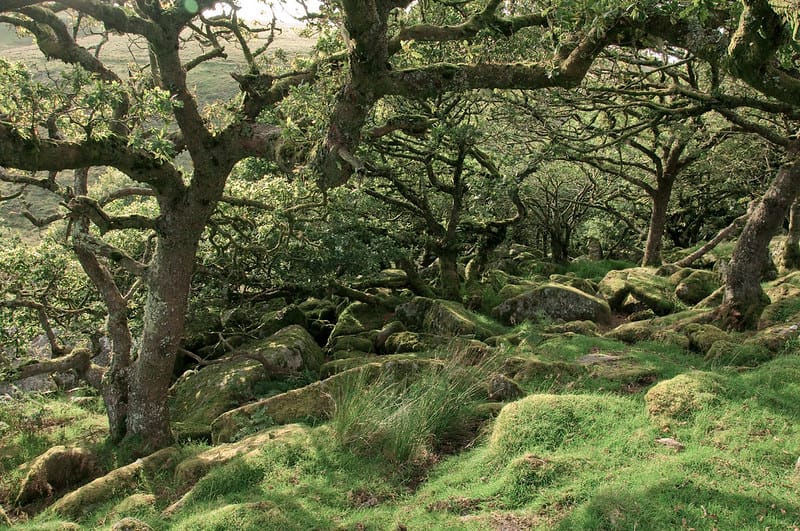
Devon | Work has begun to create a ‘mirror image’ of the iconic Wistman’s Wood, a remaining fragment of temperate rainforest on Dartmoor. Volunteers for the charity Moor Trees have planted 450 saplings at a neighbouring site, which were grown from acorns and seeds specially collected from the wood. The charity said that the oak and rowan saplings, nurtured at a community nursery in Dartington, are of ‘hyper-local provenance’ and should ‘stand the best chance to thrive’. The planting is part of a plan by the Duchy of Cornwall to double the size of Wistman’s by the early 2040s. It also involves careful management of grazing to encourage regeneration around the woodland’s edge. Jeremy Clitherow from the Duchy said that the new wood would provide a ‘stepping stone’ for wildlife, allowing species including lichens, mosses and breeding birds to ‘find a new home’. The Moorlander and the BBC covered the story.
Gloucestershire | Endangered eels caught in the Severn estuary will no longer be exported to Russia after the government banned the trade. A request to send millions of glass eels – young eels also known as elvers – to a restocking project in Kaliningrad was refused by Defra due to concerns over illegal trading, compounded by the ‘current situation in Russia’. Peter Wood, the owner of Glass Eels UK and the country’s last eel trader, called the decision ‘devastating’, and said the ban would end centuries of traditional fishing on the Severn. Sustainability campaigners have welcomed the decision, however, saying that the focus for eel conservation should be on restocking British rivers from the glass eel surplus in the Bristol Channel. The ban comes after a petition was signed by more than 50,000 people calling for the supply to be stopped. The Guardian and BBC reported the story.
South Wales | The Wildlife Trust for South and West Wales is using conservation grazing to boost the health and resilience of grasslands across the region, thanks to money from the Nature Network Programme. On Gower, the funding has allowed landowners to put grazing livestock onto coastal reserves with tricky accessibility. This has revived some of the rarest plants in the UK, including the goldilocks aster, which was believed to have been lost from the site. Meanwhile, in Ceredigion, highland cattle have helped to restore rhos pasture, a unique type of wet grassland, which has boosted the number of marsh fritillary butterflies which rely on it. Elsewhere, the Trust is using virtual fencing to move a herd of hardy Red Devon cows around an area of the Bannau Brycheiniog National Park, where they are keeping bracken and bramble at bay, allowing wildflowers and waxcap fungi on site to thrive. The Tenby Observer covered the story.
Elsewhere:
- Butterfly Conservation has been awarded £250,000 to help struggling populations of the large heath butterfly in northwest Wales, reports BirdGuides.
- Fairburn Ings nature reserve in west Yorkshire has counted a record number of egrets, reports the BBC.
- The Chelsea Flower Show will continue using peat for another two years after the Royal Horticultural Society delayed a blanket ban, reports the Times. Meanwhile, celebrity gardener Monty Don and RHS have designed a ‘robust’ and environmentally-friendly lawn, reports the Guardian and Times.
- West Norfolk council is using a specialist vacuum to remove plastic nurdles washed up on beaches following the tanker collision, reports the BBC.
- A company in Harpenden is trialling the use of sustainable fertiliser created from algae, reports the BBC.
- Data analysis by campaigners has revealed that United Utilities illegally spilled sewage into Lake Windermere on a record number of days last year, report the Times and BBC.
- The Wildlife Trust in Cambridgeshire has planted 700 young hawthorn trees to expand a green burial site near Ramsay.
- The local population of lobster in Whitby has increased by almost 400% in the last 20 years thanks to conservation efforts, reports the Yorkshire Post.
- An RSPB-led wetland restoration project to ‘rewiggle’ Howgill Beck in Cumrbia has won a UK river prize, reports the BBC.
- Tees River Trust has installed floating islands in Middlehaven Dock in Middlesbrough to provide wildlife habitats in an area with little natural space, reports the BBC.
- Natural England has planted 12,000 plugs of cotton grass at Humberhead reserve in Yorkshire to help restore the peatland.
- The National Trust has said there is hope that the puffins on the Farne Islands have built some resilience to bird flu, reports the BBC.
- The UK’s first national conference on kelp is being held in Brighton, reports the BBC.
Reports
Urban | More than 1,700 farms have disappeared from the outskirts of towns and cities since 2010, according to a report by countryside charity CPRE. The report investigates the decline of farming on the urban fringe, largely due to rising costs and competing demands from housing, industrial sites and energy infrastructure. The loss equates to 56,000 hectares of farmland and represents a ‘critical loss’ for both food security and sustainability, according to the charity. The report highlights that urban fringe farms represent just 11% of agricultural land, but produce an outsized proportion of the UK’s food, while also acting as Green Belt buffers, reducing food miles, and supporting local ecosystems. The charity is calling for greater support for urban fringe farming as a ‘key part’ of productive land-use.
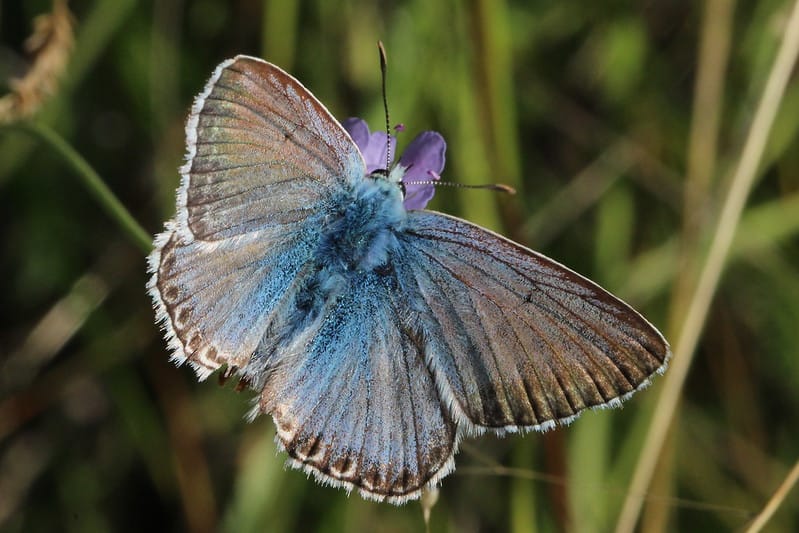
Butterflies | The latest annual results of the UK Butterfly Monitoring Scheme show that 2024 was the fifth worst year on record for butterflies in the UK. For the first time since monitoring began in 1976, more than half of butterfly species (31 out of 59) are now in long-term decline. Nine species had their worst recorded year, including the chalk hill blue, small tortoiseshell, grizzled skipper and green-veined white. In addition, common butterflies that live in gardens, parks and countryside had their second-worst year. Butterfly Conservation said that the low numbers were partly due to weather – a wet spring and relatively cool summer – as well as long-term factors such as land-use change, urban development, pollution and climate change. The charity is calling for councils to reduce grass-cutting and encouraging people to leave their lawns long to benefit the insects. The Guardian and BBC reported the news.
Regeneration | A report by the British Ecological Society has found ‘strong evidence’ for the ecological benefits of regenerative farming, with a ‘whole systems approach’ needed for the best results. The report collates the expertise of more than 40 academics, practitioners and farmers across the UK to assess the impact of various regenerative approaches. It found the strongest results came from minimising bare soil: keeping roots in the ground year-round improved soil organic matter, structure and nutrient availability, and also increased biodiversity. The report also found that integrating livestock into arable land reduced weeds, disease and pests. The authors stress that while a ‘whole systems approach’ using multiple overlapping principles achieves the best impacts, this shouldn’t discourage farmers from taking up just a few approaches, as ‘people need to start somewhere’.
Science
Offshore | Scientists have developed a modelling tool to better predict where seabirds will fly and forage, with potentially transformative impacts on offshore wind farm planning. Led by researchers from the University of Glasgow, the tool is the first of its kind to accurately predict the space use of seabird colonies without requiring extensive satellite tracking data. The authors used GPS data from eight northern gannet colonies to verify their predictions, and found that the model approximately doubles the predictive power of other industry-standard methods. Lead author Holly Niven said the accuracy would allow for ‘much more informed decisions’ about where to build offshore wind farms to avoid harming seabirds. The researchers also said the tool could be applied to other colonial wildlife, including seals, bats and bees. The findings were published in Methods in Ecology and Evolution. Phys.org and the Independent covered the research.
Storytelling | In a time of biodiversity and climate collapse, scientists should experiment with creative ways of communicating their research, according to a paper in People and Nature. Written by three environmental scientists from the University of Exeter, the paper argues that the practice of publishing work in scientific journals – where writing is expected to be technical, objective and dispassionate – makes it inaccessible to non-experts. Instead, they suggest ways of communicating that allow scientists to use their knowledge, passion and creativity, without compromising the objectivity of science. These methods include embracing the ‘art of storytelling’, with platforms for general publication alongside traditional journals. They also recommend trying new ways of ‘feeding science into normal human life’, such as sharing behind-the-scenes work, or providing biographies with personal stories and motivations.
Invertebrates | A study in Insect Conservation and Diversity argues that the Biodiversity Net Gain policy in England may be threatening the health of invertebrate species. The issue, according to a team of British researchers, is that BNG is a habitat-driven approach rather than a species-focused one. This means that, while new green spaces may be created, its broad-brush application may not provide the right conditions and microhabitats for different insect species. To address this, the researchers suggest realigning BNG with evidence-based conservation strategies such as the National Pollinator Strategy. This would involve integrating more targeted actions – such as planting native wildflowers, preserving deadwood for beetles, and ensuring hedgerows and wetlands remain intact – to deliver benefits for species with complex ecological needs. Co-author Jeff Ollerton summarised the findings in his blog here.
Driftwood
Soundscape | What do some of the world’s quietest creatures sound like? Find out in this Guardian feature, written by Amy Martin, the founder and executive producer of the award-winning podcast Threshold. The feature combines Martin’s research into nature’s soundscapes with audio clips of the creatures she is discussing, from the underwater acoustics of spadefish to the soft communications of naked mole rats. The science of passive acoustic monitoring – setting up audio recorders in wild places and letting them run – has boomed over the last decade, thanks to cheaper equipment and AI, giving scientists unprecedented access to conversations never heard before. Martin writes: ‘We are living through a quiet revolution – a renaissance of listening to the more-than-human world.’ You can listen to more on the topic in her latest podcast series, ‘Hark’.
Burial | For a piece in the Conversation, researchers from the universities of Essex and Verona dig into the ‘burial crisis’. Most urban areas are expected to run out of cemetery space by the 2050s, and some much sooner. However, initiatives involving natural burial are emerging as a potential solution. For example, Oakfield burial ground in Essex is a seven-acre woodland site: instead of headstones, a native broadleaf tree is planted for each burial with a small plaque. The site forms part of a larger nature reserve, creating rich wildlife habitat and ensuring the grounds are protected. Similar initiatives are taking root in the US, Canada, and even within the conservative burial culture of Italy. The authors write: ‘It’s only by considering human beings as part of nature that the growing burial crisis might be averted.’
Seeds | Research shows that growing and sharing seeds can boost mental wellbeing. An article in Positive News spotlights the work of researcher Catherine Howell, who, during 15 years of working on community food projects, noticed the positive impacts on the growers themselves. To test her hypothesis, she set up a pilot project in Middlesbrough, where fifteen people experiencing mental health challenges produced and harvested a crop of their choice. She found that the average score of their perceived mental wellbeing rose slightly across the project. Curious as to how much the change was attributable to seeds themselves, as opposed to being outside, she asked the participants. ‘They said: ‘It’s the seed that’s made the difference.’ It was the feeling of the creation of an abundance,’ Howell concluded. Elsewhere, a feature in the Guardian explores why the preservation of seeds in freezers needs rethinking.
Further reading:
- An opinion piece in the Guardian outlines the ‘hopeful’ benefits of the newly announced national forest in west England.
- A feature in Atmos discusses the complex communications of animals, and the debate surrounding what constitutes a non-human ‘language’.
- In the Conversation, professor of sociology Alison Anderson argues that natural history needs to be part of the whole curriculum, not just its own GCSE.
- The London Museum has a new exhibition on the history of mudlarking in the Thames: read about it on the BBC.
- A feature in Wicked Leeks discusses whether local food hubs can help fix the broken food system.
- In the Conversation, lecturer in law Oluwabusayo Wuraola argues that, as rivers are increasingly being given legal rights, they now need people to defend those rights in court.
- Also in the Conversation, this article previews Tony Juniper’s new book, which explores how a green transition can – and must – be ‘just’.
- In the Guardian, Patrick Barkham writes about how the Bedgebury national pinetum in Kent has become a ‘vital ark’ for endangered conifers.
Happy days
Stamps | Royal Mail has launched a stamp collection featuring mythical creatures and fabled figures from British folklore. Designed by London-based artist Adam Simpson, the eight stamps represent stories from different regions across the UK, demonstrating ‘our rich mythological heritage’. The stamps depict the flowery Blodeuwedd of Wales, heroic Fionn mac Cumhaill from Ireland, the spectral hound of East Anglia named the Black Shuck, and of course, the iconic Loch Ness monster. Simpson said he hoped the stamps would ‘either start conversations or invite people to investigate the stories if they’re not familiar with them’. Check out the artworks on the BBC.
Subscribe to our newsletter
Members receive our premium weekly digest of nature news from across Britain.
Comments
Sign in or become a Inkcap Journal member to join the conversation.
Just enter your email below to get a log in link.