Environmental Improvement Plan & Caledonian pinewoods
The latest news on nature and conservation in Britain.
National news
Environment | The government has published its Environmental Improvement Plan (EIP), the first revision of the 25-Year Environment Plan created five years ago. The EIP sets out how the government will translate into policy the commitment of the 25-year plan to improve the natural environment within a generation. Under the new plan, everyone in England will live within a 15-minute walk of green space or water. It also includes targets to restore at least 500,000 hectares of wildlife habitats and 400 miles of English rivers, and create 25 new or expanded national nature reserves. A new species survival fund will help Britain's most threatened wildlife, including hedgehogs and red squirrels, while sewage discharges will be tackled with upgrades to wastewater treatment works. The countryside charity CPRE celebrated the inclusion of an “ambitious” target for hedgerow creation and restoration. Chair of Natural England, Tony Juniper, said the delivery of the plan is a “defining moment for nature recovery in this country”, while Prime Minister Rishi Sunak said it would act as a blueprint for leaving the environment in a better state than finding it. However, the plan has faced criticism for a lack of clarity around finance, with targets such as the adoption of nature-friendly farming practices without a clear funding source. Campaigners have also said that more detail is needed on how the commitment to ensure proximity to green space will be achieved. Analysis by the Guardian argues that although the targets “look promising”, farmers will be key to successfully improving access. In an opinion piece, chief executive of the RSPB, Becky Speight, writes that the plan could provide a platform for saving Britain’s dwindling species, but only if words become actions. The BBC, the Guardian, the Times, ENDS and Edie covered the news.
Infrastructure | Natural England has launched a tool to help make towns and cities greener. The Green Infrastructure Framework provides a structure for planners and developers to analyse where greenspace is needed most in urban areas. The framework aims to increase green cover to 40% in residential areas, and will work in tandem with the Environment Improvement Plan to improve equal access to nature. It covers all green spaces, from parks and tree cover to green roofs, and will help to embed nature into new developments. However, conservation groups have warned that the framework will prove ineffective unless it is made mandatory for developers and properly funded, reports ENDS.
Bird flu | Avian flu has jumped from birds to mammals in the UK, prompting concerns about the spread of the virus. The Animal and Plant Health Agency tested 66 mammals in Britain, and found nine otters and foxes were positive. The cases were spread across the country, including Durham and Cornwall in England, Powys in Wales, and Shetland and Fife in Scotland. It is thought the animals contracted the virus by eating infected birds. Globally, there have been at least 200 recorded cases in mammals, including grizzly bears in America and mink in Spain. Public health experts have said the risk to humans remains very low, but the UK’s national avian flu taskforce is now ramping up its genomic surveillance in the country, while keeping a close eye on the spread in global populations of wild birds. Dr Alastair Ward, of the University of Leeds, said that the affected animals are scavenger species, whose immune system has likely been overwhelmed by a high viral load in an infected carcass. However, the natural barriers to transmission are fairly high. The BBC, the Guardian, Sky News and the Independent reported the news.
In other news:
- More than 1,300 pieces of legislation have been added to the Retained EU Law remit, bringing the total list of laws due to expire to 1,781, reports ENDS. Meanwhile, hundreds of environmental campaigners have marched to protest the Bill, reports the Guardian.
- The British Trust for Ornithology was locked out of its Twitter account during the Big Garden Birdwatch after tweeting about woodcock, reports the BBC.
- The Prince of Wales’ charitable fund has announced £1.95m in grants to seven charities, including the Wildlife Trusts and Plantlife International, reports the BBC.
- Natural England has launched the POSEIDON project, which will research the expansion of low impact offshore wind development alongside marine nature.
- The National Farmers’ Union called the government’s proposed environmental targets “irrational” and “unachievable”, reports the Guardian.
- Campaigners are calling for an urgent review of restrictions on wood-burning stoves, after Thérèse Coffey admitted air pollution targets are weaker than she would like, reports the Guardian.
- The Scottish government has published a five-year Wild Salmon Strategy, outlining actions to protect and recover wild Atlantic salmon populations in Scotland.
- The Wildlife Trusts have received £38m in funding from Aviva to restore wild places in Britain, including temperate rainforests.
- Natural Resources Wales is investigating the possibility of reintroducing beavers to Wales, reports Wales Online.
Across the country
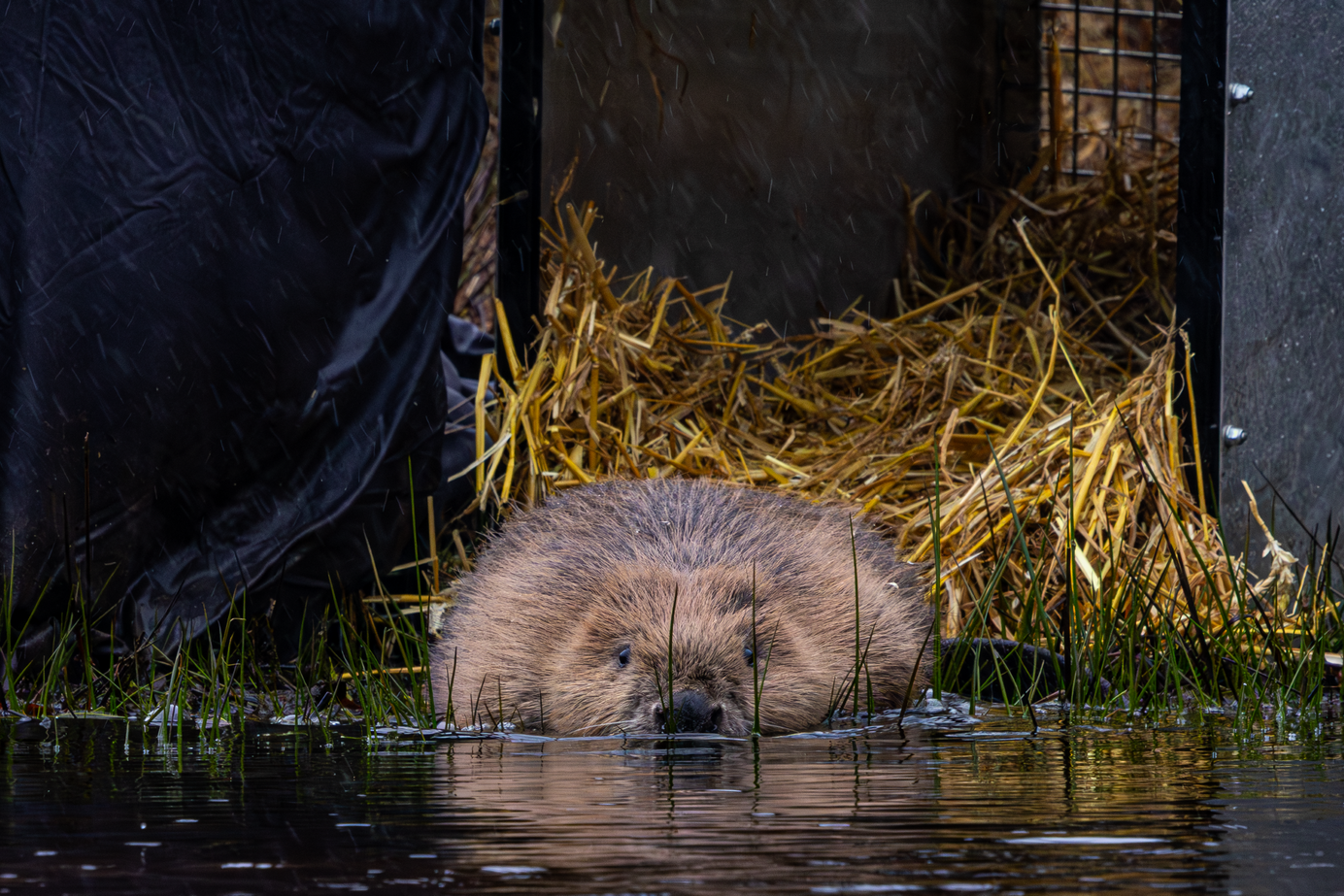
Loch Lomond | A family of beavers has been successfully moved from an agricultural area of Tayside to Loch Lomond National Nature Reserve, marking a milestone in the species’ return to the Scottish countryside. Translocation forms part of the government’s alternative plans to culling problematic beavers, although this is only the third time such a translocation has taken place in Scotland since the first beaver trial at Knapdale began in 2009. The BBC, the Times, the Herald and the Scotsman covered the news.
Oxfordshire | A collaboration between the Freshwater Habitats Trust and Thames Water is seeing Oxfordshire’s historic wetlands restored to a thriving habitat. The initiative is the latest step in the Trust’s ambitious project to build a national network of freshwater and wetland habitats, starting in Oxfordshire, where the charity is based. Restoration work will include eight new ponds and pools, creating habitats for species such as water vole, otters, and rare wetland plants. The BBC covered the news.
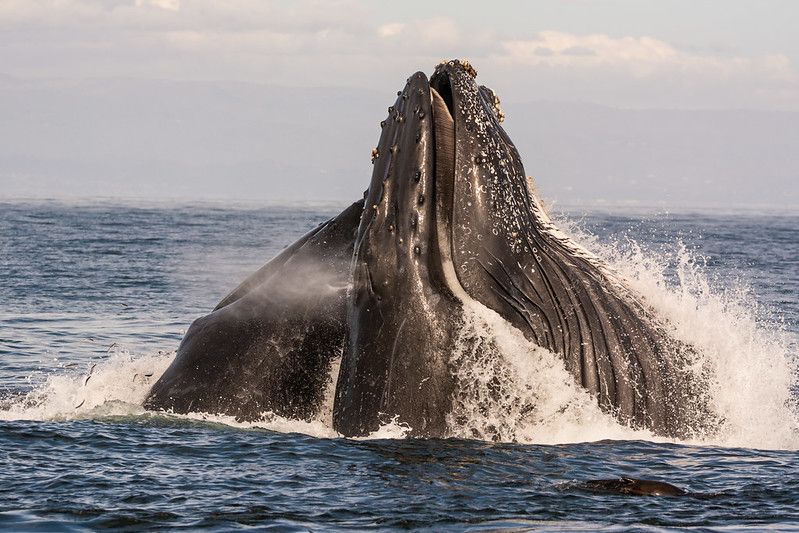
Cornwall | The recent increase in whale sightings off the coast of Cornwall and the Isles of Scilly could be a sign of population increases, according to an expert from the Cornwall Wildlife Trust. Katie Bellman said that what is being seen on the surface could be only a fraction of the total cetacean numbers below the waves. She added: "What's really encouraging is because we're getting regular annual sightings, which were quite rare in recent years, it does suggest that we might have some kind of population increase happening, which is brilliant for marine life recovery." This BBC video shows footage of a humpback whale recently spotted off the coast of St Ives. In addition to whale sightings, there have been reports of a large pod of dolphins near Falmouth, with around 100 individuals. The BBC covered the news.
Elsewhere:
- Dartmoor National Park Authority has announced it will appeal the court ruling against wild camping, reports the Guardian and Countryfile.
- The government’s decision to pay companies to halt the extraction of peat could end a 2,000-year history of peat excavation on the Somerset Levels, reports the BBC.
- A new phase of dredging has begun in the River Tees after Defra’s expert panel decided this activity was not to blame for crustacean mortalities, reports the Teesside Gazette.
- Public donations have allowed Derbyshire Wildlife Trust to offer a streaming service bringing nature reserves into hospitals.
- A disused railway line in Cheltenham is being transformed into a wildlife corridor, reports the BBC.
- The Environment Agency has outlined a £1m project to restore a Teesside country park, including wetland restoration and opening up 55km of river for migrating fish. The Northern Echo reported the news.
- With snow-free tracks, Aviemore’s annual sled dog race took place on wheeled sleds this year. The BBC has a photo article on the race.
- Climate change is impacting the risk of avalanches in Scotland, reports the BBC and the Scotsman.
- Natural Resources Wales has restored a river in Gwynedd, one of the last strongholds of critically endangered pearl mussels.
- The Environment Agency is working with partners to install artificial habitats, such as hanging fish shelters, at Whitby Harbour, to boost biodiversity and improve water quality.
- Residents of Brockley in southeast London have raised £116,000 in an effort to protect a patch of ancient woodland, reports the BBC.
- Natural England is funding a feasibility report looking into the potential of reintroducing black grouse to Ashdown Forest in Sussex, reports BirdGuides.
- One of Scotland’s largest landowners, Buccleuch Estate, has concluded the sale of the final piece of Langholm Moor to Oxygen Conservation. The BBC, the Scotsman and FarmingUK covered the news.
- Conservationists and volunteers will begin sowing seagrass seeds in the Firth of Forth shortly, as work begins on the Restoration Forth project, reports the Scotsman.
- Trees flattened by winter storms will be fixed to the bed of the River Dee to give shelter for salmon, reports the Scotsman.
- One thousand trees infected with ash dieback in Cumbria will be felled due to the danger of toppling over onto roads, reports the BBC.
Reports
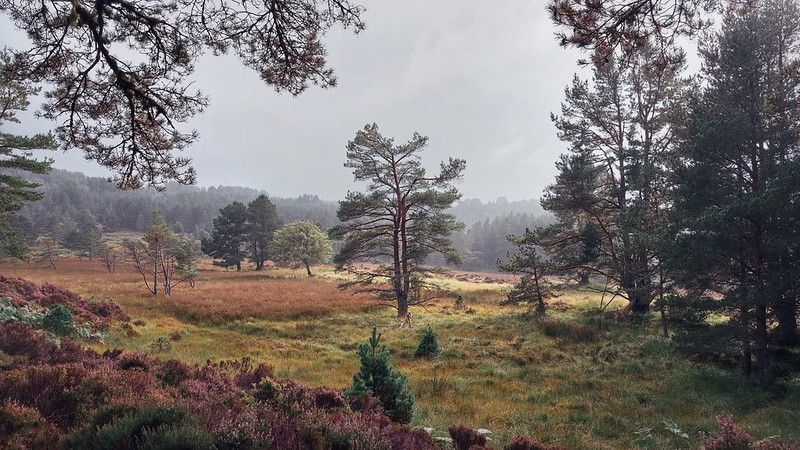
Pinewood | The survival of Scotland’s unique Caledonian pinewood forests is on a “knife-edge”, according to a report from the rewilding charity Trees For Life. The findings are based on a four-year analysis of the woodlands, which assessed the state of 72 of the remaining 84 fragments scattered across the Highlands. It found that a combination of high deer numbers, the spread of non-native conifers, a lack of long-term management and the impacts of climate change were all threatening the survival of the pinewoods. The surviving fragments are small and isolated, with only 11% of the remaining sites over 500 hectares in size. The charity is calling for urgent action from the government, including long-term funding for landowners to restore their pinewoods, as well as full implementation of proposed national measures to reduce deer numbers. It has also suggested action to allow pinewoods to expand into cooler, mountainous areas in response to climate change. The Herald and the National covered the research.
Landscape | The government risks “overpromising” land through multiple policy commitments, according to a report from the Royal Society. The report, called ‘Multifunctional Landscapes’, examines the increasing pressures on British land to feed and house a growing population, while also tackling biodiversity loss and climate change. It found that a combination of the government’s land-based targets on farming, nature and renewable energy would require an area of additional land equivalent in size to Northern Ireland, rising to twice the size of Wales by 2050. The authors make five key recommendations to the government to reduce this pressure, including a multifunctional approach to land-use, improved training for land managers, and dedicated national land-use frameworks. A spokesperson for the government said it would publish a land-use framework later this year. The BBC covered the news.
Erosion | Twenty-one coastal communities in England could be lost to coastal erosion by 2100, according to a report by climate action group One Home. The organisation has created an interactive map which highlights “erosion hotspots” along the British coast, stretching from Cornwall to Cumbria. In these areas, a lack of sea defences is leaving homes vulnerable to the impacts of rising sea levels and extreme weather. Using data from the Environment Agency, the report estimates that 2,218 properties – worth around £584m – could be lost. The group hopes that the map will help homeowners to make informed decisions about their properties and increase awareness of the lack of compensation currently available. The BBC covered the news.
Science
Trees | Planting more trees in European cities could significantly reduce deaths caused by heat, according to a study in The Lancet. Increasing the level of tree cover from the European average of 14.9% to 30% would lower city temperatures by an average of 0.4°C. Analysis of 2015 mortality data from 93 cities suggests that, from 6,700 premature deaths attributed to high urban temperatures, 2,644 could have been prevented by increased tree cover – a reduction of almost 40%. Study co-author Mark Nieuwenhuijsen said that there is enough space to plant more trees in all the cities the team studied. He praised the UK government’s plans to ensure every home is within 15 minutes of green space. The Guardian covered the research.
Whale | A study in Mammal Communications has identified the first short-finned pilot whale ever found in British waters. The specimen was stranded on a beach in Pembrokeshire more than a decade ago, and was identified by Defra at the time as a long-finned pilot whale, which is commonly found in British waters. However, fresh analysis of the skull and teeth has revealed it was, in fact, a short-finned pilot whale, which are largely found in tropical to warm temperate seas. Rob Deaville of the Institute of Zoology in London, who was involved in the 2012 examination, said that the new identification “adds to the growing evidence of a clear trend of cetacean life being affected by climate change, part of a wider impact across our seas and oceans." The discovery means that scientists can no longer assume every stranded pilot whale is long-finned, as the two are difficult to distinguish visually. The BBC and the Scotsman covered the news.
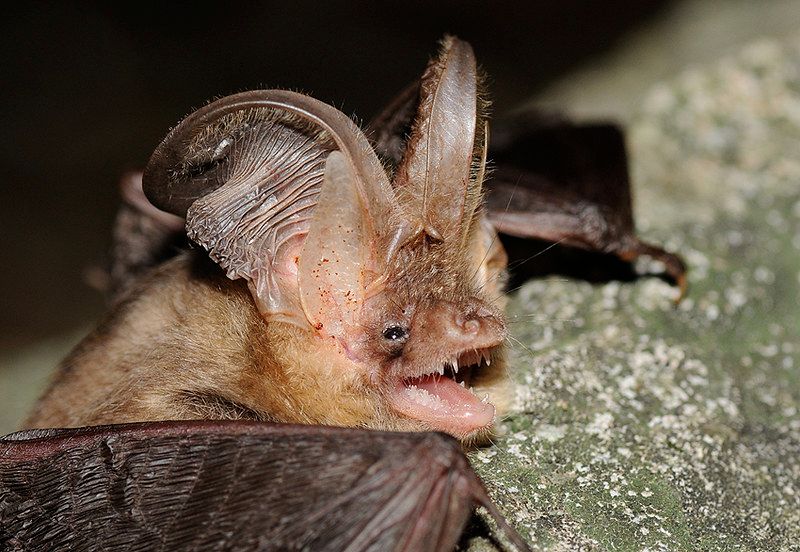
Bats | What environmental factors influence the shape of bats’ bodies? A study in Ecology and Evolution used land-use data from historical maps and statistics, combined with climatic data, to assess the effects of temperature and forest cover on bat morphology. The study used 464 museum specimens of three bat species found widely across Europe and Asia, spanning 180 years. Contrary to other research, they found no evidence that higher temperatures resulted in smaller body size. However, they found significant changes in wing shape, with temperatures above 14.5°C in forested areas promoting more pointed wings, potentially to provide energetic benefits. Encouragingly, the authors conclude that all three species demonstrate the ability to adapt their size and functional traits to different conditions, which could help them overcome future impacts of climate and land-use change.
Driftwood
Food | An article in the Press and Journal explains how common snails from one man’s garden on the island of Barra have made their way onto plates in Michelin-starred restaurants. The snails are one of the most widely distributed varieties in the UK, but 59-year old oyster farmer, Gerard MacDonald, said he is still careful to never impact the health of their local population. Instead, he believes that his small-scale harvesting is bringing tastebuds back to the wild, and promoting a local heritage product. MacDonald first began selling the garden snails to Edinburgh-based French chef Fred Birkmiller in 2015, and has since secured the species a spot on a catalogue of endangered heritage foods. Separately, a feature in the Times explores how the rising popularity of vegan diets has spiked demand for unconventional and exotic mushroom varieties.
Farming | The government must deliver for food production and the environment equally, says Minette Batters, president of the National Farmers’ Union, in an interview with the New Statesman. She claims farmers are concerned that Defra’s post-Brexit subsidy schemes are not designed to be profitable for the people working the land. Nature recovery and food production shouldn’t be seen as contradictory targets, she adds. “You can’t really separate [them],” she says. “We have to be able to produce our food in a truly sustainable way, that is decreasing its footprint but producing the same amount or more.” But ultimately, nature-friendly farming is still a “business decision” which has to benefit farmers – or “they’re just not going to be able to do it,” Batters argued. Separately, an opinion piece in the Times contends that few farmers believe Thérèse Coffey can deliver on the latest government pledges.
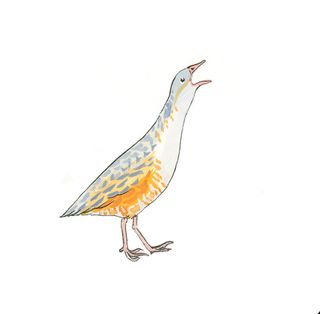
Cranes | The recovery of common cranes in Britain is in part thanks to conservationists who dressed up in robes to disguise themselves as parent birds, according to a feature in the Times celebrating the return of the species. Cranes were driven to extinction in Britain in the sixteenth century; their numbers remained low even after a handful were reintroduced to the Norfolk Broads in 1979. It wasn’t until the 2010s that numbers began to rise, when 93 birds were hand-reared for release across the Somerset Levels. During efforts to boost the population, “crane carers” at the Slimbridge nature reserve dressed up as the charismatic birds, and used a feed scoop to imitate a mother’s beak. The estimated UK population now exceeds 200 pairs, and conservationists are pushing for the expansion and connection of wetland areas to support the growing numbers. A post by the Lincolnshire Wildlife Trust celebrates another successful year for cranes in 2022.
Further reading:
- In the Bristol Post, an article explores how one grower is reducing the carbon footprint of each bouquet.
- For the Times, entrepreneur Kim Morrish writes about how protecting nature helps profits as well as the environment.
- A blog by the Natural History Museum walks the reader through a decade of digitising the museum’s collections.
- A feature in the Guardian explores the life of Norfolk-based author Nick Acheson, whose book, The Meaning of Geese, is published on 9th February.
- An opinion piece in the Herald asks why Scotland is lagging behind on targets for peatland protection and restoration.
- In Countryfile, journalist John Craven explores the potential for fermented protein to replace grazing livestock.
- The National Trust has launched an online virtual tour of the beaver enclosure on Holnicote Estate in Somerset, reports the Guardian.
- The John Muir Trust has published a statement on “the myths and the facts” of the dispute over deer culling in Assynt.
- A feature in the Ecologist explores the benefits of a right to roam.
- As part of its ‘Spa Collection’, a feature in the National Geographic reviews the experience of connecting with nature at the School of Wild Wellness and Bushcraft in Glen Dye.
Happy days
Seals | In the early twentieth century, grey seals were almost hunted to extinction in the UK, but today their numbers are booming, according to an article in the Guardian. The British population of grey seals previously dropped as low as 500, but now they hover at around 12,000, making up 40% of the world’s population. Their comeback is so strong, in fact, that wandering pups are being rescued from the most unlikely of places, from kebab shops to farmers’ fields. “We’ve had pups go up the slipway on the beach and try to head to the pub,” said Lara Howe, a marine officer with the Manx Wildlife Trust. “Ours like to try to go for a pint!”
Subscribe to our newsletter
Members receive our premium weekly digest of nature news from across Britain.
Comments
Sign in or become a Inkcap Journal member to join the conversation.
Just enter your email below to get a log in link.