Environmental Improvement Plan & Deer Culls
The latest news on nature and conservation in Britain.
National news
Targets | The government has published its much-anticipated revision of the Environmental Improvement Plan, setting out a five-year roadmap for nature restoration. The headline commitments include £500m for large-scale Landscape Recovery projects, to be invested over a 20-year period, and £85m for peatland restoration. New interim targets include creating or restoring 250,000 hectares of wildlife-rich habitat outside protected sites; doubling the number of farms providing year-round resources for wildlife; and reducing the rate of invasive species establishment by at least 50% compared with levels in 2000. It also includes fungi conservation for the first time. The Wildlife Trusts said the plan contains ‘encouraging signs’ for nature recovery, but is overall ‘underwhelming’, offering action plans rather than concrete policies. Read the Trust’s detailed analysis here, and further reaction from WCL and CPRE. Meanwhile, the NFU said the plan leaves ‘unanswered questions’ about how nature targets align with food production. ITV, BusinessGreen and ENDS covered the news.
Trees | Hexham MP Joe Morris has proposed a bill to create a register of iconic British trees. The register would provide heightened protections for culturally significant specimens, preventing them from meeting the same fate as the Sycamore Gap tree. In a speech to the Commons, Morris said that the crime had shocked the entire country, and that ‘such trees can and should be classified as “iconic” for holding widely recognised cultural, historical, ecological and symbolic significance.’ Candidates include Sherwood Forest’s Major Oak, with connections to Robin Hood; the Ankerwycke Yew in Berkshire, associated with the seal of the Magna Carta; and the ancient Fortingall Yew in Perthshire. The proposed law is tabled for a second reading in January. ITV News and the Northern Echo reported the news.
Protection | Protected sites offer a ‘golden opportunity’ for nature recovery that is currently being missed, according to a report from the Office for Environmental Protection. The report examined the regulations covering designated sites, and found that, while the legislation is sound, implementation is too restricted in both pace and scale. As a result, the number of SSSIs in ‘favourable condition’ has dropped to just over a third. The report makes 15 recommendations to the government across six key areas, including resources, monitoring, and land management incentives. Responding to the report, the Wildlife Trusts said it was ‘vital that Government maximises the contribution of these highly valuable sites for nature’, and called for increased funding for Natural England. ENDS covered the news.
In other news:
- The Welsh government has passed regulations reinforcing its climate commitments and enabling the roll-out of its Sustainable Farming Scheme, reports Nation Cymru and South Wales Argus.
- Analysis by the Energy and Climate Intelligence Unit has revealed that summer heat and droughts cost UK arable farmers over £800m this year, reports the Guardian.
- Scottish MSPs have voted to remove powers from the Natural Environment Bill that would have allowed ministers to change or repeal key nature regulations, reports ENDS.
- The UK’s first climate and nature ‘national emergency briefing’ took place in Westminster last week. Read summaries in the Guardian, Conversation and Forbes.
- Shoppers in the UK are opting for more beans in place of beef amid the rising cost of meat, reports the Guardian.
- Three-quarters of fruit and a quarter of vegetables tested by the UK government contained pesticides, according to analysis by Pesticide Action Network UK. The Ecologist and ENDS reported the news.
- The UK government has published a joint biodiversity strategy with all of its Overseas Territories for the first time.
Across the country
Dorset | The National Trust has launched a fundraising appeal to purchase the land around the iconic Cerne Abbas Giant. The 55m-tall chalk hill figure is believed to date from the late Saxon period, and was given to the Trust in 1920. The surrounding swathe of land is known as the giant’s lair, which includes Giant Hill, an SSSI home to 36 butterfly species. The Trust’s plans include restoring areas of chalk grasslands, planting woodland, and linking up habitat to support rare species such as the Duke of Burgundy butterfly and hazel glove fungus. It will also conduct landscape-scale archaeological research into the giant’s origins. The Guardian and Bournemouth Echo covered the story.
Firth of Forth | Oysters reintroduced to the Firth of Forth from Loch Ryan are ‘thriving’, according to researchers from Heriot-Watt University. The project has deployed 46,780 European flat oysters across four sites in the Forth since 2023 in an effort to return the species to its former habitat. Recent monitoring by the university’s dive team shows an average survival rate of 88%. Dr Naomi Kennon called the results ‘hugely promising’, with one oyster growing 2.1cm in one year – nearly double the expected growth rate in good environmental conditions. She said populations are still ‘a long way off’ historic levels, but the results show the ‘value of restoration work’. The Herald, Independent and BBC covered the story.
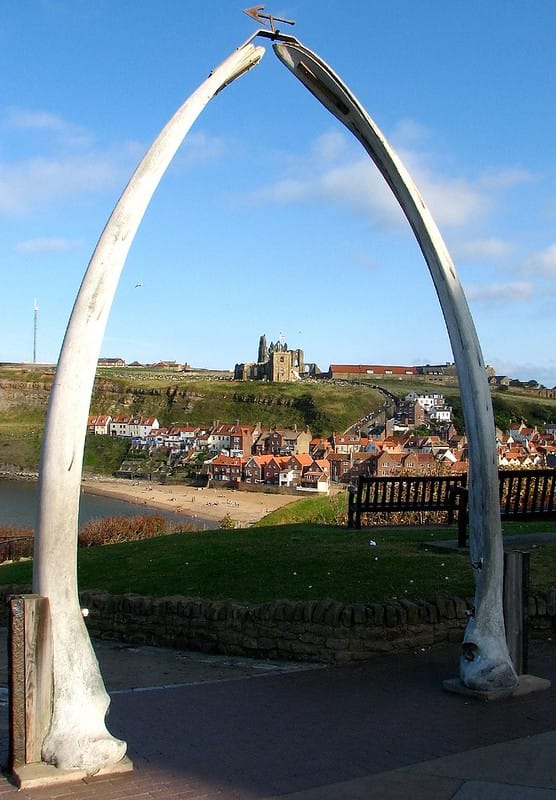
Whitby | A plan to replace Whitby’s deteriorating Whale Bone Arch is facing legal, international and moral barriers. The original jawbone arch was erected in the 1850s, and was last replaced in 2002 using bones sourced from Barrow in Alaska, where a whale had been legally killed by Inuit locals. North Yorkshire Council is currently looking for a replacement, but said the bones come with a host of issues: they would likely be in a remote location on the Arctic ice shelf, and would require careful travel logistics and thorough cleaning – even before obtaining permission for importation. In addition, ethical questions have now been raised about whether it is still ‘socially acceptable’ to display the bones of an endangered species, or whether imitation bones would be more fitting. Read the full story in the Northern Echo.
Elsewhere:
- A project led by Natural England will study adders in the Yorkshire Dales to determine the health of their populations, reports the Yorkshire Post and BBC.
- Researchers are reexamining red deer bones found inside the Neolithic Ness of Brodgar in Orkney to understand how deer featured in prehistoric Scottish life, reports the Herald.
- Powys councillors are set to oppose plans for a Glyndŵr National Park, citing economic and planning concerns, reports the Powys County Times.
- The Ribble Rivers Trust has found that the number of salmon migrating upstream to spawn in the northwest has fallen by 60% since 2012, reports the BBC.
- The Final Straw Foundation has prepared 10,000 native flat oysters for reintroduction at Portsmouth, Hayling Island and Gosport, reports the Daily Echo.
- A new electronic tracking antenna installed at Teeside’s RSPB Saltholme has tracked its first birds: two jack snipes from Sweden, reports the BBC.
- The date waxcap, one of the rarest fungi species in Britain, has been discovered on Alderney for the first time, according to the local Wildlife Trust.
- Mid Suffolk District Council has created a £1.8m biodiversity and nature recovery budget, reports the BBC.
- A survey of woodland reserves by the Wildlife Trust for Bedfordshire has revealed the devastating impacts of ash dieback disease, reports the BBC.
- Former rower Sir Steve Redgrave is leading legal action by local residents against Thames Water over river pollution, reports the Telegraph, Guardian and Oxford Mail.
- Endangered cottonweed is being reintroduced to a beachfront on Hayling Island where it was first recorded more than 400 years ago, reports the BBC.
- Denbighshire County Council’s biodiversity team has successfully grown endangered black poplar trees from seed following a four-year project, reports the Wales Farmer.
- A colony of protected terns could scupper the government’s plans to build mini nuclear reactors on Anglesey, reports the Telegraph and Times.
Reports
Adaptation | A report by Scottish Environment LINK, a coalition of 50 environmental organisations, argues that nature is Scotland’s first line of defence against climate impacts, but current adaptation efforts are too slow. The report highlights how investing in nature can build resilience against threats including extreme weather and rising temperatures: for example, restoring farmland habitats can protect food production, while repairing peatlands and riparian woodlands can reduce flooding. The authors outline priority policy actions for each focus area, including reforming agricultural funding to support nature-friendly farming, putting nature at the centre of marine decision-making, and adopting a ‘robust approach’ to deer management.
Indicators | The government has released its annual update of the UK Biodiversity Indicators, which track biodiversity trends. It reveals that most indicators are deteriorating or largely unchanged in both the long- and short-term. The data reveals particular declines for woodland, wetland and farmland specialist species, including turtle doves, marsh tits and corn buntings. Richard Benwell, CEO of Wildlife and Countryside Link, said the update demonstrates that ‘business-as-usual’ is failing wildlife. He added that nature ‘cannot recover on the back of isolated projects’, and called on the government to treat it with the ‘seriousness they would in any national crisis’. ENDS reported the news.
Cetaceans | The Scottish government has published a UK Cetacean Conservation Strategy to align efforts across the UK to protect whales, dolphins and porpoises. It identifies numerous challenges, ranging from poor water quality and human disturbance to the impacts of climate change and prey availability. Six high-level recommendations include reducing the impacts of wildlife tourism and recreational activities, eliminating bycatch and entanglement, managing underwater noise levels, and improving understanding of the impacts of marine litter and biotoxins. Water Magazine covered the report. Separately, scientists have published a manifesto calling for urgent measures to protect ‘marine animal forests’, reports Oceanographic.
Science
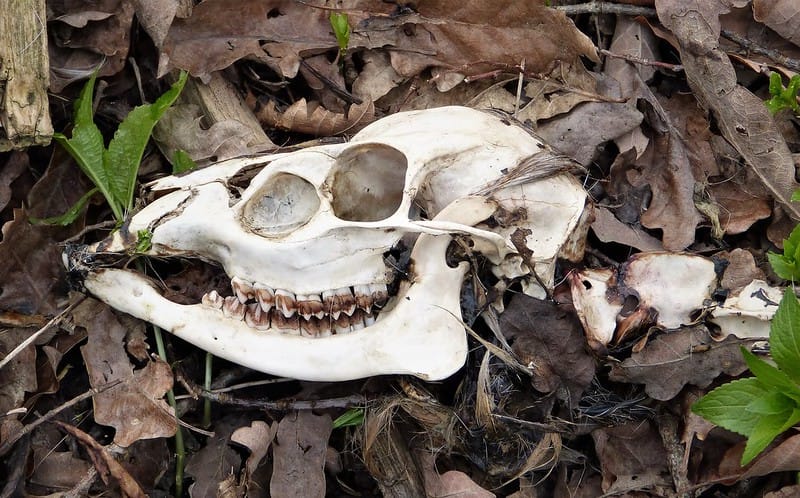
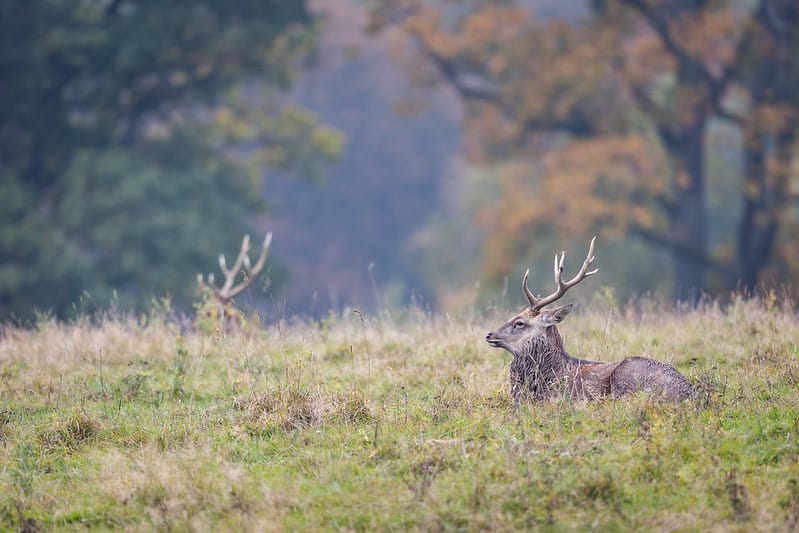
Deer | Indiscriminate deer culls could help invasive sika deer to outcompete native deer species in Scotland, according to a paper in Ecological Solutions and Evidence. The warning comes from ecologists, deer managers and foresters, who combine their practical knowledge with existing literature. Sika deer, which are native to eastern Russia and Asia, are more evasive, tolerate poorer habitat, and breed faster than native deer: all advantages which could allow them to dominate following culls. Co-author Calum Brown said: ‘While the problem of deer overpopulation in Scotland is widely recognised, we don’t want to see sika crowned the new “Monarch of the Glen”.’ The authors call for strategic control of sika populations and the use of technologies such as drone-based censuses. The Times and Applied Ecologist covered the study.
Rewilding | A special section in the journal Area examines rewilding from a gendered perspective. It includes four papers which draw on feminist approaches to uncover marginalised perspectives in rewilding. For example, this paper examines how paying closer attention to emotions – which both inspire rewilding efforts and cause conflicts – can offer ways toward resolution. Another paper also advocates for a more empathetic approach, specifically with regards to farmer-rewilding conflicts within a Welsh agricultural context. Meanwhile, two commentaries reflect on common themes within the papers, including the role of reproductive labour and how rewilding challenges masculine imaginaries of control and ownership.
Woodland | Conservationists should use palaeoecological techniques to better define and understand ancient woodlands, according to a study in Ecological Indicators. The value of ancient woodlands for biodiversity is increasingly recognised, but maps, place names and present-day species can be unreliable indicators of longevity. The authors suggest combining these sources with pollen, charcoal and plant fossils, which can reveal further historic information, including species diversity and substantial structural changes. To demonstrate this, the authors analyse peat cores from Dinnet Oakwood in Aberdeenshire, which highlight its value as an ancient woodland despite a long history of timber planting, grazing and sporting use.
Driftwood
Fungi | In the same week as fungi’s first-ever inclusion in the UK’s EIP, the Future is Fungi Awards recognised recent innovations using fungi to tackle urgent environmental challenges. This year’s winners include Hiro Technologies, which used a plastic-eating fungus to design a nappy that will biodegrade within six to twelve months, rather than sitting in landfill for centuries. Other winners have developed fungal alternatives for food colourings and cosmetics, replacing petrochemical and animal-based components. Read more about recent advances in fungi science – including electronics infused with live mycelium – in this Guardian article. Meanwhile, Emergence Magazine has an interview with author Merlin Sheldrake on mycelial networks and mutualism.
Soil | Scientists could soon be able to tell who lived in an Ice Age cave – all from the soil. A feature in the Conversation explores recent advances in how DNA is extracted from ancient materials. This has typically been bones – both human and animal – but advances in robotics and computing have allowed scientists to recover DNA directly from cave sediments. Cave floors can preserve tens of thousands of years of genetic history, providing ideal archives for studying long-term human-ecosystem interactions. For example, researchers are hoping to soon uncover the first cave bear genomes, and evidence of whether modern humans and Neanderthals ever shared caves.
Wolves | Also in the Conversation, this article by researcher Cormac Cleary argues that Hollywood’s obsession with using wolves as villains could sabotage rewilding efforts. While the predators are returning across Europe, for most people in Britain wolves exist only in stories or on screen. This is not good news for wolves, according to Cleary, since recent Hollywood horror films – such as Guillermo Del Toro's adaptation of Frankenstein – continue to depict the animals as cruel, cunning and ravenous, with conflict between wolves and humans seemingly inevitable. There is a long cultural history of villainous wolves, from ancient folklore through Victorian gothic novels, but Clearly argues that modern horror’s ongoing reliance on wolves as symbols for evil could damage future efforts to promote coexistence.
Further reading:
- Billboards across the UK will be displaying tree-inspired art thanks to a collaboration between the Tree Council and various artists to mark National Tree Week.
- In the BBC, ‘Birdgirl’ Mya-Rose Craig reflects on societal changes in the decade since she set up the Black2Nature charity.
- For the Times, Jeremy Clarkson writes about his favourite birds on Diddly Squat farm, and why Britain needs to do more to protect them.
- The Conversation and the Guardian both have articles on research revealing the value of Britain’s ponds, and efforts to revive them.
- A research project by the University of Exeter is exploring whether British farmers should diversify into growing prawns. Read more in Country Life.
- This essay in Atmos discusses why the ocean is the world’s most undervalued economy.
- In the Guardian, read about the search for wild wallabies in the UK.
- The former chief of staff for Jeremy Hunt writes in Country Life about what the Budget means for the countryside.
- The Times reviews an exhibition of Tony Foster’s watercolour paintings capturing nature’s wild extremes, currently on at the RWS Gallery London.
- For the Guardian, former environment correspondent Paul Brown looks back on lessons learned from his career.
Happy days
Books | As Christmas draws nearer, multiple papers have named their best science and environment books of 2025. Standouts for nature include Robert Macfarlane’s Is A River Alive?, in which Macfarlane floats the thesis that rivers deserve recognition as fellow living beings. Another recommendation is Sadiah Qureshi’s Vanished: An Unnatural History of Extinction, which scrutinises how the concept of extinction is entwined with racial politics and social justice. Both books feature on the Guardian and Smithsonian Magazine lists. Meanwhile, the Times recommends Lone Wolf, in which Adam Weymouth retraces a wolf’s 1,200 mile journey across Europe, uncovering the nuances of contemporary human-animal relations as he goes.
Subscribe to our newsletter
Members receive our premium weekly digest of nature news from across Britain.
Comments
Sign in or become a Inkcap Journal member to join the conversation.
Just enter your email below to get a log in link.