
EU Laws & Dartmoor Camping
The latest news on nature and conservation in Britain.
National news
Law | The Retained EU Law Bill (REUL) has passed through the House of Commons, and will now progress to the House of Lords. The Bill, which was proposed by Jacob Rees-Mogg, will get rid of around 4,000 EU laws in December, unless they are specifically kept or replaced. The Wildlife Trusts have denounced the Bill, saying it will have “profound and alarming consequences” for all four nations, while Wildlife and Countryside LINK called it an “economic and environmental wrecking ball”. Figures released by the organisation reveal the cost of scrapping or weakening EU environmental laws could reach £82bn over 30 years – the result of poorer air and water quality, as well as damage to protected sites, the marine environment, and the arrival of more invasive species. On Wednesday, a number of Conservative MPs objected to the Bill, calling it “undemocratic” and “unrealistic”. However, the threat of rebellion petered out, with only four voting for a cross-party amendment designed to give MPs better oversight of the laws being ditched. The BBC, the Guardian, the Times, iNews and the Financial Times covered the news.
Marine | Environment secretary Thérèse Coffey has launched a consultation on new restrictions to fishing in 13 marine protected areas (MPAs). Under the proposed byelaw, the environmentally damaging practice of bottom-trawling would be banned in the entirety of three MPAs, and restricted in certain parts of the other ten, particularly areas of rock and reef. The UK currently has 40 offshore MPAs. The Wildlife Trusts welcomed the news, saying that the progress could help move the 13 chosen MPAs away from being “paper parks”: areas designated on paper but with no real protection. However, ocean campaigners are disappointed that the proposed restrictions – which they dub as “piecemeal” – will only cover three MPAs in their entirety. Charles Clover, from the Blue Marine Foundation, said: “This announcement is feeble and depressing. A protected area should at the very least be protected from damaging activity.” The Guardian and ENDS covered the news.
Salmon | The number of salmon dying on fish farms in Scotland nearly doubled last year, according to official figures. Data from the Fish Health Inspectorate shows that around 15 million fish died during 11 months of 2022, up from 8.6m in all of 2021 and 5.8m in 2020. Producers have said the deaths are due to a combination of diseases, parasites and an unusually high number of micro-jellyfish, a phenomenon which could be caused by climate change. However, animal welfare campaigners argue that farmed fish are becoming increasingly overcrowded as production numbers increase, leading to poor health and issues such as lice. Abigail Penny, director of Animal Equality UK, said that customers should consider boycotting farmed fish. “It’s the only way that we can begin to curb this ever-worsening problem,” she said. The Times, the Guardian and the Scotsman reported the news. Separately, the Scottish angling community is trying to tackle rising numbers of non-native pink salmon, which are threatening already diminishing stocks of wild Atlantic salmon, reports the Herald.
In other news:
- A petition by Scottish Environment LINK calls on the government to use the Agriculture Bill to ensure public spending supports sustainable farming.
- The John Muir Trust has launched a national survey which aims to build the UK’s first register of remaining “wild places”.
- Environmental campaigners are concerned that plans for skyscraper-high “super turbines” could harm Scotland’s landscape, reports the Times. An opinion piece in the Herald argues that turbines are preferable to climate breakdown.
Across the country
Dartmoor | The right to wild camp on Dartmoor will continue, despite a court decision ruling it illegal. Dartmoor National Park Authority has come to an “agreement on principle” with most landowners in the area, which will allow people to continue wild camping in areas of the park without seeking permission, reports the BBC and ITV. Those areas will be delineated by an interactive map published on the park authority’s website, and campers will have to follow the ‘leave no trace’ principle. The agreement followed a High Court ruling last Friday, ending a case brought by wealthy landowner and hedge fund manager, Alexander Darwall, seeking to ban members of the public from camping on his land without permission. Dartmoor was previously the only area of England and Wales where there was an assumed right to wild camp; however, the judge decided that the Dartmoor Commons Act of 1985 did not "confer on the public any right to pitch tents or otherwise make camp” overnight on the commons. The ruling was met with staunch opposition from groups such as the Right to Roam campaign, which vowed to fight the ban. Separately, a Guardian article revealed that a local Conservative MP who refused to comment on the case was previously funded by Darwall. The BBC, the Guardian and the Telegraph covered the news.
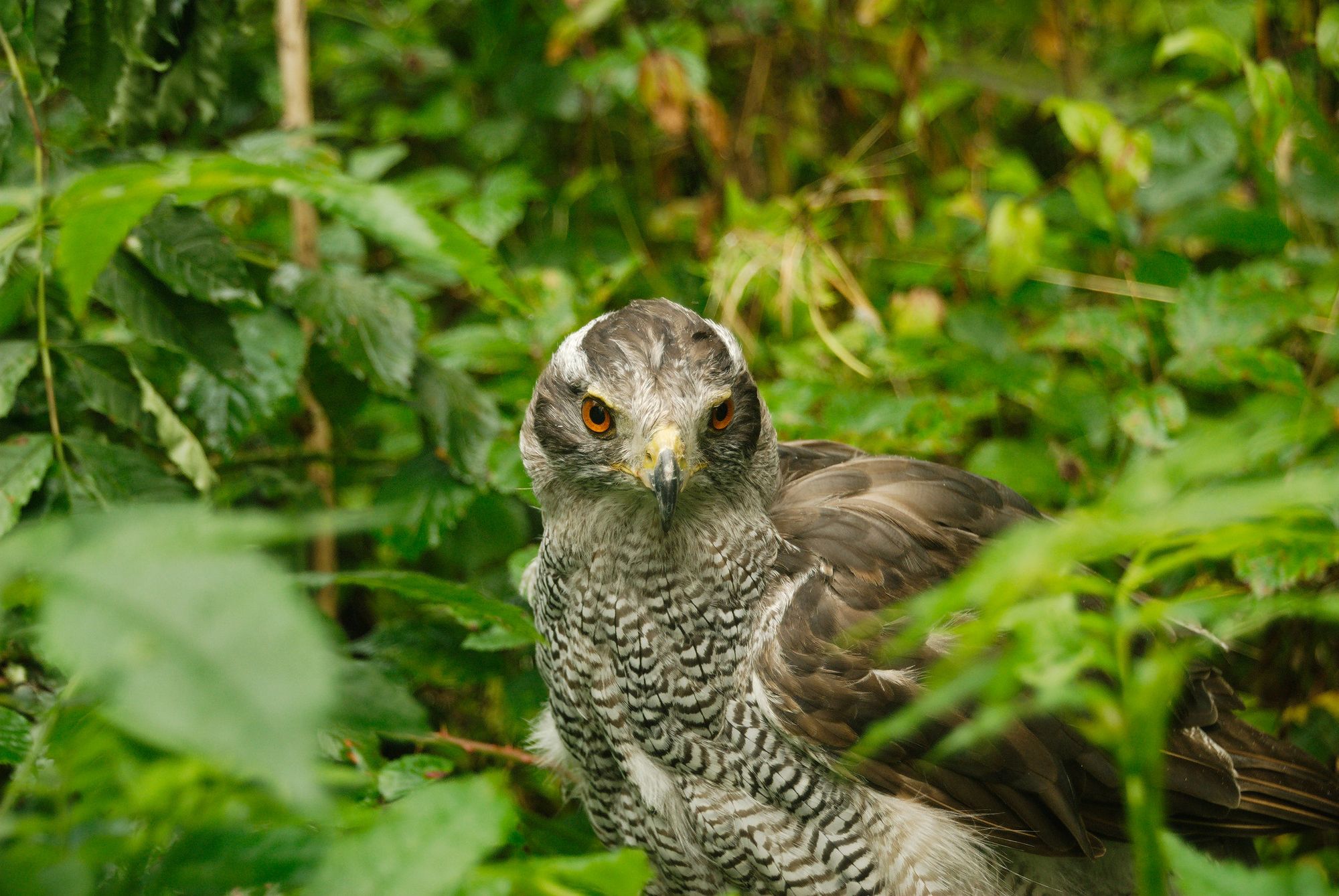
Suffolk | Local police are investigating after five young goshawks were found dead in King’s Forest near Bury St Edmunds on Monday. X-rays of the birds, which likely only hatched last summer, reveal pieces of shot in each individual. The RSPB has offered a £5,000 reward for information leading to a conviction – the highest amount ever offered by a conservation charity – with the money matched by campaigners Wild Justice. Sgt Brian Calver, from Suffolk Police, said: "This is a serious wildlife crime against an amazing bird of prey that was once driven to extinction in Britain. There is no place for such activity in modern times.” The BBC and BirdGuides reported the news.
Edinburgh | Edinburgh has become the first European capital to sign the Plant Based Treaty, an initiative aiming to reduce greenhouse gas emissions from animal agriculture through dietary changes. Edinburgh City Council conducted an assessment report on the implications of endorsing the treaty, and concluded that “any action to reduce meat and dairy consumption in Edinburgh will help to mitigate and adapt … the city to climate change.” Green councillor Steve Burgess, who brought the motion to endorse the Treaty, described a shift toward plant-based foods as a “win-win-win for society”, with lower environmental impact, significant health benefits, and a reduction in animal welfare impacts. Endorsement of the Treaty could see the council introduce carbon labelling on menus and supporting more plant-based meals in schools and hospitals. However, rural campaigners have accused the council of “turning its back” on farming communities and “pandering to misinformation”, reports FarmingUK. The National and EuroNews covered the news.
Elsewhere:
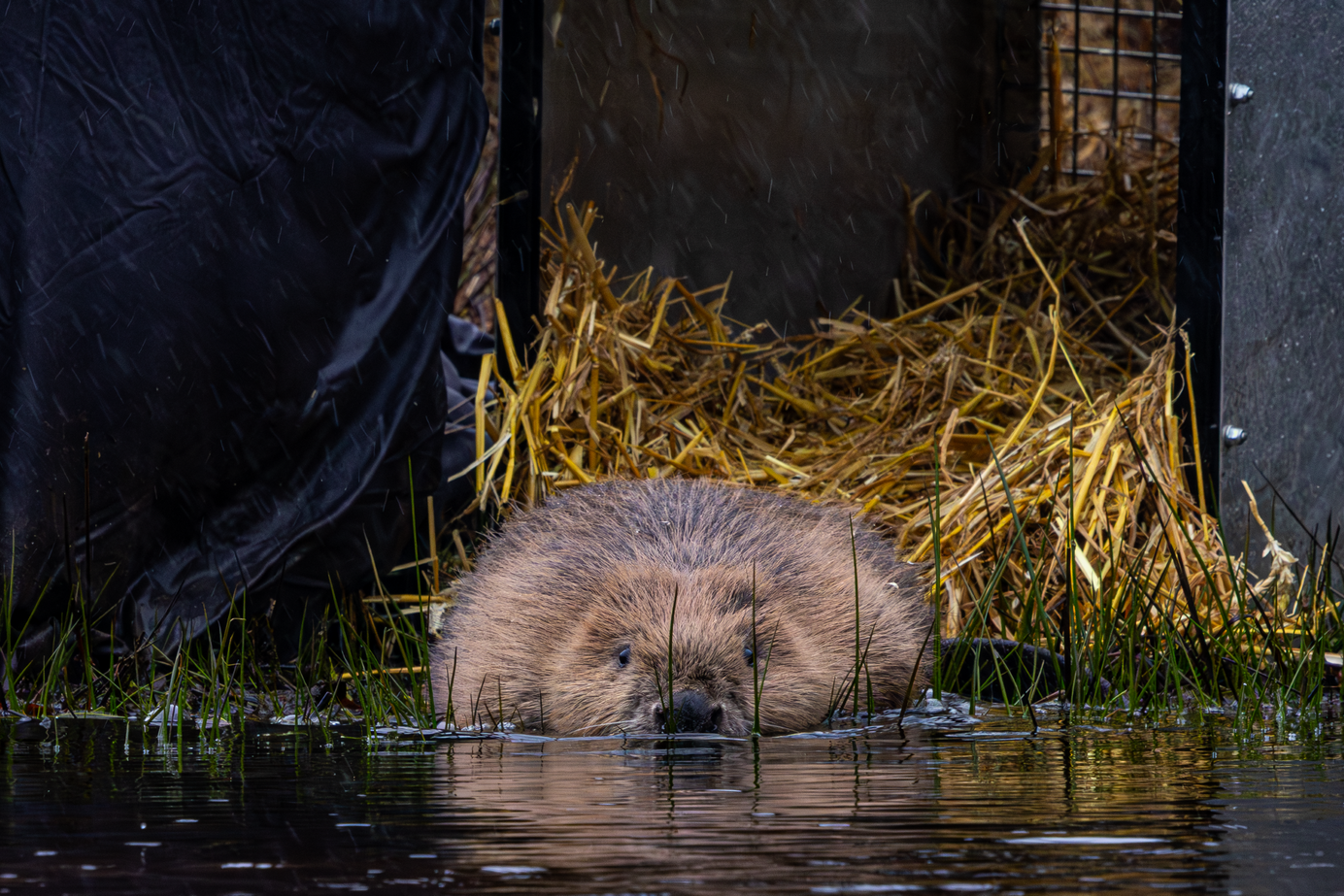
- Beavers are set to be released into an enclosure in Hampshire, the first time the animals have lived in the county for 400 years. The BBC, the Guardian and the Portsmouth News reported the news. Separately, two beavers escaped from an enclosure on Mapperton Estate in west Dorset, reports the BBC.
- Experts from eleven organisations will make up the independent panel investigating the shellfish deaths in the northeast, reports the BBC and the Northern Echo.
- A brewery’s plans to build a solar farm on “Wales’ Amazon rainforest” have met with opposition from wildlife campaigners, reports the BBC.
- The Norfolk coast is seeing record numbers of seal pups this winter, reports the Guardian.
- A Gloucestershire project is giving away fruit trees to boost shelter for wildlife and improve people’s access to fruit, reports the BBC.
- Campaigners say that plans to build 460 homes in Rhondda Cynon Taf will negatively impact local wildlife, reports BirdGuides.
- NatureScot has ordered a cull of red deer on the Loch Choire estate in Sutherland, after determining deer numbers are having a “significant impact” on protected areas. The Scotsman and the Herald reported the story.
- Buglife has launched a public survey to help identify populations of the rare Blue Ground Beetle in Devon and Cornwall, reports the BBC.
- An intrepid walker picked up 40kg of dog poo during a charity hike in the South Downs National Park to protect its fragile wildlife habitat, reports the Portsmouth News and the Courier.
- Cornwall Wildlife Trust is carrying out a search for a dead fin whale that appeared along Cornwall’s south coast, before being washed out to sea. The BBC reported the news.
- An association of dry stone wallers in Northumbria is calling for the government to raise subsidies for the skilled job, which contributes to biodiversity recovery, reports the BBC.
- Thirty-seven species of fish and five types of shark were found in the River Mersey last year, a few decades after it was declared “biologically dead”, reports the Liverpool Echo.
- Planting has begun on a community woodland in the Highland town of Dingwall, which will consist of over 7,000 native trees, funded by Scottish Forestry.
- A team of Highland cows, goats and ponies are assisting the National Trust of Scotland to return the site of the Battle of Culloden to its historic appearance, reports the Herald.
- An emergency response has been launched after ten red squirrels were found dead near Lockerbie, likely from squirrelpox, reports the Herald.
- Poultry production company Avara has vowed that its supply chain will not contribute to excess phosphate polluting the River Wye by 2025, reports the BBC and ENDS.
- A survey of Lake Windermere reveals that four-fifths of the shoreline falls short of “good” water quality, reports the Times.
- Harvest mice released at East Chevington nature reserve in 2021 have spread to a second Northumbrian reserve, reports the BBC.
- Wader birds had a bumper breeding season at Saltholme reserve in Middlesbrough following the installation of anti-predator fences, reports BirdGuides.
- More than 600 blossom trees are being planted in a ring around Birmingham to celebrate the city’s botanical history. The BBC and Secret Birmingham covered the story.
Reports
Targets | The government is failing to meet its own environmental targets, according to the Office for Environmental Protection. The watchdog published a report on the government’s progress on delivering its 25 year plan to improve the environment, which it set in 2018. The report found that, out of 23 targets examined, the government was demonstrably on track for none of them, while it was clearly off-track for 14 targets. In particular, the report highlighted that species abundance is in “inexorable decline”, despite the pledge to halt wildlife decline by 2030. Responding to the report, Richard Benwell, chief executive of Wildlife and Countryside LINK, said that the OEP had delivered a clear warning: “To halt the decline of nature, the days of fluffy wish lists, and back-of-the-settee funding for nature policy must end.” However, there is “clear opportunity to change course”, according to the report, and the government must show this in their next five-year improvement plan, due by the end of this month. The BBC, the Guardian and Edie covered the news.
Flooding | Trees and woodlands in Britain are worth more than £400m annually in flood regulation, according to a report from Forestry Research. The valuation is based on the role that trees and forests play as natural “sponges”, slowing the peak flow of water by intercepting rainfall, reducing surface runoff and storing water. With the increasing risk of extreme weather events due to climate change, the report highlights how woodland expansion and tree-planting can act as a natural, cost-effective method of protection. Forestry Commission Chief Executive, Richard Stanford, said: “From the trees lining our streets to the expanse of woodlands and forests across our countryside, the environmental, economic and social value of our treescapes has never been clearer.” It will be important to properly manage the existing trees as well as plant new ones, he added. The Courier covered the research.
Net-zero | Conservative MP Chris Skidmore has published Mission Zero, an independent review of the government’s net-zero plans. The report finds that delaying climate action risks damaging the UK’s economic prospects, and that policies need to be more ambitious to have a realistic hope of achieving the emissions target. To kickstart a “new approach”, the review recommends 25 key actions the government should implement in the next two years. These include publishing a land use framework as soon as possible, in conjunction with a review of its processes to implement nature-based solutions. The report emphasises that plans must be in place not only to restore degraded habitats such as peat and forests, but also to reinforce protection of existing landscapes that contribute to carbon sequestration. It also highlights the need to advance the sustainability of farming practices, as well as helping to improve soil management and farmland biodiversity. It includes broad recommendations for giving people more information on the food they consume, such as “eco-labelling” on products. The BBC covered the review.
Science
Dolphins | A paper published in Current Biology has revealed the impact of noise pollution on dolphins’ ability to cooperate. Cetaceans use a mix of whistles and echolocation to communicate, but increasing levels of human activity such as shipping and construction are having a detrimental effect on their ability to collaborate effectively. The study involved two bottlenose dolphins, Delta and Reese, who were required to perform a cooperative task in an experimental lagoon with different levels of noise pollution. Researchers found that the dolphins nearly doubled the loudness and duration of their whistles to compensate for noise interference, yet they were only 62.5% successful in the task, compared to 85% without noise interference. The sounds used in the experiment went to a maximum of 150 decibels, yet a super tanker cargo vessel can be as loud as 200 decibels in the ocean, according to the Natural History Museum. Pernille Sørenson, from Bristol University, said that wild dolphins would likely perform even worse than their counterparts at the research centre. Communication and cooperation are key to individual health, and exposure to noise pollution over long periods “could have bigger consequences at a population level,” she said. The BBC covered the research.
Eagle Owl | Today, the eagle owl is absent from Britain as a regular breeder, but was it a native species in the past? A paper published in the International Journal of Osteoarchaeology addresses this question using radiocarbon dating of ancient remains. It is widely accepted that eagle owls were sparsely present in Britain during the Pleistocene, but its presence during the more recent Holocene relies on ambiguous fossil findings. One particularly important specimen from Demen’s Dale in Derbyshire was originally attributed to the Mesolithic period, but a re-evaluation of the bone has revealed that the bird actually lived in the Late Pleistocene. This means there are no substantial Holocene remains in the fossil record, leaving the native status of the species unconfirmed. The authors argue that knowledge of species’ past is important to inform present-day conservation programmes, particularly reintroduction plans. Lead author of the study, Umberto Albarella, professor of zooarchaeology at the University of Sheffield – has previously written in Inkcap Journal about how understanding the past can help to restore nature and tackle climate change.
Fossils | Pioneering palaeontologist Mary Anning is famous for her fossil discoveries in the early 1800s, yet few accounts of her life exist from contemporaries. Anning lived on the Jurassic Coast in Lyme Regis, and made a series of original scientific discoveries in the cliffs along the English Channel. Several of her finds are still displayed at the National History Museum in London today. In the Journal of the Geological Society, researchers have published a transcript of an anonymous manuscript memoir from the Special Collections of the University of Bristol Library. The authors of the paper use evidence from textual analysis and handwriting to corroborate the claim that the memoir was written by George Roberts, a schoolmaster and historian from Lyme Regis, where Anning lived. It is thought to have been written during her lifetime, perhaps between 1839-47, giving a unique insight into the life of the historic figure. The manuscript and transcript can be viewed in full here.
Driftwood
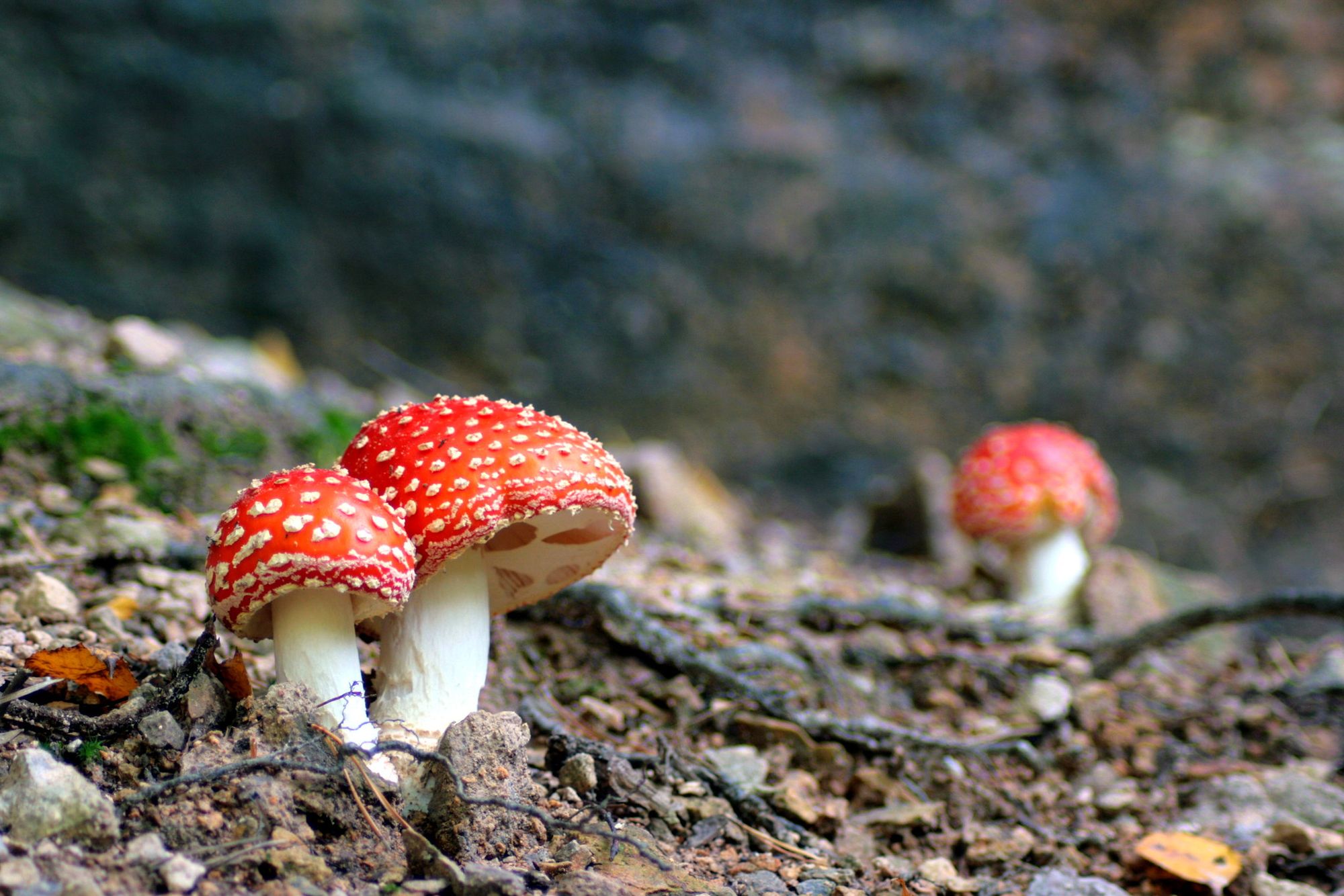
Fungi | Have you ever stopped to appreciate a particularly beautiful mushroom? Dr. Jassy Drakulic, a plant pathologist, is on a mission to spread her love for fungi, and also raise awareness that they need dedicated conservation efforts just as much as other species. Dr. Drakulic says there is a lot of mycophobia in the UK – a strong dislike or fear of mushrooms – but unless you are planning to eat unknown bodies, there is no need to fear them. The majority are are harmless to humans, and they also provide shelter for wildlife and help plants break down organic matter. There are thought to be around 25,000 species of fungi in the UK alone – five or six times more than plants – but “we don’t have names for most of the fungi that exist, so you can’t protect what you don’t know about,” says Dr. Drakulic. This BBC article features a few of the exquisite mushrooms she studies.
Cities | Scientists and planners widely agree that more trees are beneficial for cities, so why are many cities less green than they were a century ago? This Guardian article explores why the “green vision” for leafy cities is struggling to become a reality in Europe. It is partly due to older trees that have survived from the late 19th and early 20th century starting to die but also because of the cost: raising a healthy tree in a city, where it has to struggle with air pollution and compacted soil, is no easy task. And, while the costs are easily quantifiable, the multitude of benefits – from cooling temperatures and improving air quality to boosting mental health and biodiversity – are less so. Separately, a study in People and Nature looks at the relationship between urban density, nature, and sustainability.
Golf | A BBC video takes a look at the former Frodsham Golf Course in Cheshire, which was closed down two years ago to return to nature. Now, the 18-hole course is home to badgers, woodpeckers and foxes, and the Woodland Trust is at the helm of the rewilding project. One-third of the 94-acre course remains open to the public to enjoy, while the rest has been set aside to provide protected habitats for local wildlife. The Trust plans to plant around 40,000 native trees over the next few years, and the site will eventually become part of Northern Forest.
Further reading:
- A blog by the Wildlife Trusts outlines a collaborative new vision for food, farming and nature.
- A feature in the Telegraph introduces the Christian Dior model who is bringing beavers to her estate in Hampshire.
- A BBC feature explores the question of whether recycled sewage could solve future water shortages.
- Winterwatch is returning to televisions to bring a dose of wintry wildlife from Wild Ken Hill, Norfolk, into your living room. This BBC video gives a taste of the series.
Happy days
Whalesong | Scientists researching earthquakes on the Atlantic seafloor were treated to a surprise when their seismometers picked up an entirely different sound: whalesong. The researchers from University College London were aiming to record signals from earthquakes, which they could use to image the interior of the earth – not dissimilar in process to a CAT scan of the human body. In this BBC piece, the data has been “sonified” to make it audible.
Subscribe to our newsletter
Members receive our premium weekly digest of nature news from across Britain.
Comments
Sign in or become a Inkcap Journal member to join the conversation.
Just enter your email below to get a log in link.