Farming Budget Cuts & Wild Boar Benefits
The latest news on nature and conservation in Britain.
National news
Farming | Last week, the Guardian reported that the Labour government planned to cut the nature-friendly farming budget by £100m, following a report showing that the previous government had failed to spend the entirety of the £2.4bn fund – a shortfall they said made it impossible to justify the full amount. Environmentalists were swift to condemn that decision and, this week, senior Conservatives joined the chorus of condemnation. In a letter to the Telegraph, four former environment ministers called on Labour to increase, not slash, the budget: ‘When it comes to supporting farmers, strengthening food security and restoring nature, the Government needs to put its money where its mouth is and keep the farming budget intact or – better still – increase it in line with inflation,’ they wrote. Separately, the shadow environment secretary Steve Barclay wrote that Labour showed a ‘troubling detachment’ from rural issues, while the NFU warned that plans to make farming net-zero by 2040 were being put in jeopardy by the lack of investment. The Times, the Daily Mail and the BBC all covered the news.
HS2 | The Green Party has reversed its historic opposition to HS2, and now supports the construction of the railway in full. The motion was backed by a majority of Greens at their conference in Manchester this week; according to the Independent, it could put pressure on the Labour government to consider reviving the scrapped portions of the scheme to prevent the Greens wooing voters. The motion makes clear that the Party would continue to hold HS2 Ltd to account, and that their support is contingent on the infrastructure being constructed ‘to the very highest standards of care for the impacted environment and local people’, including complete transparency about the impacts on all habitats. Overall, however, it argues that the construction of the line would benefit the north and help to tackle climate change. ‘We need to move at great speed to shift travel away from cars and flights to public transport. HS2, in full, can play an important role in achieving this shift,’ said party co-leader Carla Denyer MP in a statement. ENDS covered the news.
Parks | Only ten percent of Britain’s National Parks are owned by the nation; the other 90% is in private ownership, according to research reported by the BBC. The Campaign for National Parks has said this is holding back efforts to restore nature in the Parks, since park authorities (NPAs) have little jurisdiction over how the land is managed. Some NPAs own almost no land at all: the Yorkshire Dales authority owns less than 0.4% of the land, made up mostly of car parks, woodland and small reserves. Access campaigner Guy Shrubsole, who has mapped current land ownership in the parks, said that private owners ‘too often fail to steward the nature in their care’. On X, he called on Labour to ‘complete this unfinished business’ by giving park authorities increased powers and resources to buy land for nature. Meanwhile, the CNP is campaigning for a ‘People’s Charter’ which would prioritise community and public land purchases.
In other news:
- Campaigners have told ministers to fix loopholes in the biodiversity net gain rules or face ‘mass abuse’ of the system, reports ENDS.
- The Scottish Greens said the country has ‘failed’ in its quest to become a climate leader after the SNP announced plans to water down its climate targets, reports the Scotsman.
- Meanwhile, the Scottish First Minister announced that the Natural Environment Bill would be part of the programme for the year ahead. The RSPB welcomed the news.
Across the country
Skiddaw | Cumbria Wildlife Trust has announced ambitious plans to rewild Skiddaw Forest in the Lake District: a 1,200-hectare area which, despite its name, is devoid of trees. Skiddaw is England’s sixth highest mountain, and its bare flanks will now become England’s highest nature reserve and the UK’s largest project to restore temperate rainforest, thanks to a £5m donation from insurers Aviva. The Trust plans to plant 300,000 native trees, but has stressed that the landscape will not be entirely covered in forest: they will also revive a mosaic of habitats, including blanket bog, heathland, flower-rich acid grassland and montane scrub. Stephen Trotter, chief executive of the Trust, said they would be working alongside farmers, but admitted that livestock would not be reintroduced until the flora was sufficiently established. He described the plans as a ‘100-year vision’. The Guardian and the Times reported the news.
Farne Islands | The puffin population on the Farne Islands has been declared ‘stable’ by the National Trust, relieving concerns about the devastating impact of bird flu. Rangers from the Trust took part in the first full count in five years, and discovered that the endangered species has actually increased by 15% since 2019. There are now around 50,000 breeding pairs on the islands off the Northumberland coast. Ranger Sophia Jackson said that the birds’ self-isolating behaviours, including keeping separate burrows, had likely helped to contain the spread of the disease compared to other seabird species. The BBC and the Northern Echo covered the news.
Cairngorms | The UK’s first ever project to restore the rare one-flowered Wintergreen has been a ‘roaring success’, according to Plantlife Scotland. The elusive species is a small flowering plant found in pine woodlands, which, instead of relying solely on photosynthesis, can also draw energy from fungus in woodland soils: a process known as partial mycoheterotrophy. The species has suffered a sharp decline in the last 50 years, with over half of the UK population lost. Two of the remaining populations are in the Cairngorms National Park, where Plantlife has now completed a pioneering translocation to reintroduce the species in Abernethy reserve. The charity has also trialled cattle grazing and the removal of invasive species in the woodland, resulting in rapid recovery of the plant. The Herald reported the news.
Elsewhere:
- Gamekeepers in Scotland have warned that the capercaillie is nearing extinction as the latest lek count showed a 9% decrease, reports the Herald and Northern Times.
- The Northern Forest project had a bumper season last year, with more than 1.9 million trees planted, according to the Woodland Trust. The BBC covered the news.
- A couple near Norwich has rediscovered the Norfolk Snout moth, which was last spotted in 1971, reports the BBC.
- The Woodland Trust has completed a scoping project on the Argyll Peninsula to develop plans for landscape-scale restoration of the ancient rainforest.
- A restoration project is trialling ‘remote setting’ for the first time to reintroduce half a million oysters to the Humber estuary, reports the Guardian and Yorkshire Post.
- Two Scottish wildcats reared in captivity have died since they were released into the Cairngorms, reports the Evening Standard.
- Bee inspectors in southeast England are racing to destroy Asian hornet nests before new queens hatch later this month, reports the BBC.
- The pioneering South of Scotland Golden Eagle Project needs to raise £400,000 to secure its long-term future, reports the BBC and the Herald.
- Newcastle City Council is introducing a trial to use food waste to generate renewable energy and fertiliser, reports the BBC.
- The water company responsible for discharging raw sewage into Windermere has been accused of treating the watchdog with contempt after withholding information, reports the Times.
- August saw unusually high numbers of migrating Tree Pipits, according to BirdGuides, particularly in Fife.
- Next Friday, a specialist team will abseil the Trinity Gullies on Yr Wyddfa (Snowdon) to litter-pick the ‘waterfall’ of rubbish there, believed to be up to a century old, reports the Daily Post.
- The Environment Agency is investigating after hundreds of fish died in Jubilee Lake in Wiltshire after a dramatic drop in its oxygen levels, reports the BBC.
- Essex Wildlife Trust has successfully purchased Fir Tree Wood in Little Baddow to secure the area as a nature reserve.
- In Hertfordshire, the endangered spotted flycatcher has been spotted in the ancient woodland at Ashridge Estate as three years of restoration work draws to a close, reports the BBC.
- The Duchy of Cornwall has released 80 water voles in the River Fowey at Restormel to help restore the landscape, reports the BBC.
Reports
School | The majority of schoolchildren in the UK are missing out on regular interaction with nature, according to a report by WWF. The wildlife charity conducted a survey of 1,885 schools, and found that only 27% integrate outdoor learning into their curriculum – and over a third exclude it entirely. Furthermore, the report reveals that access to nature at schools varies widely, creating a ‘nature gap’ which disadvantages children from less affluent homes and urban environments, for example. The survey also showed that these issues intensify with age, with over half of secondary schools offering no outdoor learning opportunities. The authors highlight the myriad benefits of nature-based learning, and call on the education system to embed nature in the national curriculum. The Evening Standard covered the research.
Prescribing | A report led by the University of Sheffield has shed light on the wide-reaching effects of green social prescribing. This is the practice of supporting people with mental health needs through engagement in nature-based activities, typically through referrals from GPs or social workers. The report investigates the impact of a £6m programme involving seven pilot sites in England, beginning in 2020 and involving more than 8,000 people. Across the participants, it found significant reductions in anxiety and depression symptoms, as well as increases in happiness, life satisfaction, and the feeling that ‘life is worthwhile’. The report also highlights the cost-effectiveness of green prescribing, with a return of £2.42 for every £1 invested by the Treasury. Following the positive results, the Treasury has already invested a further £2.3m in the pilot, extending it to March 2025. The Wildlife Trusts summarised the findings.
Seabirds | Scientists have added five seabird species to the UK Red List of highest conservation concern, highlighting the severe threats they are facing in British waters. The Arctic tern, Leach’s storm-petrel, common gull and great black-backed gull were added due to severe population declines driven by multiple pressures, including climate change, invasive predators and lack of food. In addition, the great skua was added because of the disastrous impact of bird flu. These species join others such as the puffin, kittiwake and roseate tern already on the list. On the back of these ‘devastating declines’, the RSPB is calling on the UK governments to rapidly resource and deliver actions, including protection from invasive predators, improvements in MPAs, and better fisheries management. The results were published in an addendum to the Birds of Conservation Concern review, and explained in greater detail on this RSPB blog.
Science
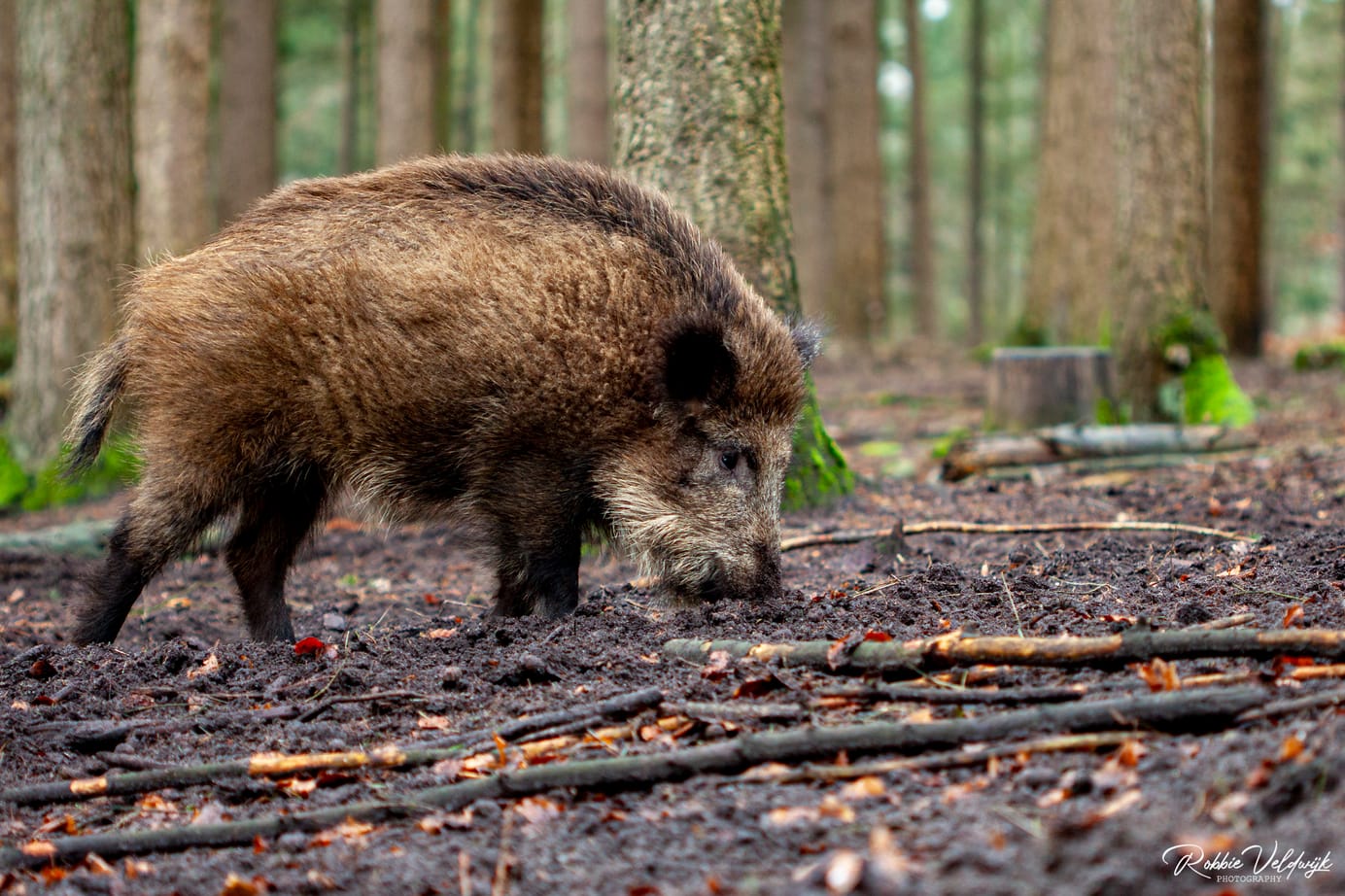
Boar | The reintroduction of wild boar can help to maintain the biodiversity of calcareous grasslands, according to a pre-print of a paper, which has yet to be peer-reviewed. These semi-natural ecosystems are threatened by afforestation, but wild boar prevent succession by rooting through the soil. The study, which focused on Germany, found that rooted plots had significantly higher species richness than unrooted plots, with the boar maintaining and even adding characteristic species to grassland sites. This effect, the authors suggest, is because rooting clears dominant grasses and creates areas of bare ground, opening up spaces where low-competitive and more nutritious species are able to take root. ‘From the perspective of grassland and biodiversity conservation, allowing wild boar populations to roam undisturbed and freely in calcareous grasslands can be beneficial,’ they conclude.
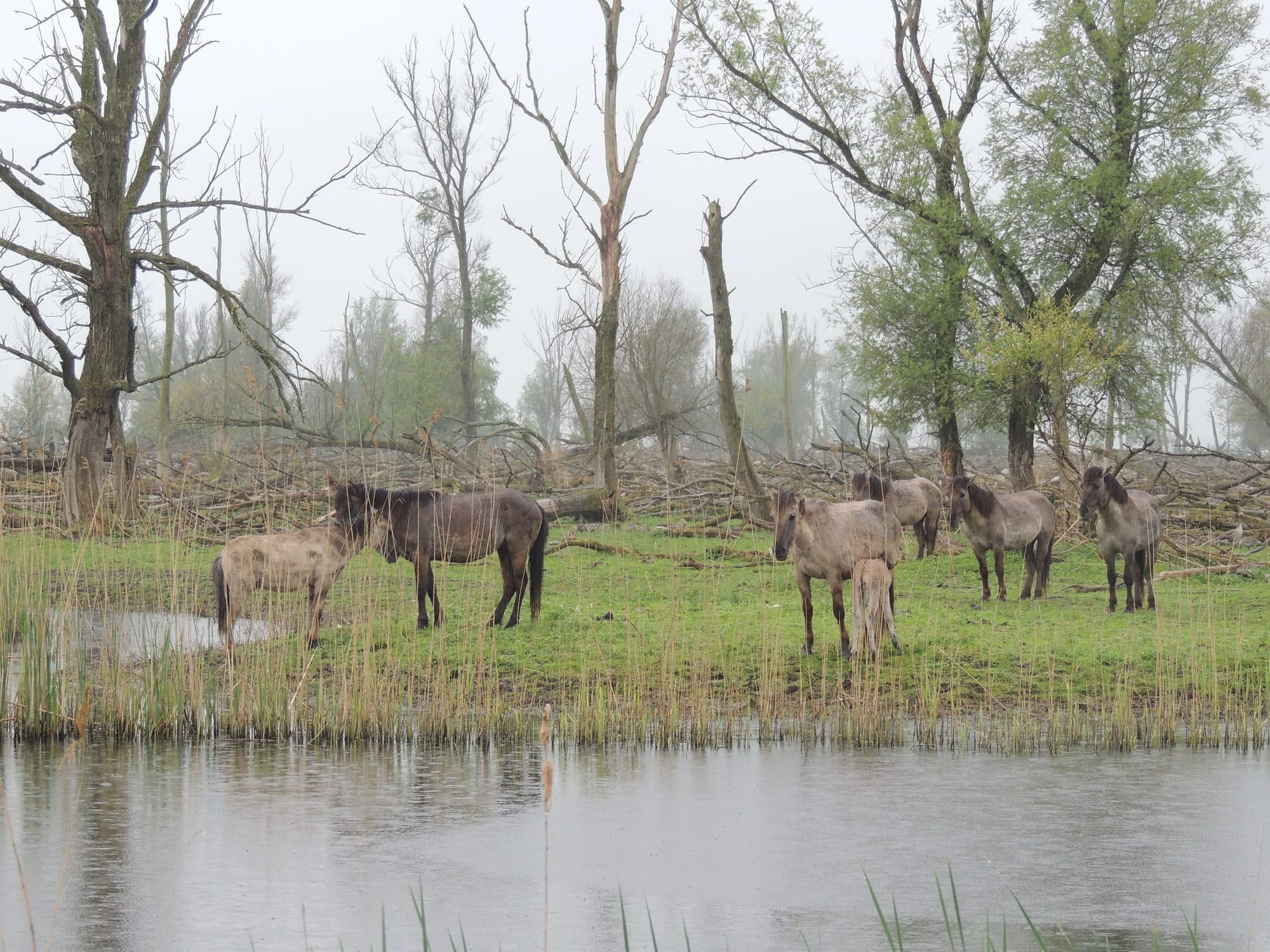
Rewilding | In the 1980s and 1990s, an unusual project was undertaken on an area of reclaimed land in the Netherlands, known as Oostvaardersplassen: conservationists introduced a number of large herbivores, including feral horses, cattle and red deer. It was one of Europe’s first experiments in trophic rewilding. Four decades on, scientists have studied the impacts on the vegetation, finding that the grazing led to more open vegetation, where stress-tolerant plants are prevalent. However, a number of rare species remain absent, despite suitable conditions, suggesting that active reintroduction may be necessary for plant communities, too. ‘Our findings are of interest for future open-ended restoration projects, as conditions in Oostvaardersplassen resemble conditions in other young systems such as post-industrial sites,’ the authors conclude. The study was published in Applied Vegetation Science.
Flowers | Planting flowers in urban green spaces in Cornwall has ‘significantly boosted’ the numbers of pollinators, according to a study published in Insect Conservation and Diversity. The project – a partnership between the University of Exeter and Cornwall Council – planted flowers and shrubbery across 78 hectares in 15 Cornish towns. By comparing the sites with control areas, researchers found that planting wildflowers led to a two-fold increase in flower visits by certain pollinators, including solitary bees and wasps. Notably, they also discovered that planting wildflowers and pollinator-friendly ornamental flowers together was particularly effective for attracting Diptera (species of flies), with 3.5 times more visits than in areas planted with wildflowers alone. PhD student Oliver Poole, who led the study, said that the results show that ‘urban green spaces can provide a vital refuge for pollinators, while also being appealing and enjoyable places for people.’ The BBC covered the research.
Driftwood
Gardens | If gardens were designed by pollinators, what would humans see? This is one of the questions posed in a research project by the universities of Exeter and Edinburgh, investigating how gardens can become ‘living artworks’ to help reverse the catastrophic decline of pollinating insects. Researcher Alexandra Daisy Ginsberg has designed the Pollinator Pathmaker, an online tool that uses an algorithm to generate unique planting designs which prioritise pollinators’ needs over human aesthetic tastes. It is free to the public, and allows users to input the specific details of their garden and see how the algorithm will ‘solve’ their planting to optimise pollinator diversity. The wider project has asked residents in the village of Constantine, Cornwall, to plant a network of these gardens, in an attempt to create the ‘world’s largest climate-positive artwork’, according to Dr. Ginsberg. Phys.org covered the research.
Reform | In an article for the New Statesman, land campaigner and author Guy Shrubsole sets out his vision for protecting English land under the Labour government. Currently, nature restoration is being held back by the fact that so much land is privately owned, with landowners paid by the government to clean up the mess they have created – a reversal of the usual ‘polluter pays’ principle. To meet its ecological targets, he writes, the government should restore funding and independence to Natural England and do more to influence how private landowners manage their land. Furthermore, it should give the public a greater stake in the land by enacting a strong community right to buy. ‘It was, after all, local residents – wild swimmers, anglers, kayakers – who exposed the scandal of our polluted rivers,’ he writes. ‘Imagine how much more could be achieved if a community came to own a river – or a wood, or a peat bog.’ For more on these themes, check out Shrubsole’s new book, The Lie of the Land, which was published yesterday by William Collins.
Graveyards | Old church graveyards act as ‘dead space’ in cities, writes Rob Stokes, a professor of environment and sustainability at Macquarie University, in the Conversation. While larger cemeteries on the edge of cities often have a dual function as both urban parks and active burial sites, church graveyards are often closed off to both the living and the newly deceased. But these could provide valuable green space as cities become increasingly densely populated, he writes. Although there are various complicated reasons – environmental, social, legal – why these places have mostly remained off limits, there are several examples of graveyards that have been successfully converted into parks. ‘As our growing cities become more dense,’ Stokes concludes, ‘church graveyards may provide valuable community open spaces for the next generation alongside resting places for generations past.’
Further reading:
- A feature on the BBC investigates which rural area the UK will choose to store its nuclear waste once Sellafield in Cumbria fills up.
- The Guardian’s Europe correspondent for the environment, Aijt Niranjan, writes about why European countries saved their predators from extinction – and are now culling them.
- Five Books has an interview with author and climber Anna Fleming on her recommendations for mountaineering books which combine history, nature and adventure.
- The shortlist for the British Wildlife Photography Awards includes six shots by Shropshire-based Andrew Peters, including stunning images of dragonflies. View them on the BBC.
- A BBC In-depth article digs into the ‘great gene editing debate’, over whether it can be truly safe and ethical.
- How did a marketing video for Northumberland Zoo go viral – with six million views, and counting? The Guardian explains how the Gen Z script started a new social media trend.
Happy days
Foraging | Cornwall Council is planting edible plants across its land, creating a source of free food for residents, in a scheme that is thought to be the first of its kind. Backed by almost £1m in government funding, workers from Cormac, the council’s subcontractors, are being trained to sow and care for plants by specialists at Forest Garden in Falmouth, the BBC reports. ‘You'll have salads from the leaves early in the year and you will have edible flowers in the summer,’ said Dean Tresidder from Cormac. ‘You'll have fruits later in the year, with apples and plums, and then later on you'll have nuts.’ The funding will last until March 2025.
Subscribe to our newsletter
Members receive our premium weekly digest of nature news from across Britain.
Comments
Sign in or become a Inkcap Journal member to join the conversation.
Just enter your email below to get a log in link.