Farming Report & Butterfly Breeding
The latest news on nature and conservation in Britain.
National news
Farming | Defra has published the long-awaited independent review of farm profitability. Led by Baroness Minette Batters, former president of the NFU, the report warns that there is ‘no silver bullet’ for making British farms profitable, but it does make 57 recommendations designed to improve productivity, investment and resilience in agriculture. These include measures to recognise the true cost of producing food and nature-friendly farming, with Batters highlighting the impact of ongoing uncertainty surrounding sustainable farming incentives. The proposals include establishing a ‘Soilshot + Nature’ taskforce, which would create a new green finance funding stream and develop a ‘whole farm approach’ to restoring soil health. The NFU and Wildlife Trusts both welcomed the findings. The BBC and Farmers Guardian reported the news.
Biodiversity | The government has announced exemptions to England’s Biodiversity Net Gain (BNG) rules, in what the Wildlife Trusts has called the ‘latest nightmare before Christmas for nature’. Introduced in February 2024, BNG requires new developments to deliver at least a 10% increase in biodiversity. Now, developments under 0.2 hectares will be exempt from this policy, as part of reforms to the National Planning Policy Framework intended to ‘get Britain building again’. Other changes include a default ‘yes’ to planning applications near railway stations, including on green belt land. While the small-site exemption is ‘less damaging’ than original proposals, the Wildlife and Countryside Link warned it could still ‘wreck the policy altogether’, since sites under 0.2 hectares account for 77% of planning applications in England. The news was widely covered.
Eagles | Conservationists and police forces are appealing for information after three white-tailed eagles disappeared under suspicious circumstances. The raptors, which were part of an ongoing reintroduction programme, went missing in separate instances in Sussex, Powys and Midlothian. In two cases, there is evidence of illegal interference: satellite trackers were cut off and dumped near the birds’ last recorded locations. The Sussex eagle, which was born in the wild earlier this year, was one of the first white-tailed eagles to fledge in England for hundreds of years. The Roy Dennis Wildlife Foundation, which is behind their reintroduction, warned that any targeting of the birds could jeopardise the species’ long-term success. The RSPB is offering a £10,000 reward for information that leads to a conviction. The news was reported by national outlets, plus local coverage.
In other news:
- Defra has launched a Farming and Food Partnerships Board to coincide with the publication of the farming profitability review, as well as a £2.3m fund for farm tech trials.
- A survey by ENDS has found that two-thirds of environmental professionals in the UK believe that working class individuals are underrepresented in their organisations.
- Scottish NGOs including Environment LINK and RSPB have walked away from the government’s farming policy group, citing ‘constant frustration’, reports ENDS.
- Farming is responsible for 40% of the UK’s river pollution, reports Wicked Leeks.
- A study has found that the European population of Bewick's swans has more than halved in the last 25 years, reports BirdGuides.
- Defra has announced a Marine Recovery Fund, allowing offshore wind developers to pay to offset environmental damage at sea.
Across the country
Buckinghamshire | Water voles have been recorded on the River Thame for the first time in 20 years. Volunteers from the River Thame Conservation Trust captured video evidence of the species, which is one of Britain’s fastest declining mammals, at two sites near Chearsley and Stadhampton. The footage was gathered using motion-sensor wildlife cameras, which are part of the Trust’s long-running monitoring project: volunteers scour footage to track key river species and detect invasive American mink, which prey on water voles. Unfortunately, the sighting comprised ‘dramatic’ footage of a heron catching and eating two voles. Despite their quick demise, the Trust said the video ‘sparked hope for the species’ recovery’ in the area. The BBC and Milton Keynes Citizen covered the story.
Essex | Rewilding company Nattergal is transforming a historic royal hunting ground outside London with the help of three pigs. Harold’s Park was once owned by the last Saxon king Harold Godwinson in 1066, but it is now a nature reserve after proving unsuccessful as arable farmland and a Christmas tree plantation. Nattergal is using ‘soft engineering’ techniques to boost biodiversity across the 509 acre site, including introducing three pigs – half wild boar, half Tamworth – to turn over the soil. Other steps include building ponds, clearing conifer plantations and, further down the line, introducing cattle and ponies. The BBC and Essex Live covered the story. Elsewhere, Maidstone Borough Council in Kent has recruited ten rare Portland sheep for its conservation grazing trial of a meadow, reports the BBC.
Argyll | Ecologists are teaming up with robotics engineers to conduct a major survey of Loch Melford using sea-going robots. The loch in Argyll is home to an oyster restoration project, and is also a sanctuary for the critically endangered flapper skate. The underwater robot will use sensors and sonar to measure the velocity of currents and map the bathymetry – underwater topography – of the loch. Researchers will then use this data to identify effective sites for reintroducing the European flat oysters, as well as areas where flapper skates are most likely to lay their eggs. Phil Anderson, head of the SAMS Scientific Robotics Academy, said that robots can ‘completely transform the way we conduct and monitor restoration projects’ by achieving more coverage in environmentally sensitive areas. The Herald covered the story.
Elsewhere:
- The National Trust has dropped plans to rewild a wetland area in Gloucestershire after locals accused the charity of destroying historic parkland, reports the Times.
- Since July, the Wilder Humber project has released 28,000 native flat oysters into the Humber Estuary, making it the largest release of oysters in the UK’s intertidal zone.
- A project in Hampshire is offering free ‘nest cups’ to households to help reverse the decline in house martin numbers, reports the BBC.
- The Freshwater Habitats Trust has installed an eel pass in the New Forest to help young eels migrate upstream, reports the Daily Echo.
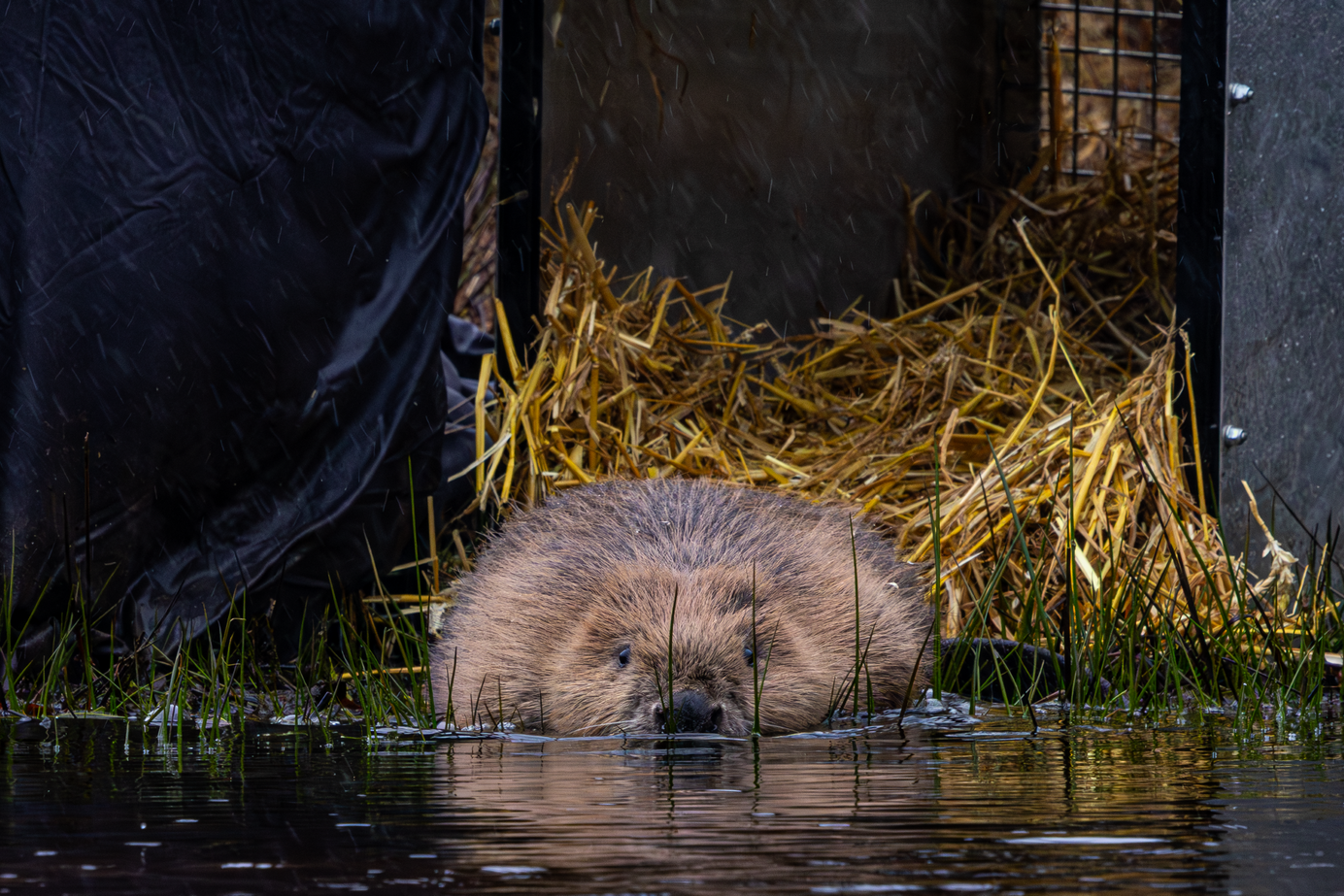
- After a beaver sighting in Norfolk, a letter in the Guardian suggests that wild beavers may be more widespread than conservationists realise, including in Berkshire.
- Derbyshire Wildlife Trust has translocated 30 endangered white-clawed crayfish from a site in Ashbourne to a secret ‘ark’ site in Staffordshire.
- Locals in Bromley are upset by two planned developments, which could become test cases for the government’s ‘grey belt’ policy, reports the Telegraph.
- Newport Town Council is replacing non-native leylandii trees in the town cemetery with native hedgerows following recommendations from the Shropshire Wildlife Trust, reports the Shropshire Star.
- Devon County Council has approved a long-term plan to expand woodland across the county, including creating 1900 hectares of new habitat, reports the Moorlander.
- Fish biodiversity in the tidal Thames has almost tripled in the last 35 years, but sewage spills are impeding further recovery, reports the South West Londoner.
- Kent County Council has secured £47,500 to plant 7,500 trees this winter, including 180 disease-resistant elm trees.
Reports
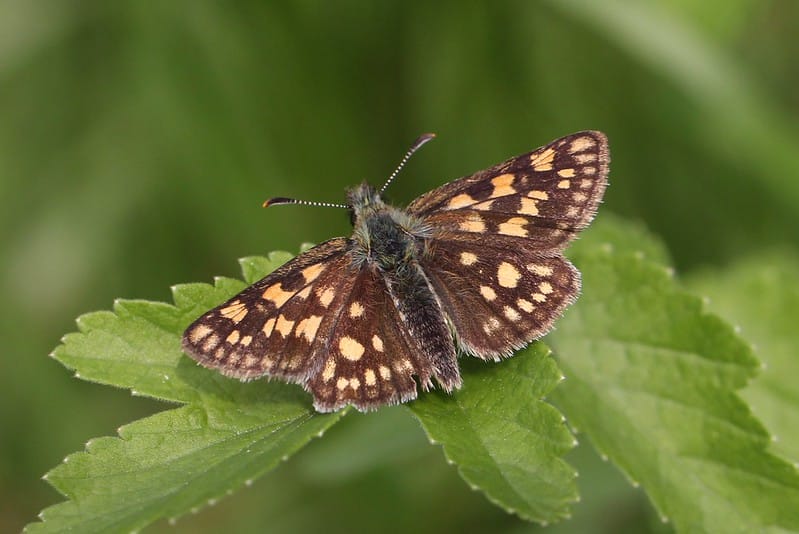
Skippers | The Flemish nature agency, the Research Institute for Nature and Forest (INBO), has published an in-depth how-to guide for captive breeding chequered skipper butterflies. The research was commissioned by Butterfly Conservation UK to support reintroduction efforts in England, where the species went extinct in 1976. The report is based on recent successful attempts to breed the butterfly in Belgium, and it outlines all the stages, from adult collection, transport and environmental control to caterpillar care, hibernation and release methods. According to the report, skippers are a relatively straightforward species to rear, although it cautions that encouraging mating in captivity is difficult due to the males’ territoriality and courtship behaviours, which include ‘chasing females in an upward flight’.
Genetics | An update to Scotland’s Genetic Scorecard Indicator has identified the native species at risk from low genetic diversity. First published in 2020 by NatureScot, the Scorecard analyses the genetic health of wild species, which is key to their ability to adapt to threats such as disease and climate change. The report highlights ‘serious’ risk for species including the Scottish wildcat, threatened by interbreeding with domestic cats, and the European ash tree, which has been devastated by dieback. Other species highlighted as ‘at risk’ include puffins, great yellow bumblebees, and freshwater pearl mussels. The Scotsman and STV covered the research.
Heritage | A project by the University of Exeter explores how land managers are adapting heritage conservation in response to climate change, with benefits for both nature and communities. Rising sea levels, eroding coastlines and volatile weather patterns are threatening many historic sites and landscapes. Rather than resisting inevitable changes – often at a high cost – the Changing Places Storymap gathers case studies from across the UK and beyond to showcase more adaptive and creative approaches. For example, on the River Tone in Wellington, a disused textiles complex is being reimagined as a shared space for people and wildlife, with community gardens and a rewilded courtyard occupied by birds and dormice.
Science
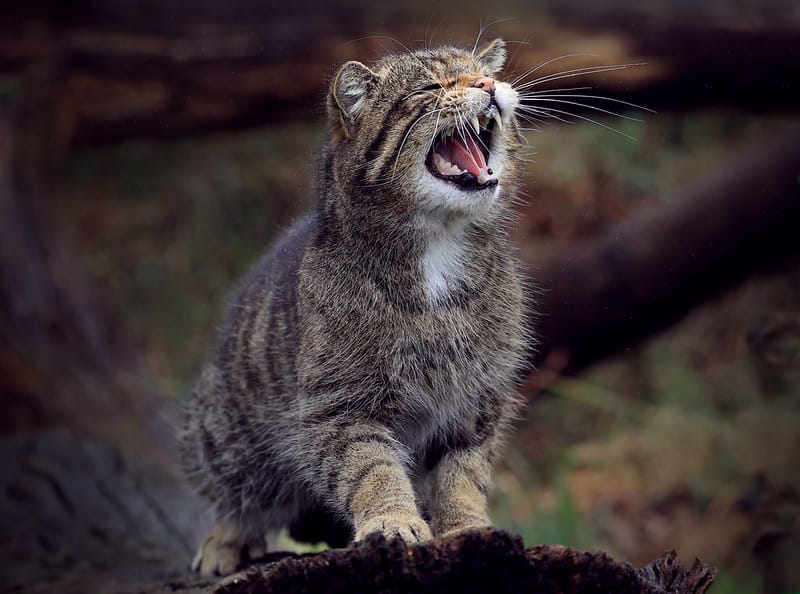
Wildcats | The first year of a project to reintroduce wildcats to Scotland has been a success, according to a study published in the IUCN’s Cat News. The Saving Wildcats project carefully selected and bred wildcats at a specialist centre in the Highlands, before releasing 19 cats into the Cairngorms National Park in 2023. Tracking using GPS collars revealed that all but one survived the first ten months in the wild. Reproduction rates were also high, with seven released females giving birth to at least 24 kittens in 2024. However, the study also revealed that hybridisation with domestic cats remains a long-term threat. Ongoing efforts include neutering and vaccinating feral domestic cats. Authors also recommended restoring more wildcat habitat to reduce other anthropogenic pressures. The Herald and ENDS covered the news.
Holocene | Farming practices introduced during the Holocene increased plant biodiversity in Europe, according to a study in Global Ecology and Biogeography. Researchers from the University of York analysed fossil pollen from 213 sites across Europe to track vegetation changes stretching back 12,000 years. They found that, as farmers cut down forests and introduced crops and grazing animals, plant biodiversity rose, with the new mosaic of habitats supporting a wider range of plants and potentially even mimicking the disturbance effects of extinct megafauna. Lead author Jonny Gordon said the findings 'provide hope for the future’ by challenging the assumption that human influence must be removed for nature to thrive.
Peatlands | The ability of damaged peatlands to sequester carbon may be restored before full recovery of its plant species, according to a study in Ecological Applications. Researchers conducted a long-term study of a blanket bog in northern Scotland. The bog had been plowed, fertilised and planted with non-native conifers in the mid-1980s, and restoration began in 1998. Researchers surveyed recovering plant species at five, 13, and 24 years after the start of restoration. They estimated that, based on the speed of vegetation returning, the bog would take between 50 to 100 years – or 120 to 285 years – to fully recover, depending on the criterion. However, the site is already acting as a net carbon sink. The authors stress that restoring the ‘full suite of species’ is still important to support the habitat’s long-term resilience.
Driftwood
Mistletoe | Festive mistletoe is here to stay, according to a feature in the Conversation, despite the decline of traditional orchards in Britain. Historically, the semi-parasitic plant was most commonly found in orchards in the southwest of England, growing among the branches of apple trees. Today, however, with traditional orchards on the wane, it is more often found in gardens. Researchers suggest that climate change may be aiding its spread: birds such as blackcaps – a key disperser of mistletoe seeds – have started overwintering in Britain due to milder winters. Ecologist Adele Julier writes that the plant is a ‘living example’ of how complex interactions between different species and climate change make it ‘hard to predict what the wildlife of the future will look like’.
Otters | Last month, CCTV cameras in Lincoln city centre captured an unlikely scene: an otter and a fox, trotting along the deserted high street in the middle of the night. Foxes have long been residents of the UK’s towns and cities, but it is only recently that otters have begun appearing more frequently in urban settings, writes Patrick Greenfield in the Guardian. Within the last year they were spotted on a river-boat dock in Canary Wharf, fishing in Stratford-upon-Avon, and raiding garden ponds in York. This widespread revival is due to improvements in river pollution since the 20th century, when the species was nearly wiped out. Now, naturalists estimate there may be as many as 11,000 otters nationwide.
Tardigrade | A deep-dive in Prospect Magazine examines ‘the most interesting and mind-expanding animal in the microcosmos’: the tardigrade, AKA the ‘water bear’ or ‘moss piglet’. It looks like a small mammal, but tardigrades are actually tiny invertebrates which have gained internet fame for being almost entirely indestructible; scientists have subjected them to increasingly extreme challenges, from noxious chemicals to the vacuum of outer space. But questions still abound, from how such complex yet tiny animals exist, to how they enter ‘cryptobiosis’, a blurred state between life and death. Journalist Lucy Jones suggests that in a time of human exceptionalism, the mystery of ‘the tardigrade might offer us a needed humbling’.
Further reading:
- Interested in making conservation more effective? Sign up for a webinar hosted by Conservation Evidence, taking place on 9 January.
- The Wildlife Trusts has a blog taking a deeper look at the tradition of Christmas trees, which dates back at least 500 years.
- An article in the Times explores how Netflix period dramas are partly behind the renaissance of British wool.
- BBC Future has a list of seven ‘quiet wins’ for climate and nature in 2025.
- A feature in Atmos explores how wildlife crossings across the globe are reconnecting ecosystems divided by highways.
- The BBC looks at the history of an iconic black pine in Oxford’s Botanic Garden, which was a favorite of both JRR Tolkien and Philip Pulman.
- The Guardian recounts the uplifting discovery of an underground rescue network for pigeons in Manchester.
- An article in the Herald spotlights the plight of native Soay sheep on St Kilda, which are left to ‘starve’ over winter, while this response argues against interference.
- A brief read in Positive News looks at two cases of abandoned oil refineries becoming unlikely havens for wildlife, including Canvey Wick on the Thames estuary.
- An essay in Aeon discusses how the Catholic Church could be a force for environmental change.
- In Country Life, an article argues that the work of Alexander Marshal – Britain’s first major botanical painter – deserves to be better known.
- An essay in Atmos asks how changing words relating to nature could redefine our relationship with the natural world.
- In Nation Cymru, read about the Welsh artist bringing animals and textiles together through ‘fauxidermy’.
- Between The Trees, a festival in south Wales combining music with environmental activism, has been named as the UK’s best micro festival. Read more here.
Happy days
Sculpture | In Somerset’s Chew Valley, community groups have installed hundreds of lanterns to illuminate a woodland growing in a gigantic spiral. This is Echo Wood: a living artwork designed by sculpture artist Luke Jerram in collaboration with the charity Avon Needs Trees. The sculpture features 365 species of trees slowly growing into a vast 110-metre-wide design. Pathways blossoming at different times of the year will guide visitors towards a central gathering space formed from 12 English oak trees. Jerram said that many of his previous artworks have touched on themes of nature and the climate emergency, but this is the first that will ‘physically do something about it’. Read more in the BBC.
Subscribe to our newsletter
Members receive our premium weekly digest of nature news from across Britain.
Comments
Sign in or become a Inkcap Journal member to join the conversation.
Just enter your email below to get a log in link.