Farming Schemes and Russian Seeds
The latest news on nature and conservation in Britain.
National news
Farming | Environment minister Steve Barclay has announced major updates to the UK’s farming subsidy schemes at the Oxford Farming Conference. The changes outlined in his speech include increased payments within existing incentive schemes, streamlined application processes, and premium payments for actions with the biggest environmental impacts, such as connecting river habitat or creating nesting plots for lapwing. Barclay said the updated offer had been designed using farmers’ feedback, and aims to encourage more farmers to join the schemes. Reacting to the announcements, Richard Benwell, CEO of Wildlife and Countryside Link, said it was ‘very good’ to see premium payment rates for nature-friendly farming choices, but that ‘much more is needed to support a sustainable farming future’. The Oxford Mail covered the news. Meanwhile, Labour has pledged a ‘new deal for farmers’, comprising five actions, including a target that at least half of the food used in schools, hospitals and prisons is British. Steve Reed, the shadow environment secretary, said it was ‘time we turned the page and embraced a decade of national renewal with the countryside at its heart.’ The Guardian, the Independent and ENDS covered the story. In other news, the government has been accused of underspending its pledged £2.4bn on agriculture, reports the Guardian – which Defra denied.
Legislation | The National Trust, the RSPB and the Wildlife Trusts have issued a warning after basic legal protections for rivers and hedgerows on farms ended on 31 December. The EU regulations, known as ‘cross compliance’, had to be followed by farmers in order to receive rural payments between 2005 and 2023. They included leaving a buffer between farmed fields and riverbanks to ensure pollution was not washed into the water, as well as protecting hedgerows and maintaining green cover on soils. The government said the rules would be replaced by UK versions after leaving the EU, but Defra has yet to confirm whether the protections will be maintained. Barnaby Coupe of the Wildlife Trusts called the situation ‘desperate’, adding that the danger is compounded by ‘low levels of uptake into new farming schemes’, leaving nature at a net loss. Meanwhile, surveys by the Wildlife Trusts have revealed that nature policies could have a significant impact on the result of the general election.
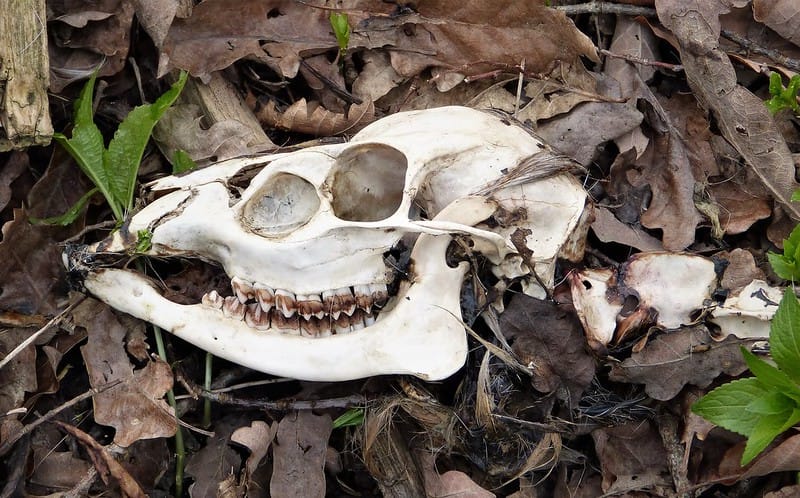
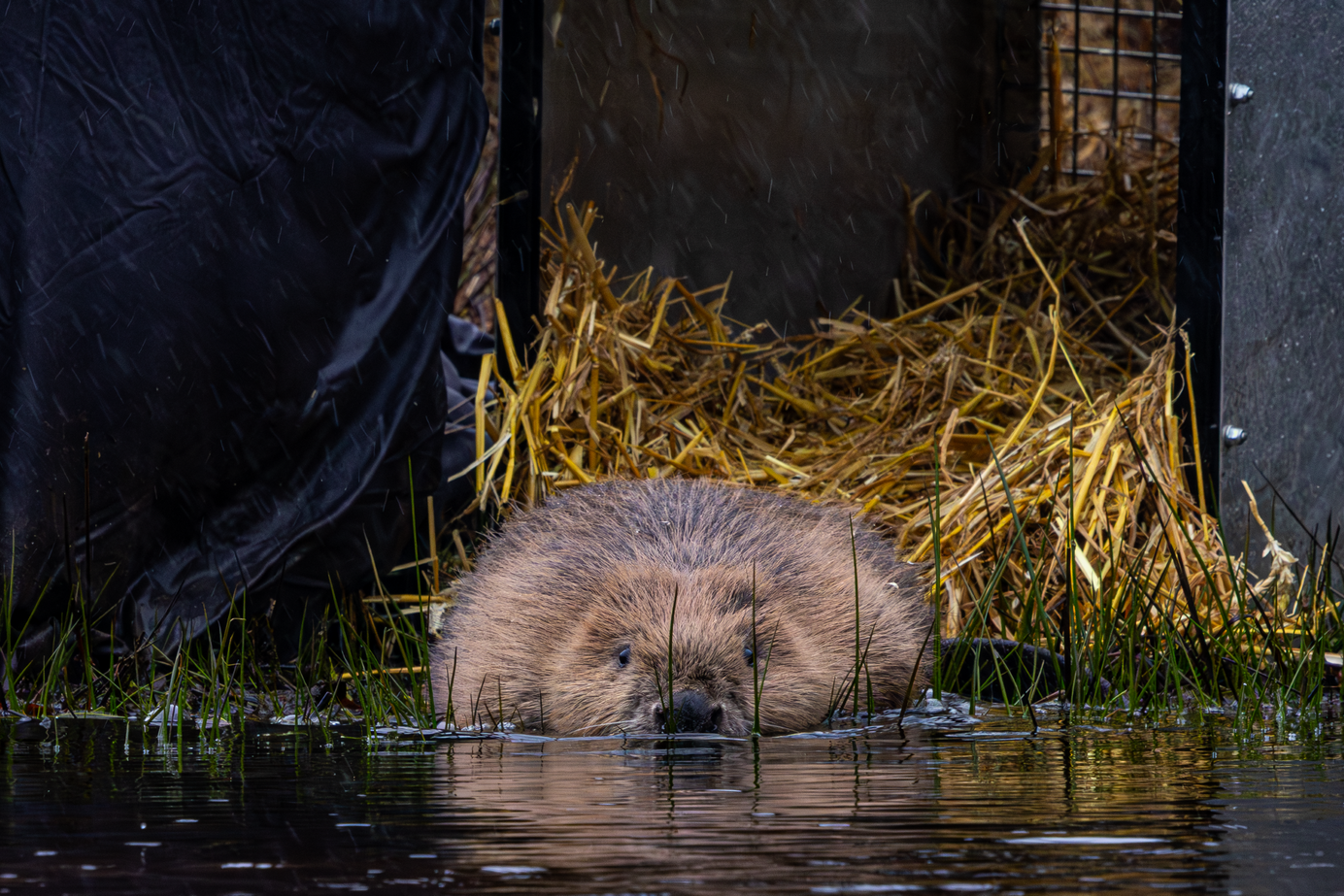
Climate | The loss of predictable weather patterns and traditional seasonal shifts is causing chaos for British nature, according to an annual audit by the National Trust. Each year, the body reviews the impact of weather on nature, drawing evidence from its estates. Seasonally, a cold start to spring delayed the blossom season and forced pollinators to emerge later than usual. In summer, the UK experienced record heat, which caused spikes in sea temperatures and early flowering. Autumn was warmer and wetter than usual, confusing deer rutting periods, while mild winters are causing hibernating species to emerge early. Ben McCarthy, the Trust’s head of conservation, said the incremental shifts may not feel notable in a 12-month period, ‘but over a decade the changes are extremely significant’, especially when combined with extreme weather events such as storms. The audit also reviews the wildlife ‘winners’ and ‘losers’ of 2023: choughs, beavers and natterjack toads thrived last year, while seabirds, red deer, mosses and oaks struggled. The BBC and the Guardian covered the news.
In other news:
- The government has announced that all of England’s storm overflows are now electronically monitored, making it easier to report spills in real time, reports the BBC. Meanwhile, nearly three-quarters of the 1,000 new monitors promised by Scottish Water have yet to be installed, according to the BBC.
- Labour has accused the government of being ‘asleep at the wheel’ over the danger of coastal landfills facing erosion and flooding, reports the Evening Standard.
- Analysis by the Guardian has revealed that an increasing proportion of England’s flood defences are in disrepair, leaving homes vulnerable to storms.
Across the country
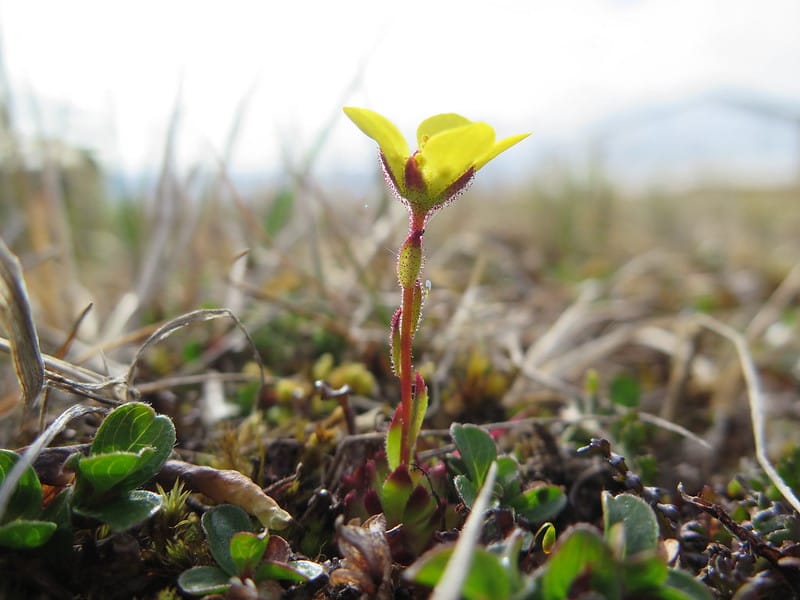
Highlands | Work is underway to revive a struggling population of rare Scottish marshland plants – using frozen seeds from Russia. Although once widespread, the delicate yellow marsh saxifrage has suffered from habitat loss and overgrazing, and is only found in six sites in Scotland: five in the Highlands and one near Edinburgh. Now, researchers from the Royal Botanic Gardens Edinburgh are turning to an unusual source to boost the species. Seeds collected from Russia around a decade ago and kept in deep freeze have been revived and placed in a complex growing system – involving a beer chiller and cascading water – to replicate a Scottish peatbog. The team hopes to transplant the newly grown plants to carefully selected spots in Scotland to increase the species’ resilience. The Herald reported the news.
Cumbria | Grey seal and shark and ray populations increased on the Cumbrian coast last year in a ‘conservation success story’, says Cumbria Wildlife Trust. The colony of grey seals at South Walney is relatively new, having only become established in the 1980s, but a drone count earlier in the year revealed 466 individuals, recovering well after a dip in 2022. It was the ninth year the colony bred, with the Trust recording nine pups to bring the total to 48 since 2015. Volunteers also collected a haul of 3,759 egg cases – a 13% increase on the previous year – at Biggar Bank. These included eggs from small spotted catsharks, nursehound sharks, thornback rays and spotted rays. Less welcome, however, was increased sightings of the Pacific oyster, which outcompetes native oysters. The BBC covered the news.
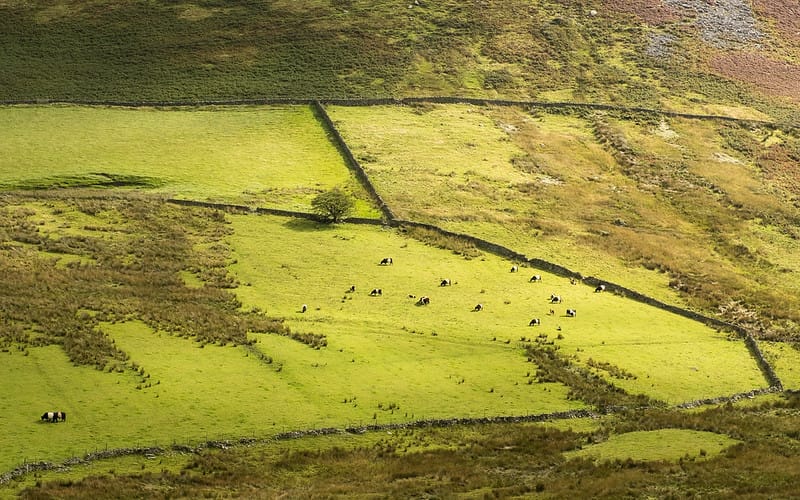
Northumberland | A BBC feature visits a farm near Morpeth, which the owners have spent four years converting back to how it would have looked 200 years ago – all based on old maps. Discovered in the local Newcastle library, the documents date back to 1805, and show a rich pasture landscape, including field names, hedgerows and patches of long-gone woodland. Farm owner Charlie Bennett describes the discovery as a ‘boom moment’: ‘I knew this was a time when farming and nature were in a good balance, and by restoring that landscape we could create a living farm that was also good for wildlife.’ In the last four years the Bennetts have returned all the arable fields to herbal leys, planted 40 acres of woodland and seven miles of hedgerows, and built 14 linked ponds, all of which are now ‘stuffed full of wildlife’.
Elsewhere:
- The National Trust has purchased 28 hectares of land adjoining the Wicken Fen reserve in Cambridgeshire, which will be managed to attract turtle doves, reports BirdGuides.
- Plans to create two large seaweed farms in Gerrans Bay off the Cornish coast have been met with heavy opposition from fishermen and locals, reports the Bristol Post.
- Whistleblowers have told the Times that the £16m scheme to eradicate invasive stoats on Orkney was underfunded and failed to listen to expert advice.
- Last year was a record breeding season for Pied Flycatchers on RSPB reserves, including in Staffordshire and Cumbria, reports BirdGuides.
- The national nature reserve on the island of Rum has welcomed the birth of two rare Highland pony foals, reports the Herald.
- A rewilding project on Helman Tor in Cornwall has added 15 native-breed longhorn cattle to its native-breed pigs to help shape the landscape, reports the BBC.
- Police have launched an investigation into the poisoning of a red kite in Norfolk last summer, reports the BBC. Meanwhile, police in West Wales made the disturbing discovery of over 100 dead pheasants in a pile near Llanelli, reports Wales Online.
- A grant of £25,000 from Severn Trent will be used to create a new wetland reserve in Shropshire, reports BirdGuides.
- A protected beach in Somerset has been damaged by ‘irresponsible’ fossil hunters using angle grinders and rock saws to excavate ammonites, reports the BBC.
- Local authorities in Nottingham have banned foraging in Wollaton Park, saying the practice is removing vital food sources for the deer, reports National World.
- The impact of the 2022 bird flu outbreak is still being felt in Shetlands, reports BirdGuides.
- Locals are unhappy that an infrastructure project to build eight miles of dual carriageway in Cornwall is sacrificing hundreds of trees and fields, reports the Guardian.
- Hill farmers and land managers in the Pentlands outside Edinburgh have received £100,000 in funding to improve biodiversity, reports the Scotsman.
Reports
Marine | The Wildlife Trusts have published an annual round-up of marine life in the UK’s seas. There was much to celebrate in 2023, with Dr Lissa Batey, head of marine conservation at the Trusts, calling it an ‘historic year’. Increased sightings of Atlantic bluefin tuna, fin whales and humpback whales suggested that these species are recovering, while 2023 was a bumper year for Risso’s dolphins off Cornwall, basking sharks in the Moray Firth, and seal pups on the Isle of Man. There were multiple reports of ‘bait balls’ – feeding frenzies formed when a predator forces fish to group together – from Scotland to Scilly. Notably, last year saw the first ever Highly Protected Marine Areas designated in English waters, with Batey calling it a ‘huge milestone’ in setting the ‘gold-standard of protection’. Not all was good news, however: researchers documented the continued devastation of seabird colonies from avian flu, as well as countless pollution incidents from sewage, plastic and industry. The Guardian covered the news.
Badgers | Badger culls are not the most effective way to tackle bovine TB, according to a report from the Badger Trust. The Trust’s review of evidence comes after ten years of culling in England, which has seen 210,237 badgers killed – costing over £58m – without any evidence of TB easing among cattle. In 2021, the government pledged to end intensive badger culling by 2025, but it is now expected to replace it with ‘epidemiological culling’, which allows for the killing of all badgers within an infected area. Instead, the Trust argues that better cattle testing, vaccinations for both badgers and cattle, and improved support for farmers would be more effective. Peter Hambly, executive director of the Trust, said that badgers are ‘a complete scapegoat and distraction’, adding that farmers ‘need more support to understand the risks and transmission routes of bTB’. The report was covered exclusively by the Guardian.
Land | A paper by Laurie Macfarlane, co-director of the thinktank Future Economy Scotland, examines Scotland’s land reform legislation ahead of the forthcoming Land Reform Bill. The paper posits that an ‘archaic and dysfunctional’ land market lies at the heart of many of Scotland’s critical issues – including environmental breakdown, the housing crisis and inequality – and the Bill is a vital opportunity to address this. Among its key recommendations are diversifying land ownership by strengthening Community Right to Buy powers; the introduction of a public interest test at the point of land sales or transfers; and commissioning an independent review into the role of carbon markets in delivering net zero, and evaluating the true scale of the natural finance gap. Macfarlane wrote on Twitter that transforming how land is owned, managed and used is fundamental to ‘creating a more democratic, sustainable and just economic model’ in Scotland.
Science
Extinction | Around 12% of the world’s bird species have been driven to extinction by human activity, according to a paper published in Nature Communications. The research team found that an estimated 1,430 species have died out since the Late Pleistocene, some 120,000 years ago – more than double the previous estimate. Researchers used a statistical model to include birds that went extinct without leaving behind evidence such as fossils and are therefore unknown to science: what is known as ‘dark extinction’. Dr Rob Cooke, a modeller at the UK Centre for Ecology and Hydrology and lead author, said that deforestation, overhunting, fires and invasive species were the key causes of bird extinctions, and the number could be even higher than the paper’s total. ‘The world is emptier than we realise,’ he said, ‘and these missing birds are a loss to our imagination.’ Also missing is the unknown role played by the extinct species in their wider ecosystem. The Guardian covered the research.
Reindeer | Did you know that the surface of a reindeer’s eyes – the tapetum – changes colour, from golden-orange in summer to blue in winter? Reindeer are the only diurnal mammals to do this, and the reason for this change was explored in a paper in i-Perception. While the shift likely helps reindeer see in the darkness of northern latitude winters, it also allows their eyes to transmit ultraviolet light. Scientists previously suggested this specialist vision could be an adaptation to help detect lichen, but without evidence. The authors tested this hypothesis in the Cairngorms, home to both a rich diversity of lichen and a reintroduced herd of reindeer. They found that species of lichen absorb UV light differently, and crucially, the species that reindeer eat are strong absorbers. Dr Catherine Hobaiter explained that, to reindeer eyes, the pale species they feed on ‘would stand out as dark patches in the much more reflective snowy landscape.’
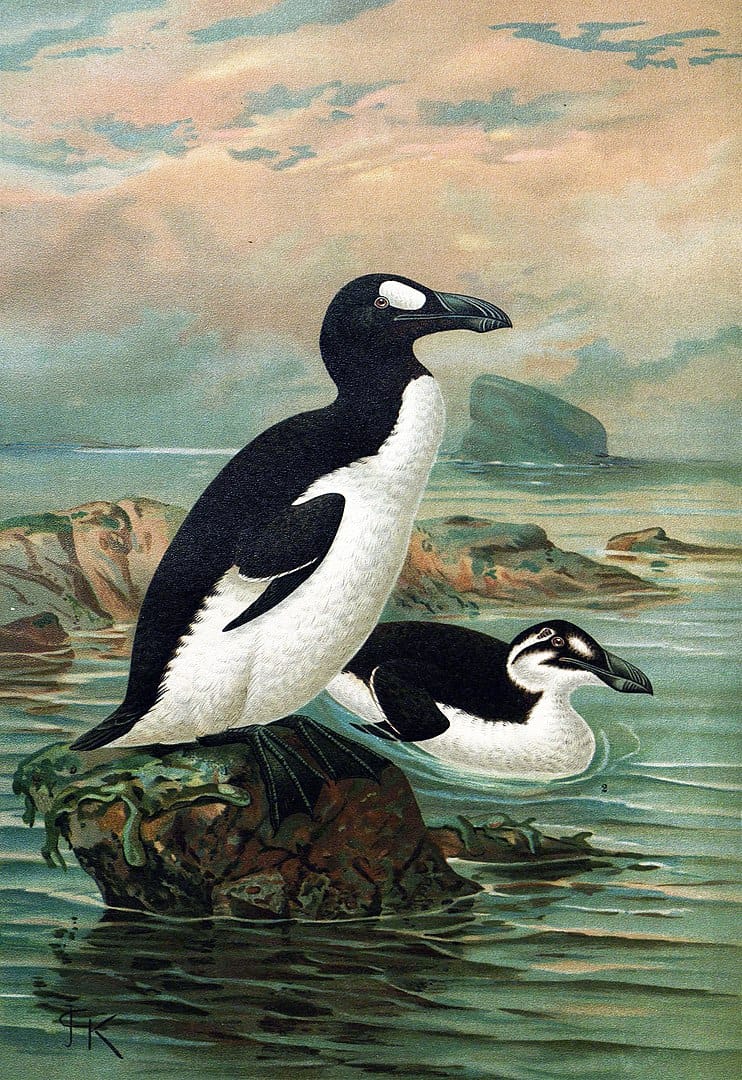
Seabirds | Great Auks have been extinct in Britain for over a century, but they are still informing scientific research on seabirds today. A paper in the Journal of Experimental Biology, led by Dr Ruth Dunn of the Lyell Centre in Edinburgh, used data on auks to test their new framework for seabird energetics. The framework provides a method of calculating how much energy seabirds need at given times of the year, based on biological and lifestyle factors. The paper found that the daily intake of an auk – which was small-winged but an efficient diver – would have been between 1,700 and 2,485 calories, equivalent to 36 to 49 sandeels, depending on migration. Dunn explained that the team chose the Great Auk precisely because the species is extinct: it allowed them to demonstrate the ability of the framework to provide insights about ‘even the most data-deficient species’, which is important when many seabirds are at sea for months during winter. The Herald covered the research.
Driftwood
Rights | A feature in the Guardian explores the growing movement to give legal rights to nonhuman species and ecosystems, and asks whether 2024 could be the year that such ideas enter the political mainstream. The article focuses on two coalitions currently campaigning for these rights: the More Than Human Rights (Moth) project and Animals in the Room (Air). The former is hoping to set a legal precedent by establishing the creative rights of the Los Cedros cloud forest in Ecuador, by arguing that a piece of music was co-created by the forest with British musician Cosmo Sheldrake. In ‘Song of the Forest’, Sheldrake mixes recordings of the ‘voices’ of the forest with his own words and those of other Moth members, including author Robert Macfarlane. Meanwhile, Air is exploring how to include sentient animals such as bears, elephants and whales in policy formulation. César Rodríguez-Garavito, the Colombian legal scholar who founded Moth, explained: ‘We want to take the idea of rights of nature from the margin to the mainstream. The idea is to embed society in the biosphere.’
Rainforest | Also in the Guardian, this article reflects on the state of Britain’s temperate rainforest, and how its fortunes could be about to change. In England, only 189 square kilometres of the rich ecosystem still remain from a swathe that once stretched the entire western coast. However, in November, campaigners welcomed the government’s publication of a recovery strategy, including the commitment to use public-private partnerships to fund its conservation. Author and campaigner Guy Shrubsole praised the announcement: ‘Before 2021, no politician had even mentioned temperate rainforests in the UK parliament. Now, the government [have] actually devoted entire official policy documents to this habitat.’ Meanwhile, forestry minister Rebecca Pow paid tribute ‘to campaigners on this issue, who have led an inspiring movement,’ and said she looks forward to working with them to protect the rainforests.
Ocean | A deep-dive in the Times uses maps to spotlight the issue of conflicting demands on Britain’s seas. It may seem like the nation is surrounded by empty water, but these areas are in hot contention between the fishing industry, conservationists, and the energy industry, with oil, gas and offshore wind all staking claims. Even environmentalists are divided: Emma Pinchbeck, chief executive of Energy UK, referred to this period as the ‘age of trade-offs’, where efforts to increase renewable energy risk harming marine wildlife and habitats. The maps in the article demonstrate the considerable cross-over of competing interests, including a 31% overlap between oil and gas licence exploration blocks and Marine Protected Areas. Environment minister, Lord Benyon, warned the House of Lords of a ‘great spatial squeeze’ coming to British waters, which is apparent when you ‘look at a map and see what is going on’.
Further reading:
- A feature in the BBC takes a look at how Christmas tree growers in Britain are responding to climate change, including planting later in the year.
- Also in the BBC, this photo article displays arresting images of British wildlife by a photographer whose cancer diagnosis inspired him to develop techniques to ‘make time stop’.
- An interview in the Guardian speaks with Satish Kumar, environmental campaigner and the founder of an ecological college in Devon, about the power of unity.
- Traditional fishing techniques such as compass net fishing are dying out in Wales due to ‘ridiculous’ laws, according to this article by Wales Online.
- An opinion piece in the Conversation aims to debunk recent studies which claim that the meat and dairy industry can easily become ‘climate neutral’.
- You can read about the Botanical Society of Britain and Ireland’s thirteenth New Year Plant Hunt here, or visit the impressive interactive map of plant records.
- Among the New Year Honours List was conservationist Roy Dennis, Natural Resources Wales’ peatland specialist Peter Jones, and the chief executive of the Hampshire & Isle of Wight Wildlife Trust, Deborah Tann.
- A feature in the Times explores the unlikely laboratory breeding coral in land-locked Derbyshire.
- The Observer has an interview with Hannah Ritchie, whose book Not the End of the World looks at the environmental crisis through the lens of data.
- In the Guardian, the co-founder of Wild Card, Joel Scott-Halkes, writes about how their ‘peasants’ revolt’ took on the royals over rewilding.
- Also in the Guardian, author Patrick Barkham writes about the views of Ted Green, a conservation advisor to the crown estate who is championing Britain’s ancient trees.
Happy days
Species | More than 800 new species were described to science in 2023 by scientists and associates of the Natural History Museum. In this blog post, the museum explains why, in the midst of a biodiversity crisis, it is more important than ever to understand life on our planet. The new species included 619 wasps, overshadowing all other species: most are found in Costa Rica, and they include a genus named ‘Dalek’ in celebration of the 60th anniversary of Doctor Who last year. Closer to home, the UK revealed an unidentified moth in Ealing; an unknown dinosaur on the Isle of Wight; and a new species of parasitic fungus, named after Beatrix Potter.
Subscribe to our newsletter
Members receive our premium weekly digest of nature news from across Britain.
Comments
Sign in or become a Inkcap Journal member to join the conversation.
Just enter your email below to get a log in link.