Funding Fury & Beaver Benefits
The latest news on nature and conservation in Britain.
National news
Funding | Money set aside for restoring nature in Scotland is to be diverted to pay for public sector wage rises. On Sunday, the BBC reported that Scottish ministers had written to councils, telling them to divert £5m from the Nature Restoration Fund to settle council staff pay deals, and that the money would be replaced in future years. The fund is worth £29m, with the cash split between NatureScot, local authorities and national parks. Environmental organisations have reacted with outrage to the news, highlighting the already limited funding available for nature restoration. Lang Banks, director of WWF Scotland, said the decision was ‘extremely frustrating’, and that ‘pulling money from this area is just storing up problems for the future’. Other industry leaders have warned that the decision puts rural jobs at risk. The Scottish Rewilding Alliance is leading calls for the decision to be reversed and funding for nature to instead be expanded. The news was widely covered by national outlets.
Drilling | The energy secretary, Ed Miliband, has announced that the Labour government will not fight a legal challenge against the previous government’s decision to approve new oil and gas fields off Shetland and Aberdeen. Greenpeace and Uplift jointly brought judicial reviews with the aim of stopping the development of Rosebank and Jackdaw fields. The government’s decision does not mean the licences have been withdrawn, but if the court sides with the environmental groups, the operators would need to resubmit environmental assessments, creating additional delays and costs for the owners. The announcement comes on the back of the Supreme Court ruling that a local council should have considered the future climate impacts of granting new oil wells, setting a new precedent. Campaigners have celebrated the news, with the executive director of Uplift saying it was a ‘common sense’ decision. The BBC, the Guardian and Sky News reported the news.
Geology | Seven sites in the United Kingdom have been named on a list of internationally important geological sites. The International Union of Geological Sciences (IUGS) has published its second list of 100 heritage sites around the globe, chosen by more than 700 experts from 80 nations. The main goal of the list is to give visibility to the sites and identify their high scientific value. It includes three sites in Scotland: the ‘parallel roads’ of Glen Roy, whose iconic glacial lake shorelines informed the development of Glacial Theory in the 19th century; the igneous complex on Rum island, which preserves the internal plumbing of one of Scotland’s most recent active volcanoes; and the Barrow Zones in the Highlands, where a series of rock layers demonstrate the forces of tectonic plates. The other UK sites on the list include the Jurassic Coast and the granite landforms of Dartmoor. The Herald covered the news.
In other news:
- Labour is set to appoint Britain’s first wildfire tsar to help tackle the growing threat of blazes exacerbated by extreme weather, reports the Times.
- The Freshwater Habitats Trust is asking citizen scientists to help identify ‘priority ponds’ to preserve the important habitats, reports the Guardian.
- Former pop star-turned-water campaigner Feargal Sharkey is organising a march in central London which he hopes will be a ‘tipping point’ in the fight for cleaner water, reports the Times.
- The Animal and Plant Health Agency has announced a £2.3m project to fill knowledge gaps on bird flu infections, reports ENDS.
- They might seem ubiquitous, but seagull species across Britain are in serious decline, according to wildlife experts. The BBC reported the news.
- A coalition of environmental organisations including the John Muir Trust and RSPB Scotland have written to the UK government over concerns about the impact of mobile masts on Scotland’s remote areas, reports the Scotsman.
- Disease-carrying insects from Europe are increasingly crossing the Channel as a result of climate change, reports the Telegraph.
- Parts of Scotland have (officially) experienced a record-breaking wet summer, reports the BBC.
Across the country
Lincolnshire | The National Trust is set to transform a former golf course on the Lincolnshire coast into a wetland nature reserve. Sandilands – a thin strip of land south of Sutton-on-Sea – had been a golf course since 1894 until it closed six years ago. Now, the Trust plans to create a mix of habitats including islands, reedbeds, ponds and open water to encourage wildlife to return. In particular, conservationists hope that the site will function as an important pitstop for migratory birds on the ‘east coast flyway’ route, providing a vital area to rest and refuel for species such as marsh harriers and curlew sandpipers. The £7.3m project is due to be completed in the autumn of next year. The Times reported the news. Elsewhere, 14 golf courses across the South Downs National Park are joining together in a project to fight biodiversity loss, reports the BBC.
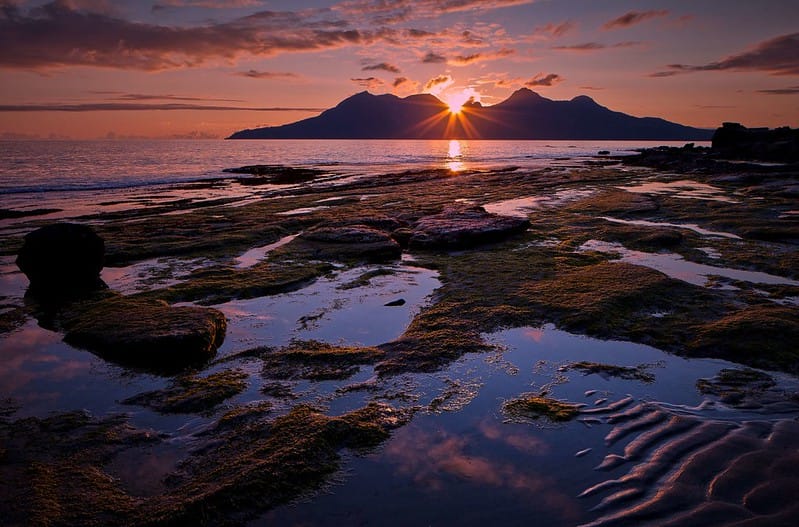
Rum | The Isle of Rum in the Inner Hebrides has been designated as Scotland’s first International Dark Sky Sanctuary, recognising efforts to protect its nocturnal environment. Scotland has five designated Dark Sky Places, but Rum is the first area to be designated as a Sanctuary, following stricter night sky quality criteria. There are just 20 other Sanctuaries worldwide, with only one other in Europe: Ynys Enlli, or Bardsey Island, in Wales. Rum has a resident population of only 40 people, but it is also home to one of the world’s largest breeding colonies of Manx shearwater during spring and summer. Amber Harrison, programme manager at Dark Sky Places, said the certification would ‘ensure that their habitat is protected for years to come’. The Independent and the Scotsman covered the news.
Portsmouth | The Ministry of Defence has turned to a new ally to help battle pollution in Portsmouth harbour: native oysters. The site is hardly the most visually promising for what is thought to be the MoD’s first marine conservation project. The harbour is packed with petrol tankers and aircraft carriers, and the water is a pungent cocktail of chemicals and sewage. But a partnership between the MoD and the Blue Marine Foundation has introduced 2,000 young European flat oysters to the area in a bid to reestablish a healthy population. It is hoped that the oysters will help to filter the polluted water, and also slowly begin to repopulate the Solent area, which used to be the UK’s biggest native oyster fishery prior to its collapse. If the water quality can improve, other marine life might return, too. The Times covered the story.
Elsewhere:
- An RSPB survey on the Humber estuary has revealed a breeding hotspot for endangered redshank, reports the BBC and Hull Daily Mail.
- Police are investigating the illegal shooting of an osprey in Cairngorms National Park, on the opening day of the grouse shooting season, reports the Scotsman and the Courier.
- The RSPB is planning to plant around 13,000 trees at Wild Haweswater in the Lake District to help conserve the temperate rainforest, reports the BBC.
- A trial to improve fish migration on the River Dee has seen the biggest improvement for salmon and sea trout in almost 100 years, according to SEPA. ENDS reported the news.
- The ‘Bog Squad’, run by the Butterfly Conservation, has been given a government grant to continue its work protecting peatlands between Glasgow and Edinburgh, reports the Herald.
- The National Lottery Heritage Fund has granted £350,000 to a project aiming to restore and protect the Chiltern chalk streams, reports the BBC.
- Researchers from the University of Aberdeen are using a state-of-the-art holographic camera to study microscopic organisms in Loch Ness, reports the Herald.
- Somerset Wildlife Trust has created a bespoke plan to help the residents of Glastonbury adapt to the impacts of climate change, reports the BBC.
- Plymouth City Council has installed nine ‘living roof’ bus shelters as part of city-wide upgrades, reports the Plymouth Herald.
- Great egret and Western Cattle egret have both nested for the first time in Nottinghamshire this summer, reports BirdGuides.
- The University of Leeds has set up a £38m research centre focusing on eco-friendly protein alternatives to meat, reports the BBC and the Independent.
- A fisherman on the River Exe in Devon has discovered a lamprey – or ‘vampire fish’ – almost three feet in length, reports the BBC.
- Somerset farmers are divided in opinion on whether rural land should be used to house solar farms, reports the BBC.
- This summer was a ‘bumper year’ for rare breeding birds in the Highlands, according to the Scottish Ornithologists’ Club, with four species breeding for the first time in decades. The Herald and BirdGuides covered the news.
- Beavers are thriving in the River Otter in Devon, a decade on from their mysterious appearance, report the Times and the Guardian.
- Storm overflows have discharged untreated sewage for seven days into the Lake Windermere catchment, reports the BBC. Inkcap Journal covered the Windermere sewage scandal in a feature here.
Reports
Planting | The multiple benefits of urban trees are widely recognised, from wildlife and wellbeing to air pollution and temperature control – but ensuring planting success is not always easy. A recent trial led by the Tree Council tested the planting of urban trees using the ‘Miyawaki method’: developed by Japanese botanist Dr. Akira Miyawaki, it involves planting trees in high densities in specially prepared soil. The project planted 16 trial sites across four authorities, targeting sites with characteristics such as high air pollution or high levels of deprivation. Preliminary results show that trees planted with the Miyawaki method had a 79% survival rate compared to 47% for standard planting methods, with an average cost of £10 per surviving tree compared to £50 – indicating that it could be an effective planting tool for areas facing challenges such as poor soils or lack of funding. The full report is available here.
Renewal | A report by the Institute for Public Policy Research (IPPR) has called on the Labour government to embed nature restoration within its ‘national renewal’ agenda. The report outlines the impending risk of missing the government’s 30x30 commitment – with only six years left to meet this target – as well as the ‘strong progressive legacy’ of protecting and restoring nature embraced by previous Labour governments. The new government has ‘the opportunity to build on this history’, according to the authors. To do this, the report sets out three key actions: tackling sewage polluters, delivering a fair transition for farmers, and legislating for a ‘right to roam’ across the English countryside. On X, access campaigner Guy Shrubsole hailed the publication as a ‘brilliant’ report, and called on Defra ministers to read and act on it. The Evening Standard and ENDS covered the news.
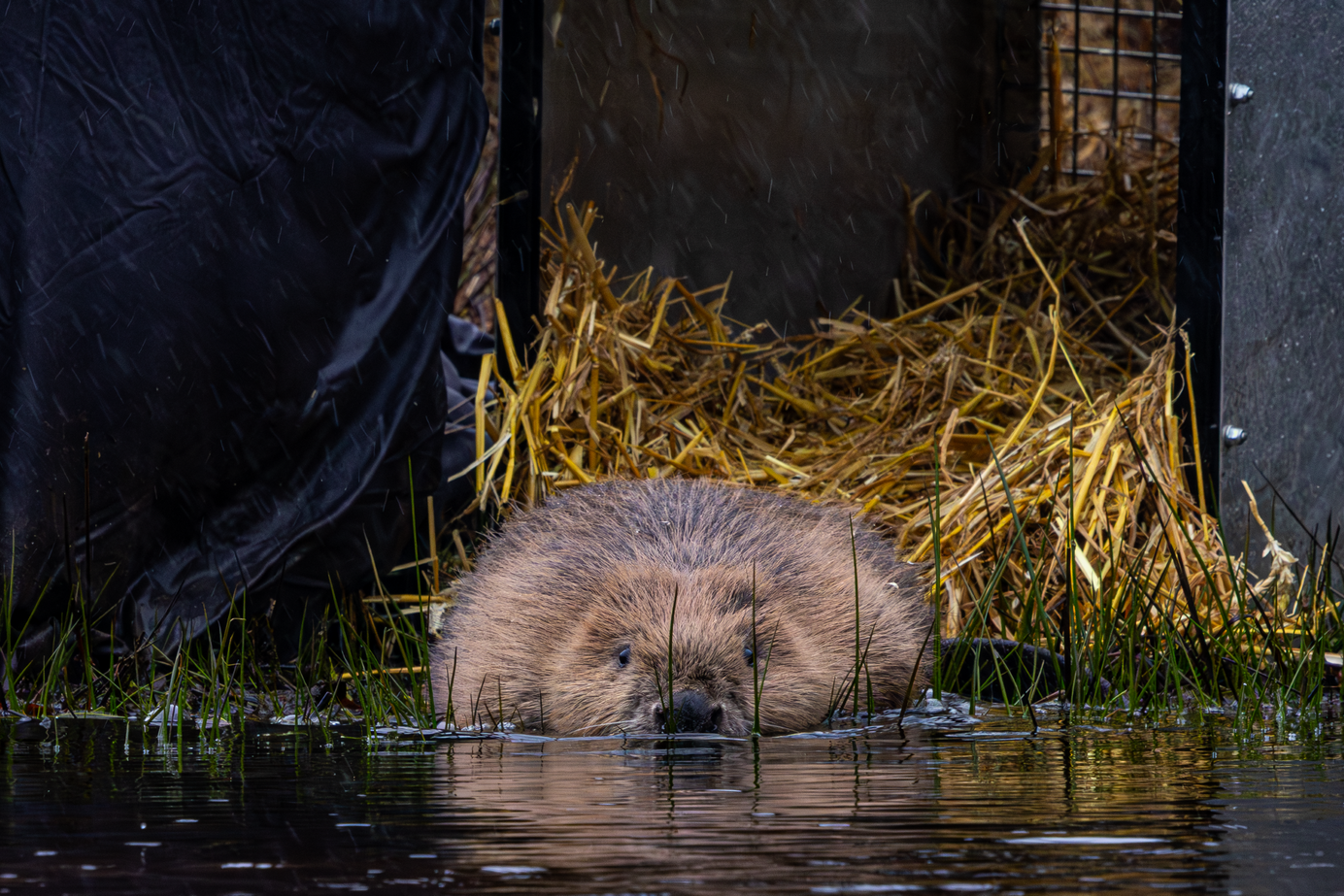
Beavers | The Wildlife Trusts has published a report setting out its vision to return beavers to the countryside of England and Wales via wild releases. Currently, beavers can only be released in these countries in fenced enclosures. It has been three years since Defra’s beaver consultation, and nearly two years since legislation recognised beavers as a native species in England, but the UK government has yet to put in place the steps needed for their full return. According to the Trusts, facilitating wild releases will allow beavers to ‘rejoin our native ecology, provide beleaguered wetlands with a powerful natural restoration tool, [and] bring back life to our rivers’. The report calls on the government to publish an ambitious reintroduction strategy, and provide funding to farmers and land managers to make more space for water on their land. The BBC covered the news, while the Guardian highlighted the rise in ‘beaver bombing’ incidents.
Science
More Beavers | The recolonisation of rivers by beavers is good news for bats, according to a study published in BioOne. Previous research has shown that beaver habitat can support more bats, but the assumed link – an increase in invertebrates – had not been tested. Researchers tracked bat activity and macroinvertebrate abundance at a river site in Devon colonised by free-roaming beavers, and compared it with a control site. They found that, although similar bat species were present, bat activity was substantially higher (42%) at the beaver site. Likewise, the richness of larvae and nymphs of macroinvertebrates – which are crucial to bats’ diets – was 205% higher, and abundance was 817% higher. This is likely because beavers' riparian activities create slow-moving water and ponds: ideal for abundant insect life, and therefore rich bat hunting grounds. The Beaver Trust highlighted the positive findings on X.
Wheat | Wheat accounts for 20% of all calories and protein globally, but the crop is facing increasing environmental threats. The International Maize and Wheat Improvement Centre (CIMMYT) has published two studies investigating how ancient wild relatives of wheat could hold the key to climate-proofing the global wheat supply. The first, published in Global Change Biology, reviews the wide-reaching impact of wild genetic traits already integrated into modern wheat breeding, including limiting pandemics, increasing food security, and avoiding an estimated one billion litres of fungicide since just 2020. The second study, published in Nature Climate Change in July, outlines the need to scale-up the exploration of genetic diversity to improve wheat resilience in a warming climate. New technologies – including next-generation gene sequencing and big-data analytics – are making this diversity more accessible to researchers. Read more in this blog by CIMMYT. Business Green covered the research.
Eco-coloniality | A study by researchers in the UK interrogates the concept of eco-coloniality with regards to the UK-France border. In particular, the paper looks at the case of the notorious Calais ‘jungle’ refugee camp: the largest in Europe at the time, and a bottleneck for people attempting to claim asylum in the UK. The camp was demolished by the French state in 2016 and redesignated as the Fort Vert nature reserve. The authors write: ‘In Calais, the environment thus provides an acceptable version of violence, a “green violence” where nature is co-opted, not just to guard the border by keeping people away [...] but also to disguise its ugly realities.’ They also note the ‘horrible irony’ that the nature reserve is primarily intended for observing ‘migrating birds’. Through the paper, the authors aim to emphasise ‘the importance of unearthing the roots and rhizomes’ that connect contemporary politics with the histories of colonial environmentalism.
Driftwood
Meteorology | Next year will mark the 170th anniversary of the Meteorological Office, the UK’s national weather and climate service. To mark its birthday, the Met Office has announced a list of storm names for the upcoming year which commemorate key figures in its history. These include Group Captain James Stagg, who used his understanding of the jet stream to convince General Dwight Eisenhower to delay D-Day by a day, thereby saving the WWII operation from disastrous bad weather. It also remembers Lewis Fry Richardson, who devised a theory to use maths and physics to make forecasts, and Mavis Hinds, who worked on the earliest Met Office computers. The Times reported the stories. Meanwhile, Storm Lilian, which arrived in the UK last Friday, is the first time the UK’s storm-naming alphabet has reached the letter 'L' as weather becomes increasingly extreme.
Comics | Earlier this summer, two researchers from the University of Sussex teamed up with a local Brighton artist, Daniel Locke, to create a 24-hour comic imagining a sustainable future. The 24-hour comic is a longstanding international event which challenges cartoonists and artists to create a 24-page comic in a single 24-hour sitting. The authors held a series of workshops with environmental NGOs, local food partners, charities, students and game developers, among others, to gather ideas before sitting down to put it to page. The end result follows the story of the three authors on a canoe journey, transported to the near future by an extreme storm. It touches on topics including species reintroductions, changing diets and diversified farming – and invites readers to create their own sustainable visions. You can read the comic here.
Biopiracy | In the Guardian, environment reporter Patrick Greenfield writes about the international battle over the natural world’s genetic data. Nowadays, genetic codes derived from biodiverse organisms are almost always exchanged digitally, through genetic signatures – giving rise to the question of who should benefit from the multibillion-dollar discoveries obtained from them. Greenfield explains that there is growing fury in some countries, particularly in the global south, which say they have been ‘cut out of the financial benefits of their biodiversity’, while digital sequencing allows companies to ‘commercialise their flora, fauna and other forms of life without sharing the profits’. This is known as ‘biopiracy’. Some companies – such as Basecamp Research in London – are using royalty-based systems to financially reward the owner of the biodiversity site and avoid disputes. In October, world leaders will meet at the global biodiversity summit and attempt to agree on a global solution.
Further reading:
- A BBC feature profiles efforts by researchers and volunteers to protect Scotland’s bat populations.
- Carbon Brief has an article detailing how climate change is driving up food prices around the world, illustrated through five charts.
- The Guardian’s science editor Robin McKie explains why the previous head of the International Whaling Commission thinks the organisation should disband itself.
- Also in the Guardian, this article by professor of invasion biology Tim Blackburn argues that moths deserve to be loved, while food grower Claire Ratinon highlights the importance of wasps for gardens. The Conversation also has an article on why the UK’s wasps need help.
- For NatureScot’s blog, Roddy Maclean explores the place of the oak tree in the heritage and landscape of Gaelic Scotland.
- The BBC has released a documentary on Brian May’s decade-long journey to understand the bovine tuberculosis crisis and oppose the controversial badger call.
- An article in the Financial Times argues that Scotland’s rural ‘land rush’ is slowing as the market for natural capital slumps.
- In the Times, science editor Ben Spencer investigates how the Crown Estate plans to use Britain’s sea bed to boost wind power.
- In the Guardian, read about how ‘pigeon-fluencers’ are helping the demonised birds make a popularity comeback.
- Farmers are beginning to embrace the new environmental land management schemes and its benefits for wildlife, according to this feature in the Guardian.
- Following last week’s rediscovery of the rare ghost orchid, the Times and the Guardian both have features on the ‘holy grail’ of plant finds.
- For the Guardian, writer James Gingell describes his ‘Dartmoor moment’ during a wild camping trip, and how the right to camp freely is under threat.
- Member of the Conservative Environment Network Kitty Thompson writes in the Critic about why Conservatism needs environmentalism.
- A feature in the New York Times describes how wild boars are ‘wreaking havoc’ in the Scottish countryside.
- A brief article in the Times recounts the origin of contour lines, during a scientific experiment 250 years ago involving Schiehallion mountain and a large pendulum.
- A selection of images up for the Wildlife Photographer of the Year award can be viewed in the Times and the BBC, while the Guardian showcases the young photographer selection.
- A comment paper in Nature argues that the meaning of the ‘Anthropocene’ matters – even if it has been rejected as a formal geological epoch.
Happy days
Soundtrack | Research by South Western Railway has revealed that listening to nature sounds can help commuters feel less stressed on busy journeys. The rail company collaborated with Charles Spence, a professor of experimental psychology at the University of Oxford, to measure the impact of listening to nature soundscapes on commuters’ stress levels during a trip from London Waterloo. They found that passengers were, on average, 35% less stressed when listening to sounds such as birdsong, rivers and storms. It is one of the first studies on the topic to be conducted with real commuters, and South Western Railway has released a free series called ‘Train Tracks’ to help commuters switch off. Read more on the Guardian and the BBC.
Subscribe to our newsletter
Members receive our premium weekly digest of nature news from across Britain.
Comments
Sign in or become a Inkcap Journal member to join the conversation.
Just enter your email below to get a log in link.