General Election & Cicada Reintroduction
The latest news on nature and conservation in Britain.
National news
Election | On Wednesday, outside 10 Downing Street in the pouring rain, Rishi Sunak made a surprise announcement that a general election is to take place on 4 July. Without an umbrella, Sunak cut a depressing figure getting steadily soaked, while a quick-thinking campaigner played the song ‘Things Can Only Get Better’ by D:Ream in the background. Business Green has reported that the summer election will see ‘climate change, nature and the net-zero transition play a central role’ in the campaigning. Meanwhile, analysis by the Guardian argues that Sunak’s record of backtracking on climate policies could punish him at the ballot box, while an ENDS opinion piece posits that things can only get better for green policy. Relatedly, polling has revealed that 71% of UK adults think the current government isn’t doing enough to protect the environment. Following the news, the Wildlife Trusts issued a statement declaring that the upcoming election will be ‘crucial for the viability of life on our planet’, and has called on all political parties to commit to ambitious plans to halt and reverse nature’s catastrophic decline. They, along with other organisations, will march peacefully in London on the 22nd June, ahead of the election, to call on UK politicians to show strong nature and climate leadership.
Farming | The government has announced a significant expansion to the Sustainable Farming Incentive (SFI) tier of its Environmental Land Management Schemes, to promote sustainable food production and inclusivity in the sector. The expanded SFI offer now consists of 102 actions eligible for payments, up from only 23. These include more than 20 options to support more sustainable production – such as payments for precision farming and agroforestry – as well as actions to support flood preparedness and resilience to the changing climate. There are also expanded options targeted at upland farmers and tenants on short-term contracts. Farming minister Mark Spencer said the expanded offer ‘gives farmers more choice, makes things easier and pays out more’ to allow them to focus on their job. On X, the RSPB called the announcement an ‘important milestone’ in the post-Brexit transition, while others welcomed the first actions for heritage and education access. ENDS and Business Green reported the news.
Fish | The number of fish dying in England’s waterways has almost tripled in the last year alone, according to data from the Environment Agency. The Angling Trust analysed the data to find that around 116,000 fish were killed last year, up from 42,000 the year before and just 27,000 in 2020. The ‘alarming’ rise is largely due to a record number of sewage spills, which increased in frequency and length after extreme wet weather regularly overwhelmed the sewer networks. Also to blame is the UK’s hottest June on record, which triggered a series of fish kills. The Trust said the numbers are likely to be an underestimate, as they are based on events where a minimum number of fish were known to have died. The Times and ENDS reported the news.
In other news:
- The downpours of the wet winter were made a fifth heavier by climate change, according to scientists. The BBC and the Telegraph reported the news.
- The Scottish government has announced £5.5m in funding to expand a network of community-led environment action hubs, designed to tackle both climate change and nature loss, reports the BBC.
- Countryside charity CPRE has welcomed Labour’s announcement of a generation of new towns, but says brownfield sites must be used first.
- Charities including the Marine Conservation Society and the National Trust for Scotland have accused the Scottish government of repeatedly missing deadlines to protect vulnerable marine life, reports the Guardian.
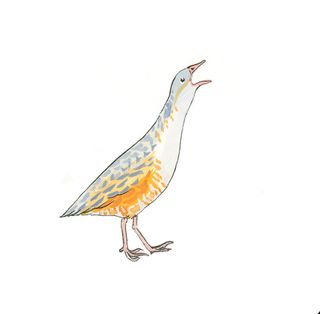
- The RSPB has asked birders to report any sightings of corncrakes to aid its conservation efforts.
- The UK’s Chief Plant Health Officer has urged beekeepers and the public to report any sightings of the invasive Asian hornet as peak summer season approaches. Sky News and the Times covered the story.
- The amount of land farmed organically in the UK fell by 2% last year, meaning it has declined by 30% in the last 15 years, according to Defra statistics. Farmers Weekly reported the news.
- The Conservative Environment Network has named Chris Grayling as the top green MP of the year, to the surprise of many. He was chosen for his efforts to tackle international deforestation, reports the Guardian.
Across the country
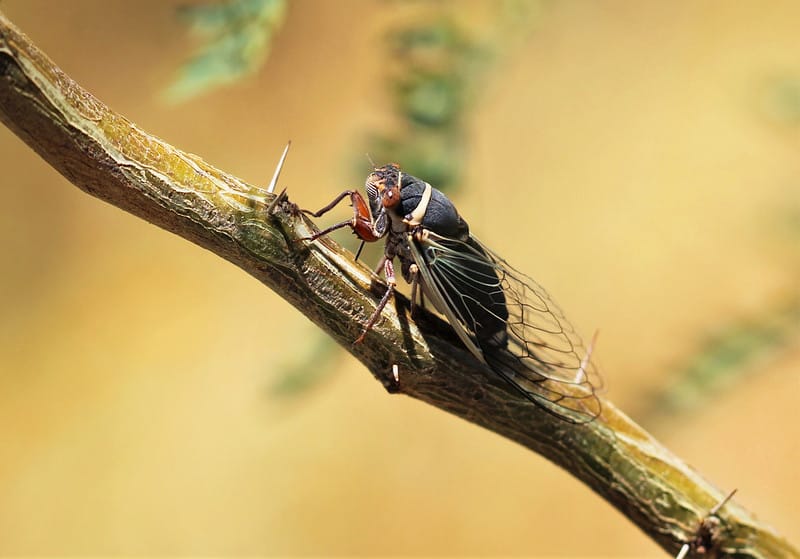
New Forest | Cicadas have been absent from the New Forest for over 30 years, but now a team from Paultons Park is putting the finishing touches on a special habitat which will house translocated cicadas ahead of their reintroduction to the forest. Experts will travel to Slovenia in June, where they will search for ten cicadas – five male and five female – in Idrija Geopark, before transporting them back to the UK. The ‘singing insects’ will then be kept in the enclosure to breed, and their offspring will be released into undisclosed woodland glades to repopulate the forest. Project lead Charlotte Carne said: ‘I want my children to be able to walk through the forest in ten or 20 years and hear [cicadas]; to really experience the sounds of the New Forest.’ The Daily Mail covered the story.
Morvern | Red squirrels could return to the entire coastline of Scotland’s Morvern peninsula following a reintroduction by the rewilding charity Trees for Life. The charity worked with landowners on the reintroduction of six squirrels at the Drimnin Estate, overlooking the Sound of Mull, where they were released into broadleaf woodland. It is hoped the individuals will help to boost the local population after the release of 21 reds near Lochaline on the peninsula two years ago, and eventually spread around the coast to link up with a remnant population on the neighbouring Ardnamurchan peninsula. The Highlands and Islands are the last main stronghold in the UK for red squirrels, but they are missing from large areas due to the fragmented state of woodland habitat: the project aims to give populations a helping hand by carefully relocating small numbers to suitable areas. The BBC covered the story.
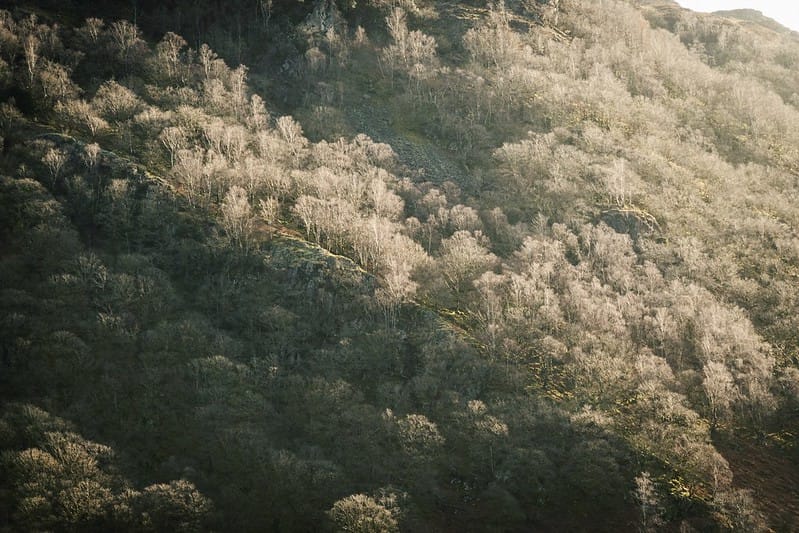
Cumbria | Natural England has announced the creation of two National Nature Reserves in the latest additions to the King’s Series to commemorate the coronation. The first is Borrowdale Valley in the Lake District, home to England’s largest temperate rainforest. The 721-hectare National Trust site is the wettest inhabited place in England, and supports a vibrant woodland full of rare lichens, mosses and liverworts. The Trust said the designation was the first step toward reconnecting fragments of the threatened habitat, as well as improving public access and working with local farmers to access conservation funding. The news was widely covered. Meanwhile, Bradgate Park and Swithland Wood in Leicestershire has also been designated in recognition of its geological and ecological treasures. Bradgate Park contains rare fossils and rocks from the Precambrian Period more than half a billion years ago, as well as some of the only remaining heath in Leicestershire. The BBC and the Leicester Mercury reported the news.
Elsewhere:
- A partnership of conservation organisations including the Somerset Wildlife Trust has received a £1.2m grant toward the reintroduction of pine marten in the southwest.
- School children at Ardersier Primary School in the Highlands are growing kidney vetch plants to support conservation efforts to save the threatened small blue butterfly.
- The Northern Isles are experiencing one of the largest influxes of red-backed shrike in modern birding history, reports BirdGuides.
- Water company United Utilities is expecting to pay £339m of dividends to its shareholders, despite being criticised for illegally discharging millions of litres of sewage into Lake Windermere, reports the Times.
- The Herts and Middlesex Wildlife Trust is planning to trial a pathological rust fungus as a method to tackle the invasive Himalayan balsam plant, reports the BBC.
- Conservationists have praised the addition of bat and bird boxes to a new music venue in Bradford, reports the BBC.
- A week after a report on the fragility of St Kilda’s natural environment, photos of a giant cruise ship moored by the archipelago have sparked outrage online, reports the Northern Echo.
- A project by the Wildlife Trust in Cambridgeshire to turn a former farm into a wetland is now underway, reports the BBC.
- A management project by Forestry England will see more than 8,000 hectares of land ‘left to nature’ to boost biodiversity. It will take place in four areas, including Castle Neroche in Somerset and Kielder Forest in Northumberland, reports the BBC.
- The charity Avon Needs Trees plans to plant more than 100,000 trees across 422 acres of land to the south of Bristol after receiving a £3.85m loan, reports the Bristol Post.
- Northumberland Wildlife Trust is creating a soundscape of nature reserves to help people who cannot access the outdoors be immersed in nature, reports the BBC.
- A team from York Archaeology have discovered what they believe to be a Roman oyster processing site on the banks of the Humber Estuary.
- Environmental groups have unveiled a manifesto to tackle pollution on the River Wye.
- Dorothy House, a hospice site in Wiltshire, has collaborated with the local Wildlife Trust to open a nature trail which aims to encourage conversations around death, reports the BBC.
Reports
Invasion | Environmental organisations including the Rivers Trust, Plantlife, Buglife and WCL are calling for government action to halt a flood of invasive species arriving and spreading in the UK due to more extreme weather. In a report, the WCL outlines the rising threat of invasive non-native species (INNS) due to increased flooding and warmer temperatures, which aids the growth of species such as Japanese Knotweed and Giant Hogweed. It also puts the UK at higher risk of future invaders, such as the Red Imported Fire Ant – first discovered in Europe last year – and the Golden Apple Snail, which both use floodwaters to spread. The report includes a set of policy measures to combat the influx, including increasing the biosecurity budget and creating a publicly available evidence base for potential invasive species. Further north, ScotLink has also launched a report setting out a strategy for tackling INNS in Scotland. Meanwhile, the Environment Agency announced new technology to help identify INNS in British waters, while the Woodland Trust warned gardeners to avoid planting the highly invasive rhododendron plant.
Pollution | A report by the UK’s top engineers, scientists and policymakers lays out a roadmap for the water industry and the government to tackle the issue of sewage pollution in UK waters. Led by the Royal Academy of Engineering, the report warns that the presence of faeces in the waterways is endangering the public, and the risk will continue to grow without action. It puts forward 15 recommendations, including to improve maintenance of the existing network, return to collecting widespread data on bacteria, and develop a long-term strategy for designing cities to reduce flooding. The experts also recommend increasing methods of rainwater collection and expanding natural environments like wetlands to reduce the sheer amount of water entering the networks. Professor Chris Whitty, England’s chief medical officer, said the sewage issue was a ‘public health priority as well as an environmental one’, and added that the report demonstrates the ‘many possible solutions available’. The BBC, the Times and ENDS covered the report.
Marine | A study by Cefas and the JNCC analyses how climate change will impact threatened marine species in British waters. Researchers used predictive models to examine the changes in ‘habitat suitability’ for 21 threatened or declining species, ranging from sharks and rays to oysters and seahorses. The results were a mixed bag: the majority of species showed an overall increase in suitable habitat by the end of the century – with many projected to shift northward – but some showed a significant decline. For example, species found in the central and northern North Sea, such as the native oyster, were more likely to experience an increase in habitat, while those in waters to the south and west of the UK, such as the sea fan and ocean quahog, were predicted to decline.
Science
Warzone | Greater Spotted Eagles have changed their migration routes across Ukraine to avoid active warzones, according to a study published in Current Biology. A research team had been studying the endangered eagles since 2019, and their GPS tags continued transmitting in March and April 2022, as the birds migrated across Ukraine after the invasion. The team found that, before the war, birds took around 1-2 weeks to cross Ukraine, and 90% of individuals spent time at stopover locations. In 2022, however, less than a third of the tagged birds used stopover sites, and it took them between 25% to 50% longer to cross. The researchers believe this was due to habitat destruction, and avoidance of dangers including artillery fire, tanks and build-ups of troops. Lead author Charlie Russell, from the University of East Anglia, said the findings provide ‘a rare window into how conflicts affect wildlife’, and the devastating impact of war on the environment as well as people. The BBC covered the research.
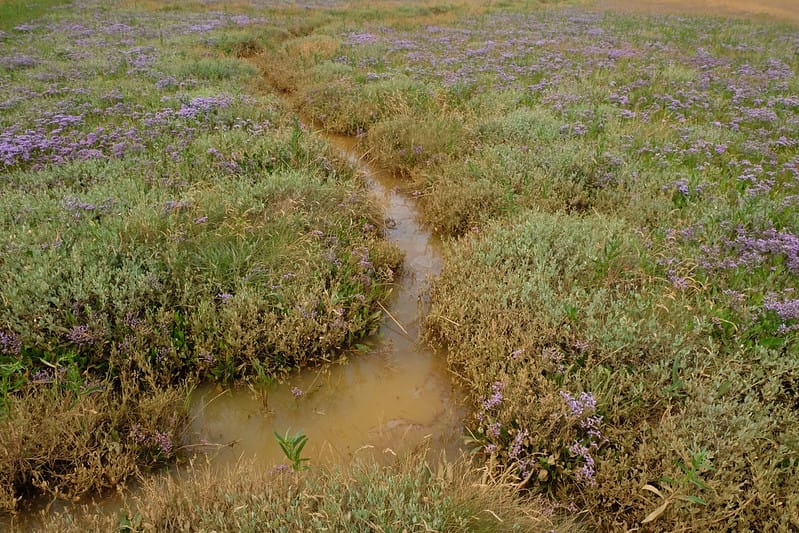
Saltmarsh | The rate of carbon sequestration by saltmarshes in northern Europe has likely been overestimated, according to a study in Science of the Total Environment. Researchers from the universities of St Andrews and York conducted the first national assessment of organic carbon accumulation in Britain’s saltmarsh, using specialist dating techniques to work out the sedimentation rates and carbon densities of 21 saltmarshes around the UK. The results showed an accumulation rate which was considerably lower than the average applied to global saltmarshes. The authors argue that this low rate underlines the significance of the tonnes of carbon already stored in saltmarshes, particularly considering how long it takes for their formation. They highlight the critical need to protect these vulnerable coastal ecosystems from the growing threats of climate change, coastal erosion and sea level rise.
Mitigation | How does climate change mitigation influence biodiversity loss? In a paper published in Communications Earth & Environment, researchers studied the impacts of mitigation measures based on land-use modifications, focusing on the large-scale deployment of bioenergy with carbon capture and storage and afforestation. They found that while climate mitigation measures benefit biodiversity at a global scale, there exist regional mismatches between mitigation efforts and biodiversity benefits, with the negative impacts concentrated in regions with a higher contribution to land-use change. The authors conclude that the results demonstrate the need to consider the unequal distribution of negative impacts, as well as mitigation options that avoid local biodiversity loss by minimising land-use change.
Driftwood
Fungi | The Royal Botanic Gardens at Kew are home to the world’s largest collection of fungi, and researchers are now about to embark on a journey to sequence the DNA of thousands of these species. The project, funded by £4.5m in government grants, hopes to discover what secret powers lie waiting within the genes. Fungi has already left its mark on the modern world in a multitude of ways. Yeast, penicillin, the citric acid of fizzy drinks, insulin, pesticides, even the modern contraceptive pill: all are created, at least in part, by fungi. ‘Something like 70% of fungal enzymes that industry uses comes from just ten species,’ according to Dr Ester Gaya, a senior mycologist at Kew. ‘Just imagine the compounds that haven’t been discovered yet.’ Read more in the Times.
Flowers | The Chelsea Flower Show opened this week with much pomp, including visits by the Royals and celebrities alike. King Charles and Queen Camilla were given new nicknames as ‘King of the Compost’ and ‘Queen of the Bees’ when they visited the first garden to be co-designed by school children. Meanwhile, actress Dame Judi Dench was in attendance to plant a seedling from the felled Sycamore Gap tree in the National Trust’s garden: the first time the public will be able to see one of the seedlings. Elsewhere, a garden thought to be the most biodiverse – featuring more than 300 plant species – has been awarded a gold medal, while others are filled with drought-resilient plants, water storage features and green innovation as gardeners look to a future increasingly shaped by climate change. One garden designer, who prioritised mosses and ferns over flowers, even dubbed the event as the ‘Chelsea foliage show’.
Nightingale | In the Byline Times, writer and publisher John Mitchinson reflects on the disappearing song of the nightingale, after spending an evening in search of it in Gloucestershire. The mesmerising song of the birds has long been used by English poets and composers to evoke a depth of feeling, but it is becoming increasingly difficult to hear in the countryside as their breeding numbers plummet. The international species, which arrives from sub-Saharan Africa each year, is also a reminder of the intricate and fragile connections across the planet. ‘To sit and listen to a nightingale is to be transported to somewhere that is both quintessentially English but also impossibly rich and exotic,’ Mitchinson writes. ‘Their sound is more reminiscent of a rainforest than mixed deciduous woodland.’
Further reading:
- In the Guardian, Rebecca Tamás writes about why councils should stop fencing off public parks during the summer. In a separate opinion piece, writer and curator Phineas Harper laments ‘trigger-happy’ councils who are cutting down flowerbeds.
- Rewilding in the UK is alive and well despite fierce opposition, according to conservationist Kris Tompkins, who was the first CEO of Patagonia. Read more in the Times.
- In a Guardian interview, meet the young generation who are shaking up the hobby of pigeoneering.
- An in-depth analysis by the BBC examines the spread of avian flu, and whether it is inching closer to humans.
- How did birds evolve into more than 11,000 species, spread across the globe? A new exhibition at the Natural History Museum examines birds’ battles for survival, as previewed by the Guardian’s science editor Robin McKie here.
- Just how dangerous are the infamous Asian hornets which are invading southern England and threatening honeybees? Patrick Barkham investigates for the Guardian.
- For the Telegraph, Abigail Butcher writes about visiting one of the government’s newly designated bathing sites, and finding water full of sewage.
Happy days
Mesolithic | What would it have been like to live in Scotland during the Mesolithic period, more than six thousand years ago? Even better – imagine living as a wild harvester as part of the Atlantic Rainforest clan, surviving by hunting, trapping and gathering in this ancient environment. Now you can, thanks to a brilliant booklet produced by Forestry and Land Scotland. Focusing on biodiversity and bushcraft in the rainforest, the educational resource explores interconnected ideas of habitats, natural resources and seasonal change.
Subscribe to our newsletter
Members receive our premium weekly digest of nature news from across Britain.
Comments
Sign in or become a Inkcap Journal member to join the conversation.
Just enter your email below to get a log in link.