
Giant Sequoias & Black Death
The latest news on nature and conservation in Britain.
Welcome to Inkcap Journal, a newsletter about nature and conservation in Britain. This is the Friday digest, rounding up all the week's news, science, reports, comment and more.
National news
Sequoias | While numbers of the world’s largest tree are shrinking rapidly in the US, its population is steadily growing in the UK. Giant sequoia trees are listed as an endangered species by the IUCN, with only around 80,000 left in North America today, and falling at a rate of 10% per year. Their decline is largely due to climate change and forestry mismanagement. However, the giant sequoia count is expanding quickly in the UK as Britons plant the trees to offset their carbon emissions. It is believed that western areas of Britain could be a good fit due to high rainfall and moderate temperatures. A company called One Life One Tree has already planted over 700 sequoias in the UK, and has plans to reach 100,000 by 2030. Although sequoias grow rapidly – up to 4 foot per year – they take hundreds of years to reach their full height, so it will be some time before the UK is host to fully grown specimens. The Telegraph reported the story.
Pollution | An investigation by the Telegraph has found that a third of sewage discharge occurred when there was no heavy rain, suggesting that firms have been breaching their permits. Analysis of 10,000 storm overflow monitors found a major discrepancy in the total hours of sewage spilled into rivers and the total amount of rainfall throughout the year. The findings suggest that much river pollution is “to an extent unjustified by bad weather”. The report is part of the Telegraph’s new Clean Rivers Campaign, with a number of stories on the topic published in the newspaper this week. Defra responded to the story, confirming that it is separately monitoring the data and has identified 1,300 overflows for further assessment.
Peatland | Scotland must do more to restore its peatland if it is to retain hopes of reaching net-zero, according to a study published by the University of Stirling. Despite carbon-rich peatlands covering 25% of Scotland, emissions from damaged peatlands increase Scotland’s ecological deficit by 40%, according to the research, which appeared in the Journal of Environmental Management. Restoration at the rate currently planned by the Scottish Government will only reduce that deficit by 7% by 2050. However, lead researcher Nicola Horsburgh highlighted that there is reason for optimism: “Restoring peatland is low-hanging fruit for Scotland’s land use sector,” she said. The Herald covered the research. Separately, the Telegraph looked at the new trend among investors to buy and restore Scottish peatlands.
In other news:
- Spring has come early this year, just as it has done for decades, reports the Guardian.
- A deadline to register forgotten historical paths in England by 2026 is set to be scrapped by the government, reports the BBC.
- Sixteen captive wildcats are being paired up so that their kittens can be released into the wild, reports the Scotsman.
- Record-breaking flooding is becoming “the new reality” for communities in Wales, reports the BBC.
- The Wildlife Trusts have instructed lawyers over the government’s deliberations on whether to allow the use of a banned pesticide, reports BirdGuides.
Across the country
Carmarthenshire | Carmarthenshire councillors have declared a ‘Nature Emergency’, despite concerns that new development proposals approved by the authority could damage habitats and wildlife, reports Wales Online. Councillor Alun Lenny, chairman of the planning committee, said the committee was “hamstrung” by planning policies, but that every proposal it considered had to have an ecological appraisal. Elsewhere, members of Staffordshire County Council voted unanimously to pass a Motion for Nature’s Recovery, which cements the authority’s commitment to help reverse the decline of wild species in Staffordshire and provide a more hospitable landscape for wildlife. Staffordshire Wildlife Trust praised the council’s commitment. Last year, Inkcap Journal published an investigation into ecological emergency declarations made by councils in England: you can revisit it here.
Kielder | The Kielderhead Wildwood project is calling for financial support to help plant new trees harvested from a particularly special individual. At the end of 2021, one of the oldest northerly Scots pine trees was destroyed by the gale-force winds of Storm Arwen. The 110-year-old tree was one of only seven Williams Cleugh Scots Pine trees left, believed to be the only truly native Scots pine in England. Now, the Kielder project team has joined forces with seed collection specialists to graft young shoots from the branches of the trees that are still standing, as well as from the fallen tree, onto a batch of Scots pine saplings for planting at a later date.
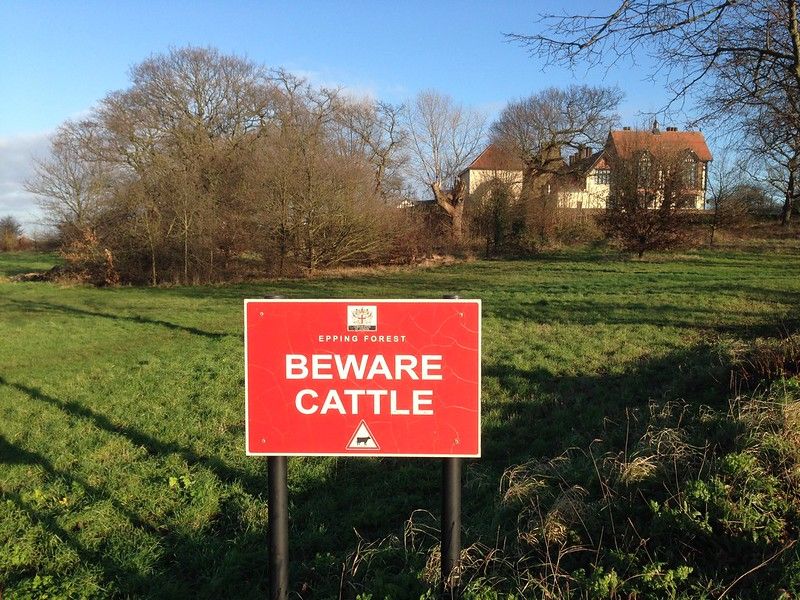
Epping Forest | Virtual grazing areas have been created in the ancient Epping woodland, thanks to the help of satellite technology. The English Longhorn cattle, which graze the forest, have recently been fitted with cowbell-like receivers that pick up GPS signals. If an animal wanders too close to the edge of its delineated area, the cowbell detects the boundary and emits a sound that rises in pitch before delivering a mild electric pulse. The cattle learn to recognise the sound and avoid the boundaries. The technology removes the need for barbed wire or electric fences, and allows forest staff to control the grazing areas on a digital map stored on their phones. “Large grazing animals like cows help to create very variable habitats,” said John Phillips, the forest’s grazing and landscapes officer. The Guardian covered the story.
Elsewhere:
- The Scottish government has granted protection for two areas of Orkney water which are important for grebes, divers and other marine birds, reports the RSPB.
- Fyfield Down in Wiltshire has lost its status as a national nature reserve, reports Countryfile.
- Parts of the Lancashire coast could be affected by an oil slick after a fuel pipe suffered a failure off the North Wales Coast, reports the Lancashire Evening Post. Here’s more on the event from the Cumbria Wildlife Trust.
- The Natural Environment Research Council (NERC) has awarded the University of Exeter £10m to investigate and tackle biodiversity loss, reports the BBC.
- Farmers in Dorset’s Poole Harbour catchment are aiming to become some of the most nitrogen efficient in the UK, according to the Environment Agency.
- North Norfolk District Council has become the first council in east England to adopt the ‘Motion for the Ocean’, pledging to consider ocean recovery in its decision-making, reports the Eastern Daily Press.
- Stockton North's MP is calling for more support for local fishermen following the crustacean deaths on the Teesside coast, reports the Northern Echo.
- The Severn Trent will begin work to trial ‘bathing rivers’ for safe swimming in Warwickshire, reports Coventry Live.
- In Pembrokeshire, hundreds of dead birds have been found after falling from the sky for an unknown reason, reports the BBC.
- A woodland created by children in Wakefield on the site of an old mine could be destroyed after plans for a housing development were approved, reports the BBC.
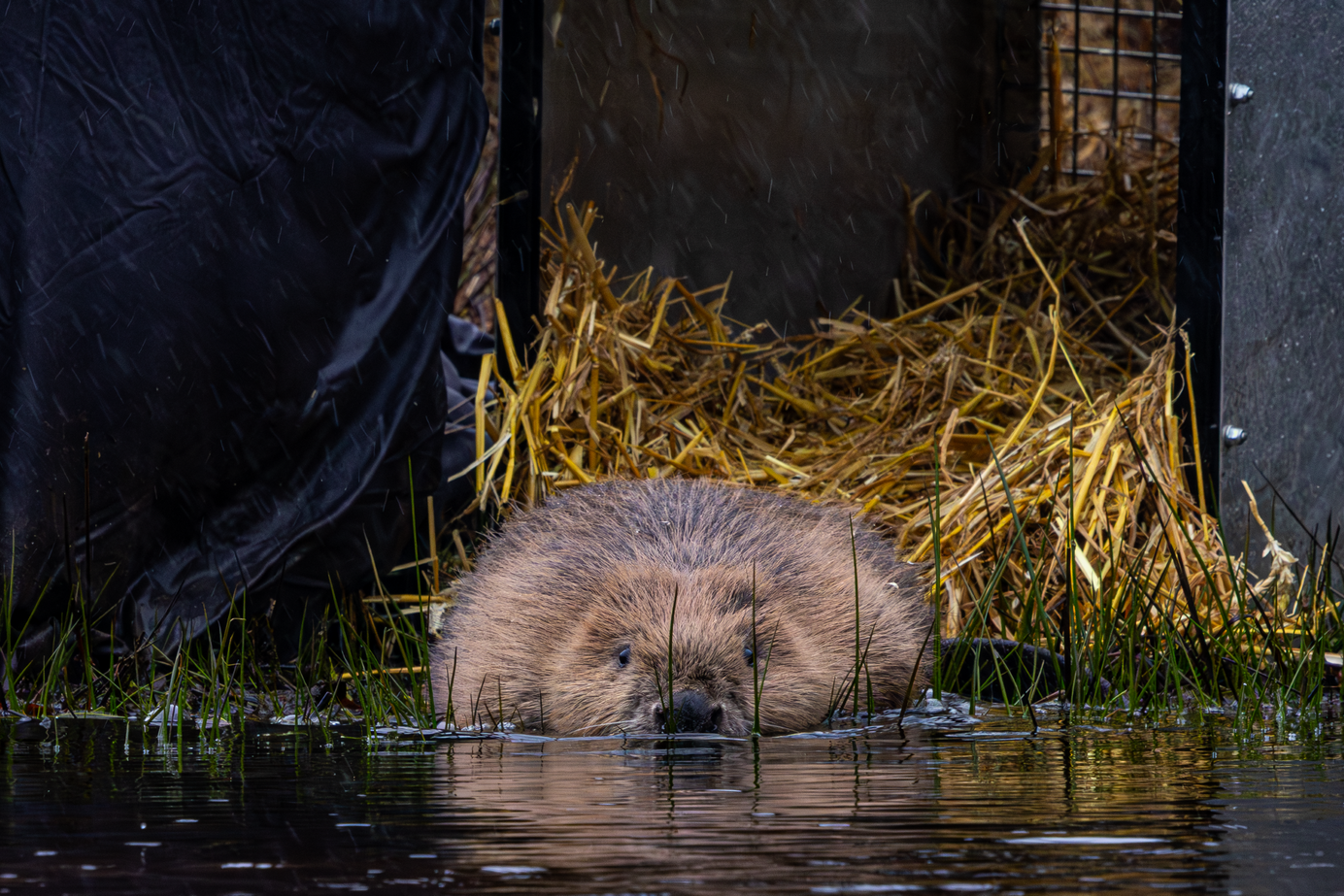
- Farming union NFU Cymru has opposed the reintroduction of beavers to Powys river, reports the County Times.
Reports
Planning | “Our planning system is squeezing nature out,” says a new report by the RSPB. Losing What We Love highlights the discrepancies in the planning system, alongside the sheer volume of applications. It finds that there are an average of 422,000 planning decisions per year, of which about 85% are granted planning approval. A snapshot of the data from July 2021 shows over 8,000 planning applications were located within 500 metres of a Site of Special Scientific Interest. The Times and LocalGov cover the report. There is a link to the original document on this blog.
Extinction | Back From the Brink, a major conservation programme targeting species on the brink of extinction in England, is drawing to a close. A new report looks back at its successes. The programme, led by Natural England, began in March 2017. Since then, over 100 organisations have worked at 150 locations across England and supported 83 priority species on their ‘species recovery curves’. The programme included 12 single-species projects supporting creatures such as the Barberry carpet moth, the grey long-eared bat, the ladybird spider, the pine marten and the willow tit. Drew Bennellick, head of land and nature policy at the National Lottery Heritage Fund, said: “Back from the Brink was a hugely significant project that has succeeded on so many levels – not only in saving species from extinction but in preserving precious habitats and building strong partnerships that will hopefully see this work go from strength to strength.”
Solent | For anyone particularly interested in saltmarsh, Natural England has published a report looking at historical changes to the Solent saltmarsh habitats along the Hampshire coast and around the Isle of Wight. The purpose was to assess the change in extent and conditions of the habitat over time, informing the future management of this resource. The data stretches back to the 1940s. “Not only would re-establishment of the saltmarsh benefit the ecosystem but there would be significant benefits to the economy surrounding the habitat,” the report concludes.
Science
Black Death | Did the Black Death really kill half of Europe’s population? Not according to a study in Nature, which uses palaeoecological data to estimate the impacts of the great medieval pandemic. Fossilised grains of pollen reveal changes in land use in response to population changes. Human pressure on the landscape was directly dependent on the availability of rural labour, and decreasing numbers meant that fields were left to rewild and reforest, leaving a distinct marker in the pollen record. The findings suggest that, contrary to previous beliefs, the impacts of the Black Death were unevenly spread across Europe, with some places experiencing steep agricultural declines as others continued to grow. The New York Times covered the research.

Voles | Researchers have developed a new interactive tool to map suitable habitats for threatened water voles in Glasgow. The results were published in the Journal of Applied Ecology. The European Water Vole is one of the UK’s most threatened animals, and lives in dry grassland habitats in and around the city. However, many of these areas have been identified for urban regeneration, requiring detailed knowledge of habitat suitability to help protect the species. The researchers’ tool can map green corridors between areas of suitable habitat, and also predict how city development may influence the availability of habitat for water voles. The web tool is now being used for the management and conservation of water voles in North East Glasgow and the Seven Lochs Wetland Park.
Extinction | Species can go extinct twice: before becoming biologically lost, some first vanish from our collective memory and attention. This is often down to social or cultural changes, such as urbanisation or digitisation, “which can radically change our relationship with nature,” says Dr. Diogo Verissimo of the University of Oxford, co-author of a new paper in Trends in Ecology & Evolution that explores this phenomenon. One example they give is the replacement of traditional herbal medicine by modern medicine in Europe, which degraded the knowledge of many medicinal plants. Societal extinctions can affect conservation efforts “because it can diminish our expectations of the environment and our perceptions of its natural state,” says co-author Dr. Josh Firth.
Driftwood
Eagles | In last week’s newsletter, we covered the untimely and suspicious deaths of two sea eagles. Since then, Chris Loder, the Conservative MP for the area of Dorset where one of the eagles was found, has elicited outrage by suggesting that police should not prioritise the deaths; the Guardian subsequently revealed that his election campaign was funded by a shooting estate. “There are few things that make me shake with anger more than the idea of a rare and magnificent bird curling up to die, a burning stomach full of poison, never to fly again,” wrote environmental reporter Helena Horton in a separate comment piece. “But even those who do not feel so strongly about this matter should take issue with the fact that criminals are getting away with destroying our wildlife and the country’s natural legacy, and we are seemingly powerless to stop it.”
Space | For BBC Future, Richard Hollingham writes about ‘Moon Trees’: trees grown from seeds which were taken into deep space. The idea of ‘moon trees’ kicked off with Stuart Roosa, an astronaut who carried 500 seeds from the US Forest Service aboard his Apollo 14 spacecraft. Allegedly a scientific experiment to determine how a trip around the moon would affect the seeds’ health, viability and long-term genetics, the records kept of the seeds’ whereabouts on return to earth are vague at best. Now, Roosa’s daughter, Rosemary, is part of the effort to hunt down the remaining Moon Trees.
Hunting | Patrick Galbraith writes for The Critic about his attempt at hunting rabbits on Ilkley Moor through the medium of ferrets (and his subsequent transformation of his catch into rabbit arancini). The experience of heading into the snowy Yorkshire hills felt like an “important reset”, he later tweeted, “in a world in which it’s so easy to walk into a supermarket and fill a trolley with anonymous mass-produced flesh” – a world that was exposed in brutal detail in this week’s Panorama episode, A Cow’s Life. Galbraith has a book coming out in April about the efforts to save Britain’s vanishing birds, so if you enjoyed his piece, you may want to consider putting in a pre-order.
Further reading:
- The Guardian features an edited extract from Ben Rawlence’s new book about trees, focusing in particular on the rewilding of Glenfeshie.
- Former Telegraph editor Charles Moore pits farming against rewilding in his latest column, claiming that it might be “immoral” not to grow food on land well-suited to production.
- The Guardian looks into the trend among chefs for serving up invasive species.
- A very tiny article (two paragraphs!) in the Guardian looks at efforts to restore Britain’s rainforests.
Happy days
Beer | You can now support osprey recovery by drinking beer, reports the Scotsman. Bellfield Brewery, a microbrewery in Edinburgh, has teamed up with rewilding charity, Scotland: The Big Picture, to fund an osprey platform at an undisclosed forested location in central Scotland, increasing the chances that the population will continue to expand when they return from West Africa. The special beer, Osprey Platform IPA, is apparently “bursting with tropical and fresh citrus flavours”, and is available for delivery across the UK.
Subscribe to our newsletter
Members receive our premium weekly digest of nature news from across Britain.
Comments
Sign in or become a Inkcap Journal member to join the conversation.
Just enter your email below to get a log in link.