Green Belt & Japanese Knotweed
The latest news on nature and conservation in Britain.
National news
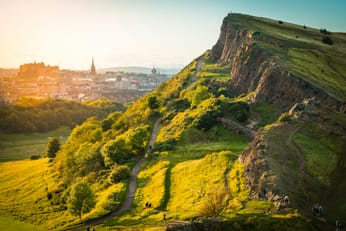
Green belt | Sir Keir Starmer has said Labour would give English councils more powers to build on green belt land – but only where it does not “affect the beauty of our countryside”. This is in contrast to current planning rules, where new buildings can only be constructed on green belt land in exceptional circumstances, reports the BBC. His comments were also reported by Sky News and the Times. In response, CPRE’s director of policy Tom Fyans said that developments should be focused on brownfield sites, while prime minister Rishi Sunak said that he wanted to “make sure our green spaces are protected”. In the Spectator, however, Isabel Hardman injects a dose of ecological reality into the discussion. “The green belt holds a special, if strange, place in the British psyche. Its primary function is to prevent urban sprawl, rather than safeguard particularly green and pleasant land. While some of it is beautiful, a lot of the green belt is just green in colour,” she writes.
Sorry | Water companies have apologised for not acting quickly on sewage spills and pledged £10 billion to start putting things right. Ruth Kelly, chair of Water UK, which represents nine of the privately-owned companies, said: “More should have been done to address the issue of spillages sooner and the public is right to be upset about the current quality of our rivers and beaches. We have listened and have an unprecedented plan to start to put it right.” However, the increase in spending could lead to higher bills for customers, reports the BBC. Some welcomed the change in direction, while others were unimpressed that the burden would be passed on. “What a shitshow,” tweeted Caroline Lucas. The Guardian and i news also covered the story.
Food | On Tuesday Rishi Sunak hosted the first Farm to Fork Summit, bringing together farmers, food producers and supermarkets to discuss working together for the food industry. In his speech Sunak acknowledged it was a “challenging time with spiralling costs”, but promised that the government “unequivocally backs” British farming. Prior to the meeting Sunak also unveiled a package of support, including commitments to protect farming interests in future trade deals, boost domestic fruit and veg production, and invest £30m in driving forward new technologies. The NFU, which had been campaigning for such a summit, said the meeting provided a “positive outlook for UK food security” and demonstrated that domestic self-sufficiency was “back on the political agenda”. However, not everyone was impressed. Representatives quoted by the Guardian described it as an “empty meeting” which failed to touch on the fundamental problems of price inflation, while another branded it as “no more than a PR stunt”. The BBC, the Independent and ENDS also reported the news.
In other news:
- Wales is set to become the first UK nation to ban snares after the Senedd voted to criminalise them. The Guardian, Wales Online and Nation Cymru reported the news.
- Avian flu has been detected in two poultry workers taking part in a testing programme, reports the Guardian and the Telegraph. Also in the Guardian, public health expert Devi Sridhar warns that politicians aren’t paying attention to what could become the next human pandemic.
- The UK’s advertising watchdog is clamping down on adverts making misleading claims that products are carbon-neutral through offsetting, reports the Guardian.
- A coalition of nature organisations is calling on the government to phase out imports of soils from other countries to help prevent invasive species from entering the UK.
- Bathing water season has now started, meaning the Environment Agency will regularly test the water quality at designated bathing sites. Defra officially designated four new sites, meaning a total of 424 sites will be monitored until September, reports ENDS.
- Scientists from Scotland’s Rural College are using mobile testing equipment from New Zealand to measure greenhouse gas emissions from sheep for the first time, reports the BBC.
- Defra has awarded £2m to projects exploring the best ways to boost tree cover outside of woodlands, in areas including Chichester, Cornwall, Norfolk and Kent.
- NatureScot and Plantlife have launched ‘Species on the Edge’, a multi-species conservation programme across Scotland’s coasts and islands. It kicked off in the Outer Hebrides.
- The latest amendments to the government’s Retained EU Law Bill mean that core green laws are off the chopping block for now, reports ENDS.
Across the country
London | A growing movement is underway to restore London's forgotten rivers. The capital is home to around 640km of waterways, but as the city became increasingly industrialised, these rivers were buried: neglected as polluted backwaters or diverted beneath streets. Now, a raft of organisations are revitalising these blue corridors for both people and nature. In east London, Rewilding the Rom is attempting to reconnect a trio of rivers to recreate a historic natural floodplain. Meanwhile in north London, a project led by Enfield Council liberated Turkey Brook from its concrete walls, creating a new wetland and allowing the brook to slowly re-naturalise its course. Ahead of the 2023 London River Week, a target has been set to restore 5km of waterway each year, totalling one-third of London’s waterways by 2050. BBC Travel covered the story.
Eryri | The National Trust is creating its largest tree nursery yet, with the aim of restoring the ancient rainforest of Eryri in north Wales. The nursery plans to grow around 30,000 saplings every year from locally gathered seeds, including oak, hornbeam, birch and black poplar, one of the UK’s rarest native trees. David Smith, lead ranger for the Trust in Eryri, said: “It is really important to use our local trees, which are already well suited to this particularly damp climate, to help us restore this special habitat that has long been in decline”. Trees from the nursery will primarily be used to connect existing fragments of temperate rainforest, especially where the forest has been impacted by ash dieback disease. The Times covered the news.
Birmingham | Birmingham council is planning to double the city’s green spaces by 2040 under a new vision for Britain’s second biggest city. The plan involves transforming sections of the A38 Aston Expressway, Birmingham’s busy central ring road, into tree-lined cycle routes and pedestrian paths, as well as creating a city centre park and adding 124 miles of new walking and cycling routes. Ian Ward, the council’s leader, said it was “the most important plan for the city in over a century,” and would spread the benefits of green development into inner city areas with some of the most deprived communities in the country. The Times reported the news.

Elsewhere:
- The Wildlife Trusts and RSPB have criticised proposals to build a tidal barrage across the Wash, saying it would cause catastrophic damage to nature.
- Bees and other pollinators are flourishing in South Downs National Park thanks to 66 hectares of habitat grown to provide connectivity between areas, reports ITV News.
- Farmland on the edge of Penrith will become a nature reserve after being passed to the Cumbria Wildlife Trust, reports BirdGuides.
- A rare and beautiful rainbow sea slug discovered in a Falmouth rock pool is a sign of warming seas, reports the Guardian and the BBC.
- A Manx charity has raised concerns for wildlife after finding polystyrene balls strewn along the coast at Port Erin bay, reports the BBC.
- Funding from Defra has allowed Tamworth Borough Council to plant 360 fruit trees in what will become a public orchard, reports the Express & Star.
- Environmental organisation Pollenize has launched a campaign to reduce the use of pesticides in Plymouth, according to the Butterfly Conservation.
- Heather Corrie Vale, a once-abandoned golf course in Kent, has been rewilded by Kent Wildlife Trust and is now offering carbon units to approved buyers.
- The High Court has granted a group of anglers from Yorkshire permission for a judicial review of the Environment Agency’s ‘failure’ to stop pollution in a trout river, reports ENDS.
- The owners of a shooting estate in the Peak District have been successfully prosecuted for illegal peat burning: the first prosecution since new regulations were introduced in 2021, reports ENDS.
- Alongside the East Yorkshire Rivers Trust, the Environment Agency has restored a trampled chalk stream.
- Locals have declared Dorset’s River Lim ‘ecologically dead’ after sewage overflows into it tripled in less than a year, reports the Times.
- A four-year trial by NatureScot in Aberdeenshire has found that sheep grazing can effectively reduce the spread of giant hogweed.
- Cumbria Wildlife Trust has expressed concerns that plans for a holiday park in Cumbria could damage the habitat of rare natterjack toads, reports the BBC.
- St Kew Inn near Bodmin has been crowned as the most nature-friendly beer garden, reports the BBC.
- NatureScot has objected to plans to build a luxury golf course at Coul Links, a rare coastal dune habitat in East Sutherland, reports the Herald.
- Music icon and environmental campaigner Feargal Sharkey visited the River Spey to help launch a campaign aimed at saving its salmon, reports the Press and Journal.
Reports
Volunteering | A report by the London Wildlife Trust looks at the barriers to volunteering for young women and non-binary people of colour. Through a series of workshops, surveys and volunteering sessions, staff from the Trust engaged with 142 young people of colour. Based on their responses, the report explores barriers across three key themes: safety, relevancy, and accessibility. More than 25% of respondents said they were not sure what ‘conservation’ really meant, while 77% stated that previous feelings of being unsafe in green spaces meant they were less likely to engage in volunteering in the future. The authors concluded that: “Themes of colonialism, extraction and elitism emerged from these discussions and it is clear that there is a significant amount of trust-building that must be done”.
Crime | Inconsistent laws, resource shortages and lack of awareness are allowing wildlife crime to go under the radar in the UK, according to a report by global non-profit International Fund for Animal Welfare (IFAW). The report is based on research by criminologists at Nottingham Trent University (NTU) and the University of Gloucestershire. It highlights a concerning correlation between wildlife crime and organised crime – with links to theft, firearms and drugs – as well as a lack of national system for enforcement, leading to disparities across the country. Dr. Angus Nurse, research lead at NTU, explained that enforcement is “heavily dependent on the enthusiasm, dedication and specialist knowledge of individual officers and prosecutors”, rather than any sort of coordinated permanent system. IFAW has launched a campaign calling on the government to harmonise all UK wildlife law and make wildlife crimes notifiable.
Bats | All 11 species of bats monitored through the National Bat Monitoring Programme are stable or have increased compared to a 1999 baseline. This is the headline news of the 2022 annual report, released this week by the Bat Conservation Trust. While the results are generally encouraging, regional progress across Britain was more mixed. Plus, some species, particularly habitat specialists, are too difficult to monitor, meaning that no information was available on their trends. The findings, says Kit Stoner, chief executive of the Trust, “suggests current legislation and conservation actions to protect and conserve bats are working and bringing success, and it is vitally important that this continues.”
Science
Birds | The use of pesticides and fertilisers in intensive agriculture is the biggest cause for declining bird populations in the UK and Europe, according to a major study published in PNAS. A team of more than 50 researchers examined 170 common species of birds using data collected by thousands of citizen scientists across 28 countries. Comparing four anthropogenic pressures – including forest cover change, urbanisation and the climate crisis – researchers found that wild birds had decreased by more than a quarter since 1980, but farmland species were the worst hit, with numbers falling by 56.8% since the research began. Species feeding on invertebrates, such as swifts, yellow wagtails and spotted flycatchers, had the steepest declines. The researchers wrote that the paper “contributes to the highest political and technical challenge faced by agricultural policy in Europe”: balancing agricultural productivity with environmental protection. The Guardian, the Times and Birdguides covered the research.
Eagles | Female golden eagles range further than males from their place of birth when choosing a new reproduction location, according to a study published in Ibis. The difference in behaviour was revealed through the use of advanced satellite tracking technology. The measure is not merely of academic interest, the authors write – it also plays a role in the conservation of the raptors. Nonetheless, mysteries around their movements remain: “Despite their iconic stature for many peoples and societies, these birds remain somewhat enigmatic and are difficult to study,” writes lead author Phil Whitfield in an accompanying blog for the British Ornithologists’ Union.
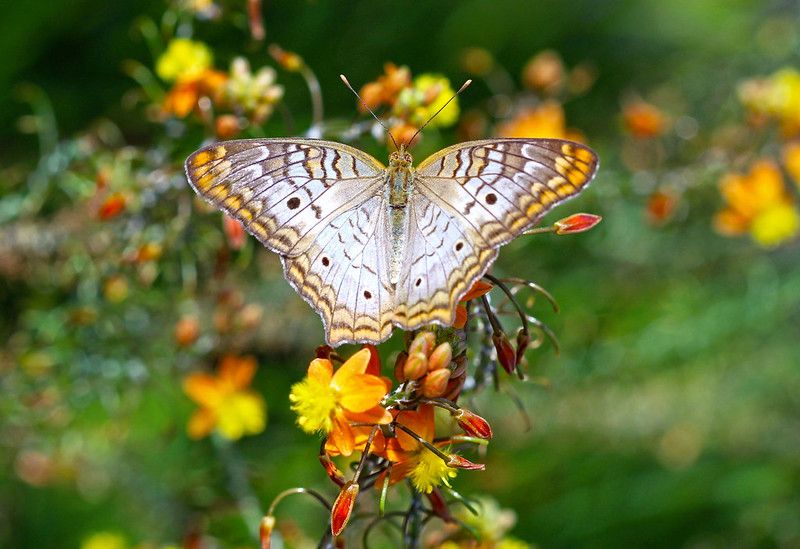
Butterflies | Butterflies originated around 100 million years ago in the Americas, according to a study published in Nature Ecology and Evolution. They originated when a group of moths started flying during the day rather than at night, taking advantage of the nectar-rich flowers that had co-evolved with bees. From here they spread into Asia and Australia, before finally making their way to Europe. Nearly all modern butterflies were around by the time the dinosaurs went extinct. The findings are the result of painstaking effort to compile disparate data across books, museum collections and the internet. “In many cases, the information we needed existed in field guides that hadn’t been digitized and were written in various languages,” said Akito Kawahara, curator of lepidoptera at the Florida Museum of Natural History, who led the study. NPR covered the news.
Driftwood
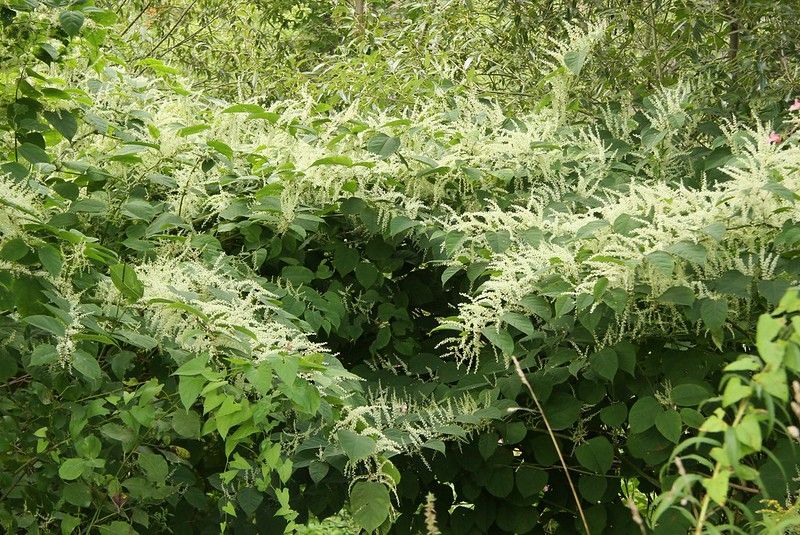
Knotweed | It is always exciting to see environmental topics crop up in the Guardian Long Read, and even more so when they are written by the excellent Samanth Subramanian. This week, he tackles the subject of Japanese knotweed. This is ostensibly a feature about house prices and how to beat a plant so hardy and menacing it is often referred to as a triffid, but there are bigger themes at play. “We often assume we understand more about the natural world than we really do, or have more power over it than we actually possess,” writes Subramanian. “That overconfidence is invariably punctured: knotweed covers a country, a virus escapes a wet market, a forest burns. At that point, we realise we know too little – and yet, to mend these worst results of our ignorance, we have to try imposing our will on nature all over again.”
Flowers | With the Chelsea Flower Show set to begin on Monday, a feature in the Times introduces one of the show’s youngest florists. Thirty-one year old Lucy Vail will decorate the main gate archway using a splendid mass of foxgloves, sweet peas, roses, stocks and lace flowers, with a carpet of ranunculus beneath. Remarkably, all 8,000 stems used in the display have been grown on Vail’s family farm, Floriston, in Suffolk. Vail, who trained as a florist in Florence, said her commitment to using British-grown flowers was cemented during the pandemic, when she returned from working in London to the family farm: “I realised how much beauty was growing right in front of us.”
Birdsong | It is not easy for farmers to analyse the impacts that their work is having on birdlife; onsite surveys by ecologists are labour-intensive and expensive. Yet retailers often want to know how environmentally friendly their suppliers are. The Times writes about a new method of monitoring farmland biodiversity, invented by former food consultant Conrad Young. Chirrup.ai is essentially a computerised alternative to an in-person survey. Small recording boxes are positioned around the farm, and the dawn chorus is monitored for a few weeks. These recordings are then uploaded to an artificial intelligence programme, which produces a list of the bird species present and an environmental report.
Further reading:
- In the Guardian, historian Simon Schama writes on how epidemics are highlighting the disrupted relationship between humans and nature.
- Two articles in the Times discuss the rise of Green votes within the traditionally Conservative British countryside.
- A feature in the Guardian takes a look at the London Zoo team striving to save the Socorro dove species.
- For Countryfile, presenter John Craven writes about why Amar Latif, known as the ‘Blind Adventurer’, is a great choice as the Ramblers’ new president.
- Author and campaigner Guy Shrubsole writes in Countryfile about where to visit Britain’s rare rainforests.
- A blog by Natural England discusses how the government is trying to improve opportunities for children to spend time in nature at school.
- A feature by BBC Future delves into how one photo taken from space sparked an environmental movement.
- A blog by NatureScot explains why this year is a significant marker for Scotland’s ‘30 by 30’ goal.
- To mark Mental Health Awareness Week, this post by the British Ecological Society brings together three experts on the mental benefits of access to nature.
- A piece in the Scotsman discusses the potential impacts of sea eagles on farmers’ finances and mental health.
- In the Guardian, an article takes a closer look at the lofty process of ringing Salisbury Cathedral’s peregrine falcon chicks. Meanwhile, a post by the RSPB highlights the migratory raptors arriving in the UK to raise their own chicks.
Happy days
Rewilding | Environmentalist and financier Ben Goldsmith has launched a new podcast, called Rewilding the World, and the first three episodes are available now. He speaks with a cast of people, from the US and Europe, about projects underway to create wilder landscapes, including the reintroduction of bison to the Great Plains and the restoration of Spain’s Iberian Highlands.
🚨 Launching Tomorrow 🚨
— Ben Goldsmith (@BenGoldsmith) May 16, 2023
I’m delighted to share that the first three episodes of my new podcast Rewilding the World will be available tomorrow on Apple Podcasts, Spotify, or wherever you get your podcasts.
Each episode I’ll be speaking to some of the most influential people in… pic.twitter.com/zSa9LfA6WO
Subscribe to our newsletter
Members receive our premium weekly digest of nature news from across Britain.
Comments
Sign in or become a Inkcap Journal member to join the conversation.
Just enter your email below to get a log in link.