Green Day & Plastic Grass
The latest news on nature and conservation in Britain.
National news
Policies | The government has released a new Green Finance Strategy, showing how it plans to encourage finance for nature-based solutions, including tree planting and peatland restoration. It sets out five key objectives, including boosting investment in the green economy – something that will be necessary, given the estimated £44-97 billion that will be required over the next ten years to meet domestic nature-related goals. ENDS has helpfully compiled 15 takeaways. The government also released its revised plans to meet the net-zero goal, which received a dim reception from commentators, given that they will only deliver 92% of the reductions required. According to Kathryn Brown, director of climate change and evidence at the Wildlife Trusts, the strategy is "shifting and storing up even more risk to our already depleted natural environment." The Strategies were just a couple from a deluge of documents released on what was billed as the government’s “green day”. Some of the most significant announcements for nature have been outlined here. Simon Evans of Carbon Brief has been updating a spreadsheet with the whole collection – current page count: 2,840.
NEW
— Simon Evans (@DrSimEvans) March 30, 2023
UK govt has released a deluge of docs on its "green day", inc an Energy Security Plan
Not yet out: crucial "carbon budget delivery plan" on how its numbers add up
By my count…
16 docs so far
25 docs due
929 pages so far
All the links in 1 place:https://t.co/qc4A9Jv1T9 pic.twitter.com/VVDoUccqFH
Peat | The government has announced that a ban on all peat-based gardening products will not be fully implemented until 2030. Although Defra confirmed that peat will still be banned from the retail horticultural sector by 2024, it said that some peat products would be available to professional growers for the next seven years. The decision has been met with staunch criticism from environmental organisations, who argue that peat-based products perpetuate the destruction of irreplaceable peatland habitats. Ailis Watt, peat policy officer at The Wildlife Trusts, said the decision was “bitterly disappointing”. She added: “We need to see far greater levels of ambition if the UK is to relinquish its status as one of the most nature-depleted countries on Earth”. The Trusts are calling on the government to reverse its decision. BirdGuides, BusinessGreen and ENDS reported the news.
Scotland | Scottish Environment Link has written an open letter to Humza Yousaf, Scotland’s new First Minister, urging him to reaffirm the Scottish government’s commitment to the natural environment. The letter is signed by 31 members of the environmental coalition, and outlines a list of key issues which the coalition calls on Yousaf to act upon. These range from introducing legally binding nature restoration targets, to developing a system for nature-friendly farming and supporting a Circular Economy Bill. Separately, the RSPB and ScotLink warned the leadership candidates against rolling back plans to implement Highly Protected Marine Areas in ten percent of Scottish waters. The RSPB’s Aedan Smith said: “The clock is ticking. We need a clear signal from the leadership candidates that protecting and recovering our natural environment will be fast-tracked, not kicked into the long grass.”
In other news:
- More than 120 lawyers have pledged not to prosecute peaceful climate protesters, and not to represent fossil fuel companies. The BBC, the Times and the Telegraph reported the news.
- Defra has passed a law to allow gene-edited food to be commercially developed and sold in England. The BBC and Farmers Weekly reported the news.
- The Times has claimed a victory for its ‘Clean it Up’ campaign, as all of England’s private water companies will publish live maps of storm overflow spills by the end of the year.
- Natural Resources Wales has launched an online consultation to gather views on a licensing system for gamebird releases.
- Defra has published an updated Biodiversity Metric, which streamlines the process of measuring biodiversity net-gain. ENDS covered the news.
- There has been a big rise in microplastics around the UK coastline, reports the Times.
- NatureScot has published a report highlighting the need for school children to be more connected to nature.
- Farming causes more than a quarter of the particle pollution in UK cities, reports the Guardian.
Across the country
Wiltshire | Numbers of stone-curlew have been declining in the UK since the 1930s, but a decades-long conservation project is supporting a comeback in southern England. A Wiltshire nature reserve is expecting record numbers of the bird this year as efforts start to pay off. Last year, the Winterbourne Downs reserve near Salisbury saw its highest ever number of stone-curlew, with 11 breeding pairs raising 19 young, and wardens hope that many will return from their annual migration to nest again this year. RSPB England’s director, Nick Bruce-White, said the results show “just what can be achieved when conservation and nature-friendly farming join forces”. The BBC covered the story.
Dorset | An oil spill near Poole Harbour has the potential to cause significant damage to protected wildlife and fragile wetland habitats. On Sunday, a pipeline from Wytch Farm – the largest onshore oilfield in Europe – leaked 65 tonnes of “reservoir fluid”, a mix containing oil, into the water. The Dorset Wildlife Trust said it is “deeply concerned” about the potential impact on wildlife, including marine species such as bass, molluscs and seahorses. Professor of environmental science, Ian Williams, said the incident showed that even for the most protected areas, “where there’s drilling, there’s spilling”. The BBC, the Guardian and ENDS reported the news.
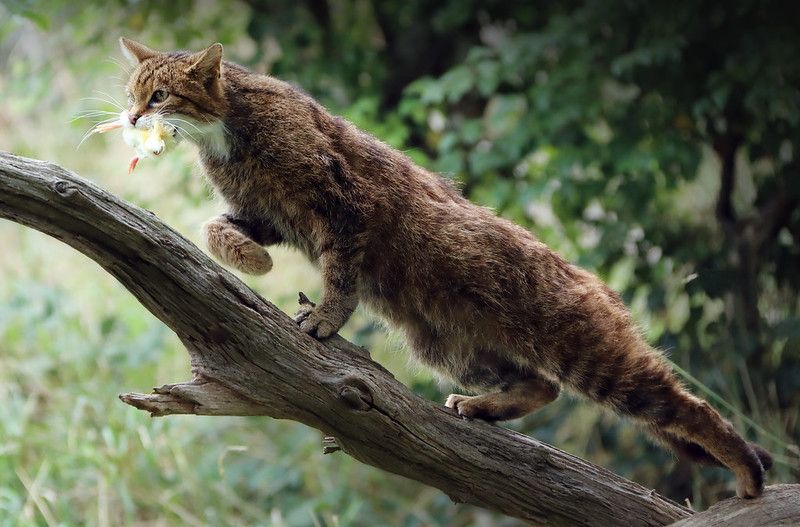
Cairngorms | NatureScot has approved a licence for the first release of captive-bred Scottish wildcats later this year. Although wildcats are already present in the Cairngorms, their population is critically endangered; a series of trial releases aims to help restore their numbers. If all goes to plan, as many as 20 wildcats bred in captivity could eventually be released every year. NatureScot’s head of biodiversity, Dr Katherine Leys, said the decision to release wildcats “marks a crucial point in the long journey towards conserving this iconic species.” The BBC, the Times, the Scotsman and the Herald reported the news.
Elsewhere:
- The Canal and River Trust is planting floating reed beds in the Gloucester Docks to attract more wildlife to the city centre, reports the BBC.
- Numbers of booming bitterns are on the rise in Lancashire, according to a BBC video.
- Cumbria Wildlife Trust has warned that dog walkers, drones and beach-goers are disturbing nesting birds in South Walney, reports the BBC.
- A giant fish sculpture on the seafront at Tyneside is designed to help reduce plastic pollution, reports the BBC.
- One side of a multi-storey car park in Sunderland has been covered in more than 50,000 living plants in an effort to create habitat for insects, reports the BBC.
- The Scottish Greens have said that more than 55,000 people have objected to Flamingo Land’s plans to build a resort on the banks of Loch Lomond, reports the Herald.
- After four years of effort, Kinclaven Bluebell Woods in Perth have been cleared of invasive rhododendron, reports the Herald.
- The Environment Agency has been employing horses to help improve the water quality and biodiversity of a chalk stream in Norfolk.
- Derbyshire Wildlife Trust has secured 60 acres north of Chesterfield for a rewilding project.
- The first count of the year on Skomer Island in Pembrokeshire has clocked a record-breaking number of puffins, reports the BBC.
- Thousands more dead and dying shellfish have been washed up on the north-east coast of England, reports the BBC, the Guardian and the Northern Echo.
- Herefordshire Wildlife Trust has announced that Bartonsham Meadows, on the edge of Hereford City, will become a 100-acre nature reserve.
- The Arctic charr in Lake Windermere are under threat as the lake warms and becomes more polluted, reports the Times.
- Local MPs are calling for an independent inquiry into plans to reduce grazing levels on Dartmoor, reports the Plymouth Herald.
- Police are appealing for information after the discovery of a red kite which had been shot near Grantown-on-Spey in the Highlands, reports the BBC.
Reports
Climate | The Climate Change Committee (CCC) has released their biennial assessment of the government’s progress on adapting to climate change. In short: it’s not a positive review. The report found that England is severely underprepared for the unavoidable impacts of climate change. With regard to nature, the assessment found that overall there are “limited policies and plans” in place to help ecosystems adapt. There has been “mixed progress” on implementing adaptation measures for marine and coastal habitats; for terrestrial and freshwater habitats that falls to “insufficient progress”. The assessment also highlights the growing vulnerability of food security, with farmers at the mercy of volatile weather patterns. The BBC and ENDS covered the report, while Carbon Brief has a deep dive on nature, agriculture and food security as part of its wider coverage.
Salmon | Atlantic salmon may disappear from Welsh rivers within the next few decades, according to a report from Natural Resources Wales. Compiled by academics from Bangor and Swansea universities, the findings show that populations have been declining for the last two decades and are currently below the conservation limit, meaning that recovery is less likely. Climate change is most likely the cause of the declines; restoring connectivity and improving the quality and quantity of habits are the best ways to bolster numbers of the beleaguered fish. Separately, the latest results from the annual UK Butterfly Monitoring Scheme show that the extreme weather of last summer has had a significant impact on certain species. Drought caused plants to wither and die, resulting food shortages for caterpillars, which then also die. The Guardian and the Times covered the news.
Nature | The European Environment Agency has released a briefing on how humanity needs to change its relationship with nature from an “us and them” mindset to an “all of us” perspective. It finds that even well-intended policies have tended to divide humans from nature – an approach which is “intrinsically at the core of the Anthropocene and needs to be rethought.” To protect biodiversity, nature needs to be protected for its inherent value, rather than viewing it as a source of capital. The report is one of a series designed to explore ideas that could help to fulfil the ambitions of the European Green Deal.
Science
Rewilding | The restoration of wild animals has been overlooked when it comes to sequestering carbon, argues a paper in Nature Climate Change. Typically, nature-based solutions have focused on trees, mangroves and seagrasses, but animals are also capable of enhancing negative emissions, for example, by dispersing seeds that will subsequently grow into carbon-dense wood. Using wild animals explicitly to enhance carbon capture and storage is known as “animating the carbon cycle”. The authors highlight the role of trophic rewilding in meeting the goals of the Paris Agreement – the ideas presented in the paper could achieve 64% of the target to remove 10 gigatonnes of CO2 from the atmosphere per year.
Eels | Endangered eels are making their way into sushi products, according to a study published this week in the journal Food Control. Academics at the University of Exeter analysed 114 samples using DNA testing, uncovering evidence for the widespread – and probably illegal – trading of critically endangered European eels. Food miles also contributed to concerns over the sustainability of eel-based products. More European eel was found on sale in East Asia than Europe, while Japanese eel was more frequently found in the UK than East Asia. “Labels on eel products and menus rarely specify what species they contain, so it’s very difficult for consumers to make ethical and informed choices,” said co-author Amy Goymer.
Knotweed | Herbicides get a bad rap from environmentalists, but glyphosate may be the most sustainable way to control Japanese knotweed, according to a study published in Scientific Reports. The research looked at the entire life cycle of products used to kill the invasive species, including biocontrol, mowing, excavation, covering and electrical treatment. However, some of these methods just exacerbated the dispersal of the species. “Currently there is a big conversation around the sustainability of herbicides and the ecological and human-health impacts of this,” said Dr Sophie Hocking, lead author of the study. “Social perceptions of the ways we manage invasive plants are really important, but we need our understanding of sustainability to be rooted in empirical evidence.”
Driftwood
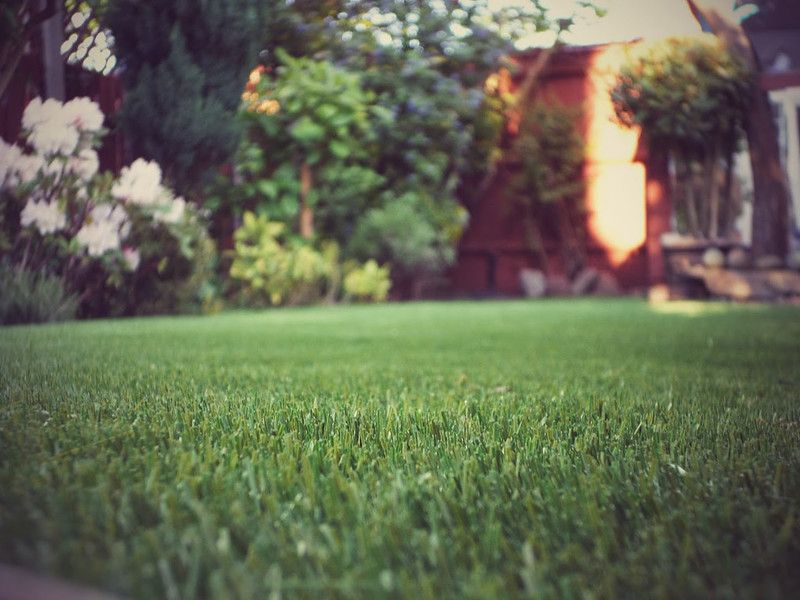
Grass | A feature in the Guardian examines the scourge of plastic grass. The charges against the product are long: it destroys natural habitats and soils, contributes to climate change, causes flooding, pollutes rivers, and ends up as plastic waste. Springwatch’s Iolo Williams said: “I would love to see plastic grass banned once and for all. It makes me very angry. I absolutely detest it.” Lynne Marcus, co-chair of the Society of Garden Designers, points out that these fake green lawns are not maintenance-free, having to be regularly cleaned of urine from wild animals. Instead of aiming for a flawless surface, the article concludes that we should accept a bit of mud and learn to appreciate the life that flows from it.
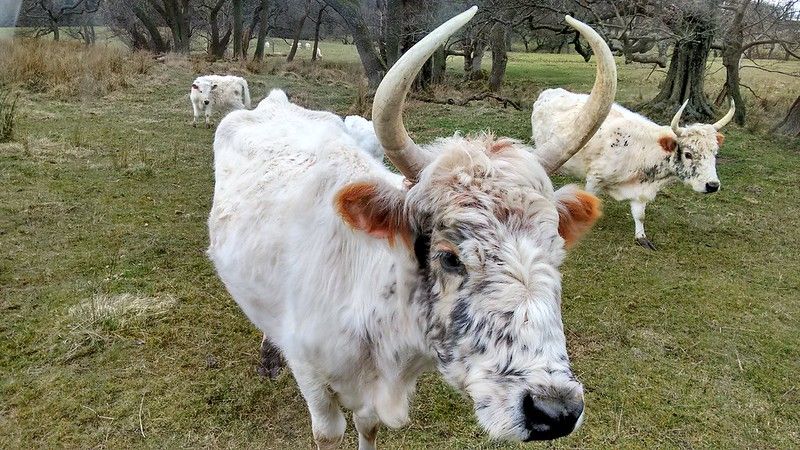
Cattle | Northumberland is home to the Chillingham cattle: a herd of wild white cows that roam the countryside with no interference from humans or vets. The Guardian has a feature on this bovine oddity, noting the mystery behind their presence – were they brought over by the Vikings or Romans, or as part of Celtic folklore? The head warden, Ellie Waddington, has certainly developed an affection for them. “But then I’ve always found cattle quite relaxing,” she says. “I’ve just come back off maternity leave and when I was giving birth I had a playlist of cattle sounds because I find them so relaxing.”
Royalty | In a comment piece for Countryfile, the BBC's head of rural affairs takes a look at the green credentials of the new monarch. Charles used his first public speech to express concerns about pollution, the environment and conservation, writes Dimitri Houtart. "Fast-forward five decades and, when it comes to conservation matters, His Majesty the King now looks like he had been a visionary all along." As head of state, he will not be able to be as outspoken – but he is unlikely to stop caring, the article concludes. In a separate article, Countryfile presenter Adam Henson writes that His Majesty’s enthusiasm for laying hedges is “almost an obsession”.
Further reading:
- Following the latest episode of Wild Isles, there have been numerous blogs on grasslands, including from the RSPB and the Scottish Wildlife Trust, as well as a piece on butterflies on the BBC.
- For what appears to be the first time, an osprey has travelled more than 4,000 miles from the Scottish countryside to Barbados, reports the Times and BirdGuides.
- BBC Future asks whether kelp might power the planes of the future.
Happy days
Rainforest | This BBC article includes striking images from The Ghost Rainforest, a short film featuring a group of Indigenous people from the Amazon who visited Scotland’s rainforest in 2021. Five leaders and activists – who were in Scotland to attend Glasgow’s COP26 conference – carried out a spiritual blessing for the Cormonachan Community Woodlands near Lochgoilhead in Argyll. The filmmakers said the blessing was intended to connect distant communities, and spread a message of resilience and hope.
Subscribe to our newsletter
Members receive our premium weekly digest of nature news from across Britain.
Comments
Sign in or become a Inkcap Journal member to join the conversation.
Just enter your email below to get a log in link.