Grouse Row & Wolf Reintroduction
The latest news on nature and conservation in Britain.
Welcome to Inkcap Journal, a newsletter about nature and conservation in Britain. Not a member? Sign up for a 30-day free trial.
National news
Shooting | On the Glorious 12th – the first official day of the grouse shooting season – a row broke out over the Scottish government’s proposals for a licensing scheme. The new Wildlife Management and Muirburn Bill, which is currently moving through Parliament, would tighten regulations on the management of grouse moors, as well as increasing investigatory powers for wildlife crime. On Saturday, Scottish Land and Estates called for the government to amend the bill, arguing that the measures were “excessively disproportionate”, and that sustainable moor management provides “a huge boost” to the rural economy and “remarkable” conservation benefits. Meanwhile, the Scottish Greens spoke out against the shooting season, calling it a “festival of violence” and a “cruel and outdated hobby”. They added that the Bill was necessary to prevent illegal persecution of Scotland’s iconic birds of prey, such as the golden eagle. The BBC covered the news. Elsewhere, a gamekeeper in the Peak District has warned that the decision by United Utilities not to renew shooting licences is an environmental “disaster”, reports the Telegraph. Also to mark the 12th, the Guardian has released a podcast mini-series called ‘Killing the Skydancer’, investigating the illegal killing of birds of prey on grouse moors.
Countryside | The charity Campaign for the Protection of Rural Wales (CPRW) has spoken out against the growth of wind and solar farms in the Welsh countryside. Although it recognises the need for green energy, the charity said the government’s strategy for 100% renewable energy is outdated, and does not include the potential for offshore wind farms. These, along with rooftop solar panels, should be the preferred method to cut emissions, the charity said, as onshore farms would further industrialise the countryside. CPRW published a map outlining existing projects, as well as the locations of a further 34 wind and 92 solar farms being proposed. “We’re not just talking about common ground or forestry here,” said CPRW’s Ross Evans. “Farmland, nature reserves, SSSIs, curlew breeding areas, peatlands, they’re all being destroyed for onshore wind and solar.” The Welsh government said a range of technologies was required to reach net zero. The BBC reported the news.
Carbon | Thirty-one organisations have joined the John Muir Trust in calling on the Scottish government to introduce a carbon emissions land tax on Scotland’s largest estates. The Trust said that a tax would be world-leading, and would drive urgent changes in land use to support climate targets. According to the proposal, the tax would apply to landholdings over 1000 hectares, with an exemption for community-owned land. Taxation would work on a banding system based on the gap between the land’s potential for storage and the current levels of emissions. Mike Daniels, the Trust's Head of Policy, said the tax is “based on the polluters pay principle”, and added that the slow uptake of incentives for woodland creation and peatland restoration “show that we need sticks as well as carrots”.
In other news:
- A survey of 600 dairy farmers by the NFU found almost a quarter were “unsure” if they would continue farming beyond 2025 due to rising costs, reports Wicked Leeks.
- Researchers have warned that heatwaves in southern Europe could add billions of pounds to the cost of Britain’s food, reports the Times.
- Analysis has revealed that less than 12% of the sewage network in England and Wales was built in the 19th century, undermining claims that sewage overflows are due to Victorian infrastructure, reports the Financial Times.
- The Scottish Environment LINK has written an open letter to all Scottish Party Leaders urging them to support increased ambition on the climate and nature crises.
- A government climate advisor has warned Sunak and Starmer against making climate change into a “wedge issue”, reports the Times.
- The number of salmon returning to protected chalk streams in the UK is below the long-term average, reports ENDS.
- The RSPB has partnered with kids’ food brand Ella’s Kitchen to restore 30 million square feet of wildflower meadows by 2030.
- The Wild Trout Trust has highlighted the launch of the INNS Mapper, an app for tracking and tackling invasive non-native species.
- Campaigner Feargal Sharkey has said that United Utilities’ £800,000 fine for illegally abstracting 22bn litres from an aquifer is laughable, reports the Times.
- Wildlife experts are alarmed by the sharp rise in Asian hornet sightings in the UK, reports the Guardian.
Across the country
Ceredigion | On Saturday, a project by Aberystwyth University saw artist Miranda Whall livestream from a mountain ditch for 24 hours to highlight the role of soil in the climate crisis. Whall lay in a self-dug ditch 600m up in the Cambrian Mountains, and aimed to “give voice to the soil” by vocalising a data stream from sensors in the soil around her. The new sensor technology will allow researchers to more accurately model emissions for the soil, and help them to understand the multiple challenges facing upland landscapes. The University said the performative act presented the technology beyond traditional statistics, and hoped to give the data a wider meaning, “not only of the nuanced and fluctuating soil conditions, but of human and non-human entanglement”. The BBC covered the news.
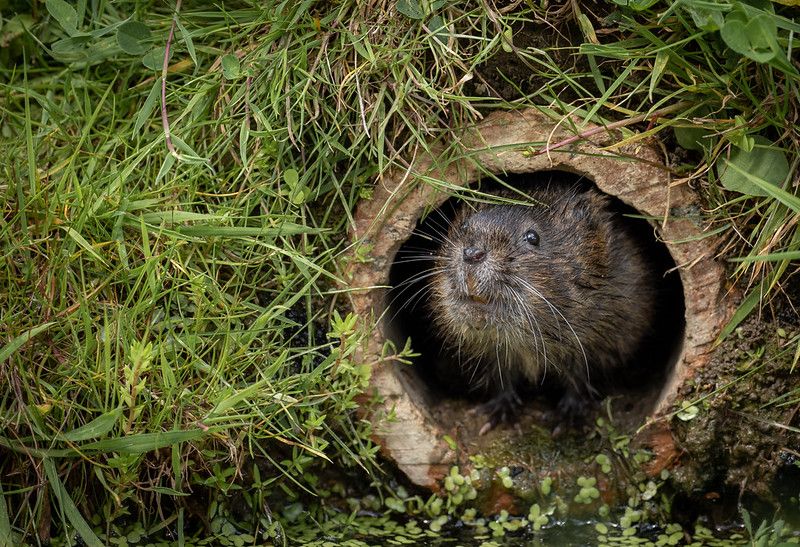
Cumbria | More than 200 water voles have been released near Haweswater in an attempt to create a healthy population of the endangered species. It is the first reintroduction of the small mammals in the Lake District; once widespread across the UK, the species has come close to extinction in recent decades. The RSPB, who manages the site at Haweswater, estimates that the UK population has dropped from eight million to around 132,000, disappearing from 94% of its former sites. A key preparation for the arrivals has been controlling the local population of American mink, an invasive species which has decimated water vole numbers. The voles are being held first in soft-release pens to allow them to acclimatise. Overall, 350 individuals will be released across two sites in the Lakes. The BBC and the Times covered the story.
Wye | An environmental project on a chicken farm in Herefordshire has succeeded in halving the pollution entering local watercourses from field run-off. The Wye and Usk Foundation dug 11 wetland pools at Joe Orgee’s farm in Much Cowarne: loosely resembling a series of canal locks, the ponds are designed to reduce soil loss and soak up excess nutrients before they enter nearby streams. The Foundation recorded a 53% reduction in total phosphorus levels after the work, and hopes it can be a blueprint for wetland projects elsewhere. The BBC covered the story. Meanwhile, the NFU Cymru has said that farmers are being unfairly blamed for river pollution, after the Welsh government put a hold on all new chicken farm developments in mid Wales. Separately, a feature in the Guardian spotlights the work of citizen scientists who proved the Wye was polluted.
Elsewhere:
- Councillors have rejected a plan to build allotments on green belt land near Bristol, reports the Guardian.
- A director of the Loch Lomond park authority said that the future of the area will be about reducing car dependency and improving public transport, reports the Herald.
- A large-scale study of South Yorkshire’s tree population is currently underway, according to the Sheffield Wildlife Trust.
- Four curlews have been released on Dartmoor to boost their dwindling population, reports the BBC. Meanwhile, two Cumbrian farmers have received an award for their efforts to protect the species, reports BirdGuides.
- BirdGuides has published details of a nature recovery project that aims to connect and restore heathland sites in western Surrey.
- Two Exmoor ponies are the first grazers to get to work on the Hampshire Wildlife Trust’s rewilding project on the Isle of Wight.
- A pod of around 30 pilot whales off the coast of Yorkshire are being monitored by marine scientists due to fears of stranding, reports the BBC.
- Herefordshire Wildlife Trust has received funding from the Environment Agency to work on reducing pollution in the River Lugg.
- The Nene Rivers Trust has transformed an “unloved” and inaccessible flood meadow in Kettering, Northamptonshire, into a wetland full of biodiversity, reports the BBC.
- Improvement works by Natural Resources Wales on the River Dee have boosted migration routes for young salmon and sea trout.
- Environment secretary Thérèse Coffey and water minister Rebecca Pow held a roundtable to discuss action to improve the River Deben, while Anglian Water promised to invest in disinfection equipment for its sewage works feeding into the river, reports the BBC.
- Derbyshire Wildlife Trust is celebrating a pair of bitterns breeding in Derbyshire for the first time on record, reports the BBC.
- The largest poultry producer in the River Wye catchment has stopped the sale of chicken manure to nearby farms as part of its efforts to reduce phosphate pollution, reports ENDS.
- Work to transform former playing fields in Mytholmroyd into a wetland nature reserve is now complete, reports the Yorkshire Post.
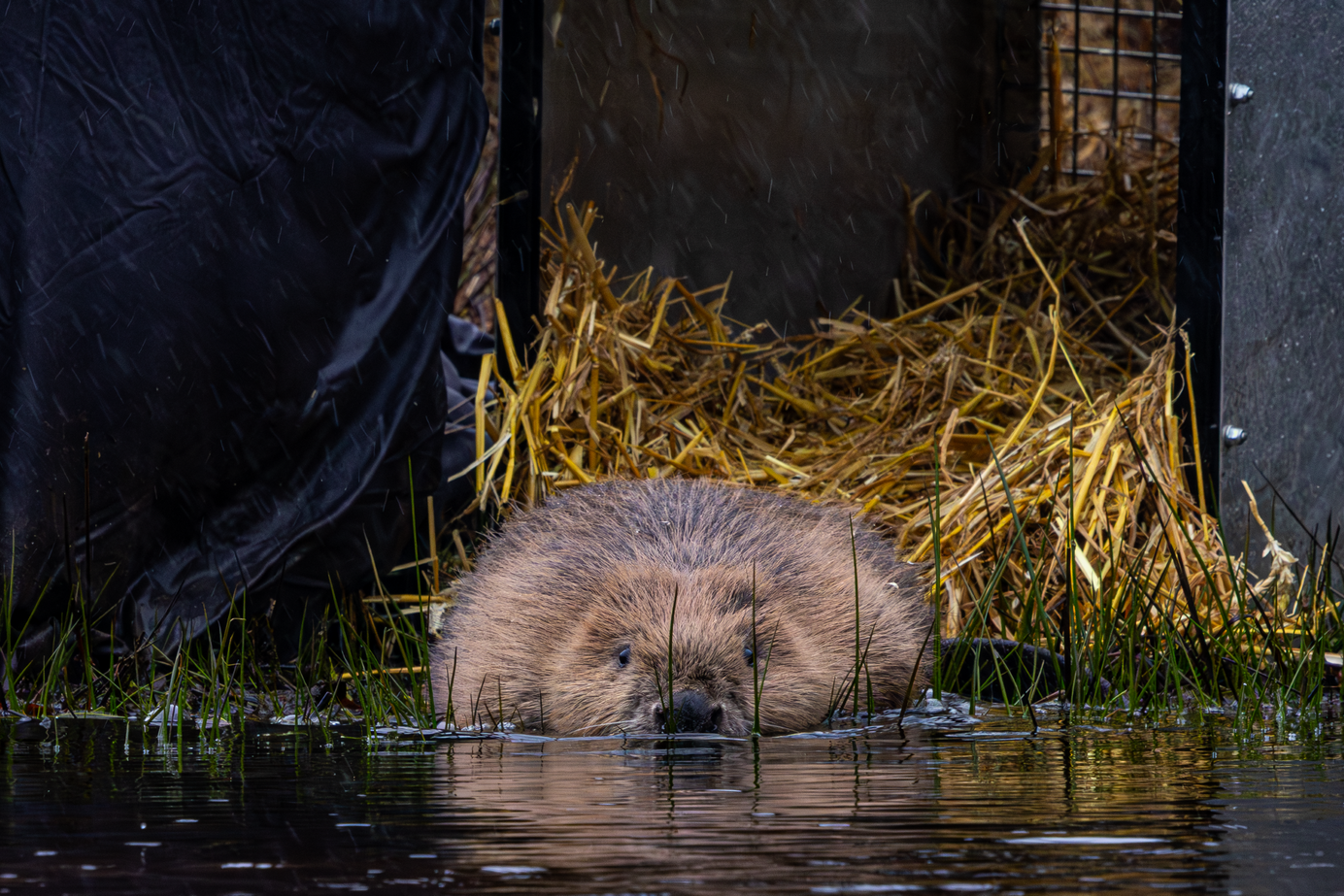
- A beaver kit born on the Holnicote estate near Exmoor has been named after goalkeeper Mary Earps to celebrate England reaching the football World Cup final, reports the BBC.
- Washington Wetland centre is celebrating after the successful fledging of seven red-listed willow tit chicks, reports the Sunderland Echo.
Reports
Clusters | A report from the Highland Good Food Partnership considers the prospect of ‘farmer clusters’ in Scotland, with a focus on the Highlands. The authors define farmer clusters as grassroots entities created when farmers, crofters, and/or land managers work together, often for the benefit of wildlife, biodiversity and the climate. Although a relatively new concept in Scotland, they note that many clusters already exist across Europe and the global south, and have made significant impact in areas including species reintroduction, local food production, local job creation and habitat improvement.
Marine | The United Nations Environment Programme has published a global review of marine restoration projects. Covering data from 2015 to 2022, the researchers found that €3.35bn has been invested in marine restoration since 2015 across 237 projects. The highest number of projects were found in Western Europe, with seagrass meadows, saltmarshes, and coastal sand dunes featuring in the top five habitats chosen. David Thomas, director of the Endangered Landscapes Programme, said the report was the “first step to better intelligence on ocean action”, and it would help inform funders and conservationists, as well as inspire more strategic action.
Bird flu | The Scottish government has launched a new response plan to deal with the spread of avian flu in wild birds. The document sets out the multi-agency approach to mitigation and monitoring, drawing on information from the 2021-22 outbreak, and will remain a “live document” with updates on policy developments and scientific advice. Scotland’s environment minister, Gillian Martin, said that in most cases “there is no alternative but to let the disease run its course”, but the effectiveness of monitoring could help to build understanding of what mitigation measures may be helpful. She added that the last two years of the outbreak had been “difficult for us all to witness”. BirdGuides covered the news.
Science
Rivers | Freshwater ecosystems are responsible for nearly half of all global methane emissions, but it is unclear what role rivers and streams play in these emissions. In a study in Nature, researchers compiled data on riverine methane concentrations and emissions, and used machine-learning to predict emissions globally. They found that rivers and streams account for roughly equal emissions to other freshwater systems, such as lakes and wetlands. Although temperature does not appear to be a major factor, the study highlights that methane concentrations were elevated in rivers directly affected by human modifications such as wastewater treatment plants, agricultural ditches and urban canals.
Shellfish | Bivalve species harvested by humans tend to be resistant to extinction, according to a study in Nature Communications. Scientists from institutions including the Smithsonian and Birmingham University set out to study the shallow-marine bivalves known to be eaten by humans, expanding the list substantially, from 81 listed in the United Nations Production Database to 801 species. They found that some of the traits that make the species appealing for human exploitation also boost their resistance to extinction: specifically, living in a range of climates across the world, with a wide temperature range. Lead author Stewart Edie said that while these traits could help protect the species in the future, “humans can transform the environment in the geologic blink of an eye”, so they must still be sustainably managed. Phys.org covered the research.
AI | A breakthrough in artificial intelligence technology could help tackle Britain’s biodiversity crisis, according to researchers. A project led by the Zoological Society of London (ZSL) has developed a suite of AI-controlled cameras and microphones, designed to identify species in the wild and record their movements without the need for human observers. Working with Network Rail, ZSL conducted tests on land along rail lines at Barnes, Twickenham and Lewisham in London. The devices were able to recognise dozens of bird species from their songs, as well as identifying foxes, deer, hedgehogs, and six species of bats. Anthony Dancer of ZSL said that the crucial point was the “scale of the operation” enabled by AI, which could help to monitor and therefore protect biodiversity in the future. The Guardian covered the news, while a blog by Google Cloud explains the technology in more detail.
Driftwood
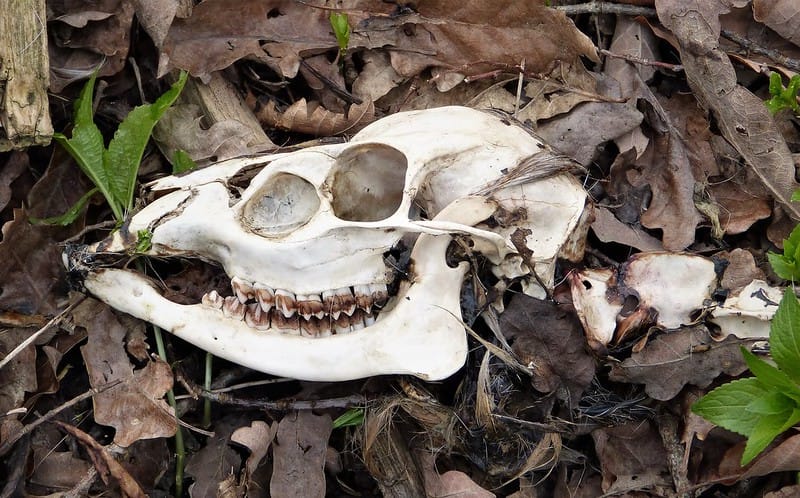
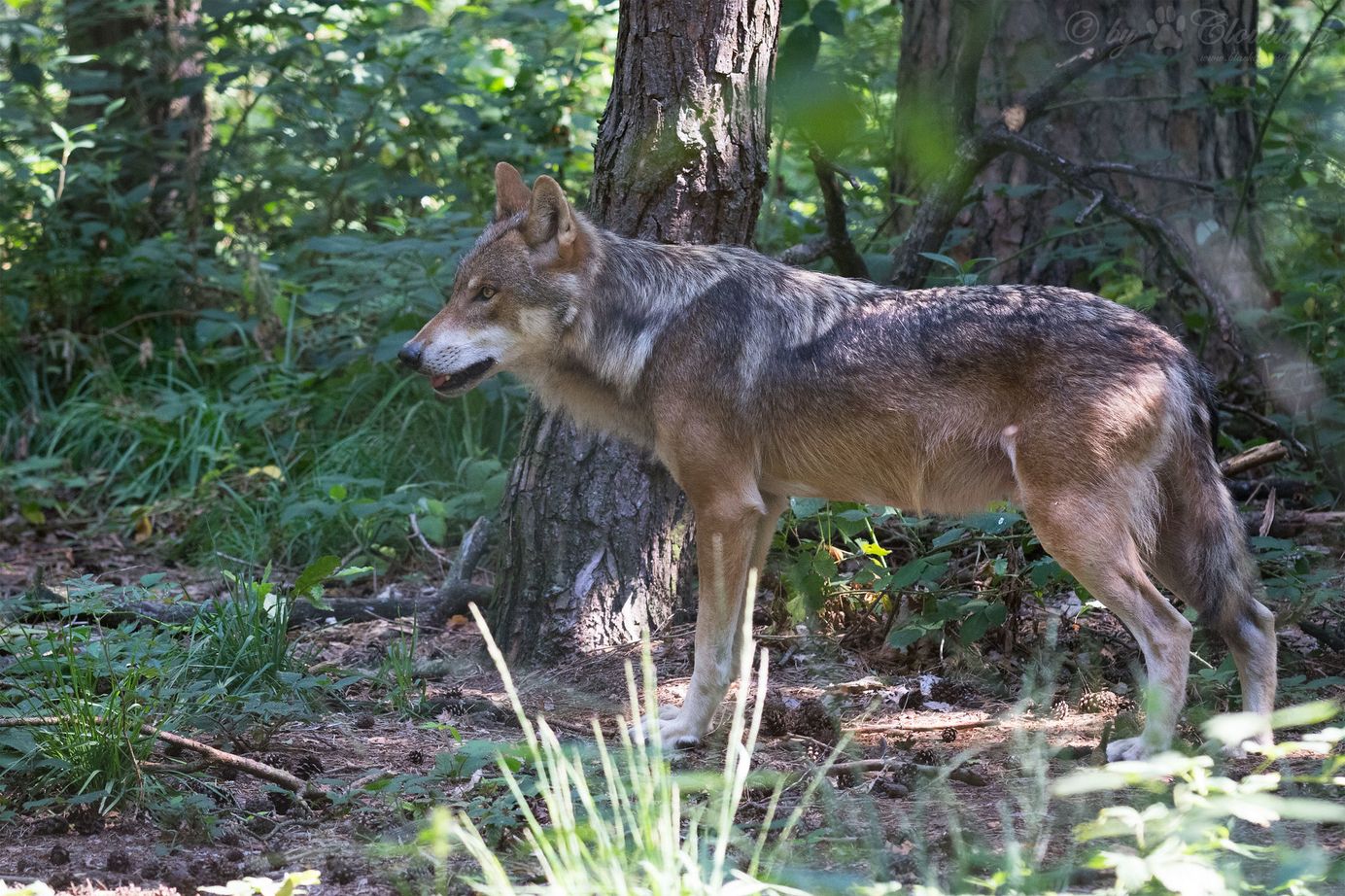
Wolves | While rewilding efforts in Britain are spreading thick and fast, George Monbiot writes in the Guardian that one critical piece of the puzzle is still missing: wolves. Or, more specifically, predators which provide an effective method of controlling Britain’s surging deer population. This is known as ‘trophic rewilding’: the process of bringing back missing species to restore ecological processes and self-regulating systems. Without them, according to Monbiot, our human efforts to control deer populations are failing, with dire consequences for woodland regeneration and the small species reliant on healthy woodlands. However, not everyone agrees: in the Spectator, Christopher Snowdon of the Institute of Economic Affairs writes emphatically about the “insanity” of Monbiot’s argument, and sardonically suggests releasing wolves in central London.
Voices | In Emergence Magazine, a long essay by author and researcher Melanie Challenger considers how humans can and should include animal voices in decision-making efforts. Challenger describes how the experience of living in a forest alongside a community of non-human neighbours heightened her awareness of the myriad forms of communication used by different species – yet in decisions affecting them, they are considered “silent”. Now, Challenger has gathered an international group of scholars engaged in the question of how to represent the voices of non-human animals. She writes: “Anyone who develops deep knowledge of other species by living alongside them for years realises something both obvious and essential: we are not the only lives that matter.”
Rewilding | A feature in Rewilding Magazine describes the opening of the world’s first rewilding centre, at Dundreggan in the Scottish Highlands. Journalist and artist Agatha Scaggiante writes about visiting the 10,000-acre estate, which the charity Trees for Life has been rewilding since 2008. Once the hunting grounds of one landowner, the area was previously overrun with deer; now, it “vibrates with the life of more than 4,000 species, including golden eagles and wild pigs”. The centre welcomes visitors who can attend guided walks, visit the native tree nursery, and learn about Gaelic history and folklore. Laurelin Cummins-Fraser, director of the centre, said it is trying to demonstrate the “socio-economic benefit of rewilding” as well as the ecological merits.
Further reading:
- In the New Yorker, novelist Jonathan Franzen argues that in order for nature writing to “succeed”, it must be about more than just nature.
- This article in the Guardian dives into the world of city-dwelling gulls in the UK – and why society should think twice before demonising them.
- An article and accompanying video by the BBC explain how sign language is expanding to adapt to climate change.
- An article in the Independent recounts how a two-year project is recreating Darwin’s voyage in the hopes of inspiring the next generation of conservationists.
- A feature in BBC Travel, by Daniel Stables, describes how a project by Natural England is mapping England’s ancient holloway network.
- A blog by Marine Scotland takes a look at how numbers of wild Atlantic salmon are faring.
- A blog by Natural England introduces the new England Species Reintroduction Taskforce, and describes its role in conservation translocations.
- This BBC video introduces the work of Winston Plowes, a Yorkshire-based land artist who creates mesmerising artworks from natural materials.
- In the Times, an article describes how scientists are converting insect shells into biodegradable plastics.
- A feature in BBC Future Planet explains how new technology is allowing researchers to understand more about ocean life through listening.
- In the Express & Star, this feature details how Syrian activist Ali Alzein is using therapeutic beekeeping to help refugees and asylum seekers in Kent.
- Innovative farmers are looking for ways to boost productivity through electrical horticulture. Read about it in this BBC Future feature.
Happy days
Trees | The Woodland Trust has published the contestants for its annual Tree of the Year competition. This year’s contest focuses on urban trees: these individuals support urban wildlife, clean city air and boost wellbeing, and each is a “locally-loved ancient or veteran tree with a fascinating story”, according to the press release. The contenders include an oak in Exeter which survived wartime bombing; a sweet chestnut planted in London’s Greenwich Park at the behest of King Charles II; and an elm in Sheffield which narrowly avoided being chopped down by the city council in 2017. The BBC covered the story, while in the Guardian, horticulturist Alys Fowler writes about why we should celebrate and protect urban trees.
Subscribe to our newsletter
Members receive our premium weekly digest of nature news from across Britain.
Comments
Sign in or become a Inkcap Journal member to join the conversation.
Just enter your email below to get a log in link.