HS2 Cancellation & Farm-Free Future
The latest news on nature and conservation in Britain.
Welcome to Inkcap Journal, a newsletter about nature and conservation in Britain. Not a member? Sign up for a 30-day free trial.
National news
HS2 | Prime minister Rishi Sunak has confirmed that the HS2 line from Birmingham to Manchester will be scrapped, with the money invested instead in transport projects across the country. The news was met with mixed reactions from environmentalists. Jo Darlington, acting CEO of Cheshire Wildlife Trust, wrote that the announcement would “save threatened farmland birds, water voles and much-loved wild places” across the county – a sentiment that was echoed by the activist Swampy, who has protested the line since the beginning. The Wildlife Trusts as a whole, however, was more circumspect about the impact that the cancellation would have on new road building. “Assurances are rapidly needed that they won't harm vital nature areas and align with commitments to protect 30% of land for nature by 2030 and reach Net Zero,” said Joan Edwards, the organisations director of policy and public affairs. In the Guardian, Patrick Barkham wrote that damage to biodiversity caused by its construction would continue elsewhere, despite a reprieve for the ponds and hedgerows on the cancelled portion. In another feature, Barkham interviews a farmer whose land was bought, through compulsory purchase, just five days before Sunak’s announcement.
Predators | RSPB Scotland has come under fire for “double standards” in its approach to predator control. Last week the charity featured in the news for its efforts to eradicate stoats from Orkney to protect breeding seabirds. The charity also looks after Abernethy reserve in the Cairngorms, one of the last strongholds of the endangered capercaillie. Pine martens pose a threat to the species by preying on the birds’ eggs and chicks, but the RSPB has no plans for their control. Rory Kennedy, director of the Game & Wildlife Conservation Trust, said the disparity was “puzzling”, adding that the RSPB would not need to eradicate pine martens, but only remove a small number of individuals to safeguard capercaillie. However, a spokesperson for the RSPB said there was “a world of difference” between eradicating an invasive non-native species on Orkney and removing a highly-protected mammal on the mainland. The Times covered the story. Inkcap Journal featured the debate last year.
Pollution | Road pollution is causing a toxic cocktail of chemicals to flow into England’s rivers – and there is no one to regulate it, reports the Guardian. Analysis of hundreds of outfalls and soakaways by the newspaper, alongside Watershed Investigations, found that 70 discharge sites are located in areas that are legally protected for important habitats and wildlife, and another 250 within 1km of a protected site. However, Defra took issue with the Guardian's representation of the problem. While the Environment Agency does not directly regulate highway drainage, it does work with the government and other organisations to reduce pollution from roads, it said in a blog, adding that it would be impractical to permit every single outfall.
In other news:
- Chris Packham has issued a legal challenge to the prime minister over the delay to net-zero policies, reports the Evening Standard.
- CPRE has launched its manifesto for the next UK government, outlining its priorities for the countryside, climate, communities and wildlife.
Across the country
Whitburn | A project has released 10,000 native oysters off the northeast coast, onto a man-made reef constructed from old stones and scallop shells. Conservationists hope the underwater platform will create a new marine ecosystem, with the oysters helping to filter pollutants from the water. Historically, oysters were an important part of northeast culture – there were ‘oyster saloons’ in Tynemouth and specialist markets in South Shields – but national numbers have declined by over 95% since the 1800s. The reintroduced oysters will not be farmed, but instead left to reproduce and spread. The BBC, Sunderland Echo and Chronicle Live covered the story.
Perthshire | In a Perthshire field, the ancient practice of ‘gleaning’ is being repurposed for modern needs. Traditionally, gleaning involved gathering up leftover crops after harvest before they went bad. Now, volunteers are picking blueberries which the farmer has decided are not economically profitable, and donating them to food banks. This harvest is the first ever official ‘gleaning’ project in Scotland, and the fruit will be distributed around Dundee. Alex Daniels, who helps coordinate the project, said it is about saving the food from going to waste, as well as getting more fresh and nutritious food into communities that need it most. The story featured in the BBC.
Cambridge | The National Trust is re-designing a Victorian-style garden at Wimpole Hall in Cambridge to withstand the stress of climate change, reports the BBC. Currently, the garden is planted with annual bedding plants and bulbs – but that needs to change if the site is to be resilient to the extreme weather conditions now facing East Anglia. The new design, which is being planned by a newly appointed landscape architecture team, will also improve the condition of the soil, be less susceptible to pests and disease, and improve biodiversity, according to the head gardener at the Hall.
Elsewhere:
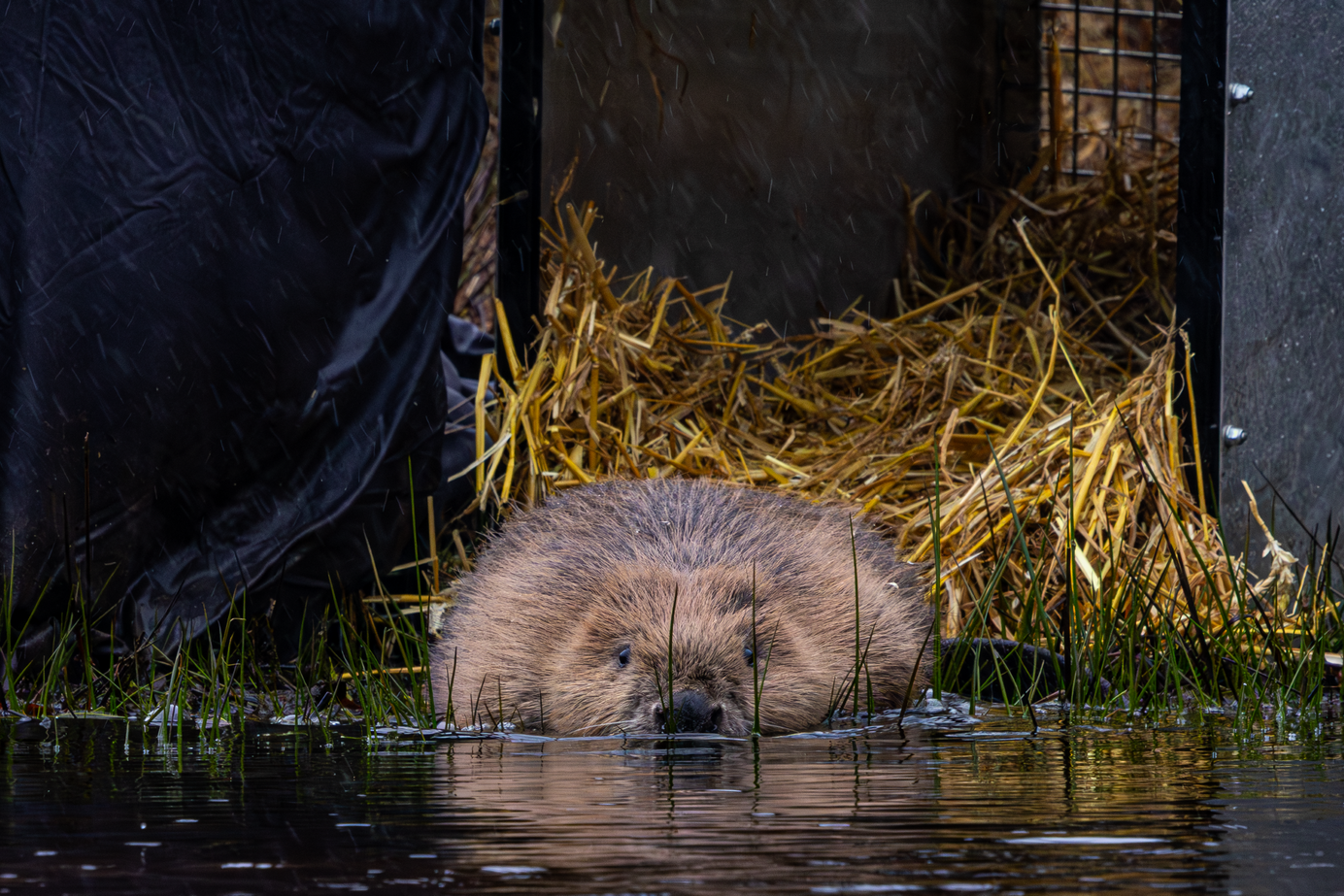
- A baby beaver has been born in London for the first time in four centuries, reports the Guardian. The Beaver Trust summarises the journey to return beavers to Ealing here.
- A survey by the Woodland Trust found that, over the last five years, the Northern Forest project has given 300,000 households access to nature, reports the BBC.
- Conservationists are studying wild salmon in the River Frome, Dorset, to tackle severe declines in the species, reports the BBC.
- Plans to overhaul the derelict Cavers Castle in the Borders have been approved, as long as developers put up a protection barrier for great crested newts, reports the BBC.
- NatureScot has restored 200 hectares of peatland on Ben Wyvis in the northern Highlands as part of a landscape-scale restoration stretching from summit to sea.
- The Wildlife Trust for Cambridgeshire has raised £143,000 to buy part of Fleam Dyke near Cambridge and restore its chalk grassland habitat, reports the BBC.
- The Natural History Society of Northumbria is hosting a wildlife survey centred on Gosforth reserve to celebrate its centenary, reports Chronicle Live.
- A share of Natural England’s £14.5m funding for threatened species will help boost the willow tit population in Cheshire, reports BirdGuides.
- Suffolk Wildlife Trust has raised the £1m needed to transform an arable farm into a rewilded nature reserve, reported BirdGuides.
- The Berkshire, Buckinghamshire and Oxfordshire Wildlife Trust has launched an appeal to raise £3m over the next three years to help bring wildlife back to the counties, reports the BBC.
- A Derby-based developer has been fined more than £14,000 for endangering the welfare of brown long-eared bats and pipistrelle bats, according to the Bat Conservation Trust.
Reports
Fish | Fishermen in Shetland have claimed that the loss of biodiversity in Scottish seas is being greatly exaggerated. In the latest of its ‘Fishy Falsehoods’ papers, the Shetland Fishermen's Association argue that unsubstantiated claims of a marine biodiversity crisis are being used to justify management measures such as bans in MPAs. Instead, they posit that there is a “striking lack of evidence” of biodiversity loss. The report includes a graph showing significant increases in abundance for 147 species of bony fish – alongside increases for sharks and rays, cephalopods, and invertebrates – since 1998. However, not everyone agrees with the association’s analysis. A commentary in the Herald points out that their evidence does not give a longer view of biodiversity loss during and after the industrial era, and only represents around 3.2% of the species found in Scottish waters. Overall, it says the report “smacks of a kind of crisis denial”.
Law | The government promised that the Retained EU Law Bill, introduced with the purpose of removing EU laws following Brexit, would not result in the loss of any laws that were necessary for the UK to achieve its international obligations, including commitments concerning nature. The trouble, however, was that these “international obligations” were never specified. A two-part report from Natural England seeks to fill that gap. The first part provides an overarching analysis of all international nature obligations, while the second looks at how the Conservation of Habitats & Species Regulations have secured win-win solutions for nature, society and the economy. There is also an annex setting out, in detail, all the elements of each of the obligations. Definitely one for the policy nerds out there.
Wildfire | The Fire Brigade Union has warned that the UK is “woefully underprepared” to deal with increasingly frequent wildfires. The report reveals a lack of UK-wide planning and strategy, alongside under-resourcing of fire and rescue services. In the last decade, almost 12,000 firefighter jobs have been cut, according to the report, while wildfire risk has increased significantly due to climate change: last year saw wildfire incidents increase by 72% from the previous year. The union argues that this summer’s devastating fires across Europe must be taken as a warning, and calls for a statutory duty on authorities to prepare, as well as more investment and funding for necessary training. The BBC and ENDS covered the report.
Science
Pollinators | Bees struggle to find flowers amid high levels of car pollution, according to a study in Environmental Pollution. A UK-based research team conducted a series of controlled experiments using a giant wind tunnel and simulated flower scent. They found that, as ozone levels increased, the spread of the flower scent collapsed as the pollution broke down its chemical compounds, with only half of bees able to recognise the odour from six metres away. Co-author of the study, Professor Christian Pfrang, said the study provided “robust evidence” that pollution causes pollinators to “struggle to carry out their crucial role in the natural environment”, with further implications for food security. The BBC covered the research.
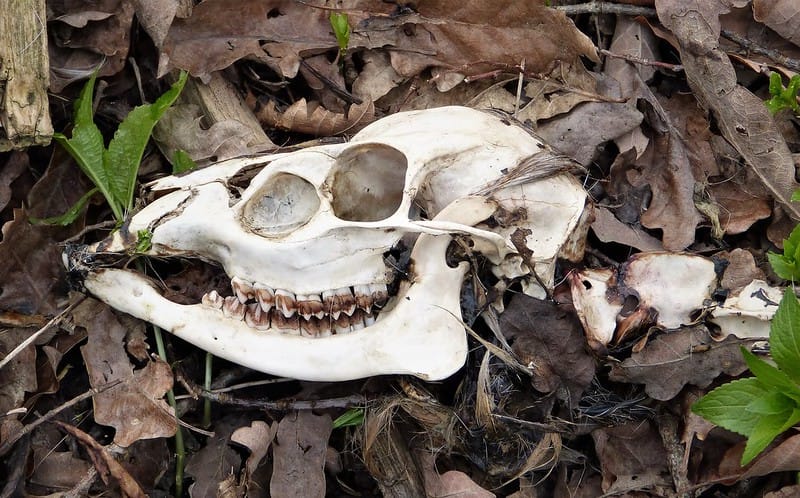
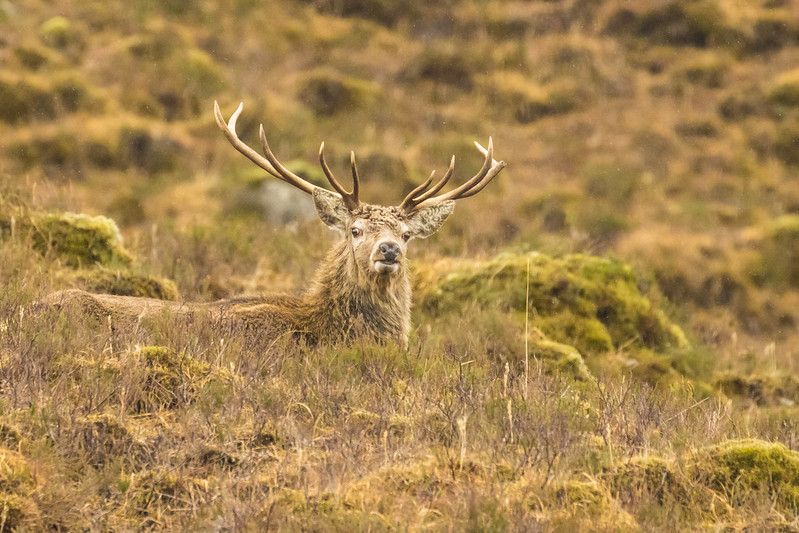
Deer | In the Cairngorms, culling 1,000 deer per year has allowed for the natural regeneration of 164 hectares of native woodland annually. The data – published in the Journal of Applied Ecology – covers 30 years of monitoring by Cairngorms Connect, a restoration partnership of four landowners covering 60,000 hectares. The paper also reveals that sustainable culling removed the need for most deer fences. Dr. Pip Gullett, project scientist, said that importantly, the research showed that woodlands were “expanding successfully in the presence of deer, as long as deer numbers were kept relatively low for long periods.” Deer are an important component of Scotland’s ecosystem, but the lack of natural predators has led to an unchecked rise in numbers, causing knock-on damage to habitats. The Times covered the research, with further commentary from the British Ecological Society.
Birds | The UK’s protected areas provide little to no additional benefit to birds compared to the wider landscape, according to a study in Conservation Letters. The authors used data from the breeding bird atlas to calculate how the proportion of birds breeding in those areas had changed over time. Sites of special scientific interest, although managed for biodiversity, were generally too small to have much positive impact. National parks and areas of outstanding national beauty, meanwhile, lacked sufficient large areas of high-quality habitat to support the species. The authors concluded that “stabilizing long-term rates of biodiversity loss in PAs requires substantial increases in the size of individual sites.”
Driftwood
Food | On his own website, George Monbiot has published an eloquent and in-depth essay about the romantic fantasies that plague the debate around food production. In particular, he takes aim at the writer Chris Smaje, whose recently published pamphlet, Saying No to a Farm-Free Future, is a direct attack on the ideas that Monbiot put forward in his own book, Regenesis. Smaje advocates for a return to rural living and self-provisioning – an idea that has resonated with many. But Monbiot attacks his failure to quantify this plan, and suggests that it would ultimately lead to mass starvation. Smaje, and others pushing this vision, “privilege their aesthetics – their arcadian fantasies – above the wellbeing of 8 billion people,” Monbiot writes. In the Guardian, meanwhile, Monbiot turns his pen to the ecological damage caused by pheasant shooting – “one of the bluntest expressions of class power in the United Kingdom”.
Acorns | Researchers at Kew Gardens have recently returned from an unusual overseas trip: a search to identify future-proof trees. As the climate of southern England heats up, many of the nation’s iconic trees – including the English oak and the capital’s ubiquitous London plane – could struggle. In the first field trip of its kind, experts travelled to Romania to collect seeds from trees that are thriving in the type of climate that could be expected in England by the end of the century. These included acorns from downy and Hungarian oaks, which will be tested as saplings for drought resistant qualities. The Times covered the story, while a column in the Scotsman asks whether oaks will follow in the fatal footsteps of elm and ash.
Northumberland | The felling of the tree at the Sycamore Gap has prompted some soul-searching about why that particular tree was valued so highly in the first place, and what that says about the landscape that surrounded it. The tree, writes Helen Rumbelow in the Times, stood “romantically alone” because those around it had been “deliberately hacked down by humans” – probably to make game hunting easier or to improve the view. “No one made a fuss about those other trees, of course not,” she writes. In the Guardian, meanwhile, Ben Martynoga discusses the efforts that are afoot to restore the landscape of Northumberland National Park – although these doesn’t mean re-establishing uniform tree cover. He quotes David Morris of the RSPB, who points out that the park includes large areas of peat bog, where reforestation would be counterproductive, as well as habitats for threatened birds that require a more open landscape.
Further reading:
- In Prospect, journalist Nicola Cutcher writes about how the UK’s National Parks are failing nature – and the efforts underway at Bannau Brycheiniog to turn that around.
- In the Guardian, Haroon Mota, a mountaineer and founder of Muslim Hikers, writes about his efforts to make the UK’s green spaces more accessible to minority communities.
- The BBC looks into whether it is possible to raise a low-carbon cow during a visit to the Somerset Dairy Show.
Happy days
Libraries | Natural England has joined forces with Libraries Connected to launch Nature Culture – a project that aims to transform local libraries into dynamic nature hubs – “for nature enthusiasts, beginners, and everyone in between” – tailored to meet the unique needs of their communities. This includes offering books and other resources related to nature, as well as hosting workshops and events, and incorporating community gardens into their spaces. The initiative is being launched in Bradford, Bristol, Doncaster, Leicestershire, Staffordshire and Sutton.
Subscribe to our newsletter
Members receive our premium weekly digest of nature news from across Britain.
Comments
Sign in or become a Inkcap Journal member to join the conversation.
Just enter your email below to get a log in link.