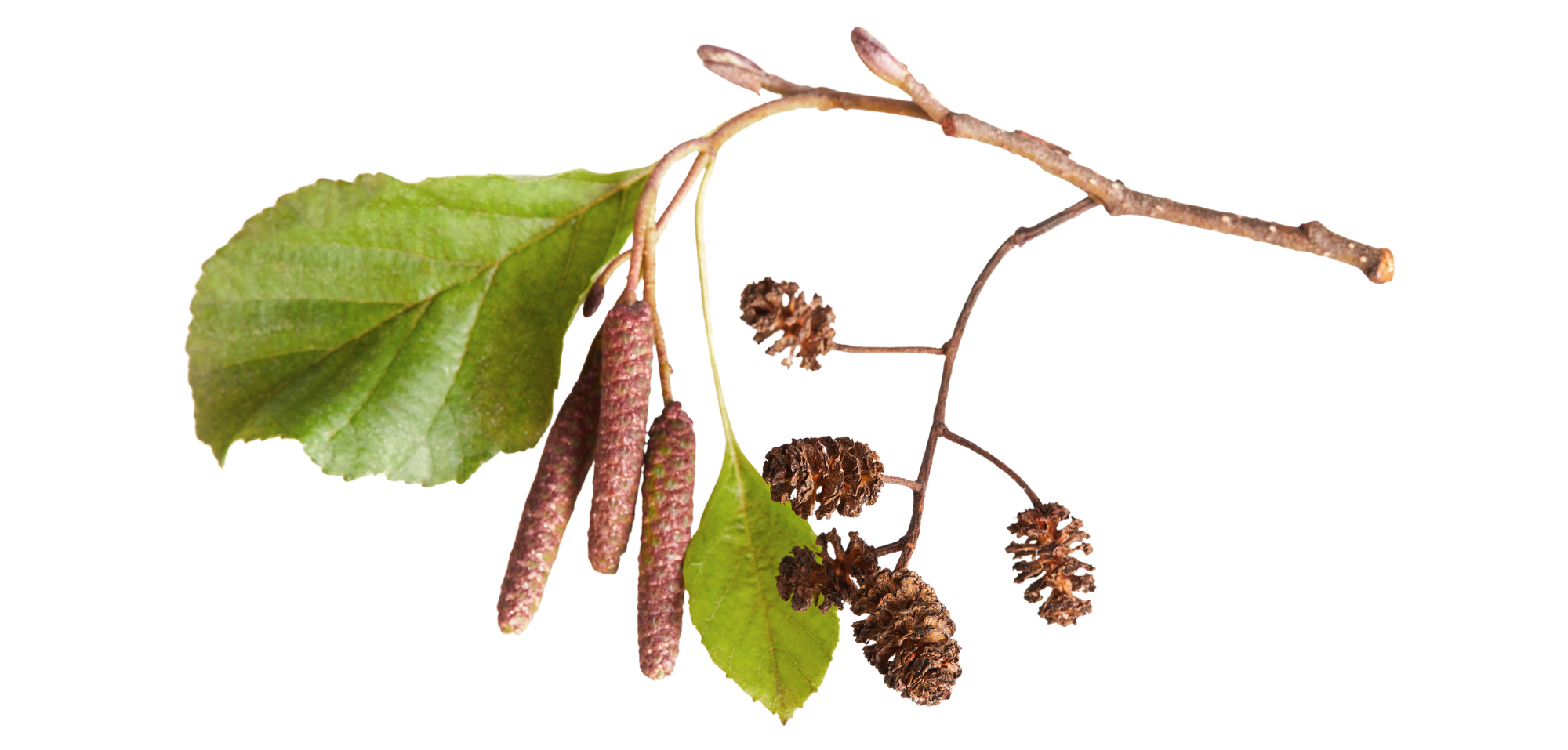
I know of a single alder on my regular walking route.
Trees are an irregular sight for the high moor of Dartmoor where I live. This one is tucked down a private lane, beyond my letterpress workshop in Princetown, a village some 400 metres above sea level that is perhaps best known for its prison.
Most other trees here are confined to a few plantations of Sitka spruce and beech. Beyond that are the grassy hills that stretch for miles, dotted with cows, sheep and ponies.
My hope is to one day make ink from this alder: a bottle of colour that will capture this stretch of the moor. I store the dried fruit, which look like little pine cones, in a jam jar. Once it is full, I should be able to make a small vial of caramel liquid that can be shifted to black and grey by the addition of iron.
I anticipate it will take several years to collect enough. The tree is regularly trimmed, perhaps by human hands or grazing cows, and the flowers that remain are often out of reach. So far, I’ve collected about a dozen. Not enough to make ink, yet.
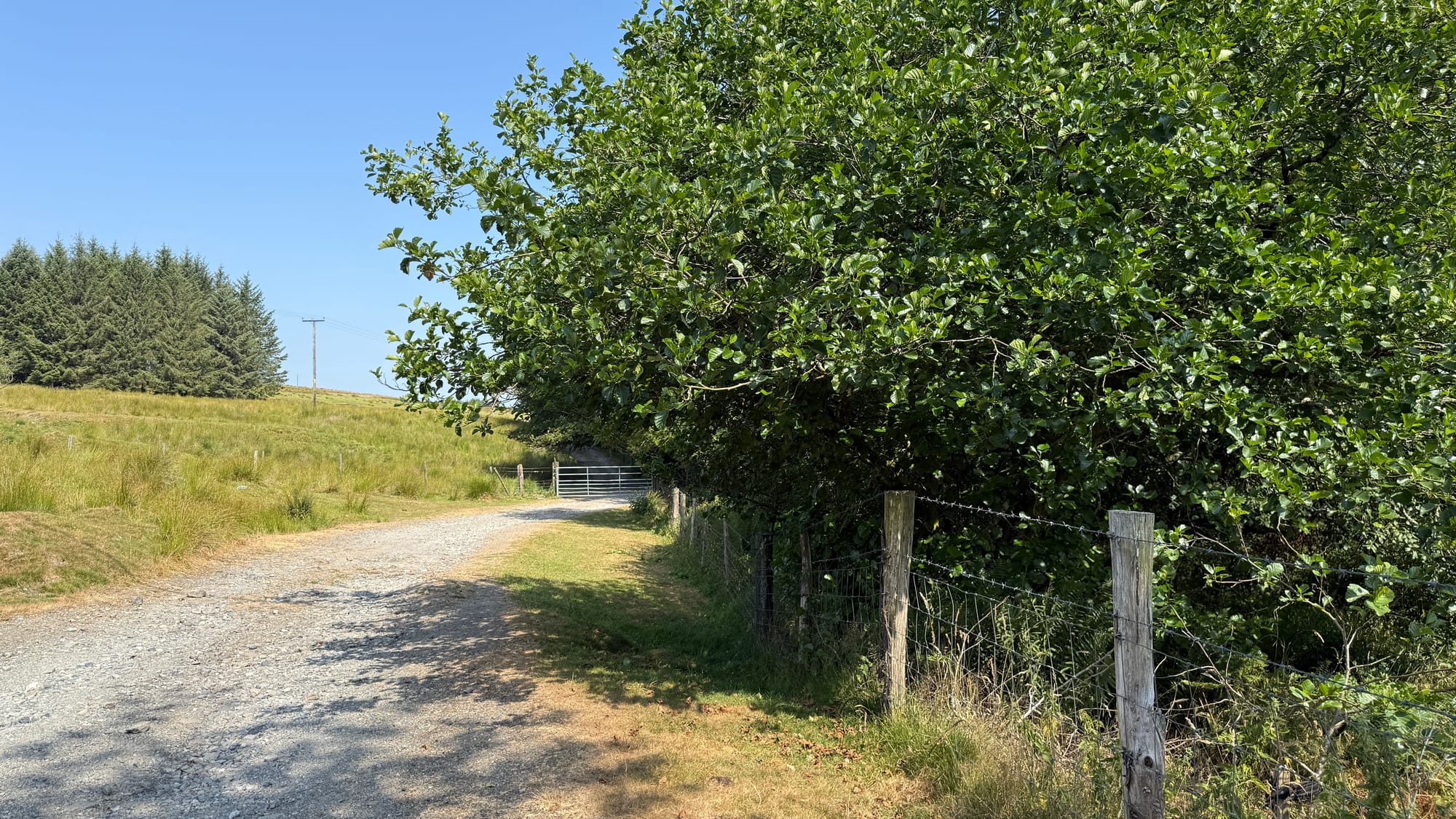
There is always the chance of finding more alder, and the more I explore my home, the more likely this is. I could always seek it out from the river valleys that lead away from the high moor. But that is not the point. The resulting colour would not represent the landscape where I live, but another kind of ecosystem entirely.
Just as foodies might chase the distinction of a single-origin coffee, chocolate or wine, I am a craftsperson in pursuit of a single-origin ink.
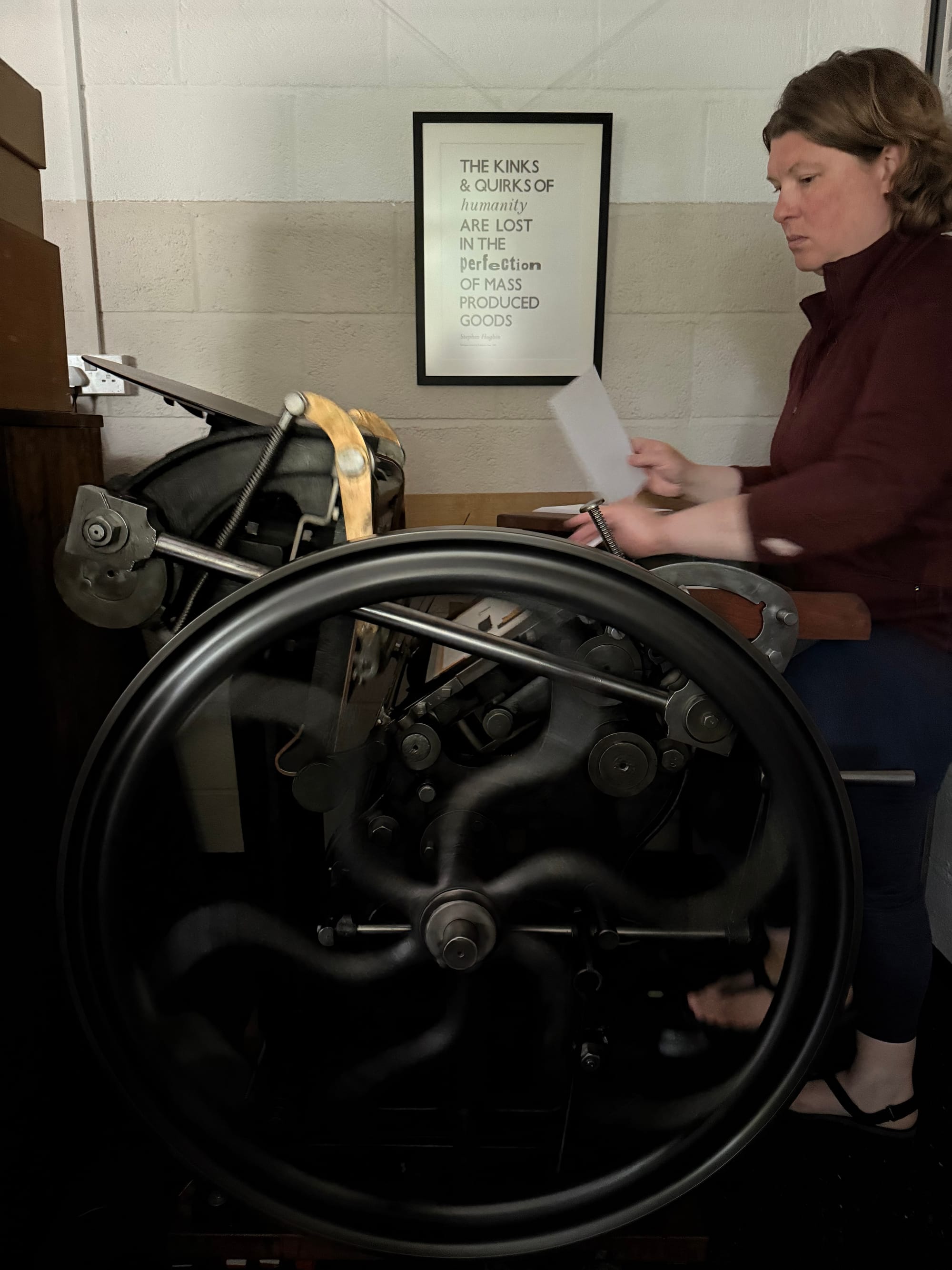
I am, primarily, a letterpress printer. My partner, Jon Palmer, and I run Princetown Press. We work with individual letters made from wood and metal type to compose words, which are then laid out and printed onto the page.
The workshop looks like something from a steampunk revival, although the machines are all powered by hand. The oldest, a cast iron press with a giant flywheel, was made in Halifax in 1910.

People have been creating and using colour for longer than we’ve been Homo sapiens. At first, they ground rocks into ochre. The archaeological record for this practice dates back at least 300,000 years. Later came colourants created by crushing insects, sea snails, eggshells, and even mummified humans. The earliest known record of a botanical pigment is 34,000 years old, when humans in the Caucasus Mountains of Georgia began grinding and pounding the leaves of woad, a native plant, to create indigo.
The oldest known synthetic pigment, Egyptian blue, is about 5,000 years old. A few others, such as lead white, Prussian blue and Scheele’s green, eventually followed.
But the use of synthetic colourants did not become commonplace until the accidental discovery of mauve in 1856. Derived from coal tar, it was used to dye textiles and, by the turn of the century, the mass-production of goods had become synonymous with bright, chemically-produced hues.
Synthetic dyes are convenient. They come in a wider range of colours than natural dyes, stick fast to fabrics, and do not fade as quickly as their natural equivalents. I use synthetic inks in my letterpress workshop: I’ve not yet been able to make usable quantities of a botanical ink that sticks to the intricate face of metal type.
But, as a whole, synthetic inks have been responsible for devastating environmental damage. Some individual synthetic colourants in food have been linked to behavioural issues in children, allergic reactions and increased cancer risk. Scientists believe that Napoleon Bonaparte's arsenic-green wallpaper may have contributed to his early death. Our desire for cheap, fast colour has outweighed concern for its consequences.
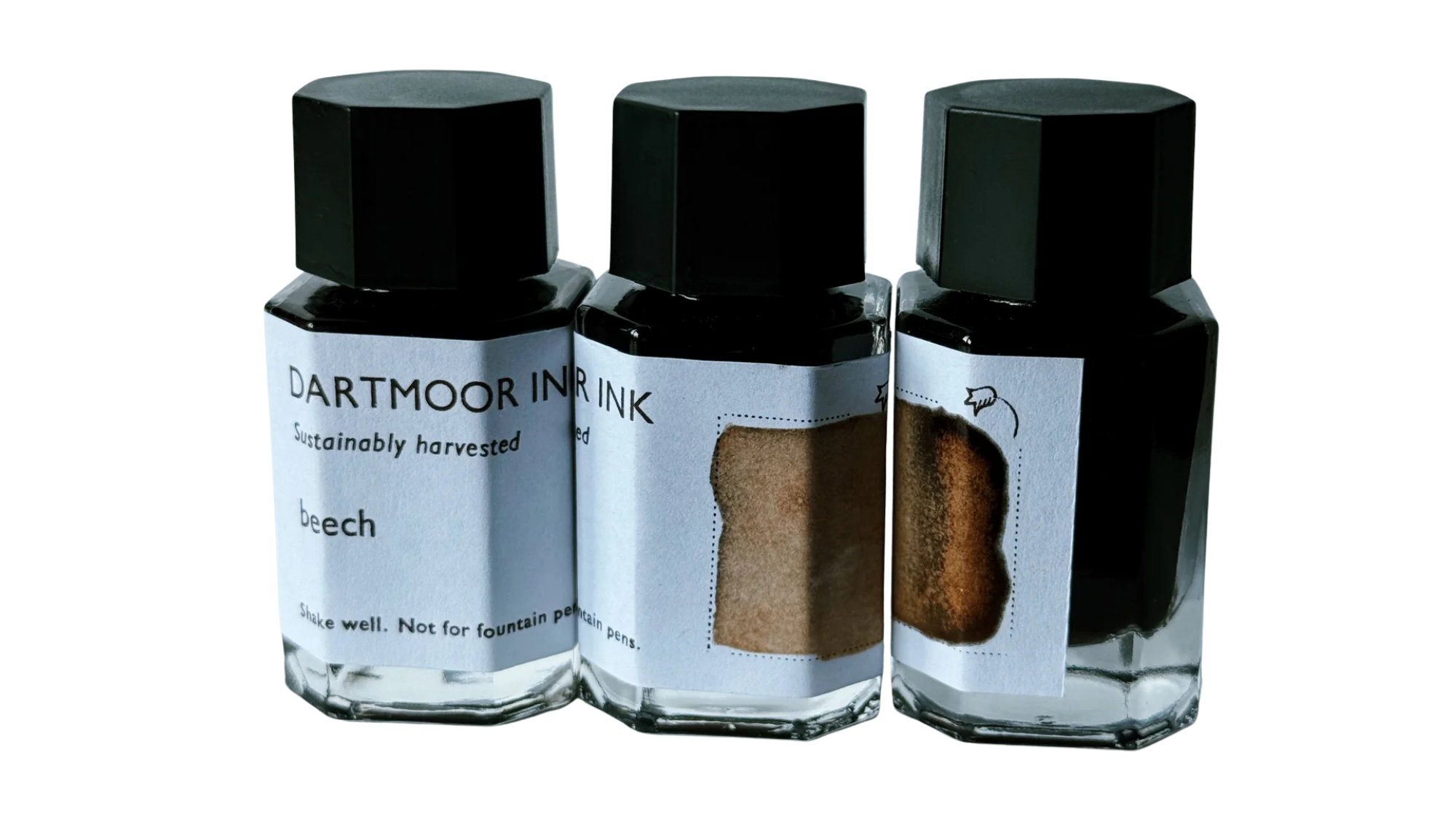
I began making ink from plants in 2022. A few books, a few courses and, most importantly, a few failures got me absolutely hooked.
The first time I made ink, I used a variant of a medieval recipe containing four ingredients: oak galls, iron II sulphate, water and gum Arabic. Iron gall ink is best known as the ink used to write the Magna Carta. It is black and considered permanent, meaning it will remain unchanged for more than 100 years when displayed in gallery conditions.
My first attempts were curiously disappointing. The black ink dried to a bronze brown a few days after I brushed it onto paper. Beautiful, but not permanently black. I assumed the galls I was finding on Dartmoor were sub-par (they are not; my technique was at fault) and I began looking for other plants that might be more suitable for my practice.
I now work regularly with more than a dozen plants all foraged from within a three mile radius of my home and have achieved nearly a full spectrum of colours.
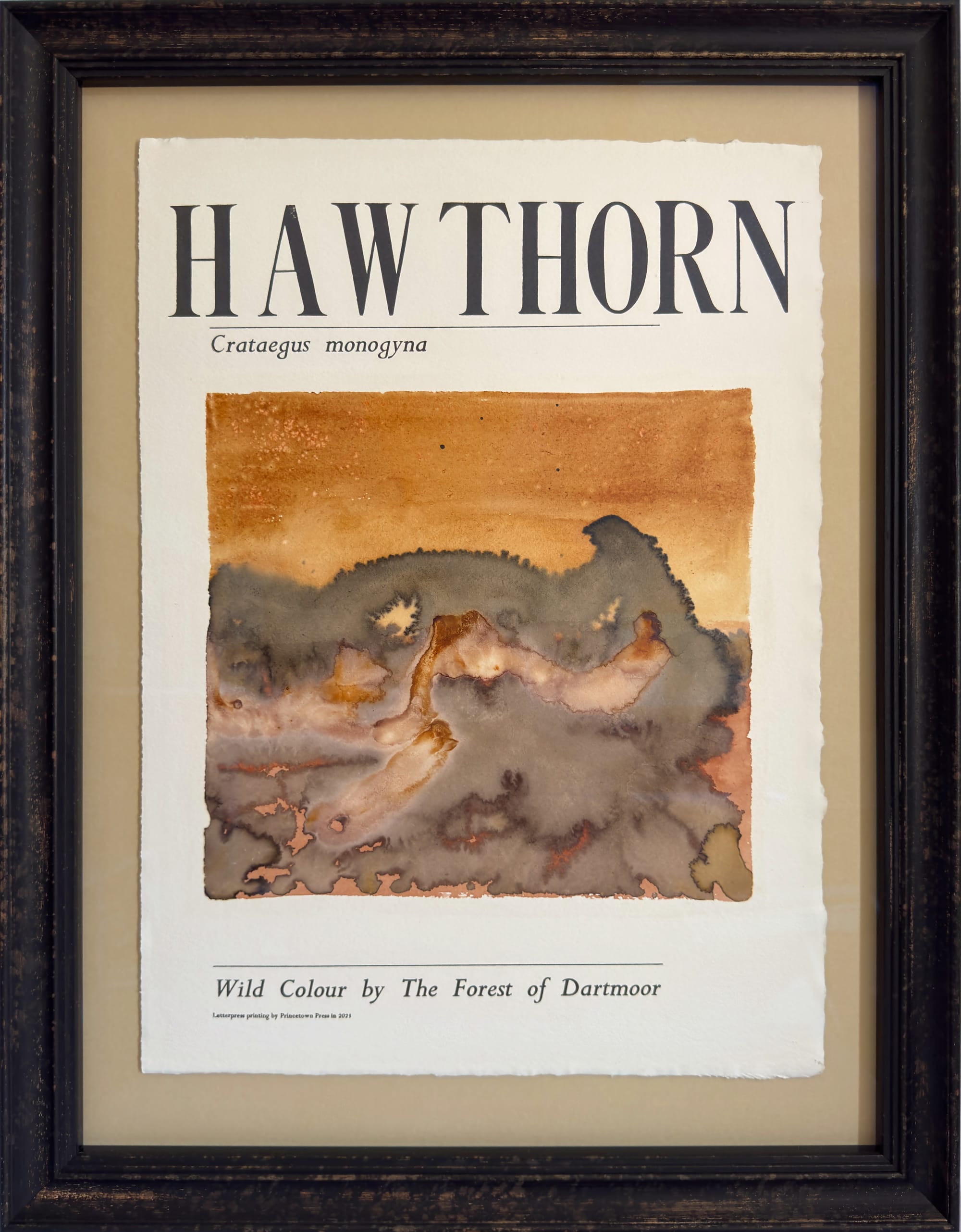
With these inks, I make wild colour specimens: swirling artworks drawn both physically and imaginatively from the landscape, stylised as Victorian herbariums. The plant’s name is letterpress printed with synthetic ink onto the page. Below the text, and in contrast to the precision of the letterpress text, a biochrome wash of ink made from the plant is brushed onto the page. It is literally working with the chemistry of Dartmoor – its plants, and our seasons.
The basic process of making colour from plants is relatively straightforward: cook a plant in water and then use the colourful liquid. (Think of what happens when you cook beets: the released colour stains anything it comes in contact with, including your fingers.)
Not every colour is available in every season, but across the year most are possible. In spring, nettles, docks and gorse petals yield green and yellow inks. In summer, Molinia grass produces a shocking green. In autumn, the berries of rowan, holly and hawthorn create reds, browns and oranges. Ivy berries, elderberries, blackcurrants and blackberries produce short-lived pinks, blues, purples and greens. Woody material, including windfallen willow and Sitka spruce bark, produces varying shades of warm brown.
Other plants have produced disappointing results. The keys from an ash tree produced a light, sticky ink that never quite dried properly. The smell from cooking poisonous laurel leaves wasn’t worth the reddish brown that it produced.
There are also plants that I don’t use simply because they don’t grow within my foraging patch. These include some of the best-known plants for natural dyes, like walnut, indigo and woad.
Initially, I had assumed each plant would yield the same colours each year. But plants respond to their environmental conditions. For example, plants harvested during drought years have more anthocyanins, which appear red. The berries from the hawthorn tree in 2023 produced orange ink – a colour I wasn’t able to replicate in 2024 or 2025 while using the same recipe. The conditions were harsher and the plant chemistry differed.
The specimens I create record this information.
Playing with the chemistry of plants lacks the predictability of my letterpress practice and I love the contrast. To pluck and process a plant from nature, instead of tossing a specific colour into a digital shopping cart for delivery the next day, requires a different kind of thinking.
As I began to develop my own archive of the wild colours of Dartmoor, I became curious about their history. I am Canadian – perhaps my own immigrant status made me curious to know who had been here the longest. I knew the Sitka spruce had been imported and planted en masse. But what about the others?
I began reading published reports on Dartmoor’s environmental history. They are interesting for their differences. The landscape is varied both historically and geographically. Swathes of moorland are punctuated by rocky outcrops and bordered by wooded river valleys. Hunter-gatherers, pastoralists, tin miners, medieval villagers, hill farmers and commercial foresters have all had a hand in shaping the vegetation we see today.
While it is impossible to generalise about the history of Dartmoor, archaeologists have peeled back the layers of individual sites through analysis of the pollen and other fragments preserved within the peat.
One such place is Tor Royal, which is home to a raised bog around half a mile from the farm where I rent my workshop, and the site of my solitary alder. Analysis of a peat core, taken from the deepest part of the bog and examined in a laboratory during the ’90s, shows how the flora here has changed across the millennia.
Alder trees, it seems, were not always so sparse. The species arrived at Tor Royal somewhere between 6,880 and 6,530 years ago and established itself around the edges of the developing mire: it is a tree that likes wet feet. Its absence on the high moor is a (relatively) modern phenomenon, its decline tightly coupled with a growing human presence during the Medieval period.
If I could have access to Dartmoor's prehistoric flora today, I would have a much easier time making single-origin ink.
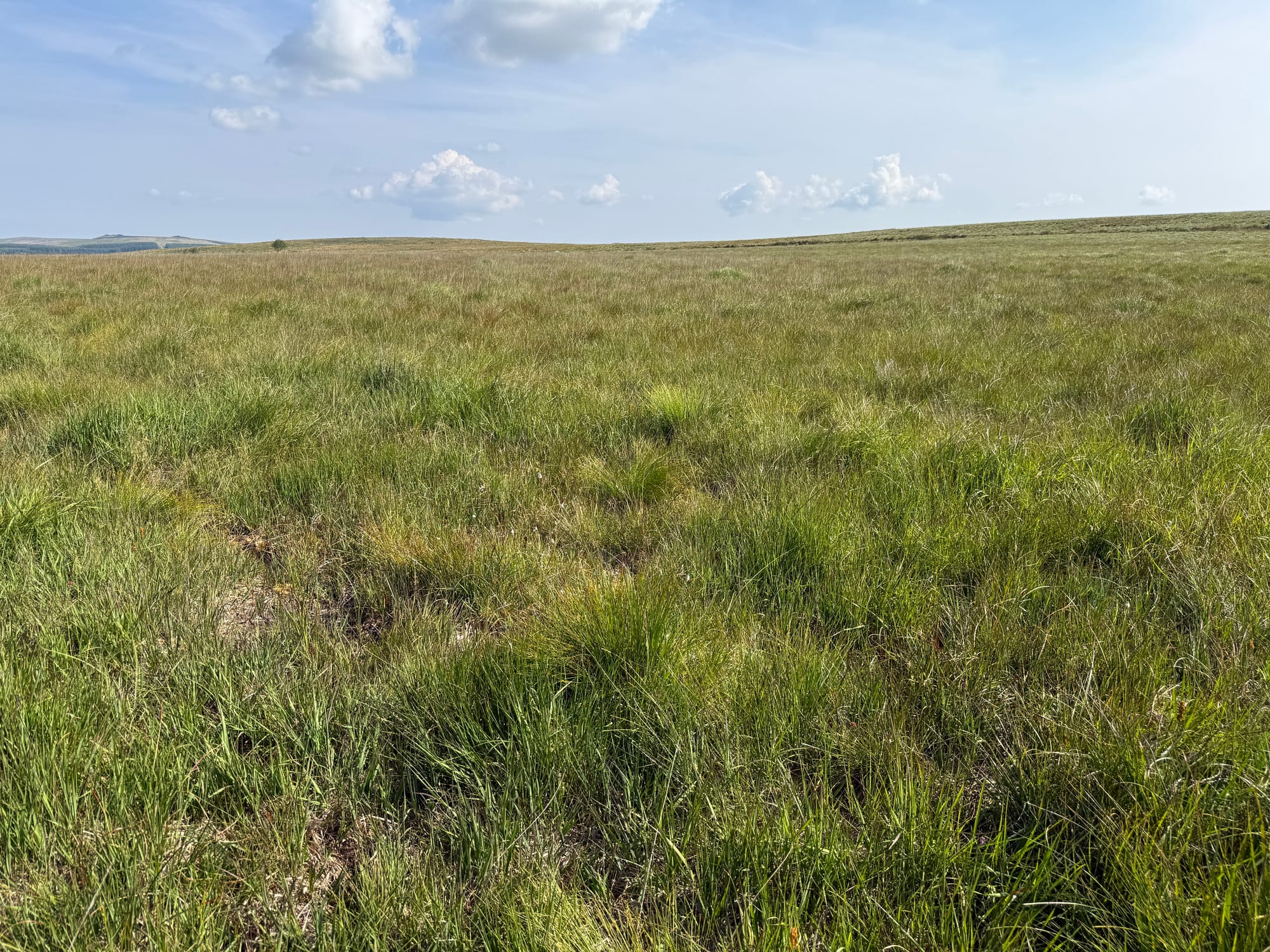
We conceive of ecological change in myriad ways: the extent of the forest, the abundance of species, the level of pollution. Rarely do we think of it in terms of colour.
Of all the trees presented in the pollen record of Tor Royal Bog, most are present today in enough quantity to create ink. The exceptions are birch and alder. The absence of these pigments is at least partly down to humans.
There are now initiatives to bring them back.
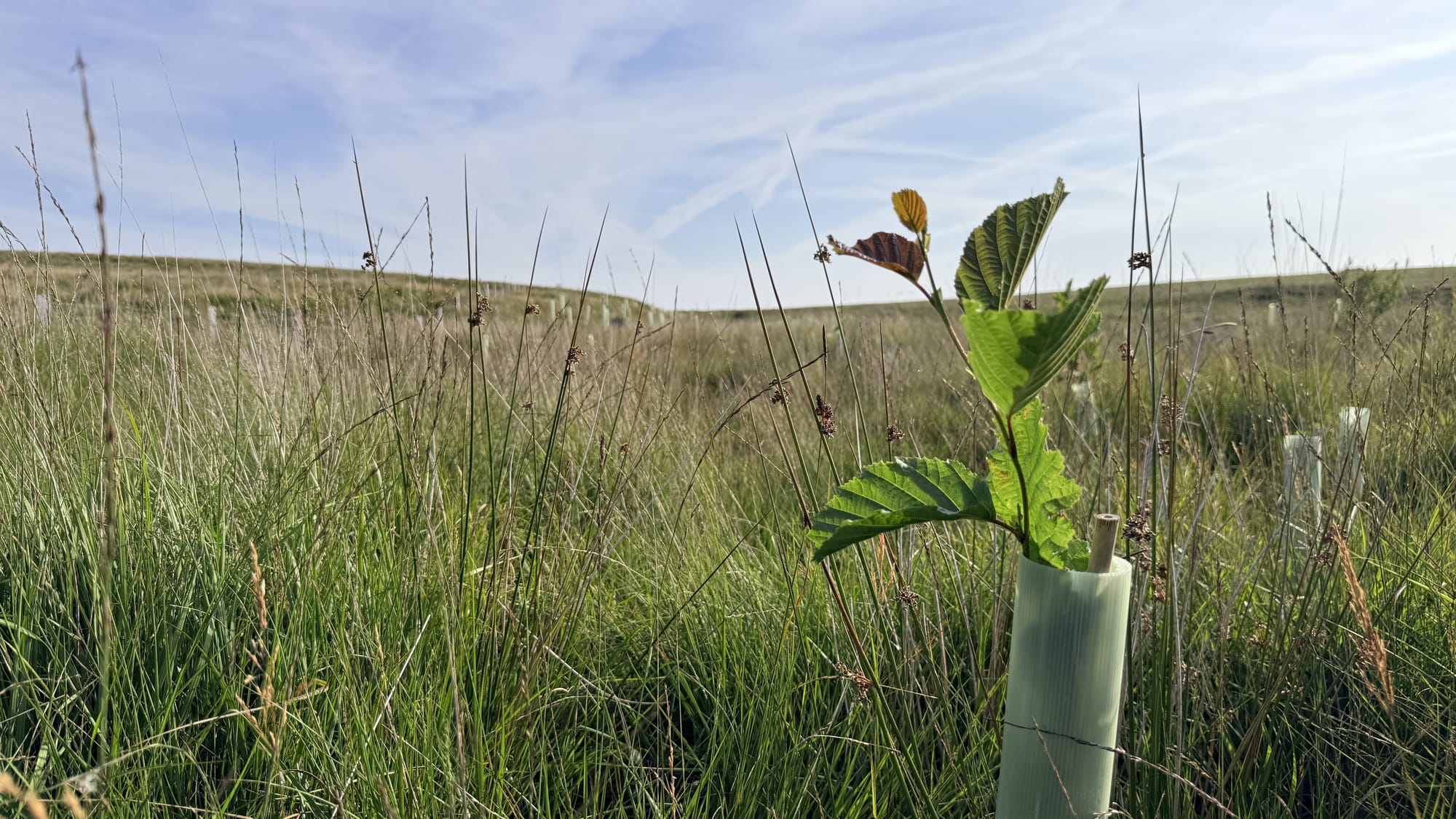
In the past year, the Southwest Peat Partnership has planted 850 trees just south of Princetown: a mix of downy birch, alder, grey willow, sessile oak, hazel, and rowan. They will help to stabilise the degraded peat and slow the rush of water during high rainfall events from their new home on the northern side of the valley.
This spring, I helped to check for signs of life. Some of the alders had survived the first few months of their life on Dartmoor.
They are still years away from producing their distinctive flower and catkin. But the alder is a fast-growing tree. Perhaps within my lifetime, if the planting is successful and the livestock and deer don’t find a way over the fence, I will be able to collect the cone-like fruit and finally make caramel-coloured ink from the moor.
The Dartmoor landscape will continue to evolve. In time, the unrecorded history will be forgotten. Hopefully, the only evidence of my practice will be tucked into a bookshelf: printed words I created and the aged botanical colours as a record of the plants that once lived here.