Labour Promises & Fossil Blossom
The latest news on nature and conservation in Britain.
National news
Labour | The Labour Party has set out its stall for the next election, at least so far as nature is concerned. Writing in the Guardian, shadow environment secretary Steve Reed claims that a Starmer-led government will ‘fully commit to restoring and protecting nature’, including cleaning up rivers, planting more trees, nurturing habitats and halting the decline of British species by 2030. The Guardian has produced some separate analysis of the announcement, pointing out that Labour will have an uphill climb to meet these commitments, given the tight deadline and the reluctance of the shadow chancellor to commit any new money to the cause. The article also includes comment from NGOs, which are pleased by the statement of intent, but want details on how Labour will deliver on their promises. Separately, Labour has published five ‘golden rules’ for house-building to ensure new homes are built in a way that protects natural green spaces.
Solar | England’s rural countryside is experiencing a ‘sunrush’, according to the Times, with landowners opting to cover acres of land in solar panels. The sudden spread is a result of government subsidies to encourage cheaper, cleaner technology and progress toward carbon targets: authorised plans will see millions of solar panels erected across the country, from farmland in Essex and Wiltshire to marshes in Kent. Even his Majesty, King Charles, has announced plans for a significant solar farm at Sandringham Estate – a move which energy industry figures said represents an endorsement of solar power potential in the UK. Not everyone is on board with the change, however. Last week, protesters appeared outside a Westminster debate on the subject, criticising the loss of productive farming land and its rural aesthetic. Andrew Bowie, the renewable energy minister, told them that the government was actively looking into what it could do to protect valuable farmland from being used for solar.
Finance | Destruction of nature could cause a larger economic slump in the UK than the 2008 financial crisis or Covid-19, according to a report by the Green Finance Institute. It is the first analysis of its kind to quantify the impact of nature degradation – both domestically and internationally – on the UK’s economy and financial sector. The report finds that nature-related risks are as detrimental to the economy as climate risks: the current rate of deterioration could lead to an estimated 12% loss in GDP by the 2030s. In particular, the authors sound the alarm over the rising cost of pollution, damage to soil health and water systems, food security, and threats from disease. Environment minister Richard Benyon said the findings would help ‘the corporate and finance sectors understand that it is in their own interests to go further and faster for the planet to protect it for future generations.’ The Guardian covered the news.
In other news:
- Last Saturday, nature presenter Chris Packham joined hundreds taking part in a ‘Funeral for Nature’ in Bath. The Guardian and the BBC covered the news.
- The EU has accused the British government of depriving European fishermen of their livelihoods through the marine ban on sand eel fishing, reports the Times.
- The Scottish government’s Bute House Agreement between the SNP and the Greens has come to an end after a key climate change target was scrapped. The Scottish Environment Link said the end of the agreement ‘must not change the commitment of all parties to act ambitiously’ to restore nature.
- Cases of wildlife offences involving birds in Scotland have more than doubled after a police operation targeting attacks on peregrine falcons, reports the Herald.
- The Scottish government has asked NatureScot to develop a biodiversity metric specific to Scotland’s planning system, reports ENDS.
- The government has announced it will introduce legislation to ban wet wipes containing plastic.
- Scotlink has welcomed the news that the Scottish government will develop a national scheme to incentivise increased investment in venison.
- The government has launched a £1.6m fund to help farmers combat drought and better manage water resources, reports ENDS. Meanwhile, British food prices will rise as a result of the wet winter, reports the Times.
- A campaign calling for Scotland to become the world’s first Rewilding Nation, backed by Leonardo DiCaprio, has raised more than £200,000 in less than a week, reports the Herald.
Across the country
London | The Mayor of London, Sadiq Khan, has pledged that the Thames – and all London rivers – will be ‘swimmable’ within ten years. His plan to clean up the capital’s waterways comes on the back of progress in reducing air pollution, and aims to emulate the efforts of Anne Hidalgo, mayor of Paris, to reopen the Seine to swimmers as part of the Olympics. Announcing his plan at Isleworth in west London, Khan described the Thames as a ‘national embarrassment’, and said that Labour was ‘committed to tough new legislation’ to improve the performance of water companies. ‘We won’t do this overnight,’ he said, ‘but the great thing is there’s an appetite from Londoners and campaigners.’ The Times covered the news.
Aberdeenshire | One of Scotland’s rarest birds has paired up with a mate originating from a reintroduction project in England. The English crane, known as Sherry, is the offspring of birds which were released in Somerset as part of efforts to boost the UK population. It is the first time that a crane released in England has been spotted with a mate in Scotland: Sherry and her new partner were sighted by RSPB volunteers performing duet calls in Aberdeenshire. Volunteer Amanda Biggins said it was ‘wonderful to see mixing of the UK’s cranes to increase the genetic diversity’ of Scotland’s small population, and added that she hoped the pair ‘find a peat bog to call home and return next year’. The BBC and the Herald reported the news.
Northumberland | Near Northumberland National Park, there exists a hit squad of a different kind: this one is made up of four pensioners, and their targets are small grey mammals. Ian Glendinning heads the Coquetdale Squirrel Group, a group of pensioners who have installed specialist traps across 20,000 acres of local land. Their purpose is to keep the number of grey squirrels at bay through culling, so that native red squirrels can remain. ‘I’ve probably killed about 300 [greys] in the last four years,’ Glendinning says. ‘I take no pleasure whatsoever in doing it but it’s a choice.’ There is evidence that growing numbers of pine marten in areas like Kielder Forest could provide a natural predator for greys, but for Glendinning, that is too far in the future. ‘They have been here since the Ice Age,’ he adds; ‘If we don’t stick up for them, who’s going to?’ The BBC covered the story.
Elsewhere:
- Actress Cate Blanchett has become an ambassador for Wakehurst nature reserve in Sussex, and hopes to ‘spread the word’ about its unique landscape, reports the BBC.
- Derbyshire Wildlife Trust has purchased a farm in Nether Heage, which it plans to turn into a nature reserve, reports BirdGuides.
- Footage of what is believed to be a Scottish wildcat hunting at night in Aberdeenshire has revealed new stalking behaviour, reports the BBC.
- The Hertfordshire Wildlife Trust is hoping that a new osprey nest built at Stocker’s Lake will help attract the species back to the county.
- A colony of by-the-wind-sailors – creatures closely related to the Portuguese man o’ war – has washed up on Guernsey beaches, reports the BBC.
- Net zero secretary Claire Coutinho has approved plans to build 53 wind turbines off the coast of Norfolk, despite concerns for the health of seabirds, reports ENDS.
- Natural Resources Wales has partnered with the Amphibian and Reptile Conservation to boost numbers of great crested newt at Newport Wetlands nature reserve.
- The National Lottery Heritage Fund has helped to fund community action for pine martens, including building den boxes to be installed in woodlands in Herefordshire.
- Last week, conservationists were delighted to hear the distinctive call of corncrakes as they returned to the Western Isles for the breeding season, reports the Herald.
- The recently formed Seahouses Toads on Roads helped almost 800 toads to cross a stretch of the Northumberland Coastal route during their breeding season, reports the Chronicle Live.
- NatureScot has met its deer management targets to help protect and restore nature in North Ross in the west and Caenlochan in the east.
Reports
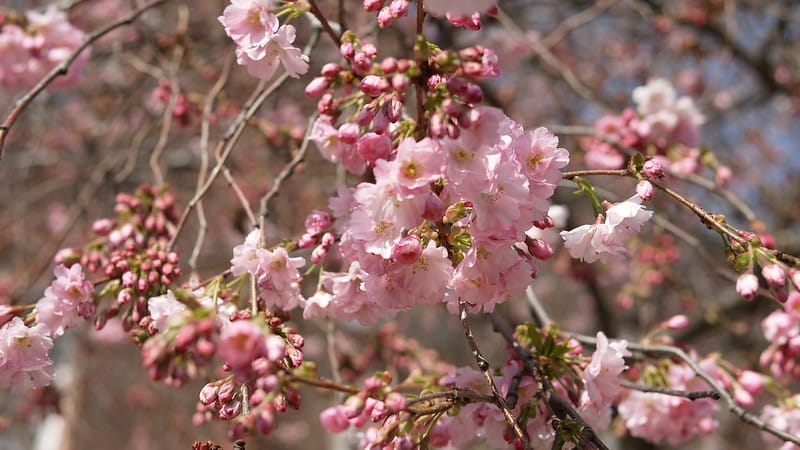
Blossom | Orchards and blossom trees have been disappearing from the British landscape since the 1900s, but the ‘ghosts’ of these trees can be found in an increasing number of place names, according to research by the National Trust. The charity analysed almost a million place names in England and Wales, and found that the number of street, house, and farm names related to blossom and orchards has doubled since the turn of the 20th century – a period in which more than half of traditional orchards have been lost. Rather poignantly, the Trust describes these names as ‘fossil blossom’. Prof Matthew Heard of the Trust said that, despite the loss of blossom trees from our landscapes, ‘we clearly haven’t lost our connection to them – their memory is something we seem to want to keep alive’. However, the study also found that blossom-related place names are becoming increasingly generic, suggesting a loss of connection with specific regional species. The Guardian covered the story.
Bugs | The annual Bugs Matter citizen science survey has revealed that the abundance of flying insects in the UK has fallen by a staggering 78% since 2004. The survey, which is led by the Kent Wildlife Trust and Buglife, enlists volunteers to count the number of insects which are ‘splatted’ on their vehicle number plate after a journey. Since 2004, the report has analysed records from nearly 26,500 journeys across the UK. Data from 2023 shows a continued decrease in insect splat rates across all regions of the country, with the sharpest fall recorded in England, at an 83% decline since 2004. Dr Lawrence Ball, from Kent Wildlife Trust, said the results are ‘incredibly concerning’, and ‘illustrate the scale of the crisis facing insect populations’. The BBC and the Herald covered the research.
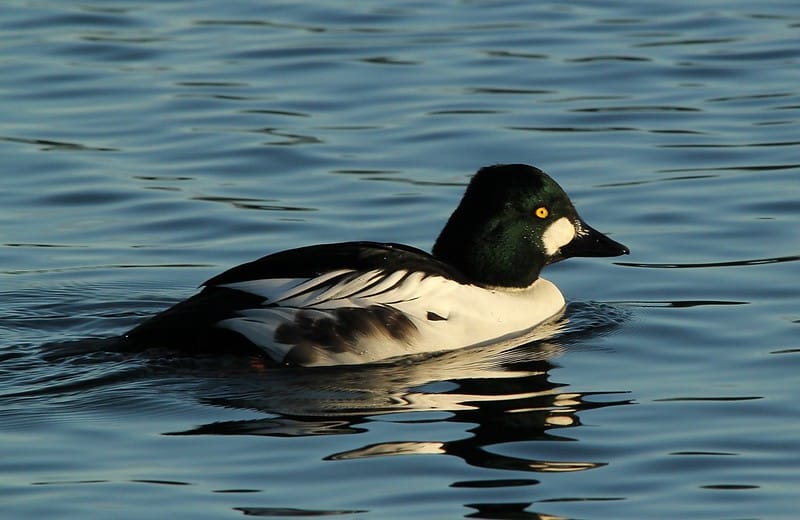
Birds | Fewer wetland birds are travelling to the UK as northern Europe experiences milder winter conditions, according to the annual Wetland Bird Survey. More than 3,800 volunteers collected data for the annual survey, which monitors the number of ducks, geese, swans and waders journeying to the UK each winter. The 2022/23 report reveals that many species – including the Bewick’s Swan, goldeneye, and dunlin – are altering their behaviour in response to warmer winters, with significant numbers staying closer to their breeding grounds in a phenomenon known as ‘short-stopping’. The survey plays an important role in international efforts to monitor these species on a flyway scale, and is especially critical for species such as the Bewick’s Swan, which is also experiencing declines in breeding populations.
Science
Bison | Following their extirpation at the beginning of the twentieth century, bison are now making a strong comeback across Europe. Conservationists have reinstated the species in the wild both for its own sake and because of its top-down impacts on ecosystems. However, until now, there have been no empirical studies of how this mammal actually impacts biodiversity. A new study, published in Forest Ecology and Management, finds that bison increased the species richness of vascular plants in a woodland in Denmark. Eight years of monitoring showed that grass-like species and bryophytes benefitted from their presence, although the impacts varied by woodland type: oak-dominated forests were particularly enriched by their grazing, while there were no observable impacts within the forests of beech.
Climate | It is well established that species shift their range in response to climate change. However, not all species are on the move, and observed shifts are not always predictable, with certain species moving in the opposite direction to expectations. A literature review, published in Nature Reviews Earth & Environment, summarises the reasons for this varied response to heat, as well as the impacts of range shifting on human communities. For instance, changes to the local weather may not match global climate patterns, while species may track non-temperature related variables, such as precipitation, accounting for the diversity of response. Habitat fragmentation and natural geographical barriers can also prevent movement. By better understanding such factors, scientists can better predict migrations in the future and thus help to preserve biodiversity in a changing world.
Fish | Seaweed and shellfish offer not only a sustainable source of food – they are also supporting healthy marine ecosystems, according to a study published in Aquaculture Environment Interactions. Biologists carried out surveys around blue mussel and kelp farms in Cornwall. They discovered that the underwater farms were acting as new feeding grounds for at least 11 species of fish, and also potentially as new breeding grounds. The farms featured a significantly higher number and diversity of fish than outside areas. ‘These results provide important evidence about how shellfish and seaweed farms could be used as nature-based solutions if appropriately managed,’ said lead author Sophie Corrigan, a marine biologist at the University of Exeter.
Driftwood
Wild Service | The publication of a new book, Wild Service: Why Nature Needs You, by the right to roam campaign has launched a number of features and think-pieces. In the Guardian, the columnist John Harris finds that it sits at the centre of a new and radical politics, where nature is treated as something sacred and mystical. In a separate piece, Patrick Barkham outlines the message of the book – essentially, that communities must develop a new relationship with the natural world – and suggests that it ‘might just be the founding text for a new environmentalism’. Finally, in the Times, Matt Rudd writes about his day of trespassing with the book’s co-editor, Jon Moses, through private land in Herefordshire. His article includes a brief overview of the arguments for and against expanding the right to roam in England and Wales – and his wife’s disapproval of the movement.
Anthropocene | The New Yorker has waded into the debate over the Anthropocene, with a feature on the failed attempt to designate it as a new geological epoch. This is a good explainer of the labyrinthine world of stratigraphy, the efforts to find the ‘golden spike’ that would officially mark the end of the Holocene – the search for ‘the Bud Light layer’, as this article memorably puts it – and the controversial vote that eventually put the epoch, if not the word itself, to rest. The writer, the Pulitzer-prize winning Elizabeth Kolbert, confesses that she is herself ‘an Anthropocene partisan’. For an alternative view, check out this clear and informative thread by palaeoecologist Dr. Jacquelyn Gill.
Conifers | Scotland needs more conifer plantations, writes Fergus Ewing, the former cabinet secretary for rural economy and tourism, in the Times. The comment comes in response to a ‘thoroughly pernicious’ report for the Royal Society of Edinburgh (covered in a recent digest), which called on the government to end public subsidies for commercial conifer forestry, on the grounds that native woodlands provide greater benefits in terms of biodiversity and carbon sequestration. But Ewing said that these accusations were only myths, and that depriving the industry of subsidy would harm rural communities and increase the UK’s reliance on timber exports.
Further reading:
- Is the wood wide web a fantasy, asks Daniel Immerwahr in this Guardian long read.
- Mud worms are among the solutions to natural carbon storage, reports the Times.
- The Telegraph looks at the battle to save the River Wye from pollution.
- The Big Issue profiles five species making a comeback across the UK.
- Amy-Jane Beer connects with the Mesolithic landscape in this week’s Country Diary column.
- Wasps are unfairly maligned, according to a new study, covered by the i.
- Positive News profiles the Woodland Trust’s efforts to save an ancient woodland in Devon.
- A chamber music festival in the Scottish Highlands aims to celebrate native rainforests, reports the Herald.
- Continuing with its focus on acoustics, the Guardian profiles efforts to study soil biodiversity by eavesdropping on its conversations. In the same paper, Tony Juniper mourns the loss of birdsong on his street.
Happy days
Gulls | A nine-year-old boy from Derbyshire has won the European Gull Screeching competition – and, if you watch the video, you will soon see why. Honestly, I wouldn’t be able to distinguish it from the real thing. The jury was made up of professionals involved in gull research and policy, and the competition has a serious message, according to judge and marine biologist, Jan Seys. ‘It is more than fun and entertainment, it is also meant to elicit some sympathy for seagulls, which are an essential element of our coasts but are often maligned as “rats of the sea”,’ he said.
Subscribe to our newsletter
Members receive our premium weekly digest of nature news from across Britain.
Comments
Sign in or become a Inkcap Journal member to join the conversation.
Just enter your email below to get a log in link.