National news
Land | The government has published its long-awaited Land Use Framework: a report promised by the Conservative government, and the culmination of an extensive public consultation. The Framework presents a cohesive strategy for the use of England’s finite land, balancing nature restoration with food security, energy production and housing: a government blog sets out the implications for each sector. It envisions a future where, by 2050, woodland cover reaches 16.5%, rivers are bordered by woodlands, and restored habitats protect towns and cities from flooding. The recommendations are backed, writes environment secretary Emma Reynolds in the foreword, by ‘the most advanced spatial analysis ever undertaken in this country’. A Land Use Unit will now be established to advance its delivery, while the EFRA Committee launched an inquiry into land use and nature to scrutinise the government's work. The Guardian outlines the Framework in further detail, including a separate article on its promise to open up the Land Registry to the public, while the Telegraph accused Labour of plotting a ‘crackdown’ on pheasant shooting. Major figures across the government published their reactions here. See Driftwood for a roundup of further response and analysis.
Nuclear | The government has published its response to the Nuclear Regulatory Review, promising to deliver a ‘new golden age’ for nuclear power. In November, the Fingleton review recommended deregulation measures to speed up nuclear development, raising concerns for environmental protections: we covered the issue here. Keir Starmer accepted the findings in December, but the government’s official response pulls back from adopting the full gamut of recommendations, including those deemed ‘most dangerous’ for nature. Importantly, the government decided against the wholesale weakening of the Habitats Regulations and against removing the legal duty that protects National Parks and Landscapes. Instead, it committed to improving implementation of existing environmental legislation, including reducing ‘unreasonable burdens’. Organisations including the Wildlife Trusts, RSPB, WCL and CPRE welcomed this ‘reprieve’ for nature, although they warned that the response ‘leaves the door open’ to weaker safeguards. The Guardian, ENDS, and Inside Ecology reported the news, with further commentary in the Times and Critic.
Gamebirds | The Welsh government has launched a call for evidence on the environmental impact of gamebird releases. Announcing the research, Deputy First Minister Huw Irranca-Davies said that irresponsible releases of gamebirds are placing ‘additional pressure’ on some of Wales’ most sensitive environmental sites. The research, to be undertaken independently by Environment Platform Wales, will inform the government’s intention to move towards a more regulated and sustainable system for managing releases, including the potential introduction of a licensing regime. The Countryside Alliance, BASC and GWCT all vowed to respond with evidence of the ‘positive benefits’ of shooting for both the environment and rural communities. ShootingUK covered the news.
In other news:
- The King Charles III England Coast Path – which creates a continuous walking trail along the entire English coast – is nearing completion, and has been inaugurated by its namesake. The Times, Telegraph, Independent and BBC reported the news.
- Salmon farms released record levels of carcinogenic formaldehyde into Scottish waters last year, reports the Times and ENDS.
- The National Lottery Heritage Fund has awarded more than £15m to 28 projects restoring and improving biodiversity in Wales.
- Pigeons are being injured and killed by people using catapults for a social media trend, reports the BBC.
- The government has announced police-style powers for environment officers to tackle illegal waste dumping, reports the BBC.
- A Times investigation has revealed that there were nearly 15,000 dry-day sewage spills in England last year.
Across the country
South Downs | One of Britain's most elusive birds, the nightjar, is making a ‘remarkable’ recovery in the South Downs National Park. An ecological survey last year counted 78 birds – a record since monitoring began in the late 1990s – and the population has roughly doubled in the last five years. The rise follows efforts to protect and restore lowland heath, which provides ideal ground-nesting habitat for the birds. Park rangers have also been encouraging visitors to avoid disturbing nests. The amber-listed species has several nicknames, with the most unusual being ‘the goatsucker’, from a long-enduring myth that nightjars would drink milk directly from goats, poisoning their udders. The BBC and ITV covered the news.
Dartmoor | The High Court has ruled that Dartmoor commons were mismanaged by Dartmoor Commoners’ Council (DCC), which failed to prevent overgrazing of important habitats. The case was brought by Wild Justice, which argued that the DCC had failed its legal duty under the Dartmoor Commons Act 1985 to assess the level of grazing livestock. The court found in favour of this argument, although it dismissed other claims, including alleged breaches relating to Sites of Special Scientific Interest. The DCC must now carry out a full assessment of livestock numbers, which Wild Justice said it would ‘scrutinise’. The Canary, ENDS, and FarmingUK covered the news, with the latter saying the judgement is likely to ‘intensify debate’ over how grazing is balanced with environmental protection.
London | The future of allotments in Isleworth, west London, has been secured after the Duke of Northumberland's Estate extended a council lease on the land. The decision follows a decade-long dispute with campaigners after the estate announced plans in 2015 to build flats on the land. The three-acre plot has been used as allotments since 1917, when the 7th Duke of Northumberland leased the land to the council to feed wounded soldiers returning from the First World War. More than 900 objections were filed against the development plans, and the estate has now leased the land back to Hounslow Council for at least 24 years. Labour councillor Salman Shaheen, who led the efforts, said the allotments are ‘a little patch of paradise in our urban environment’. The Chiswick Calendar, Northumberland Gazette and BBC covered the story.
Elsewhere:
- The National Trust has launched a ten-year hedgerow restoration programme at Wimpole Hall in Cambridgeshire, reports the BBC.
- Somerset Wildlife Trust has submitted a planning application to convert a former dairy farm into a research hub for lowland peat management, reports the BBC.
- A group of 49 farmers and land managers have submitted a proposal to restore nature across 5,000 hectares along the Wye and Lugg rivers.
- GenWild, a Warwickshire Wildlife Trust group, is using social media to persuade 18-30 year-olds to interact with nature, reports the BBC.
- The fishermen’s association of Jersey claims that plans to expand MPAs could make fishing ‘more dangerous’, reports the BBC.
- Two current art exhibitions on seagrass and kelp in northeast England are helping communities learn about native marine habitats, reports the Northern Echo.
- Southwest England lost record numbers of bees last winter, likely due to wet weather, reports the BBC.
- Bristol City Council has apologised after council mowers destroyed £6,000 worth of flowers planted by community volunteers, reports the Bristol Post.
- A project to restore temperate rainforest in southeast Cornwall has planted the first batch of 28,000 trees.
- Hampshire Hedge, a landscape project linking the South Downs and New Forest national parks, is nearing completion, reports the Daily Echo.
- A conservation group in Woking is set to dig up Spanish bluebells from an ancient woodland in a bid to protect native English bluebells, reports the BBC.
- Campaign group Save Windermere has called for real-time pollution alerts on Lake Windermere after a young boy nearly died from E. coli, reports the Guardian and Times.
- Sussex Kelp Recovery Project has recorded a ‘transformation’ in seabed biodiversity five years after a ban on bottom trawling, reports the BBC.
- The 2025 Cairngorms Wader Survey shows declines in population numbers for all five monitored species since the last survey in 2021.
- Dorset Wildlife Trust has launched a public consultation to explore reintroducing wild beavers to parts of Dorset.
- A community project in Devon aiming to restore losses of tree cover due to ash dieback has planted 250,000 trees.
- The iconic Seven Sisters chalk cliffs on the coast of the South Downs have been named as the latest national nature reserve in England, reports the Argus.
- The National Lottery Heritage Fund has donated £5m toward the Wildlife Trusts’ appeal to buy Rothbury Estate, pushing the fundraiser past its halfway point, reports the BBC.
Reports
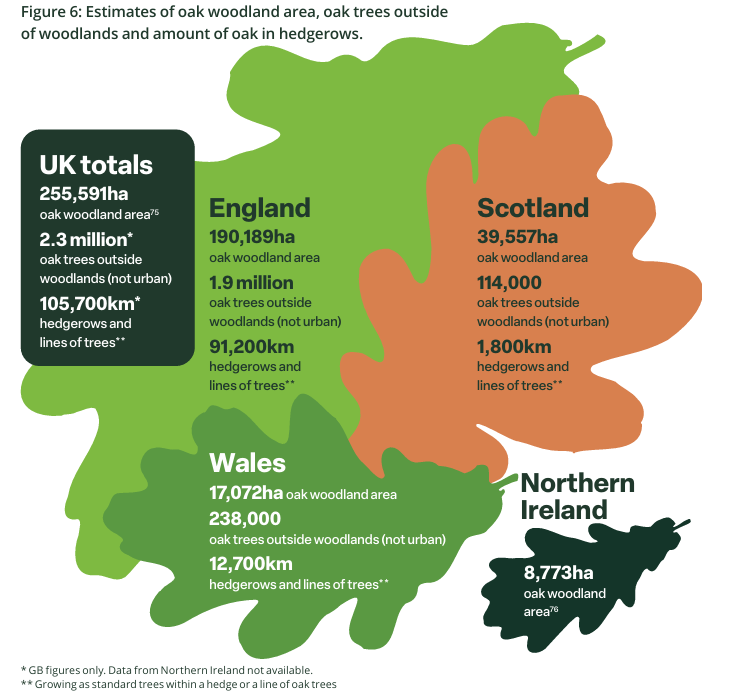
Oaks | A report by the initiative Action Oak warns that the UK’s most iconic tree faces a ‘litany of threats’. The UK has more than 250,000 hectares of oak woodland, and its two native species – sessile and pedunculate oak – support around 2,300 species, more than any other native tree. The report identifies a range of pressures acting simultaneously on Britain’s oaks: these include climate-related stress, increasing pests and diseases, lack of regeneration, vulnerability to bacterial infections, and deer browsing. Action Oak’s director, Annabel Narayanan, said that ‘we cannot allow what has happened with Dutch elm disease and ash dieback’ to happen to oaks. The report concludes with a summary of evidence gaps for further research. The Scotsman and Yorkshire Post covered the report.
Wales | Rewilding has long been a controversial word in Wales, approached cautiously by environmentalists – but a new organisation is once again testing the waters. The Welsh Rewilding Alliance launched last week and immediately published a new report, The Welsh Way to Rewild, setting out its manifesto. Authored by Right To Roam campaigner Jon Moses, the report sets out the challenges facing the Welsh landscape and proposes a new way forward with people at its heart. Rewilding, the alliance argues, can help to tackle rural depopulation and give people more control over the land, while also addressing the ecological crisis. Among its key demands are payments for natural grazing, bringing back lost species, and the creation of a Community Right-to-Buy for land via a Land Reform Act for Wales.
Health | Natural England has published the Healthy Outdoors guide, designed to better measure the impact of outdoor activities on people’s health and wellbeing. UK health strategies are increasingly recognising the benefits of time in nature, but there is no single methodology for measuring its impact, making it difficult to understand what works best. This is particularly important in light of health and access inequalities. The report sets out key measures to consider when evaluating interventions, including participant demographics, how the activity connects health to the outdoors, and intended mental and physical health outcomes. Separately, the Guardian spotlights Dose of Nature, a nature prescription project in London which is outperforming standard NHS therapies.
Science
Deer | Deer stalkers have a wide range of views on land management in the Scottish Highlands, holding ‘more nuanced and complex positions’ than the organisations that supposedly represent them would suggest. This is the conclusion of a study in People and Nature, based upon interviews with 19 professional stalkers. The conversations covered a range of topics, including employment, public attitudes towards stalking, and the intrinsic value of deer. While the subject of deer management has been widely and variously researched by academics, this study claims to be the first to centre the experiences of the stalkers themselves – something that is particularly valuable as the policy landscape around deer hunting shifts.
Finance | The UK’s green finance strategy risks commodifying nature in its efforts to raise private investment, according to a paper in People and Nature. The harm caused by commodifying the natural world could outweigh the benefits – particularly as commodification has so far failed to actually attract much in the way of private finance. The authors, all based at the University of Leeds, argue for a new way of relating to nature, where the living world is ‘no longer conceived as vast a collection of exploitable things but instead, for example, as a mutually interdependent network of kin.’
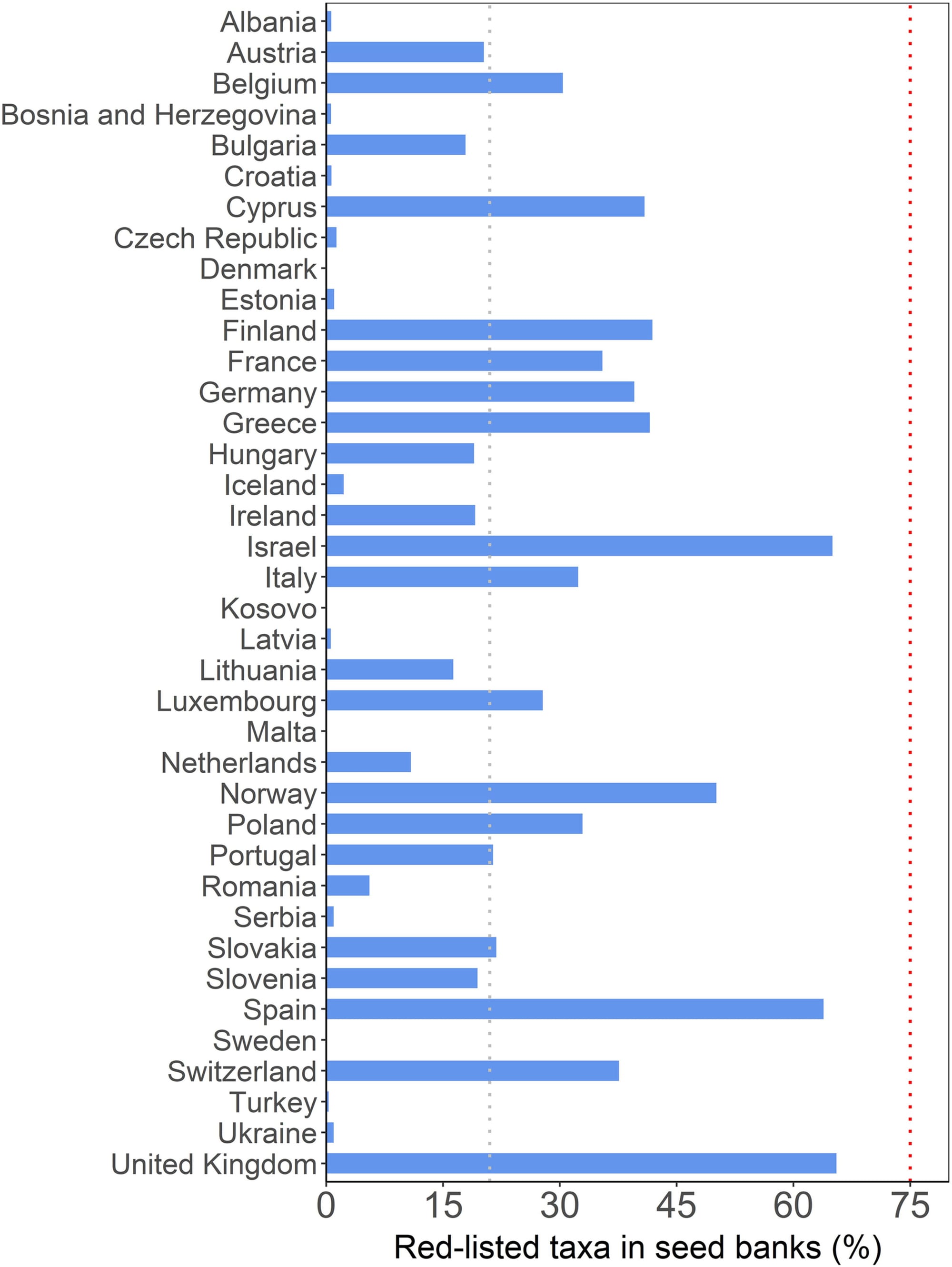
Seeds | A survey of 44 European countries reveals that not one has met its seed banking targets under the Global Strategy for Plant Conservation. This plan called for 75% of threatened species to be conserved ex situ by 2020 – the current average, however, stands at just 21%. The UK was one of the best-performing countries, alongside Israel: both countries have stored 65% of their red-listed taxa. In terms of pure numbers, however, botanically diverse Spain came out top, with a total of 781 taxa preserved in seed banks, followed by Germany with 460. Among western European countries, Denmark and Sweden performed particularly poorly. The study was published in Plants, People, Planet.
Driftwood
Land | Responses to and analysis of the government’s Land Use Framework have already come pouring in. The IUCN’s Peatland Programme set out the key headlines for peat. CPRE welcomed various elements, including promises of greater transparency, but urged ‘stronger safeguards’ – a new report by the charity, published the day before the Framework, argued that the policy tools to deliver land-use decisions ‘already exist but remain fragmented and largely neglected’. The NFU welcomed the ‘explicit recognition of multifunctional land use’ as well as the renewed commitment to food security, with further opinions from farmers rounded up in Farmers Guide. The Countryside Alliance was less impressed, especially objecting to the Framework’s position on shooting, including the possibility of further licensing, which chief executive Tim Bonner claimed amounted to a ‘declaration of war’. Meanwhile, in LabourList, Hexham MP Joe Morris wrote that the Framework would benefit rural communities. In his Who Owns England? blog, author and activist Guy Shrubsole explores the impacts on private landowners and celebrates the opening of the land registry – something for which he has spent the last decade campaigning.
Food | Vittles, a magazine on food and culture, has published the winning essay of the inaugural Food Stories Fellowship Award, run by the British Library. Written by Stella Swain, the essay looks at the ‘forgotten history’ of the Land Settlement Association. This was a national scheme that set up local farming cooperatives between 1934 and 1939, totalling more than 1,000 government-funded smallholdings. By the 1980s, the LSA produced around half of all British-grown salad crops. However, increasingly cheap imports began squeezing small farms, and the Thatcher government closed the scheme in 1982. Swain – whose grandparents were part of the scheme – explores how this collective, centralised model could offer a blueprint for more just and sustainable food production in the future.
Animals | Humans are acutely attuned to animals, which ‘creep into our psyche in spectacular and sometimes alarming ways’, writes science writer Michael Bond in Unherd. This is particularly true when our minds are in an altered state, either through medical disorders or from psychedelic drugs. The reason remains a mystery, but it may come down to evolutionary biology: the leftovers of a time when humans had to be hypervigilant about the wild animals that are now absent from our lives. Though largely useless in normal circumstances, this impulse still ‘becomes fully activated when our psyche is disrupted’, argues Bond, and reminds us that our relationship with animals is more intimate than most will care to admit.
Further reading:
- The Times looks at the success of the Eden Project as it turns 25.
- Author Jo Winpenny writes about why no species should be villainised for the Guardian.
- The Herald spotlights how community allotments in Ellon, Aberdeenshire, became a lifeline for some residents.
- For Country Life, writer Sarah Langford investigates the decline of the common toad and what can be done.
- The Guardian takes a look inside the company claiming it can resurrect the dodo.
- A feature in Wicked Leeks explores the rising popularity of whole foods ‘that our grandparents would recognise’.
- Country Life spotlights the three men behind one of Britain’s fastest-growing hospitality brands, which aims to reinvigorate both pubs and farms.
- The Guardian has published a rebuttal by heads of conservation organisations to an article from last week, which argued that legal protections for nature are ineffectual.
- The Telegraph has an interview with conservationist Isabella Tree on the critics of rewilding, farming’s dependence on fertiliser, and the cultural rift in the countryside.
- A feature in the Guardian delves into the mysteries of insect migrations.
Happy days
Legacy | The National Trust is commissioning a public artwork from wood of the Sycamore Gap tree. The six shortlisted artists each offer a vision for how the iconic tree’s ‘story, symbolism and memory can live on for future generations’. The proposals include an elevated platform where the tree once stood; a sound sculpture; the creation of artists’ materials such as ink, charcoal and pigments; and a project collecting the stories of 1,000 trees. Read more about each proposal and vote here. The final selection will be decided by 30% public vote and 70% score from a judging panel. Positive News, the BBC and Cultured North East covered the news.