Lead Bullet Ban & Salt Path Controversy
The latest news on nature and conservation in Britain.
National news
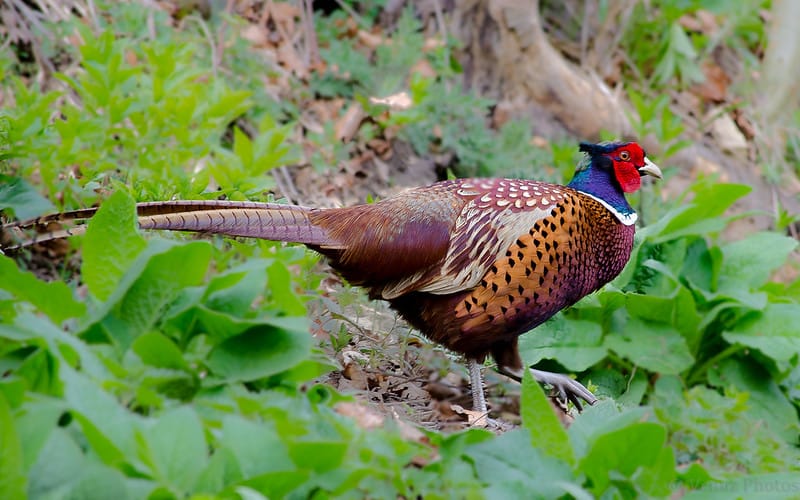
Shooting | Environment minister Emma Hardy has announced a ban on toxic lead ammunition. In its press release, Defra said that around 100,000 wildfowl die from lead poisoning annually, while 40,000 birds of prey are at risk through eating carrion. The long-awaited ban, which applies in England, Scotland and Wales, will be phased in over three years from 2026. Organisations including BASC have said that, while they support the overall change, replacement ammunition may not be available in the timeframe. Meanwhile, wildlife organisations have welcomed the news, with James Robson of the RSPB commenting that ‘Britain will become a safer place for millions of birds and other wildlife’. The Guardian and ENDS reported the news.
Rivers | The UK’s hottest spring on record has wreaked havoc on Britain’s rivers, according to the Angling Trust. The Trust’s water quality monitoring network – which involves around 800 citizen scientists – found that river temperatures in England and Wales were the hottest since the project began three years ago. So far there have been 87 confirmed incidents of fish kills, 36 of which were caused by low water flow concentrating pollution. Meanwhile, the sunshine has promoted algal growths, and both ammonia and nitrate concentrations are up. The Trust said its results – which were released ahead of the UK River Summit in London on Tuesday – showed more water monitoring was needed as global warming exacerbates existing pressures. The Times reported the news.
Regeneration | The success of regenerative food brand Wildfarmed is proving that ‘we don’t have to choose between food production and biodiversity’, according to an article in Farmers Weekly. Wildfarmed works with 150 farmers, supplying more than 1,000 retail customers, guided by the mission to have a fully traceable, regenerative supply chain based on robust farming standards. Initially focused on wheat, the company is now expanding into milled oats and malting barley, and it has struck deals with Tesco and M&S after launching in Waitrose last year. Meanwhile, a project with Bristol University is tracking its impact on biodiversity: so far, fields following Wildfarmed’s regenerative protocols show an 80% increase in total insect biomass. Founder Andy Cato said the company’s success is showing that ‘when you reconnect farmers and food buyers, it unlocks a collaborative effort that can make a real difference.’
In other news:
- Westminster held a debate on banning driven grouse shooting this week after a petition by Wild Justice reached 100,000 signatures. Defra minister Daniel Zeichner confirmed that the government has no plans to ban grouse shooting. The RSPB responded here, with a summary of the debate by Mark Avery here.
- An investigation by the Guardian and Watershed has revealed that millions of tonnes of toxic sewage sludge are spread on British farmland every year.
- The Woodland Trust has said that underfunding and a lack of stability from year to year is stalling woodland creation.
- NatureScot has launched an app, SkateSpotter, to help build a clearer picture of endangered flapper skate populations around Scotland’s coasts.
- Experts have warned that the trade of pot-plants is a ‘hitchhiker pathway’ for invasive flatworms arriving in the UK, reports the Guardian.
- The RSPB is celebrating after counting a record number of rare field crickets thanks to targeted conservation efforts, reports Farming Life.
- On Wednesday, thousands of people headed to Westminster to take part in the Act Now, Change Forever mass lobby, calling for urgent action on the nature and climate crises.
Across the country
Powys | A trial using goats to safeguard populations of two of Wales’ most at-risk bryophytes has been declared a success. Stanner Rocks, on the Powys border, is the only place in the UK where two species – upright apple-moss and black crystalwort – are found growing together. However, both were at risk of being wiped out by bramble and gorse overgrowth. To protect the plants, conservationists brought in three hardy Bagot goats, trained using no-fence geo collars, to graze the shading vegetation. The trial is now expected to expand to a wider area and increase to eleven goats. The Shropshire Star reported the story.
Cumbria | The Lake District National Park Authority and Cumbria Wildlife Trust have announced a joint project to plant hay meadows on farmland this summer. The £65,000 project will work with farmers across the Lake District to enhance agricultural biodiversity by sowing and transplanting seeds from donor sites over the next three months. Species-rich hay meadows in the Lake District have been shaped by centuries of low-intensity farming, through traditional grazing and hay-making, meaning the grasslands haven’t been fertilised or re-seeded. The Trust said this makes the meadows ‘one of the rarest grasslands in the UK, yet the most biodiverse’. The BBC covered the story.
Sussex | The Knepp Estate in West Sussex has recorded its highest ever number of endangered purple emperor butterflies. Known for its large size and elusive nature, purple emperor populations steadily declined in the 20th century and are mostly restricted to larger woodlands in southern England. However, the species has been slowly recolonising the rewilded landscape at Knepp since 2001, and it is now home to the largest colony in the UK. At the start of July, ecologists conducted an annual count and recorded 283 individuals in a single day. They said the record numbers would likely be reflected in nationwide trends, although the ‘top quality’ landscape at Knepp had allowed the emperors to flourish. The Guardian reported the story.
Elsewhere:
- Conservationists have counted the highest number of seahorses in Studland Bay, Devon, since a high during Covid lockdown, reports the BBC.
- A project has doubled the number of uncommon wetland plants found on Northamptonshire farmland thanks to new ponds, reports the BBC.
- More than 2,000 school children across Bristol and Weston have planted wildflower meadows and green walls as part of a Butterfly Conservation initiative.
- Norfolk Wildlife Trust has launched the county’s first youth-led nature reserve.
- Archaeologists have discovered the remains of a large Neolithic hall in Carnoustie, where some of Scotland’s first farmers gathered for festivities, reports the BBC and Independent.
- Police are appealing for information after vandals destroyed specially-designed sand martin nests at Nene Wetlands in Northamptonshire, reports the BBC.
- Derbyshire Wildlife Trust has completed work on a project to open up more than 28km of the Ecclesbourne River for fish migration and help Atlantic salmon return.
- Woodland Trust Scotland has agreed a 30-year deal with the Assynt Foundation and Aviva to restore two Highland estates, including thousands of acres of new native woodland.
- Cumbernauld is set for a five-year urban restoration project, with £3m of funding for trees and wildflowers across the town, reports the Herald.
- Devon Wildlife Trust has captured footage of the first pine marten kits born to the animals reintroduced by its conservation project last year.
Reports
Health | The government has published its long-awaited ten-year plan for improving England’s health, but campaigners say it is missing one crucial ingredient: nature. The plan does contain a long-overdue focus on prevention before cure, and gives attention to mental health issues. It also has rules which will force supermarkets to publish details on how much healthy food they are selling. However, nature is not mentioned once in the 168-page document. This is a ‘striking omission’, according to four health researchers writing in the Conversation. The science behind the health and wellbeing benefits of time spent in nature is unequivocal, they argue, and point to Scotland’s Green Health Partnerships as an example. They write: ‘By failing to recognise the centrality of nature in our health, the government overlooks one of the simplest and most effective ways to build resilience – both human and ecological.’
Biodiversity | A report from the University of the Highlands and Islands has found that a lack of clear and cohesive biodiversity measurements is endangering Scotland’s environmental strategies. It comes as the Scottish government is consulting on an Ecosystem Restoration Code, which would encourage private investment into biodiversity projects. Such a mechanism will only have ecological integrity if there is a viable means of measuring biodiversity gain, according to the report – and currently there is no universal standard. The report focuses on the problem this poses for community-owned land and buyouts, which are often ‘inherently geared toward biodiversity’ and contain a higher-than-average proportion of sites of ecological importance. The authors are calling for better availability and transparency of land ownership data, and for local people to be more involved in biodiversity monitoring. The Herald covered the research.
Housing | Plans to weaken environmental regulations for small housebuilders would allow developers to destroy 215,000 hectares of nature in England in the next 10 years, according to analysis. Ministers are currently consulting on Labour’s proposal to remove the requirement for small housebuilders – sites under 2.5 acres – to replace the nature they destroy under biodiversity net gain rules. A report by environmental economists from the consultancy Eftec has found that, if the change went ahead, 97% of planning approvals would be exempt from the requirement. This could result in an area the size of the Yorkshire Dales being developed over the next decade, with no requirement to compensate for lost nature. Richard Benwell of Wildlife and Countryside Link said the proposal would ‘be a return to the bad old days of damaging development, and torpedo confidence in private investment in nature recovery’. The Guardian reported the news.
Science
Butterflies | Trees and hedgerows on farmland significantly boost butterfly numbers, according to a study in Ecological Solutions and Evidence. Research by Oxford University and Butterfly Conservation analysed a decade of data from the Wider Countryside Butterfly Survey in England. By cross-referencing the results with nearby habitats, they found that hedgerows, small woodlands and even individual trees had a positive impact on butterflies, especially in more arable landscapes. Areas of ancient woodland were particularly beneficial for species richness. The researchers also surveyed 31 farmers, many of whom appreciated the benefits of trees and hedgerows but also raised concerns about the cost and commitment of maintaining them. The authors said that farmers should be ‘better supported’, both financially and through advice, to maintain these natural assets. The BBC covered the research.
Fungi | A study in Current Biology has found that up to 83% of ectomycorrhizal fungi species may be unknown to science. Ectomycorrhizal (ECM) fungi are symbiotic species that play a foundational role in forest ecosystems and carbon drawdown. An international research team surveyed global DNA databases and found that only 17% of DNA traces from ECM fungi could be matched to known species. The rest are known as ‘dark taxa’: organisms that have been detected but not formally named. Writing in the Conversation, UK-based researchers explain that, without this understanding, reforestation efforts including carbon offsetting schemes or monoculture plantations may be ‘potentially severing ancient relationships between native trees and their fungal partners’.
Space | Green and blue spaces are widely recognised as being critical to addressing climate change, biodiversity loss and economic divides – but past research has focused on availability rather than quality of these spaces. Quality is of equal, if not greater, importance than quantity, according to research from the James Hutton Institute, but definitions to measure quality are rarely consistent. To remedy this, researchers have outlined 72 key indicators in a paper in Environmental Science and Policy. These related to environmental quality – such as the presence of protected species, ecological connectivity and pollination potential – but also benefits for people, communities and businesses, including food growing opportunities, accessibility, renewable energy generation and flood risk. The authors hoped that a better understanding of the dimensions of quality would facilitate improvements, and therefore the benefits felt by communities.
Driftwood
Salt Path | The remarkable ‘true’ story of the bestselling book and film The Salt Path is built on ‘deceit and desperation’, according to an investigation by the Observer. The book tells how Raynor Winn and her husband, Moth, embarked on a life-changing 630-mile walk of the South West Coast Path after being dealt the double blow of losing their home in rural Wales, and Moth being diagnosed with a terminal illness. Except, Raynor Winn was not her true name, and ‘several aspects of her story were untrue’, according to the article. It alleges that Sally Walker – Winn’s real name – embezzled thousands from her employer, borrowed money to evade impending criminal charges, and lied about being made homeless. It also casts doubt on Moth’s diagnosis. Winn has responded on her website, claiming that the article is ‘grotesquely unfair’ and ‘highly misleading’. There is further coverage and commentary in the Guardian.
Moths | It is currently the best time of year to appreciate moths, as adults take to the wing and cluster around lights. In a column for the Financial Times, journalist Jonathan Guthrie invites readers to take the time to appreciate their nocturnal beauty. This can be done by attracting moths using a light trap, or, more economically, a bright torch pointed at a white sheet on a washing line. Guthrie’s own interest in moths was piqued by hawkmoths, a ‘spectacularly large’ species with scalloped wings which resemble flaking tree bark, or ‘swept back like those of a fighter jet’. Elephant hawkmoths are pink and green, while the death’s-head variety has skull-like markings. He writes: ‘Enjoy for a moment the subtle beauty of their patterns and ponder the briefness of their adult lives, before they flutter back into the dark.’
Lynx | In the Independent, author and journalist Richard Benson has outlined a number of reasons why releasing lynx into the British countryside would cause issues. The rebuttal comes after comments made by Natural England’s chair, Tony Juniper, that he was personally ‘enthusiastic’ about reintroduction. Benson puts forward the ‘obvious’ problem of livestock predation, arguing that this would not only affect sheep but also farmed deer and outdoor-reared pigs. He also points to less obvious concerns, including the impact on game on country estates – potentially leading to gamekeepers targeting the lynx – and the risk to domestic pets. Finally, he argues that the symbolism of lynx reintroduction would have a ‘more vague’ effect on farmers, reinforcing the lack of ‘coherent agricultural policy’ from the government and signalling their priorities.
Further reading:
- A BBC article explains why Peak District local Stuart Cox has gone viral for filming himself kicking down stone stacks – and why the stacks are problematic.
- In the Conversation, researchers examine what went ‘wrong’ with the reintroduction of golden eagles to Ireland.
- In Positive News, read about what is being billed as the world’s first sustainable, biodegradable ink made from regeneratively farmed seaweed.
- In the BBC, read about author James Canton’s efforts to ‘renature’ a former cricket field, and why he believes everyone can play a part in increasing biodiversity.
- In the Conversation, Oxford professor Nathalie Seddon argues that, although nature-friendly farming received a financial boost in the spending review, cuts to Defra’s day-to-day budget will make delivery difficult.
- A feature in Country Life explores the various wildlife that makes a home in British graveyards and churchyards. Meanwhile, an article by BBC Future looks at the endangered species thriving in Vienna’s Central Cemetery.
- Ahead of the summer field season, the BSBI has a post explaining efforts to find missing wild plants in Wales – and which species have already been discovered. Read more in Nation Cymru.
- A Guardian article investigates research, not yet peer-reviewed, into why young trees are dying in UK woodlands.
Happy days
Nessie | Research from the University of St Andrews has found that those who claim to spot the Loch Ness monster – Nessie – are not influenced by traditional depictions of what she looks like. Like many serpentine aquatic monsters throughout history, Nessie is usually depicted with visible humps at the surface of the water. However, this arched shape would be ‘biologically impossible’ for a swimming creature, according to the authors. In a paper for Endeavor, they compared eye-witness accounts with traditional depictions of Nessie, and found that only 1.5% of reports over the last 100 years included descriptions of hoops or humps. This suggests that the reports are based on ‘some underlying physical reality’, even if they are not ‘an actual encounter with an unknown species’. Read more about the search for Nessie in the BBC.
Subscribe to our newsletter
Members receive our premium weekly digest of nature news from across Britain.
Comments
Sign in or become a Inkcap Journal member to join the conversation.
Just enter your email below to get a log in link.