Lost Paths & Illegal Lynx
The latest news on nature and conservation in Britain.
National news
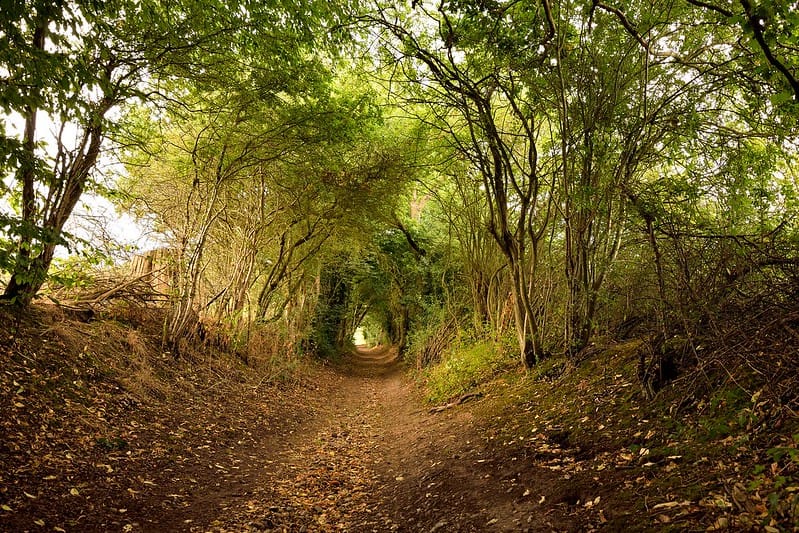
Paths | On Boxing Day, the government announced that it was scrapping the deadline to save unrecorded rights of way from being lost. England contains thousands of miles of historic paths, many of which are frequently used but may not be officially recorded – and therefore protected – on the nation’s ‘definitive map’. This is the legal record of public rights of way established 75 years ago. Under the last Conservative government, any unrecorded paths which had not been assessed by local authorities by 2031 would be lost forever. The decision to scrap the deadline comes as part of Labour’s wider efforts to expand access to nature and the outdoors. Campaigners have rejoiced. Ross Maloney, chief executive of the Ramblers, said the decision was ‘a fantastic step forward in making sure everyone can enjoy the benefits of walking in nature.’ However, the NFU said the move would disrupt farm businesses for ‘years to come’. The Guardian, the BBC and the Telegraph covered the news. You can read more about these historic ways in this Inkcap feature.
SSSIs | Conservationists have issued a warning after figures from Natural England showed that three-quarters of the nation’s most precious natural areas have not been recently assessed. The data, released following an information request from PA Media, covered assessments of sites of special scientific interest (SSSIs) – legally protected sites which contain features such as threatened habitats or rare species – in the last five years. The statistics revealed that only 3,384, or around 25%, of features had been assessed for their condition since the start of 2019. Campaigners argued that the figures demonstrated the under-resourced state of environmental agencies, and called for better funding. Richard Benwell, chief executive of Wildlife and Countryside Link, said: ‘Wildlife could be disappearing in the dark while ecosystems break down. It’s like shutting the door on a new power plant and not visiting for a decade.’ The Guardian, the Independent and ENDS reported the news.
Farming | Environment secretary Steve Reed announced a ‘new deal for farmers’ at the Oxford Farming Conference on Thursday. The deal comes as Labour attempts to reset its relationship with rural voters after controversial changes to the agricultural inheritance tax and farming subsidies. The new vision centres on making farming more profitable, with measures including a ‘cast iron commitment’ to food security, reforms to help farmers diversify their income streams, and loosened planning regulations. In response, the NFU said there were ‘positive elements’ to the measures, but that the government had failed to recognise that farmers are in a ‘cash flow crisis’. Meanwhile, environmental campaigners have warned that loosening planning restrictions will result in more ‘megafarms’ and increased river pollution, reports the Guardian. The Wildlife Trusts also published a briefing ahead of the conference calling for increased investment in nature for UK food security. While Reed did emphasise the importance of sustainability in the sector, he said that its ‘primary purpose’ must be ‘food production’. The news was widely covered.
In other news:
- Police have seized more than 6,000 illegally collected wild birds’ eggs in the biggest haul of its kind in UK history, after carrying out raids in Scotland, Yorkshire, Essex, Wales and Gloucester. The news was widely covered.
- The Times reports that Labour has shelved plans to restore the globally rare chalk streams of southern England.
- A temporary ban on the annual shooting of migrating turtle doves passing through France, Spain and Portugal has resulted in a 25% increase in its western European population, reports the Guardian.
- Defra has announced £15m of funding to help reduce food waste by strengthening the links between farms and charities. ENDS covered the news.
- Some landowners are unhappy with the prospect of white-tailed eagles being reintroduced across England and Wales, reports the Times.
- Natural England has launched a satellite-tagging project to study the UK’s wintering population of Jack Snipe, reports BirdGuides.
- The National Trust’s annual report records an ‘alarming’ drop in insects and seabirds at its sites, largely due to unstable and extreme weather. The Guardian reported the news.
- A host of species, including grey seals, minke whales and bluefin tuna are slowly returning in numbers to the North Sea, reports the Guardian.
- Wildlife organisations including the RSPB and the Wildfowl & Wetlands Trust have written an open letter to Steve Reed calling for a ban on lead in ammunition sales to be introduced within 18 months, reports the Guardian.
Across the country
Highlands | Two lynx have been safely captured by the Royal Zoological Society of Scotland after being illegally released into the Highlands. The alarm was raised on Wednesday afternoon after the cats were spotted in the Drumguish area near to Kingussie. Wildlife experts worked with the police overnight to humanely catch the cats, using live trail cameras near baited traps, and they are now being cared for in quarantine facilities at the Highland Wildlife Park. RZSS chief executive David Field said the charity condemned the release in the ‘strongest possible terms’, adding: ‘It was a highly irresponsible act and it is very unlikely they would have survived in the wild due to a lack of adequate preparation.’ Likewise, the partnership Lynx to Scotland said that, while it supported an official reintroduction of the keystone species, illegal releases were not the way forward. The news was widely covered by national outlets.
Essex | Across the Essex countryside, lost ponds are being restored thanks to a project uniting farmers and conservationists. Around a century ago, there were more than 17,000 ponds in the county, but today only around 3,500 survive in good condition, with the decline largely down to agricultural intensification in the post-war period. However, these ‘ghost’ and ‘zombie’ ponds – the former having disappeared entirely, the latter being dried and degraded – remain visible in old maps. Now, a partnership between the Essex Wildlife Trust and the RSPB is reinstating them, with 400 already recovered. Emma Gray, the co-owner of a regenerative farm home to 11 restored zombie ponds, says the practice provides ‘a lot of biodiversity bang for your buck’ by quickly building up a network for species, while keeping fertile land available for food production. The Guardian and the BBC covered the story.
Sutherland | The largest escape of Scottish farmed salmon in more than a decade has come to light, almost two years after it took place in northwest Scotland. In February 2023, a fishing vessel was transporting salmon smolts from Loch Shin to Lochinver when human error led to around 80,000 fish escaping through an unsecured hatch. The incident remained unreported because government officials said they can only publicly report escapes linked to specific farm sites; it was not until the charity Green Britain Foundation lodged an FOI that the incident was uncovered. Escapee farmed salmon pose a threat to the already endangered wild salmon population through interbreeding, compromising their genetics, as well as spreading lice and disease. Dale Vince, founder of the Green Britain Foundation, said the incident ‘underscores the urgent need for a complete reassessment of how we monitor and regulate the salmon farming industry.’ The Oceanographic Magazine and the Times reported the news.
Elsewhere:
- The number of puffin nests on Alderney has almost tripled since the island’s Wildlife Trust started monitoring the population in 2005, reports the BBC.
- Conservationists in the Highlands have warned that nature restoration projects are facing long-term challenges, including funding and depopulation, reports BirdGuides and the Northern Echo.
- The charity Devon Culm has bought land between Exmoor and Devon to create its first nature reserve protecting culm grassland, reports the BBC.
- A walking group launched in Bristol to boost the confidence of women of colour now has more than 500 members, reports the BBC.
- The charity Avon Needs Trees has enlisted the help of around 1,000 volunteers to plant 100,000 native trees in Somerset’s Chew Valley, reports the Guardian. Meanwhile, volunteers in Powys have planted 400 saplings to create a traditional hedge, reports the Brecon & Radnor Express.
- The Eryri National Park Authority has published a Tree and Woodland Strategy which aims to boost tree cover from 20% to 30% over the next 100 years, as well as restore 80% of its ancient woodlands, reports the Daily Post.
- A year on from completion, the National Trust has said that a project to create wetlands on the Holnicote Estate in Exmoor has led to an ‘abundance’ of wildlife, reports the BBC.
- This year the Chelsea Flower Show will feature a garden dedicated to Britain’s endangered rainforests, reports the Guardian. The Wildlife Trusts are behind the creation. The show will also feature underwater seagrass for the first time, according to the Times.
- Volunteers working to protect England’s remaining red squirrels are ‘devastated’ after an outbreak of squirrel pox was confirmed in Northumberland, reports the BBC and the Chronicle.
- Campaigners are pushing to protect the Hampshire landscape featured in Jane Austen’s work from risk of development under Labour’s council housing target, reports the Times.
- The charity Buglife has spotted worker bumblebees starting nest-building activities in the middle of winter in Aberdeen as a result of mild weather, reports the BBC.
- Around 50 fishermen in Devon and Dorset have been trained to dissect and remove a specific bone in fish to help gather data on fish stocks, reports the BBC.
- The Woodland Trust is leading a skills-boosting programme on the west coast of Scotland to equip local people to earn a living from the rainforest.
- Suffolk Wildlife Trust has started work on rewilding the 289-acre Martlesham Wilds reserve in Suffolk, reports the BBC.
Reports
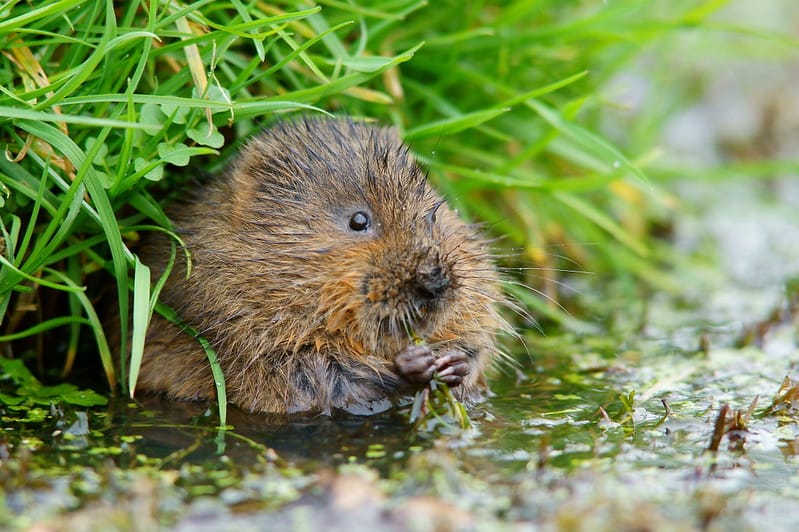
Water voles | The creature that inspired ‘Ratty’ from the Wind in the Willows is still declining across Britain, but there are signs of recovery, with populations bouncing back in key areas. This is the main finding from a report by the Wildlife Trusts on its National Water Vole Database Project. The study found that water vole occupation had declined in range by 39% from 2006 to 2022, but it also highlighted revived numbers in parts of Yorkshire, Oxfordshire, Hertfordshire and East Anglia, thanks to targeted conservation work. This includes reintroductions, habitat restoration and, critically, the eradication of invasive American mink which preys on water voles. In light of the progress, the Trusts is calling for research to identify how funds from housing developers can be better used to enhance water vole habitats, and priority for these habitats within the ELM farm subsidies. Read more in the Guardian and BirdGuides.
Canals | Protecting the UK’s canals is vital for improving the nation’s resilience to climate change and boosting biodiversity, according to a report by the Canal & River Trust. The report highlights how canals are helping to solve some of the UK’s most pressing challenges, including a deficit of urban green space, regional inequalities in wellbeing, and climate impacts such as threatened water security and urban warming. The canal network also functions as the UK’s longest corridor of freshwater habitats, including 304 conservation areas. These are crucial areas for wildlife within cities, including kingfishers and the endangered water vole, as well as acting as highways for species movement. However, many canals are up to 200 years old, and the materials originally used for building are liable to erosion. The authors stress the importance of making canals more resilient so that their benefits last for future generations. The Guardian covered the report.
Politics | How do you best ‘sell’ the importance of nature to Labour? Adam Dyster, former adviser to the Labour Party and the National Trust, writes a forthright essay for Green Alliance on why restoring nature should be central to the government’s missions. The environmental sector, he argues, must do more to demonstrate how reversing nature’s decline will benefit society and underline Labour’s ‘people first’ approach: through better public health, new jobs, and greater resilience to the impacts of climate change, including flooding and food prices. He writes: ‘Talk of “Nature” with a capital N as a separate entity to people’s lives risks it feeling like a luxury issue, entwined with beauty and bucolic ideals.’ Instead, he explains, green causes must appeal directly to politicians who have come into parliament expressly to improve people’s lives.
Science
Freshwater | One-quarter of all freshwater species are threatened with extinction, according to a study in Nature. The study is the largest global assessment of freshwater animals on the IUCN Red List to date, accounting for more than 23,000 species of fish, crustaceans and water-based insects. It found that 24% are at high risk of extinction, with the major threats including pollution, dams, water extraction, invasive species and overfishing. The list of threatened species in the UK includes Atlantic salmon, white-clawed crayfish and European eel. Catherine Sayer, the lead author of the study, highlighted the poor health of UK rivers, which are plagued by a combination of sewage, industrial waste and agricultural run-off. Indeed, the assessment highlights that most species face multiple and often interacting stressors, and conservation efforts will need to address these holistically. The Times and the Conversation covered the research.
Tuna | Atlantic bluefin tuna were once abundant in the waters off the UK, but they largely disappeared following historical overfishing. Now, as they are increasingly returning to British waters, a study in Scientific Reports aims to understand their movements to aid conservation efforts. A team of researchers used pop-up satellite archival tags to track 63 individuals. The data revealed that tuna occupy the Channel for much of the year, with peak occurrences between August and November. They also migrate to numerous seasonal hotspots, such as the Bay of Biscay and the Mediterranean Sea, indicating a key link between re-occupied regions and stable aggregation sites. In addition, the data showed that tuna spend more time at greater depths during the daytime, or when the moon is brightest. These results provide a ‘first perspective’ on the spatial ecology of tuna in UK waters, which will contribute toward their sustainable management.
Agroecology | A paper in the Journal of Rural Studies examines the role of agroecology in Wales, and its impacts on the country’s food policy. The author, Bernd Bonfert, an assistant professor at a business school in Normandy, highlights opportunities for change following Brexit, as Wales replaces land-based subsidies with environmental incentives. He suggests that agroecological organisations are providing the government with substantial arguments, data and best practices to support their policy demands, but are struggling to get their more ambitious reforms realised. New policies so far remain limited in scope, and unlikely to facilitate a holistic food system transformation – at least partially due to the specialisation of the Welsh agrifood system in meat production and trade. However, Bonfert argues that the government can still strengthen its agroecological policies by introducing stricter transition targets towards more sustainable food provision.
Driftwood
Extinctions | A long read in the Financial Times tackles the moral grey area of de-extinctions: efforts by ambitious biotechnology companies to ‘revive’ extinct species. The article focuses on the work of Colossal Biosciences, a company which has already raised more than $230m for the express purpose of giving life back to creatures including mammoths, dodos and thylacines. In fact, it aims to bring back a woolly mammoth – or at least a creature resembling one – within just five years. According to co-founder Ben Lamm, humans have a ‘moral obligation to undo the sins of the past’, having eradicated such species. He also argues that de-extinctions would help to heal ecosystems, by filling ecological niches which have been left empty. However, sceptics claim that such a relentless pursuit of technological advances is part of the problem – and a ‘morally bankrupt project’ which refuses to accept vital limits in nature.
Food | Food production accounts for roughly a quarter of all anthropogenic greenhouse gas emissions, but are there certain foods that help reverse climate change? An article in BBC Future looks at ‘carbon negative’ foods, which have the potential to remove more greenhouse gases than they emit. For example, kelp and other macroalgae take in CO2 as they grow, and store this in the ocean floor when parts break off or die. Similarly, products including blueberries, cranberries and celery can be grown on areas of rewetted peatland where organic carbon can accumulate faster than it decomposes. Meanwhile, planting nut, olive, and citrus trees on cropland helps to store carbon across the lifetime of the trees. However, it is still very difficult to identify carbon negative foods today: research on robust carbon monitoring and labeling schemes is working to make sustainable choices more achievable.
Flowers | Can art ever truly capture the beauty of a flower? The short film Algorithms of Beauty, available to watch here on Psyche, explores this question using modern tools. The Belgian director Miléna Trivier was inspired by the work of 18th century English artist Mary Delany, who created realistic two-dimensional paper works depicting plants which she called ‘paper mosaiks’. Today, these creations are seen as the forerunners to modern collage. For the film, Trivier compiled a database of Delany’s 985 botanical artworks and applied artificial intelligence to them, resulting in generated imagery with an uncanny life of its own. Psyche describes the film as ‘a philosophical journey into questions of imitation, creation, seeing and beauty’: an ‘impressive act of creation’ in its own right.
Further reading:
- Articles in the Times and the Scotsman introduce Hilda: the Scottish calf bred using IVF to help fight climate change.
- On television, the Beaver Trust has launched a documentary exploring the relationship between beaver reintroduction and migratory fish conservation.
- Read about the work of charity Seawilding to restore seagrass crops and oyster beds in the ‘empty’ coastal waters of Scotland in the Times and the Herald.
- The Guardian has an article on the strange ways that species are adapting to humans, from shrinking trees to nests protected with anti-bird spikes.
- Want to test your knowledge of environmental news? The Guardian has an environmental quiz of 2024.
- A feature in the Times explores whether olive oil grown and pressed in Essex could become the new English sparkling wine.
- In the Big Issue, Rebecca Wrigley of Rewilding Britain contends that the growth of rewilding projects and their popularity offers hope for a ‘wilder future’ in 2025.
- Find out why healthy cities must focus on incorporating green space and nature into urban design going forward, in this WIRED piece.
- Have you ever studied the underside of a log? If not, you are missing out, according to a feature in the Guardian by author Lucy Jones, who extols the beauty of slime molds.
- Also in the Guardian, an article by Patrick Backham investigates the growing number of farmers joining forces with right-to-roam campaigners to boost access to the countryside.
Happy days
Churchyards | An extensive audit of burial grounds across the UK has found that they are crucial havens for rare wildlife. The conservation charity Caring for God’s Acre mapped out 20,325 cemeteries, involving 800,000 wildlife records and more than 10,800 species. They found that these tranquil spaces are often home to a wide variety of wildlife, with over a quarter of species recorded featuring on the Red List of endangered species. These included dormice, bats, butterflies, and plants such as shepherd’s-needle and the eagle’s claw lichen. The data is freely available to view on the Beautiful Burial Ground Portal, and a Guardian article includes a list of notable churchyards for wildlife, stretching from Bristol to Powys to Edinburgh.
Subscribe to our newsletter
Members receive our premium weekly digest of nature news from across Britain.
Comments
Sign in or become a Inkcap Journal member to join the conversation.
Just enter your email below to get a log in link.