Lynx Reintroduction & Animal Sentience
The latest news on nature and conservation in Britain.
National news
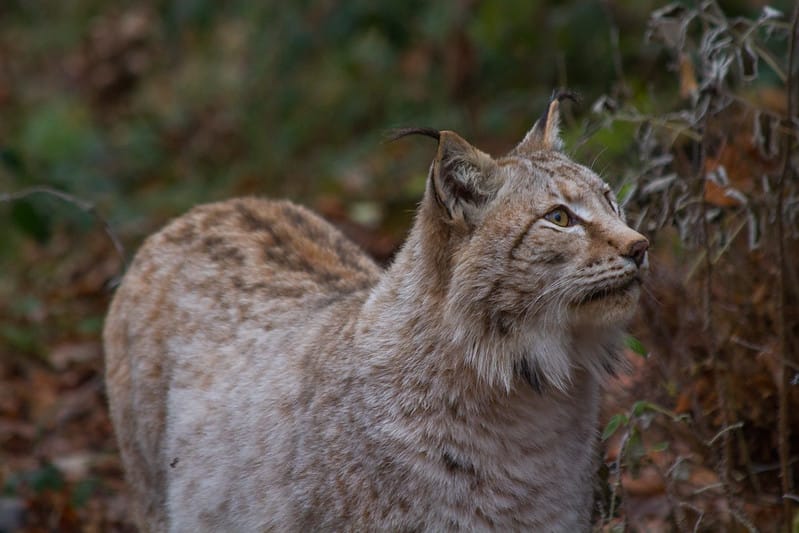
Lynx | The chair of Natural England Tony Juniper has said he is ‘enthusiastic’ about reintroducing lynx to Britain, but the debate remains ‘still quite polarised’ and more community engagement would be required. The comments come after the Lynx UK Trust submitted a draft application for a trial return of lynx to England’s largest forest, Kielder, using animals rescued from culls in Sweden. Officials from Natural England told the Trust that a trial reintroduction currently cannot proceed because Defra rules it illegal under the Dangerous Wild Animals Act. Juniper conceded that authorities need to ‘understand how communities that would be living with these animals would be able to continue with what they do’. In response, chief executive of the Trust, Paul O’Donoghue – whose previous reintroduction projects have been mired in controversy – said that Juniper ‘must know that sheep farmers will never change their position’, making calls for more engagement ‘utterly futile’. The Guardian and Independent reported the news.
Royalty | The role of King Charles III has been redefined to include leading on ‘environmental sustainability’. The monarch’s job as ‘Head of Nation’ will now include four key themes, confirmed by an annual report from Buckingham Palace: they include ‘national unity’, ‘community impact’, ‘cultural heritage’ and ‘environmental sustainability’. The King has long been known for his personal dedication to nature and green initiatives, but this is the first time it has been officially recognised in his role. Also this week, the King attended a conference in London with ministers, businesses and investors to discuss how to drive private money into restoring and conserving nature. The Telegraph and Independent reported the news. Separately, Prince William has said that regenerative farming should become a ‘foundation stone’ of British agriculture to ‘rebuild the nation’s health’, reports the Telegraph.
Crayfish | Conservation efforts are accelerating across Wales to protect the white-clawed crayfish, a native species at risk of extinction in Welsh rivers, according to Natural Resources Wales. Once widespread, the crayfish is now critically endangered due to pressures including disease from invasive species, pollution and ongoing habitat loss. To combat this decline, conservationists are creating ‘Ark sites’ where new populations can be safely established. At a hatchery in Cynrig, for example, officers bring in berried females (crayfish carrying eggs) and rear the juveniles in safe conditions. In the wild, survival rate to maturation is less than 10%, while in a hatchery this can rise to around 90%. The aim is to release these juveniles into Ark sites in late summer 2025, a ‘major milestone’ in a four-year project to protect one of Montgomeryshire’s last strongholds for the species. Find out more about the efforts in this post.
In other news:
- Mega farms in Scotland were responsible for 126 breaches of green regulations between 2022 and 2024, including leaking contaminants, reports the Ferret.
- Britain’s data centres are consuming nearly 10bn litres of water every year, reports the Times, as parts of the country brace for drought conditions.
- A blog by the Wildlife Trusts summarises developments for nature policy in 2025, and urges the public to join a mass lobby at Westminster on July 9th.
- Defra has announced funding for the Environment Agency to double farm inspections as part of efforts to cut agricultural pollution, reports ENDS.
- Wales Nature Week is running from 5th to 13th July to celebrate native wildlife and connection to nature: find local events here.
- More than 50,000 sheep have ‘disappeared’ from the Scottish Highlands, according to the National Sheep Association, with reported reasons including rewilding projects and commercial forestry. The Scotsman reported the news.
- Defra has announced £150m in funding for its Capital Grants offer, which supports sustainable food production and farmers’ environmental projects.
Across the country
London | The London School of Economics (LSE) has announced the creation of a new research centre to study animal sentience. The Jeremy Coller Centre, due to open in autumn, will develop approaches to studying the feelings of other animals, and use the emerging science of animal sentience to design better policies, laws, and ways of caring for other animals. The centre will bring together top experts from fields including philosophy, evolutionary biology, neuroscience and psychology, with research focusing on priorities such as the ethical use of AI in relation to animals, and revamping laws to safeguard insects and other invertebrates. Inaugural director Professor Jonathan Birch said the first-of-a-kind facility would be a place for ‘ethical moonshots’: ‘Let’s make a world in which all sentient beings are respected, even the smallest ones,’ he said. Positive News covered the story.
Surrey | Wealden Heaths has been announced as the 9th National Nature Reserve in the King’s Series. In the heart of Surrey countryside, the area includes a rich mix of open dry and wet heath, acidic grassland, regenerating woodland, and scrubby heath. England has lost around 80% of its heathland in the last two centuries; the new reserve will bring together a patchwork of these habitats, owned by different landowners, with the aim of joining and reviving them. It will also provide protection for a number of rare species including nightjars, sand lizards, adders and natterjack toads. The atmospheric landscape – which has provided inspiration to literary greats from Lord Tennyson to Arthur Conan Doyle – remains popular today, and includes a walking route named as ‘Britain’s Favourite Path’ by the Ramblers Association.
Cairngorms | Efforts to restore the environment are fuelling a boom in nature-based employment in Scotland, reports STV News, with roles in conservation, restoration and green health growing five times faster than other industries. In the Cairngorms, for example, environmental efforts are helping to revitalise the local job market: in recent years, at least 24 new posts have been created, from beaver and peatland project officers to green health link workers helping people to reap the benefits of being outdoors. Meanwhile, 20 long-term projects taking place over the next five years are aiming to improve landscapes, wellbeing and access, offering local residents a chance to develop skills while keeping the carbon footprint of the workforce low. Find out more and hear about individual work experiences during a feature on the Scotland Tonight programme, available here.
Elsewhere:
- The Natural History Museum is displaying an old wooden fingerpost from Exmoor National Park which has 12 species of lichen living on it, reports the BBC.
- Marine heatwaves are impacting Cornwall's marine wildlife, including booms in jellyfish and octopus numbers, according to the Cornwall Wildlife Trust.
- RSPB Campfield Marsh reserve in Wigton has been named as the UK’s 12th dragonfly hotspot after two rare species were spotted, reports the BBC.
- Conservationists have weighed and ringed three peregrine falcon chicks, which hatched at St Albans Cathedral after previous eggs were destroyed, reports the Times.
- Rotherham Council is set to buy six parcels of land, which will be used for reservoirs and wetlands as part of a £15m flood defence project, reports the Yorkshire Post.
- A £3m project between Teesside, Durham and Newcastle Universities will connect urban areas via 35 miles of green corridors, reports the Northern Echo.
- Hampton Court Palace in Richmond has unveiled plans to create a climate-resilient garden featuring almost 300 species selected for their resilience and biodiversity value.
- South Cumbria Rivers Trust has restored the course of a beck above Ulverston, creating a new brown trout spawning ground, reports the Cumbria Crack.
- Frome Town Council and campaigners have raised more than £37,000 to buy and protect a water meadow in Somerset, reports the BBC.
- Cumbrian farmers are using AI-powered recordings to monitor birdsong as part of a project to boost wildlife on farmland, reports ITV News.
- British Sugar has announced a two-year pilot project on a farming estate in north Norfolk to gather data on pollinator populations using sugar beet crops, reports the AA Farmer.
- National Highways has relocated over 2,000 snakes, slow worms and lizards in the first two years of construction work for a road in Gloucestershire, reports ENDS.
Reports
Farming | The time is now to get the green farming transition back on track, according to a report by the Wildlife Trusts. The report comes after the government’s decision to protect England’s nature-friendly farming budget in the Comprehensive Spending Review, and it argues that nature-friendly farming must now ‘move centre-stage’ as one of the most cost-effective and efficient ways to achieve nature recovery and climate targets. Under a ‘vision for 2050’, the report outlines key goals, including all farmed land in England operating under agroecological and regenerative principles, and farming contributing to the restoration of waterways. To achieve this, key transformations include utilising both public and private finance to supercharge nature-based solutions, and reforming food supply chains to ensure they reward farmers fairly.
Land | Europe’s land and forests are absorbing less carbon than expected, putting climate targets at risk – but with the right policies and measures, the sector can still play a crucial role in climate mitigation. This is the main finding of a report by the European Environment Agency on enhancing Europe’s land carbon sink. It found that the amount of greenhouse gas removed by land use change and the forestry sector has diminished: between 2014 and 2023, the average annual carbon sink dropped by 30% compared to the decade before. This was largely due to dynamics in forested land, including an increase in tree felling. The report also outlines a range of mitigation options to unlock the sector’s full sequestration potential. These include protecting carbon stocks by avoiding the drainage of peatlands; improved management and restoration of forests, cropland and grassland; and tree-planting, including agroforestry and in urban areas.
Invertebrates | The charity Buglife is celebrating a major milestone in its project to map Britain’s network of Important Invertebrate Areas. There are more than 100 IIAs across Britain, and they are home to nationally or internationally important invertebrate populations. These range from a handful of Plymouth quarries, which are the sole home for the horrid ground-weaver spider, to a Scottish river with a centuries-old population of freshwater mussels. Buglife is working to create profile documents for each of these areas, and has now finished 50 profiles. Each profile details the landscape’s important features, the key species and assemblages, and the threats they face. The charity said these documents are ‘what is needed to help make sure that the needs of bugs are recognised by everyone’, from ecologists to planners, statutory bodies and land managers. You can also find out which IIA is closest to you on this webmap.
Science
Wildcats | Farmers in England and Wales are not necessarily opposed to the reintroduction of wildcats, but outreach by conservationists needs to improve, according to a study in People and Nature. Researchers interviewed 22 farmers about the potential return of the predator, which has been absent from the countries since the mid-1800s. Lack of cultural knowledge about wildcats meant that many farmers overstated their impacts, both positive and negative, while the conflation of ‘reintroduction’ and ‘rewilding’ had had a detrimental effect on support for any such projects. However, many said they were willing to engage with wildcat reintroduction as long as engagement with their communities was thorough and sensitive. Local involvement was seen as essential, with conservation organisations often regarded as complicit in an anti-farmer narrative. As one interviewee put it: ‘Spending time in these communities would help build solutions that benefit all.’
Willow | When restoring degraded mountain woodlands, prioritising planting trees on remnant habitat may be counterproductive, according to a study in Restoration Ecology. Scientists from the University of Stirling and Forest Research examined the physical and biological features of potential planting sites for montane willow on Ben Lawers in central Scotland. They found that using ‘relict’ habitat – surviving willows – as a guide for planting restricted possible sites, and even omitted the most productive sites. This is because surviving trees are often found in isolated and inaccessible locations, such as cliff edges, due to overgrazing. The conditions of these sites, including lower soil depths and higher pH, do not present ideal growing conditions. Instead, the authors conclude that restoration efforts must move beyond simply ‘protecting and magnifying’ present-day populations, and instead aim to re-establish montane woodland across its ‘full range’.
Agroecology | Nature-friendly farming methods improve both biodiversity and crop yields, but may be less profitable than conventional farming, according to a study in the Journal of Applied Ecology. The findings are from the first comprehensive on-farm trials of their kind in the UK. The study took place across 17 conventional, commercial farms in southern England, which trialled various agro-ecological methods, including planting wildflower margins and strips, sowing overwinter cover crops to capture carbon and retain soil nutrients, and adding organic matter. They found that these practices increased pollination, natural pest control and the number of earthworms, as well as boosting crop yield – but the associated costs affected the bottom line. The authors concluded that the transition to more sustainable farming systems would require new policy interventions to overcome economic constraints. Phys.org covered the research.
Driftwood
Afterlife | In Emergence, Potawatomi botanist and Braiding Sweetgrass author Robin Wall Kimmerer writes about the afterlife of trees at the Andrews Experimental Forest in Oregon. Here, scientists are tracking and measuring the growth and decomposition of an ancient ecosystem – and yet, this ecological experiment is also a kind of ‘experimental theology,’ writes Kimmerer, with the transformation of carbon akin to that of the human soul after death: ‘Is that how the spirit leaves the body? Released from the weight of wood, into the afterlife of cedars; there is no boundary between the sacred and the mundane…’ she muses. Kimmerer also reminisces about her former tutor, Dr. Francis D. Hole (who appended TNS – Temporarily Not Soil – to his name), who used music and poetry to convey the complexities of the forest soil.
Atlas | What can historical archives tell us about ocean ecosystems today? In this feature for the Conversation, researcher Ruth Thurstan explains how her field of ‘marine historical ecology’ uses information extracted from old books, reports and even newspaper articles to shed light on present-day issues such as fishery declines and degradation of coastal habitats. For example, the Piscatorial Atlas, which contains 50 illustrated maps of the British seas, includes a map dedicated to native oysters, with colour gradations indicating where oysters were found in abundance in the 1880s. Being able to visualise and compare these historical strongholds with modern day declines can ‘help make the case’ for more ambitious conservation and restoration, Thurstan argues, and reverse ‘collective societal amnesia regarding what we have lost’.
Sacred | Reframing the natural world as sacred may help to preserve it, writes anthropologist Dimitris Xygalatas in Noema. He looks at how Hindu tradition and rituals have helped to preserve the Grand Bassin in Mauritius, and how the cosmological rhythms of the lunar cycle determine sustainable water usage among Balinese farmers. But can this approach to environmental preservation work in the increasingly secular West? He argues that it can – and that one must only look to the US National Parks to see it in action. Although these are not religious sites, they are treated with a kind of reverence among those who visit them. This attitude could easily be replicated elsewhere: ‘What if heads of state took their oath of office in national parks or nature reserves rather than government halls?’ he writes. ‘These are modest, low-cost interventions – rituals in waiting – that could help reframe our relationship with the planet, embedding meaning, care and a deeper sense of obligation to our common future.’
Further reading:
- The Guardian has a review of Beastly Britain by Karen R Jones, which examines the cultural history of Britain's relationship with its native wildlife.
- A BBC article quotes anonymous ‘guerilla rewilders’ who claim they are ‘doing God’s work’ by illegally reintroducing beavers.
- The RSPB has announced the launch of Return, a film about the reintroduction of white-tailed eagles.
- A feature in the BBC takes a look at cities in Europe which are using maggots to help process food waste.
- Could giant wildlife puppets be a more effective – and captivating – form of environmental engagement than climate news? Find out in the Conversation.
- In the Guardian, read about how musician Ellie Wilson composed ‘Moth X Human’ using moths’ flight data from Salisbury.
- A feature in the Guardian explores a 20-year project in Scotland to boost depleted wild salmon populations, particularly through tree-planting.
Happy days
Poo | In Tasmania, artists have been invited to take part in a competition with a strange rule: paintings must be created out of animal poo. Karin Koch established the Pooseum – a science museum devoted to animal droppings – in 2018, where three paintings made of poo (cow, wombat, pademelon) are already on display. The competition, she says, was the ‘next logical step’. Though the medium may raise eyebrows, the intention behind it is serious: to break the taboo around poo and raise awareness of bowel cancer. Koch established the museum after a close friend died of the disease, having kept silent on the warning signs for years. ‘In his generation, talking about such things was taboo and that silence unfortunately cost him his life,’ she said. The Guardian covered the story.
Subscribe to our newsletter
Members receive our premium weekly digest of nature news from across Britain.
Comments
Sign in or become a Inkcap Journal member to join the conversation.
Just enter your email below to get a log in link.