Missing Species & Tree Memory
The latest news on nature and conservation in Britain.
National news
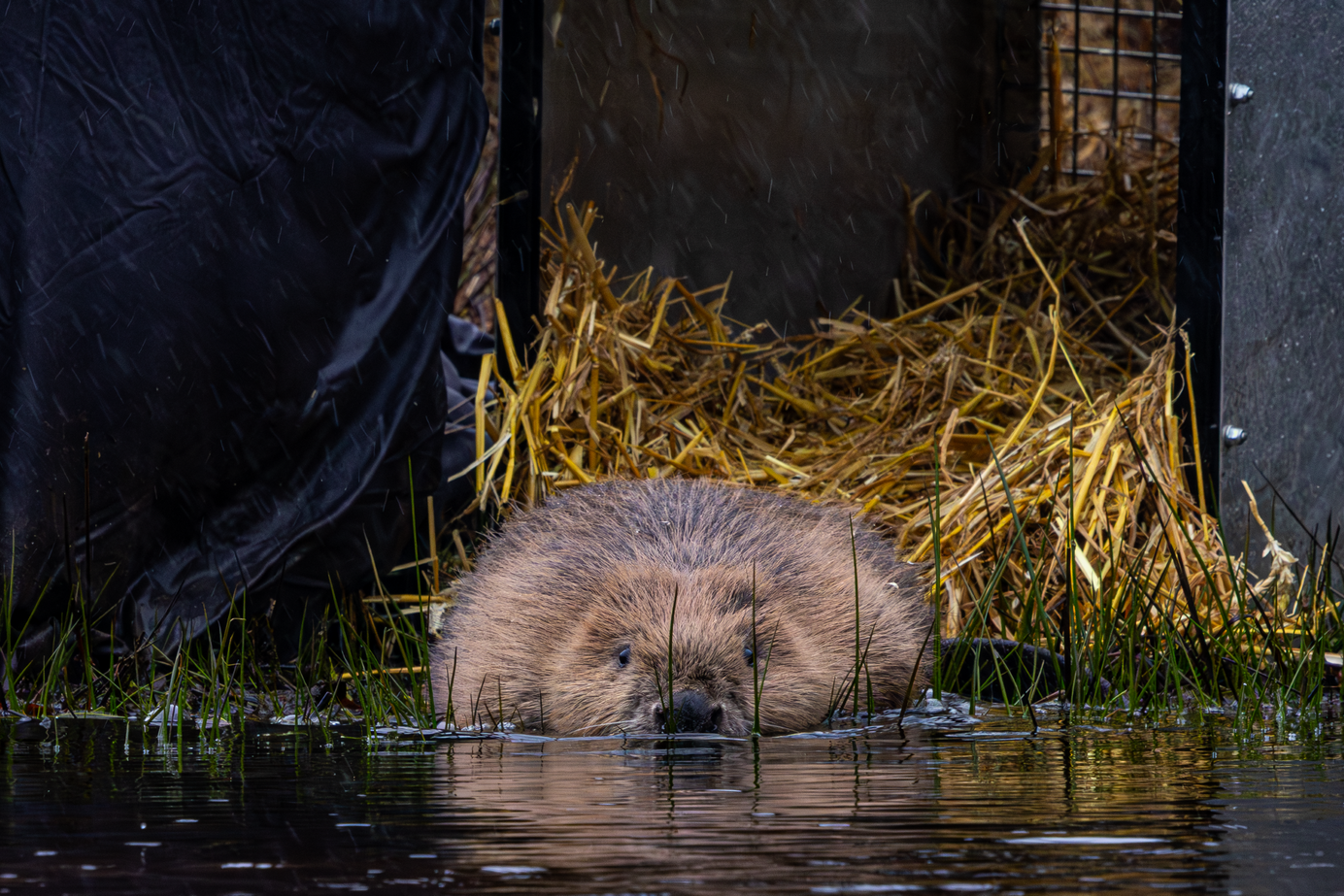
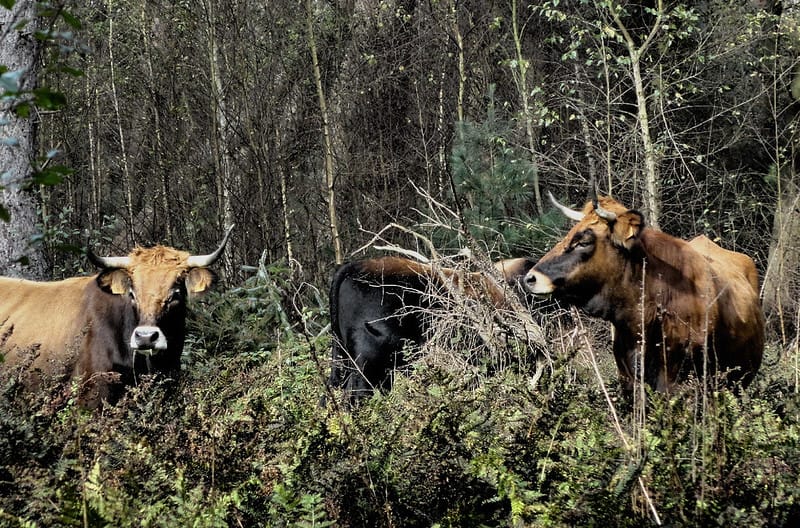
Species | Trees For Life has launched a £3.6m project to return four missing species to the Scottish Highlands: lynx, beavers, red squirrels and aurochs. Beavers and red squirrels already live in Scotland, but are absent from much of the suitable habitat. The reintroduction of aurochs, however, is more ambitious: the species is globally extinct, with the charity hoping to instead return tauros – cattle back-bred to resemble the ancient beasts – to its Dundreggan estate. The hope is that returning these ‘architects of the wild’ will ‘restart the natural engines of Scotland’s ecosystem’ and boost eco-tourism. The Scotsman and Daily Record reported the news. Meanwhile, the Scottish Green Party has proposed amendments to the Natural Environment Bill to strengthen nature restoration. The suggested changes include reintroducing lynx, better protecting red squirrels, expanding Atlantic rainforest habitat, and mandating swift bricks. These are among more than 300 amendments to be debated next week. The news was covered by national outlets.
Planning | Eighty environmental organisations have written to the government, warning that its plans to restrict Biodiversity Net Gain rules would be ‘ruinous’ for England’s main nature market. Proposals to exempt small development sites from obligations to compensate for nature loss would remove 97% of applications from the market, according to the open letter. Separate research commissioned by the Wildlife Trusts revealed that the proposals would cost nearly 2,500 jobs and £250m in investment. In other planning-related news, a report by the cross-party Environmental Audit Committee has warned that nature should not be viewed as a ‘blocker’ to housing delivery, and that this ‘lazy narrative’ endangers the government’s housing and environmental targets. The Committee acknowledged the government’s amendments to the Planning and Infrastructure Bill in July, but said the changes were insufficient, and that using nature as a ‘scapegoat’ was undermining efforts to tackle the genuine challenges facing the planning system. The BBC, Guardian and ENDS covered the report.
Farming | A government-commissioned review on the profitability of farming has been ‘buried’ by the Treasury until after the budget, reports the Times. The review by Baroness Batters, former president of the National Farmers’ Union, will highlight the pressures faced by British farmers, and makes 57 recommendations on how to improve agricultural profitability. It was submitted to Defra at the end of October and expected to be published within weeks, but on Sunday the Treasury confirmed it would now be published before Christmas. Victoria Atkins, the shadow environment secretary, said the report had been ‘deliberately delayed’ until after the ‘dreaded budget’ because it must ‘tell hard truths about the government’s farming policy’. The Telegraph also reported the news; see more reaction in the Driftwood section.
In other news:
- The Tree Council has launched a programme aiming to double the number of community-run tree growing projects in the country within the next three years.
- The government has introduced a law banning the sale of plastic wet wipes to protect waterways and wildlife, reports the BBC.
- Some 98% of Welsh bathing waters met strict environmental standards this year, while 70% were ‘excellent’, according to the 2025 classifications.
Across the country
Hebrides | Three major whisky distillers have pledged £1.6m to restore 1,000 hectares of peatland at the Oa nature reserve on Islay. The RSPB, which is leading the project, said the ‘unprecedented’ collaboration underlined the importance of working across industries to restore nature. Over the next five years, the project will restore much of the reserve’s blanket bog that was drained by centuries of domestic peat cutting. New vegetation will make the peatland more resilient to flooding and wildfires, help store carbon, and provide habitat for threatened species including curlew, snipe, hen harrier and large heath butterfly. The charity said the project would also ‘celebrate the cultural roots’ that link Scotland’s nature, people and whisky. The Herald and the Whisky Magazine covered the news.
Northumberland | The Environment Agency has completed one of the largest river restoration projects to date in the UK at the River Breamish in Northumberland. Like many British rivers, the course of the Breamish was straightened centuries ago for agriculture, disconnecting it from its original floodplain. The restoration team combined analysis of maps from the 1600s – courtesy of the archives at Alnwick Castle – with 3D modelling of the terrain to trace the river’s original meanders. Restoration work included excavating channels, installing shallow ponds and constructing woody dams, but the EA said the river will develop its own ‘final design’ as it spills into the former floodplains, forms wetlands and adapts over time. The Northumberland Gazette and BBC reported the news.
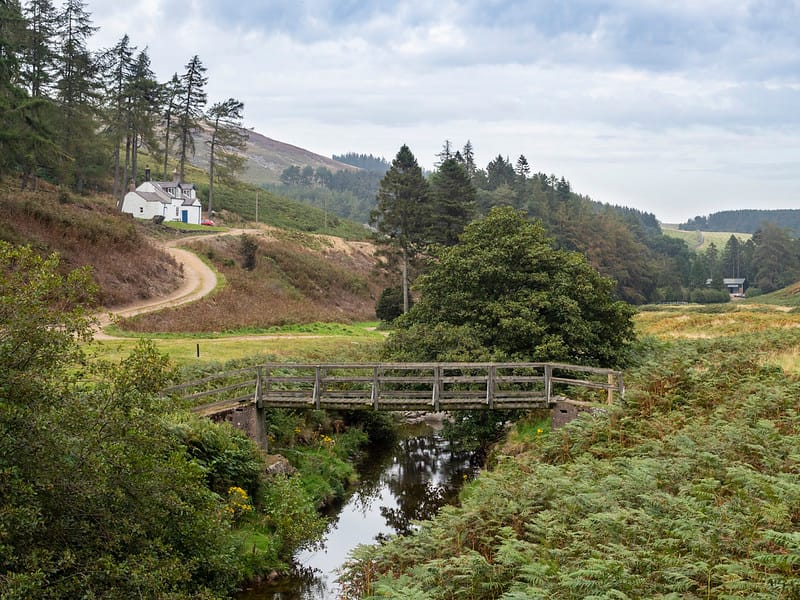
Highlands | The Glen Affric national nature reserve has joined the UK’s largest rewilding landscape, Affric Highlands. The reserve, which is managed by Forestry Land Scotland, is renowned for its beautiful and biodiverse landscape, and contains one of Scotland’s most intact areas of ancient Caledonian forest. It is the 20th landholding to sign up to the ambitious rewilding initiative, which aims to restore nature across more than 200,000 hectares of the central Highlands, with connected habitat stretching from Loch Ness to Kintail. Alex Macleod, regional manager for the FLS, said the team was ‘delighted’ to join a project that would allow nature to ‘thrive across such a vast area of the Highlands’. The National and Inverness Courier reported the news.
Elsewhere:
- Salmon have returned to the Levern Water in Barrhead after 170 years of absence, thanks to a river restoration project, reports the Herald.
- Two citizen science projects in Dorset are monitoring the effects of agricultural pollution in rivers, reports the BBC.
- Volunteers are restoring sand dunes in Alderney by removing sour fig, which is thought to have been introduced after WWII to cover bunkers, reports the BBC.
- A public inquiry has heard that plans to build a busway between Cambridge and Cambourne would cause irreversible ecological harm to traditional orchards, reports the Guardian. Inkcap Journal previously featured the issue.
- Volunteers are working on Camber Sands to remove millions of plastic bio-beads by hand, reports the Guardian.
- The Countryside Regeneration Trust in Surrey is fundraising to install 250 footprint monitoring tunnels to track dormouse numbers, reports the BBC.
- Design company Tandem Ventures has designed an underwater robot to harvest seagrass seeds 100 times faster than manual harvesting, reports Electronics Weekly.
- A research project by the University of Sussex will measure carbon capture levels in different landscapes by counting the number of earthworms, reports the BBC.
- Ancient woodland in Bolton, Greater Manchester, is being restored by increasing light levels for native species, reports About Manchester.
- A group from Eryri has launched a campaign against the ‘colonial’ naming practices of Ordnance Survey, which often replaces Welsh place names with English ones, reports Nation Cymru.
Reports
Rainforest | Temperate rainforest in the southwest of England is in dire need of greater protection and restoration, according to a report commissioned by the Woodland Trust. Based on research by the University of Plymouth, the report provides the first ecological baseline for rainforest habitat in the region. It found that around 40% (just under one million hectares) of the southwest experiences climatic conditions to support rainforest, yet less than 10% of this zone actually contains suitable woodland for the vulnerable habitat. It also found that the vast majority of existing ancient woodland within the rainforest landscape has no legal protection, with just 15% designated as SSSIs. The Trust said it plans to use the report as an ‘essential blueprint’ to identify locations for rainforest restoration and expansion. The Moorlander and Mid-Devon Advertiser covered the news.
Wildcats | A two-year feasibility study has found that southwest England could support a population of European wildcats. Wildcats disappeared from England in the 1800s largely due to persecution, and only around 115 wild individuals remain in the Scottish Highlands. The report, led by the Devon Wildlife Trust, found that the southwest has sufficient woodland connectivity and prey availability to support between 40 to 50 cats. Some 70-80% of local people felt positive about reintroduction, and believed that wildcats would not significantly threaten existing endangered wildlife, livestock or pets. Releases would not take place before 2027, however, and would require further engagement with local communities. The news was widely covered by various outlets.
Bugs | The 2025 Bugs Matter report has found that numbers of flying insects are still falling, despite a sunny spring and hot summer. The annual citizen science survey uses the simple method of counting insect ‘splats’ on vehicle number plates after car journeys. This year, volunteers logged around 31,000 insects across more than 10,000 journeys. Data analysis showed an average annual decline in bug splats of 19% since the survey began in 2021, and last year was no exception: Andrew Whitehouse of Buglife said that the ‘apparently favourable conditions’ had not boosted numbers as hoped, with the survey instead recording a fifth year of ‘significant decline’. The BBC reported the findings.
Science
Beavers | Wetlands created by beavers can boost struggling pollinators, according to a study in the Journal of Applied Ecology. Researchers from the University of Stirling compared the number of pollinators and plant species around beaver-engineered wetlands to numbers at human-created ponds, both at the Bamff Wildland rewilding estate in Perthshire. They counted 119% more hoverflies and 45% more butterflies at the beaver-created wetlands. The difference was attributed to more diverse flower foraging opportunities and more open habitats. Lead author Patrick Cook said the study demonstrated the potential for beavers to help reverse the decline of pollinators, but warned that landowners currently lack incentives since most agri-environment subsidies only support artificial ponds.
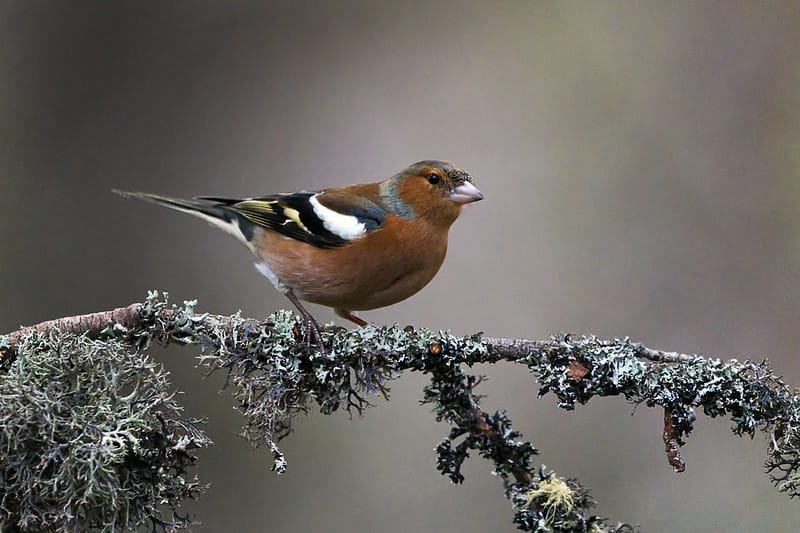
Birds | Birds are making a tentative recovery in France following a ban on neonicotinoid pesticides, according to a study in Environmental Pollution. Neonicotinoids were banned by both the EU and UK in 2018 due to their fatal effects on insects such as bees. The study analysed data from more than 1,900 sites across France on 57 bird species, and found that numbers of insectivorous species – such as blackbirds, blackcaps and chaffinches – had increased by 2-3% in the four years after the ban. Lead researcher Thomas Perrot said that even a small increase is ‘meaningful’, and shows the ban is an effective conservation measure. Other researchers were more cautious: James Pearce-Higgins of the British Trust for Ornithology said the results could be due to other factors such as habitat and climate. The Guardian covered the study.
Grasslands | England and Wales has lost around a third of its nature-rich grasslands in the last 90 years, according to a study in Landscape Ecology. The study is based on a land-use survey from the 1960s, when 3,000 volunteers – many of them schoolchildren – marked out types of land cover on maps covering Britain. Researchers from UKCEH have digitised 15% of these maps, allowing them to fill a gap between the first land-use survey in 1930 and modern satellite imagery. They found a 29% net loss in pastures and meadows from 1930 to 2000, with the majority of decline between the 60s and 90s as arable farming became more profitable. Lead author Lucy Ridding – whose grandmother was one of the schoolchildren in the 1960s survey – said that knowing ‘when and where’ habitat loss took place would enable conservationists to make targeted future restoration efforts. The Times covered the research.
Driftwood
Memory | A long read in the Conversation dives into research on the ability of trees to remember. The Membra project (full name: Understanding Memory of UK Treescapes for Better Resilience and Adaptation) is a multidisciplinary research collaboration exploring how memory might function in long-lived organisms such as trees, where memories are ‘a biological reality, written into their cells.’ Oaks, for example, may adjust their gene expression after long-term drought, potentially allowing future generations to respond more quickly, while ash trees contain chemical traces linked to ash dieback pressure. Interpreting tree memory could help inform future conservation efforts, according to the researchers: they write that ‘trees are not just survivors – they are storytellers, record keepers and even teachers.’
Weaponry | Off the coast of Germany, scientists have made a surprising discovery: marine life is thriving on the sunken detritus of abandoned second world war munitions. After the end of the war, the seafloor of the Bay of Lübeck in the Baltic Sea became a dumping ground for Nazi weaponry including bombs, torpedo heads and mines. Recently, researchers visited to catalogue any life surviving there – and were astonished to find a regenerated ecosystem more populous than the surrounding seafloor. Thousands of creatures were living on every square metre of the munitions, including crabs, sea anemones, mussels – and 40 starfish on an exposed chunk of TNT. Lead researcher Andrey Vedenin said it was ironic that ‘things that are meant to kill everything are attracting so much life’. Read more about the discovery in the Guardian.
Farming | Author and farmer James Rebanks criticises Labour’s treatment of farmers in UnHerd. The article traces the situation back through the Conservatives’ policies, but argues that, since Labour came into power, the dynamic has ‘gone into freefall’. This is epitomised, in Rebanks’ view, by the apparent disappearance of a report into the profitability of farming until after the government budget. He also takes issue with the government’s frequent claim that it has ‘put more money into supporting farming than any previous government’. The majority of this, he argues, pays for nature restoration rather than farming. He writes: ‘The argument here is not that we don’t need more nature – we do – but that we also need to produce enough food, and to ensure our farmers make a decent return.’
Further reading:
- The Times has an article about Danish billionaire Sofie Kirk Kristiansen, the Lego heiress who plans to rewild much of her Highlands estate.
- A feature in the Times recounts the 5,000-mile quest of Kew Garden botanists to track down a tree species with only one known specimen in the world.
- The Telegraph has a feature about the threat of development to Britain’s ancient woodlands, as demonstrated by Oaken Wood in Kent.
- In Country Life, read about the ‘complicated world’ of falconry, combining sport with a ‘profound empathetic connection’ to the hawk.
- For the Times, environment editor Adam Vaughan writes about the latest signs that Britain’s seasons are slipping out of sync, including poppies blooming in November.
- An article in the Telegraph profiles the plans for the Rothbury Estate, which the Wildlife Trusts plan to purchase – if they can raise the cash.
- The Financial Times has a list of the best books on the environment, science and technology in 2025.
- On Tuesday, a choral piece inspired by the Sycamore Gap tree premiered in Helsinki: read about the inspiration here.
- An opinion article in Nation Cymru argues that the rewilding movement is starting to focus on people within landscapes, rather than aiming for land without people.
- In an essay for Aeon, researcher Ville Lähde argues that the concept of the ‘Anthropocene’ still has currency even after it was rejected as a scientific designation.
Happy days
Beatrix Potter | A Lake District farm formerly owned by Beatrix Potter will begin a new chapter this month, reports Cumbria Crack, with its first female tenant farmer since Potter bought the property in 1905. Hill Top Farm in Near Sawrey was responsible for Potter’s lifelong dedication to farming, conservation and Herdwick sheep. It is now owned by the National Trust but continues to operate as a working farm in accordance with Potter’s wishes. Amy Dixon and partner Daniel Fletcher, who are taking on the tenancy, plan to build on the Herdwick flock, and continue Potter’s legacy of sustainable farming by creating a new wood pasture alongside the existing hay meadows.
Subscribe to our newsletter
Members receive our premium weekly digest of nature news from across Britain.
Comments
Sign in or become a Inkcap Journal member to join the conversation.
Just enter your email below to get a log in link.