National Parks & Grassland Rewilding
The latest news on nature and conservation in Britain.
National news
Parks | England’s National Parks have warned that a funding crisis means they may have to cut back on nature services, including maintaining footpaths and rights of way. The government only confirmed the parks’ funding for 2024-25 last Thursday, leaving the authorities uncertain on budgets until a few days before the new financial year. The main issue is that, after accounting for inflation, the parks have suffered a real-terms cut of 40% over the last decade. Several are predicting large shortfalls in the coming years; the Yorkshire Dales, for instance, is facing a £4m hole for 2025-26. Some have said they will need to close visitors centres, while others predict the cost of maintaining footpaths is on the front line for cuts, threatening public access to the landscapes. In light of the news, campaigners have criticised the additional cost of the new national park promised by the government. The Times covered the news, and campaigner Kate Ashbrook has written a blog about the 75th anniversary of the National Park Act.
Mapping | Ordnance Survey, the national mapping service, has said the latest update to its geographic database of Britain will have a ‘significant impact’ on biodiversity monitoring. The update is in two parts: the first is a ‘Field Boundary’ layer, which details the type of boundaries surrounding land areas – such as trees, hedgerows or walls – as well as their height and width. The second is an enhancement to its ‘Land Cover’ data, which documents categories of natural land surfaces across the UK. Both features can be used by landowners, farmers and organisations to monitor changes to Britain's landscape over time, according to the service, and the changes mean they will be able to better measure biodiversity net gain or loss, as well as provide evidence for carbon offsetting and environmental land management schemes. The Evening Standard and Business Green covered the news.
Seagulls | As populations of gulls in Britain decline, scientists have argued that the birds are unfairly maligned, and that society needs to learn to live alongside them. ‘Seagulls’ is an umbrella term used to describe multiple species of gulls: the six main species found in the UK are all declining in number, and are either amber – or, in the case of the herring gull – red listed. These birds face multiple pressures, from avian flu to depleted fish stocks, and are increasingly being forced into urban areas, where they come into conflict with humans over food. ‘When we see behaviours we think of as mischievous or criminal, almost, we're seeing a really clever bird implementing very intelligent behaviour,’ said Professor Paul Graham of the University of Sussex. Instead of demonising them, he said that cities should implement simple solutions, including more secure bins and educating people about leaving food in the open. The BBC reported the news, and this video looks at Wales’ gull population.
In other news:
- Eighty-three percent of British people ‘do not feel comfortable’ swimming in Britain’s waterways due to sewage pollution, according to polling for the Byline Times.
- Conflict zone mediators have been hired to try to find common ground between environmentalists and gamekeepers over the management of Scottish deer, reports the Times.
- Fourteen nature projects across Scotland will receive a share of £7.8m in the latest round of the government’s Nature Restoration Fund, reports the Herald.
- Farmers are calling on the government to give them a universal basic income to cope with the effects of post-Brexit payment schemes, reports the Guardian.
Across the country
Wiltshire | An arable farm in Wiltshire is being transformed into the largest grassland rewilding project in southern England. The ‘Pertwood Plain’ project will see 2,800 acres of farmland gradually altered into flower-rich chalk grassland, maintained through naturalistic grazing of free-roaming pigs and cattle. In a landscape dominated by arable fields, the project aims to restore endangered species, including the cuckoo, turtle dove, and locally extinct great bustard. Pertwood is among an increasing number of traditional farms turning to nature regeneration as a financial option: the government’s ‘wood pasture’ funding under the countryside stewardship scheme guarantees the project annual payments of £300,000 for 10 years. Benedict Macdonald, the naturalist who is leading the project, said it was ‘a myth that by creating nature we destroy food production’; instead, the project is advocating ‘countywide biospheres that are large enough to halt or reverse species decline’. The Guardian covered the story.
North Wales | At a secret location in north Wales, naturalists have planted 30 young specimens of a once-common plant which has been pushed to the brink of extinction. Cotoneaster Cambricus – Welsh Cotoneaster – grows on windy cliffs in North Wales, but by the 1960s overcollection by enthusiasts and overgrazing by sheep, goats and rabbits had reduced the species to just a handful of individuals. Decades of conservation efforts, including specimen cultivation at Chester Zoo, have boosted the population to around 110 individuals, and the team hope the latest planting will eventually help to create a stable population. Phil Esseen, Head of Plants at the zoo, said it is ‘not the most spectacular plant, but you can’t just go by looks’, adding that it was increasingly important to conserve local species. Reuters reported the story.
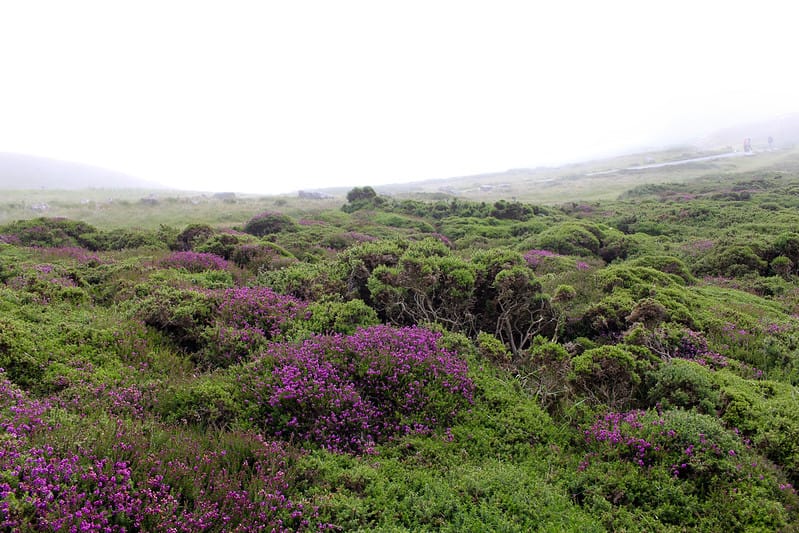
Hebrides | A new group has been set up to support crofters across the Western Isles and encourage more young people into the industry. Crofting is a system of land tenure and farming specific to Scotland: around 33,000 people live on crofts, but recent years have seen a decline in livestock numbers as older generations bear increasing responsibility for keeping the industry afloat. However, some believe that the tide is turning: 29-year-old crofter, Fiona Mciver, told the BBC that more young people are taking an interest, partly due to rural influencers on social media, as well as increasing interest in food security. The Western Isles Young Crofters group was launched at a busy event in Stornoway, and the organisations hope that having a dedicated group will help channel the growing interest into increased involvement.
Elsewhere:
- Derbyshire Wildlife Trust is planning to rewild an 83-acre farm near Belper after a fundraising campaign allowed the Trust to purchase it, reports the BBC.
- The Manx Wildlife Trust has launched the Isle of Man’s first carbon credit project, which aims to establish native woodland, reports the BBC. Separately, it is also looking for experienced anglers to take part in a shark tagging programme.
- Conservationists are concerned by plans to surface the ancient Monk’s Trod path in the Cambrian mountains to allow for trail bikes and off-road cars, reports the Daily Post.
- Northumberland National Park has scored the highest rating for visitor satisfaction of all parks in England and Wales, reports the Northern Echo.
- Crews from Penlee Lifeboat in Cornwall rescued a humpback whale which had become entangled in fishing ropes, reports BBC.
- Somerset Wildlife Trust and Diverse UK are offering free nature activities aimed at helping neurodivergent people, reports the BBC.
- Rowers from the University of Oxford have criticised the amount of sewage in the Thames after the discovery of high levels of E. coli, reports the BBC. Villagers have also mocked Thames Water with hand-made signs.
- The Cambridgeshire-based charity, Creating Nature’s Corridors, aimed to plant more than 3,000 trees and hedges over the Easter weekend, reports the BBC.
- Also in Cambridgeshire, the number of red kites has soared due to the raptors stealing meat intended for tigers, cheetahs and dingoes at a Peterborough zoo, reports the BBC.
- A collaboration between Aberdeen City Council and Buglife Scotland is transforming 20 hectares in the ‘Granite City’ into wildflower habitat, reports the Press and Journal.
- A builder from Caerphilly has received a 12-month conditional discharge and £111 fine for destroying three bat roosts, reports the Nation Cymru.
- The iconic gasholder at Granton in Edinburgh has been infilled in preparation to create a multifunctional public park, complete with trees, shrubs and wildflowers to improve local biodiversity, reports the Scotsman.
- RSPB Scotland is investigating the ‘suspicious’ disappearance of a satellite-tagged hen harrier from the Glen Esk area of Angus, reports BirdGuides.
- A project to restore the ecology of the River South Esk in Angus has been granted £1.4m by the Scottish government.
- A petition signed by more than 100,000 people is calling on Natural England to protect the current number of Dartmoor ponies, reports the South Hams Gazette.
- The Wiltshire Wildlife Trust has launched a project to monitor and conserve the remaining lapwings in the Wiltshire chalk landscapes, reports the Swindon Link.
- The National Trust and the Cotswolds National Landscape are creating new wildflower grasslands in the Cotswolds to encourage native species to return, reports the BBC.
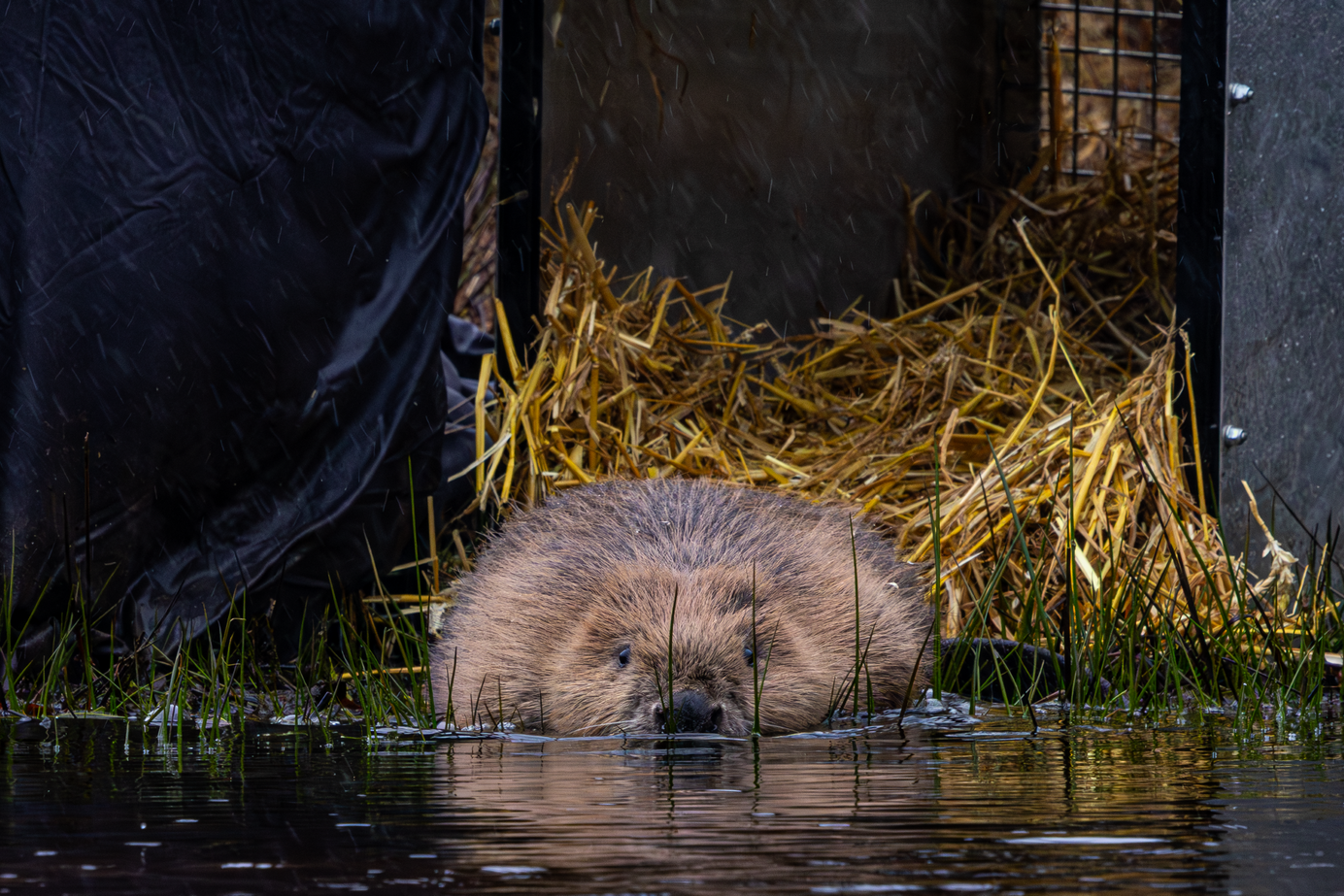
- The Environment Agency has said a beaver reintroduction project in Essex, aiming to reduce flooding and drought, turned out ‘better than we could have imagined’, reports ENDS.
Reports
Butterflies | The latest annual results of the UK Butterfly Monitoring Scheme show a mixed picture for Britain's butterflies. The scheme records data at over 3,000 sites per year for 58 of the 59 regularly occurring species in the UK. Last year, half of those species recorded a better-than-average year, while the other half experienced a below-average year. On the positive side, some species are responding well to conservation efforts: the large blue, which was reintroduced to the UK in the 1980s, recorded its best year yet, as did the chequered skipper, which was returned to England in 2018. The migratory red admiral also had an exceptional year, particularly in Scotland. However, two species recorded their worst year on record: the small pearl-bordered fritillary and the small tortoiseshell. The sharp decline of the latter – a once-common garden butterfly – has somewhat confused scientists, but it is thought to be linked to climate change. The Guardian and the Independent covered the research.
Green space | Three-quarters of children want to spend more time in nature, according to a survey conducted by the National Trust and the children’s newspaper First News. The poll, which surveyed 1,000 children aged seven to 14 and 1,000 parents, found that nearly two-thirds of parents are only able to take their children to nature spaces once a week or less – citing accessibility as the main barrier – while nearly a third of parents from lower-income houses cited cost as the main barrier to accessing nature. Some 56% of children wanted better access to green space, and 76% wanted to spend more time in nature. On the back of the results, the Trust is calling on the government to make good on its pledge for every person to live 15 minutes away from nature by enshrining the access in law. Director general of the Trust, Hilary McGrady, said: ‘We’d like to see the largest improvement in access to urban green space since the Victorian era.’ The Guardian and the Standard covered the news.
Waste | The United Nations Environment Programme has published a report providing the most up-to-date global estimate of food waste levels. It found that, in 2022, 1.05 billion tonnes of food were wasted, amounting to almost one-fifth of all food available to consumers. Notably, the majority (60%) of waste happened at household level, with the remaining 28% coming from services and 12% from retail. Inger Anderson, executive director of UNEP, said that food waste is not only a major development issue, but ‘the impacts of such unnecessary waste are causing substantial costs to the climate and nature’. The good news is that food loss and its impacts can be significantly reversed if countries prioritise the issue, according to the report. It provides guidance for improving data collection and for moving from measuring to reducing food waste.
Science
Hornets | Researchers from the University of Exeter have unveiled an early warning system designed to detect Asian hornets, aided by the use of artificial intelligence. The monitoring station – which has been named VespAI – uses a cloth laced with food to attract the insects, while an overhead camera captures images. AI then determines whether or not the insect is an Asian hornet – a highly invasive and predatory species which may be establishing in the south of England – and sends an alert to the operator’s device. The current response strategy relies on people reporting hornet sightings, but many turn out to be cases of mistaken identity, so the device could be a game-changer. Thomas O’Shea-Wheller, who led the research, said: ‘Our goal was to develop something cost-effective and versatile, so anyone – from governments to individual beekeepers – could use it’. The research findings were published in Communications Biology and the Guardian covered the story.
Cetaceans | Twenty-two percent of all small cetaceans are threatened with extinction, according to a paper published in Scientific Reports. Dolphins, porpoises and other toothed whales are often the subject of research and public interest, yet their populations have continued to decline in recent years. Researchers set out to examine the human activities driving their extinction risk, and found that fisheries and coastal habitat degradation made up the main predictors of extinction risk. Contrary to popular belief, the casual impacts of small-scale fisheries were greater than those of large-scale operations. Most alarmingly, they found that research efforts for these priority threats were vastly underrepresented in study focuses. ‘Small cetaceans are among the lower hanging fruits of marine conservation’, they write; ‘continued failure to halt their decline bodes poorly for tackling marine biodiversity loss’.
Afforestation | Planting trees on rangelands – that is, deserts, grasslands, shrub steppe, savannas and open woodlands – is perceived to be a natural climate solution, but that is not the case, according to a paper published in Frontiers in Ecology and the Environment. The misconception partly comes from the erroneous view that all open landscapes are degraded forests, when actually many are ancient ecosystems that precede even the evolution of humans. The afforestation of these landscapes has limited potential for carbon storage, as it reduces the volume of carbon in the soil, while also undermining the vital ecosystem services they provide and increasing the potential for severe wildfires. The approach is often an example of neocolonialism, write the authors, and ‘may result in the resettlement of local populations, land privatization, and transformation of livelihoods’.
Driftwood
Spring | In the Times, farmer and author James Rebanks writes an uplifting ‘shepherd’s sermon’ on the eternal joys of spring. It has not been an easy winter – or year – to arrive at this point, he says: the weather has been disastrously wet, farmers are protesting over pay, and supermarket prices are continuing to inflate beyond what the land can sustain. Despite all this, spring is a ‘new chapter full of hope’ for Rebanks, who describes the birth of a Belted Galloway calf on his farm, and the imminent arrival of fields full of black Herdwick lambs. Among the daily hardships of farming, the arrival of spring is a reminder of how lucky he feels to be connected to nature and the new season. He writes: ‘I love spring — all that new life and promise appearing when you have almost stopped believing.’
Storks | The Knepp Estate is at the heart of an effort to establish stork populations in Britain. But the birds don’t stay within the rewilded grounds of the former farm for the whole year. Come autumn, they migrate south – to Spain, Portugal and Morocco – where their surroundings are somewhat less romantic. Around a dozen of the Knepp storks have died after colliding with electricity and power lines during their journey. Others feast on landfill sites, which provide a ready source of food waste, although plastic is a hazard. ‘It's a bit grim but it's easy pickings and they'll see a lot of other storks hanging out there so they will stop off,’ says Amy Hurn, who is helping to monitor the birds. ‘They're on a very long gap year, and it's the best bar in town.’ BBC Future covered the story.
Commoning | A feature in the Telegraph explores the ecological role played by Commoners in the New Forest, and the threat to the tradition posed by rising house prices. Rights of common are tied to land and individual properties. The owners have rights to graze livestock and let out pigs to feed on acorns. These animals maintain the landscape in its current condition, and are therefore important to the wildlife that depend on it. But wealthy people are now buying up the properties with common rights attached, despite having no interest in commoning themselves, while passionate locals are being pushed out. ‘If you want to save the forest, you have to save the commoners. If the commoners are under threat, so is the forest,’ according to one New Forest resident.
Further reading:
- The Guardian profiles Matt Gaw, whose book In All Weathers came out last week.
- The BBC looks at the effort to remove invasive hedgehogs from the Hebrides.
- David Attenborough has a new documentary series out, and it’s about mammals.
- The Guardian is holding a competition for invertebrate of the year – and you can nominate your own here.
- In the Guardian, Patrick Barkham profiles the spectacular swallowtail butterfly, which he describes as a ‘very British’ species now endangered in its last stronghold.
- For the Times, Caitlin Moran waxes lyrical on the rejuvenating effects of rewilding your garden.
Happy days
Wilding | First it was a project, then it was a book, and now it’s a film. Watch the trailer for Wilding, a new documentary based upon Isabella Tree’s bestselling account of the transformation of the Knepp Estate in West Sussex, in Country Life. The film is directed by David Allen, and features some undeniably beautiful shots of the land as it transforms from farm to wilderness. The film will be released in cinemas on 14 June.
Subscribe to our newsletter
Members receive our premium weekly digest of nature news from across Britain.
Comments
Sign in or become a Inkcap Journal member to join the conversation.
Just enter your email below to get a log in link.