
National Trust Rewilding & Flora Guardians
The latest news on nature and conservation in Britain.
National news
Rewilding | National Trust members have rejected calls to stop the rewilding and re-wetting of farmland. More than two-thirds of members voted against the motion at its AGM, with more than 127,000 people taking part – one of the highest turnouts to date. Another motion, against the Trust’s participation in Pride events, also failed. The right-wing lobby group Restore Trust has previously criticised the National Trust’s stance on social inclusion and rewilding, the Evening Standard reported, and the failure of these motions was largely interpreted as a rejection of their position. “It's a major self-own by this dark-money lobby group. By forcing the issue to the vote, it revealed the large democratic mandate for rewilding among the members,” tweeted environmental campaigner and journalist George Monbiot. The BBC also covered the news.
Defra | The new environment secretary Thérèse Coffey is already in hot water over her department’s actions – or lack thereof – on water pollution and environmental targets. Dame Glenys Stacey, chair of the Office for Environmental Protection, is holding talks with Coffey over the government’s failure to meet its own deadline for publishing new legally binding targets for nature; see last week’s newsletter for more details on this subject. Stacey warned that the watchdog could still take formal enforcement action against the government. “We remain concerned that there is a pattern of missing legislative deadlines,” she said. The Guardian covered the story. Separately, the Telegraph highlighted that Coffey had overseen a major reduction in funding for the Environment Agency during her previous stint as a Defra minister between 2016 and 2019. Following the cuts, sewage discharges more than doubled.
Research | Seven new interdisciplinary studies, focusing on the economic value of biodiversity, have been announced by the funding body UK Research and Innovation (UKRI). The projects will share £6.4 million, and are being led by universities across the country. Studies will focus on a variety of topics, including the development of the world’s first biodiversity credit standards, the acoustic properties of the UK’s natural soundscapes, and the value of biodiversity to urban areas. The research will help to deliver on the recommendations of the government’s Dasgupta Review on the economics of biodiversity, according to a UKRI press release.
In other news:
- Numerous environmental organisations have written to Michael Gove, urging him to refuse permission for the proposed Whitehaven coal mine in Cumbria.
- Defra has announced new funding to protect island seabirds from invasive predators.
- Campaigners have called on the Scottish Government to “rapidly” scale-up action to restore peatlands, the Herald reports.
- The Natural History Museum has partnered with the Department of Education to help map, manage and enhance all the land across the education estate, creating one vast nature park.
- The Scottish Government’s tech accelerator programme has launched a new £2.6m initiative to support digital solutions to challenges facing the natural world, PublicTechnology reports.
Across the country
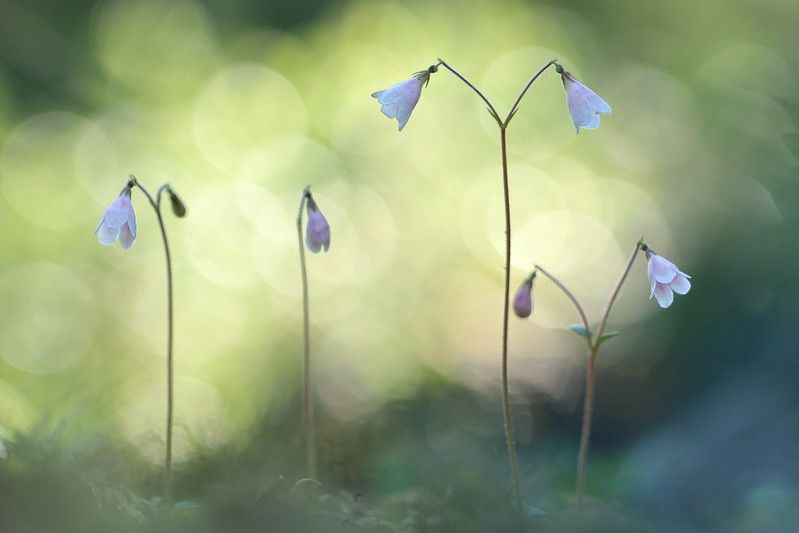
Grantown-on-Spey | For two years, volunteers in a small Scottish town have been growing the threatened twinflower in their gardens. The plants, with their two little bell-shaped flowers, are now ready to be transplanted into secret locations in a bid to save the species from extinction. The sweet-smelling bloom is usually only found in ancient pine woodlands in the Highlands, but remaining patches are too fragmented for insects to properly cross-pollinate the plants. The project, overseen by Plantlife Scotland, recruited amateur gardeners, known as Flora Guardians, to nurture cuttings until they were old enough to be returned to the wild. Among the volunteers is Grant Moir, chief executive of the Cairngorms National Park Authority. The Herald reported the story.
Moffat | The Borders Forest Trust is removing hundreds of thousands of old plastic tree tubes from forests in southern Scotland. Plastic tree tubes were introduced in the late 1970s, with 200 million used across the country to help establish new woodlands, often ending life as litter once the trees had matured. In addition to removing old tubes, the Trust is trialling a new fully biodegradable tube made from wool and a polymer of cashew nut and castor oil. "This will last – depending on the conditions – around about five years, which is long enough for any tree to establish itself,” said the Trust’s Adrian Kershaw. At the moment, the new composite tube is more expensive than the plastic one, but then he says that they do not have to worry about removing them. The BBC reported the story.
Skomer | Manx shearwater on Skomer Island off Pembrokeshire have been eating plastic and glitter, mistaking it for fish, according to new scientific research. In a study of 34 of the seabirds, researchers found that nine of 12 fledglings and 15 of 22 adult birds had swallowed at least one piece of plastic. “It was shocking to see so much plastic in the chicks within the first few weeks of their lives,” said co-author Louise Gentle. More than half of the world’s Manx shearwaters breed on the islands of Skomer and Skokholm, although the scientists point out that the plastic may have been ingested elsewhere – the birds forage in the seas of Wales, Ireland, England and northwest Scotland. The story was reported in the BBC and Wales Online.
Elsewhere:
- Water off Hayling Island contains bacteria “10 times over safe levels”, Portsmouth News reports. The BBC also covered the story.
- Whisky giant Beam Suntory will provide £385,000 to restore and regenerate peatland at the Airds Moss reserve in East Ayrshire, the Herald reports.
- A team of abseilers worked for three weeks to clear an invasive shrub species threatening a rare plant on a cliff in the Highlands, the Courier reports.
- Anglers are catching "more sanitary products than fish" in the River Severn, the Shropshire Star reports. The Express and Star published an editorial about the “bespoiled” river.
- Derbyshire Dales District Council says there isn’t enough evidence to ban disposable BBQs on moorlands, reports Derbyshire Live. Meanwhile, a number of Lancashire councils are mulling a BBQ ban for the West Pennine Moors, reports the Lancashire Post.
- Plans to make a part of west Cornwall a protected wildlife area will hinder farming activities, the BBC reports.
- Estée Lauder has pledged £100,000 to investigate water quality issues in Windermere lake, the BBC reports.
- Nesting and fledging gull numbers have risen by 150% following the installation of a predator-proof fence in South Walney Nature Reserve in Cumbria, BirdGuides reports.
- Flood-prone Spains Hall Estate in Essex is planning two more beaver enclosures, the BBC reports.
- Oxford University’s Merton College has given permission for part of its land to be turned into a solar farm, the BBC reports.
- The National Lottery Heritage Fund has awarded almost £250,000 to a two-year project in Rockingham Forest aiming to bring people closer to nature, the BBC reports.
- Neighbours in the Yorkshire Dales have joined forces to create new native woodland after flash floods, the Yorkshire Post reports.
- Somerset residents are angry at the deaths of newly-planted trees, which were a condition of new developments, the BBC reports.
- A 14ha derelict plot in Glasgow is set to become a forest as the council steps up plans to increase the numbers of trees in the city, Glasgow Live reports.
Reports
Connections | Natural England has published a series of ‘rapid reviews’ exploring human connection to nature and the related benefits. The reports are motivated by the concern that people – particularly children and young people – are becoming increasingly disconnected from nature, which could prove detrimental to their health and wellbeing. Individual report topics cover mental health, physical health, and how the natural environment can support children and young people. In an overview report, the authors conclude that disconnection from nature is being caused by a range of factors, including increasing urbanisation, a loss of respect and empathy for nature, and the increasing appeal of indoor activities. The final section of each report outlines the implications for policy and research, including areas – such as the impact of Covid-19 on nature connectedness – which would benefit from further study.
Marsh | Creating “more mud” could be a quicker, cheaper, and more effective way of storing carbon than planting trees, according to a report released by the Wildfowl and Wetlands Trust (WWT). Specifically, their Wetlands for Carbon Storage route map calls for the creation and restoration of coastal saltmarshes. According to the report, the creation of 22,000 hectares of saltmarsh – equivalent to an area twice the size of Bristol – could store 1.5 megatonnes of carbon every year. Saltmarsh is currently a rare habitat in the UK, but the WWT is urging the government to increase funding and support by incorporating action for saltmarshes into its key climate policies. The report also advises the government to embrace the Saltmarsh Carbon Code – currently being piloted by the Centre for Ecology and Hydrology – by 2025, to promote private investment.
Forestry | A report commissioned by the Forest Policy Group reveals the negative experiences of Scottish communities around new afforestation projects. The authors found that “communities are not opposed to woodland creation per se” but that they found the consultation process challenging and disheartening – and ultimately believed that their efforts had little or no impact on the resulting planting schemes in any case. Furthermore, responding to consultations required many unpaid hours from the impacted groups. Particular concerns included the impacts on private water supplies, the loss of well-loved views, and biodiversity. “The realities undermine policy goals of community empowerment, just transition, and sustainable forestry that contributes to social and environmental values as well as economic,” the report concludes.
Science
Bumblebees | Pollinators use many cues to choose which flowers to visit, such as smell, shape, and texture. However, scientists have recently discovered that some pollinators also detect flowers’ electric fields. In a study published in PNAS Nexus, researchers from the University of Bristol found that bumblebees are less likely to land on flowers sprayed with synthetic fertilisers because these chemicals alter the flowers’ electric fields, similar to what has been seen for other chemicals. It’s the first known example of anthropogenic “noise” interfering with a terrestrial animal’s electrical sense, said co-author Sam England. “It’s much like motorboat noise that hinders the ability of fish to detect their predators, or artificial light at night that confuses moths; the fertilisers are a source of noise to bees trying to detect floral electrical cues.”
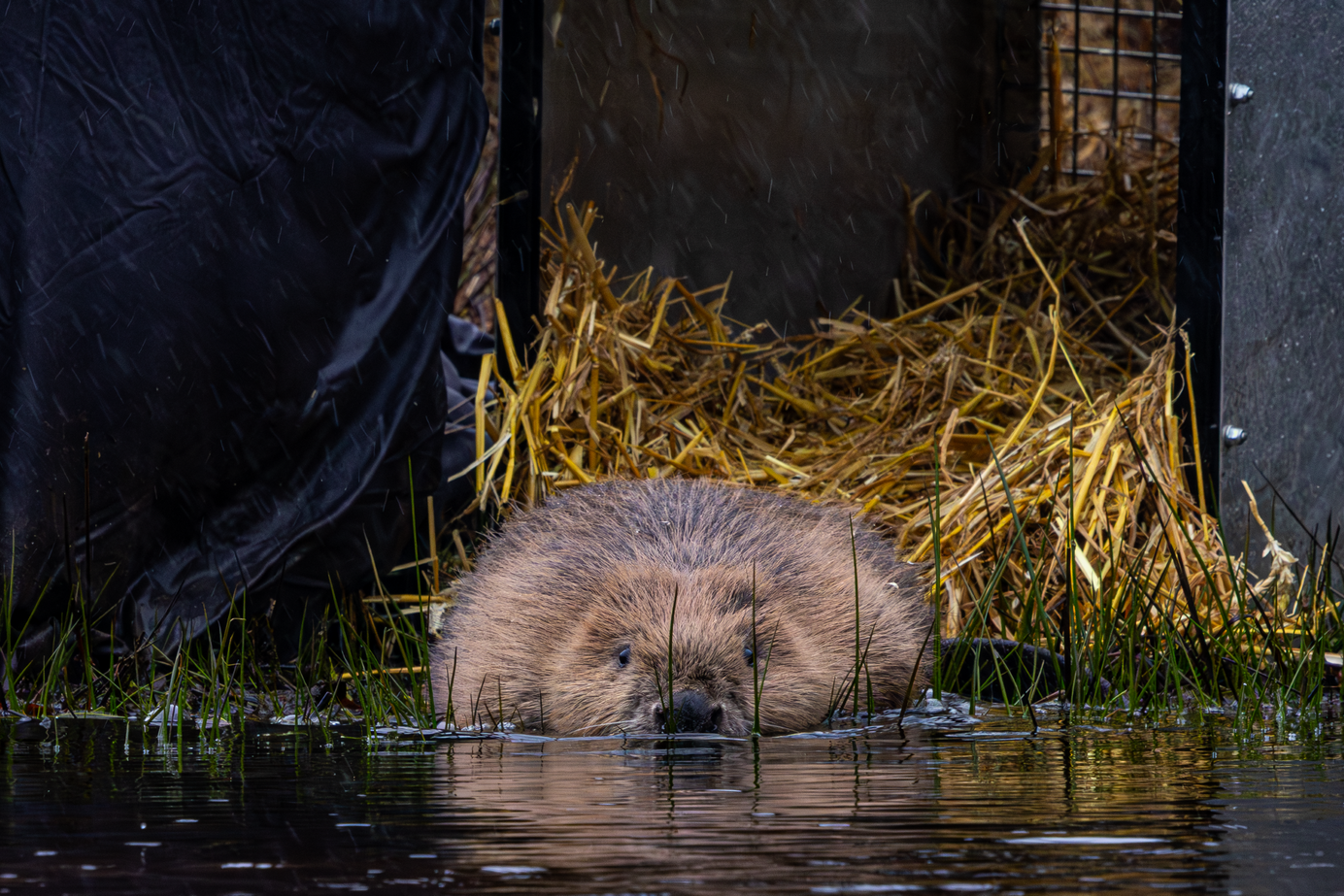
Beavers | Beaver dams could help offset the impacts of climate change on river water quality, according to a paper in Nature Communications. Researchers from Stanford and Berkeley studied a mountainous watershed in Colorado, and found that the presence of beaver dams resulted in an almost 50% decrease of nitrogen, as well as a rise in oxygen levels. Dams help remove damaging pollutants from rivers by diverting the water flow through soil, acting as a filter. Professor Scott Fendorf, who oversaw the study, said: “Our findings show that beavers serve to counter the effects of reduced water flows on water quality in rivers, which are increasingly being observed with a changing climate.” The Times reported the research, noting that the findings “are likely to strengthen calls for wider beaver reintroductions, despite landowners’ fears that they damage trees and flood farmland.”
Biodiversity | Changes in land and sea use are the greatest drivers of biodiversity loss worldwide, according to a paper published in Science. Natural resource extraction ranked second, followed by pollution. The international team of scientists found that climate change and invasive species are significantly less important than the top two drivers. They reviewed more than 45,000 natural science studies published since 2005 that compared the impacts of multiple direct drivers, and ultimately identified 163 studies that weighed the impacts of biodiversity loss drivers. They found that there was far more information about vertebrates than plants or invertebrates. “Stopping global biodiversity loss requires policies and actions to tackle all the major drivers and their interactions, not some of them in isolation,” the authors write. The Natural History Museum reported on the study.
Driftwood
Protest | A near-naked woman, whose body was painted to resemble feathers, marched through London to protest the decline in the swift population – numbers plummeted by 53% between 1995 and 2016, according to the RSPB. Thirty-six-year-old Hannah Bourne-Taylor from Oxfordshire is no stranger to extreme measures to protect birds. In 2018, she nursed a finch back to health by letting it nest in her hair. This week, wearing blue, black and white body paint applied by artist Guido Daniele, Bourne-Taylor made a speech at Speaker’s Corner in Hyde Park, after which she and a group of protesters marched on Downing Street where she read out a letter to launch a campaign to save the birds. Their petition, supported by the RSPB and Rewriting Extinction, calls for "swift bricks" in all new housing developments. The Mirror and the BBC reported the story.
#TheFeatherSpeech is a collaboration between leading scientists + artists supported by @Natures_Voice +@rwritextinction for swifts who need our help. #EveryBirdCounts (Film @blackmoreheal )
— Hannah Bourne-Taylor (@WriterHannahBT) November 8, 2022
Sign the petition ➡️ https://t.co/lboVopCb89 pic.twitter.com/dgZO3SG5ow
Disease | In an opinion piece in the Guardian, Devi Sridhar, chair of global public health at the University of Edinburgh, warns that avian flu is a “ticking time bomb” to human as well as avian health. The disease, which has already led to the deaths of millions of birds, is highly contagious. Although its transmission among humans has so far been limited, a mutation to this effect is possible. “This would be a gamechanger and raise the risk to humans considerably. And the more chances the virus has to jump into a human and mutate, the more likely it is a dangerous strain will emerge that could set off the next pandemic,” writes Sridhar. Separately, a piece in the Telegraph looks at what is happening on the ground, as beaches become seabird “morgues”, and how rangers and government officials are responding to the crisis.
Agriculture | Most Scottish farmers would be willing to move away from livestock farming, according to a survey by lobby group Stockfree Farming. The group questioned 51 farmers and crofters across Scotland over the course of 2021-22. Almost two-thirds (64%) of respondents with rough grazing and permanent pasture said they would consider transitioning out of livestock farming entirely and into “farming carbon capture” by rewilding the land, provided there was adequate financial support. A strong majority (86%) said they would consider changing their farming practices to help mitigate climate change. Just over half (56%) would think about reducing livestock numbers. Plant Based News reported the findings.
Further reading:
- In an opinion piece in the Telegraph, climate sceptic Matt Ridley warns that the obsession with climate change is threatening conservation.
- An article in the Financial Times looks at the ethics of afforestation, focusing on the village of Cwrt-y-cadno in Carmarthenshire.
- The Guardian lists five magical walks through Wales that are seeped in the country’s rich folklore.
- Nature writer Nicola Chester argues in Countryfile that the right to roam could heal people’s broken relationship with nature.
- A piece in the Telegraph cautions that the UK’s net-zero ambitions could put a dampener on bonfire night.
Happy days
Trees | The results are in. An ancient yew tree in the ruins of Waverley Abbey in Surrey has been crowned UK Tree of the Year 2022 by the Woodland Trust, beating 11 other finalists to take the top spot. The sprawling specimen took 16% of the votes, with the Portal Tree Rowan in Midlothian coming in second place. The yew will go on to represent the UK in the European Tree of the Year competition, the BBC reports.
Subscribe to our newsletter
Members receive our premium weekly digest of nature news from across Britain.
Comments
Sign in or become a Inkcap Journal member to join the conversation.
Just enter your email below to get a log in link.