Nature at COP28 & Rainforest Strategy
The latest news on nature and conservation in Britain.
National news
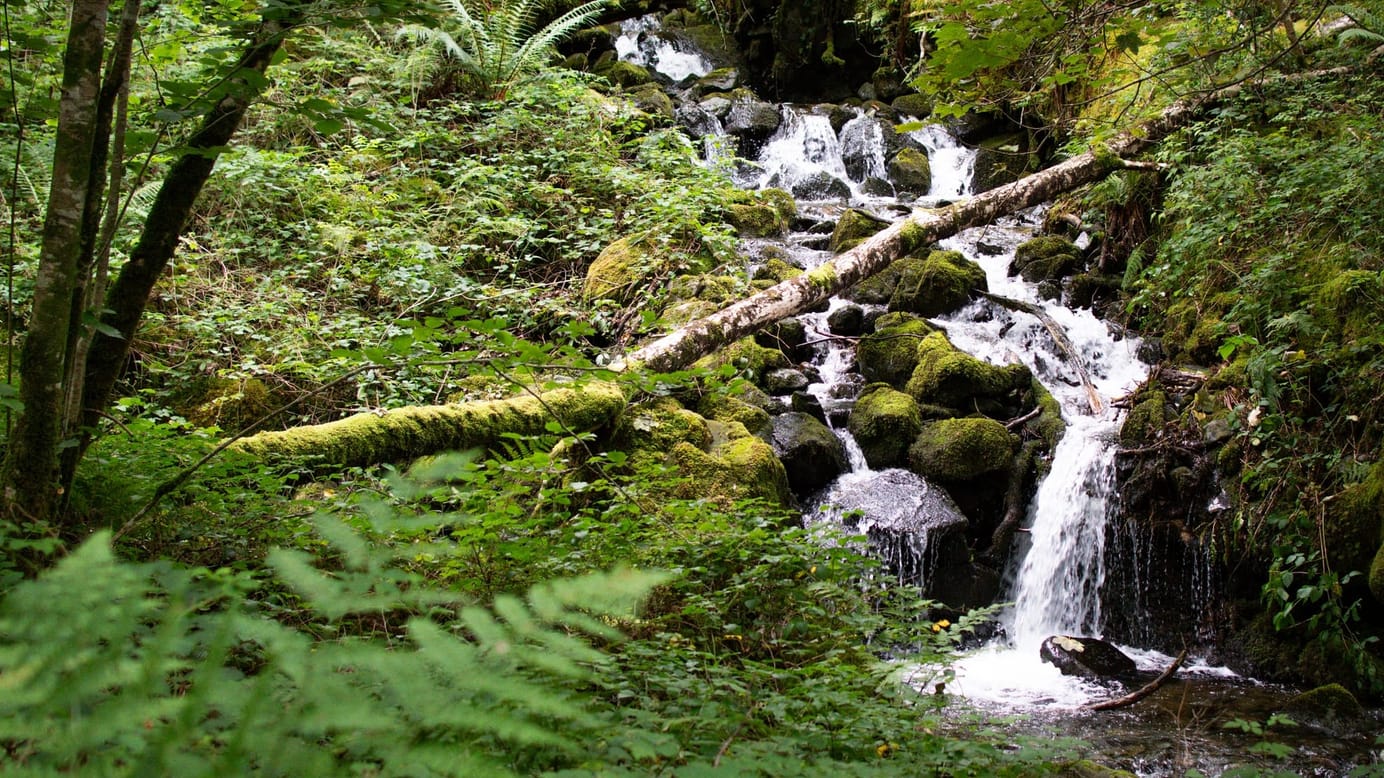
Pledges | Ahead of the opening of COP28 in Dubai, the government has set out a package of ‘nature pledges’ to increase access to and protection for the countryside. The measures include the search for a new National Park, 34 landscape recovery projects, new forests, and funding to help more children get outdoors. The search for a National Park will begin next year – with possible sites including the Chilterns, the Cotswolds and Dorset – while a further £15m has been pledged to support existing Parks and National Landscapes (formerly AONBs). The government has also published the final response to the Glover Landscapes Review, and a strategy to recover England’s temperate rainforests. Writing in the Telegraph, Rishi Sunak said the recent tragedy of the Sycamore Gap tree presented an opportunity to ‘turn this moment of anger into a movement of action’, so that the tree becomes ‘a symbol not of loss, but renewal’. He added that ‘for Conservatives, protecting nature is in our DNA.’ The measures have been cautiously welcomed by environmental organisations as a ‘step in the right direction’, although some have warned that much more still needs to be done. Dr Rose O’Neill, chief executive of the Campaign for National Parks, pointed out that the extra investment for landscapes would go ‘some way to easing the burden in the short term’, but was not enough to cover cuts in real terms funding. Ahead of the conference, the Wildlife Trusts have issued three priorities for negotiators representing the UK, including putting nature recovery centre stage. The news was widely covered by national outlets.
Countryside | While the Conservatives attempt to win votes with their package of nature pledges, Labour is aiming to build bonds with rural communities through a ‘respectful attitude’ towards the countryside. Shadow environment secretary, Steve Reed, said he wants to demonstrate his party’s commitment to farmers and landowners after two decades of political detachment, reports the Independent. In particular, he is promising access to cheap, clean energy, fewer food imports, and a veterinary agreement with the EU. ‘We want rural communities to control their own futures,’ according to Reed. His pledge to connect communities to the National Grid at record speed has hit a nerve for the Conservatives, who are currently engaged in an internal row over the building of pylons, with a certain Thérèse Coffey arguing that ‘precious landscapes’ must be protected by placing infrastructure in appropriate locations. She is not alone: a coalition of environmental groups has recently written to the UK government asking it to review its ‘haphazard’ rollout of telecoms masts.
Shooting | Environment minister Lord Richard Benyon has overruled experts to approve the release of game birds into protected sites, despite warnings about the potential spread of bird flu. This year, Natural England had recommended stricter limits on licensing releases to minimise the risk of game birds spreading the disease to threatened populations of wild birds. Out of 36 licence applications, Natural England recommended 30 should be refused. However, Defra documents obtained by openDemocracy reveal that Benyon and Thérèse Coffey, the ex-environment secretary, decided to disregard the advice, and approved 15 licences. In response, campaign group Wild Justice has accused the government of acting unlawfully and said it is considering legal action. Mark Avery, co-founder of the group, said: ‘Natural England, Defra’s statutory nature conservation adviser, was sidelined. That is a terrible model for regulation.’
In other news:
- King Charles is set to deliver the opening address at the COP28 climate summit, reports the Guardian.
- NFU Cymru has said the Welsh government must protect funding for rural affairs amid fears over cuts, reports the BBC.
- The Scottish government has made £1m of funding from the Forestry Grant Scheme available to support projects restoring and expanding Scottish rainforest.
- Meat companies and lobby groups are planning to present meat as ‘sustainable nutrition’ at COP28, according to documents seen by the Guardian and DeSmog.
- Pensions for the Scottish Environment Protection Agency are invested in fossil fuel giants and a highly polluting English water company, according to an investigation by the Ferret.
Across the country
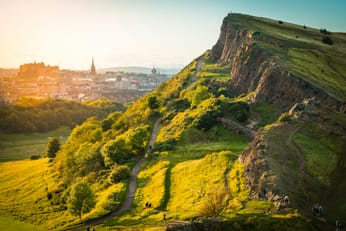
Borders | The disappearance of a golden eagle in the Borders is being treated as suspicious. The missing bird, a female named Merrick, was translocated to the area as part of the South of Scotland Golden Eagles project last year. She was last seen on 12 October, and police say they believe the bird has come to harm. The disappearance is a set-back for the so-far successful project, which has quadrupled the local population of golden eagles in the last six years. Michael Clarke, who chairs the group, said that the disappearance of any eagle is ‘extremely upsetting’, but particularly when there is evidence of suspicious circumstances. The BBC, the Telegraph and Sky News reported the news. Elsewhere in Scotland, a peregrine falcon has been found dead in an illegal trap in the Pentland Hills near Edinburgh, reports the BBC. Following the incidents, gamekeepers have said that wildlife criminals deserve to ‘feel the full force of the law’, reports the Times.
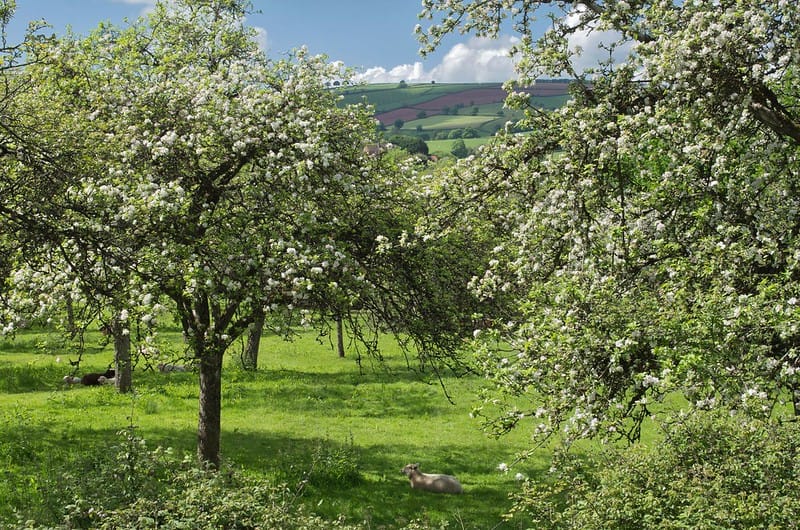
Oxfordshire | More than 50 orchards are set to be planted around Oxfordshire in honour of King Charles. The West Oxfordshire District Council has secured £50,000 from Defra’s Coronation Living Heritage Fund and will be distributing the money to groups who want to establish community orchards in their neighbourhoods. Applicants must have space to plant at least five fruit trees – the minimum to qualify as an orchard – and they must be on publicly accessible land for as many people to benefit as possible. Councillor Andrew Prosser, member for climate change, said that, as well as boosting tree numbers, the orchards would provide nesting sites for bats, birds and insect life as they aged. The BBC covered the story. Meanwhile, Walsall Council has committed £65,000 toward planting community orchards and micro-woods, reports the Express & Star.
Exeter | To mark National Tree Week, Exeter City Council has planted 60 trees across the city – but this is tree planting with a twist. Each tree has been tagged with a QR code, which, when scanned by a phone or device, shows people how much carbon the newly planted tree will store when it reaches maturity. Josie Parkhouse, lead councillor for climate and ecological crisis, said that trees in the city play a vital role in carbon reduction, and the QR codes are a ‘great way for people to understand the crucial role’ of trees in urban environments. The council has also planted another 40 whips in hedges, and fruit trees will be added later in the season. Meanwhile, a feature in the Times describes how scientists are modifying ‘mutant’ trees as part of efforts to suck extra carbon from the atmosphere.
Elsewhere:
- Conservationists have criticised an ‘unthinkable’ plan to divert water from the iconic Rhaeadr y Cwm waterfall in Eryri, reports the Daily Post.
- Wessex Water has started work on four projects to help remove chemicals from rivers, reports the BBC.
- East Cambridgeshire District Council is investigating ways to incorporate hedgehog-friendly measures into new developments, reports the BBC.
- Natural Resources Wales is considering treatment options including a toxic substance to rid lakes near Llanelli of topmouth gudgeon, an invasive fish, reports Wales Online.
- Rangers at Wicken Fen reserve in Cambridgeshire have turned on six ‘taps’ to create a winter wetland habitat for wildfowl, reports the Express & Star.
- Extensive sewage spills by Southern Water into Chichester Harbour have been branded an ‘assault on the environment’ by campaigners, reports the Independent.
- Cotswold District Council has fined a man £9,000 for illegally felling three mature apple trees in a conservation area, reports the BBC.
- Work to install solar panels on the roof of Cambridge’s iconic King’s College Chapel is underway, despite criticism from Historic England, reports the Independent.
- Buglife has issued a call to save a former East Ayrshire colliery which has been reclaimed by nature, but now faces plans to become an ‘eco-wellness park’.
- The Highland Council has recommended refusing plans to build a golf course on one of Scotland’s last undeveloped dune systems, according to Buglife.
- Twitchers have expressed outrage after a hotspot for red-listed yellowhammer in Surrey was ‘decimated’ by new landowners, reports BirdGuides.
- Goldeneye ducks are thriving at the Muir of Dinnet reserve in the Cairngorms after NatureScot introduced measures to reduce disturbance, reports BirdGuides.
- A small population of American painted lady butterflies have set up home on the Isles of Scilly, reports the Guardian.
- The UK’s last opencast coal mine, Merthyr Tydfil's Ffos-y-Fran, has shut after a legal row, but locals are concerned the vast site may not be restored, reports the BBC.
- A nine-acre plot of rewilded land in Cumbria which has been put up for sale includes ancient woodland and caves containing late Bronze Age pottery, reports the BBC.
- Volunteers in Cardiff are organising to map ancient trees growing around the city in the hope of safeguarding them for future generations, reports Nation Cymru.
Reports
Crime | The RSPB has published its annual Birdcrime report, detailing the illegal shooting, trapping and poisoning of protected birds of prey. There were 61 confirmed persecution incidents in 2022: the lowest figure in more than a decade. However, the charity warned that the figure is distorted by the failure to examine dead raptors during the avian flu outbreak, and the actual number is likely to be much higher. The report also found that at least 64% of confirmed incidents were linked to land used for gamebird shooting. Hen harriers continue to be ‘relentlessly’ targeted, with 39 harriers killed or ‘disappeared’ between January 2022 and October 2023. Incidents included decapitation and chicks being stamped in their nest. Another headline is the poisoning of a reintroduced white-tailed eagle on a shooting estate in West Sussex: the first case of a white-tailed eagle being illegally killed in England since their extinction in the 18th century. The report re-emphasises that existing laws are failing to protect birds of prey, and presses for the introduction of grouse moor licensing legislation across the UK. The RSPB summarised the findings on Twitter, and the Guardian, Channel 4 and BirdGuides reported the news.
Capital | The Office for National Statistics has published the latest UK Natural Capital Accounts, which calculate the financial and societal value of natural resources. The report found that the total asset value of the natural environment in 2021 was £5.1 trillion, which is roughly equivalent to the entire housing stock. The calculations work by assigning monetary value to the contributions provided by an ecosystem service: everything from the impact of sea views on house prices to the value of greenhouse gas removal by trees. The largest contribution comes from the health benefits of recreation in nature, which was valued at a whopping £445 billion in 2021. Significantly, ONS also found that an estimated 1.1 million fewer people are gaining those health benefits in 2022 compared to 2020, during the peak of the Covid pandemic, due to a drop in the number and length of visits to nature. For the first time, the in-depth report also includes estimates on the value produced by eight of the UK’s broad natural habitats, with marine habitat supplying one-third of the total value. ENDS covered the news, and this blog by ONS explains how it works to expand and improve its estimates each year.
Woods | The planting, protection and restoration of trees and woods must be at the heart of nature recovery in Wales, according to a report by Coed Cadw, the Woodland Trust in Wales. Only 9% of Wales’ native woodland is in favourable ecological condition, and a third of all woodland species are in decline. Ancient woodland is even worse off: covering only 4.5% of land surface, one-third of it has been over-planted with non-native conifers. To reverse this pattern, the report lays out principles for nature recovery at three scales: landscape, woodland and tree scale. Through ten recommendations for the government – and a further five for local authorities – the report calls for better protected woodlands, the restoration of wooded habitats, and the creation of new native woods to form wildlife-rich mosaics. Climate minister Julie James said the report had ‘a lot of challenging recommendations’ to consider, but all of them were important issues. The Nation Cymru covered the report.
Science
Fens | The Fens of eastern England were once covered in vast forests of yew trees, according to a study published in Quaternary Science Reviews. The Fens are a low-lying area which was artificially drained between the 17th and 19th centuries: now, it is among the most productive farmland in the country. Scientists from the University of Cambridge analysed hundreds of tree trunks which had been dug up by farmers ploughing their fields. They found that most of the ancient wood came from yew trees which grew in the area around 4,000 to 5,000 years ago. The researchers hypothesise that a rise in North Sea levels flooded the area 4,200 years ago, and the saltwater caused the woodland to disappear suddenly. Lead author, Tatiana Bebchuk, said the trees were so well preserved by the peat, ‘it looked as if they were cut down just yesterday’. The BBC, Phys.org and the Independent covered the findings.
Dolphins | A paper in Animal Conservation examines the threats faced by England’s only resident population of bottlenose dolphins. The pod – estimated to be around 48 individuals – lives in the English Channel between north Cornwall and Sussex, in what is one of the most heavily impacted marine ecosystems worldwide. Researchers used a citizen science network to collect data on the pod between 2000 and 2020, with more than 7,400 sighting reports used to estimate its size, distribution, and ranging behaviour. The study found that, despite a relatively stable pod size, the small population is at significant risk from a combination of human activity and environmental pollution. The authors are calling for conservation organisations to enact urgent measures to protect the population and its habitat – or risk it disappearing entirely. The Independent covered the news.
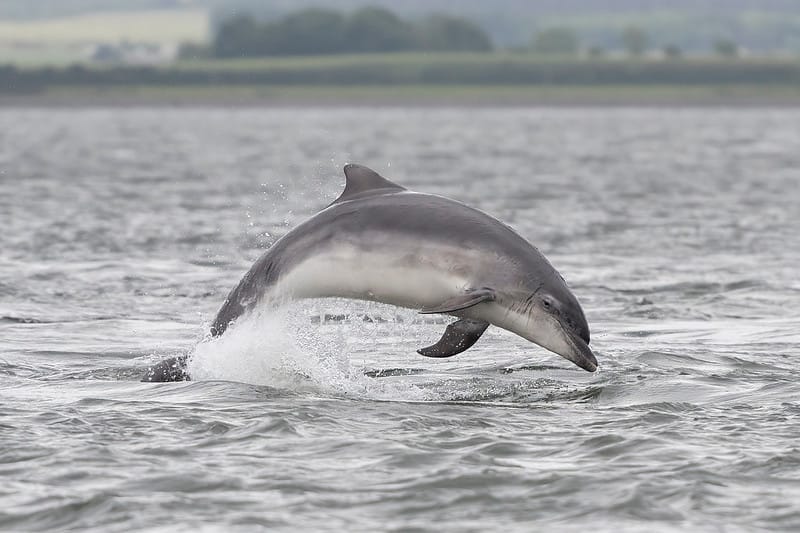
Cetaceans | An investigation in Environmental Science & Technology reveals that nearly half of the whales and dolphins found in UK water in the past five years contain harmful concentrations of banned chemicals. Persistent organic pollutants were banned under the 2001 Stockholm Convention, but they are still widespread and bioaccumulate inside living things. Researchers used one of the world’s largest strandings datasets to examine pollutant concentrations in 11 species over the last three decades. They found that, although levels had decreased overall, 48% of individuals sampled within the last five years exhibited toxic levels. Significantly, concentrations were highest in long-lived species such as killer whales, bottlenose and white-beaked dolphins, and also in animals stranded on industrialised coastlines. The authors said the results were a ‘huge wake-up call’ for both the future of marine life but also risk to human health. The Guardian covered the research.
Driftwood
Rainforest | Campaigner and author Guy Shrubsole has written an analysis of the government’s newly published temperate rainforest strategy for England. First and foremost, Shrubsole says the strategy is ‘hugely welcome’ – and a ‘vindication of the power of campaigning’, after three years of petitioning the government for a strategy. Among the ‘good stuff’ in the strategy is £750,000 of funding for research and development, work to target key threats, and seven new landscape recovery pilots involving rainforest restoration. What’s missing, however, is an overarching target or goal – Shrubsole suggests doubling the area of England’s rainforests by 2050 – as well as legal protections. The campaigner says he will continue to engage with the government to address these missing elements.
Neuroscience | A feature in the Guardian explores the emerging field of environmental neuroscience, and how time outdoors in nature can affect cognitive function. It is well documented that time spent in green and blue spaces can help alleviate stress, but did you know that nature exposure also benefits mental processes including memory, logic, imagination and problem-solving? One study found that participants in a memory test who went on a walk in a natural setting improved their mental performance by around 20% compared with urban-walking counterparts. There are mixed theories about why nature has this effect, ranging from the evolutionary ‘biophilia hypothesis’ to increased production of the oxytocin hormone. Most lyrical, however, is the effect of ‘soft fascination’: when our brain’s attention span is rested by indirect and spontaneous triggers, such as the movement of a bird or the naturally-occurring shape of fractals.
Prison | An article in the Times interviews millionaire farmer John Price, who was sent to prison for 11 weeks after destroying a one-mile stretch of protected river beside his family farm in Herefordshire. This involved using bulldozers and a digger to uproot trees and bushes, and dredge gravel from the riverbed where salmon and brown trout spawned. Natural England and the Environment Agency said it was the worst riverside destruction they had seen, and the river would take decades to recover. Price, however, maintains he did nothing illegal: he said that, as a businessman and a farmer, ‘I push things to the limit but I always work within the law’, adding that the work had prevented his fields from flooding. Now free from prison, he said he will be suing the Environment Agency for his financial losses while in jail.
Further reading:
- In honour of COP28, the Guardian has published a series of articles on its own reporting, including the newspaper’s environmental impact and its attitude toward impactful environmental journalism.
- Prompted by new findings on the mating habits of serotine bats, author Philip Hoare writes in the Guardian about the variety of sex lives among species.
- Another feature in the Guardian spotlights a conservation project in the Highlands to reintroduce rare medicinal leeches to lochs and rivers.
- Analysis by Carbon Brief examines how historical responsibility for climate change shifts dramatically when colonial rule is taken into account. The Guardian covered the findings.
- The Guardian showcases images from the Wildlife Photographer of the Year award, including foxes scavenging in London. You can also check out an image of gannets nesting in Yorkshire which was highly commended in the Comedy Wildlife Photography Awards.
- On his blog, Mark Avery shares naturalist and author Stephen Moss’ 2023 round-up of nature books, as well as his own shortlist of 14 books.
- At the Muir of Dinnet nature reserve, seasonal reserve officer Gordon writes beautifully about the onset of winter in this blog.
- In an interview with BBC Wales, the Welsh government’s climate change minister, Julie James, explained why she hopes young people will ‘want to be me’.
- A blog by John Muir Trust features a new ‘Ben Lomond’ gin, launched to support conservation and restoration of wild places. A separate blog takes a look at a pilot programme aimed at introducing people from under-represented communities to the outdoors.
- A post by Much Better Adventures interviews Ailish Been, the founder of Queer Out Here, a group which aims to connect queer people who enjoy being outdoors.
- To coincide with COP28, Nature has published a set of commentary and review articles that highlight the outsized impact of microbes on the environment.
- This post explains why the Natural History Museum has teamed up with Bloomberg to make its Biodiversity Intactness Index available to financial markets for the first time.
- More than 50 artists came together to protest the potential felling of the ‘Darwin Oak’ by creating images of the tree. Read about it in the Independent.
Happy days
Apples | One of Scotland’s rarest trees, the native crab apple, has been given a new lease on life thanks to the Woodland Trust Scotland. The charity spent five years searching for the wildest crab apple trees in Scotland: there are only around 300 individuals known to remain, and their future is threatened by hybridisation with other apples. The Trust took twig cuttings from pure trees in Galloway, Argyll and Ross-shire, and grafted these to root stock to create a ‘gene bank’ orchard at the Glen Finglas estate in the Trossachs. The Trust plans to use the 59 trees as a seed source for future woodland creation schemes. The Times covered the story.
Subscribe to our newsletter
Members receive our premium weekly digest of nature news from across Britain.
Comments
Sign in or become a Inkcap Journal member to join the conversation.
Just enter your email below to get a log in link.