Nature Law & Wolf Reintroduction
The latest news on nature and conservation in Britain.
National news
Law | The European Parliament has approved a flagship law to restore nature despite fierce opposition. The law, which was a key pillar of the EU’s green deal, sets a target for the EU to restore at least 20% of its land and sea by 2030. It also requires member states to restore at least 30% of target habitats (including forests, wetlands and rivers) from poor to good condition by 2030, increasing to 90% by 2050. Environmental groups have praised the outcome of the vote, which passed the law by 329 votes to 275. It took place amid heated protests by farmers – who argue they cannot afford the EU’s green policies – as well as last-minute opposition from the centre-right European People’s party. A coalition including BirdLife Europe, ClientEarth and WWF EU said: ‘We are relieved that MEPs listened to facts and science, and did not give in to populism and fear-mongering.’ Meanwhile, the RSPB called the decision a ‘huge win for nature’, adding that it puts crucial habitats back on the path to recovery. However, the Guardian noted that the law had been heavily watered down during negotiations from the original proposal in 2022. The news was widely covered by international outlets, and Carbon Brief has an in-depth analysis of its implications for climate and biodiversity.
Rights | At a UN meeting in Nairobi, a delegate from the UK declared that the government would never accept that nature or Mother Earth has rights – despite a growing campaign by activists and lawyers to acknowledge them, and the fact that many other countries have already recognised them in their laws, regulations and constitutions. ‘The UK’s firm position is that rights can only be held by legal entities with a legal personality. We do not accept that rights can be applied to nature or Mother Earth,’ the delegate, from Defra, said. ‘While we recognise that others do, it is a fundamental principle for the UK and one from which we cannot deviate.’ The Guardian broke the story. The statement was criticised as shameful and undemocratic by others, with one former Ecuadorian supreme judge branding it as disrespectful. However, for Paul Powlesland, one of the leading campaigners on the issue, the UK’s declaration was not all bad news. The fact that the government even acknowledged it was a sign that ‘we’re actually getting somewhere,’ he told the Times.
Water | Defra has made two important water-based announcements this week. In the first, it pledged £25m in funding across 40 projects in England using nature to increase flood resilience. The projects are a range of community, charity and council schemes which aim to harness natural processes. Some organisations, such as the Severn Rivers Trust, are using a mix of measures in one location: near Halesowen, the Trust is implementing soil management to slow and store surface water, as well as planting woodland and hedgerows to support wetland complexes. Edie and the Express & Star reported the news. Separately, Defra also announced it would consult on plans to designate 27 new bathing water sites across England. If designated, the sites will receive regular water monitoring by the Environment Agency, with steps taken to investigate pollution sources. The list includes three wild swimming spots in East Anglia, as well as Shropshire river sites and a North East beach. Campaign groups such as the Manningtree Mermaids have celebrated the news, which represents a record number of potential new bathing sites. The BBC and ENDS covered the news.
In other news:
- Thousands of farmers in Cardiff have staged a mass protest over environmental subsidy plans, report the BBC and the Guardian. Meanwhile, the Welsh government said its agricultural policy would be reviewed, and Rishi Sunak offered support for protesting farmers.
- The Climate Change Committee has expressed ‘serious concerns’ over the Scottish government’s cuts to tree planting budgets, reports the BBC.
- The Woodland Trust is urging politicians to relieve pressure on the NHS by boosting trees and green spaces, reports the Independent.
- Residents of communities across England and Wales have lodged safety concerns over council plans to turn off street lights, according to the Guardian.
- Defra is set to establish the first UN-backed centre for circular economy research.
- Scientists have warned that pipelines abandoned in the North Sea could release poisons as they decompose, reports the Guardian.
Across the country
East Anglia | The Norfolk hawker dragonfly will likely be removed from the British red list of endangered species due to recent range expansion, according to the British Dragonfly Society (BDS). The hawker, which is known for its green eyes and golden body, went extinct from the Cambridgeshire Fens in the 1890s due to drainage, and has since been almost entirely restricted to the Norfolk Broads. In recent years, however, the species has been found with stable populations in Cambridgeshire, Kent and Herefordshire. The expansion has been credited to both climate change and improvements in its favoured wetland habitats. The new inland colonies could help protect the species if sea levels rise in East Anglia, although Dr Pam Taylor from BDS said there are still ‘huge gaps’ in its distribution which it will need to infill before the species is ‘truly secure’ in Britain. The Guardian and the BBC covered the news.
Edinburgh | The Royal Botanic Gardens Edinburgh (RBGE) has unveiled a £500,000 research programme to investigate how society can use garden plants to protect against the impacts of climate change. The five-year ‘Plants with Purpose’ scheme will use the institute’s four sites across Scotland to conduct large-scale experiments into the capabilities of garden plants, from soaking up flood waters to supporting pollinators and absorbing heat and pollution. Raoul Curtis-Machin of the RBGE said that, ‘while we know intuitively that green is good,’ the project aims to ‘find out more about how different plants can tangibly work in the battle to cope with our changing climate’. The Herald and the Scotsman reported the news. Meanwhile, a study into the heat-mitigating effects of green spaces during heat waves found botanical gardens to be the most effective, reports the Guardian.
Essex | In December of last year, the RSPB counted the highest number of waterbirds ever recorded at Wallasea Island as part of its monthly Wetland Bird Surveys (WeBS). The charity counted 38,000 birds, which included over 2,000 black-tailed godwits and 700 avocets. They credited the record to the success of the Wallasea Island Wild Coast Project, which created over 650 hectares of intertidal lagoons, mudflats, saltmarsh and coastal grassland. Part of the habitat was constructed using three million tonnes of soil from the excavation of the Elizabeth Line railway tunnel in London, with the earth being used to raise land levels before the seawall was removed. The area now provides a rich feeding and safe roosting space for birds overwintering on the Essex coast.
Elsewhere:
- Cameras installed on bird feeders on Manx farmland have revealed ‘heartening’ numbers of endangered tree sparrow, reports the BBC.
- A herd of Mangalitsa pigs – a Hungarian breed with curly coats – are helping woodland grow on a hillside Ayrshire farm, reports the Herald.
- Birdwatchers in Cornwall have been asked not to reveal the location of choughs’ nests to prevent their eggs from being stolen, reports the BBC.
- Avon Wildlife Trust has called for increased protection of dormice after an ancient hedgerow on Bristol’s last working farm was cut, reports the Bristol Post.
- Butterfly Conservation has discovered a new colony of the rare and beautiful white-spotted sable moth near Canterbury, reports BirdGuides.
- A project is aiming to turn Norwich into the ‘Silicon Valley’ of food and science, reports the BBC.
- East Suffolk Council has unanimously declared a biodiversity and ecological emergency, reports the BBC.
- A local council is planning drastic action to prevent Llyn Padarn, one of Wales’ largest lakes, from being overrun by invasive weeds, reports the Daily Post.
- The Herts Wildlife Trust has created a ‘rare and diverse’ wetland habitat at Hilfield Park Reservoir reserve, the only breeding site for black-necked grebes in the south of England, reports the BBC.
- A £40m development in the north of the Isle of Man has been rejected due to fears for the saltmarsh on which it was to be located, reports the BBC.
- Southern Water has been fined £330,000 for killing more than 2,000 fish in Hampshire, reports the Times.
- Warwick District Council is to erect protective fencing around an area of ground-nesting birds after a three-year trial showed a rise in numbers, reports the BBC.
- Local residents are alarmed by plans to build a seaweed farm 600 metres off the Cornish coast close to Padstow, reports the Guardian.
- The social group Maryport Round Table has created a community orchard with the aim of preserving varieties of Cumbrian apple trees, reports the BBC.
- A citizen science programme has revealed the decline of the River Avon due to chemicals after the Environment Agency claimed it had not deteriorated, reports the Guardian.
Reports
Rivers | A report by the Rivers Trust on the state of British waterways makes for grim reading. Using data from the EU-derived water framework directive, the report looks at both the chemical and ecological health of rivers in the UK. It found that not a single river in England or Northern Ireland was in ‘good overall health’, with all of them failing to pass tests for safe levels of toxic chemicals. In England, 85% of rivers also fell below good ecological standards. The Trust said that very little has changed since its last report in 2021, and worryingly, data has become patchier because river sampling by the Environment Agency has decreased, with around 6% fewer rivers receiving health classifications. The picture is slightly better in Wales and Scotland, where 44% and 57% of rivers were in good or above conditions, respectively. The Trust is urging members of the public to use the report, and its detailed maps, to examine the health of their local waterways, and pressure local politicians to take action to improve their rivers. The Guardian, the Independent and ENDS reported the news.
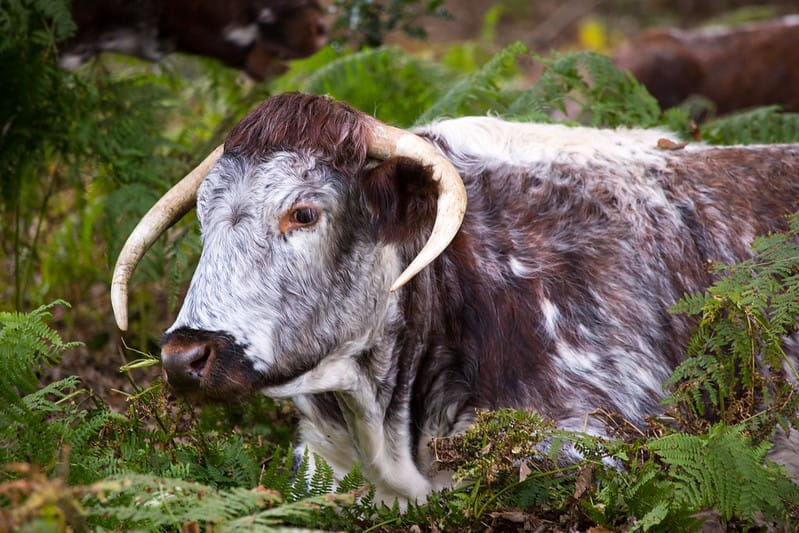
Grazing | Conservation grazing can improve biodiversity, but what about the impact on climate change? Livestock emit methane, a greenhouse gas. To assess the potential trade-offs, Natural England has built a carbon calculator, taking into account the size and species of livestock used, as well as stocking rates. And the answer is… it’s complicated. The difficulty of assessing the carbon flux of the land meant that outcomes were often inconclusive. The accompanying report, however, did draw the tentative conclusion that, in certain habitats with the ability to sequester carbon, it may be possible to carry out some conservation grazing without causing net emissions to rise. But for habitats where the carbon flux is in equilibrium, or are already net emitters, the addition of livestock will cause an increase in emissions. The greatest benefits are likely to accrue in places with high water tables: salt marsh, fen and bog, for instance.
Forestry | The Scottish government should no longer subsidise commercial conifer planting, according to a report by the Royal Society of Edinburgh. These plantations are failing to deliver many of the benefits associated with woodlands, including carbon sequestration and biodiversity. The authors make a number of recommendations for redirecting public money, as well as changes to policy. For instance, Scottish Forestry, the agency responsible for forestry regulation, should require monoculture plantations to be mixed with patches of shrub cover, open land and broadleaf trees, and should also encourage and support natural regeneration in addition to planting. The report also recommended that native planting and regeneration be required along watercourses.
Science
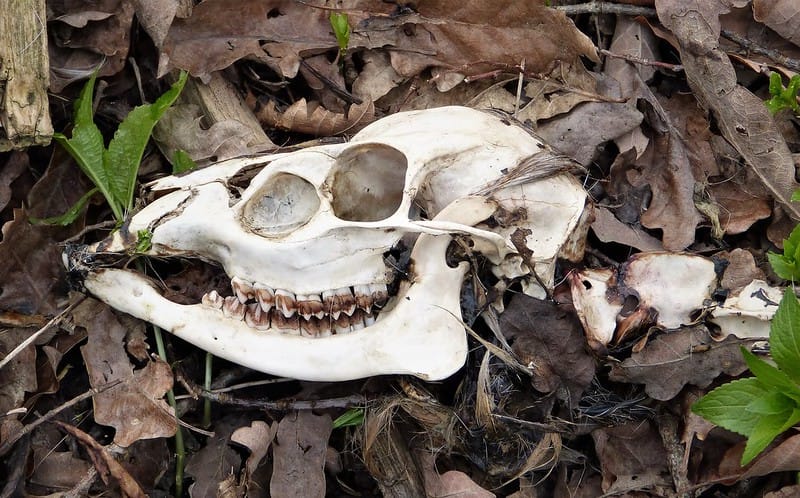
Wolves | What impacts would wolf reintroduction have on ecosystems? Predictions are largely based upon the role of these predators in landscapes that are still relatively undisturbed by humans. However, most recolonised areas have been heavily modified in the centuries since wolves were extirpated – and recent studies suggest that their return is not shaping prey communities and woodland structure as predicted. A paper published in the Journal of Applied Ecology suggests that this is partly because their function has become redundant in human-shaped ecosystems. Instead, we can expect to see a range of novel interactions emerge between wolves and their twenty-first century landscapes: the oft-referenced ‘landscape of fear’, for instance, may apply to feral cats and dogs as much as the wolves’ wild prey.
Rewilding | Rewilding can help to reduce the impacts of flooding and, to a lesser extent, drought, according to a study published in WIREs Water. The research took the form of a literature review – although the authors found that there were few publications that examined the role of landscape rewilding specifically, or indeed the shrubland habitats that often develop when rewilding is carried out. The picture was instead pieced together through various studies dealing with analogue contexts. The researchers called for more data, which is key to unlocking future action, they argued, in a blog published on WCLink: ‘The better we can quantify and articulate the range of benefits, whether water related, carbon or biodiversity, the more likely these nature-based solutions are likely to become the default and the more likely we will see a range of actors investing in them.’
Grassland | Ancient and restored grasslands do not differ in pollinator richness or species composition, according to a study in the Journal of Applied Ecology, which is reassuring given the loss of the former thanks to agricultural intensification, afforestation and land management. This is because many pollinators are generalists, adapting to the plants available to them. However, the precise nature of the insect communities within such grasslands depended upon the surrounding green infrastructure, particularly in the case of bees, butterflies, beetles and flies. Meanwhile, the number of visits paid by pollinating insects did differ between ancient and modern grasslands, suggesting that the latter were less complex and resilient than their older counterparts. To avoid biotic homogenisation, the authors suggest that specialist species may have to be intentionally reintroduced to restored sites.
Driftwood
Evidence | For the Observer, science editor Robin McKie writes about a research group at the University of Cambridge which has been created to avoid conservation flops. More specifically, the job of the Conservation Science Group is to ensure that efforts to boost biodiversity or protect an endangered species use scientific evidence properly. All too often, conservation plans are based on ‘faith and not on science’, according to Professor William Sutherland. One such expensive mistake was a scheme to prevent bats from colliding with traffic by building metal ‘bat bridges’ designed to appear like trees, thus making bats fly higher above roads. A total of £2m was spent building 15 bridges across Britain, only to find that bats had no issue differentiating between trees and metal bridges, rendering them useless. While people want to support conservation causes, ‘we have to make sure we have decision-making processes that get the best results’, says Sutherland.
Landscape | The first in a series on restoring landscapes, this blog by the Applied Ecologist explores the story of Cairngorms Connect, the largest ecological restoration project in the UK. Stretching across 600 km, the partnership between land managers has committed to a bold 200-year-long vision to enhance habitats and processes across the National Park. ‘It is a landscape of superlatives,’ write Sydney Henderson and Dr Pip Gullett, where ancient woods and vast tracts of bog and wetlands surround a wild, Arctic-like mountain massif. The partners are working to create a ‘seamless landscape for nature’, with habitat restoration ‘at a scale unparalleled in Britain’.
Parks | Scotland is due to get a new national park by 2026 – but the initial flurry of excitement has been replaced by division and concern among communities, reports the Times. The nomination process began in October, with ten areas showing an interest, but many of those have since dropped out. Farmers fear the additional regulation that may come with national park status, while rural residents worry that the branding would drive up house prices, exacerbating depopulation as young families are driven out. In Galloway, however, which remains one of the few serious contenders, there is hope that the establishment of a new national park may finally put the region on the tourist map – this ‘forgotten’ corner of Scotland is not overburdened with visitors in the same way as the Highlands and Islands. In the Herald, meanwhile, the vice president of NFU Scotland argues that a new national park will damage the rural economy.
Further reading:
- This Guardian article speaks with biodiversity campaigner Isabella Tree, co-owner of Knepp Estate, about how rewilding can help in the face of climate meltdown.
- Take a look at the rare Cambridge moonflower under the microscope in this BBC feature.
- An article in the Independent explains why the weather over the past year has led to trees and shrubs being ‘laden’ with blossom.
- The Tree Council is marking the opening of their Force for Nature exhibition – which features the opinions of young people about a healthier planet – by planting a hedgerow along the River Tees.
- A feature in the Herald explores the work of the Fife Golf Trust, which roots biodiversity at the heart of its golf courses.
- In the Express & Star, this article features the work of designer and climate innovator Rhea Thomas, who creates fertilising seed trays out of prawn leftovers.
- An article by BBC Future takes a look at the cities around the world stripping out concrete for earth and plants. London gets a mention for de-paved gardens.
Happy days
Service | In Denbighshire, efforts are underway to recover the population of wild service trees. The species is now rare in North Wales, where it is mostly confined to pockets of ancient woodland, although in the past its berries were used to make beer, flavour whisky and produce jams. Historically, it was known as the Chequers tree, inspiring the names of many pubs. Last September, some 500 seeds were collected by the council’s biodiversity team, of which some 300 have now germinated. Their saplings will soon be planted across the county, bringing about both a cultural and ecological renaissance. The Daily Post reports on the story.
Subscribe to our newsletter
Members receive our premium weekly digest of nature news from across Britain.
Comments
Sign in or become a Inkcap Journal member to join the conversation.
Just enter your email below to get a log in link.