Nature Protest & Firefly Decline
The latest news on nature and conservation in Britain.
National news
Protest | On Saturday, thousands of people took to the streets of central London to urge political leaders to tackle the nature and biodiversity crisis. More than 60,000 people and 350 environmental groups were present, led by prominent figures including the naturalists Chris Packham and Steve Backshall, as well as actor Dame Emma Thompson. The protest culminated in a rally outside Parliament Square, where they urged parties to ‘Restore Nature Now’. The march is thought to have been the biggest public demonstration in the run-up to the general election, and shows the strength of public opinion on the need for stronger political action to tackle the nature crisis, according to the Wildlife Trusts. The Guardian and the Independent covered the news. Meanwhile, the charity WWF has accused political parties of going ‘Awol’ on the environment as polling shows that four-fifths of voters care about climate and nature issues, reports the Independent.
Trees | The governments of the UK have missed their tree-planting targets by a combined area the size of Birmingham, according to analysis by Carbon Brief. It found that every nation in the UK has repeatedly failed to meet its planting goals since 2020, despite the latest figures showing an increase in woodland creation over the past year. By 2050, the unplanted trees would have removed around 8.5m tonnes of carbon from the atmosphere, according to the analysis – roughly equivalent to 2% of the UK’s annual emissions in 2023. The authors said that the lost carbon ‘will need to be made up for with stronger efforts elsewhere, if the UK’s net-zero by 2050 target is to be met’. ENDS reported the news.
Election | With the general election taking place next week, news coverage continues apace of the parties’ battle for votes, including environmental ones. On the campaign trail, Labour and the Liberal Democrats have stepped up their attacks on the Conservatives over sewage dumping, reports the BBC. Meanwhile, the Times and the Telegraph both have articles criticising the green aspects of Labour’s mass building plans, with the former arguing that the party has neglected to explain how it will balance development with its devastating effect on biodiversity. If you want to learn more about the parties’ commitments from the perspective of environmental experts, Wild Justice has published a series of guest blogs reviewing the manifestos. They include posts by Green MP Caroline Lucas, environmentalist Ben Goldsmith, and 19-year-old conservationist Indy Kiemel Greene. Co-founder of Wild Justice, Mark Avery, takes a look at the SNP manifesto, while solicitor Carol Day sets out a ‘legal manifesto’ for environmental justice. For more detail on water, the campaign group River Action has written a review specifically on how rivers fare.
In other news:
- An investigation by the Byline Times reveals that the next Parliament is set to have multiple MPs with backgrounds in the water industry.
- Less than a quarter of England’s SSSIs inspected in the last six years are in good condition, according to analysis by Unearthed.
- Natural Resources Wales has finished work on a five-year project to recreate natural movement in dunes and revitalise coastal habitats which are home to some of the country’s rarest wildlife.
- The British Trust for Ornithology has launched a public survey to help understand why blackbird numbers are declining, reports BirdGuides.
Across the country
Cairngorms | Two Scottish wildcats have given birth to litters of kittens after being released into the Cairngorms National Park last summer. The kittens are a first for the Saving Wildcats project, and conservationists have described them as a ‘major milestone’ for the species’ recovery. The Royal Zoological Society of Scotland, which leads the project, released 19 wildcats last year, which had been raised at the nearby Highland Wildlife Park. It is unknown yet whether the kittens are the offspring of these male wildcats or feral domestic cats, but the project will attempt to get a DNA profile once the kittens are old enough. The BBC, the Times and the Evening Standard covered the news.
Essex | Essex Wildlife Trust has reported a record-breaking year for the threatened heath fritillary butterfly at their Pound Wood reserve near Hadleigh. The species was once close to extinction in the UK, but numbers are on the rise thanks to conservation efforts at a number of sites in the south of England. The ancient woodland at Pound Wood is managed specially for the butterflies, which mainly occupy coppiced woodland or sheltered heathland. This year, the Trust counted 218 fritillaries, up from the previous record of 148 in 2019. Ruth Angrave, reserves manager for the Trust, said the butterflies were a ‘remarkable recovery story for conservation’, and encouraged the public to take part in their Butterfly Seekers campaign to gather more data on other species. The BBC covered the news.
Sutherland | A ten-year project in Sutherland has planted 70,000 native trees in a bid to boost numbers of Atlantic salmon and sea trout. It is the first river catchment-scale restoration project tackled by the Atlantic Salmon Trust, which is working with the Reay Forest Estate to restore the River Laxford from its source to where it enters the sea. The fish spawn in the Laxford, and trees play a crucial role in keeping the waters cool and providing habitat for insects which the fish feed on. The project has planted trees across 198 acres,comprising native species including aspen, birch, hawthorn, holly, oak and rowan. Technical project manager Chris Conroy said that, with the numbers of wild salmon declining, it is ‘vital’ to build climate-resilience into landscapes so that the species can adapt to the future. The BBC reported the news.
Elsewhere:
- The famous stag Callum, a ‘local legend’ in the Torridon area, has been put down by the National Trust over health concerns, reports the BBC and the Guardian. The Ross-shire Journal reported that the deer was unwell due to being fed the wrong food by visitors.
- Sand martin chicks have been spotted for the first time in the newly installed habitat at Washington Wetland Centre, reports the BBC and Chronicle Live.
- The Eden Project in Cornwall is using the UK’s first operational deep geothermal well since 1986 to heat its giant biomes, reports Cornwall Live.
- The New Forest National Park authority has turned down an application to build a large solar farm after it failed to limit the potential impact on wildlife or account for commoners’ grazing needs, reports the BBC and the Daily Echo.
- The Bombay Sapphire Distillery in Laverstoke has won an award for its conservation efforts on the Upper Test chalk stream, including building fish passes and planting wildflowers.
- The Wildlife Trust for Lancashire is experimenting with growing lettuce on rewetted peatland.
- The charity Swan Support has said that police are not doing enough to protect waterbirds on the River Thames after a spate of attacks, reports BirdGuides. Meanwhile, police have issued a warning after ‘numerous reports’ of seagulls being shot in north Wales, reports the BBC.
- The Green Party and celebrity chef Hugh Fearnley-Whittingstall are calling for a ‘protection zone’ to be placed around the River Wye, reports the Guardian.
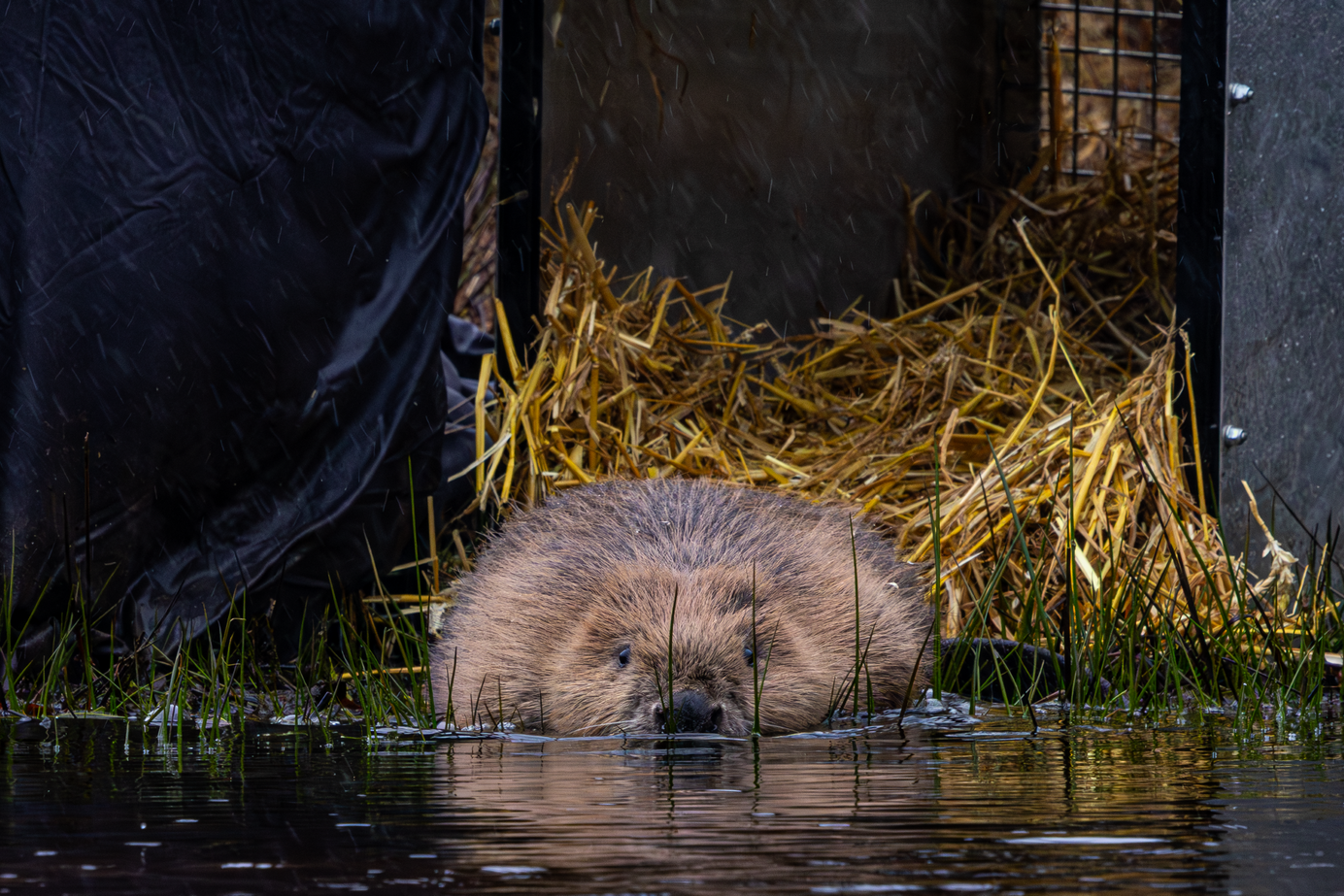
- Dorset Wildlife Trust has confirmed that evidence indicates beavers are now living on the River Stour, reports ITV and the BBC.
- Brighton City Council is overseeing the creation of a £1.8m project to create a wetland which will absorb run-off pollution from one of Brighton’s busiest roads, reports the BBC.
- Greenpeace has criticised the ‘neglect’ of the River Test after damage to the protected chalk stream was left unchecked by Natural England for 11 years, reports the Telegraph.
- Campaigners have launched a statutory nuisance complaint over sewage discharges into Lake Windermere, in what they say is the ‘first complaint of its kind’, reports ENDS.
Reports
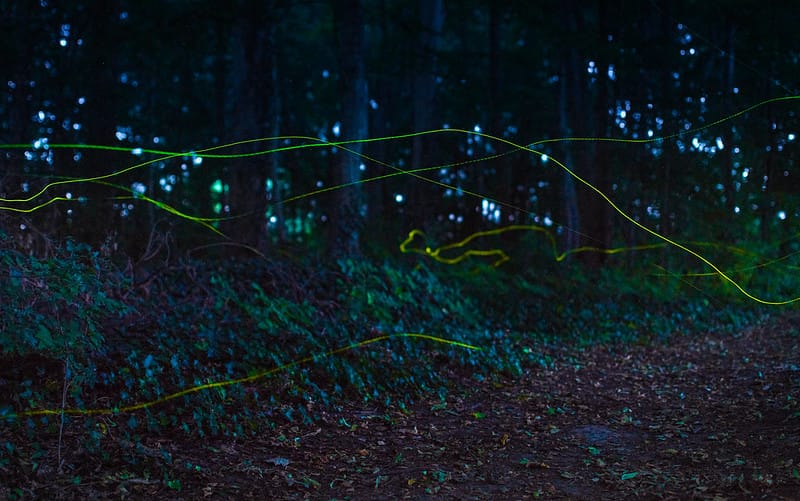
Fireflies | Research by the IUCN Firefly Specialist Group has revealed that European glow worm and firefly species are in decline. Glow-worms and fireflies belong to the beetle family Lampyridae, and use bioluminescence to produce their own light to communicate with each other. There are around 65 Lampyridae species in Europe, and the IUCN group assessed the status of ten of these using the Red List criteria. They found that half are threatened with extinction, and that even the Common Glow-worm was near threatened. Habitat loss, light pollution, climate change and chemical use are the main threats causing the declines, according to the group. Craig Macadam of Buglife said it was ‘alarming’ that these charismatic species are disappearing, but that ‘we can help protect their populations with a few simple actions. Reduce light pollution, ban harmful chemicals, and report glow-worm sightings’.
Rivers | A citizen science project has found that three-quarters of UK waterways are in poor ecological health. Between June 7th and 10th, 2,630 people tested their local freshwater quality as part of the Great UK WaterBlitz, organised by the charity EarthWatch Europe. The project tested for nitrate and phosphate nutrients, which are commonly found in waste, sewage and fertilisers. The results revealed that 75% of the data points showed poor water quality due to levels of nutrient pollution, with the percentage rising to 89% in the Thames and Anglia areas. Hertfordshire and Cambridgeshire had the worst water quality, while Derbyshire and Northumberland had the least nutrient pollution. Sacha Woods, the charity’s director of science and policy, called the results ‘truly disturbing’, and said there are ‘no parts of the UK unaffected’. The national blitz was the first of its kind, and Woods called on the next government to make better use of citizen science data. The Independent and the Telegraph covered the news.
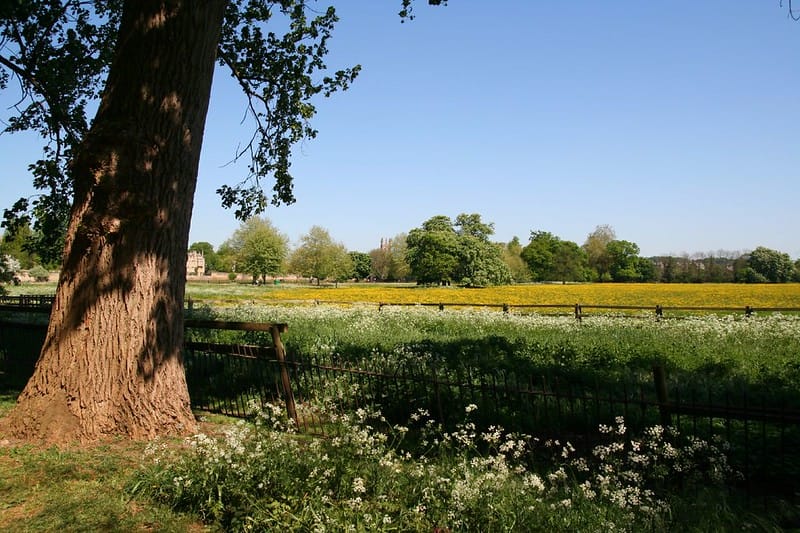
Cities | Oxford has retained its position as the greenest city in England, according to an in-depth analysis of environmental data by ENDS. The annual Green Cities Index ranks England’s 55 primary urban areas according to more than 30 environmental factors, grouped under five headings: public realm, green behaviour, climate, air quality and water quality. Oxford ranked top in the green behaviour category, and highly in public realm. Data shows that it has one of the highest recycling rates in the country, the largest proportion of adults who cycle and walk, and is among the top ten cities with close access to public green space. Caroline Green, chief executive of the City Council, said she was ‘delighted’ by the result, adding that Oxford has ‘some wonderful green spaces, parks, meadows and rivers which we are determined to protect and enhance’. Behind Oxford, Cambridge rose to second spot, swapping places with Barnsley for 3rd, while Exeter, York and Brighton all made the top ten.
Science
Grazing | A study in Ecological Solutions and Evidence investigates how different grazing methods affect natural regeneration in UK uplands. Researchers recorded colonising trees within 60 plots in the Yorkshire Dales National Park, and quantified the effects of sheep removal, cattle grazing, and environmental factors such as distance from woodland, elevation and soil geology. Significantly, they found that the number of naturally colonising trees per hectare was 16% higher each year after sheep removal, while both cattle and ungrazed management were equally effective in promoting colonisation. Meanwhile, colonisation rates decreased by 25% for every additional 100m from the nearest woodland. The authors conclude that ‘sheep grazing is a key limiting factor of natural colonisation in the UK uplands’, and that tree-planting will still be required to restore tree cover in areas away from seed sources. On X, Guy Shrubsole said the study was ‘a key finding for a just transition’ in the uplands.
Extinction | Protecting just 1.2% of the Earth’s land could save thousands of the most threatened species from extinction, according to a study in Frontiers in Science. A team of researchers compared species data with existing protected areas, and used satellite analysis to identify the remaining habitat of rare and threatened species. They identified 16,825 sites that should be prioritised for protection over the next five years to prevent imminent extinctions. Most of these areas were in the tropics, but grassland, temperate forest and tundra sites were also identified. They also found that 38% of these areas, called ‘conservation imperatives’, were within 2.5km of an existing protected area, and could therefore be ‘quick wins’ for conservation targets. The authors highlighted the importance of strategic designations, as they estimated that only 7% of sites protected between 2018 and 2023 were home to the most threatened species. The Guardian covered the research.
Treeline | A study in British and Irish Botany examines the tree species which make up the ecotone in the Cairngorms National Park. An ecotone is a transitional region between two biological communities: in the Cairngorms, this is found between 500 metres and 1,000 metres elevation, where the natural treeline gives way to montane scrub above. Ecologist Andy Amphlett found that the same ten species appeared in the same order of frequency across the ecotone – including across the forest line, treeline woodland and montane scrub – with juniper in the top spot, followed by rowan in second. It has recently been argued that a ‘birch belt’ used to be present in Scotland, as it is in Norway, where birch forms the highest treeline above the altitudinal limit of pines. However, Amphlett argues that the make-up of the Cairngorms’ ecotone does not support this argument, and therefore it should not be a target for conservation efforts.
Driftwood
Seaside | As temperatures heat up, the Guardian has published a series of articles about the ‘Great British Seaside’, examining its treasure trove of biodiversity and history, but also suggesting ways in which the public can help protect it. For those planning their trips, this article reviews 13 of the best sustainable eateries on the British coast, while this feature interviews six ‘coast fanatics’ – including naturalist Steve Backshall and writer Michael Morpurgo – on their favourite beaches. For the environmentally conscious traveller, this list collates projects and volunteer opportunities from planting seagrass to surveying rockpools and monitoring seabirds. In the meantime, you can learn about the diversity of marine life found under piers on the Isle of Wight, or read about rewilding efforts on the UK’s south coast.
Map | There have been countless articles on the polluted state of the UK’s waterways, but do you know what’s in your local river? Now you can find out, via Watershed’s newly launched Pollution Map. The first-of-its-kind interactive map collates more than 120 datasets, ranging from river and bathing water health to historic landfill sites, sewage dumping, intensive farming, road run-off, forever chemicals and more. It contains data from field research, FOIs and EIRs, and other official sources, all sorted into an accessible map so that ‘as many people as possible’ can see the range of pollution ‘in their backyards’. In the launch announcement, journalists Rachel Salvidge and Leana Hosea write that ‘knowledge is power but shared knowledge is more powerful’, and invite other journalists, campaigners, scientists, policymakers and others to use the map and data freely.
Secret | What does the actor Michael Sheen have to do with toxic chemicals in the south of Wales? A new podcast by the award-winning husband and wife team, Dan Ashby and Lucy Taylor, digs into the dark and convoluted story of how the Hollywood actor recorded the last testament of an eco-activist who was fighting against – and dying from – the effects of dangerous PCB chemicals. It started in 1967 when Douglas Gowan began investigating strange deformities in animals born close to Brofiscin and Maendy quarries in South Wales. He spent the rest of his life working to prove they were linked to the dumping of chemical waste by nearby companies, but most documents went unpublished. Now, Ashby and Taylor have acquired his life’s work, and attempt to unravel the murky history along with Sheen, who met Gowan in 2017, a year before he died. The Guardian and the BBC have features on the story.
Further reading:
- In the Times, a feature looks at the suggestion by the Scottish Gamekeepers Association to cull deer in urban areas to provide quality meat for locals and reduce car crashes.
- A feature in the Scotsman takes a look at the difficulties of crofting in the 21st century – and how Highland cows are playing a new role for tourists.
- When writer Kitty Johnson’s son was leaving for university, she decided to overcome empty-nest syndrome in an unusual way: by rescuing injured hedgehogs. Read more in the Guardian.
- The BBC has a selection of striking insect images from this year’s Royal Entomological Society photography competition, while the Times exhibits some arresting shots from the Environmental Photography Award.
- In the Spectator, an opinion piece argues that growing tourism and National Trust guardianship is wrecking the Cotswolds.
- A BBC video takes a look inside the Chelsea Flower Show garden where adults aren’t allowed – now installed in the school of the children who co-designed it.
- An article in Nature examines how farming could help fight climate change.
Happy days
Music | A blog by the Scottish Wildlife Trust celebrates Landscape to Light, a new album by Scottish pianist and composer James Ross. Born and raised in the northern town of Wick, Ross explains that the album ‘celebrates the remarkable landscape of the north of Scotland’, and melds together classical music with the traditional music of his upbringing. The tracks are inspired by various elements of the landscape, including a whirlpool, the Caithness coastline, and even the carnivorous sundew plant. The album’s namesake track is inspired by Scottish novelist Neil Gunn’s descriptions of land, sea and nature in his collection of essays of the same title; you can listen to the beautiful track here, accompanied by a video by Scottish-Finnish cinematographer Minttu Mäntynen.
Subscribe to our newsletter
Members receive our premium weekly digest of nature news from across Britain.
Comments
Sign in or become a Inkcap Journal member to join the conversation.
Just enter your email below to get a log in link.