Nature Targets & Scottish Wolves
The latest news on nature and conservation in Britain.
Welcome to Inkcap Journal, a newsletter about nature and conservation in Britain. This is the Friday digest, rounding up all the week's news, science, reports, comment and more.
National news
Targets | The government has proposed new long-term legally binding targets for nature, water, waste and air quality, as well as updated nature recovery plans. The proposed targets are a requirement of the Environment Act passed into law last November. They include reducing harmful air pollutants by over a third compared to 2018 levels; increasing species populations by 10% by 2042; and “significant improvements” in the condition of Marine Protected Areas also by 2042. The targets will now be subject to an eight week consultation period, giving environmental groups, local authorities and stakeholders the opportunity to comment. Published simultaneously with the targets, the government’s Nature Recovery Green Paper outlines the government’s “initial thoughts” on driving recovery via protected sites and species, and provides details on the proposed plans for 30% protection of land and seas by 2030. However, environmental organisations have already criticised the new targets and nature recovery plan, urging the government to aim higher. The Wildlife Trusts stated that the two documents will fail to stop nature’s decline, let alone enable it to recover, while Wildlife and Countryside Link pointed out that no marine wildlife is included among the protected species. The Guardian highlighted that the proposed air pollution limit is twice as high as WHO recommends. Sky News and the Times also covered the story. The government subsequently responded to some of the criticisms.
Sewage | The quantity of sewage in British waters is still featuring heavily in the news. In Wales, a report by the Senedd’s climate change committee found that there were 105,000 storm overflow spills in 2020 alone, and the true figure may be much higher, reports the BBC. The Welsh government said it would look at the report and its recommendations. Meanwhile in England, the Times reports that water companies have yet to complete a single improvement under the government’s scheme for tackling the worst of sewage overflows, almost four years after it was launched. At the coast, almost half of England’s blue flag beaches – rated “excellent” for water quality – were affected by sewage spills last year during the official bathing season, according to analysis by charity Surfers Against Sewage. The Times covered the story, and published a partner piece which reports that swimmers will soon be able to get live updates on water quality under plans for real-time monitoring at beaches. The first monitor will be trialled this summer on Hayling Island in Hampshire. In another positive development, water firms Severn Trent and Anglian Water have pledged to accelerate their efforts to protect rivers after the government called on the sector to do more last month. The Guardian covered the story.
Ukraine | The discussion over how the UK should respond to a potential food security crisis caused by Russia’s invasion of Ukraine has been ramping up. Lorna Slater, Scotland’s biodiversity minister, has rejected the call by the National Farmers Union of Scotland to convert ecological areas to food production. “The way to tackle this is by tackling food waste so that farmers can produce food that they will know ends up on people’s plates, especially those people who are struggling with their cashflow,” she said in comments that were reported by the Times. ScotLink also spoke out against the NFU’s proposals. Campaigner and journalist George Monbiot dismissed the notion that rewilding has become a luxury we can’t afford. “It’s an ecological necessity,” he writes in the Guardian. The Nature Friendly Farming Network said that the crisis is an opportunity to reframe our current definition of food security so that it includes, among other things, ecologically functioning landscapes and better support for nature-friendly farming practices. Last week, environment secretary George Eustice met with his G7 counterparts to discuss the developing situation.
In other news:
- The government has launched an inquiry into land use in England. You can submit evidence here.
- A group of farming groups in Wales have launched a campaign to explain that “doing our bit for the planet does not mean a vegan diet,” reports the Herald.Wales.
- Public outcry has prompted a government u-turn over guidance that reclassified pheasants as livestock, reports the Guardian.
Across the country
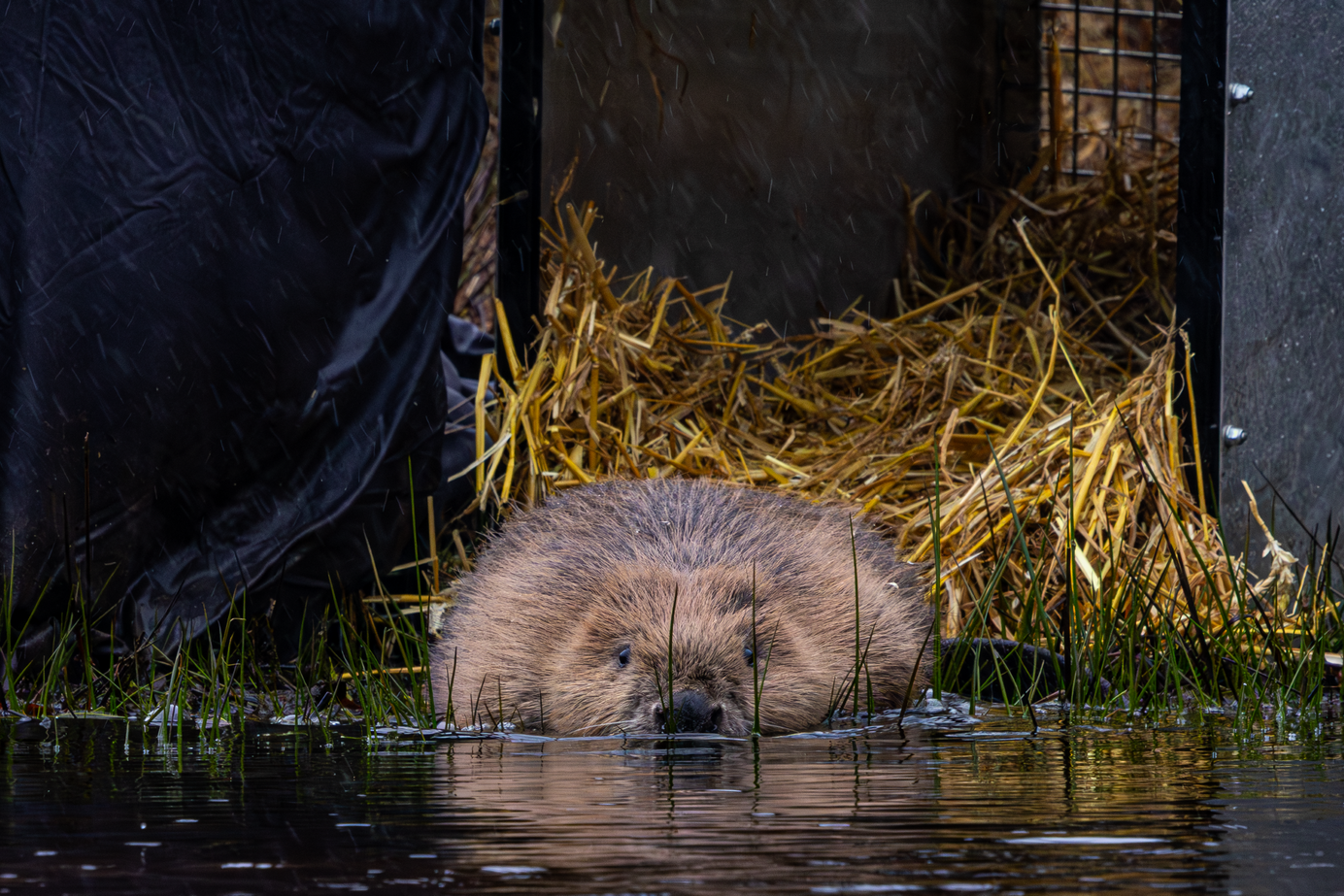
London | Beavers are returning to London for the first time in 400 years, thanks to a project being launched by Enfield Council and Capel Manor College, London’s environmental college. The two beavers, a male and a female, were released into an enclosure yesterday within the ground of Forty Hall Farm. The reintroduction is part of the council’s drive to tackle climate change and improve ecosystems. “This is a truly humbling event to see these wonderful creatures back in the borough,” said Ian Barnes, the deputy leader of Enfield Council. The story was covered by the Telegraph. Separately, water voles could be reintroduced to marshes in Devon, reports the BBC.
Langholm Moor | A crowdfunder led by the Langholm Initiative is aiming to secure land on Langholm Moor before it is put on the open market in May, reports BirdGuides. The purchase would double the Tarras Valley Nature Reserve, which was created last year after a successful community buyout. A total of £2.2 million is needed to secure the area and prevent it being purchased by corporate investors. Rewilding Britain has already contributed £20,000 to the cause. The Times did an in-depth profile on the group’s efforts this week. “It’s vital we get this land because I don’t think whoever buys it is going to manage it as a nature reserve,” said estate manager Jenny Barlow. “It has a different feel to the land that we already own and it gives us more opportunities to do things on a landscape scale.”
Glasgow | Glasgow City Council has approved plans to create more than 20 local nature reserves across the city, reports Glasgow Live. Officials will now set to work with the local communities to draw up designs. So far, 22 open spaces and woodland have been earmarked for the project; designation of the new sites, in addition to the current ones, would result in a total of 776 hectares of local nature reserves across the city, equating to one hectare per thousand people.
Elsewhere:
- Over 140 fish have been killed in a pollution incident in the Afon Trystion river in North Wales, reports the Daily Post. Improvements are to be made by an environmental charity following an investigation by Natural Resources Wales.
- The National Trust has created a Northumberland “ark” to protect endangered crayfish. The Guardian and the Chronicle covered the story.
- HS2 protesters living in Staffordshire woodland off the A51 have been served an eviction notice, reports the BBC.
- Jeremy Clarkson’s opposition has failed to stop Oxfordshire County Council’s vegan-only food policy, reports the BBC.
- England’s largest seagrass planting project will begin in Solent this week, reports Natural England.
- A rare fen in Lincolnshire will be restored by the Lincolnshire Wildlife Trust following a generous grant.
- The newly formed Lowestoft Kittiwake Partnership will help safeguard endangered kittiwakes in the coastal town, reports the Eastern Daily Press.
- A Cambridge rotary club will fund the propagation of new elms from six disease-resistant trees surviving in the city, reports the BBC.
- The Environment Agency has introduced new byelaws on the River Wye in response to the decline in migratory salmon stocks.
- The Cumbrian Wildlife Trust is taking over the care of two areas of limestone pavement near Burton-in-Kendal to help preserve the rare habitat.
- East Staffordshire Borough Council has passed a Motion for Nature’s Recovery, according to the Staffordshire Wildlife Trust.
- Fireworks and sky lanterns could be banned in South Yorkshire to protect its open moorland, reports the Yorkshire Post.
- Canterbury City Council have refused a proposal by Kent Wildlife Trust to build raised platforms for visitors to watch the herd of bison at West Blean’s ancient woodland, reports Kent Online.
Reports
Climate Change | The UK Climate Change Committee (CCC) has presented its 2022 report to the Scottish Parliament, in which the Committee finds that Scotland is “not yet climate ready.” The report highlights that action to adapt to critical impacts such as wetter winters and rising sea levels has stalled in recent years. One of the five key action areas that the CCC identifies as lacking is the natural environment: the report states that there is no credible plan to adapt farmland habitats and species to a changing climate; that rates of peatland restoration fall well short of Government targets; and that river basin management plans do not include consideration of future changes. Responding to the report, NatureScot CEO Francesca Osowska said that the agency is “stepping up action to meet this challenge”, and while there is much to be done, “we are building on the real progress that is already being made”. The BBC reported on the story.
Birds | An RSPB report looks at how wildlife fared on its reserves across 2021, and finds that a range of bird species have increased rates of breeding success when given more space to nest and raise their young. It was a particularly good year for lapwings, redshanks and terns, while cranes had their best breeding year since the species began to recolonise the UK in the 1970s. Elsewhere in the bird world, birds of prey are still struggling in the Peak District, according to a report released by The Peak District Bird of Prey Initiative. The report summarises data sent in by raptor groups, volunteers, landowners and gamekeepers. This year’s report finds that, despite slight increases in most species, the area still hosts far fewer raptors than the landscape can accommodate. The Derbyshire Wildlife Trust hopes its new peregrine protection officer, due to start work in mid-March, can help to raise the issue of illegal persecution of birds in the Peak District.
Species | A report from 13 nature charities calls on the UK to take an urgent leadership role in 2022 to restore nature, both at home and globally. The report, Ten Species That Can Help Save the World, highlights little known facts about everything from the lob worm and the common poppy to the oak tree and the blue whale. It highlights the vital but often unseen, underestimated and undervalued roles of all wildlife in protecting our environment. Ahead of the COP15 biodiversity talks, these charities, including the Woodland Trust, Marine Conservation Society, Buglife and Wildfowl & Wetlands Trust, are urging the government to act to protect UK species and secure a strong global deal for nature. Wildlife and Countryside Link announced the report, and iNews covered the story.
Science
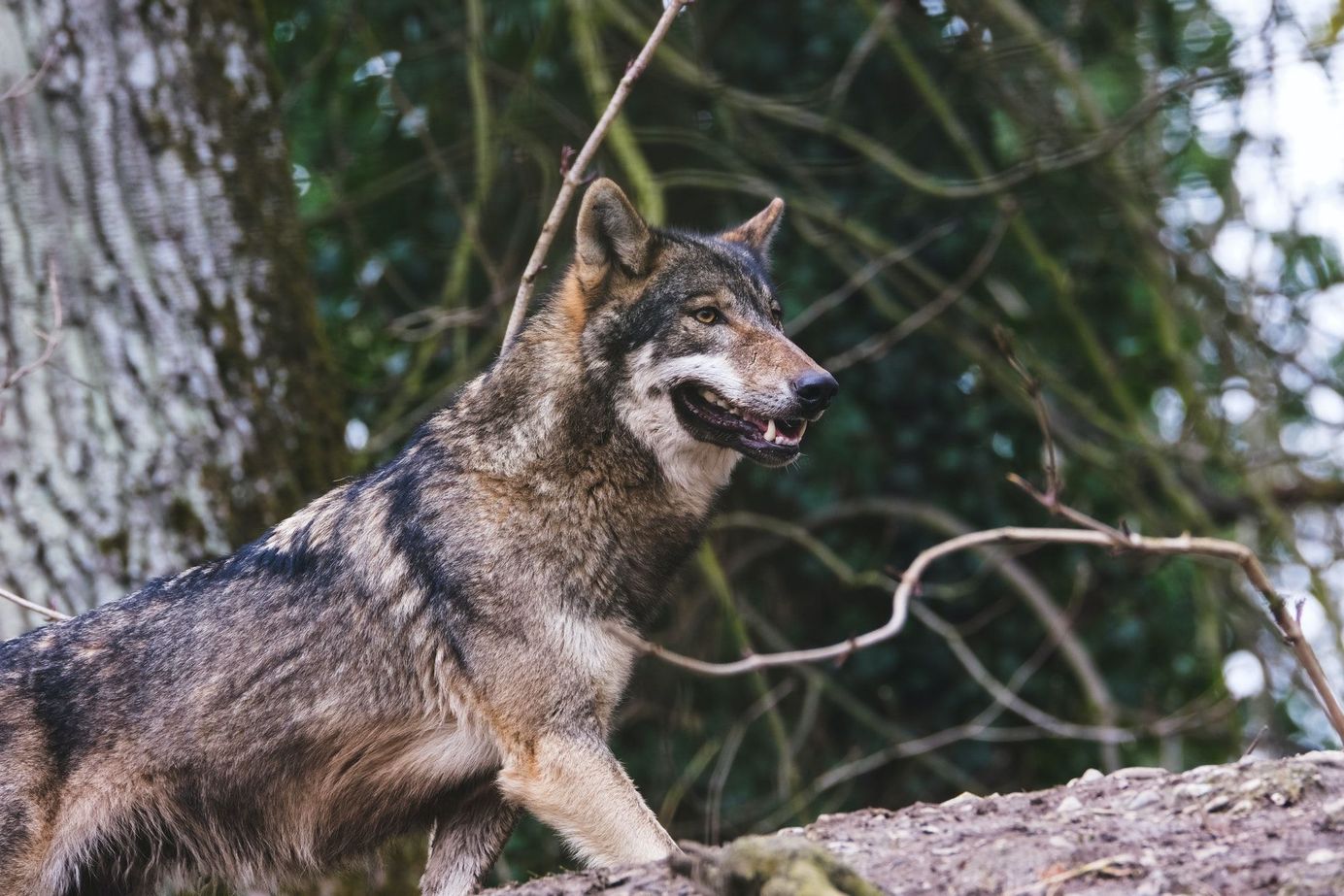
Wolves | Reintroducing wolves to the Highlands and Grampian mountains of Scotland “should be feasible”, according to a study by researchers from Manchester Metropolitan University’s natural sciences department, which is still awaiting peer review. The researchers used a habitat suitability model, with the most important variables being land cover, prey density, road density and human density. The Highlands and Grampians “emerge strongly and consistently as the most suitable areas” due to the high densities of deer combined with sparse human populations and few roads. The authors of the study conclude that the combined area “could be sufficient to support between 50 and 94 packs of four wolves, if the average pack range size is taken to be 200km².” The Scotsman, the Herald, the Sunday Times, the Telegraph and the Daily Express all covered the research.
Lead | Lead poisoning is a common cause of death for raptors, but there until now has been no attempt to understand its overall impact on European raptor populations. This study in Science of the Total Environment measured lead concentrations in the livers of over 3,000 raptors of 22 species found either dead or dying in 13 European countries to assess the proportion of birds in which lead poisoning caused or contributed to death. Although the prevalence of lead poisoning varied substantially among countries, it was perhaps unsurprisingly positively correlated with the reported number of hunters per unit area. The study’s model indicates that death by lead poisoning results in an average 6% overall decrease in European populations of adult raptors.
Meadows | In England and Wales, 97% of wildflower meadows were lost by 1984. There is now a push to create more flower-rich margins in agricultural environments – but what about urban ones? A study published in the Journal of Insect Conservation demonstrates that just four square metres could be enough to provide a rich habitat for pollinators. Researchers worked with citizen scientists across the UK over two years to investigate the effectiveness of sown wildflower “mini-meadows” in gardens and allotments. The results showed that, in the year following seed-sowing, the mini-meadows supported on average 111% more bumblebees, 87% more solitary bees and 85% more solitary wasps. Professor Dave Goulson, co-author of the study and author of the book Silent Earth, said, “This new study shows that you don’t need much space to do your bit. If most of the UK’s 22m private gardens had a mini-meadow like this, it would really make a difference.”
Driftwood
Kites | It’s always exciting to see a British conservation story in National Geographic, thanks to its in-depth reporting and excellent photography. This week, the magazine has recounted the tale of how red kites were returned to the countryside after almost being driven locally extinct in the 19th century, starting with the establishment of a feeding centre at a farm in mid-Wales in the early nineties. It contains the fascinating anecdote that public opinion was partly won over by inviting the local Women’s Institute, mostly comprising farmers’ wives, to see the kites for themselves – which, notably, were not harming the lambs.
Weeds | Once upon a time, gardener and columnist Alys Fowler wrote about her fight to rid her garden of dandelions. Now she’s returned to the Guardian with a piece on her newfound appreciation for weeds. Her article is a beautiful meditation on the changing reputation of weeds over the centuries, and why they are so beneficial for biodiversity today. “For millennia, humans gathered, tended and used these so-called weeds so that they became a resource, either as a source of food (for their animals or themselves), a medicine or a material,” she writes, before pointing out how the intensification of farming changed our perspective of “what could stay at the margins”. On a similar theme, both the Times and the Metro have articles on how to return wildness to your garden, the latter based on a new book by regenerative landscape gardener Jack Wallington.
Hiking | The Coventry Telegraph has a feature on how the Muslim Hikers group has gone from strength to strength since pictures of its Christmas Day hike in the Peak District were trolled on social media last year. Its founder, Haroon Mota, has now left his full-time job and is focusing on building up Muslim Hikers and other projects through his own social enterprise, Active Inclusion Network. One of his objectives is to promote respect for the environment; he says he is driven by a “huge passion to get communities outside, to exercise and enjoy the beautiful countryside”. The group is now planning a hike during Ramadan, which begins next month.
Further reading:
- ITV looks at the impacts that rewilding could have on Welsh farms.
- There’s another feature on Lee Schofield and his new book, Wild Fell, this time in the Times.
- The world needs to rethink how it sees gastropods, according to an editorial in the Guardian.
- Various NGOs have written an open letter to Center Parcs, asking them to reconsider the location of their new facility.
- Tim Farron outlines a new Liberal Democrat policy to tackle biodiversity loss.
- The Times dedicated a whole section of the newspaper to rewilding on Thursday. Among the pieces included was an overview of the debate, and a profile of a Highlands estate.
"Nothing is more powerful than an idea whose time has come."
— Luke Steele 🇺🇦 (@Lukesteele4) March 17, 2022
Fantastic to see @TheTimes dedicating a section of the newspaper to promoting rewilding as a solution to climate change and biodiversity loss. pic.twitter.com/f0Ikakrqp9
Happy days
Languages | The John Muir Trust is in the process of developing a policy around language, including Gaelic and Welsh, to shape the support of native languages and their role in culture, community and the conservation of wild places. Two speakers of these languages (including one learner) give their perspectives on the link between language and nature. This seems a good time to remind you of the feature we published on ancient harvesting techniques last year, which appeared on our website in both English and Gaelic.
Subscribe to our newsletter
Members receive our premium weekly digest of nature news from across Britain.
Comments
Sign in or become a Inkcap Journal member to join the conversation.
Just enter your email below to get a log in link.