Nature Targets & Golden Eagles
The latest news on nature and conservation in Britain.
National news
Scotland | The Rural Affairs and Islands Committee has backed proposals to introduce targets for nature restoration, in its Stage 1 Report on the Natural Environment Bill. The Bill was introduced earlier this year, and is a ‘once in a generation’ opportunity for wildlife, according to the RSPB, with statutory targets among the main demands of environmental charities. The report calls for a clear timetable for introducing those targets, and sets out recommendations for how they should be monitored, reviewed and reported on. Scottish Construction Now has an overview of the report, including comments on other sections of the Bill, including national parks and deer management. The British Association for Shooting and Conservation (BASC) raised concerns over proposals to introduce mandatory training for deer stalkers. Separately, Scottish Environment LINK has published a manifesto for nature, ahead of the Holyrood election next year. Among its demands are increased investment in nature restoration and a national mission to restore peatlands.
Climate | The Conservatives have pledged to scrap the Climate Change Act if the party wins the next election, removing the need to meet carbon budgets and disbanding the Climate Change Committee. Announcing the policy, Kemi Badenoch said: ‘Our priority now is growth, cheaper energy, and protecting the natural landscapes we all love.’ The Act was passed in 2008 with cross-party support, and was strengthened under Theresa May. However, political consensus on the topic has since fractured. The announcement was condemned by politicians, businesses and environmentalists. ‘Instead of tearing down our strongest protections, politicians should bind nature recovery into the Climate Change Act – making sure every cut in carbon is matched by new woodland, restored wetlands, and thriving wild places,’ said Richard Benwell of Wildlife and Countryside Link. The story was widely covered, with reports in the Guardian, BBC, Telegraph, Times and ITV.
Land | The UK is losing nature and agricultural land to development at a rapid pace, according to an investigation by the Guardian and other organisations across Europe. Between 2018 and 2023, more than 600 square kilometres of land vanished beneath concrete, bricks and mortar – making it the fifth worst offender of the 11 countries examined. While the loss of the Amazon has been measured for years, this is the first time that satellite imagery has been used to track the loss of green space in Europe. The investigation revealed that special protections are being trumped by local developments, including residential, transport and commercial projects. But many were small encroachments, including barns, extensions and road widening projects. The largest losses were in landscapes including the Cotswolds, Chilterns and High Weald. Read more about the findings across the rest of Europe here.
In other news:
- Scientists are attempting to rear swallowtail butterflies from frozen eggs, to investigate the potential of cryopreservation, reports the Guardian.
- The latest report from the European Environment Agency presents a grim outlook for nature across the continent. WWF called the findings ‘alarming’.
- The renowned primatologist Jane Goodall has died aged 91, reports the Times (among many others).
- The number of nesting hen harriers in England rose slightly this year, according to Natural England.
- Parts of Wales are no longer in drought, though recovery may take months, says Natural Resources Wales.
Across the country
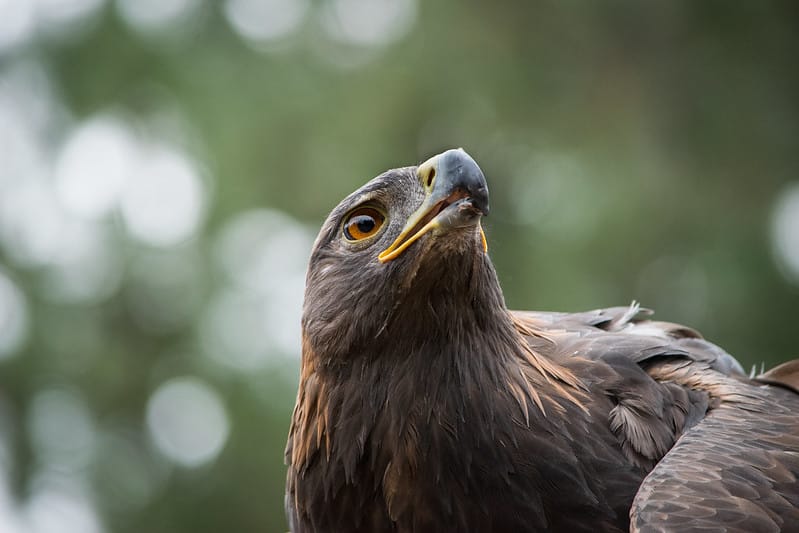
Langholm | Two golden eagles are missing in southern Scotland, and police are concerned that one of them – a four-year-old called Tarras – may have come to harm. The male’s tag was displaying suspicious patterns and data reports, prompting concerns that the bird was in danger between 27 and 29 August. Efforts to locate him are ongoing, and the police have urged anyone with information to come forward. Tarras was introduced to the Langholm area in 2021 as part of the South of Scotland Golden Eagle Project; he is the second eagle from the project to vanish in suspicious circumstances. Fears are also mounting for Tarras’ mate, Wren. ‘To lose one eagle is bad enough, but to lose a settled pair is particularly upsetting,’ said Michael Clarke, chair of Restoring Upland Nature. BirdGuides and the Scotsman covered the story. Separately, police fear that a one-year-old hen harrier has been shot in the Yorkshire Dales, reports the BBC.
St. Kilda | Two vets are calling on the National Trust for Scotland to reduce the number of sheep on St. Kilda to prevent their starvation due to overgrazing. The Soays, a rare breed, have roamed wild on Hirta, the largest island in the archipelago, since humans evacuated in 1930, and have the same legal protections as Scotland’s wild deer – but the vets argue that, because of their history of domestication, they should be treated in the same way as livestock. ‘Starvation is not a good death and it's the suffering that concerns us,’ said David Buckland. But scientists monitoring the sheep have suggested that intervention could cause the flock to become less resilient to disease and parasites, as winter mortality removes the most vulnerable lambs. The documentary was broadcast on BBC Alba, and covered by the BBC and the Telegraph.
Cambridgeshire | In the Fens, farmers are preparing to harvest the UK’s first crop of rice. The grains are the result of an ambitious experiment, designed by the UK Centre for Ecology and Hydrology, to futureproof the food supply and tackle climate change. The peaty soils of the Cambridgeshire Fens are drying out and disappearing, emitting around 2.6 million tonnes of carbon every year. Re-wetting the soils prevents degradation, but makes it impossible to grow crops like wheat. At Oxwillow Farm, Craig and Sarah Taylor have allowed water to surface, creating paddies where they now grow nine varieties of rice. It has also encouraged wildlife, with ducks and snipes now nesting in the marshy fields. While the UK is still at the edge of rice’s range, in a warmer future it could be a ‘completely perfect crop’. The BBC and the Times covered the story.
Elsewhere:
- A project to reintroduce smooth snakes to Peddlebed Heaths in East Devon has been successful, reports the BBC.
- Berkshire, Buckinghamshire & Oxfordshire Wildlife Trust has launched a £300,000 appeal to buy an ancient woodland.
- An ash tree in Glasgow has been crowned Tree of the Year 2025 by the Woodland Trust, after being nominated by the public.
- A farm is thought to have caused the pollution – probably slurry – that led to fish deaths in the River Weaver, reports the BBC.
- Residents are concerned by plans to cut down 19 mature trees in a Southampton cemetery because they pose an obstacle for aeroplanes, reports ITV.
- A conservation group in the New Forest has purchased a kiln, allowing them to make enough charcoal to cover most of their running costs, reports the Daily Echo.
- In Cumbria, ospreys have successfully reared three chicks on a previously unused nesting pole, reports the BBC.
- Praying mantises have been spotted in the wild in Cornwall, at two separate locations, leading to suggestions it is a climate migrant, reports the BBC.
- The Mayor of Cambridgeshire has objected to plans to build a bus route through Coton Orchard, reports the BBC.
- Planning permission has been granted for a new 250-acre nature reserve in Aylesbury, reports the Bucks Herald.
- Hedgehogs have made a dramatic comeback in Highgate Wood, reports Ham & High.
- The number of Dingy Skipper butterflies at Cannock Chase Country Park has increased by more than 50% since 2023, reports the BBC.
- Oxygen Conservation has bought the Kinrara Estate in the Cairngorms, home to BrewDog’s controversial Lost Forest, reports the Scotsman.
Reports
Climate | Nature in the UK is bearing the brunt of climate change, and the government is ‘shockingly underprepared’, according to a report from the Wildlife Trusts. Resilient Nature documents how species and habitats are responding to rising temperatures across the charity’s 2,600 nature reserves. It tells a tale of drying peat bogs, high wildfire risks and disruptive storms. It also looks at how the organisation is adapting to climate change, including planning for hazards, recording and managing pests and invasive species, and considering the effects on future conservation grazing regimes. The report states that, ‘Given the scale of risk, the UK Government should rethink its whole approach to adaptation.’ The BBC covered the story.
Climate again | In a similar vein, Natural England published a report on the use of nature-based solutions to tackle climate change, with an emphasis on soil fungi and hedgerows. It summarises of the first four years of the agency’s Nature Returns programme, exploring the evidence base for nature-based solutions across six natural areas. Experiments included LiDAR scanning to assess hedgerow carbon and using the presence of specific fungal communities to predict soil carbon stocks; research found that old trees in woodlands store a disproportionate amount of aboveground carbon. The project also led to active conservation work, with more than 800 hectares of habitat created or restored.
Finance | Scotland has a ‘nature finance gap’ – but the extra £20 billion that the government estimates is required to meet its recovery targets is too high, according to a report by Future Economy Scotland. The true sum is more likely to be between £41-176m per year – at most 0.3% of the government’s annual budget. As a result, the government has overemphasised the need for private finance. Instead, the report proposes a public-led investment model for peatland restoration, with interest-free government loans covering the upfront costs, to be repaid via the sale of carbon credits, or written off if the money is never recouped, ‘similar to how student loans work today,’ explain the authors. In the Guardian, NatureScot defended its current approach, saying that it is on course to raise more than £100m from private investors.
Science
Bird flu | Avian influenza has devastated bird populations across Europe and North America, but what has the impact been on survivors? Gannets offer a unique opportunity to examine that question: their blue eyes turn black following exposure to the virus. Researchers studied the breeding success of blue- versus black-eyed gannets at Bass Rock and Bempton Cliffs. The infected birds bred just as successfully as those who avoided the disease – ‘an important sign of resilience,’ writes Sue Lewis, who led the research, in a blog. Overall breeding success, however, was down on previous years, suggesting that the aftershocks continue to ripple through the population. The study was published in Ibis.
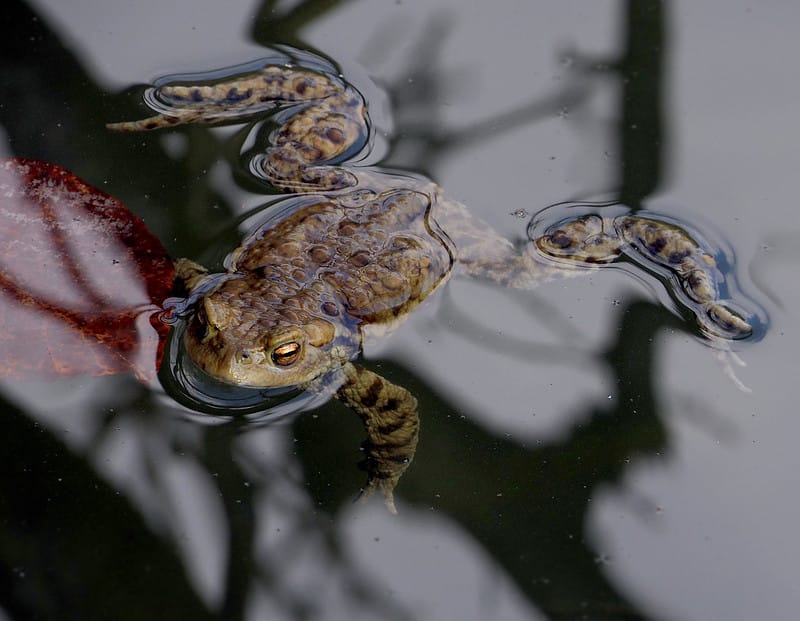
Toads | The common toad is becoming uncommon, according to a study published in Biodiversity and Conservation. In Britain, populations have declined by 41% over the last 40 years. The data was collected by volunteers carrying out ‘toad patrols’, transporting the animals across roads during their spring breeding migrations. This makes the data especially worrying: it means that toads are continuing to decline despite these efforts. ‘Without toad patrols populations in these areas would have already experienced a much steeper decline, resulting in more populations becoming locally extinct,’ said Jenny Tse-Leon of Froglife, the organisation that led the study. The Guardian covered the story.
Baselines | Shifting baseline syndrome is undermining the conservation of Europe’s seabirds and waterbirds, according to a study in Biodiversity and Conservation. Most monitoring schemes started in the 1970s, yet the decline of many species began before that. Assessing trends from 1900 onwards, researchers found that 35 birds were already in decline when official monitoring began. They also discovered that some species had lost a significant portion of their historical range. Although the paper stresses that historical baselines ‘should [not] be targeted at any price’, long-term information is vital nonetheless. ‘Restoring bird populations to their 1970s levels is not enough: their decline began long before that,’ said co-author Thomas Galewski.
Driftwood
Fruit | It has been a bumper year for British apples, but supermarkets continue to stock varieties imported from abroad, writes William Sitwell, the Telegraph’s restaurant critic. Buyers may cite shelf life and British tastes, but Sitwell isn’t buying it: the produce of our orchards should be displayed proudly on shelves, he writes, and the rest used for crumbles. A similar attitude is on display with meat: venison and pheasant are harvested en masse across the countryside, yet shops prioritise beef, lamb, chicken and pork. Shoppers should head to their local greengrocer, he concludes, ‘then have some fun annoying the supermarket-store managers by asking if they can check their computer to see if they have any (almost unspellable) Egremont Russets, Worcester Pearmains, Lord Lambournes or Ashmead’s Kernels.’
Swifts | A short feature in the BBC looks at efforts by Westminster Abbey to conserve swifts by installing nest boxes. The boxes have been attached to a red-brick administrative building in the College Garden, where they have been sprayed red to blend in with the historic environment. A small device plays swift calls at dusk and dawn to attract the birds. Swifts have declined steeply since the mid-90s: the smooth facades of modern buildings mean that there is nowhere for them to nest when they arrive from Africa, leaving them homeless. In the past, however, it would have been a different story: ‘In 960, when Benedictine monks founded Westminster Abbey, they would have clearly heard the scream of swifts each summer.’
Tides | In Country Life, writer Roger Morgan-Grenville looks at Britain’s intertidal land – the stretches of mud and sand hidden and exposed by the tides on a daily basis. Britain has the largest intertidal area of any island on Earth: ‘an ethereal, shapeshifting habitat that has tempted and fascinated us since time immemorial,’ he writes. The most famous of Britain’s intertidal islands is probably Lindisfarne: until the causeway road was opened in 1954, the muddy route across the flats was the only way to reach the monastery. Follow the marker posts across the sand, and you’re walking in the footsteps of monks, traders, illustrators, Vikings and pilgrims. For a less uplifting look at tidal waters, take a look at this feature in Prospect, which examines the impacts of flooding on people and communities across Britain.
Further reading:
- In a blog, Natural England chief scientist Sallie Bailey looks at how restoring nature can reduce the risk of wildfires.
- A feature in Earth.org looks at efforts to restore the Scottish Wildcat to the Highlands.
- In Aeon, author David Farrier examines whether we should use gene-editing technology to save threatened species.
- Reasons To Be Cheerful profiles Paul Stamets, AKA ‘the granddaddy of all things mushroom’, as part of its Fungi Week series.
- Climate change may be contributing to a rise in rats in cities, reports the BBC.
Happy days
Rewilding | A picture of a sturgeon emerging from a crate into the Göta River in Sweden, marking the species’ return after more than 120 years, has won this year's Rewilding Europe award. As one of the categories in the European Wildlife Photographer of the Year competition, the award highlights photographs showcasing the revival of wild nature across Europe. Read an interview with Jon A. Juárez, who took the winning photograph, in Rewilding Europe, and see more of the nominated images here.
Subscribe to our newsletter
Members receive our premium weekly digest of nature news from across Britain.
Comments
Sign in or become a Inkcap Journal member to join the conversation.
Just enter your email below to get a log in link.