Net Zero & Butterfly Count
The latest news on nature and conservation in Britain.
National news
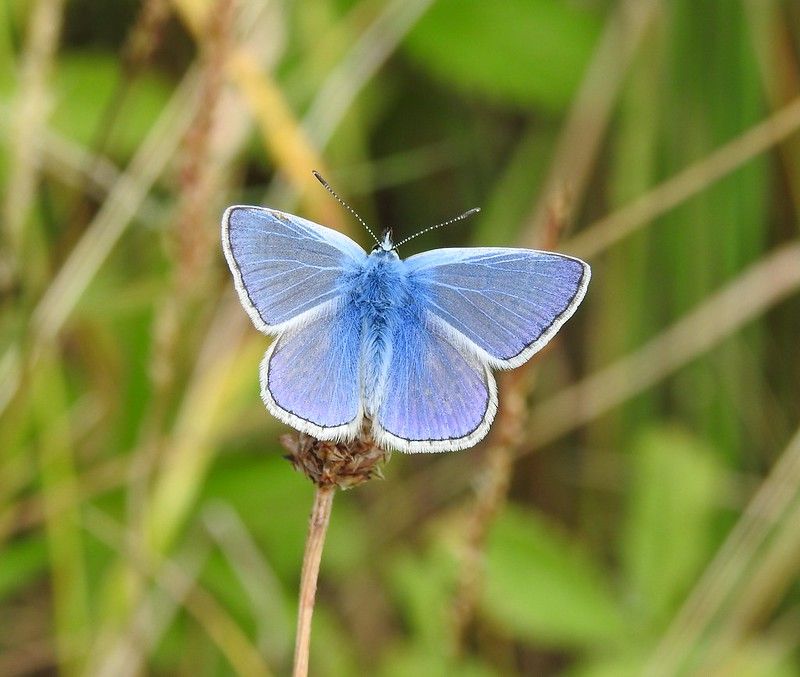
Butterflies | Butterfly numbers in the UK are at their highest in four years, according to the results of this year’s Big Butterfly Count. More than 95,000 people took part in the citizen science project, with more than 1.5m butterflies and moths counted over 24 days. Volunteers spotted an average of 12 individual butterflies per count, up from an all-time low of 9 per count in 2022. Officers at Butterfly Conservation, which runs the project, said the increase was likely due to the mixed summer weather, with damp spells providing an abundance of food. The species with the largest increases from last year included the Peacock, up 172%, the Silver Y, up 171%, and the Brimstone, up 73%. However, Butterfly Conservation stressed that butterflies are still experiencing long-term declines across the UK, with habitat loss presenting the biggest threat. The Times reported the news, while the Guardian included pictures of favourite sightings.
Net Zero | Prime Minister Rishi Sunak has announced a revision of the UK’s climate policies, including plans to weaken several key commitments. Sunak said the government was still “completely committed” to the 2050 net-zero target, but that a policy shift would ensure goals were met in a “more proportionate way”. Criticism of the move has been widespread, coming from industry as well as scientists and environmental groups. Already 400 organisations – including the National Trust and WWF alongside the likes of IKEA and Nestlé – have issued an open letter to Sunak expressing their “deep concern”, and stating that weakening net-zero policies “would be a historic mistake of your premiership”. On Twitter, the RSPB added that tackling climate change was critical to “reverse declines, restore birdsong to our skies and reconnect people to nature”. The Guardian rounded up a list of reactions from green groups, including that of Professor Brian Hoskins, chair of the Grantham Institute, who said that net-zero policies were already too weak before the review, but now the PM “wants to have his cake and eat it”. The news was widely covered by national outlets.
Chalk | The Wildlife Trusts are leading a campaign to secure legal protection for England’s chalk streams. Eighty percent of the world’s chalk streams are located in England, representing a rare and rich habitat, yet only 11 out of 220 in Britain benefit from legal protection, as Sites of Special Scientific Interest. This means that the rest are unprotected from pollution such as sewage discharge, while also struggling with unsustainable pumping of aquifers and increasing droughts. The government’s target to achieve healthy rivers by 2063 is too late for chalk streams, according to Sienna Somers of the Wildlife Trusts: “We need to see powerful new protections and immediate action, so that our chalk streams can be brought back to their former glory now, not in 40 years!” The BBC covered the story.
In other news:
- Welsh anglers are calling for a cull on fish-eating birds such as cormorants and goosander ducks in order to reduce predation on fish stocks in rivers, reports the BBC.
- NatureScot has ruled out a formal review of the right to roam guidance amid concerns of overtourism, reports the Scotsman.
- Natural England has announced that 141 hen harrier chicks fledged in England this year, marking the seventh consecutive year that numbers have increased.
- The UK government is pushing for increased international marine protections, according to Defra.
- A report by the House of Lords says the government must “get a grip” on its haphazard implementation of environmental rules on housebuilding, report the BBC and the Times.
- Scientists have warned that climate change will lead to a very different pattern of bird species arriving on British shores, reports the BBC.
Across the country
Hertfordshire | A population of water voles is thriving on the River Ver after 150 individuals were released in 2021. The Herts and Middlesex Wildlife Trust announced that water vole occupancy has more than doubled each year since the reintroduction, which followed extensive restoration work to improve the habitat west of St Albans. Water voles are facing extinction across the UK, and the species had not been seen in the Ver Valley since 1987. The Trust is aiming to have water voles present in every river in Hertfordshire by 2030, although it said it will need further funding for future reintroductions. The BBC covered the news.
Forth | Native oysters have returned to the Firth of Forth for the first time in a century, after disappearing due to overfishing and industrial development. On Monday, the project Restoration Firth threw a batch of oysters into the estuary – the first of a planned 30,000 individuals. These oysters were sourced from Little Loch Broom near Ullapool, and represent the latest species reintroduced to help restore the Forth’s ecosystem, after the project planted seagrass seeds earlier this year. Caitlin Godfrey of the Marine Conservation Society said: “Native oysters have huge cultural value in this area and throughout the project we are reconnecting communities with the fascinating history of oysters in the Forth.” The Independent, the Herald and the Scotsman covered the news.
Dorset | The BBC has two stories this week showing the potential for rewilding projects to boost biodiversity. The first features Wild Woodbury, where the Dorset Wildlife Trust has been working to transform a former agricultural site into a mosaic of habitats. Just two years after they acquired the site, bird life is exploding with various Red List species recorded on the land, including nightingales and nightjars. The second highlights the success of the critically endangered black-veined moth in Kent following efforts by farmers to return fields to their natural form, instigated by Natural England. The species needs a combination of tall tufts of grass and short wildflowers within the same field, the absence of which has almost pushed them to extinction.
Elsewhere:
- Natural England has launched the first in the King’s Series of nature reserves, this one on the Lincolnshire coast, reports the BBC.
- Campaigners claim that the pollution levels in a tributary of the River Wye in Monmouthshire are above official targets, reports the BBC.
- A new wetland bird habitat created as part of flood defence works in the Severn Estuary is to open to the public, reports the BBC.
- The number of birds which died from bird flu in the Farne Islands has dropped by almost half compared to last year, reports BirdGuides.
- Eight projects across Yorkshire will receive a share of £1.5m in government funding to improve habitats for threatened species, reports the Yorkshire Post.
- The future of a five-acre woodland in Bristol remains uncertain after it was purchased by a mystery buyer, reports the Bristol Post.
- Two refuge zones along the Exe Estuary established to give wintering waterbirds protection are proving successful, reports BirdGuides.
- The Environment Agency has almost completed work on a £9m nature-based water treatment scheme to reduce metal pollution in rivers in the North East and Cumbria.
- Kingfishers have been filmed courting at Washington Wetland Centre for the first time, reports the BBC.
- A partnership between Angus Council, RSPB Scotland and others is delivering a nature prescribing project in Angus for wellbeing benefits, reports the Courier.
- Jersey’s Environment Minister has proposed expanding a new planning law to better protect trees, report the BBC and ITV.
- The ‘death’ of the UK’s largest freshwater lake – Lough Neagh in Northern Ireland – due to a toxic algal bloom has been marked with a ‘wake’, reports the Bristol Post.
- The Environment Agency is inviting residents in the River Severn area to join a Citizens’ Panel on the future health of the river.
- Dalkeith Country Park near Edinburgh has been named a Heritage Tree Hotspot after experts recorded 500 ancient, veteran and notable oaks, reports Scottish Field.
- Westminster City Council has declared an Ecological Emergency.
Reports
Paths | The benefits of the UK’s path network are mostly felt by the old, the white, the healthy and the wealthy, according to a report by the Ramblers. Analysis of 140,000 miles of public rights of way revealed that paths in England and Wales provide more than £2bn of health and wellbeing benefits every year – yet access is restricted for those who would benefit most. Residents of the wealthiest areas have 80% more local paths than those in the most deprived areas, while the most white-dominated areas have 144% more paths than ethnically diverse areas. The report explores various solutions to this imbalance, including creating green urban corridors, restoring historic rights of way, and connecting existing routes. Overall, the report calls for an additional £650m annually to expand the path network and create more equal access. The Guardian covered the report, and researcher Alex Chapman neatly summarised the findings on Twitter.
Councils | A report by UK100, a cross-party organisation focused on accelerating net-zero, looks at how local authorities are pioneering nature recovery initiatives. It is the most comprehensive assessment of local authorities’ duties and powers to restore biodiversity to date, according to the group. The report spotlights the work of “trailblazing” councils, including Oxfordshire’s climate adaptation policies, Oldham’s urban eco-park development, and Gloucestershire’s biodiversity guidance for highway planning. However, these councils are the exception, according to the report: other authorities’ recovery efforts are often hampered by constrained resources, dysfunctional policies and short-term, competitive funding. The report calls on the government to back local leadership on nature recovery by providing long-term investment and clear, coherent policies.
Salmon | The charity WildFish has published a report investigating the certification of Scottish farmed salmon. In ‘Responsibly Farmed?’, the charity outlines the “systemic failures” of three popular certification schemes to improve the environmental, welfare and sustainability performance of the open-net farms they certify. Practices employed by these farms include the use of large volumes of wild-caught fish as feed, and the use of chemical treatments, including pesticides known to be toxic to marine life. The report seeks to change the ‘perception gap’ between consumer beliefs and the reality, stating that the schemes are little more than “a greenwashing tool, exploited by both the producers and retailers, to command a premium price”. Separately, vegan charity Viva! has used underwater drones to reveal “monstrous invasions” of sea lice and jellyfish at salmon farms in Scotland, report the Guardian.
Science
Museums | Visit the bird collections of the Natural History Museum, and you will find drawers and jars containing over one million specimens – a treasure trove of skins, skeletons, nests, eggs and even whole birds, preserved in alcohol, that have the potential to provide a window into the environmental conditions of the past. However, until this data is digitised, it will remain mostly inaccessible. A study in Ibis by scientists at the museum spells out the need for digitisation at scale, while an accompanying blog asks scientists how such efforts would help their research – vital information when it comes to raising the massive funds required for such a task. If your work might benefit from an online dead bird library, you can fill in their questionnaire here.
Storks | White storks are a non-traditional candidate for reintroduction in Britain: they are neither threatened globally nor a keystone species. The motivations of those seeking their return are more socio-cultural than ecological, and yet there has thus far been no real attempt to find out how people feel about the return of the species. A study in People and Nature attempts to plug that gap. Researchers asked thousands of people for their perceptions of the bird. Responses differed between those who had self-selected to take part in the survey and the nationally representative sample, with awareness and knowledge much higher among the former group. Nonetheless, there was widespread support among all participants for the stork’s return, although some doubted whether it was ever native to Britain.
Water | Pollution caused by discharged sewage is the greatest threat to river biodiversity, according to a study in Global Change Biology. Researchers from the University of Oxford studied four rivers in England over three seasons to compare the effects of sewage effluent and agricultural pollution. They found that while run-off from farms had a negative effect on water quality, it was sewage – both treated and untreated – that was the primary driver of increased nutrients, algae and sewage fungus. Lead author Dr Dania Albini said the study highlighted the “disproportionate impact that sewage discharge has on river quality, presenting an urgent need for a comprehensive action plan” to address the problem. The Guardian covered the research. A separate study in Environment International has charted the contamination of London’s waterways by pollutants including medication and insecticides, report the BBC and ENDS.
Driftwood
Eagles | Hakai, a publication focused on marine environments, has a feature by the American journalist Emma Marris on the return of sea eagles to Mull. As someone who has written frequently about wolf reintroduction in North America, she finds herself a bit depressed – both at the landscape she encounters and the continuing acrimony towards the enormous birds. “In my naive optimism, I assumed that as soon as a generation of farmers grew up in a world with eagles, they would take them for granted as a rightful part of the island’s life,” she writes. “But instead, they nurse a grudge, against the birds and the birds’ advocates.” The feature includes the voices of both conservationists and sheep farmers, providing an in-depth perspective on both sides of the debate.
Goldsmith | In a lengthy profile, Tatler delves into the life, loves and contacts of longtime environmentalist, former minister and current peer Lord Zac Goldsmith. The overwhelming impression is of a man who is astonishingly well-connected and extremely wealthy, who happens to also have a genuine passion for the natural world. These have combined into a unique ability to achieve change on both the international and domestic stage. Goldsmith refused to speak on record, but characteristically sent a list of 68 high-ranking friends to call, whose opinions are peppered through the piece. The profile covers everything from his childhood to his friendship with Carrie Johnson. According to Boris himself: “There is a simple reason he succeeds: he so obviously cares.”
DNA | The possibilities of ecological monitoring are exploding thanks to environmental DNA. A feature in the Guardian covers some of the applications of the new technology, from seeking evidence for eels in the Somerset Levels to tracking invasive crayfish in Norfolk. The method lifts the lid on the secret life of ecosystems by identifying the species present from the tiny clues they leave behind – including faeces, mucus, skin cells, saliva and hair – thus vastly expanding the volume of data that it is possible to collect through traditional fieldwork. This information then feeds into conservation efforts. For instance, if scientists can prove that eels are deliberately seeking out the ponds they have studied, then more can be done to protect them.
Further reading:
- A feature in the Times explains how marine heatwaves are affecting the food chain in British waters.
- In the Guardian, this feature explores the lives of guillemots on the Welsh island of Skomer, and the scientist who has been studying them for 52 years.
- Textile artist Allan Brown spent seven years spinning a dress out of stinging nettle as part of a therapeutic process. You can see the result in the Shropshire Star, and view a documentary on the story here.
- In an interview with the Times, Chris Packham discusses his view of environmental protests which break the law.
- A review by the Guardian looks at A Year in a Field, a meditative documentary filmed in a Cornish field for – as the title suggests – a year.
- This article in the Times previews how robots could be used to help grow seaweed in future ocean farms.
- Also in the Times, you can read about the campaigners taking legal action against the government for setting fish quotas too high.
- The Guardian takes a look at the winning book of the Wainwright prize for nature writing: The Flow by Amy-Jane Beer, described as “unparalleled” by the prize director.
- A feature in the Evening Standard explores the approach of adventurous parents Leo and Jess Houlding, who take their kids on microadventures to instil a love for nature.
- In the National, Steve Micklewright – CEO of charity Trees for Life – writes about why he believes support is increasing for rewilding in Scotland.
- For the Times, editor Matt Rudd describes the process of hunting for Asian hornets in the fields of Kent.
- This week, a team of ten women are following in the footsteps of celebrated mountaineer and writer, Nan Shepherd, through the Cairngorms. They are producing a short film of the expedition with the aim of empowering other women and girls to explore the outdoors: you can check out their adventure on Instagram.
Happy days
Spiders | There’s a love letter to spiders in the Guardian this week, celebrating not their surprising beauty or their role in keeping your house free from flies, but rather their capacity to inject some productivity into your working day. Emma Beddington’s ode is dedicated to her own “spider motivational coach”, who is constantly engaged in a flurry of “web-building, fly-wrapping, fly-eating and general darting around.” It is certainly one of the best nature-based hacks that we have heard in a while.
Subscribe to our newsletter
Members receive our premium weekly digest of nature news from across Britain.
Comments
Sign in or become a Inkcap Journal member to join the conversation.
Just enter your email below to get a log in link.