New Environment Secretary & Biodiversity in Literature
The latest news on nature and conservation in Britain.
National news
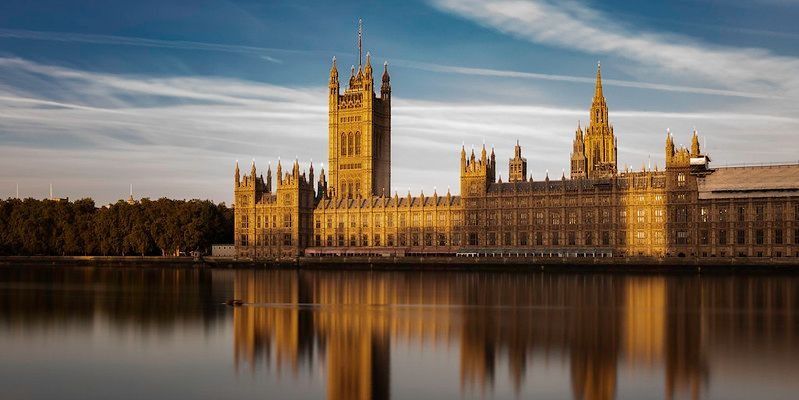
Government | Defra has its seventh Environment Secretary since 2016, as Prime Minister Rishi Sunak’s cabinet reshuffle sees Thérèse Coffey out the door. Environmentalists have widely rejoiced at her departure, with author Robert Macfarlane taking to Twitter to bid “good riddance to the least competent, least ecologically literate, least committed, most anti-nature” secretary since Owen Paterson (who was widely regarded as a climate change sceptic). Coffey is replaced by Steve Barclay, who has been moved from the Health Secretary position. Little is known about Barclay’s position on the environment, although he represents the rural seat of North East Cambridgeshire and is close to the farming unions. He is also known to be dismissive of rewilding efforts, according to the Times’ science editor, Ben Spencer. The discovery that Barclay’s wife, Karen Barclay, is a senior executive at Anglian Water has prompted concerns over a conflict of interest in Barclay’s dealing with sewage pollution. Campaigners are calling on the new secretary to “speed ahead” with quick wins – including a ban on horticultural peat, a 30x30 delivery plan, and ratifying the Global Ocean Treaty – after the complacency of Coffey, reports the Independent.
Indicators | The Joint Nature Conservation Committee has published its annual update to the UK Biodiversity Indicators, which chart broad trends for nature. This year’s update provides a mixed bag. On the positive side, bat populations have increased across the long and short term, greenhouse gas removal by forests has gone up, and plant abundance in broadleaf woodland and hedges has increased slightly. However, environmental organisations have expressed concern over the continued decline in protected site condition. In addition, priority species have declined by 37% since 1970, and the threat from invasive species is continuing to grow. Although funding for biodiversity has increased, organisations agree that it is not sufficient. ENDS reported the news, while the Woodland Trust and the Wildlife and Countryside Link summarised their concerns on Twitter. In other news, the JNCC has also published the Seabirds Count, the most comprehensive census of breeding seabirds in the UK. Out of 21 British species, five have increased and five remained stable – with 11 having declined over the last 20 years. The Guardian covered the news.
Wales | A leading wildlife charity has praised the Welsh government’s proposals to strengthen protection for ecologically sensitive landscapes. Wales’ minister for climate change, Julie James, has issued amendments to the Planning Policy Wales which will protect SSSI sites from inappropriate development. Only minor developments deemed necessary to maintaining a ‘living landscape’ in these areas will now be acceptable. Gwent Wildlife Trust welcomed the news, saying it would help protect nationally important sites such as the Gwent Levels, currently under threat from solar plant proposals and business parks. Nation Cymru reported the news. Meanwhile, the Welsh government has announced that 27 woodland sites will join the National Forest for Wales network.
In other news:
- Three-quarters of Scots are against grouse moor land management, according to a poll by the coalition Revive. The Herald reported the news.
- The government is set to loosen EU-derived chemical regulations in a decision that heightens the risk of toxic substances entering the environment, reports the Guardian.
- A report by the National Audit Office has revealed that the number of English homes to be better protected from flooding by 2027 has been cut by 40%, while a quarter of new flood defence projects have been scrapped, reports the Guardian. Meanwhile, Natural Resources Wales has published its six-year road map for managing Wales’ flood risk.
- The Wildlife Trusts Wales is calling for the urgent reinstatement of agricultural water rules after changes will allow farmers to ‘self-report’ how much manure they put on fields.
Across the country
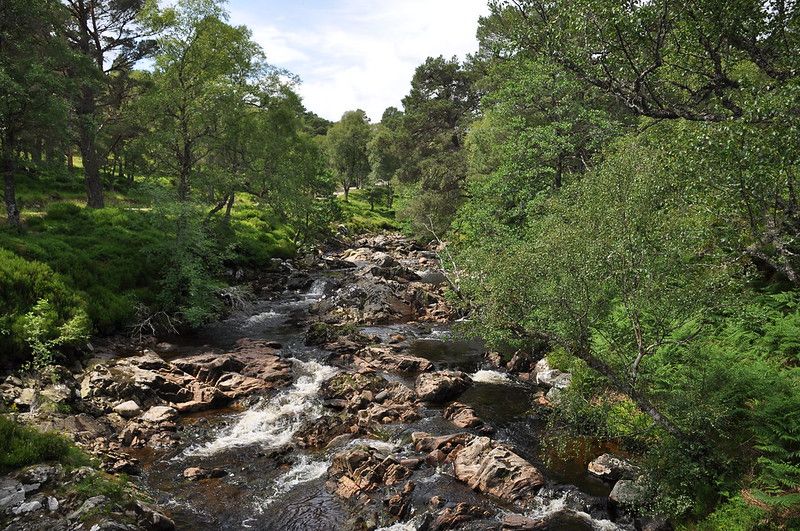
Alladale | A fragment of ancient Caledonian pinewood in Sutherland has been restored after two decades of conservation effort. This unique habitat once covered a much wider area of Scotland, but forest clearances, agriculture and historic climate change have reduced it to a handful of fragments in the Highlands. Alladale is the second most northerly fragment, and was in unfavourable and declining condition until it was purchased for restoration in 2003. The Alladale team fenced the fragment to relieve pressure from deer, and also planted almost a million native trees to supplement the forest. After two decades, the area – now a Wilderness Reserve – has been reclassified as being in ‘favourable condition’, safeguarding the future of the habitat and the rare wildlife it supports. The Herald and the Northern Times reported the news.
Dorset | Juvenile sand lizards bred in captivity have been released onto Winfrith Heath in an effort to restore a self-sustaining population of the rare species. Dorset Wildlife Trust, in collaboration with Natural England, released 23 individuals onto the lowland heathland managed by the Trust, and plans to release a further 150 in two batches. Sand lizards are only found in two habitats in the UK – sand dunes and lowland dry heath – yet as much as 75% of Dorset’s heathland has been destroyed over the last century. The species has not been seen on Winfrith Heath since a fire in 2020, and ecologists from the Trust have carried out work to ensure the habitat is suitable for reintroduction. The BBC reported the story.
Kent | Ecologists have discovered a very rare species of fungus growing in Addington, Kent. Candelabra coral – also known as crown-tipped coral fungus due to the crown-like shape of its ‘branches’ – is commonly found in North America, and was thought to be extinct in the UK until a find in 2012 in Suffolk. Natasha Aidinyantz, of the Kent Wildlife Trust, said the discovery in Kent was particularly interesting because it suggested a pattern of distribution building in the east of England – although how it ended up there is “a bit of a mystery”. She added: “It just goes to show that nature doesn’t play by our rules, and that’s very much what is so beautiful about it.” The BBC covered the story.
Elsewhere:
- King Charles has supported pioneering methods of river restoration on Balmoral Estate, reports the Independent. The estate featured in a public awareness campaign by the Riverwoods Initiative.
- Bird populations on Lundy Island have soared, according to the RSPB, with some 40,000 seabirds living on its shores, reports the BBC.
- Eight pairs of little terns have nested at RSPB Minsmere in Suffolk after a three-year project to restore breeding sites, reports the BBC.
- The National Trust has planted a mix of 26 native wildflower species at Tor Hill Wood in the Mendips to boost biodiversity, reports the BBC.
- Conservation charity the Vincent Wildlife Trust is overseeing a project to help pine martens thrive at Northumberland’s Wallington estate, reports the BBC.
- Environmental campaigners have warned that plans to build England’s biggest wind farm on the Yorkshire moors would disturb peat bogs, reports the BBC.
- The Environment Agency has fined a Somerset cheesemaker £20,000 for its third pollution offence, reports the BBC.
- A Cape May warbler has been spotted on the Isles of Scilly in a UK first, reports the BBC. Meanwhile, an American ‘Storm Wigeon’ appeared briefly on Anglesey, reports BirdGuides.
- Cambridge City Council has introduced cows to East Barnwell nature reserve to improve biodiversity, reports the BBC.
- Countryside charity CPRE has criticised plans to build an electricity line between Kent and Suffolk, as it would endanger wildlife where it came ashore in a National Nature Reserve.
- Newcastle City Council has submitted plans to build ‘kittiwake hotels’ on the Tyne Bridge during repair works, reports the Northern Echo.
- The Highland Council has announced the first round of funding for its nature restoration programme, including projects for wildflower planting, bat protection and rhododendron removal.
Reports
Dormice | The UK’s population of native hazel dormice has declined by 70% since 2000, the latest national report has revealed. Monitoring by the People’s Trust for Endangered Species found that the small mammal is now extinct in 20 English counties, having disappeared from Northumberland, Staffordshire and Hertfordshire since the last report in 2019. The report cites habitat loss as the main cause, with dormice acting as a flagship species for the management of woodlands and hedgerows. Warmer winters are also causing dormice to wake during hibernation, when there is no food available. However, the report does highlight that reintroduction efforts by PTES and other charities are yielding positive local results. The authors emphasise the need to reclassify the species as ‘Endangered’ rather than ‘Vulnerable’, which could result in more targeted conservation efforts. The Guardian covered the news.
Scilly | The Isles of Scilly Wildlife Trust has issued a warning call following the results of its seabird survey. The Scilly Isles supports one of the most significant seabird colonies in England, but the survey revealed that it has suffered declines of nearly 20% in the last eight years, and lost half its seabird population over three decades. In particular, the islands have lost common terns as an annual breeder – with kittiwakes hard on its heels – and also seen steep declines in gull and shag populations. However, the report also found that work to eradicate rats on St Agnes and Gugh resulted in significant recovery for burrow-nesting birds, with numbers of Manx shearwater and storm petrels booming. The Trust is calling for a comprehensive island restoration project to remove rats. The BBC and BirdGuides reported the news.
Protein | A report by cross-party think-tank Social Market Foundation explores the potential for future growth in the alternative meat market, and whether it could reduce demand for intensive farming. The market for alternative meats in the UK has grown by 400% in the last ten years, but it stalled in 2022, largely due to the cost-of-living crisis. Forecasts for potential growth by 2040 vary wildly – anywhere from 3% to 70% of the global market – but experts agree that making products cheaper and tastier are the key requirements for growth. Notably, the report found that the growth of alternative proteins would almost certainly reduce the number of animals reared intensively: if alternative proteins reached 30% of market share by 2040, it would result in over 300m fewer animals being raised in factory farms each year.
Science
Authors | A study in People and Nature looks at how authors’ depictions of nature are influenced by their personal circumstances. Combining methods from natural sciences and the humanities, a research team from Leipzig University examined roughly 13,500 literary works by around 2,900 authors. They found that, on average, works by women contained more biodiversity than those by men across all periods analysed. Geographical location also played a part: authors from small towns included more biodiversity than those from urban areas, while nature featured more prominently in North American works than European. Lead author Lars Langer said the results were “statistically highly significant”, and suggested that “all the correlations we can find can be traced back indirectly to the corresponding education and socialisation”.
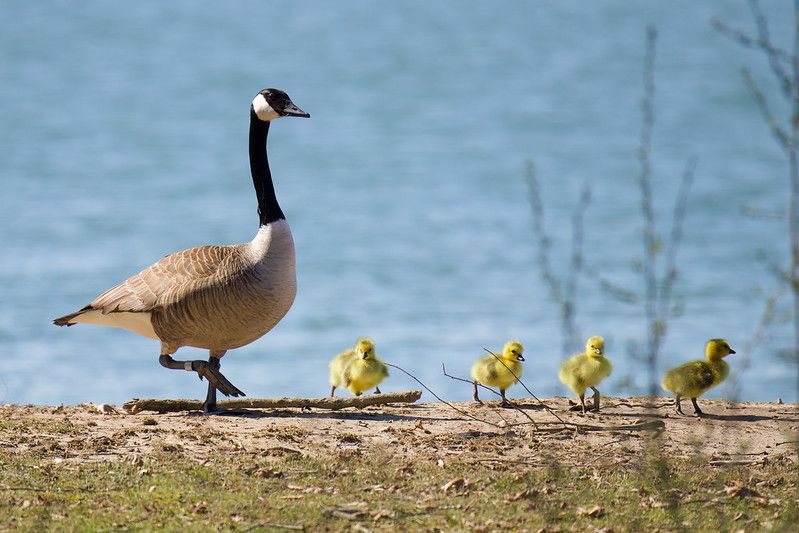
Geese | Canada geese “keep calm and carry on” in the face of social upheaval, according to a study by University of Exeter scientists. The team observed a flock of Canada geese in Cotswold Water Park before and after a population management cull, in which around 20% of the flock were killed. In some species, this type of loss can cause increased ‘social connectivity’ – mixing with many new individuals – which can spread disease. Instead, the researchers found that the geese strengthened their existing relationships, and only added enough new individuals to replace those that were lost. Dr. Nick Royle, from the Centre for Ecology and Conservation, said that “this ability to deal with social disruption – this resilience – might contribute toward their success as an invasive species.” Phys.org covered the research.
Forests | Forest conservation and restoration could make a huge contribution to carbon sequestration, according to a collaboration of hundreds of forest ecologists. The research, published in the journal Nature, combined ground-source and satellite data to evaluate the scale of the global forest carbon potential outside agricultural and urban lands. It found that forests are markedly under their carbon potential, with a deficit of 226 gigatonnes. Most of this potential (61%) could be realised by protecting existing forests, while the remaining 39% could be achieved by restoring fragmented or cleared forests. The authors stress, however, that this is not a replacement for cutting fossil fuels, and that mass monoculture tree-planting is not a substitute for healthy forest ecosystems. The Guardian covered the research.
Driftwood
Mammalhood | For Emergence Magazine, writer Kerri ní Dochartaigh writes movingly and viscerally about what it means to be a mother in the midst of “innumerable, unstoppable crises”. In the second trimester of pregnancy, she writes, she suddenly became aware that she herself was a female mammal, carrying her mammalian offspring: “Never had I felt myself such a part of a planet before; an ecosystem; a species. Never had I felt the animal that I am so keenly; so bodily; so terrifyingly.” Exploring the ties between home and motherhood and the earth, Kerri suggests that through the course of motherhood, “we are writing a new story”.
Gaelic | The UK’s first ever Gaelic Climate Convention has taken place in the Western Isles. More than 60 people attended the event in South Uist, where islanders discussed their concerns around the impact of climate change on their communities and homes. The gathering also discussed key terminology that could be used in Gaelic conversations about climate change. These included words for ‘climate’: Clìomaid/gnàth-shìde; ‘rewilding’: Ath-stèidheachadh fiadh-thìre; and ‘anthropogenic’: Ri linn dhaoine. Alasadair Mackenzie of Climate Hebrides, which offers education on climate change, said that “the need to bridge the gap between [Gaelic] language and climate change has become increasingly prevalent.” This BBC feature includes a video about the climatic changes seen on the islands, while this week’s Inkcap Journal feature looks at the history of weather in the Outer Hebrides.
Peat | A post by the University of Stirling details a pioneering research project which will explore the dynamics of peat bogs – by recreating one right on campus. Researchers have teamed up with Orbital launch services company, Orbex, which is providing a small amount of peat from its Sutherland Spaceport site to recreate a bog in Stirling. The campus bog will be closely monitored to assess the effects of seasonal surface fluctuations – also known as ‘bog breathing’ – and inform techniques to measure the water table depth. PhD researcher Georgina Page says the results will help to assess the success of restoration efforts, and in the future, identify areas most in need of restoration.
Further reading:
- In the Guardian, Phoebe Weston explains the global implications of the number of insect species on the brink of extinction.
- The Standard has an exclusive first look at the Natural History Museum’s £21m garden revamp, which includes a tour through the earth’s natural history.
- In a Guardian feature, you can read about the dangers of microplastics from the perspective of the man who first identified them: Robert Thompson.
- Journalist Georgina Roberts describes her experiment to live on food waste for a week in the Times.
- The BBC has two features on artists highlighting the biodiversity and climate crises: in Devon, Fran Gynn draws species for people to erase, while Manx sculptor Robert Jones creates sculptures from discarded materials.
- A BBC feature takes a look at the plethora of species named after Sir David Attenborough.
- Chris Packham has accused the Scottish ‘country set’ for trashing the landscape, reports the Telegraph. The same paper published a vitriolic opinion piece from Scottish journalist Alan Cochrane, who wrote that Packham should leave the Scottish countryside to its own people.
- The 2023 Nature Conservancy photo contest winners are showcased in the Guardian, including a corn snakelet in Somerset photographed using ultraviolet light.
Happy days
Birding | Look up, and you won’t regret it. This is the message of a Guardian article by wildlife cameraman and presenter, Hamza Yassin. Hamza writes about the joy that birding has brought him, ever since he would watch his favourite weaver birds while growing up on the banks of the Nile in Sudan. Now based on the west coast of Scotland, Hamza’s new favourite is the unassuming starling, from the heart-shaped speckles on its chest to the species’ 50,000 strong murmurations. Recently in London, he spotted a peregrine falcon swooping over Waitrose while everyone else was on their mobiles. He writes: “If you take the time to stop and listen, you’ll find that the world is full of song.”
Subscribe to our newsletter
Members receive our premium weekly digest of nature news from across Britain.
Comments
Sign in or become a Inkcap Journal member to join the conversation.
Just enter your email below to get a log in link.