New Labour Policies & Urban Beavers
The latest news on nature and conservation in Britain.
National news
Policy | Labour has announced a number of environmental policies during its first week in government. On water, environment secretary Steve Reed has said that water companies must place the environment at the heart of their objectives, with vital infrastructure investment also ringfenced for upgrades benefiting customers and the environment. He set out his five priorities in a video on X, which were summarised by Edie. They include ensuring nature’s recovery and supporting farmers to boost food security, as well as cleaning up the country’s rivers, lakes and seas. Meanwhile, the party has already ended the Conservative government’s de facto ban on onshore wind farms, and is also considering whether they should be designated as nationally significant infrastructure projects, which would allow energy secretary Ed Miliband to sign them off personally. The Guardian reported the story. More mysteriously, the Telegraph reported that Miliband had ordered an immediate ban on drilling in new North Sea oil fields, quoting a statement from the secretary’s spokesman. But the Department swiftly denied the claims: ‘This piece is a complete fabrication – it invents meetings and decisions that have not taken place.’ There will hopefully be more clarity on this story in the weeks to come, with environmentalists urging Miliband to move swiftly to make it true.
Hope Ed Miliband ignores right wing scare stories & swiftly confirms immediate ban on all new N Sea oil & gas fields. Those cheerleading for fossil fuel industry must not be allowed to derail us from the path towards a green transition. And revoking #Rosebank must then follow https://t.co/7Hza5YaDye
— Caroline Lucas (@CarolineLucas) July 11, 2024
Demands | For all the action that Labour has taken so far, challenges remain on the horizon, writes Pilita Clark in the Financial Times. How will it balance new wind and solar plants with its pledge to protect nature? Will they be able to integrate them into the grid? ‘In an ideal world, we would know more about exactly what this government plans to do,’ she writes, ‘but ultimately, it’s a relief to finally have leaders willing to take the risk.’ Certainly, Keir Starmer will be facing a full inbox – a detailed interactive by CarbonBrief outlines the extent of the new government’s to-do list as far as climate change, nature and energy is concerned. Among the outstanding issues in the nature category are the introduction of a land-use framework, tree-planting, and peatland restoration. The Guardian, meanwhile, has a feature on the ‘11 green challenges Labour must solve’, ranging from nuclear energy to food. Environmentalists are continuing to issue their own wishlists. A coalition including the National Trust, WWF, the RSPB and Extinction rebellion have called on Keir Starmer to address five major challenges to the UK’s ecosystems, reports the Independent. In a blog post, Becky Pullinger of the Wildlife Trusts sets out how the government can meet their manifesto pledge to build new homes while also safeguarding the climate and environment.
Pesticides | The Office for Environmental Protection (OEP) has announced it will investigate the emergency authorisation of a neonicotinoid pesticide by the Conservative government in 2023 and 2024. The pesticide is used on sugar beet and is extremely harmful to bees. It is banned in the EU, and Labour has promised to end its use in its manifesto. The investigation was launched after the campaign group ClientEarth submitted a complaint about the emergency authorisation to the OEP. The OEP said that, in particular, it would be considering Defra’s ‘interpretation and application of the precautionary principle and compliance with its nature conservation obligations’ when it approved the use of the pesticide. Kyle Lischak of ClientEarth called on the government to support farmers in adopting sustainable methods of pest control in the future. The Guardian covered the story.
In other news:
- Water bills are expected to rise by a third as Ofwat approves a £100bn infrastructure deal to clean up sewage, reports the Times.
- Scientists are calling on the public to help track the northward expansion of butterflies due to climate change, reports the Guardian.
- The Labour government has said that it will not defend a coal mine in Cumbria that was approved by the last government in 2022, reports Sky News.
Across the country
Kielder | A breeding colony of ospreys, at Kielder Water in Northumberland, has experienced its worst year yet, with the deaths of 12 chicks. The majority appear to have perished because of the wet and windy weather. Two were lost from one nest after being blown out by strong winds, while wind demolished half another nest, leading to the loss of another two chicks. There are now seven survivors – down from 2021, when a record 16 babies fledged. ‘Bad weather also makes fishing by the adults more difficult as the fish go lower down in the water,’ said Kielder osprey observer Joanna Dailey. The Chronicle covered the news. Nor are birds the only creatures to suffer from the washout summer: the drab summer weather has been bad for butterflies, reports the Times.
Ochil Hills | Numbers of sticky catchfly – one of the UK’s rarest plants – have trebled on the craggy slopes of Dumyat, one of the Ochil Hills in central Scotland. Volunteers counted around 10,000 flowering stems during a three-day survey this summer, up from around 3,000 in 2013, representing at least a fifth of the known British population. The species appears to have recovered following restoration work; since taking over the site, the Future Forest Company has removed sheep and reduced the number of roe deer around the crags. The species is named for its sticky stem, which prevents insects from climbing to its flowers; the trapped insects then fertilise the roots when the plant dies back. The results were published by NatureScot, and the BBC covered the news.
Cheviots | The Rare Breeds Survival Trust has put the Cheviot goat on its watchlist, in an attempt to support its conservation. There are just 450 individuals left, with the population centring on the Cheviot Hills. Those living in the College Valley survive as a completely wild herd, while others are kept by breeders and conservationists. The goats provide a genetic link to Britain’s primitive goats, relied upon by farmers from the Bronze Age onwards. According to legend, the Cheviot goats ended up in the Northumberland hills when the monks of Lindisfarne abandoned their monastery in 875 AD; the goats were too feisty, so they were left to roam free. The breed is well suited to conservation grazing. The BBC and the Chronicle covered the story.
Elsewhere:
- Puffins are making a comeback on St Kilda, after populations were decimated by avian flu, reports the Times.
- A Harris hawk is being flown around Worcester city centre in an attempt to control the gull population, reports the BBC.
- In Jersey, a search is underway for a rogue stone marten, which has allegedly killed a guinea pig, reports the BBC.
- A wildflower meadow in Devon is flourishing, 18 months after sowing began, reports the Guardian.
- Yorkshire Water has invested £1.4m to reduce the number of storm overflows into the Derwent, reports the BBC.
- The RSPB is planting more than 1,000 trees on an arable farm in Cambridgeshire to explore the potential of agroforestry, reports the BBC.
- A television advert by Wessex Water has been banned for misleading viewers over the company’s record on sewage discharges, reports the Bristol Post.
- Researchers in North Wales have uncovered the complex social lives of bats, reports the BBC.
- Bee colonies in the northeast are suffering the worst outbreak of American foulbrood disease in a decade, reports the BBC.
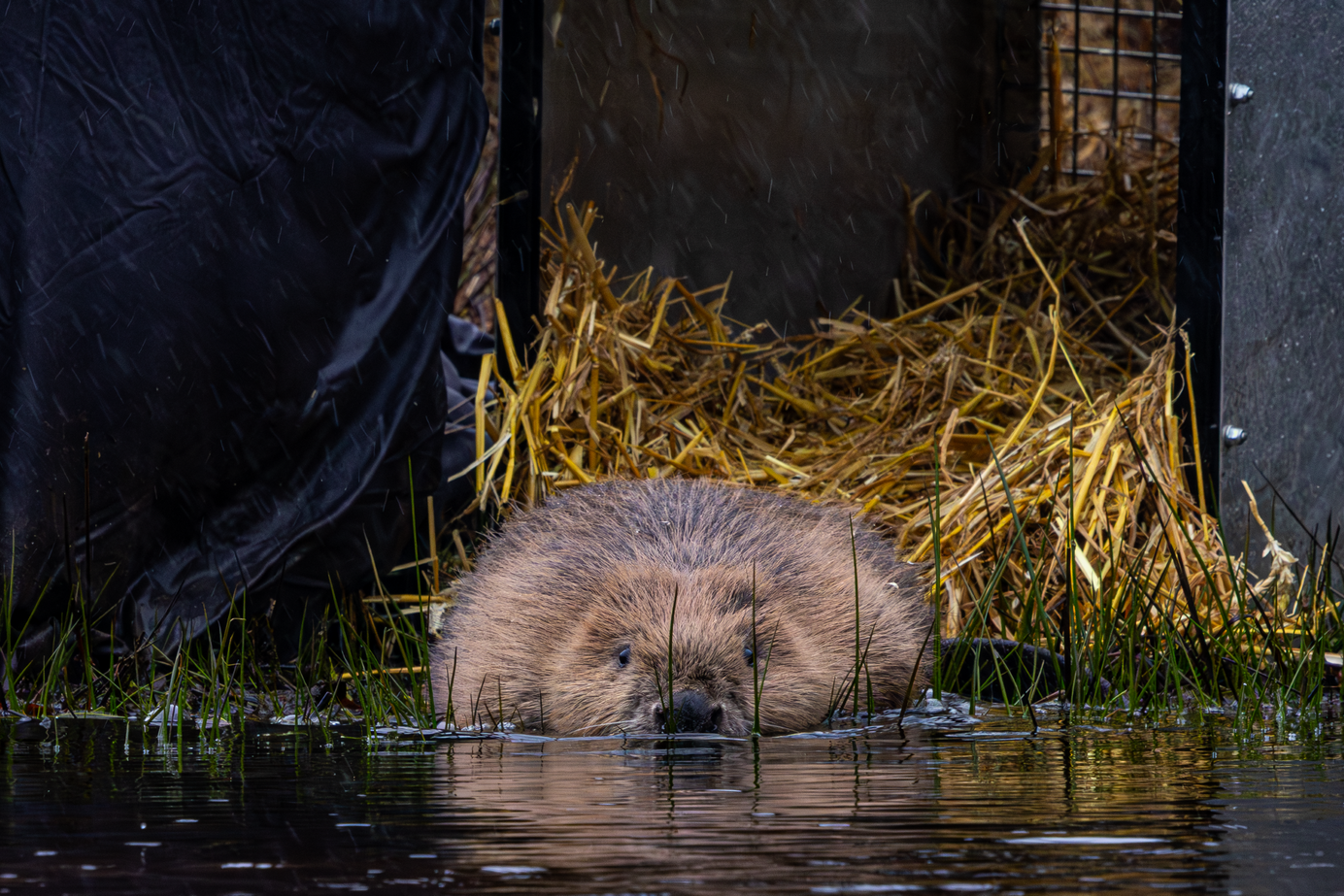
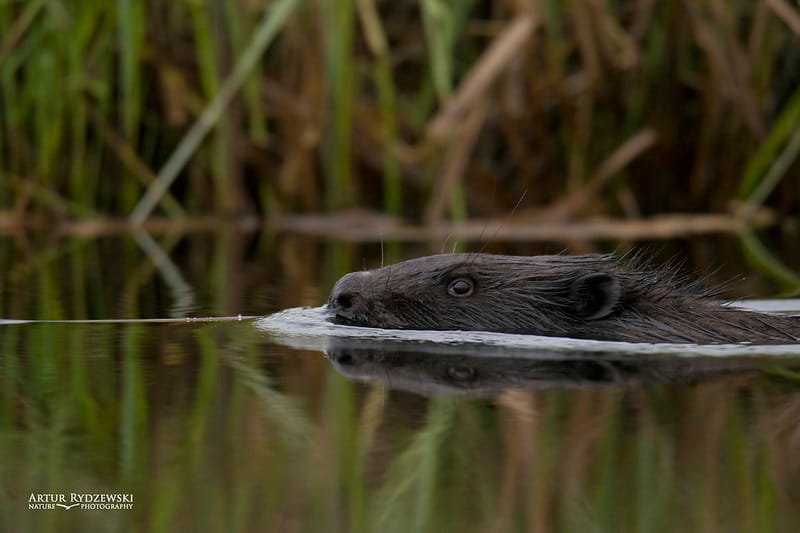
- Baby beavers, called kits, have been born in the River Stour, in what is thought to be the first birth in a wild urban setting in England for centuries, reports the BBC.
- A pod of 77 pilot whales has stranded on a beach in Orkney, in what could be the biggest mass stranding for decades, reports the BBC.
- The Robin Hood oak is not dying, despite rumours, the RSPB has confirmed. The BBC reports the good news.
Reports
Beavers | The introduction of beavers, alongside other nature-based flood management techniques, has reduced the flow of water in the Bircham Valley by 23%, according to a report by scientists from the University of Exeter. The beaver reintroduction project was led by Plymouth City Council. Beavers were first introduced to the site in November 2020. They escaped, and a second batch was released in November 2023. Other interventions included leaky wooden dams and flow deflectors. It is thought to be the first research into the effects of the animals in an urban environment. ‘I'm hopeful that this research can serve to benefit communities at risk of flooding in other urban areas across the county and mark Plymouth as a place that pioneers nature-based solutions to climate change,’ said Councillor Tom Briars-Delve. The BBC covered the news.
Sludge | A coalition of NGOs, including Buglife, Friends of the Earth and the RSPB, have released a joint position paper on the agricultural use of sewage sludge in the UK. Despite its unappealing label, sewage sludge is not a wholly bad innovation, offering an organic and renewable alternative to chemical fertilisers. However, the sludge also contains harmful contaminants that are challenging to remove, including microplastics. The paper argues that, currently, sewage sludge is not managed in an adequately safe and environmentally beneficial way. The NGOs are urging the government to phase out the use of sludge until it is truly a clean and safe resource, and to make financial support available for farmers to seek out less contaminated alternatives. Read the rest of their demands here.
Education | The Royal Meteorological Society has released a report looking into the opportunities to further incorporate climate change into the school curriculum. One option would be to introduce climate education as a separate subject entirely, although the authors write that this misses an opportunity to apply the knowledge and skills gained across other subjects to students’ climate literacy. It also looks at how the climate could be integrated into existing teaching frameworks. It concludes: ‘Although a substantive curriculum reform would be the “gold standard” in the long term, significant and effective improvements could be achieved more rapidly with either of the other approaches, if teachers and schools were given support and incentive to implement them.’
Science
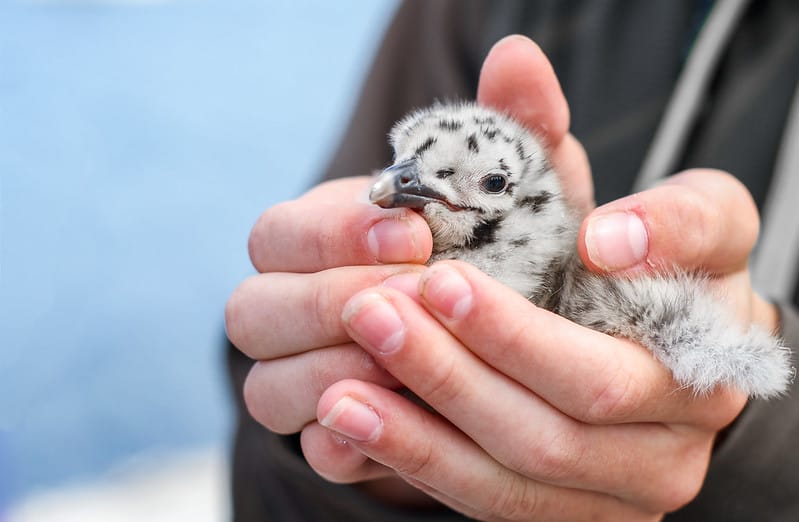
Gulls | Urban gulls rely on anthropogenic foods – for example, your chips – to feed themselves. However, herring gulls often turn to marine sources to feed their newly hatched chicks. To test why this is, researchers raised captive-reared chicks on four specific diets: fish, cat food, mussels and brown bread. Later, when they offered the chicks all four foods together, they discovered that all the chicks preferred fish and most refused the bread. The findings suggest that chicks have a ‘strong and persistent preference’ for marine food, even if they were brought up on other foodstuffs. ‘Animals can live and exploit urban areas for human food waste,’ Neeltje Boogert, one of the researchers involved in the study, told the Guardian. ‘However, this does not necessarily mean they’re thriving or that they prefer this food, rather than making the best of a bad situation.’ The study was published in PeerJ.
Bees | Bumblebees need pollen and nectar – but not all sources of pollen and nectar are created equally, with some flowers having greater nutritional quality or nectar viscosity, for example. A study published in Ecological Solutions and Evidence found that bees will forage from species possessing such qualities with surprising consistency, regardless of their quantity in the landscape, suggesting they are preferentially seeking them out. This has implications for pollinator conservation schemes, suggesting that managers should take care to plant preferred floral resources. In particular, the low proportion of pollen from garden plants suggests that these are no substitute for semi-natural habitats like woodland, hedgerows and unimproved pasture.
Lichen | ‘The history of science is filled with examples of attractive ideas that are later shown to be false, because of either mistake or malice,’ begins a paper published in BioScience. The authors go on to describe a particular example of such a myth and how it came to spread: in this case, the oft-cited statistic that 8% of the world is covered by lichens. To truly know this would require a massive global effort involving satellite data, ground surveys and international coordination – yet no such work has been done. So where does this number come from? It seems to derive from an off-the-cuff comment made by Vernon Ahmadjian, a prominent lichenologist, to a group of graduate students in 1974. This was then cited with increased certainty until it came to be regarded as truth. ‘We actually don't know how much of the world is covered in lichens, and this is an exciting mystery to solve,’ the authors conclude.
Driftwood
Humans | In a brilliant and challenging essay for Noema Magazine, Tristan Søbye Rapp explores the myth of the Noble Savage: whether our prehistoric ancestors were really in tune with the natural world, the extent to which modern-day Indigenous people can be considered conservationists, and what that means for the future of the planet. He concludes that humans have been acting to the detriment of the environment for millions of years, and that, even today, tribes who live in harmony with nature often fail to show restraint when offered opportunities for increased prosperity. ‘Interrogated under the hard light of evidence, the primordial harmony of humankind and nature appears to dissipate, vanishing like a pleasant mirage,’ he writes. Ultimately, this raises the question of what it means to be a human in the wild and what we consider to be pristine landscapes today.
Rewilding | Country Life Magazine has a feature that purports to tell the ‘truth about rewilding’, based upon the views of seven of Britain’s most influential farmers, landowners and conservationists. In practice, this is a series of short essays, mostly by people who own large estates, who have varying approaches to land management. These include Isabella Tree of the Knepp Estate, Dieter Helm of Oxford University, and Tom Orde-Powlett, 9th Baron Bolton, among others. Though rewilding is rarely featured by name within these passages, it nonetheless offers an interesting insight into how large landowners are thinking about conservation today, ranging from shooting to farming to predator control.
Seagrass | In an essay for The Conversation, marine biologist Isabel Key writes about how she has been eavesdropping on seagrass meadows, and how the oceanic conversations she has recorded could help the conservation of this dwindling habitat. A wider variety of sounds might indicate a healthier and more biodiverse seagrass meadow. So far, Key has captured 14 different types of sound – including metallic scraping and purring – probably belonging to fish and crabs, plus the whistles and clicks of dolphins swimming past. There is also the popping of seagrass photosynthesis and the acoustic pollution of humans. Scientists must be cautious in interpreting this information, she warns, but eventually this bank of sound could be used to identify early indicators of meadow decline or to measure the success of restoration projects.
Further reading:
- In the Welsh Agenda, Bethany Handley looks to the future to imagine how disabled access might be improved in the Welsh countryside.
- Elms might yet make a comeback following the ravages of Dutch Elm Disease, writes geographer James Weldon in The Conversation.
- The weather this summer has not actually been exceptionally bad, reports Tom Whipple in the Times.
- Professor of invasion biology Tim Blackburn writes about the myths and concerns surrounding Britain’s parakeets in the Guardian.
- The UK’s waters are teeming with fish, so why has it become so expensive, asks Katie Gatens in the Times.
- Positive News wants to know what forests mean to you. Share your experiences with them here.
Happy days
Books | Time to stock up on summer reading! The Wainwright Prize has announced its three longlists: for nature writing, conservation writing, and children’s writing on nature and conservation. Among the nominated books are Groundbreakers by Chantal Lyons, from which we published an extract in January, and – I am thrilled to say – my own book, Nature’s Ghosts. We have also recently published some mini-reviews of other nominated books, including Bothy, The Lost Paths, and Dispersals. Good luck to all those on the list!
We are delighted to announce our 2024 #NatureWriting Longlist for The Wainwright Prize.
— The Wainwright Prize (@wainwrightprize) July 11, 2024
Congratulations to all our wonderful longlisted authors! ✏️🍃#WainwrightPrize pic.twitter.com/7LpH57ZDau
We are thrilled to announce our 2024 #ConservationWriting Longlist for The Wainwright Prize.
— The Wainwright Prize (@wainwrightprize) July 11, 2024
Congratulations to all our wonderful longlisted authors! ✏️🌱#WainwrightPrize pic.twitter.com/QJURMRRl1v
We are excited to announce our 2024 #ChildrensWriting on Nature and Conservation Longlist for The Wainwright Prize.
— The Wainwright Prize (@wainwrightprize) July 11, 2024
Congratulations to all our talented longlisted authors and illustrators! ✏️🌿#WainwrightPrize pic.twitter.com/QJsSDuc78r
Subscribe to our newsletter
Members receive our premium weekly digest of nature news from across Britain.
Comments
Sign in or become a Inkcap Journal member to join the conversation.
Just enter your email below to get a log in link.