Oyster Reefs & Cambrian Mountains
The latest news on nature and conservation in Britain.
National news
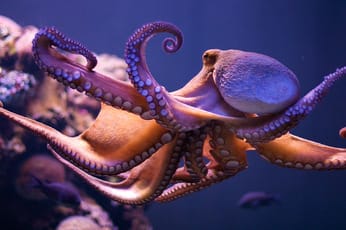
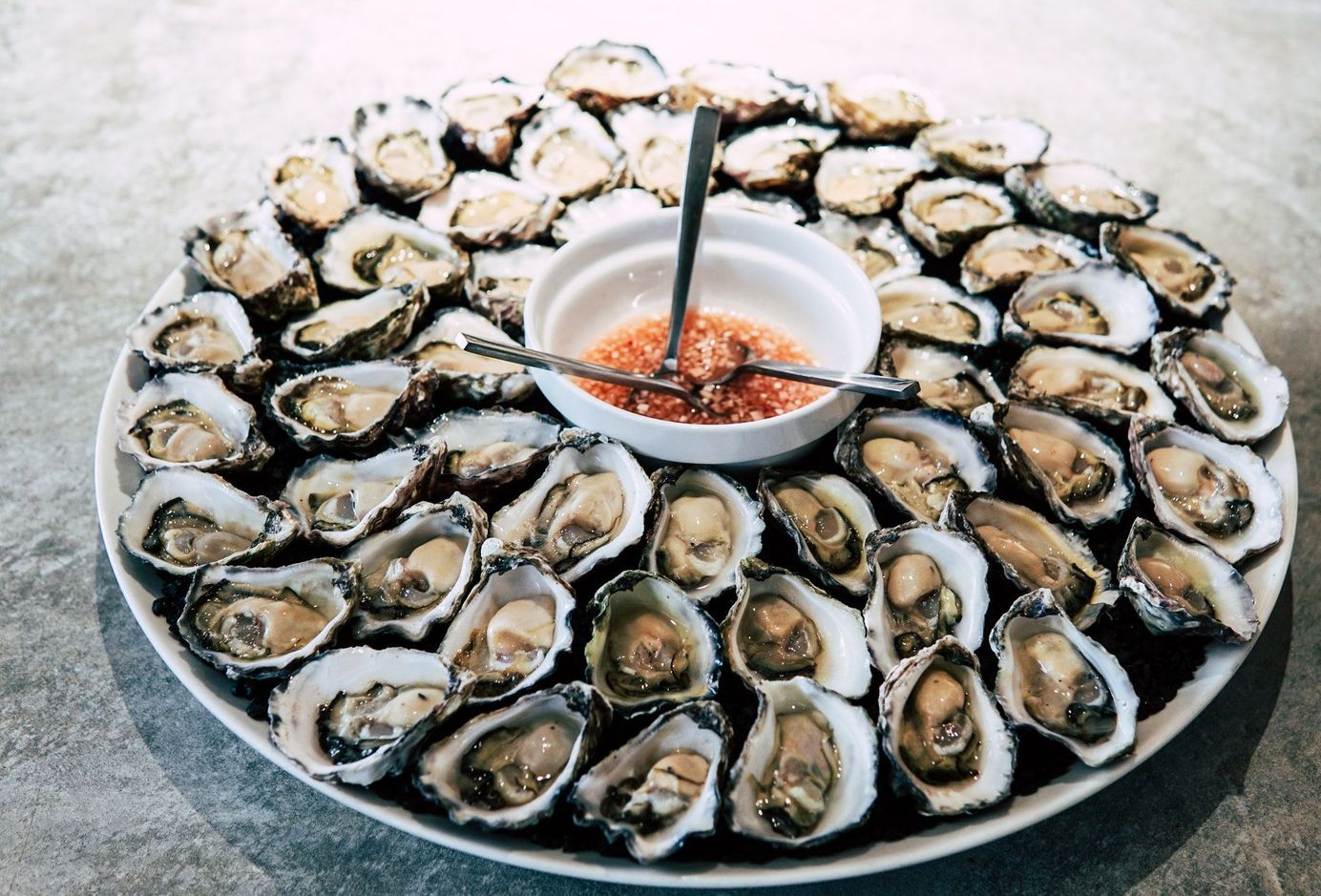
Oysters | On Wednesday, which was World Oceans Day, the Environment Agency launched a new tool to help boost the restoration of native oyster reefs around the English coast, which have declined by 95% since the mid-1800s, mainly due to overfishing. Academics from Exeter and Edinburgh Universities have developed a new map data layer, which provides information on the locations of the vanished beds. The map layer was created using data from the government, scientific and maritime bodies, and historic media accounts. “This map of historical oyster fisheries is a step towards building the knowledge base required for successfully restoring this culturally and ecologically important species in our coastal waters,” said Dr. Ruth Thurstan, who helped to develop the tool.
Food | The government is expected to water down its upcoming food strategy for England, ignoring the recommendations proposed in a government-commissioned report. The independent National Food Strategy was commissioned by Michael Gove in 2019 and authored by restaurateur Henry Dimbleby, who made a number of ambitious recommendations to improve public health and create a more sustainable food system. The government’s white paper on Food Strategy is due later this month, and campaigners hoped it would be a ground-breaking plan to tackle the nature and climate emergencies. In particular, it was hoped the strategy would introduce a food bill to enshrine the ideas into law. Experts also pushed for a reduction in intensive animal agriculture and mandatory reporting for retailers on sales of animal versus plant protein. However, those who have been working with the government on the strategy say that none of this will be happening, and any points critical of the government will be removed from the paper. The Guardian reported the news.
Emissions | Greenhouse gas emissions from Scottish agriculture decreased in 2020, according to data published by the Scottish government. The new statistics show that the industry saw a 14.9% fall in net emissions between 1990 and 2020, while 2019–2020 alone saw a decrease of 2.9%. The NFU has welcomed the figures, saying that the numbers highlight the hard work undertaken by the industry to mitigate emissions on farms, and that “with the right future policy support” Scottish agriculture can reach net-zero. The Scotsman reported the reaction. The data also shows that land use, land use change and forestry was a net source of emissions in 2020, when the sector emitted 0.6 MtCO2e (although this is an improvement on the 1990 baseline, when it was responsible for 6.1 MtCO2e). Meanwhile, emissions data released by BEIS shows that Wales has likely met its first carbon budget (2016-2020) and 2020 target for emissions reductions. Julie James, Welsh minister for climate change, announced in a statement that, between 1990 and 2020, Wales had cut its emissions by 40%, exceeding the 2020 interim target of a 27% reduction.
In other news:
- NatureScot has announced £6.5m in funding for local nature restoration projects.
- NFU Cymru has said that disruption to food supplies caused by the pandemic and the war in Ukraine should trigger a rethink of major changes to farm subsidies, reports the BBC.
- The Ocean Conservation Trust has launched the Blue Meadows project, which aims to restore and protect 10% of UK seagrass, reports the BBC.
- The weed killer glyphosate seriously damages the ability of wild bumblebees to keep their colonies at the right temperature, according to a study covered by the Guardian.
Across the country
Poole Harbour | An osprey chick has hatched in southern England for the first time since 1847. The parents are part of a reintroduction project started in 2017, and their first offspring is a landmark moment for the restoration of Western Osprey to the Dorset coast, according to BirdGuides. The egg was incubated for 39 days before hatching at the start of June, and the breeding pair have another two eggs, which the Poole Harbour Osprey Project hopes will hatch imminently. In other osprey news, a nest near Jedburgh in the Scottish borders, which was left empty for five years, has once again been filled with chicks, reports the BBC. Ospreys became extinct in the UK just over a century ago, but were reintroduced to England 26 years ago after a natural comeback in Scotland: this summer there will be around 300 osprey nests raising chicks across Scotland, England and Wales .
Shetland | The Scottish islands are facing a growing threat to seabird populations as breeding colonies are acting as “super spreader” areas for avian influenza. In the north, Shetland is experiencing the largest losses. Tens of thousands of seabirds have been arriving to nest in Shetland for the breeding season, and ornithologists are worried about how many will survive the summer; around 1,000 dead gannets have been recorded so far. Bird flu has also been confirmed on the remote Scottish archipelago of St Kilda, where around 104 great skua have died so far this season, reports the BBC. The collection of tiny islands and sea stacks lies more than 40 miles west of the Western Isles, and is one of Europe’s most important seabird colonies, hosting almost a million seabirds each year. The RSPB is calling on the Scottish government and NatureScot to urgently develop a response plan. The BBC covered the news.
Forest of Dean | Some councillors are concerned that a bid to designate the Forest of Dean as a UNESCO Biosphere Reserve would turn the forest into a “climate change-themed Center Parcs”. Council leaders recently approved moving to the next phase of the decision-making process, after more than 90% of residents registered their support for the main aims of the reserve. However, Councillor Thom Forester said the survey results were presented disingenuously as a ‘vast majority’, even though fewer than 500 residents responded to the survey. In particular, he is concerned that achieving Biosphere status could lead to restrictions on ancient customary rights in the forest, like commoning and freemining. Gloucestershire Live reported the story.
Elsewhere:
- Greenpeace and Open Seas have documented a 30-hectare seagrass meadow off Orkney, reports the BBC.
- The Environment Agency has fined Anglian Water and a contractor £60,000 after raw sewage leaked into a river in Stanground, Peterborough, killing more than 2,400 fish.
- A pilot scheme in Oban is investigating how the introduction of 540 oysters can improve the quality and carbon capture capacity of the nearby waters, reports the Press and Journal.
- Volunteers have recorded a species of insect, the Fallen’s Leatherbug, which has never before been found in Shropshire, reports the BBC.
- Designs for a wetland network around the HS2 line in Birmingham have been revealed, including grass meadows, woodland and ponds, reports the BBC.
- Inland parts of Cornwall could become coastal in the coming millennia due to climate change, reports Cornwall Live.
- A councillor has voiced concerns over the £1.6m price tag for creating Northumberland’s first biodiversity net-gain site on a former coal mine, reports Chronicle Live.
- Westminster Council has removed a set of anti-bird spikes from a tree in Mayfair following criticism on social media, reports the BBC.
- Cornwall Wildlife Trust has launched its “biggest ever” fundraising appeal to help secure the 97-acre Creney Farm near Bodmin.
- There are early signs that hen harriers will enjoy another productive breeding season at RSPB Geltsdale in Cumbria after a “fantastic” season in 2021, reports BirdGuides.
- The Derbyshire Rural Crime Team has teamed up with the RSPB to establish an intense surveillance network to safeguard local peregrine falcon nests, reports BirdGuides.
- The Scottish Land Fund has awarded £1m to the Langholm Initiative, giving new hope for the £2.2m community buyout bid of the Duke of Buccleuch’s moorland. The Herald and the BBC reported the news.
- Drones have been trialled to plant trees on the hillsides above Glencoe’s Rest and Be Thankful, Scotland’s “most infamous road”, reports the National.
- An innovative project in Eglwyswrw, Pembrokeshire, is collecting seeds from an ancient Wych elm to help save the species, reports the Tivyside Advertiser.
- The Marine Management Organisation has extended a no-anchor zone at Studland Bay, Dorset, in a bid to save the seagrass habitats, reports the BBC.
Reports
Marine | Defra has opened a 12-week consultation on the aims and principles of “marine net gain”, their proposed approach to sustainable marine development. Marine net-gain aims to improve the oceans by protecting, restoring or creating environmental features that outweigh – in terms of ecological value – the losses caused by marine infrastructure projects. There is already an established approach to net-gain on land, which will become mandatory for developers in 2023, but this is the government’s first attempt to create a similar policy for the oceans. The consultation asks stakeholders to put forward their views on what the ‘gains’ could be and how they should be delivered; Defra gives examples such as planting seagrass and removing plastics and other litter from the ocean. Natural England has welcomed the consultation, stating that the amount of marine development is likely to increase significantly due to offshore wind development, and that it is vital that nature recovery is embedded within policy approaches to industry at sea. The RSPB released a briefing on the concept in January.
Markets | A report comprising recommendations of more than 300 experts sets out how to make the UK a thriving market for nature-based investment. While public and philanthropic finance has a role to play in nature finance, the report outlines how private finance is also a necessity. There are currently “significant barriers” to private investment in nature in the UK, according to the report, which was led by the Broadway Initiative, Finance Earth and Green Finance Institute. These include the systemic undervaluation of nature, a lack of tested revenue streams and standards, and convoluted environmental regulations that complicate investing in nature. The report outlines a framework to unlock these barriers. ENDS, Circular and Edie covered the news.
Flooding | The Environment Agency has launched a strategy roadmap to build towards a more flood- and climate-resilient nation. The roadmap sets out practical actions to be taken over the next four years in partnership with local authorities, farmers, environmental groups and others to tackle the growing threat of flooding from rivers, oceans, surface water and coastal erosion. The strategy prioritises the use of nature-based solutions to prevent flooding, alongside working with local communities to develop long-term plans for future management. In his speech announcing the roadmap, Environment Agency chief executive Sir James Bevan said that “the penny is certainly dropping [that] we need to work with nature rather than against it”.
Science
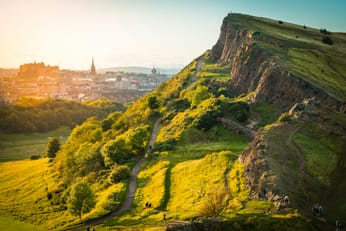
Landscape | A study in Geoforum seeks to understand contesting visions for the future of the Welsh rural landscape, focusing on the Cambrian Mountains. In broad terms, the authors found two distinct visions for the landscape: the first favoured a more socially, economically and environmentally sustainable version of the current rural economy – they tended to harbour a dislike of sheep, for instance, blaming them for creating a "green desert" in the hills – while the second held strongly positive views of traditional farming, its heritage and economic contribution. However, the study also aims to give a deeper understanding of what underpins people’s attitudes towards the landscape. Researchers found that, while individuals may claim to speak on behalf of homogenous rural communities about unified desires for the landscape, there are crucial differences of opinion even within communities. The authors explain that their research is particularly significant in the UK, where Brexit could result in radical changes to agricultural landscapes, and where very different visions for rural areas – especially around rewilding – are currently clashing.
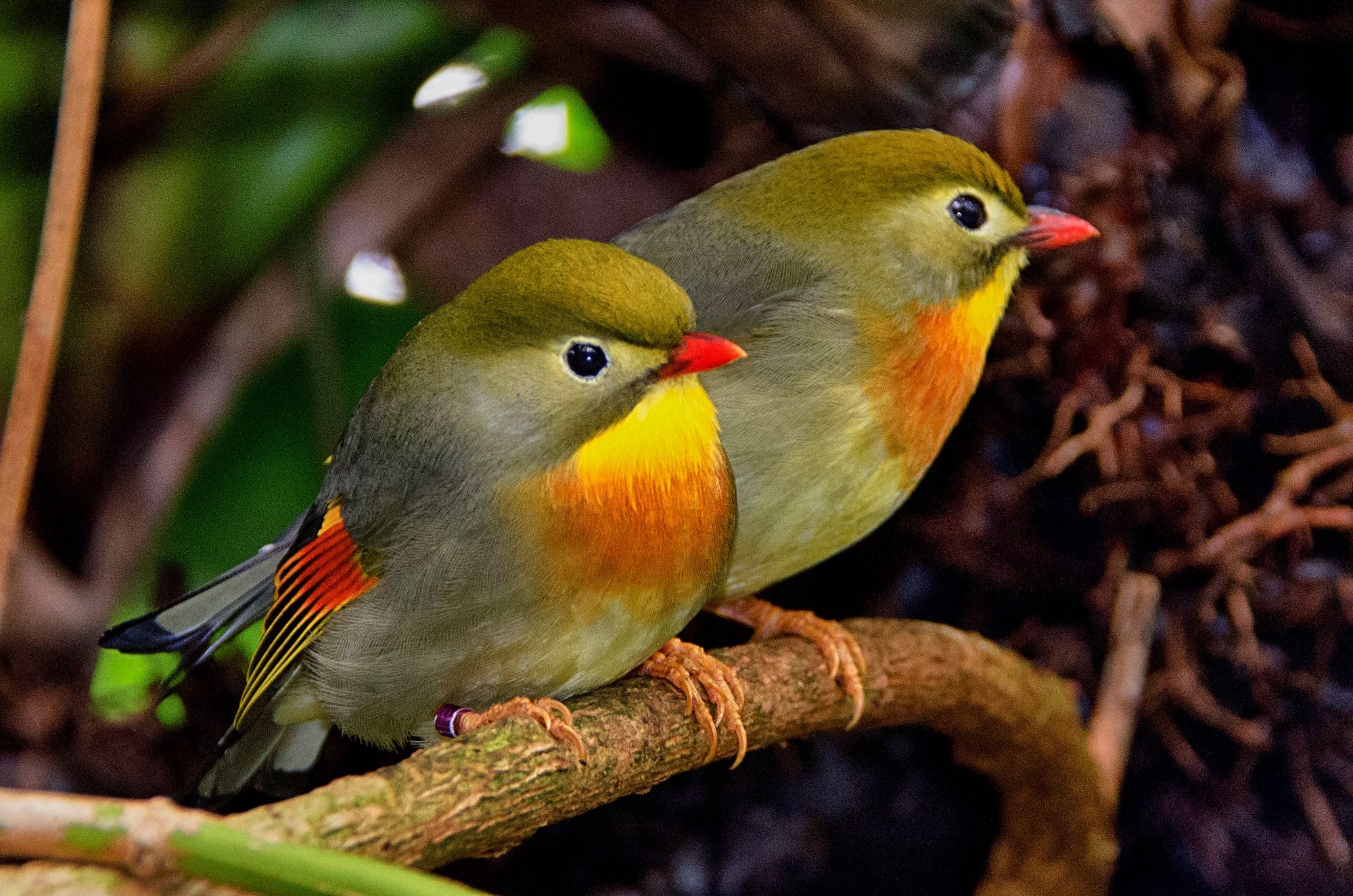
Songbirds | Britain’s dawn chorus could soon be permanently altered, according to a study published in Ibis. The red-billed leiothrix, a small but mighty songbird from subtropical Asia, could be establishing itself thanks to climate change and garden bird-feeding, threatening to drown out the song of native robins, blackbirds and warblers. Red-billed leiothrix has already become established in several parts of Europe, and the study documents clusters of sightings in Wiltshire and Somerset. Dr. Richard Broughton, lead author of the study, said: “The potential for red-billed leiothrix to become established here had seemed very low, but the cluster of records in southern England suggest we need to take it seriously as a potentially new invasive species.” The Guardian and BirdGuides covered the story.
Children | Children should be allowed to play in nature on their own more often, according to research conducted by Radboud University. The study, published in Children’s Geographies, asked more than 1,500 Dutch primary school pupils to draw their favourite place to play outside. On average, the drawings contained more green than man-made elements, though the green elements were mainly surface areas such as grass or sand in urban playgrounds. Only a very small group of children drew a place in nature, such as a woodland. Bernadette van Heel, co-author of the study, pointed out that 90% of the children chose somewhere they could visit without an adult where they could release their energy undisturbed, making it vital to open up more natural places where children can enjoy solo play.
Driftwood
Shrike | A blog by conservationist Steve Jones sets out a recipe for creating grassy “Shrike Shrublands'': areas of habitat suited to the red-backed shrike. The red-backed shrike is essentially extinct in the UK, with only a few birds appearing each spring. However, the species is showing signs of resurgence in the Netherlands, France and southern Spain as the climate warms, meaning that the UK could once again become attractive for the species. But to improve their prospects it will be necessary to create suitable habitats; these consist mostly of species-rich grasslands with well-scattered patches of shrubs, which would also provide habitat for turtle doves, cuckoos, whinchat, adders and various bats. The other key ingredient is an abundance of larger invertebrates for food, which Jones suggests would benefit from disturbed ground for egg-laying and basking opportunities.
Judaism | A feature in the Guardian focuses on 33-year old Talia Chain, the founder of Sadeh Farm in Kent. Set up in 2018, Sadeh Farm is currently Europe’s only Jewish farming community, which Chain started in the hopes of creating opportunities for Jewish people and others to connect with nature. “We’re trying to remind the Jewish community that environmentalism, sustainability and preserving the planet is a fundamental tenet of their faith,” Chain says. However, the farm is threatened with closure: the land is owned by the Jewish Youth Fund, which has said it will soon go up for sale, arguing that the project is outside its remit. Chain has launched a campaign to save Sadeh Farm and its important work.
Royals | Marine conservation is being slowed down by the Queen herself, according to an article in the National Geographic. Or, at least, her ownership of the seabed is delaying and obstructing conservation efforts. As well as owning considerable land, the Queen’s holdings include much of the British seabed, out to 12 nautical miles from shore. More surprising is the fact that gaining permission to restore kelp and seagrass ecosystems within these areas requires a lease, with fees paid to the Crown Estate. Scientists and campaigners say the idea that people should have to pay for the chance to fix dying ecosystems is not only immoral, but it could also make some conservation efforts financially unviable. Meanwhile, a feature in the New Statesman asks more broadly whether the Royal family is good for nature, taking a close look at their riding and hunting pastimes.
Further reading:
- For Countryfile, Sara Maitland writes about how the new GCSE in natural history will empower the future caretakers of our planet.
- Taking a “bird’s eye view” of the Platinum Jubilee, the RSPB has published five highs and five lows for birdlife during the Queen’s 70 year reign.
- A feature in the Guardian explores Huxhams Cross Farm in Devon, where Marina O’Connell runs a regenerative farm working to improve the soil without fertilisers.
- Prompted by the social media backlash to George Mobiot’s Regenesis, Nina Pullman in Wicked Leeks argues that we should leave anger out of environmental debates and instead dive into the nuances.
- In the Times, Alf Young reacts to David Segal’s article in The New York Times last month, arguing that saving Scottish peatlands must be more than a simple fashion statement.
- For the Conversation, Christian Dunn writes about how the size of Britain’s first wetland “super reserve”, the 15,000-acre Somerset Wetlands, could help boost nature-based solutions to climate change.
- Gal-dem has a list of their favourite new writing on nature and the environment by people of colour.
- For the Guardian, Chair of Natural England Tony Juniper writes about society’s dependence on animals, and argues it is high time we recognise their true value.
Happy days
Mindfulness | In Countryfile, Kevin Parr writes about how he finds peace and tranquillity from spending time by rivers. A river tells a different tale every day, he says, and can provide a “ribbon of life” even in the most urban environments.
Subscribe to our newsletter
Members receive our premium weekly digest of nature news from across Britain.
Comments
Sign in or become a Inkcap Journal member to join the conversation.
Just enter your email below to get a log in link.