Peatland Archaeology & Toxic Otters
The latest news on nature and conservation in Britain.
Welcome to Inkcap Journal, a newsletter about nature and conservation in Britain. This is the Friday digest, rounding up all the week's news, science, reports, comment and more.
National news
Archaeology | Britain’s buried heritage is at risk as climate change dries out peatlands, reports the BBC. Thanks to the oxygen-deprived conditions, ancient artefacts can survive for thousands of years – but as the peat dries out, there is a risk that these treasures could decompose and disappear forever. Experts estimate that there are about 22,500 archaeological sites in or beneath peat in the UK, including Palaeolithic pathways and Bronze Age burial sites. “Peatlands represent such a small part of the ecology of Britain, but they have massive potential to tell us about our past,” says Dr Rosie Everett of Northumbria University, who is assessing the effect of climate change on peatland archaeology. “The loss of peatlands would have big implications for the understanding of the country's history but also for our climatic history and our environmental history.”
Shooting | The RSPB is calling for an emergency ban on the shooting of migratory geese that overwinter on the Solway Firth due to the increasing pressures of bird flu, reports the Guardian. While these are protected species, experts worry that wildfowlers targeting legal species could stress the geese, causing them to use up vital energy supplies. Wildfowling bans are allowed under the Wildlife and Countryside Act 1981 in cases of prolonged freezing weather; the RSPB is arguing that this should be expanded to the current circumstances. “Our teams on the ground are seeing many birds that are sick or dying and under significant stress. Anything that can be done to limit activities which incur additional disturbance at this time should be implemented with urgency,” said Paul Walton, head of habitats and species at RSPB Scotland.
Funding | This week has seen sizable funding boosts for nature recovery projects across the UK. Natural England announced £11m in funding, split across three projects spanning the north of England and southern Scotland. Funded by EU Life and led by Natural England, the projects will focus on Special Areas of Conservation (SAC) and Special Protection Areas (SPA) over the next five years. In North East England and the Scottish Borders, the project will improve the ecological condition of more than 49,000 hectares of habitat and water quality within the Tweed river catchment and estuary and the Northumberland Coast. The Cumbrian project aims to increase the critically endangered freshwater pearl mussel population in the River Kent, while in South Yorkshire the funding will be used to restore and improve 400 hectares of degraded raised bogs and will also trial innovative payment schemes for carbon storage. Separately, the Welsh government has announced funding for protecting and restoring rivers and bogs: more than £9m will go towards bringing four Welsh rivers into good condition – the Teifi, Cleddau, Tywi and Usk – while just over £4.5m will conserve quaking bogs.
In other news:
- Farmers in Wales are being “cold called” by agents working for investors who want to buy farmland to plant trees that would offset their carbon footprint, reports the BBC.
- Biodiversity is just as big a threat as climate change, but 90% of Brits don’t see it, according to a piece in Euronews.
- There have been lots of hedgehog sightings in rural Wales over the past few weeks, which is worrying because they should still be in hibernation, reports WalesOnline.
- Foreign trawlers are dumping bass, accidentally caught while fishing for other species, in the Channel, reports the Telegraph.
- Applications have opened for the chair of the England Species Reintroduction Task Force.
Across the country
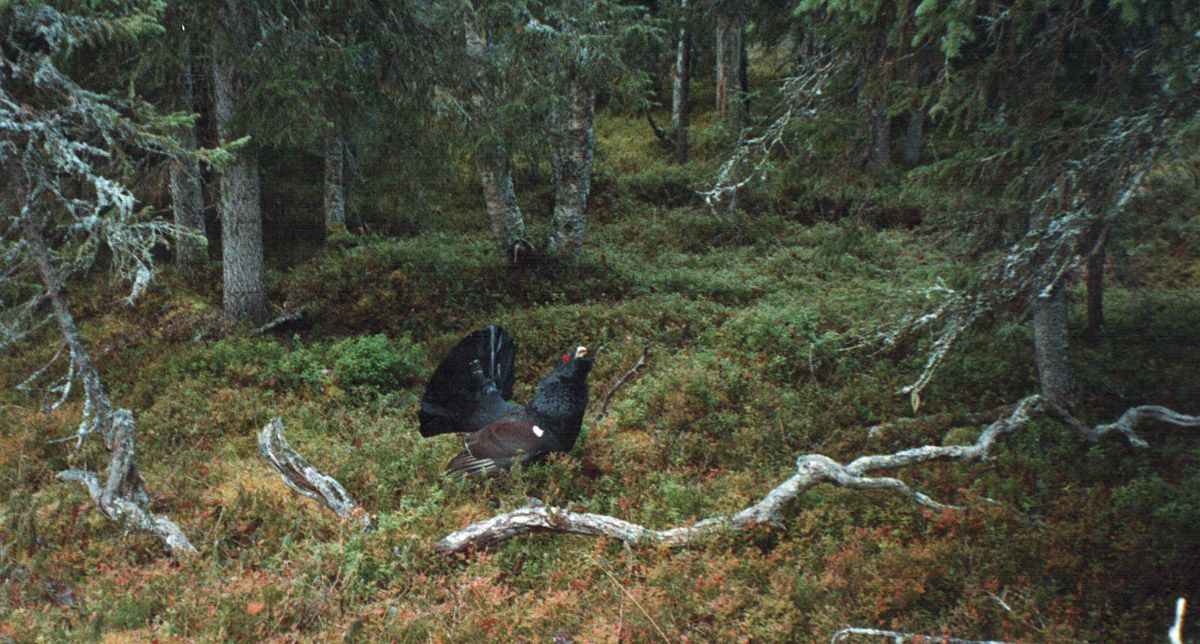
Cairngorms | Dwindling numbers of capercaillie have been given a boost by the introduction of cattle to Abernethy Forest, one of the birds’ strongholds. The grazing and wandering of the cattle through the forest helps to create a capercaillie-friendly habitat by trampling heather and other vegetation that overshadows blaeberry, a plant which attracts the insects on which capercaillie chicks feed. Since being reintroduced to Perthshire in 1837, capercaillie numbers have been reduced by habitat loss, human disturbance, predation and climate change. Abernethy Forest is situated in the Cairngorms National Park, and is a remnant of the ancient Caledonian forest. The BBC reported on the introduction. Elsewhere in the UK, goats have been reintroduced to Wick Golden Valley local nature reserve in South Gloucestershire to help trim the grassland at Raven’s Rock, a tourist attraction. Bristol Live reports that four goats have already arrived, with two more on the way.
Northumberland | Land on top of an old opencast mine at Druridge Bay is set to get £2m for rewilding, reports the BBC. Northumberland Wildlife Trust plans to make the 327-hectare site more nature-rich by testing a number of rewilding methods, which variously aim to store carbon, boost biodiversity and connect wildlife habitats on an “unprecedented scale locally”. The Trust also plans to create wildflower meadows and grasslands to boost pollinator populations, as well as water voles and harvest mice numbers. The charity describes the plan as one of its most ambitious lowland rewilding projects yet.
Brecon Beacons | Natural Resources Wales has defended plans to build 40 tourism cabins in the Brecon Beacons National Park. The development plans are in partnership with Forest Holidays, who already own ten sites across the UK, with six located in National Parks. Natural Resources Wales claims that the development, which will be situated in the heart of the Coed Taf Fawr forest, will not only be “sympathetic to the environment”, but will also boost the local economy through job creation and increased visitor footfall. However, local resident Efan ap Ifor called the plan “outrageous”. He said: “This destructive development will destroy habitat and fundamentally change the entire essence and feel of the location.” Nation Cymru reported the story.
Elsewhere:
- Long-term plans to protect Clocaenog Forest’s ancient woodland have been put out for public consultation by Natural Resources Wales, reports the Shopshire Star.
- Dead seals have washed up on North East beaches, while the mystery of crustacean deaths in the area continues, reports the Northern Echo. The BBC highlights the impact of shellfish deaths on the North East fishing trade.
- Rare black poplar trees have been planted at Oxburgh Hall, a Norfolk stately home, to help restore its historic parklands and protect the endangered tree species, reports the Eastern Daily Press.
- The Wetlands Trust’s Welney reserve in Norfolk has applied to the local council for permission to extend a five-year project aimed at conserving the rare black-tailed godwit, reports the Eastern Daily Press.
- The Peak District National Park Authority is set to plant hundreds of acres of new woodland after receiving £1m in funding, reports Derbyshire Live.
- The findings of a major genomic study could help save a rare Westcountry pig breed from rapid decline, reports Cornwall Live. The Eastern Daily Press reports that growing demand for the Lop pigs’ meat over lockdown has also boosted its numbers.
- Oxford wild swimmers were informed of a Christmas sewage release a day late, after they had already swum in it, reports the BBC. Meanwhile, the Telegraph features a report which finds that the River Thames has become an ‘open sewer’ as treatment plants are overwhelmed.
- In Kirkcudbright, the Ministry of Defence has stepped in to help red squirrels return to its training centre, reports the BBC.
- An environmental group has launched a legal challenge against EDF’s plans to dump sediment from Hinkley Point into the Bristol Channel, reports Bristol Live.
- In Cardiff, protestors have gathered to campaign against the felling of ~350 trees to make way for a new cancer centre, reports South Wales Argus. The veteran eco-activist Swampy has joined the protest, according to Voice Wales.
- Cornwall’s rockpool species are threatened by climate change, according to a study by the University of Exeter. The BBC featured the research, which focused on the St Piran’s hermit crab.
- Living near a canal can cut risk of chronic disease, according to a study by researchers at Glasgow Caledonian University. The Courier featured the research.
Reports
Land reform | The Scottish Land Commission has published advice to ministers on the role of taxation in supporting land reform objectives. This includes ways in which the government can support the just transition to net-zero and active farming. It recommends using taxation measures to ensure that there is a “productive balance of public and private benefit” when the land is used to sequester carbon, and a potential income tax relief to support the letting of agricultural land in an attempt to encourage a diverse range of tenants. The Scotsman covered the report.
Soil | A research briefing from the Parliamentary Office of Science and Technology (POST) summarises the state of England’s agricultural soils. According to the report, many arable soils have lost 40-60% of their organic carbon, and almost four million hectares of agricultural land in England and Wales are at risk of compaction. There are also concerns about the risk of microplastic contamination in farmland soils. The note also looks at opportunities for reversing soil degradation, including biochar additions, cover cropping and reduced reliance on synthetic fertilisers.
Science
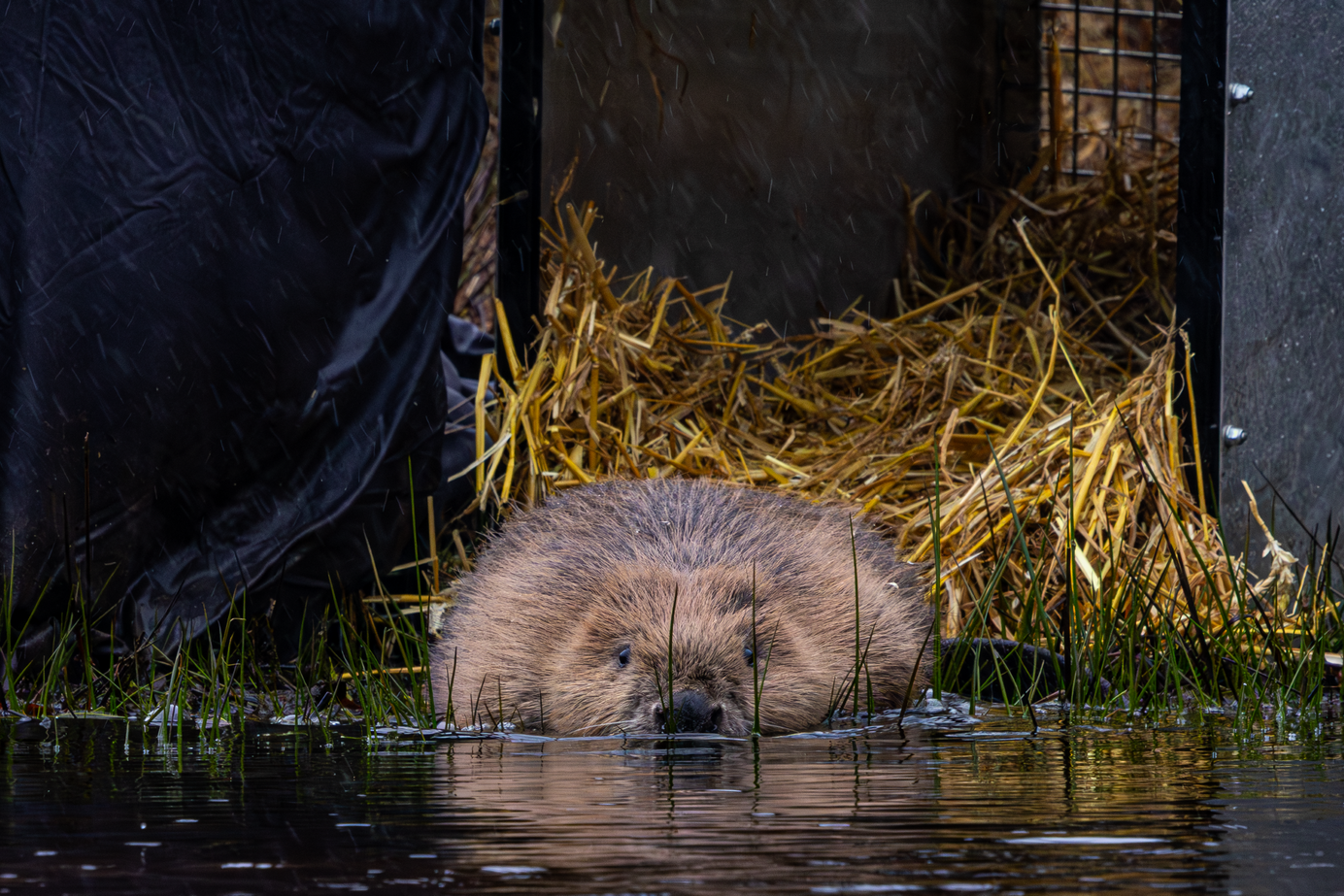
Otters | Toxic ‘forever chemicals’ have been found in otters across England and Wales, reveals a study in Environmental Science and Technology. The substances, called PFASs, are used to make various products water-, stain- and grease-proof, and have been linked to pregnancy complications, liver disease, cancer and other illnesses. Researchers tested 50 otters found dead between 2007-09, and detected PFAS in all of them. Some 80% of the animals had at least 12 different types of the chemicals in their livers. Most animals tested died from road accidents, however, and it is not yet clear how the presence of the chemicals affects their health. Emily O’Rourke, lead author of the study, said that otters are a ‘sentinel’ species, and their state reveals the ‘widespread environmental pollution’ of British fresh waters.
Virtual reality | What might change if we could experience the perspective of non-human nature for ourselves? This was the question asked by a study in Scientific Reports, which set out to explore the effect of using immersive virtual reality (iVR) technologies to embody non-human beings – in this case, a tree. The experimental study compared the effects of iVR to viewing the same thing on a desktop. The results showed that the more immersed participants felt in their experience, the more they reported increased levels of “nature relatedness” – for example, describing their experience from a first-person perspective, suggesting a higher level of identification with the tree. The authors concluded that experiencing nature via iVR in itself does not seem sufficient for creating an effect on nature relatedness, but the higher level of immersion did provoke reflection on one’s own role towards nature more strongly.

Biodiversity | Climate change is not the primary driver of biodiversity loss, according to a paper in Conservation Letters. The authors argue that this misconception is “at best, premature”, and detracts focus and effort from the primary threats of habitat loss and overexploitation. The study collated threat information for amphibia, birds and mammals from the IUCN Red List, as well as causes of vertebrate extinctions since 1900. They conclude that conserving ecosystems by focusing on habitat loss and overexploitation not only protects biodiversity, but is also the only available, economically viable, global strategy to reverse climate change.
Driftwood
Yews | The BBC has a short video on the work of 26-year-old Justin Gillings, who is campaigning for Wales’ yew trees to be given special protections, given their great age – some are said to be more than 3,000 years old. Currently, they receive the same safeguards as any other tree, but Gillings believe that they should receive the same protection as other historic monuments. The UK and Welsh governments have said that there are already adequate measures in place to safeguard these giants.
Seeds | In an interesting article in the Conversation, Helen Anne Curry, an associate professor at the University of Cambridge, explores the past and future of crop diversity – including her own attempts to grow three different varieties of corn in her own garden. She argues that seed banks alone are not the answer to preserving the world’s various crop varieties – they must also continue to be grown by farmers in their fields. “In this view, seed banks may be an important safeguard, but never the only sites where genetic diversity is kept alive,” she writes. Curry has a book out this month, Endangered Maize, which explores these issues in more depth.
Farming | Farmers face a dilemma over whether to plant trees in the face of economic uncertainty, reports Fiona Harvey for the Guardian. New farm payments are expected from 2024 under the post-Brexit environmentally-friendly subsidy regime the government has promised, but farmers fear if they plant trees now they may not get the credit when the new schemes start. In the meantime, they could lose their existing subsidies if they switch from food production to more tree-planting. Trees are an important part of environmentally beneficial farming: they provide habitats for wildlife, encourage pollinators, help prevent flooding, store carbon and clean the air, as well as providing shade and shelter for livestock. Planting trees requires significant investment, however, and farmers say there is simply too little information available currently to make that commitment.
Further reading:
- Ben Goldsmith argues for wilder farming, which he says would not meaningfully harm food production, in the Times.
- Wealthy companies are using the façade of “nature-based solutions” to enact a great carbon land grab, writes George Monbiot in the Guardian.
- Penny Churchill, the property correspondent for Country Life, looks at how the drive for net-zero has increased prices of Scottish Highlands estates.
Happy days
Woodlands | The Times has assembled a list of 20 of the UK’s most beautiful woodlands for winter walks – and, unlike many of these lists, they are not entirely concentrated in the south of England. And each one comes with the suggestion of a convenient pub.
Thank you for reading Inkcap Journal – your support is essential to our journalism. You can help us further by spreading the word! Please feel free to share this on social media, or with anyone who may be interested. You can manage your subscription at any time.
Subscribe to our newsletter
Members receive our premium weekly digest of nature news from across Britain.
Comments
Sign in or become a Inkcap Journal member to join the conversation.
Just enter your email below to get a log in link.