Peatland Restoration & White Storks
The latest news on nature and conservation in Britain.
National news
Soil | On World Soil Day last Friday, Natural Resources Wales published its latest five-year action plan for peatland restoration. Since 2020, the national programme has restored around 3,600 hectares of peatland; the new plan aims for ‘greater pace and scale’, with a target of tripling the annual restoration rate to 1,800 hectares by 2030. It also outlines key actions including updating the Peatlands of Wales Map and developing a collaborative monitoring plan. Nation Cymru reported the news. Meanwhile, a not-for-profit cofounded by George Monbiot aims to use seismic waves – usually used to measure earthquakes – to assess soil health for the first time, reports the Guardian. Monbiot describes the ‘eureka moment’, which he says could ‘revolutionise’ soil protection, here.
Housing | Figures revealed by a Freedom of Information request show that Natural England’s flagship scheme to unblock housebuilding has resulted in the construction of fewer than 3,000 homes. The body introduced the programme in 2022, promising it would clear 40,000 new properties within a year that could not be built due to ‘nutrient neutrality’ pollution rules. Now, statistics reveal that only 7.5% of predicted homes have been issued with mitigation certificates since the scheme began. Furthermore, the scheme cost £28m to develop and has only received £7.7m from developers ‘offsetting’ their builds. The Times and ENDS reported the news. Meanwhile, a report by the countryside charity CPRE shows that 88% of developments approved under the government’s ‘grey belt’ policy are being built on undeveloped countryside, including high-quality farmland and wildlife sites.
Crime | More than 250 endangered species and illegal wildlife products have been seized at the UK border during a month-long operation to uncover wildlife smuggling. The annual crackdown, known as Operation Thunder, is led by Interpol and the World Customs Organisation. During searches at airports, ports and mail depots, it uncovered a car containing more than 100 endangered birds and a vehicle transporting 2,000 live tarantulas. Oxford professor E J Milner-Gulland congratulated the Border Force on its efforts, but said that ‘we need to remember that [the trade] relies on people wanting to buy these products from the traffickers’. The Guardian reported the news. Meanwhile, a BBC investigation found that endangered species are being offered for sale on Facebook, including seahorses harvested illegally in the UK.
In other news:
- The government has undermined its Landscape Recovery scheme by inserting a clause allowing it to terminate contracts with only a year’s notice, reports the Guardian and ENDS.
- Five food and farming alliances have written an open letter to the government, urging it to deliver a healthy food and sustainable farming plan backed by legislation, reports the New Food Magazine.
- There has been a 666% rise in Asian hornet sightings in the UK this year as the invasive species moves north, reports the Times.
- The Wildlife Trusts has a blog looking at potential further damages to environmental protections through proposed changes to the Biodiversity Net Gain scheme.
- The UN unveiled its largest ever scientific assessment on the dire state of the environment, but a key summary of its findings was torpedoed by nations fighting over fossil fuels, plastics and other threats. The Guardian and ENDS reported the news.
- Britain’s Christmas trees are at risk of being infected by the large pine weevil after a ban on insecticides, reports the Telegraph.
- The MP for Hastings and Rye, along with wildlife experts, is calling for a nationwide ban on the use of biobeads at sewage works after a devastating spill, reports the Guardian.
- The Scottish government has delayed implementing fishery restrictions in MPAs for the fourth time, much to the dismay of environmental groups.
- NatureScot has released figures tracking the abundance of Scotland's breeding birds, showing declines for farmland and upland birds, reports the Herald.
Across the country
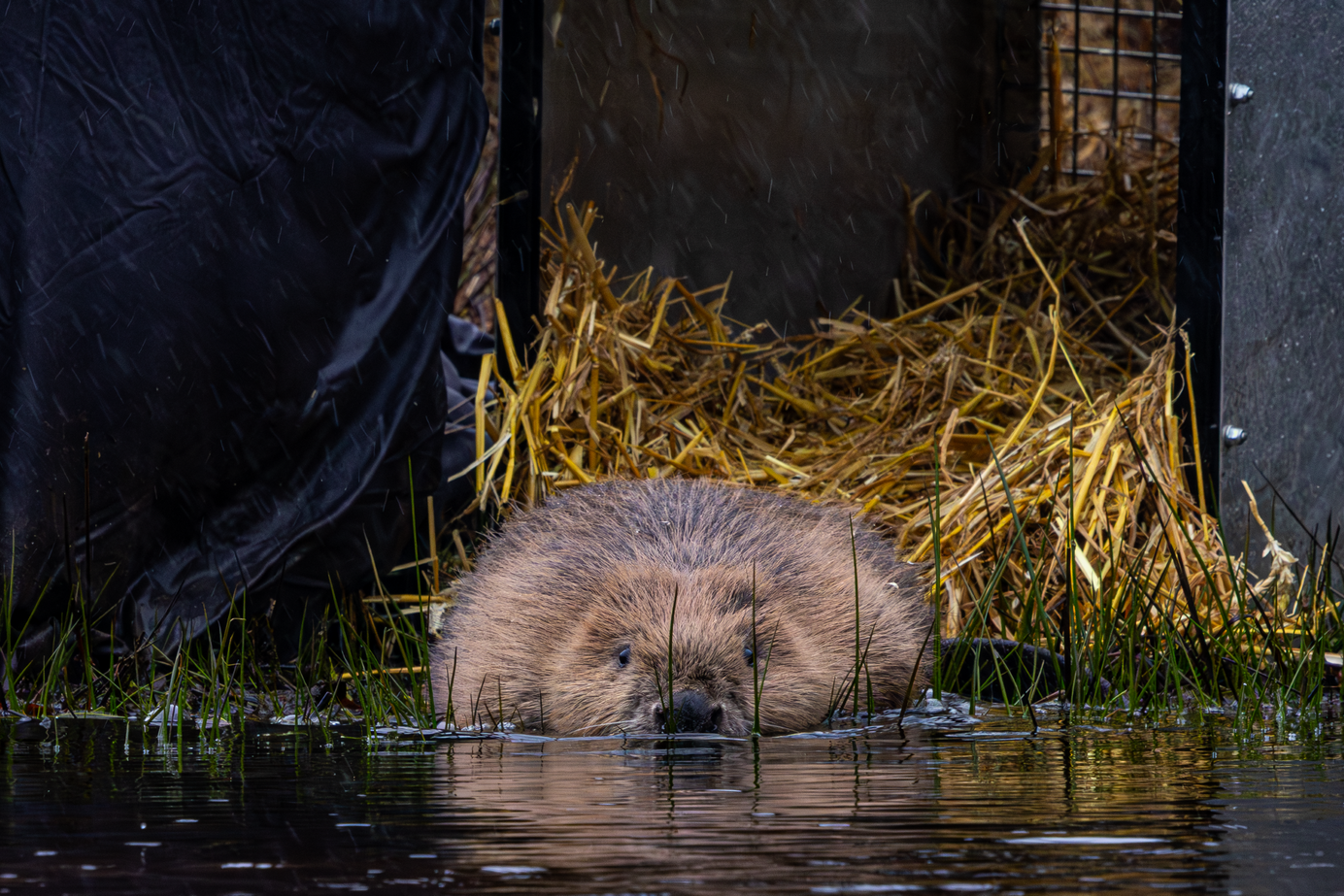
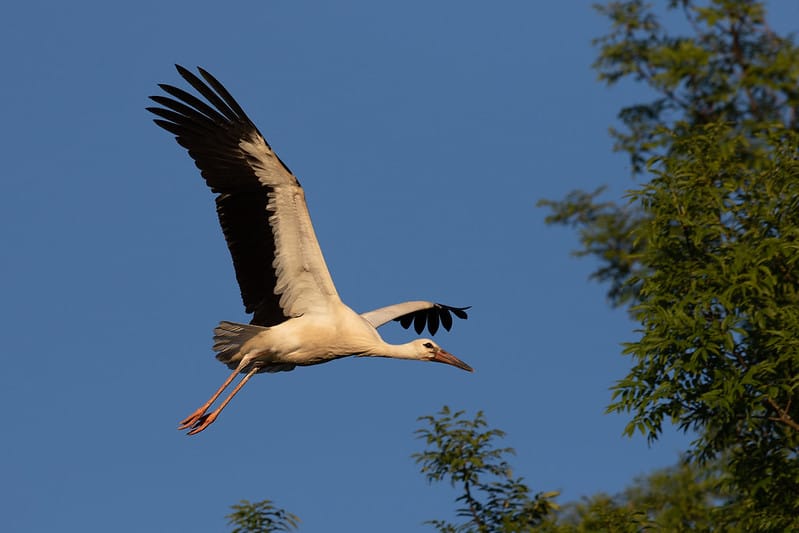
London | White storks and beavers are set to return to East London under a reintroduction project by the London Wildlife Trust. The initiative is based at Eastbrookend County Park in Dagenham, where extensive work has already turned former gravel pits into wetland habitats. The storks are expected to arrive in autumn 2026, and will initially be housed in a purpose-built aviary, with their chicks released to establish what would be London’s first breeding colony in roughly 600 years. Meanwhile, beavers are scheduled for release into a publicly accessible enclosure in spring 2027. The project has received £500,000 from the mayor of London, who said that ‘it can’t just be those who live in the countryside who get to share their home with our amazing wild creatures’. The news was widely covered.
Borders | An innovative project has used drones to drop two million native tree seeds around the Talla Reservoir. It is the first time in the UK that heavy lift drones have been licensed to operate ‘beyond the line of sight’ to disperse seeds: the reservoir sits in a remote upland area where traditional reforestation techniques would be ‘extremely difficult’, according to Scottish Water. The project aims to stabilise the soil around the reservoir – which is a major water source for Edinburgh – so that less organic matter is washed away during periods of extreme rainfall. The full project aims to create 80 hectares of woodland, making it one of the largest montane schemes in the Southern Uplands. The BBC and Envirotec reported the story.
Cumbria | Cumbria Wildlife Trust has joined forces with a tree nursery run by the therapeutic charity Growing Well to grow seedlings destined to become Atlantic rainforest. Growing Well runs a 1.4-acre kitchen garden at the popular Tebay Services on the M6, which supports people experiencing mental ill-health and promotes recovery through a healthy lifestyle. The Wildlife Trust has supplied locally-sourced seeds for 20 native tree species, which are being planted and nurtured by volunteers at the nursery. Once they reach a certain maturity, the Trust will buy the seedlings for planting out on Skiddaw Forest – England’s highest nature reserve – with the aim of eventually restoring temperate rainforest. Cumbria Crack reported the news.
Elsewhere:
- Powys councillors have unanimously rejected a proposal to set up a new national park in Wales, reports Wales Online and Cambrian News.
- A wild beaver has been spotted in Norfolk for the first time since the species went extinct in England, reports the Guardian.
- The ‘Species on the Edge’ programme has reintroduced the tadpole shrimp – only found in two other locations in the UK – to the Solway coast, reports BirdGuides.
- A campaign group is opposing plans for a major wind farm on the Yorkshire Dales which threatens a wildlife corridor, reports the BBC.
- East Hampshire District Council is the latest UK council to back legal Rights of Rivers.
- Cornwall Wildlife Trust has warned that the proposed redevelopment of Falmouth Docks threatens the fragile marine environment, reports Cornwall Live.
- Lichfield District Council has approved six mini nature reserves in Staffordshire to enhance biodiversity and access to nature, reports the Express & Star.
- Remains of an unusual deep-sea creature called a seven-arm octopus have been discovered on Forvie beach in Aberdeenshire, reports the BBC.
- A ‘Santas Against Sewage’ swim protest in Falmouth was called off – because of sewage, reports Cornwall Live.
- St Andrews University is developing a ‘detect and deter’ system on the River Dee using underwater speakers to protect endangered salmon from seals, reports the BBC.
- A report by the Derbyshire Wildlife Trust has highlighted the positive impact of an urban rewilding project in Allestree Park for both people and wildlife.
- A project to restore peatland on Kinder Scout is nearing its end and already paying dividends, reports the BBC.
- Atlantic salmon have spawned in an undisclosed West Cumbrian river for the first time after it was restored, reports the Cumbria Crack.
- A sighting of frog spawn in west Cornwall is the first record in the Freshwater Habitats Trust’s annual survey – a full three weeks earlier than last year’s first entry.
Reports
Squirrels | Red squirrels have expanded their range across the Highlands following a 10-year reintroduction programme. The project, run by rewilding charity Trees For Life, has translocated 259 squirrels since 2016 to help the species spread to areas of the north and northwest Highlands – former habitat that they can no longer reach unaided. Now, data from the Highland Red Squirrel Survey reveals that the project has successfully created 13 new populations from Ullapool to Lairg, expanding the species’ Highland range by 26%. The charity said the findings will help identify fragmented habitats that could be connected and potential future reintroduction sites. The Northern Times, Guardian, BBC and Scotsman covered the research.
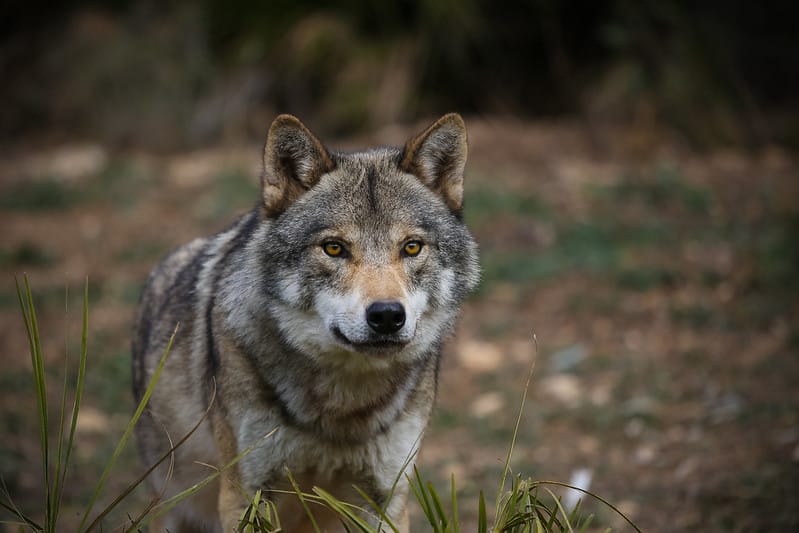
Carnivores | Young people are cautious about reintroducing large carnivores to the UK and Ireland, according to the first dedicated survey of their views. Researchers interviewed 2,000 16-year-olds and 4,000 children aged 10 and 11. The results, published in a report, found that just 32% of 10 to 11-year-olds and 35% of 16-year-olds support the idea of lynx reintroductions, with slightly lower support for wolves. The single strongest result was ‘neither agree nor disagree’ across both species and age-groups, although girls and rural residents were significantly less supportive of reintroduction. Lead researcher Jonny Hanson said that carnivore reintroductions ‘are very socially complex and highly contested’, and the data will help researchers to understand the diverse perspectives of young people. The BBC and Standard covered the research.
Capital | The Office for National Statistics has released its annual report on the UK’s natural capital accounts, valuing the benefits that natural resources provide to society. The total value of ecosystem services in 2023 was £41bn: £34bn from biotic (living) ecosystem services and £7bn from abiotic services. Recreation and tourism contributed the most at £10bn, while health benefits were valued at £7.9bn. Almost 20m people gained these health benefits, with the largest portion (7.3m) from urban nature. The report also highlights improved data for urban heat regulation services: read more about how nature keeps cities cool in this ONS blog.
Science
Deep-Sea Mining | A deep-sea mining test impacted more than a third of animals on the surrounding seabed, according to a study in Nature Ecology & Evolution. Commercial deep-sea mining is highly controversial: it collects minerals needed for green technologies, but its local environmental impact is relatively unknown. Scientists from institutions including the Natural History Museum conducted a large-scale study of a mining trial in the Pacific Ocean, 4,280m below sea level. They found that, in the tracks of mining vehicles, the number of macrofaunal animals such as worms, sea spiders, clams and snails fell by 37%, and species diversity by 32%. The BBC, New York Times and Smithsonian covered the research.
Peatlands | Climate change is shrinking the boundaries of Europe’s remaining peatlands, according to a study in Environmental Research Letters. Researchers analysed peatland distribution across Europe and mapped areas likely to persist under future climate scenarios. They estimated that 93% of European peat soils no longer have the wetland conditions needed for functional peatland ecosystems, largely due to peat extraction and agricultural conversion. The remaining 7% will face increasing climatic pressure, with the best conditions persisting in parts of northern Scandinavia, Ireland, Scotland – especially the Western Isles – and higher-elevation mainland regions. The authors conclude that restoration efforts will be most effective in these areas. Read more on Phys.org.
Sports | Nearly a quarter of professional sports teams across the globe use a wild animal in their name, logo or fan identity, presenting an untapped opportunity for conservation support, according to a study in BioScience. Researchers examined 727 teams across 50 countries and 10 major sports, identifying at least 161 different wild species. In the UK, teams include the Bristol Bears, Swansea Ospreys, Hampshire Hawks and Warrington Wolves. More than half of teams featured animals that are threatened with extinction on the IUCN Red List. Co-author Diogo Veríssimo from Oxford University said that ‘if even a fraction of sport organisations used their platform to support wildlife, the impact for conservation could be truly transformative.’ Anthropocene Magazine covered the research, and an interactive map of the teams is available here.
Driftwood
Wool | The price of British wool is at its highest average in nearly a decade. The Economist explains that the reason behind this revival is pent up demand, reduced supply and, reportedly, happier sheep. Wool once comprised nearly all of England’s export earnings, but the industry collapsed after cotton then synthetic fibres became widely available. The recent up-tick is partly due to post-pandemic demand from the hospitality sector – where British fleece makes for excellent carpets and upholstery – and customers turning toward natural fabrics. Recent sunny, dry weather has also resulted in more contented sheep, which produce a whiter, higher-quality fleece. Overall, though, the price of wool will need to rise further for British farmers to see much profit.
Thames | Research on the Thames estuary has historically focused on water quality rather than the physical environment – but species need both to survive. Writing in the Conversation, UCL PhD student Wanda Bodnar explains that centuries of urban development has replaced tidal habitats with concrete walls, docks and flood defences. Now, however, two major projects are reengineering aquatic habitats across London. In the inner city, the Estuary Edges project is softening riverbanks using vegetated terraces and ‘setbacks’, while Transforming the Thames is restoring larger areas of habitat in the outer estuary. These projects are playing a key role in supporting the various species now reappearing in the Thames thanks to cleaner water.
Perfume | More than 200 years ago, a 400-page book called The British Perfumer was published in the hopes of saving the country’s fragrance industry from ‘total annihilation’. Today, the industry is alive and well – and British nature is a driving force within it, according to a feature in Country Life. It spotlights various independent British perfumeries which are combining traditional recipes with modern technologies to evoke British landscapes and seasons within a single scent. For example, the Somerset perfumery Ffern draws inspiration from the seasons on Exmoor, while Edinburgh’s Jorum Studio uses a wide range of native botanicals such as gorseflower, catchfly, bell heather and flag iris to ‘capture the beauty’ of Scottish nature.
Further reading:
- The BBC has a feature on Richard St Barbe Baker, a botanist from Hampshire who promoted reforestation in the early 1900s.
- The Wildlife Trust has a winter reading list of books which promise nature exploration from the comfort of your home.
- The BBC explains why acres of traditional hay meadows are being restored in the Lake District.
- Country Life has two articles on dirt for World Soil Day: this one looks at the history of soil science, while this one extols the virtues of leaving leaves where they fall.
- An essay in Noema investigates the growing movement of ‘bioregionalism’: the idea of reorganising social and economic life around the natural boundaries of the ecosystem.
- In the Conversation, researcher Sven Batke explains why food security should be placed on the UK’s national risk register.
- Professor of economics Alan Collins writes in the Conversation about why Grand Designs-style eco-homes aren’t a good blueprint for sustainable living.
- A feature in Positive News profiles a project to create Europe’s largest restored oyster reef off the coast of Norfolk.
- In a blog, author Guy Shrubsole explains his attempts to map England’s Landscape Recovery projects.
- With the UK ranking as one of the most nature-depleted countries on earth, an article in the Big Issue investigates what needs to change.
Happy days
Christmas | A giant redwood at the National Trust’s Cragside Estate has been awarded the Guinness World Records title for the world’s tallest living Christmas tree. The 44m giant is more than twice the height of the Angel of the North, and it took staff three full days to dress it in 1,300 lights, with the help of a cherry picker. It is also sporting two large purple bows, as it needed two types of decorations to qualify as a ‘Christmas tree’. The chosen tree is one of millions planted in the 1860s by the estate’s founders, the Armstrong family. Read more in the BBC and Museums & Heritage Advisor.
Subscribe to our newsletter
Members receive our premium weekly digest of nature news from across Britain.
Comments
Sign in or become a Inkcap Journal member to join the conversation.
Just enter your email below to get a log in link.