Planning Bill & Community Buyout
The latest news on nature and conservation in Britain.
National news
Planning | The Planning and Infrastructure Bill may not be quite so bad for nature, following amendments by the House of Lords. The Bill seeks to address environmental impacts through Environmental Delivery Plans – a broad-brush approach to regulation that academics and conservationists are worried would ‘blot out nature’s details’. (See this helpful briefing by the Wildlife Trusts for an in-depth account of the problem.) Amendment 130 calls for protected species and habitats to be outside the scope of these plans, limiting their reach to air and water, where a broader approach can be effective. Peers also voted in favour of Amendment 94, giving new protections to chalk streams. The Bill will be debated in the Commons again in November, and the Wildlife Trusts are urging the public to write to their MPs, demanding that these amendments are retained. The Telegraph and BirdGuides cover the news.
Land | Scotland’s largest landowners must publish plans on how they will increase biodiversity, after MSPs voted for an amendment to the new Land Reform Bill. The Bill aims to address the concentration of land ownership in Scotland. The amendment requires landowners of holdings over 1,000 hectares to produce Land Management Plans, showing how they will improve biodiversity, cut emissions, manage deer and uphold access rights. The Scottish Rewilding Alliance celebrated the move as a ‘big step’ toward encouraging large-scale nature restoration. Scottish Land & Estates, however, issued a briefing warning that the new requirement would be a ‘bureaucratic nightmare’, and the Bill as a whole risks delivering a ‘hammer blow’ to rural businesses. FarmingUK, the Scottish Farmer, ENDS and the Herald report the news.
Wind | Offshore windfarms may be exempted from biodiversity net gain rules, in an attempt to keep down the cost of renewable energy, reports the Guardian. Currently, under new planning rules expected to be introduced by May, all nationally significant infrastructure projects must boost pre-existing nature by 10%. The rules were expected last week, but the announcement was delayed, reportedly to add a last-minute loophole for offshore windfarms. Energy companies say that the BNG requirements would prevent them building the number of turbines required to meet the government’s net-zero targets. WCL’s Richard Benwell said the move would endanger habitats vital for species such as puffins and oysters. Separately, environment minister Emma Hardy announced changes to the environmental permitting system, exempting ‘low-risk activities’ from the application process.
In other news:
- England’s water companies have scored their worst rating on pollution since the metric was introduced in 2011, reports the Times. The Environment Agency urged urgent improvement.
- A UN report has found that the Scottish government is failing to guarantee access to environmental justice. The National and Common Weal cover the news.
- The government has published its Carbon Budget and Growth Delivery Plan, reports the Guardian. WCL urged politicians to include nature in net-zero plans, too.
- The Scottish Green Party is urging the government to scrap Part 2 of the Natural Environment Bill, which it says could allow politicians to unpick nature protections.
- Campaigners have written to the Archbishop-designate of Canterbury, asking her to make environmental stewardship a ‘defining mission’ of her role. The Church Times covered the story.
Across the country
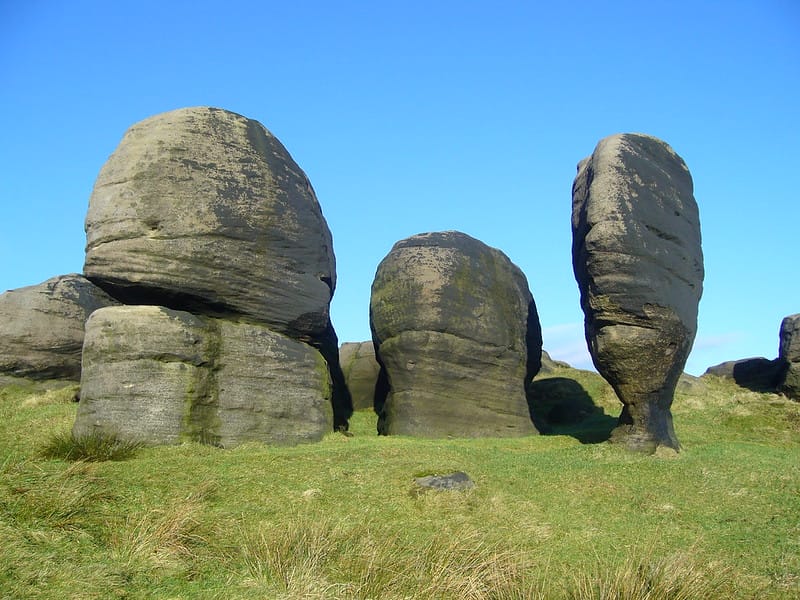
Yorkshire | Bridestones Moor has officially been brought under community ownership, following a successful crowdfunding effort and a philanthropic donation, reports the Halifax Courier. The moor is a 114-acre expanse above Todmorden in the Calder Valley. The land will now be managed by Bridestones Rewilded CIC, with efforts led by ecologists, naturalists and residents. The team hopes to protect wildlife, and also to restore peatland, ancient grassland and heathland, which have been degraded by centuries of heavy grazing. Dr. Anthony Arak, co-founder of Bridestones Rewilded, said it was ‘a huge milestone for both conservation and community action.’ Read more about the project – and donate to the crowdfunder – here.
Northumberland | Sir David Attenborough is backing the Wildlife Trusts’ efforts to raise £30m to buy the Rothbury Estate. The appeal comes at a crucial time: the charities have just one year left to raise the remainder of the money to purchase the 9,500-acre upland site, which was put up for sale by the youngest son of the Duke of Northumberland in 2023. In the 24 hours following Attenborough’s plea, the charities raised £581,000, adding to the £8m already raised, reports the BBC. In the Telegraph, however, Clive Aslet, the former editor of Country Life, argued that it was in fact the grouse moors of the Rothbury Estate that needed saving – ‘from the menace of David Attenborough’.
Dales | The Yorkshire Dales National Park Authority has launched a five-year plan, with a key aim of making the park more inclusive and accessible. Of the park’s five million visitors, 97% are white and 75% are over 45, according to the chief executive of the Yorkshire Dales Millenium Trust. Proposals to diversify visitors include working with community groups to co-design training and activity days; providing 7,000 volunteer days per year, with at least 20% coming from underserved communities; and enabling at least 1,500 people to connect with the park through ‘social prescribing’ schemes. Other objectives in the plan include starting to restore all remaining degraded peatland by 2035, and working with farmers and landowners to improve the condition of rivers. The Northern Echo reported the news.
Elsewhere:
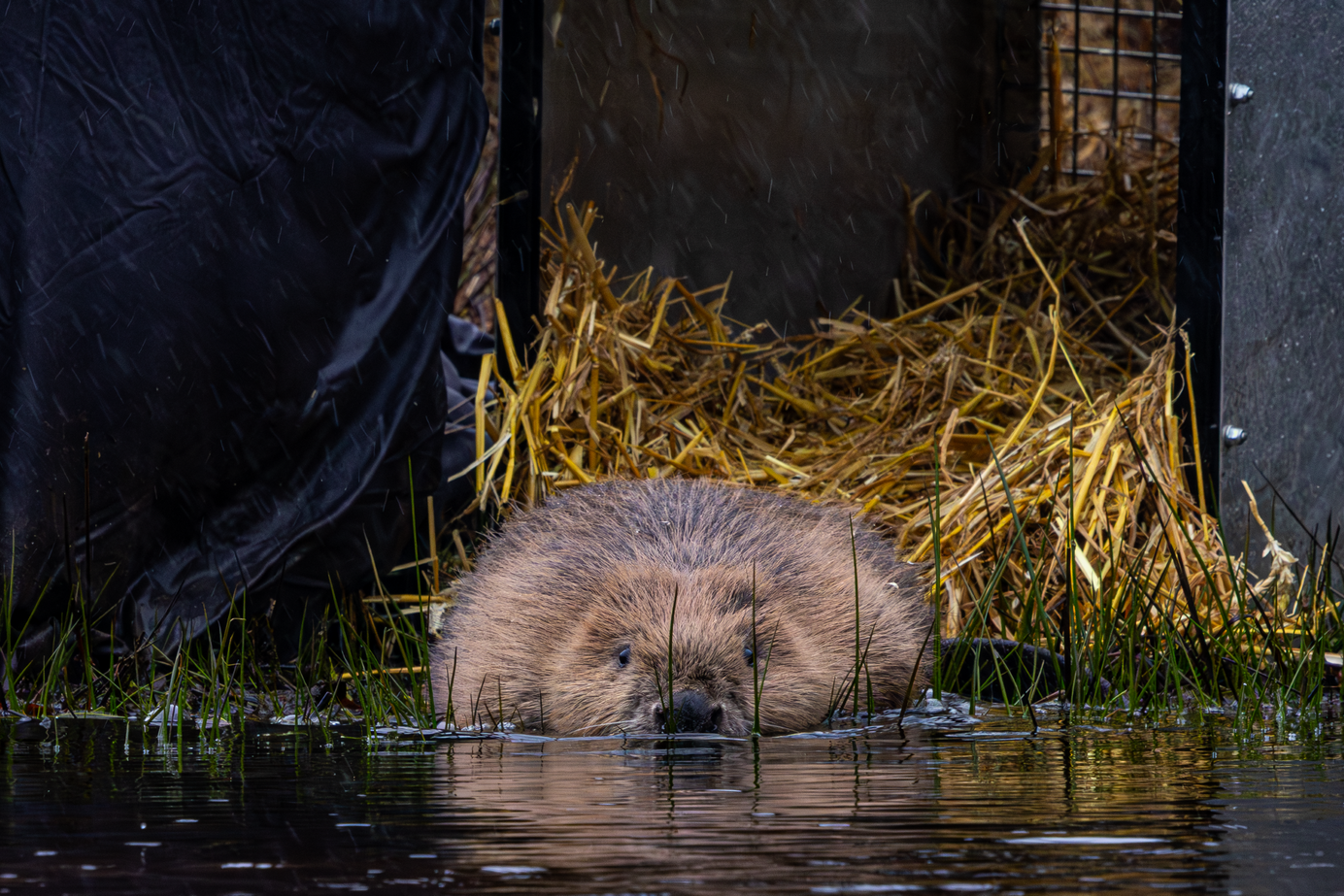
- Beavers have been reintroduced to Glen Affric – the first time the species has been released north of the Great Glen. The news was widely covered.
- The National Trust is reviewing the number of horses grazing on the common land at Rhossili, reports WalesOnline.
- The white-knuckled wolf spider, thought to have been extinct in the UK, has been rediscovered on the Isle of Wight, report the Guardian and the BBC.
- A nature reserve near Bangor has had its Welsh name reinstated: Llyn Celanedd. Appropriately, that translates to ‘Pool of Dead Bodies’. WalesOnline covers the news.
- A new wetland area, designed to provide a habitat for ground-nesting birds, has been established in Derby alongside the Pride Park Stadium, reports the BBC.
- Do you have views on whether white-tailed eagles should be returned to Cumbria? Fill in this questionnaire.
- A £13m wetland storm overflow has opened in Torfaen, using reedbeds and pools to naturally filter pollutants and clean excess water, reports Business Wales.
- Elsewhere, Derbyshire Wildlife Trust is trying to raise £1.2m to buy Middleton Moor for rewilding, reports the Derbyshire Times.
- In the Scottish Highlands, a Great Northern Diver has successfully bred twice with a Black-Throated Diver, in 2024 and 2025, reports BirdGuides.
- Cattle are grazing Buckleberry Common in Berkshire for the first time in more than 80 years, in an effort to restore the heathland. The BBC covers the story.
- A new charity, founded by a man with incurable cancer, aims to plant 1,000 acres of wildflower meadows by 2035, reports Pro Landscaper.
- Cardiff Council hopes to plant another 30,000 trees across the city by next spring, reports Wales247.
- Torbay Coast and Countryside Trust has entered liquidation, raising fears for the nature reserve that it manages, reports the BBC.
Reports
Homes | First-time homebuyers are being forced into urban ‘nature deserts’, according to research by Wildlife and Countryside Link. Data from the Office for National Statistics, mapped onto green space data, revealed that those entering the housing market are disproportionately buying property in areas with fewer parks and green spaces, due to the lower costs. This is exacerbating the already-stark inequalities in access to nature. WCL is calling for the upcoming Planning Bill to be amended to include guarantees for green spaces in future developments. The Guardian covered the research.
Libraries | Libraries can boost nature connection, particularly among marginalised groups, according to a report by the Countryside and Community Research Institute. The report evaluates a collaboration between Natural England and Libraries Connected, with 25 library services receiving up to £6,000 to host nature-themed activities, including everything from crafts to gardening to nature-themed storytimes. Some activities were targeted towards asylum seekers, ESOL learners, disabled and neurodiverse audiences and low-income families. The report concludes that, as a free-to-access space, libraries can help communities access nature despite wider barriers. A separate summary includes case studies of six libraries, including those in Gateshead, Solihull and Somerset.
Insects | Buglife has published two Manifestos for Bugs, for Scotland and Wales, aimed at politicians ahead of parliamentary elections next May. Both manifestos call on the governments to recognise the rapid decline in insect abundance and pledge to restore sustainable populations of all invertebrates. These central demands are accompanied by a list of actions. Some are specific to each nation: Scotland, for instance, must protect its peatlands, while Wales needs to conserve coal spoil sites. Both manifestos call for reduced light pollution, freshwater restoration, more resources to the most threatened species, and enhanced protections against invasive non-native species.
Science
Insects | Nocturnal flying insects are declining in the UK, even as daytime insects remain relatively stable, according to a study in Global Change Biology. The study is among the first to differentiate between numbers of day- and night-flying insects. Scientists repurposed data from weather surveillance radars to track arthropod numbers – including bees, moths, flies and spiders – between 2014 and 2021, across more than 35,000 km². The decline of nighttime insects took place mainly in the far north and in areas linked to light pollution. Overall insect numbers were higher in areas with woodlands and grasslands, but dropped in intensively farmed regions. The authors said the findings provide just a ‘tantalising glimpse’ of what weather radar data can reveal. The Guardian and BBC covered the research.
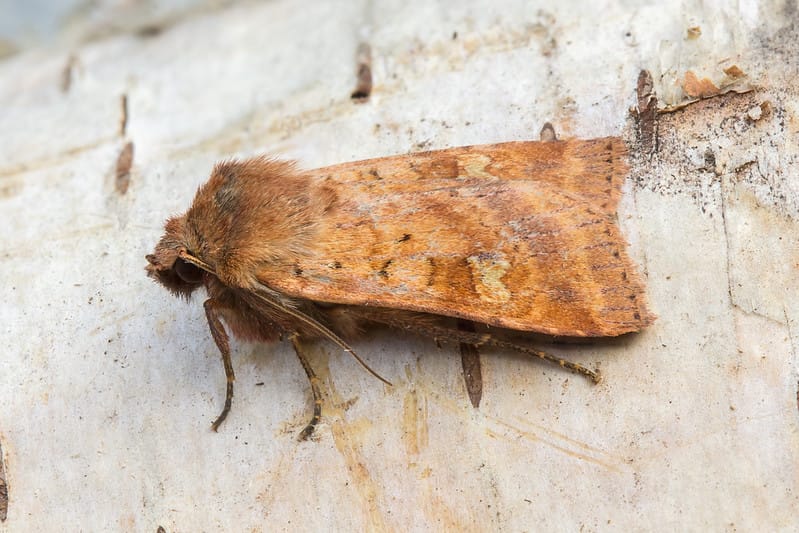
Moths | The return of woodland in the Cairngorms is already boosting moth numbers, according to a study in Ecological Solutions and Evidence. Researchers from the University of Stirling and Butterfly Conservation spent 12 nights at the Mar Lodge Estate, where the National Trust for Scotland has been culling deer to encourage natural woodland regeneration. In this period, they counted 1,502 moths in mature woodland, 820 in younger woodland, and 654 on moorland. They found 85 species in the woods and 55 on moorland. Lead author Patrick Cook said: ‘We are not simply saying woodland is better than moorland… [but] by controlling browsing by deer, we can create a fantastic mosaic of mature forest, young woodland and open moorland,’ which will benefit a range of species. InsideEcology covered the findings.
Biomass | Two complementary studies, in Nature Communications and Nature Ecology & Evolution, look at the rise of human biomass – and the corresponding decline in wild animal biomass. The first paper looks at trends since 1850: it finds that the biomass of humans and their domesticated mammals was around 200 million tonnes around two centuries ago – roughly equal to the combined biomass of all wild mammals. Since then, human and domesticated mammal biomass has risen to around 1,100 Mt while that of wild mammals has decreased by more than 2-fold. The second study looks at the more complex metric of ‘biomass movement’ – the total biomass of a given species times the distance it actively travels each year. Here, too, the value of humans has sharply increased, outpacing that of all wild birds, land arthropods and wild land mammals sixfold.
Driftwood
Leather | The conventional leather industry is notoriously bad for the environment, relying on factory farming, toxic tanning chemicals and untraceable supply chains. But what if there was another way to produce quality British leather goods? A feature in the Independent explores a collaboration between regenerative farmers and designers, offering an ethical alternative. British Pasture Leather was founded four years ago, creating leather from the hides of pasture-fed British cattle, supporting healthier agricultural land, animal welfare, and local craftspeople in the process. This year, the company has partnered with British makers to launch the MADE WITH collection. The resulting pieces redefine ‘what luxury can mean when immersed in place, ecology and purpose’ – although they come with an accordingly hefty price tag. A DIY tassel kit costs £48.
Climate | Climate change may harm existing habitats, but it will also create new ones. In particular, pristine landscapes and freshwater bodies are emerging where glaciers are retreating, some of which will become valuable spawning grounds for salmon. In a feature for Atmos, journalist Zack Metcalfe writes about the efforts underway to protect these landscapes, even before they exist, giving nature priority over the mining interests that also hope to stake a claim. There has already been some success: the Ice & Life Project, launched by glaciologist Jean-Baptiste Bosson, has secured commitments from the French government, and is seeking the same from other Alpine nations in Europe.
Banks | Colonialism and botany collide in the BBC’s feature on Sir Joseph Banks, the naturalist and botanist who – despite his chronic seasickness – joined Captain James Cook’s voyage to the South Pacific on HMB Endeavour in 1768. Growing up on his father’s estate in Lincolnshire, Banks was fascinated with nature, and grew interested in botany while at Eton. ‘He was paying the old ladies a few pennies a time to tell him what the plants were and what they were used for,’ said Paul Scott of the Sir Joseph Banks Society. Later, George III tasked him with setting up Kew Gardens. Banks’ legacy, however, has been tarnished by violence towards the indigenous people that the crew encountered on their travels. He was also instrumental in draining the Lincolnshire Fens.
Further reading:
- Conservationists have a new tool when it comes to eradicating Orkney’s stoats: AI. The Guardian covers the story.
- Plaid Cymru may have seen off Reform in Caerphilly, but the party has a ‘nature blind spot’, writes campaigner Eben Myrddin Muse in Nation.Cymru.
- The Times reports on Whinfell Forest in Cumbria, one of the few remaining sanctuaries for red squirrels.
- Since their reintroduction, white-tailed eagles have shown up in some unusual places – including the skies of Westminster. The Times covers some of their unlikeliest flights.
- Stanford researcher Tong Wu writes about making the economic case for nature in Noema.
- Insurers are removing trees as a quick fix for subsidence problems, reports the Guardian.
- The Guardian reviews Where Is Heaven?, a documentary about people living off-grid in Devon: a ‘shimmering celebration of the wild, mostly treeless Devon landscape’.
- The Times speaks to the landowners who are funding rewilding through biodiversity net gain credits.
- The Argus interviews Charlie Burrell of the Knepp Estate, where he reveals, among other things, his plan to ‘carry on playing croquet until I die’.
- The New Statesman reviews Rory Stewart’s latest book, which deals with some of the issues, including the future of rewilding and food production, facing the Lake District.
Happy days
Frankenstein | A spooky scene took place in Devon this week: gigantic dead trees ‘resurrected’ at Yonder Oak near Exmouth. While this might sound like a Halloween stunt, it is in fact a project by the Woodland Trust to boost biodiversity in the charity’s new woodland. The Trust has created five ‘Frankenstein trees’ by bolting deadwood branches onto already dead trees, and using chainsaws to carve extra nooks and crannies. These structures will loom over thousands of recently planted saplings, providing homes for bats, beetles and fungi while the saplings are too immature to provide such habitats.
Subscribe to our newsletter
Members receive our premium weekly digest of nature news from across Britain.
Comments
Sign in or become a Inkcap Journal member to join the conversation.
Just enter your email below to get a log in link.