Planning Bill & Crime-Busting Bryophytes
The latest news on nature and conservation in Britain.
National news
Planning | MPs in the House of Commons have voted against an amendment to the Planning and Infrastructure Bill intended to protect British wildlife and habitats. The rejected amendment (previously known as 130, now renumbered as 40) sought to restrict the most controversial part of the bill by removing protected animals and habitats from the proposed Environmental Delivery Plans: see this previous digest for an explanation, or this helpful blog by the RSPB. The amendment was voted down by 243 votes to 130, with Labour comprising 240 of the rejections. Prior to the vote, housing secretary Steve Reed encouraged MPs to vote against it, reports the Guardian. Caroline Lucas said the ‘reckless’ action would take ‘a wrecking ball to nature’. Separately, a report commissioned by the RSPB found that 43% of British people are more likely to vote for a party that prioritises nature conservation, compared to only 10% for one prioritising housebuilding.
Amendment 40 to the Planning and Infrastructure Bill has been voted down.
— RSPB (@Natures_Voice) November 13, 2025
Had it passed, it would have meant more precious wildlife would have retained existing protections.
Instead, MPs have bought into the false 'nature vs growth' narrative.
COP | Several pieces of nature-related research have been published to coincide with COP30. A report by WWF Cymru and Size of Wales draws links between deforestation in the Amazon and the pollution of Welsh rivers such as the Wye. It says that Wales imports thousands of tonnes of soy grown on deforested land, which becomes a pollutant when used in livestock feed and spread as manure. The report urges the government to support farmers in adopting deforestation-free feed systems. The BBC covered the news. Meanwhile, researchers from Imperial College London have warned that global conservation efforts are being undermined by the growing abandonment of initiatives. Their study, published in Nature Ecology & Evolution, found that billions of dollars are invested in conservation efforts annually, yet there is more focus on launching new projects than ensuring their lasting success. Oceanographic and the Observer covered the research.
SSSIs | Natural Resources Wales is failing to meet its commitment to expand and improve the country’s network of Sites of Special Scientific Interest (SSSIs), according to the Audit Wales watchdog. Its report found that NRW has only designated 31 SSSIs since it was established in 2013, despite being aware of many areas that qualify for protection. It also found that half of all SSSI features have not been assessed for decades, and of those that have, only 20% are in favorable condition. The watchdog said that staff shortages, key data gaps and outdated digital systems were responsible for the stunted progress. Deeside.com and the Pembrokeshire Herald covered the news. A separate report urges the Welsh government to strengthen legal protections for trees and woodlands, reports Wales 247.
In other news:
- Scotland is facing water shortages almost every summer for the first time in history, reports the Times.
- The RSPB has a blog explaining the government’s Carbon Budget and Growth Delivery plan, announced last week, and what it means for nature.
- The Conservative party has promised to ‘take a chainsaw’ to ESG reporting requirements for companies if elected, reports the Times.
- Whooper swans are experiencing a ‘worrying outbreak’ of avian flu, reports BirdGuides.
- Whisky maker Diageo has pledged £5m to restore 3,000 hectares of degraded peatlands across Scotland, according to the New Food Magazine.
- Forestry England has launched a resilience strategy to protect the nation’s forests from multiple threats, reports the Forestry Journal.
- The Welsh government has announced a raft of amendments to its flagship Environment Bill, reports ENDS.
- Renewable energy developers have partnered with Natural Resources Wales to provide an ‘unprecedented’ dataset on threatened wader species, reports the Tenby Today.
Across the country
Derbyshire | Atlantic salmon have spawned in the upper reaches of the River Ecclesbourne for the first time in a century, following a project to renaturalise the river. Earlier this year, the Derbyshire Wildlife Trust and partners re-meandered a 400 metre stretch of the river back to its original channel, bypassing the last remaining weir on the Ecclesbourne and opening up around 28 kilometres of river and tributaries to fish migration. A survey in August confirmed the presence of parr – young salmon – proving that salmon had successfully journeyed upstream to spawn. Tim Jacklin of the Wild Trout Trust said that, at a time when Atlantic salmon and sea trout face a crisis in England, the results were ‘fantastic’ and could be replicated on other rivers.
Glastonbury | An Iron Age settlement protected by water and peat in the Somerset Levels could soon be lost due to climate change. Glastonbury Lake Village was first uncovered in 1898, and is thought to be one of the best preserved Iron Age settlements in the UK thanks to the surrounding wetland. However, the latest dry summer has lowered the local water table, threatening to expose the almost 2,000-year-old timbers to oxygen, which will cause them to rot. Historic environment officer Richard Brunning said the situation was likely to get worse as Britain's weather becomes more extreme, and given the site’s connection to other fields with different uses, there is no easy solution. The BBC reported the story.
Lake District | A joint project between the Lake District National Park Authority and Cumbria Wildlife Trust has restored 16 hectares of hay meadows across the national park this summer. Between June and September, teams worked with farmers in Cartmel Fell and Newlands Valley to select sites for restoration, before sowing native wildflower seeds from nearby donor meadows and planting 1,305 locally-propagated plugs. The project aims to expand species-rich grassland in the park whilst honouring traditional farming practices. Farming officer Claire Foster said that, in years to come, the restored meadows will become diverse habitats supporting both wildlife and sustainable livestock farming. Cumbria Crack, Farming UK and the BBC reported the story.
Elsewhere:
- Sussex Wildlife Trust is celebrating victory in a legal battle over the disposal of dredged sediment in a Marine Protected Area, reports the BBC.
- Southern Water has apologised after millions of plastic beads washed up on Camber Sands beach, posing a fatal threat to marine wildlife, reports the Guardian and BBC.
- Three rural communities in the North York Moors are the latest areas to gain ‘dark sky friendly’ recognition, reports the BBC.
- Heath lobelia, a rare wildflower, is showing signs of recovery thanks to targeted conservation efforts in east Devon, reports the BBC.
- An oyster reef restored in the River Hamble two years ago by the Royal Navy is now thriving with life, report the Daily Echo.
- Telford & Wrekin Council is sowing urban wildflower meadows covering an area the size of seven football pitches, reports the Shropshire Star.
- Campaigners in Edinburgh are fighting to save the Roseburn Path, a former railway line repurposed as a green corridor, from becoming a tram route, reports the Herald and BBC.
- A cricket club in the New Forest has been accused of breaching historic laws after closing its grounds to grazing animals, reports the Times.
- Loch Lomond and the Trossachs National Park Authority is set to distribute £1.28m to biodiversity projects in the region, reports the Herald.
- A study by Durham University found that public support for wilder green spaces is driven more by attractiveness than environmental benefits, reports the Northumberland Gazette and BBC.
- The rare candelabra coral fungus has been discovered in the New Forest for the first time, reports the BBC.
- The Shetland Amenity Trust has announced two peatland restoration projects on Yell and at Murrister, reports the Shetland Times.
- Researchers have discovered a new species of ancient mycorrhizal fungi preserved within a 407-million-year-old plant fossil from Aberdeenshire, reports the Herald.
Reports
Canals | A report by the Canal & River Trust highlights how the UK’s once-industrial canal network has become one of the country’s most important ecological corridors. Built as transport routes during the 18th and 19th centuries, canals now form the nation’s longest corridor of freshwater habitat, providing spaces for wildlife in both urban and rural areas and, crucially, reconnecting otherwise fragmented landscapes. This is especially significant in the intensively farmed Midlands, where the canal network is centred. However, most canals were built over 200 years ago and require constant maintenance; the report also outlines opportunities for funders and partners to support the Trust’s mission to sustain them, from habitat restoration to expanding nature-based health programmes.
Crime | Only 2% of nearly 2,000 wildlife crimes reported in 2024 led to conviction, according to the latest Wildlife Crime Report by the WCL. Although slightly higher than in 2023, the rate remains ‘woefully low’. The authors cited low-prioritisation by enforcement authorities, limited resources and a lack of sentencing guidelines. Focus points in the report include a record low of hunting convictions since 2017, and the illegal actions of developers harming protected species such as bats and badgers. It also highlights connections between wildlife crime and crimes toward people: analysis of data on 128 wildlife criminals revealed that 82% of offenders were associated with other crimes, the most common being violence, theft and criminal damage.
Farming | A report by the cross-party Welsh Affairs Committee warns that the UK government is failing to recognise the distinct nature of farming in Wales, putting the sector’s future at risk. In particular, the report criticises the government’s ‘complacent’ approach to the introduction of inheritance tax changes, due in April 2026. The Committee argues that the reforms overlook key differences in Welsh farming – including a greater portion of land dedicated to agriculture and a higher proportion of family-run farms than in England – and calls for a delay until a Wales-specific impact assessment is completed. It also urges the Welsh government to ringfence agricultural funding to provide certainty for farmers. The BBC, FarmingUK and the Farmers Guardian covered the report.
Science
Light | Artificial lighting at night is increasing the carbon released by ecosystems, according to a study in Nature Climate Change. Researchers from Cranfield University compared satellite data with measurements from 86 carbon flux monitoring sites across Europe and North America. They found that nocturnal light pollution increased ecosystem respiration – when plants, animals and microbes release carbon dioxide – without a corresponding rise in photosynthesis removing carbon. With around a quarter of the Earth’s land exposed to artificial lighting at night, the result is reduced carbon storage in ecosystems across continents, with major implications for climate models and ecosystem functions. However, the authors also note that, unlike most climate stressors, light pollution can be cut ‘almost overnight’ through better lighting decisions.
Badgers | Badgers in the UK are at greatest risk of road collisions in cities and towns, despite relatively low populations in these areas, according to a study in Biological Conservation. Researchers from Cardiff University and the Badger Trust analysed citizen science data on roadkill alongside species distribution modelling. They found that, at a national level, roadkill risk correlated with badger distribution: the more badgers, the more roadkill. However, at a more detailed level, they found that hotspots of roadkill risk (the top 1% predicated probability of roadkill) were concentrated in urban areas of central and southern England, despite having fewer badgers there. This is likely due to high density roads and heavy traffic. The authors warn that pressure on badger populations will grow as urban areas continue to expand, and suggest using the results to identify priority areas for targeted mitigation efforts.
Plants | Non-native plant species can integrate into native food webs over time, regardless of their similarity to native species, according to a study in Ecology Letters. Researchers used a dataset of 127,000 plant-to-microherbivore interactions across Europe, examining which plants are eaten by parasite species such as leaf miners, gall midges and aphids. They found that the longer non-native plants had been established and the wider their distribution range, the more they were used by parasites. In fact, species introduced more than two centuries ago, or with ranges as large as the average native plant, supported a similar number of species to native plants. The study demonstrates that ecosystems can adapt over time to changing floras, which could be significant for understanding species migration as climate change progresses.
Driftwood
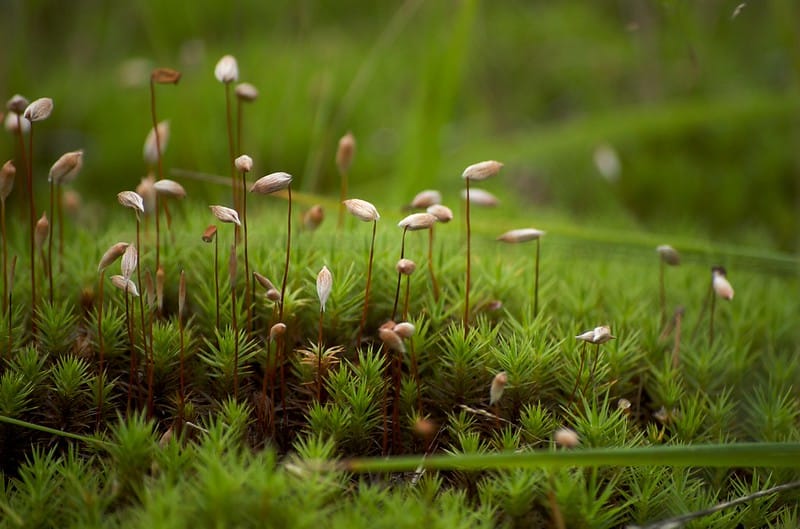
Bryophytes | In 2013, researchers helped solve a murder case in Michigan by using microscopic pieces of moss found on the suspect’s shoes to pinpoint where he had buried the body. Now, those researchers have written a research paper compiling various cases of bryophytes being used to solve crimes. Bryophytes are particularly useful because they are extra-sensitive to their local environments and can therefore point to specific locations. In 150 years-worth of records, however, there are only a handful of examples of their use in crime investigations. Co-author Jenna Merkel said she hoped the research would raise awareness of bryophytes as an ‘overlooked yet powerful source of forensic evidence’, and prove that ‘even the smallest plant fragments’ can provide big clues. Read more in the Field Museum press release.
Youth | A feature in Positive News profiles Jamie’s Farm, a project based in the Somerset Hills blending regenerative farming and therapy to help young people struggling at school. The organisation aims to instill a sense of purpose and agency in its young participants through hands-on, often muddy, work: mucking out pigs, picking veg, herding cows, feeding chickens and sharing meals around a communal table. Participants are referred by their schools, often in response to behavioural challenges, and so far the charity has supported more than 17,000 young people. The approach works, according to founder Tish Feilden, because immersing young people in the land ‘gives them optimism, and it gives them a new value of themselves.’
Glowworms | Glowworms and fireflies were once common across the UK and Europe, but, like many insect species, their numbers are dwindling. Writing in the Guardian, journalist Natasha Frost explores various efforts by naturalists to save these luminescent species, from rewilding efforts to guided night-time walks for children. In the UK, projects range from the volunteer-led UK glowworm survey, which aims to increase understanding of the species, to the more drastic efforts of ecologist Pete Cooper, who has bred glowworms in captivity since 2020 with the aim of re-establishing new populations. Cooper also hopes that reintroducing a species as charismatic as glowworms in the UK could act as a ‘gateway drug’ to capture the public’s attention, and reconnect them with a wider array of British nature.
Further reading:
- A feature in the Times looks at the 22-year journey of a couple to build an off-grid lifestyle on the Isle of Wight.
- A BBC In-Depth article questions the point of COPs when key world leaders are missing, while economist Dieter Helm argues it is time for ‘climate realism’ in the Times. Meanwhile, an opinion piece in Politico suggests COP30 could be the ‘People’s Cop’.
- In Business Green, CEO of Natural England Marian Spain writes about why nature recovery can be a catalyst for growth. Chair Tony Juniper has a blog on the same subject here.
- The Guardian has a review of David Attenborough’s new ‘high drama’ series, Kingdom.
- A feature in Country Life profiles a few of the ‘dangerous’ beasts of Britain and where to find them.
- A feature in Wicked Leeks spotlights community projects that are working towards a better future for British farming.
- An essay in Aeon by researchers in bioethics and philosophy questions whether we should assume all animals – such as ants – can feel pain and merit moral concern.
- A BBC feature takes a deep dive into the ‘full circle’ conservation story of red kites in the UK, which are now rejuvenating the Spanish population that saved them first.
Happy days
Foraging | Acorn pancakes, wild mushroom broth and nettle pakoras are some of the favourite meals of Bristolian chef Lewis Pidoux – and he sources most of the ingredients from his local park. Pidoux works part-time at Toby Carvery, and the rest of his time foraging and uploading educational content to his popular Youtube channel. The chef reckons he saves around £200 on his monthly food shop in spring, and £100 in cooler seasons. Despite criticism that foraging could deplete habitats, Pidoux reckons that most foragers are respectful of nature. Read more in the Bristol Post.
Subscribe to our newsletter
Members receive our premium weekly digest of nature news from across Britain.
Comments
Sign in or become a Inkcap Journal member to join the conversation.
Just enter your email below to get a log in link.